Host Merchant Services – Credit Card Processing and Point of Sale for Small Business
Classifying your business as high-risk can be nerve-wracking, but credit card processing for high-risk companies is more common than you might think. In some cases, entire industries are cataloged as high-risk due to their clientele, products, or form of business. While there certainly are limitations associated with being classified as high risk, there’s more to this classification than many people know.
In this article, you’ll find an explanation of what constitutes a high-risk business, the different industries considered high-risk, and tips on choosing the best high risk merchant services provider when you are a high-risk business.
What Is a High-Risk Business – Factors Determining The Risk Level?
High-risk businesses are those that banks and credit card processors believe have a higher chance of failing financially. Businesses are classified as high-risk by processors and financial institutions if they operate in industries with high chargeback rates or are considered risky.
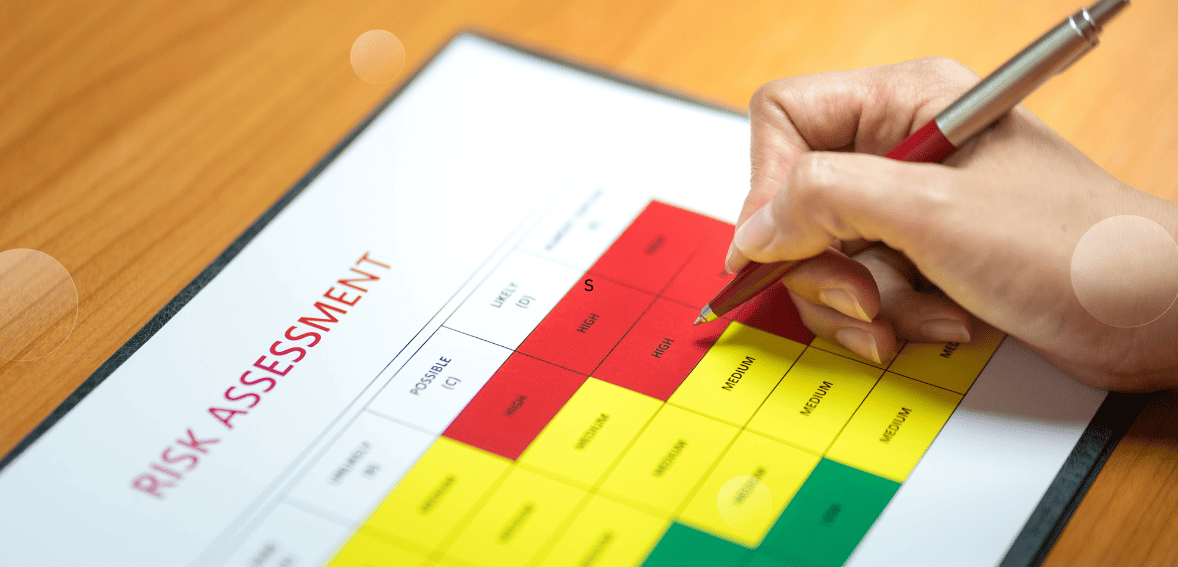
Banks, credit card processors, and insurance companies consider a few indicators to determine if a business is high-risk. A firm’s industry (high-risk MCC codes) may be evaluated according to its federal, state, or local regulation degree, the likelihood of loan default or chargebacks, and the competition in its local market.
Last but not least, a high-risk designation is based on the type of your business and the policies of the processing provider; for example, while one payment processor may declare your business high-risk, another with a different high-risk category may not. Beware of companies that promise high acceptance rates for merchant accounts only to gouge you with high fees and processing rates later.
Payment processors often consider the following elements when determining if your business is high-risk:
- Chargeback and fraud rates are the most common reasons banks and payment processors label firms as high-risk. Merchant account providers, business insurance providers, and loan providers analyze customer behavior patterns to determine whether you have a high chargeback rate.
- If you are based outside the U.S. but sell primarily to American customers, US financial institutions may view your native country’s relatively loose banking regulations as sufficient to label you as high-risk.
- Pornography and drug paraphernalia, for example, can indicate unpredictable revenue streams coupled with questionable sales and marketing techniques.
- Financial institutions may view your company as high-risk if your company consistently accepts high-dollar purchases via credit cards. The impact of this aspect is most significant for organizations that handle a large volume of B2B transactions.
- Banks and payment processors will often classify you as high-risk if you have a low personal credit score.
You won’t be able to provide your financial institution with a lengthy transaction history if your company is new. - You need a merchant account provider to calculate your chargeback ratio. You may be classified as high-risk if you do not complete enough monthly transactions to achieve an average score.
- Due to many cancellations, specific industries, such as travel, gaming, and adult sites, are notorious for large chargebacks.
Why Is Risk Level Important For Credit Card Processing?

Your level of risk can affect your business in a wide variety of ways, including difficulty securing a merchant account and stricter requirements. Here is a breakdown of how your risk level affects your business:
Higher account and processing fees: A high-risk merchant account is more expensive than a non-high-risk account. You’ll pay extra for account and processing fees and almost certainly be locked into long-term contracts with steep early termination penalties. Hefty processing charges are a terrible reality for high-risk businesses. Depending on the processor, you should expect to pay about twice as much as a non-high-risk business with the same sales volume.
In addition, high-risk accounts must maintain a rolling reserve. Your account will usually be charged an early termination fee if you close it before the end of your contract period. Your contract may even contain a clause that increases breaching costs if liquidated damages are involved.
Increased chargebacks: Your company’s high number of chargebacks will almost certainly contribute to your high-risk status. The average chargeback threshold is 1%, meaning that if 1% or more of your transactions are ultimately charged back, your payment network will likely penalize you. You might benefit by periodically asking your processor to review your processing history. Your high-risk status may be lifted if you demonstrate a strong track record of chargeback prevention.
As reported by the Federal Reserve Bank of Kansas City, merchants could only dispute 20% to 30% of fraud-related chargebacks in 2016, emphasizing the importance of using a payment gateway with robust fraud detection tools to minimize the damage fraud-related chargebacks can cause. According to midigator.com data, both Visa and Mastercard have seen an increase in fraud-related chargebacks each year since 2017.
Stricter regulations: Organizations operating in high-risk industries often have more compliance standards to meet. The rules (such as OSHA guidelines) may be federal, state, or municipal and are frequently tied to high-risk business types.
Other considerations: Your payment processing options are limited as a high-risk business owner. You also have limited options for financing and insurance. You may have trouble getting a loan if you are a startup, have limited income or terrible credit, or work in an unstable industry. Contact online lenders who provide high-risk business loans, such as personal loans, invoice financing, short-term loans, asset-backed loans, and business credit cards.
Business insurance options differ based on your high-risk business classification. As some carriers may not be willing to offer you a fair deal, contacting business insurance agencies specializing in high-risk industries is a good idea. Buying general liability insurance out of pocket is also risky with chargeback-related fraud and volatile revenue sources, so you need to find a provider that offers general liability insurance at a reasonable price.
Furthermore, merchant account providers rarely scrutinize high-risk organizations’ sales and marketing methods, which can either be a blessing or a curse. Due to the public perception of your business type, you might be accused of guilt by association, mainly if you offer controversial products or services.
The Benefits and Drawbacks of Using a High-Risk Merchant Account
High-risk merchant accounts have several downsides, but they also offer some advantages. The following are some good and bad aspects of high-risk businesses:
Pros
- There are fewer restrictions on international transactions.
- Recurring billing is available.
- Load balancing is used to reduce chargebacks and handle increased sales volumes.
- Various currencies are accepted.
- No matter how bad your credit or money you owe, credit card transactions can still be processed.
- Fraud protection is also enhanced.
- A high-risk processor must be skilled in risk mitigation. Even though this comes at a premium, your company will still benefit from a high-risk, quality supplier.
Cons
- An increase in processing fees
- Potentially obligatory reserve account, potentially as much as 50% of monthly volume
- Rolling reserves may be held for 180 days after an account has been closed.
Complete List of High-Risk Business Types
The following is a complete list of business types that are traditionally marked as high-risk:
| 1-800-type chat sites for high-risk industries |
| Airlines or charter flights |
| Books and programs that promise “instant riches.” |
| Antiques |
| Auctions |
| Average ticket sales are high. |
| Bankruptcy lawyers |
| International merchants (from outside the United States) operating in the United States. |
| Brokering |
| Brokers in automobiles |
| Casinos, gaming, or gambling |
| Cigarettes, e-cigarettes, and vape shops are all options. |
| Clubs, services, or travel agencies |
| Coaching for Life |
| Coins, collectible currencies, or autographed collectibles are all examples of collectibles. |
| Collection firms |
| Companies that provide extended warranties |
| Contracts for a year |
| Coupons or point-rewards schemes |
| Credit monitoring, counseling, and restoration services |
| Dealers with a Federal Firearms License (FFL) |
| Debit cards that are pre-paid |
| Downloads or uploads of music, movies, or software (i.e., copyrighted digital products) |
| Drug paraphernalia, cannabis, or CBD products are all prohibited. |
| eBay shops |
| eBooks (copyrighted material) |
| Electronics |
| Event ticket brokers (non-registered/unlicensed (i.e., Stub Hub-type merchants)) |
| Finance brokers, financial advising, and loan modification services are all available. |
| Financial strategy, planning, or advice |
| Furniture retailers |
| Health or medical care schemes with discounts |
| How-To webpages (for example, “Learn How to Make Money on the Internet”) |
| Indirect financial advice (for example, “How to Save Money by Lowering Your Electric Bill”). |
| Rentals for vacations (unless the merchant owns the property) |
| International transportation, import/export, or freight transportation |
| Investment firms, investment strategies, or books |
| Lawyer referral services |
| Magazine subscriptions and sales |
| Marketing on multiple levels (MLM) sales techniques |
| Third-party processing and merchant factory (like vacation rental brokers or payment processors) |
| Modeling agencies or talent agencies |
| Non-US citizens conducting business in the US |
| Offshore corporation formation services |
| Organizations with a membership (contracts over 12 months) |
| Pawnshops |
| Poor-credit merchants |
| Prepaid phone cards |
| Property investment |
| Psychic and horoscope services |
| Rentals for vacations (unless the property is owned by the merchant) |
| Replica sunglasses, watches, handbags, wallets, and other accessories |
| Sales in several currencies |
| Sales of lingerie |
| Sales of vitamins and supplements (such as health supplements, diet pills, prescription pills, and pharmacy products) |
| Sales through mail or telephone |
| Self-defense items like mace, tasers, or pepper spray. |
| Self-hypnosis or hypnotist services |
| SEO solutions |
| Services exportation (non-US based) |
| Services for cashing checks |
| Services for debt collection |
| Services for debt consolidation |
| Services for telemarketing |
| Sites for social networking |
| Sports predicting or betting on odds |
| Stores such as Amazon, Yahoo, and Google |
| Sweepstakes or lotteries |
| Telecommunications |
| Telecommunications companies |
| Terminated Merchant File (TMF) or MATCH List merchants |
| Timeshares or advertising for timeshares |
| Tour companies |
| Vacation organizers |
| VoIP solutions |
| Weapons of any type, including firearms, knives, stun guns, and ammunition. |
| Websites for fantasy sports |
Merchant Accounts with High Vs. Low Risk
To register for credit card processing and a merchant account, you must determine whether you are a low-risk or high-risk merchant. Merchant account providers categorize businesses as one or the other, but various indicators can distinguish between them.
Account for high-risk merchants
You may be considered high-risk due to your processing history, which includes chargebacks. Merchant account providers may add their criteria to the list, but here are a few that identify high-risk companies:
- $500 or more in credit card transactions
- Doing business in countries with a high level of fraud.
- Selling products that are considered high risk, such as cannabis or adult content.
- History of poor credit
- A high rate of chargebacks.
Accounts for low-risk merchants
Merchants must meet several criteria to qualify as low risk, including minimal revenue, few transactions, and few chargebacks and returns. Low-risk merchants also have the following characteristics:
- Purchases with credit cards are limited to $500.
- Chargebacks account for less than 0.9% of total transactions.
- Most business is conducted in low-risk areas such as the United States, Europe, Japan, Canada, and Australia.
- Investment returns are minimal.
- Commodities, apparel, household goods, and baby items are low-risk industries.
Choosing a Merchant Services Provider When You Are Classed as High-Risk
Finding business services tailored to your specific needs is never easy, but it is considerably more difficult for high-risk businesses. You may have to pay higher fees and processing rates, but poor customer service and assistance shouldn’t be tolerated. There are companies on the market that provide high-quality service and fair prices to high-risk merchants, however your options are more limited than those of non-high-risk merchants.
The following features should be considered when choosing a high-risk credit card processor:
- Quick assistance and excellent customer service: Any transaction that goes wrong on your website could lead to problems. When an issue arises, choose a service that provides proactive help. If your company operates in a specific industry, several industries, or a broad set of locations, you should find a credit card processor that can provide you with great customer service. You should be able to find industry and country support on the website.
- Different payment scenarios: Your provider should be able to meet your complex business requirements by offering customized payment forms with different payment scenarios.
- Ensure there are no hidden fees: Be aware of any costs before committing. The monthly fee for high-risk credit card processing and merchant accounts should be visible on the provider’s website. In this case, a quick phone call or chat should resolve your concerns.
- Modern technology: Your payment partner should know payment trends and offer open APIs. Onboarding should be easy and take only a few days, not weeks. Avoid payment processors with outdated websites, frequent downtimes, and insufficient technical expertise to meet your business needs.
- Fraud protection: To protect high-risk accounts from fraud, look for a merchant account with enhanced security features, such as chargeback prevention and multifactor authentication.
- Reliability: When choosing a high-risk merchant account, you must consider onboarding and customization. Your time and money are safeguarded by selecting a reliable provider.
Finding a Good Merchant Services Provider for High-Risk Businesses
Following are some recommendations to help you find the right merchant services provider for your business if you’ve been classified as a high-risk merchant or fear you could be one:
- Check the processor’s list of permitted company types. A processor may be a high-risk specialist but may not serve all high-risk company types. Some providers might accept your type of business, but not all of them. For example, cannabis merchants are not accepted by all high-risk providers.
- Look for a processor that provides load balancing. Load balancing allows you to distribute transactions among multiple merchant accounts linked to a single payment gateway. This has many advantages. As a starter, if one account fails you, you still have the others. Numerous accounts also allow you to process more monthly, reducing your chargeback risk.
- Since high-risk merchant account providers typically work with various payment processors, rates and fees can vary depending on which merchant account you are paired with. So, pay close attention to the rates you’ll be charged, and be sure to understand any additional fees. Even if you are unlikely to be approved for interchange-plus pricing or a month-to-month contract, it never hurts to ask.
Avoiding Predatory Service Providers
Many merchant services companies claim to serve high-risk businesses but charge exorbitant rates and fees to have business owners looking to establish a merchant account quickly. While some providers may treat you well and offer reasonable prices to high-risk merchants, others may try to take advantage of you. As a result, you must follow the three suggestions below:
Look at the company’s online reputation: Find out what others are saying about the company online. You can bet that your experience with that firm will be similar to others’ experiences if the evaluations are mainly negative. It’s a good sign you should avoid the firm if you cannot find any reviews. Check consumer protection websites such as the Better Business Bureau (BBB) and Ripoff Report for feedback from merchants who have done business with the firm you are considering. Find out how the company handles dissatisfied customers. Failure to respond to complaints is a major red flag.
Check out the website of the company: Businesses are accepting online and digital payments more than ever before in the wake of the COVID pandemic. For these small businesses, payment processors need to make it easy to find products and services, such as payment gateways and virtual terminals that simplify eCommerce operations on their websites. You may commit to a contract with many hidden terms if a company doesn’t say whether it offers features to help high-risk eCommerce businesses. Look for processor websites that provide clear, actionable information, indicating a business model centered on high-risk enterprises.
Read the company’s terms and conditions or merchant application: Although few suppliers provide sample contracts online if you can obtain a copy of the company’s standard Terms & Conditions or Merchant Application, carefully review it. In the fine print of these contracts, you will often find myriad ways the firm can cheat you off. The less information you can uncover about the company’s future activities, the more reason you must be concerned.
Conclusion
Classifying as a high-risk business isn’t ideal, but it’s not necessarily a death sentence. While you will have fewer options when it comes to financing and securing a payment processor, there are some perks, such as less scrutiny over your operations and fewer international restrictions for payments. When choosing a payment processor that works with high-risk businesses, make sure that they offer the features that you need. Furthermore, take the time to review their policies and terms to avoid falling for a predatory service provider.