

10 Best Payment Gateways In 2024

10 Best Payment Gateways In 2024

Running an online business requires an effective method for receiving payments, and payment gateways serve as financial tools that facilitate the collection of payments through credit or debit cards. Nowadays, where online shopping is prevalent, and physical cash is less common, having an accessible and user-friendly payment gateway is essential for engaging both consumer and business clientele.

To make an informed choice for your business, it’s crucial to evaluate factors such as cost, features, and supported payment methods. Read on to discover the best payment gateways in 2024 suitable for businesses that rely on card-based transactions.
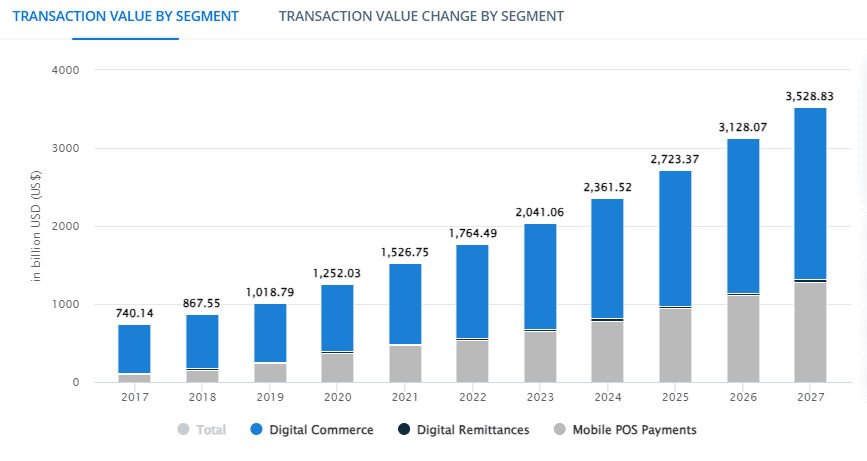
image 49

Source: Statista – Digital Payments in the US

Understanding Payment Gateways

A payment gateway is a software application utilized by merchants to facilitate the acceptance of various electronic payments, including credit cards. Functioning as encryption systems, these gateways play a crucial role in safeguarding sensitive information like credit card numbers during the transfer from customers to merchants. Following this secure exchange, the gateways transmit transaction details to both the customer’s bank and the merchant’s acquiring bank, responsible for credit card processing services.
Understanding Payment Gateways

The payment gateway assumes the responsibility of authorizing credit card transactions and ensuring the seamless transfer of funds from the customer’s account to the merchant’s account. It’s common for payment gateways to impose a monthly fee along with a per-transaction fee for their services.

How Payment Gateway Works?

The structure of a payment gateway can be divided based on its use in either an online payment portal or an in-store setting. For online payments, the gateway must be hosted on the website. This can be done through a third-party service provider or directly by the merchant using an API. This integration enables the website to interact with the payment processing network and receive a response from the issuing bank.
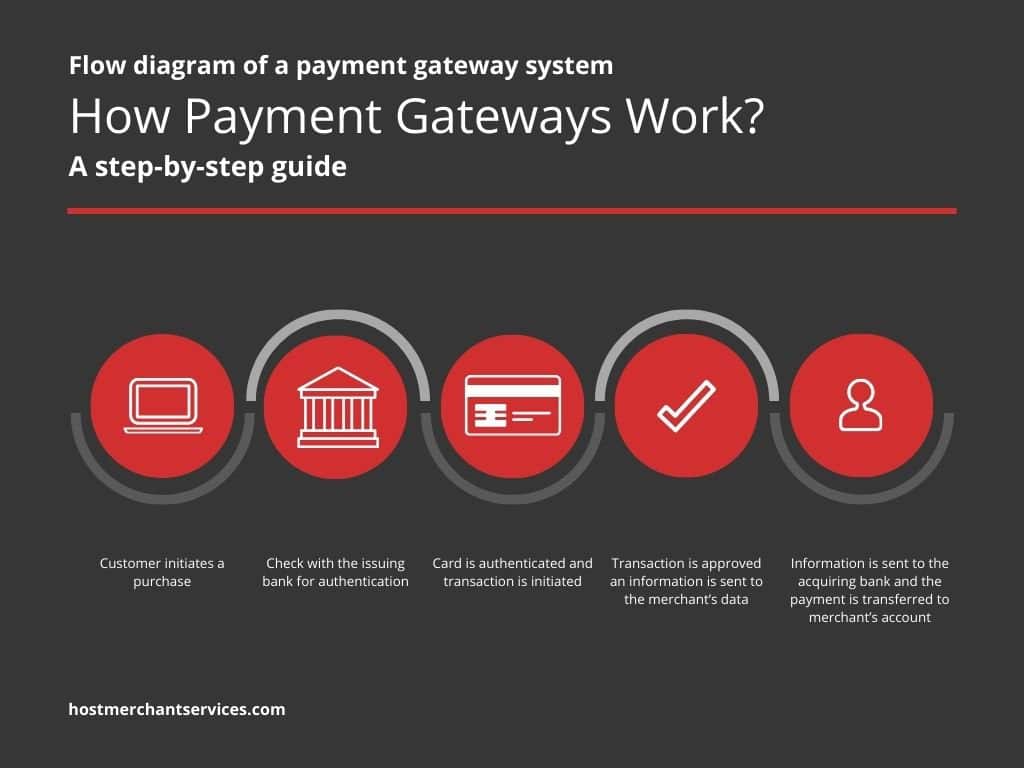
How Payment Gateway Works?

In an in-store setting, a payment gateway is utilized through a physical card reading device or a POS terminal. These devices connect to the processing network via a secure internet connection, ensuring a seamless transaction process.

Key Players In The Payment Gateway Ecosystem

  • Merchant:

The merchant is the individual or business conducting online sales of goods or services. To enable online transactions, a merchant requires a merchant account, essentially a bank account tailored for online transactions. Integrated with the payment gateway, this account ensures secure transaction processing, serving as the destination for incoming funds after settlement.

To open a merchant account, thorough research is necessary to select a provider that aligns with specific business requirements.

  • Customer:

Customers constitute the primary participants in the payment gateway ecosystem. They utilize various online payment methods, including debit or credit cards, net banking, UPI, or online wallets, to make purchases online.

  • Acquirer and Issuer Bank:

Two distinct types of banks operate within the payment gateway ecosystem. The acquirer bank manages payments on behalf of the merchant, housing the merchant account. This bank serves as the endpoint for financial transactions routed through the payment gateway, ultimately receiving the funds.

Conversely, the issuer bank is where the transaction originates. This account belongs to the customer initiating the payment for a product. The issuer bank represents the customer and supports diverse payment methods like credit cards, debit cards, or net banking.

  • Payment Gateway:

Serving as the intermediary between the merchant’s website or app and the acquirer and issuer banks, the payment gateway plays a crucial role.

When a customer makes a purchase on the merchant’s platform, the payment gateway facilitates the smooth progression of the payment. It ensures the secure transfer of payment information and manages the authorization and settlement of transactions.

  • Payment Processor:

The payment processor is responsible for overseeing the technical connections between the payment gateway, the acquiring bank, and the issuer bank. It validates and securely routes payment transactions. Both the payment gateway and the payment processor are essential components in effectively managing online payment transactions.

How To Select The Best Payment Gateway?

How To Select The Best Payment Gateway?

Selecting the appropriate payment gateway for your business is a crucial decision. Opting for a gateway that doesn’t align with your business model can potentially lead to significant financial losses and a decline in customer satisfaction.

Consider the following key factors:

  • Cost:

The foremost consideration when choosing a payment gateway is the overall cost it incurs. The costs associated with payment gateways typically involve a set-up fee, a monthly fee, and a transaction fee.

To determine the most cost-effective option for your business, it’s essential to evaluate both the volume and value of your transactions. Many payment gateways offer competitive transaction fees, often around 2.9% + 30¢. Carefully assessing these costs ensures a financially prudent choice for your business.

  • Accepted Card Types:

The widely utilized credit cards—Visa, MasterCard, and Amex—are typically supported by most payment gateways. However, if your customers commonly use alternative card types like debit cards or Diners Club cards, it’s crucial to ensure that your chosen payment gateway accommodates these variations.

  • Holding Period:

While payments are generally swiftly approved, there is a brief holding period before the funds are settled into your account. This delay allows for the processing of refunds and handling chargebacks. Holding periods can range from 1-7 days, varying among payment service providers. Depending on your cash flow needs, you can opt to receive immediate payment or wait for the designated settlement period.

  • Multiple Currency Support:

For businesses engaged in international transactions, verifying that your selected payment gateway can process payments in various currencies and from different countries is essential. Enabling customers to pay in their preferred currency is paramount. Additionally, it’s advisable to check for any associated fees related to foreign currency transactions.

  • Seamless Integrations:

Ensure that your chosen payment gateway seamlessly integrates with your shopping cart, accounting software, and any other tools essential for your business operations. This integration capability enables automation in your accounting processes, ultimately saving valuable time.

  • Customization Options:

Consider whether the payment gateway provides customization features. For instance, having the ability to incorporate your logo or modify the payment page’s color scheme can enhance your brand representation. Many gateways offer this through an API, though it’s worth noting that not all gateways provide such customization options.

  • Emphasis on Security:

Prioritize security when making your payment gateway selection. It’s crucial to confirm that the gateway employs state-of-the-art encryption technology to safeguard your customers’ credit card details from potential theft.

  • PCI Compliance:

Verify that the chosen payment gateway adheres to PCI compliance standards. This compliance involves following the PCI DSS standard, a set of security regulations mandatory for all businesses engaged in credit card payment processing. Choosing a PCI-compliant gateway ensures that your business meets the required security standards.

Top 10 Payment Gateways In 2024

There are many payment gateway options now with the rise of e-commerce and online payments, here is our best pick for the reliable payment gateway solution for 2024:

1. Authorize.Net

  • Pricing: $25 monthly
  • Processing Charges: 2.9% + an additional $0.30 for every transaction

Authorize.net Virtual Point of Sale

Authorize.Net, affiliated with Visa, accommodates major credit cards like Mastercard, Visa, Discover, American Express, JCB, and Diner’s Club. It also supports digital payment services such as PayPal, Visa Checkout, and Apple Pay. While it caters to global transactions, your business must be registered in the US, Canada, UK, Australia, or Europe.

Starting with the gateway-only plan, which incurs no setup fee, it involves a monthly gateway fee, a per-transaction charge, and a daily batch fee. For larger business needs, enterprise solutions provide customized pricing.

Pros:  
Tailored fraud prevention with AFDS
Offers both payment gateway and one-stop solution for flexibility
No setup charges, minimizing the initial costs

Cons:  
Additional charges for specific features like e-check and
Account Updater Merchant account approval may take up to 5 business days, potentially delaying the setup.

2. PayPal

  • Pricing: Free
  • Processing Charges: 2 to 4% + an additional $0.49 for every transaction
PayPal Working Capital Loans

A stalwart in online payments, PayPal facilitates quick registration and online payment acceptance. It extends its services to mobile and in-person transactions, among other financial solutions.

Online card payments typically incur a $0.49 fee plus an additional 3.49%. QR code payments reduce costs to 1.90% for transactions above $10 or 2.40% for transactions of $10 or less, plus the $0.49 fee. Businesses usually face no monthly recurring fees. In-person payments cost 2.70% for card-present transactions or 3.50% plus $0.15 for keyed transactions.

Pros:  
Versatile payment solutions for diverse business needs
Strong global recognition instills customer trust
Efficient customer support post-sale
Transparent pricing with no monthly fee

Cons:  
May not be cost-effective for high-volume sellers
Known for holding funds from sellers and occasional account closures with limited recourse.

3. Stripe

  • Pricing: Free
  • Processing Charges: 2.9% + an additional $0.30 for every transaction

will stripe ipo

For companies of any kind, Stripe offers outstanding adaptability with over 660 integrations. Because of its highly configurable nature and application programming interfaces, it can be easily integrated into applications for smartphones and other software, catering to both startups as well as big corporations. Robust identification of fraud and tools for risk management, a flexible checkout procedure, the capacity to process payments via the Internet in over 135 currencies, and low-cost, programmed clearinghouse processing are some of the key features. Stripe offers flexible monthly agreements and reasonable fees when compared to different payment gateway service providers.

Pros:  
Zero monthly charges
Zero setup charges
Developer-friendly
Highly versatile with many integrations and customizations

Cons:  
Instant deposits cost 1% of the transaction
No native inventory management

4. Square:

  • Pricing: Free
  • Processing Charges: 2.6% + an additional $0.10 for every transaction
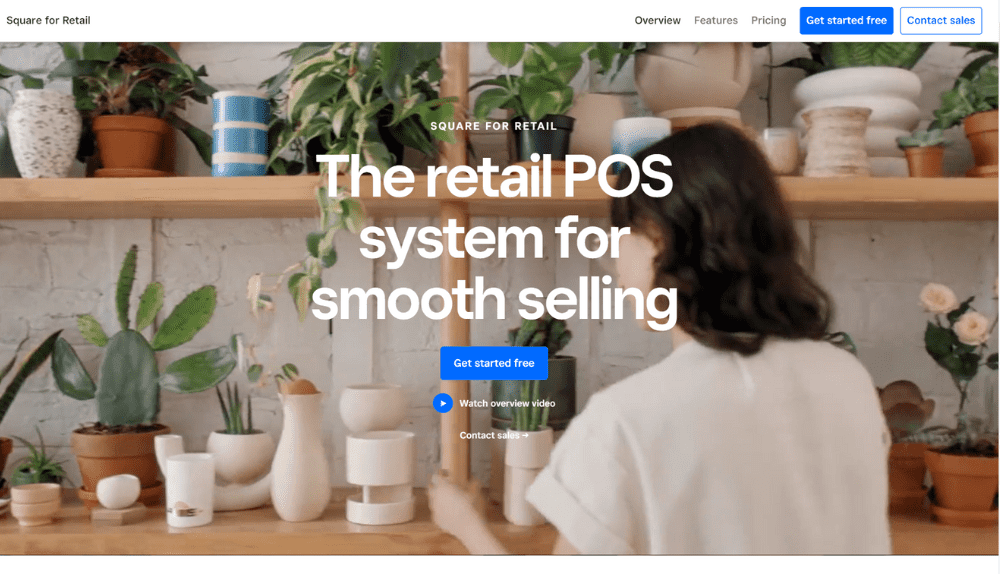
Square Point Of Sale

Founded in 2009, Square has become a prominent financial services and mobile payment provider, generating over $3 billion annually. Offering an intuitive and user-friendly experience, Square gained popularity in online payment gateways. Without needing to know programming or other specialized technical abilities, consumers can create an effective online presence with its tools.

Square offers several more sophisticated plans with recurring costs in addition to a starter package at no cost. Dispute resolution and live mobile assistance are included with all plans. On a device you own, Square’s standard POS is free to use through a mobile app. Advanced attributes, such as shortage in inventory alerts, are only available with a monthly POS plan.

Pros:  
Zero monthly charges
Clear pricing on a per-transaction basis
Cheap and best hardware
BNPL options for online and in-person transactions
Numerous add-ons and integrations are available

Cons:  
Loyalty programs for customers cost extra
No additional phone supportInflexible support hours for customers

5. Braintree:

  • Pricing: Free
  • Processing Charges: 2.59% + an additional $0.49 for every transaction
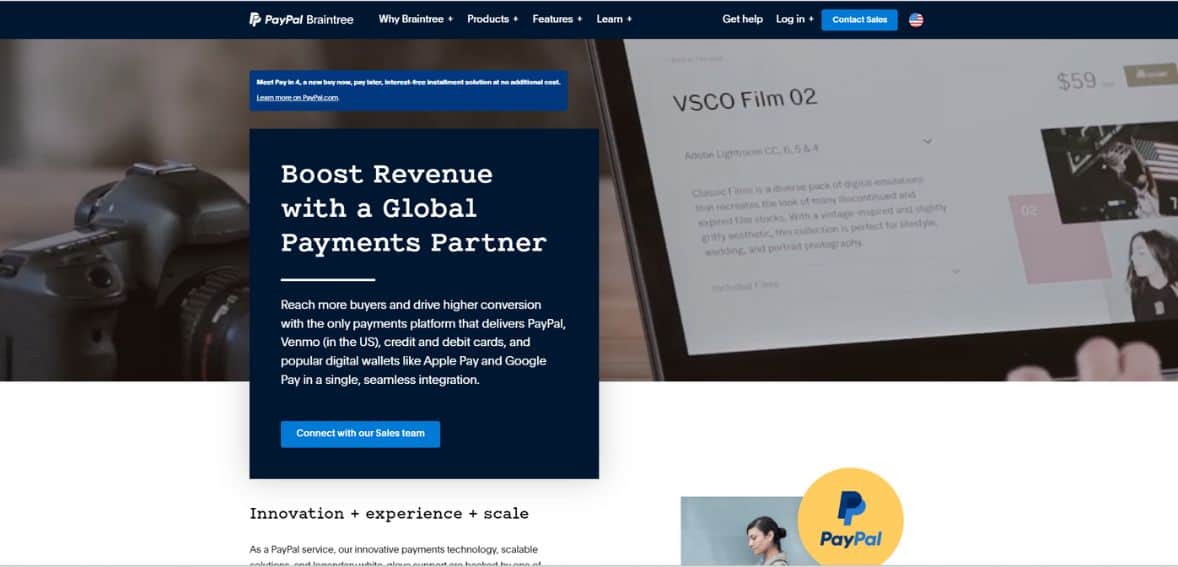
braintreen by paypal

Since its acquisition by PayPal in 2013, Braintree has become closely associated with the renowned payment service provider. What sets Braintree apart is its provision of dedicated merchant accounts, a rarity among payment service providers. Some notable users of Braintree’s payment solutions include Uber, Airbnb, and GitHub.

Pros:  
Drop-in payment widget with a best-in-class UI
Accept multiple payment methods with a single implementation
Single dashboard to manage all user subscriptions

Cons:  
Coupon management is not very robust
Setup is challenging, lacking seamless migration from existing payment systems
Slow response from customer support

6. Stax:

  • Pricing: $99 per month (no transaction fees)
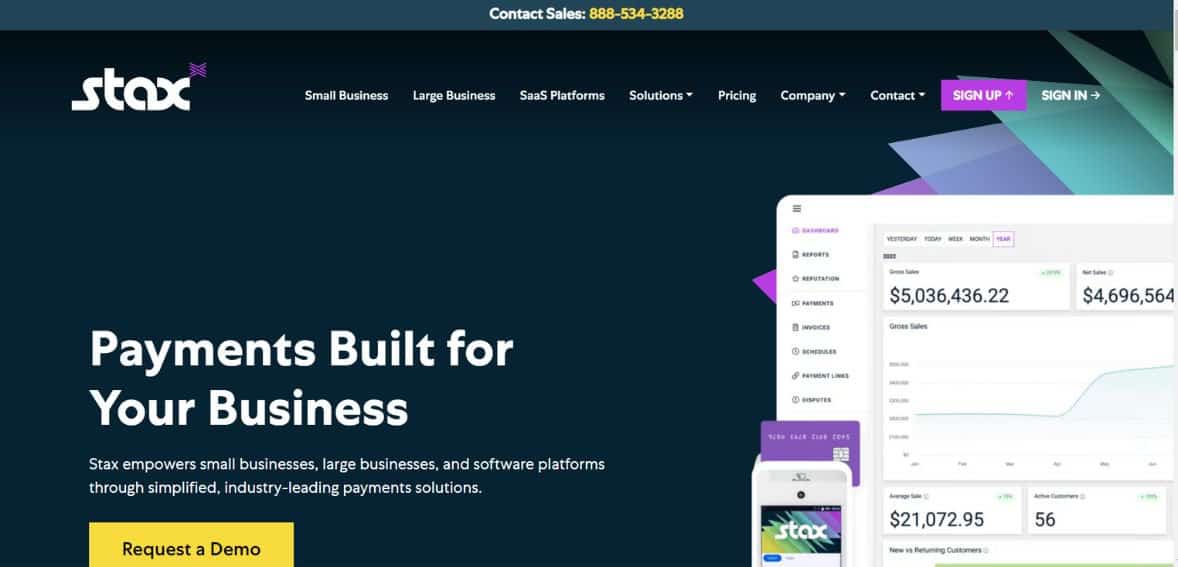
stax

Stax distinguishes itself with comprehensive customization tools that make branding tailored to your business easier than with other payment gateways. Its custom branding options allow you to tailor invoices, receipts, and website payments to align with your brand. Stax integrates seamlessly with popular business software programs like Xero, QuickBooks, MS Teams, Hubspot, Slack, Zoho, Google Docs, and Calendly.

Unlike most payment gateways, Stax adopts a flat monthly fee model instead of charging a percentage of each transaction, though there are still flat per-transaction fees.

Pros:  
No charges for transactions; pay one flat-rate monthly subscription fee.
Free mobile or terminal reader
Scheduled payments and Recurring invoices option
Digital invoicingOption for ACH processing

Cons:  
Additional fees per terminal1% charge for same-day access to funds

7. Payment Depot

  • Pricing: $79 flat fee monthly
  • Processing Charges: 2% + an additional $0.10 or $0.22 for every transaction
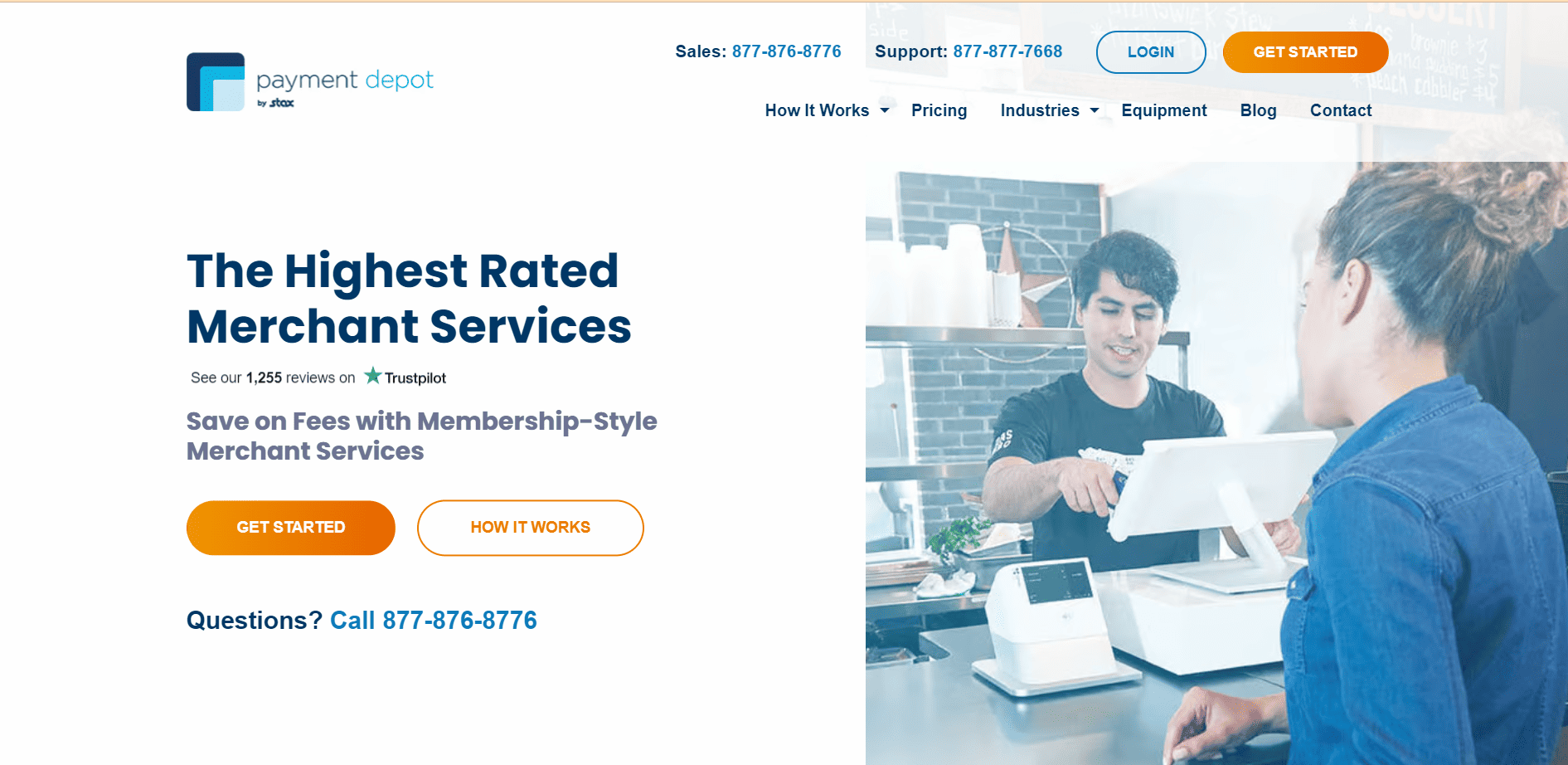
Payment Depot

Image source: Payment Depot

Distinguishing itself from other payment processor companies, Payment Depot employs a subscription pricing model based on a merchant’s month-on-month transaction volume. Merchants pay a flat fee per transaction along with the interchange rate, irrespective of the transaction type.

Notably, Payment Depot doesn’t impose hidden fees or cancellations and ensures swift access to funds within 48 hours of a transaction. The company offers various card readers, terminals, and POS systems, complemented by 24/7 customer support.

Pros:  
Significant savings for merchants in fees
Top-notch customer care and support
Flexible month-to-month billing

Cons:  
Limited hardware options
Relatively costly for businesses with lower transaction volumes

8. Clover

  • Pricing: $14.95 monthly
  • Processing Charges: 2.6% + $0.10 for every transaction

clover point of sale machine issues and solutions

Clover stands out as one of the premier payment gateways for small, brick-and-mortar businesses due to its user-friendly interface suitable for non-technical users. Its features encompass reporting tools for aggregated sales across multiple locations, revenue tracking, end-of-the-day reports, sales tracking, and analysis of peak business hours. Clover facilitates rapid deposits, allowing access to sales transaction funds within minutes (with a 1% fee).

Additionally, it supports the creation of digital and physical gift cards and accepts payments via Google Pay, Apple Pay, PayPal, and Venmo.

Pros:  
Well-structured and transparent pricing plans
Comprehensive feature set, including tracking, loyalty programs, and order management.
Acceptance of a wide variety of payment methods

Cons:  
Longer learning curve for users with limited technical expertise

9. Adyen

  • Pricing: Free
  • Processing Charges: $0.13 plus different interchange
Adyen

Adyen stands as an international payment processor facilitating transactions across diverse payment channels, such as in-app orders with in-person pickup, self-scan and pay, in-store purchases, home shipping, QR code payments, and self-service kiosks.

For businesses in the US, Adyen imposes a $0.13 processing fee along with a variable interchange fee determined by the customer’s payment method. Interchange typically ranges between 2% to 4%, varying based on the chosen payment method. As a global processor, Adyen supports nearly every card or payment platform, including Alipay, Affirm, Apple Pay, Amazon Pay, Diners Club, and Cash App Pay.

Pros:  
Zero setup or monthly charges
Round-the-clock mobile support
A comprehensive knowledge base available on its site

Cons:  
Requires two months’ written notice for contract termination
Minimum sales volume requirement of $120
Not as user-friendly for individuals without a technical background

10. Helcim:

  • Pricing: Free
  • Processing Charges: 1.92% + an additional $0.8 for every transaction
Helcim

Image source: Helcim

Helcim is renowned for its cost-effective payment gateway, offering an array of features, including invoice creation, subscription setup, and international payment processing. The platform provides numerous APIs, enabling customization of the payment gateway to align with specific business needs.

For businesses with high transaction volumes, Helcim offers automatic volume discounts, eliminating the need to contact their sales team for negotiation.

Pros:  
Zero monthly charges—transaction fees only
Below the average rates for processing payments
No need of long contracts, you can pay as you go
API allows for extensive customization

Cons:  
Flat charges of $10 monthly for instant deposits
Additional cost associated for hardware

Conclusion

Selecting the right payment gateway is a pivotal decision for any online business, influencing both customer satisfaction and financial outcomes. Evaluating factors such as cost, features, and supported payment methods is crucial. Among the top 10 payment gateways in 2024, each option offers unique advantages and considerations.

Whether it’s the cost-effective model of Helcim, the user-friendly interface of Clover, or the international capabilities of Adyen, understanding your business needs is key. Ultimately, a well-informed choice ensures not only smooth transactions but also sets the foundation for sustained growth and success in the competitive online marketplace.

Frequently Asked Questions

  1. What are the most used payment gateway in the US?

    The top three widely used payment gateways in the US are:u003cbru003e-PayPalu003cbru003e-Authorize.Netu003cbru003e-Stripe

  2. Which is better, Stripe or PayPal?

    Choosing between Stripe and PayPal depends on your business needs. If your business handles a high volume of sales and requires flexibility in accepting various payment methods, Stripe may be the better choice. On the other hand, if you already use PayPal for invoicing and payments and operate a small business, sticking with PayPal might be more convenient.

  3. Which payment gateway has no monthly fee?

    Among others from the list, Adyen stands out as one of the best options with low prices and no monthly fees. Additionally, it provides support for in-person payments. For merchants operating across various channels, Adyen offers tools to seamlessly connect your sales data without imposing monthly, setup, integration, or closure fees.

Holiday Shopping Trends In 2023

Holiday Shopping Trends In 2023 – Impact Of Inflation and Supply Chain Problems

The holiday shopping season for 2023 has officially arrived. Brands and retailers are busy and actively involved in their marketing strategies. They are making sure to have inventory and aligning their resources for a great quarter ahead and a joyous holiday season. Plans are in place for wholesale, dropship, marketplaces, and social initiatives, creating a great atmosphere for the festivities.

Taking insights from the figures for 2022, retailers and brands have plenty of reasons to feel positive about the approaching holiday season. Projections indicate that retail sales will surpass $1.6 trillion by 2027, which is more than phenomenal.

However, the current economic landscape brings some uncertainty to this year’s quarter due to factors like macroeconomics, inflation rates, job market conditions and high-interest rates. There is anticipation among industry observers as they await to see how consumers will navigate these challenges while approaching their holiday shopping. Let us understand the holiday shopping trends in 2023 and how inflation and supply chain problems will impact these 2023 holiday shopping trends.

image 47

Source: Statista – Monthly inflation rate in the US

The Impact Of Inflation On Item Prices This Year

The holiday shopping season is starting this year and many consumers are taking advantage of discounted prices to get a head start on their gift purchases. As we approach the holidays, numerous retailers have already reduced prices on a range of products, including electronics and clothing.

The potential impact of rising costs on holiday shopping is something to consider this year on the holiday shopping trends. For example, TV prices have dropped by 9.4% compared to the year. However, overall there has been an inflation rate of around 3.2% higher than the year before for goods. These numbers fall within a range so analysts are expressing skepticism about any major effects this year.

The 2023 holiday shopping season is expected to resemble pandemic years in terms of consumer behavior, with more people choosing to buy gifts in physical stores rather than online. Retailers are also better prepared to manage their inventory levels. And, of course, there are pressures that contribute to rising prices for goods.

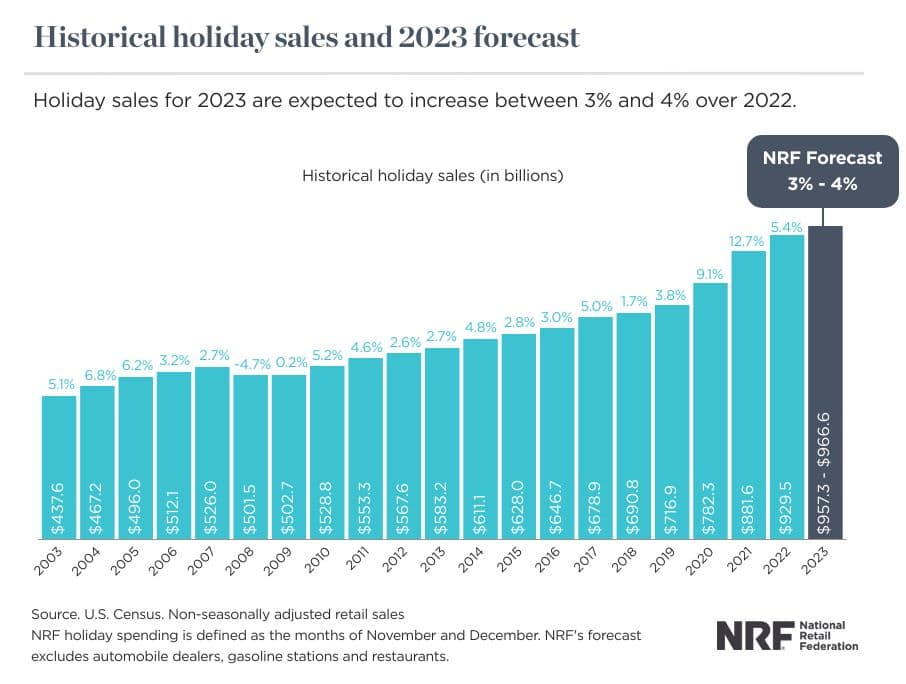
Experts anticipate a subdued holiday season, with things returning to a more usual state after a surge in spending during the height of the pandemic. Over the decade (2010 to 2019), holiday spending experienced a yearly growth rate of 3.6%. In 2020 spending exceeded that of 2019 by 9.1%. This was further surpassed by another 12.7% in 2021. However, reports suggest that this year we can expect spending with an overall increase projected at around 3 4%.

holiday sales projections in 2023

Source: NRF

Rising inflation in sectors, such as grocery prices, may impact people’s incomes. It may potentially lead to cutbacks in holiday shopping.

Budget Adjustment By Consumers

Consumers might be adjusting their budgets to accommodate prices, which could result in controlled spending. According to McKinsey reports 79% of consumers are making more budgetary choices this year. In response to holiday shopping trends, companies are placing emphasis on offering holiday promotions. Walmart, for example, has lowered prices on gift items. They also assured customers that their Thanksgiving meals would be more affordable compared to the year prior. Target plans to provide over two-thirds of its toys at prices below $25.

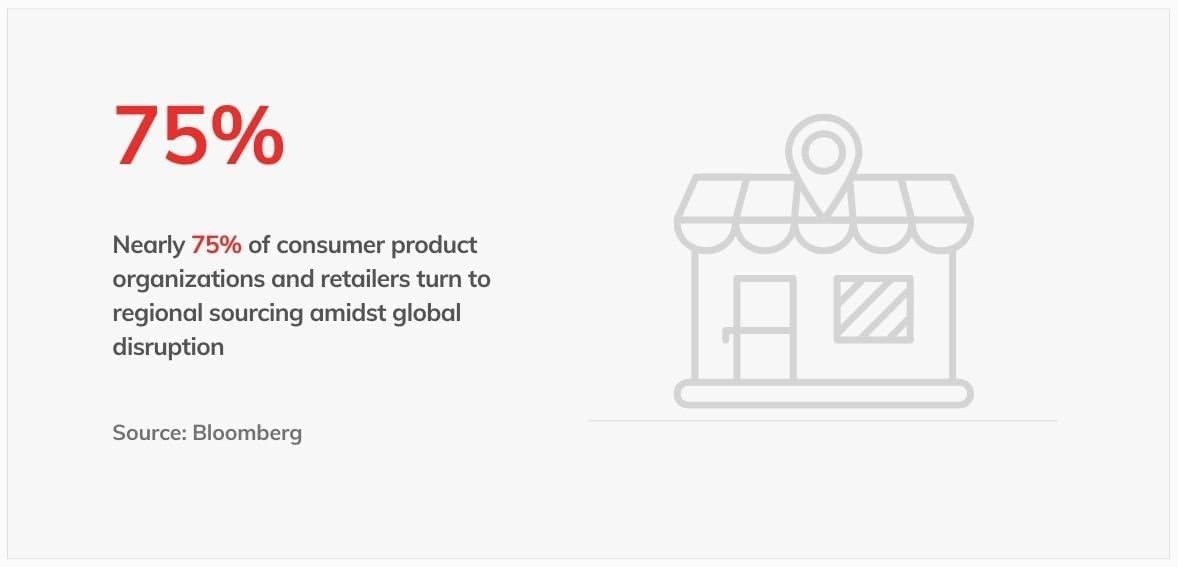
retailer finding local source to combat supply chain disruption in 2023

Retailers Anticipate Supply Chain Difficulties by 2023

Consumer goods and retail companies (CPR) are preparing themselves for head-on difficulties in their supply chains during this holiday season. According to a recent report, 42% of these companies anticipate facing stockouts or product shortages and 75%1 are finding local source to fight the anticipated stockout1.

Moreover, there is an expectation of delays in delivering products to customers due to import delays by 38%2 of companies. Alongside this, 35% foresee labor shortages as well. Various challenges faced by supply chains include factors like inflation, geopolitical tensions, dependency on countries for components, fluctuating freight rates, and port congestion will certainly impact the holiday shopping trends this year.

Geopolitical Issues

Geopolitical issues are also impacting the holiday shopping trends this year. Especially costs and efficiency of supply chains for 77% of consumer goods and retail organizations are the worst impacted. As a result, many companies are giving importance to nearshoring and domestic sourcing options as they strive to balance cost-effectiveness with resilience. These changes, coupled with increases in shipping rates, have forced manufacturers to make tough decisions about what products they can transport. Consequently, consumers may experience a reduced variety of choices on store shelves.

So, what does all this mean for consumers? It is advisable not to leave your holiday shopping until the minute. In fact, it would be wise to complete the majority of your shopping before December if possible.

Retailers Ready To Face The Challenges And To Overcome It!

In the face of escalating inflation, surging costs, and uncertainties in the labor market, consumers are strategically optimizing their purchasing power. A staggering 89% of global consumers actively seek better value, and they are finding their preferred options in marketplaces and dropship businesses, which experienced an impressive 38% growth in 2022.

Furthermore, retailers and brands on a global scale are actively expanding their presence on marketplaces, with over 60% planning to diversify across channels in the coming year to address the challenges they face.

The Impact Of Inflation On Item Prices This Year

For brands, it translates to increased exposure to potential new customers, while retailers are seizing the opportunity to expand their product offerings, reach new customer segments, and boost the Average Order Value (AOV). Marketplaces have emerged as leaders in this new era of commerce, providing value-conscious shoppers with the diverse choices they desire.

Top Holiday Shopping Trends And Insights To Look Out For In 2023

1.    The Prominence of AI Will Shine

The prominence of Generative AI and other models is a major highlight in this year’s discussions, and these tools are becoming increasingly mainstream. Research indicates that 17%3 of consumers have utilized GPT for inspiration and product research, with an additional 10% expressing the likelihood of using it to curate their holiday shopping lists.

Predictive AI has already played a crucial role in enhancing the shopping experience online. Product recommendations generated by AI have been a staple for digital marketers and ecommerce merchants, providing consumers with suggestions on product detail pages, in shopping carts, and beyond.

This holiday season, brands and retailers are expected to embrace this technology, leveraging customer data to prepare more personalized and better shopping experiences that add value and loyalty. The notable impacts will be observed in:

  • Marketing: Automation of marketing campaigns and generating content for landing pages, emails, social media, text messages, and other applications.
  • Commerce: Introduction of conversational site search for a more natural and human approach to discovering the perfect gift across various digital touchpoints.
  • Service: Development of more human-like and nuanced chatbot responses capable of deeply anticipating, addressing, and understanding user queries.

2.    Strong Pull to Home Products

Consumers are currently placing a strong emphasis on home products and services. The extended period of time spent at home over the last three years has significantly influenced the types of gifts people are planning to purchase. A notable 64%4 of shoppers intend to buy home products, such as coffee makers, vacuums, as well as electric toothbrushes, as gifts for the upcoming holiday season.

3.    BNPL to be the Hero of Festive Season?

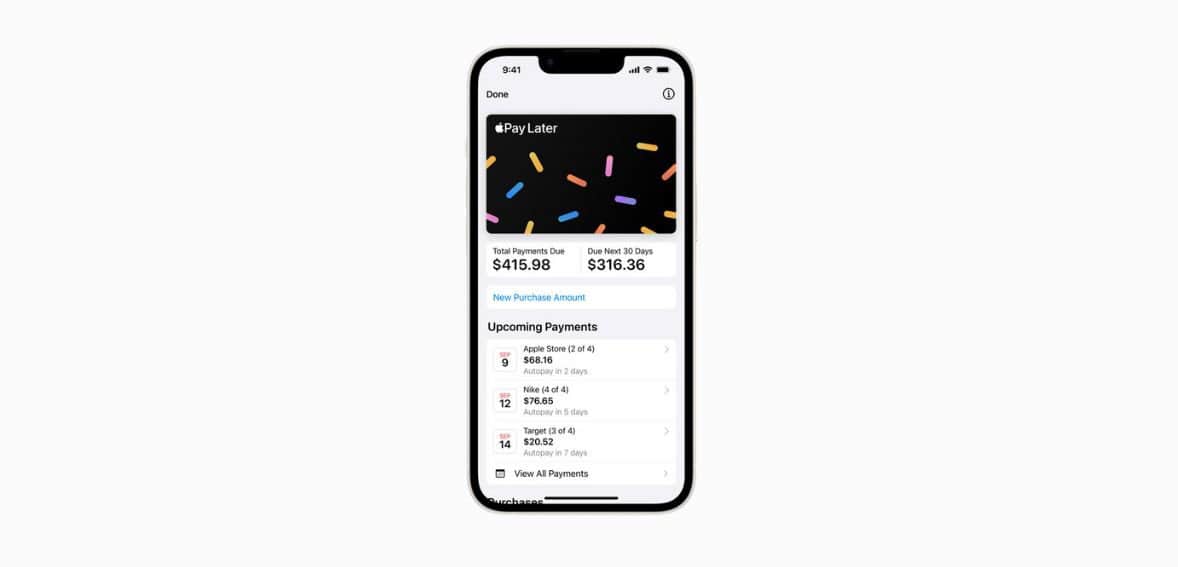
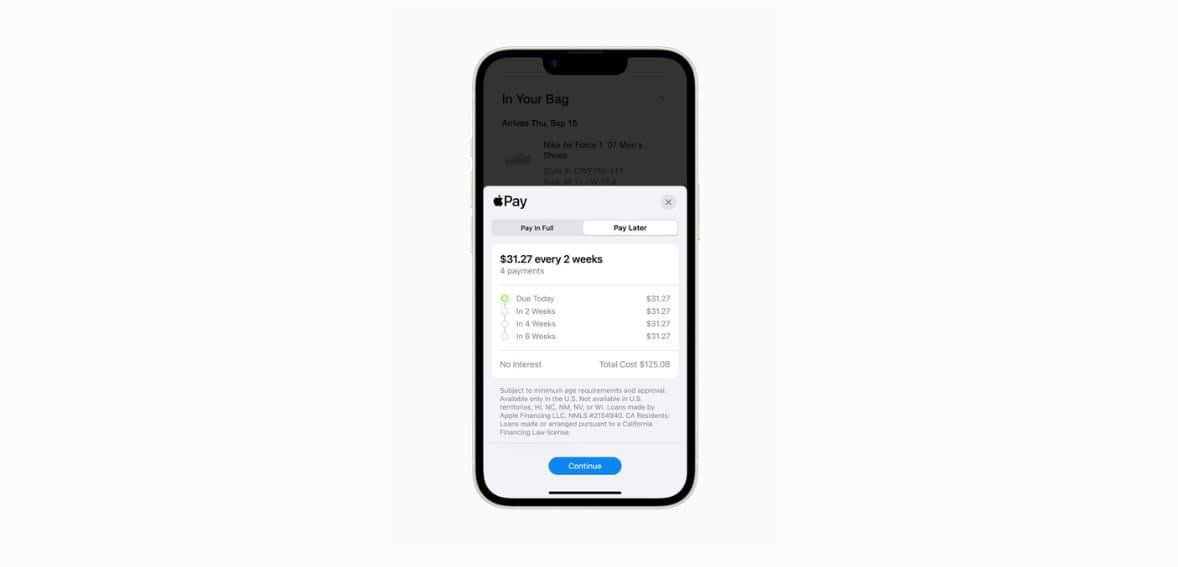
Buy Now, Pay Later‘ shopping apps are becoming increasingly popular, offering consumers additional flexibility in their purchasing choices. Services like Klarna, Affirm, Apple Pay Later, and Afterpay, alongside standard payment options, are now featured on various online merchant sites, and their popularity is expected to rise.

Here’s how they typically work: When customers opt for these platforms during checkout, their total order amount is divided into easy installments (which are usually 4 or 6). The first installment is levied during purchase, while the balance is automatically charged every other week after. Many of these platforms have simple terms, don’t impose interest charges, and skip credit checks – features that appeal to consumers. The ability to pay off the “debt” in few easy EMIs adds to the appeal.

Retailers also stand to benefit from these payment plans. They not only encourage customers to make more purchases but also facilitate the acquisition of high-priced items that might have been otherwise out of reach. Additionally, retailers experience fewer instances of shopping cart desertion and reduced returns for items bought through ‘Pay Later’ services.

However, consumers should be mindful of the potential drawbacks. While these services offer convenience, they may lead to higher spending. Falling behind on payments is a risk, and as users become accustomed to these installments, the introduction of interest fees in the future is a possibility. It’s essential for shoppers to weigh the benefits and risks before embracing ‘Buy Now, Pay Later’ options.

4.    BOPIS to Contribute Highly this Festive Season

This in-store pickup option has become a significant driver of additional purchases in the physical store. This option gained popularity in 2020 and has since become a crucial aspect of the shopping experience. Studies show that consumers’ decisions about which retailers to shop at are greatly influenced by BOPIS, with 39% of consumers actively looking for stores that provide this service.

The effect on sales is also noteworthy, as 41% of consumers say they are more likely to buy something after looking online for products that are available in physical stores than they were a year ago. The trend toward omnichannel purchasing emphasizes how crucial comfort and access are to retaining customers. One out of every five online orders during the prior festive shopping season was fulfilled through BOPIS; after shipping deadline dates, this percentage increased to more than one in three.

However, implementing BOPIS successfully can be complex. Stores need to adopt new training programs, processes, metrics, and incentives to scale it profitably. The use of tools that enable seamless execution becomes crucial in maintaining a balance between streamlined operations, high customer satisfaction, and positive associate morale.

5.    Both Online and In-Store Business Will See Growth

Offering customers the flexibility to choose between online and in-person shopping, especially if you have a physical store, is a smart strategy. This approach caters to their preferences in how and when they want to shop. The key, however, lies in ensuring a consistent experience, whether customers are shopping online or visiting your brick-and-mortar location.

An integrated shopping experience ensures that inventory information is transparent and promotions align seamlessly both online and offline. This means that when a customer wants to physically examine a product before making a purchase or assess the color options in-store, they can do so with confidence, knowing the item’s availability.

For those concerned about package theft or residing in multifamily housing, ordering online and opting for in-store pickup can offer added convenience. It’s crucial to provide a cohesive experience, regardless of where the consumer chooses to shop and their preferences for a particular purchase.

6.    Addressing the Impact of Inflation on Consumer Spending

The economic challenges of recent years have placed a strain on consumers’ finances, with many households acknowledging the influence of inflation on their holiday budgets. Consequently, individuals are actively seeking the best opportunities for savings to mitigate the effects of inflation on their seasonal expenses. Some may opt to trim down their shopping lists, aiming to make more prudent purchases.

In response to this consumer sentiment, retailers are adapting their strategies by adjusting inventory, focusing on more budget-friendly options, and strategically pricing products to align with customers’ financial constraints.

However, it’s crucial for businesses to approach discount planning with precision. Careful consideration is needed to avoid potential pitfalls, such as losing profitability on sales or diminishing profit margins to an extent that could compromise the overall success of the holiday season. In essence, countering rising inflation’s impact requires a thoughtful approach to discounts and incentives, ensuring a balance that supports both consumer affordability and business sustainability.

7.    Tailoring Special Deals for a Personal Touch

Just as customers receive personalized offers from various service providers, it’s only natural for them to anticipate personalized deals from your business during the holiday season. Enhancing the customer experience involves considering how to make these deals uniquely special based on individual preferences and interactions.

One approach is to craft deals that align with a customer’s past purchases, ensuring that advertisements highlight products related to their buying history. Alternatively, you can extend offers connected to items they have recently viewed or expressed interest in, creating a more tailored and relevant shopping experience.

The key to establishing a meaningful connection lies in the customization of offers. The more personalized the deal, the stronger the impression that your business is actively building a relationship with its customers. Leveraging data is crucial in achieving this level of customization, prompting potential investments in more advanced systems and tools to elevate your business’s intelligence and responsiveness.

8.    Captivating Shoppers with Video Marketing

Harnessing the power of video ads can significantly influence a customer’s purchasing decision, adding a dynamic element to your holiday marketing strategy. Whether opting for a live stream or pre-recorded video as part of your social media content, the impact of effectively showcasing a product’s features and benefits during the holiday season can yield impressive results.

Video content proves particularly effective in capturing the attention of younger shoppers, with Gen Z highlighting its significant influence on their product choices. Surpassing other impactful factors, such as recommendations from friends or family or witnessing trusted individuals using the product, videos play a pivotal role in shaping purchasing decisions for this demographic.

To leverage this trend, consider creating suitable videos tailored for social media platforms or collaborating with influencers to generate engaging video content. Initiating contests that encourage users to share their own videos featuring your products can also result in valuable user-generated content, enhancing your brand’s visibility and engagement.

Conclusion

In 2023, as we move through the challenging terrain of holiday shopping trends, it is clear that there exists a fine balance between different economic variables, such as costs, consumers’ purchasing decisions, and industry changes. In order to curb up inflation, retailers have strategically adopted early discounts as well as value-based promotions in anticipation of its effect on prices. Consumers are being forced to rush to finish purchasing before supply chain threats take over and force them to wait longer than usual before buying for Christmas.

Despite the numerous uncertainties in the industry, technology, including AI, is becoming fundamental to many retailers to improve customers’ shopping experiences. While inflation will have an effect on consumer expenditure in companies, a smart approach to discounts and tailored discounts comes up as a critical step.

This complex mix of factors involves agile and flexible retailers who will probably surmount during the festive season.

Frequently Asked Questions

Q: How Do Holidays Impact the Supply Chain?

The holiday season can impact the supply chain due to various factors, including stringent stock control measures and challenges in handling shipping issues, especially during the final stages of delivery—the crucial last mile.

Q: What’s the Christmas Shopping Outlook for 2023?

Anticipated holiday shopping trends for 2023 indicate that consumers plan to spend a similar amount as in 2022 but on fewer gifts. The total planned expenditure is slightly higher than the 2022 levels by one percentage point, while the expected number of items to be purchased is four percentage points lower than the previous year.

Q: What Are the Holiday Sales Predictions?

While holiday shoppers are expected to increase spending, their focus on value and desire for deals might temper overall growth, bringing it back to pre-pandemic levels, according to the National Retail Federation. The major trade group forecasts a 3% to 4% year-over-year increase in sales for November and December.

Q: Why Could the Supply Chain Crisis Impact Your Holiday Shopping?

The ongoing supply chain crisis may disrupt last-minute holiday shopping plans, forcing buyers to resort to traditional methods this season. The combination of high demand, supply chain delays, material shortages, and challenges in hiring workers is reducing the availability of items both online and in physical stores.

References

1- Bloomberg

2- Capgemini

3- Salesforce

4- Gallup

Almost 50% of BNPL Users Prefer Pay-in-4 vs. Credit Cards

Almost 50% of BNPL Users Prefer Pay-in-4 vs. Credit Cards

With the evolution of the payment processing industry, merchants and consumers regularly come across multiple ways to process payments for a purchase. From credit cards to NFC payments and fast online transactions to monthly installments, users enjoy a variety of payment options at their convenience. BNPL is no exception. It is one of the many financing solutions that several renowned financial service companies offer for users to purchase a product and pay for it later within set intervals.

There are many different types of BNPL payments; it all comes down to individual preferences and requirements. Users can choose between an installment plan with interest or without interest. The length of the installments varies for different service providers. Pay-in-4 is a loan installment plan with four intervals. This article will discuss how Pay-in-4 is equally popular among customers as any other payment form and is sometimes even more favored than credit cards.

What is Pay-in-4?

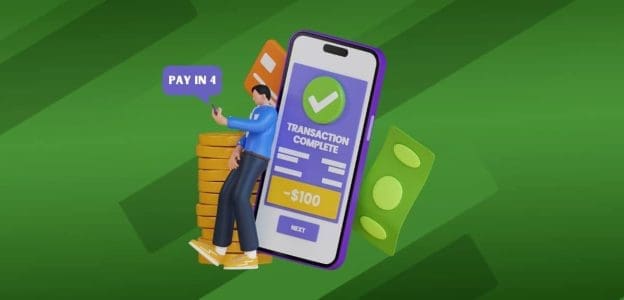
Pay-in-4 is a highly preferred buy now, pay later service, in which a payment is split into four equal installments, generally without a high-interest rate. Today, many reliable companies offer this service to make it easier for buyers to pay for the items they typically can’t afford. If we talk about the statistics, one out of every 5 BNPL users chooses pay-in-4 as their preferred mode of payment, compared to debit, credit, or cash payments.

In this mode of payment, users pay the first installment at the time of purchase, and the rest of the dues are payable every two weeks. According to surveys, almost half of the users opt for pay-in-4 for their purchase, and over 69% of customers indicate the need for BNPL service in their area. It implies that current generations highly demand BNPL services to be more accessible.

BNPL is also one of the commonly mentioned reasons for higher sales and reduced costs by many retailers in the U.S. In short, BNPL directly benefits buyers and sellers, and pay-in-4 comes at the top of the list of favored BNPL services.

Pay-in-4 by Afterpay

Afterpay is a financial technology company offering payment processing solutions to customers in Australia, the United States, the United Kingdom, Canada, and New Zealand. The company facilitates BNPL and comes under the list of top-picked providers for pay-in-4 payment services. Reports reflect that two in every five U.S. users trust Afterpay for its BNPL offerings. In the debate over credit cards vs. pay-in-4, almost half of U.S. consumers choose the latter as their desired payment method.

afterpay bnpl

With Afterpay, you can keep a close eye on your spending and budget your purchases. Its pay-in-4 interest-free installment plan is designed to enhance customers’ financial health and allow them to earn rewards while shopping.

As an Afterpay user, you can manage your finances while buying whatever you need. Can it get any better? With the release of an app, users can discover thousands of popular, global brands only with a tap and enjoy secure loan installments to pay for their favorite items. If you are concerned about missing your payments, Afterpay sends regular reminders to help you be on top of your dues.

Credit Cards vs. Pay-in-4

In today’s modern world, merchants are advantaged to offer more than one way to process payments. As a result, customers are free to choose a convenient payment method. In the last couple of years, the buy now, pay later service has gained much recognition. Many popular payment processing companies are acknowledging the fast-growing demand.

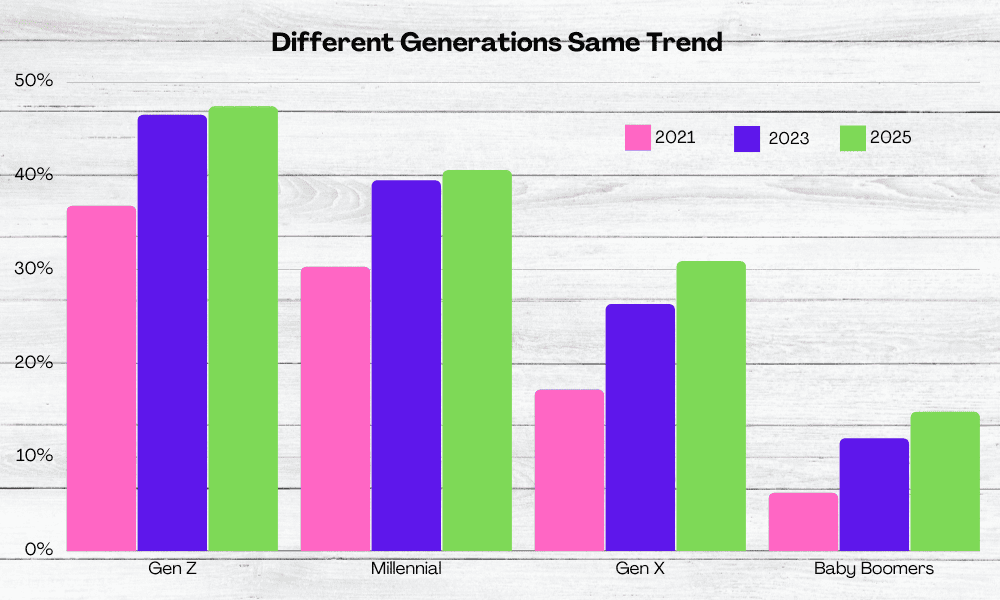
Source: Statista BNPL popularity growing in different generations of people

Even though credit cards are notably the most used mode of payment for in-store and online shopping, the BNPL payment plan is receiving equal online traction. Now, it’s true that some differences between these services have long since blurred; many credit card companies provide pay-over-time installment plans, and some BNPL service provides grant virtual and physical cards. Yet, there are still some distinct qualities restricted to each payment method.

If you aren’t sure what payment method is better for your personal or business usage, here are some main differences between credit cards and BNPL services:

Account Opening

To use a credit card, you need to apply for and open an account with a bank. The requirements for opening and using an account vary for each card issuer. Your credit score, monthly bills, and income are some of the many factors that can come in the way of opening a credit card account.

As for the buy now, pay later facility, you can either open an account before making a purchase or request it at checkout. Most pay-in-4 services do not require a hard credit check and are accessible (sometimes) even if you have a bad credit score.

Availability

Even though most popular credit card networks such as MasterCard, Visa, or Discover are widely used, some stores may not accept all credit card brands. Similarly, some stores may not offer the buy now, pay later service. Moreover, your ability to use pay-in-4 depends on where you shop, what you buy, and how much money you need. However, most BNPL providers have debit cards that can be used at any store that accepts the card network.

Loan Payment

If we talk about credit cards vs. pay-in-4 in terms of their installment plans, most credit card companies allow users to pay off one part of their balance and pay the rest in the next month. The minimum dues payable depends on your total balance; a percentage of your total balance will be deducted. Some companies may even fix an amount. The time it will take to pay off your balance depends on your minimum payments.

In the pay-in-4 BNPL service, the total amount is split into four equal parts. One part is paid at the time of purchase, while the rest is paid in six weeks. Some BNPL providers offer extended installment plans.

Fees and Interest Rate

It isn’t a secret that credit cards have a high interest rates. And they can charge late payment fees and annual fees. If you are lucky, your credit card might have a grace period that allows users to avoid interest by paying the credit card bill in full. On the other hand, if you fail to pay the bill in full when it is due, the interest can add up daily.

Most buy now, pay later services do not charge fees, and generally, pay-in-4 plans are interest-free. However, some providers do charge late fees. Loan installment plans besides the pay-in-4 one could have varying interest charges.

Ease of Access

Most short-term BNPL plans are easily accessible because of their high approval rate. This mode of payment is suitable for people with a low credit score and inadequate credit history. This service is highly recommended if you have faced trouble getting approved for a traditional credit card for any particular reason.

Contrarily, credit card loans are hard to get approved. There is a high chance of application rejection if you have a low credit score. For that reason, most people aged between 18-21 choose the buy now, pay later service when it comes to credit cards vs. pay-in-4.

Credit Impact

A hard inquiry is performed when you apply for a credit card loan. Your repayment and burrowing information is provided to credit bureaus. It means you can earn a good credit score by paying your credit card bill on time and keeping a low debt amount. However, missing payments and high credit card debt can lead to a bad credit score.

Since most BNPL service providers do a soft inquiry and do not report your details to credit bureaus, you can build a good credit score. However, some buy now, pay later providers will report you to credit bureaus if you fail to repay the debt.

Why do BNPL Users Prefer Pay-in-4?

Younger generations prefer Pay-in-4 instead of credit cards, and around 62% of customers use BNPL services once a month. According to most users, the buy now, pay later facility frees them from the stress of hefty expenses. It helps them spread the costs and manage their financial situation, especially during the holiday season. 60% of BNPL users have indicated that the pay-in-4 plan is a reliable alternative to high-interest credit card loans.

Why do BNPL Users Prefer Pay-in-4?

The convenience of set payments and reduced financial stress make BNPL the best option for most customers. With credit cards, users must pay a part of the total payment by the month’s end. In the case of buy now, pay later, you have multiple ways to clear your debt. The pay-in-4 plan gives you much control over your payments and allows you to manage your spending. It is also more pocket-friendly than credit cards, as most BNPL providers are very upfront about the payment plan and costs.

Why are Credit Card Loans Less Popular Among BNPL Users?

Even though credit cards are the most frequently used mode of payment, they can be ridiculously expensive for some users. It is definitely a big no for people with a low credit score. Credit card loans are becoming less popular among BNPL users because of their strict terms and conditions. The risk of getting caught up in heavy debt and the tedious loan approval process are two of the most common reasons for younger consumers to opt for BNPL payment plans.

The rising interest rate prevents many users from meeting the minimum payment requirement, and the number of people turning to the pay-in-4 payment structure has significantly increased. The late payment fee and many other usage-based charges can come in the way of your financial stability. The impact of delayed payments can be extensive and likely to cost you your credit score.

Is BNPL Surpassing Credit Cards?

Even though not everyone uses BNPL services (many merchants solely work with credit cards), the demand for pay-in-4 payment services is increasing day by day. Many consumers believe they would want to use the buy now, pay later payment plan if it is more widely accessible.

Paying for an expensive product on the spot is no doubt less convenient than taking out a small amount every two weeks to cover that cost. The ability to plan your budget and buy your desired things without straining your financial situation is the best perk of a BNPL plan.

However, it comes with a cost for some consumers. Even though more than half of consumers are leaning towards pay-in-4, they have not stopped using credit cards entirely. Saying that BNPL has replaced credit cards would be an overstatement. Nevertheless, its fan base is rapidly expanding.

Conclusion

Each payment plan has its perks and shortcomings, and pay-in-4 is not an exception; it is not suitable for all kinds of purchases. With that said, BNPL is becoming a top pick among users who prefer to split their budget over weeks and plan their spending accordingly. Unlike credit cards, the buy now, pay later option offers more transparency about how long it will take them to pay off the debt.

Some users switch between both facilities depending on their shopping. It indicates that the conclusion to the credit cards vs. pay-in-4 debate isn’t the same for everyone. While some consumers solely rely on credit cards, some prefer BNPL. It all comes down to individual needs. The BNPL service is best suited for short-term budgeting and large purchases. Over 60% of users acknowledge that the pay-in-4 plan comes with the ease of set payments and offers convenience.

The bottom line is that most shoppers look for more convenience at checkout. They look for flexible options to pay for their purchases and the easiest ways to cover their debts on time. BNPL gives them that. Even though most credit card service providers offer the option to pay in installments, these installments come with hefty interest rates.

With pay-in-4, users can receive micro-loans to divide an expensive purchase into equal parts with little to no interest. As a result, people are shifting their preferences, and their need to depend entirely on credit cards is decreasing.

Best Gift Cards For Employees In 2024

Best Gift Cards For Employees In 2024

Celebrating occasions, whether a festival, an event, a birthday, or any moment of joy, is truly wonderful. What adds to the magic is when you accompany it with a gift. Traditionally, gifts were limited to close friends, family members, or relatives, making gifts a special and personalized thing. With changing trends and technology integration, gifting has become more frequent, including in the business world. It is a great way to appreciate your employees to boost their energy and confidence in the company. So here is a list of the best gift cards for employees in 2024 that you can use to boost their productivity and enthusiasm.

Nowadays, where one click can help solve the most difficult problems, gifting has also been made easy with Gift cards, it allows a high level of personalization straight to every division and employee. This can truly bring joy to your workforce. Gift cards empower individuals to choose what they truly desire from a store, ensuring that they feel content and satisfied with their chosen purchase. If you’re looking for gifting ideas, for your company employees explore a range of gift card options designed meticulously below.

Top 10 Gift Cards For Employees & Incentives Platforms/Services

Employee gift card platforms simplify how we show appreciation and recognize their efforts by making it easier, more convenient, and more spontaneous.

1.   Motivosity

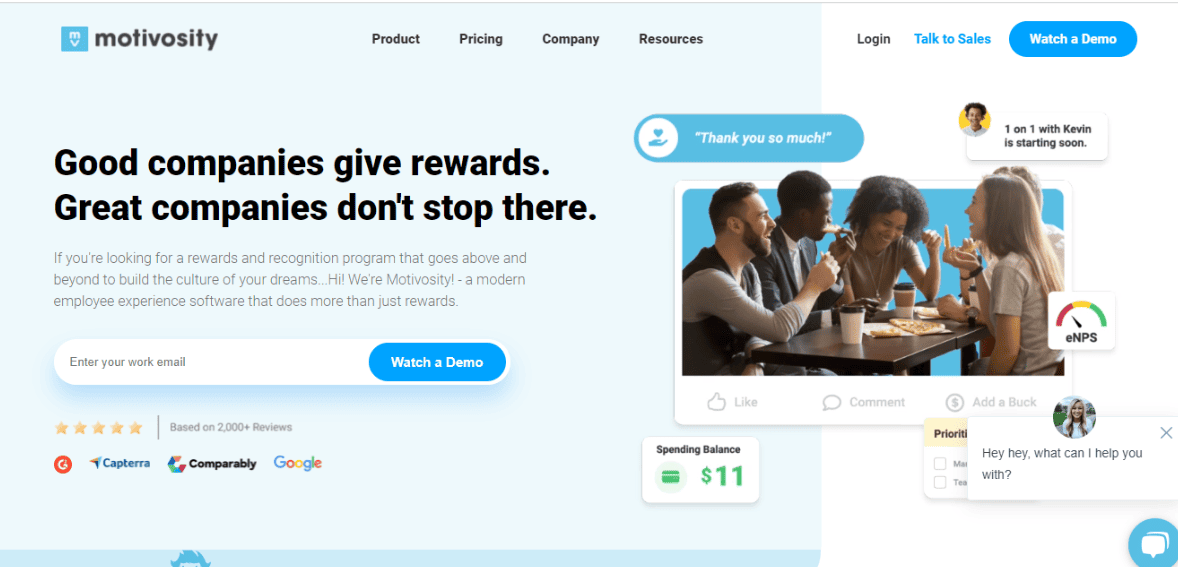
Motivosity is transforming the corporate gift card for employees with its ThanksMatters Card. This exceptional gift card offers a range of redemption options at approved merchants enabling employees to enjoy a global reward experience. What sets it apart is the availability of funds giving employees the freedom to decide when and how they want to use their rewards.

Motivosity

Image source: Motivosity

Motivosity empowers employees by allowing them to personalize their rewards according to their preferences. Whether it’s treating themselves to a cup of coffee, filling up their gas tank for their commute, or even splurging on an exciting new surfboard. This level of personalization makes this gift card a meaningful token of appreciation that enhances the overall employee journey.

How does Motivosity stand out?

  • Easily Accessible: Accessibility through phones, desktops, and work-related apps like Teams/Slack
  • All-in-one Platform: A unified platform that integrates gifts, employee engagement, recognition, and more
  • Built-in reporting: Built-in reporting offers insights into potential attrition, most recognized employees, managers in need of coaching, and more.

2.   Bonusly

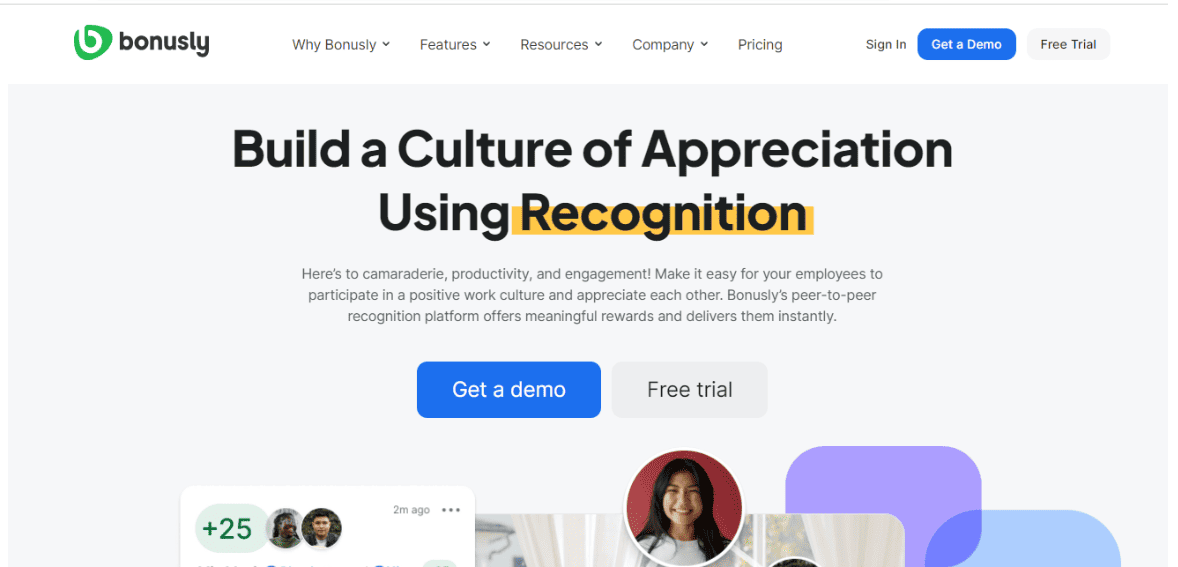
Other than the rewards and acknowledgments Bonusly offers a special feature that enables employees to exchange top-notch gift cards with their employees. Every month each manager or department head receives an allowance to send bonuses as a gesture of gratitude for their employees’ contributions.

Bonusly

Image source: Bonusly

Bonusly promotes transparency through a bonus feed where everyone can see who received rewards with the note behind what they did well this month.

How does Bonusly stand out?

  • P2P acknowledgment: Effortless recognition of contributions from one colleague to another.
  • Automated celebratory moments: Streamlined automation of gifts for important occasions such as birthdays and work anniversaries.
  • Incentive initiatives: Nurturing a positive workplace culture through incentivized programs.
  • Variety in rewards: Employees can choose from a diverse range of rewards, including gift cards, charitable donations, cash, or company swag.

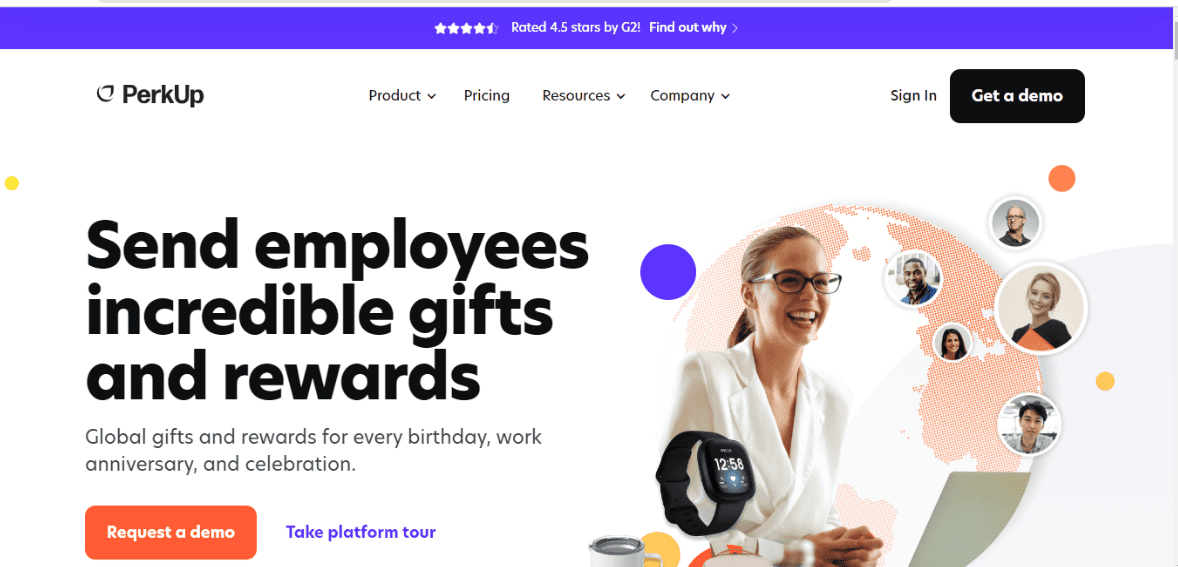
3.   PerkUp

PerkUp provides a convenient and diverse employee rewards program that eliminates the need for complicated points systems. With PerkUp you can easily reward your staff with gifts they truly desire.

Getting started with PerkUp is a breeze – you can simply fill the Visa cards with specific dollar amounts. This empowers your employees to select products, services or experiences that align with their preferences. Alternatively, they can choose Visa gift cards that are accepted globally, which can be a great way to show appreciation to employees working from different countries (e.g., Virtual Assistants).

PerkUp - Best Gift Cards For Employees

Image source: PerkUp

The efficiency of these gift cards ensures that sending and redeeming rewards is quick, secure and convenient.

How does PerkUp stand out?

  • Extensive Range of Options: Choose from a wide array of gift cards and products, ranging from simple treats to high-end tech and enriching experiences, catering to almost every occasion.
  • Premium Company-Branded Swag: Boost company loyalty and make recipients feel valued with premium, company-branded swag.
  • Company Swag Store: PerkUp allows you to open your own company swag store.
  • Customizable Themes: Engage employees while maintaining company culture through customizable themes.

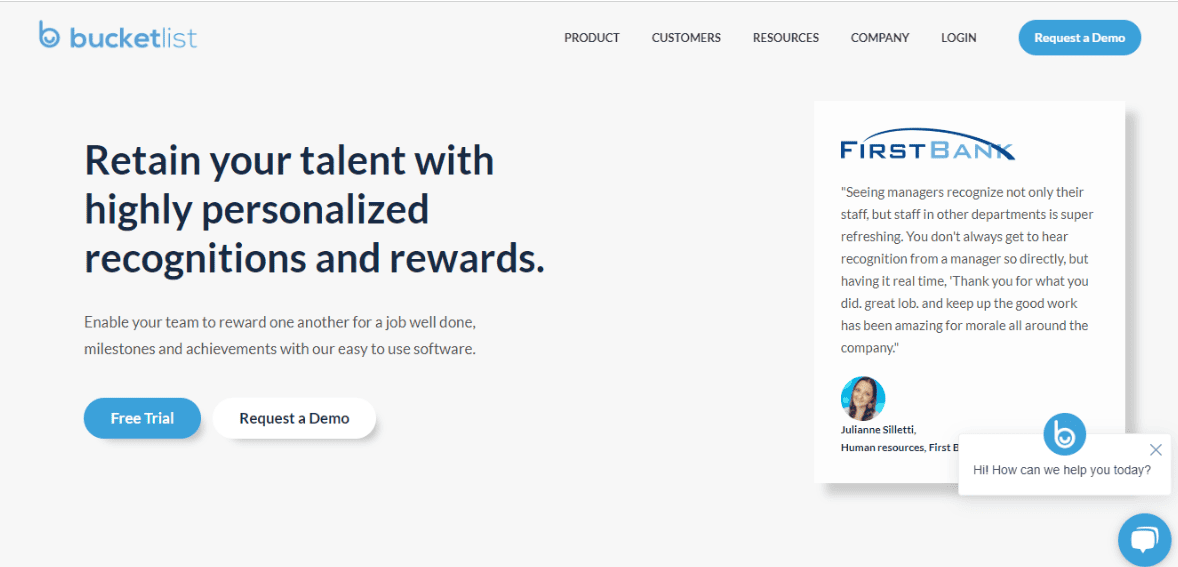
4.   Bucketlist

Bucketlist is an employee gift and rewards program that focuses on providing recognition to cater to the specific needs of each employee. Bucketlist enables employees to earn points that can be used towards achieving their personal life goals.

Bucketlist - Best Gift Cards For Employees

Image source: Bucketlist

This platform places an emphasis on each employee, avoiding a one-size-fits-all approach. Through Bucketlists employee gift cards, individuals have the opportunity to explore, claim, and even share high-quality items, experiences, and rewards. This ensures that they can fulfill aspirations from their bucket list.

How does Bucketlist stand out?

  • Customizable Rewards: Tailor rewards to align with your company values, ensuring a personalized touch.
  • Extensive Range of Gift Cards: Choose from a vast array of gift cards to offer diverse options to your employees.
  • Effortless Onboarding: Simplify the process with easy onboarding, allowing employees to make use of the program instantly.

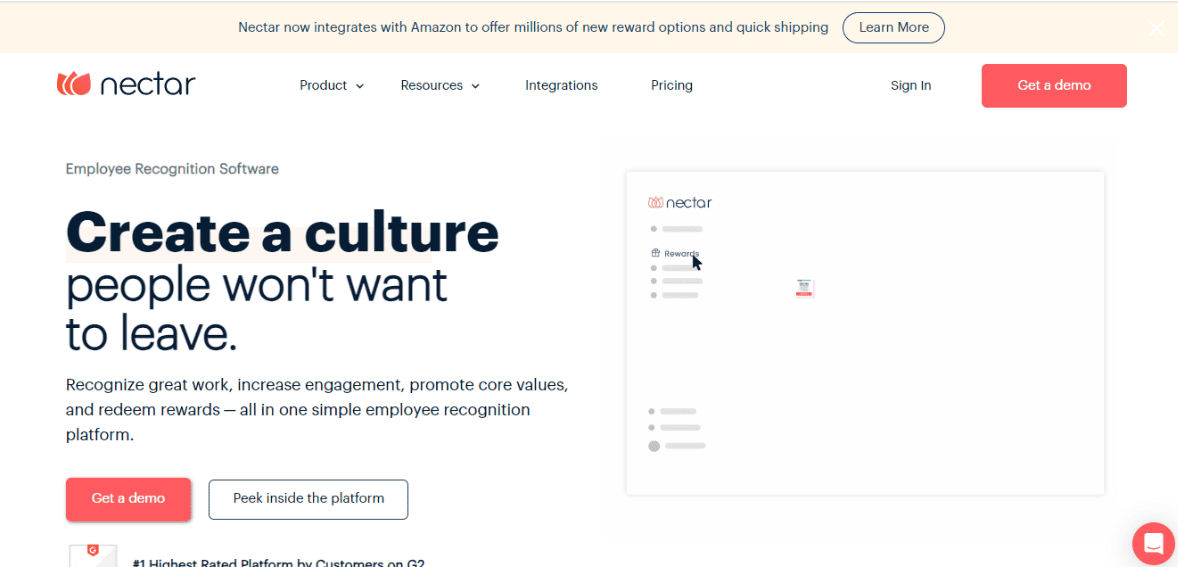
5.   NectarHR

NectarHR truly stands out as a P2P recognition platform fostering an environment where team members can freely express appreciation for one another’s contributions and come together to celebrate occasions across all divisions of the company. Unlike other systems, NectarHR promotes inclusivity by actively encouraging every team member to participate.

NectarHR - Best Gift Cards For Employees

Image source: NectarHR

With integration with Amazon, NectarHR empowers employees by giving them the freedom to choose their gifts across the platforms, including third-party companies. The platform provides a range of options, including a catalog of gift card opportunities and customizable rewards tailored specifically to individual preferences.

How does NectarHR stand out?

  • User-Friendly Interface: Nectar HR offers a user interface that’s simple to navigate and understand.
  • Diverse Range of Gifting Options: You have a range of gifting options to choose from, such as gift cards from Amazon, charitable donations, branded merchandise, personalized rewards, and more.
  • Extensive Integration Capabilities: Nectar HR effortlessly integrates with your business software making the gifting process more efficient and streamlined.

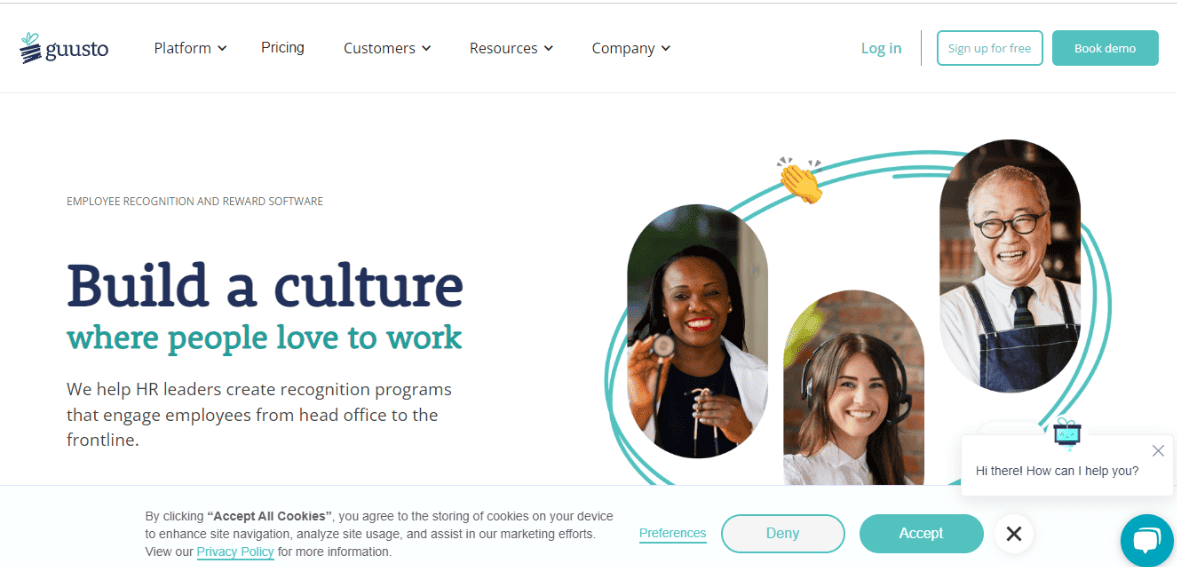
6.   Guusto

Guusto offers you the opportunity to gradually implement a reward and incentive program. You can start by introducing a pilot program tailored for your managers and providing the rewards.

Guusto - Best Gift Cards For Employees

Image source: Guusto

Once the pilot program receives good feedback, you can then move forward with implementing a plan for your entire organization. Guusto is particularly effective in assisting managers in understanding their team’s dynamics recognizing accomplishments and showing gratitude towards team members.

How does Guusto stand out?

  • Easy to Integrate with Your Employee Datalog: Begin sending or scheduling rewards within minutes, not months.
  • Good Adaptability: Real-time recognition, providing individuals with something they genuinely desire.
  • Value for Money: No setup fees, shipping fees, markups, and unclaimed gift cards are entirely refunded.

7.   Connecteam

Connecteam stands out as one of the top all-in-one gift card platforms for employees. Its versatility as a rewards app provides a wide array of gift card options for employees to choose from. The platform allows you to acknowledge and reward employees for both minor and major accomplishments through their token system.

Connecteam  - Best Gift Cards For Employees

Image source: Connecteam

Individuals with the necessary privileges can use tokens to recognize employees for completing tasks, excelling in their roles, or going above and beyond expectations. For instance, employees can earn tokens for finishing assigned training or as a bonus for their work anniversary. The earned tokens can then be utilized to purchase gift cards of their choice. The token system ensures flexibility, allowing employees to acquire gift cards aligned with the price points of various vendors.

How does Connecteam stand out?

  • Different Programs: Recognition for a diverse range of achievements suitable for any milestone to any festivities or any celebrations like Birthdays or Anniversaries.
  • Token-Based Gifts: Token-based system for employees to shop for gift cards. It also encourages the employees to do more.
  • Various Vendors to Choose From: Inclusion of gift cards from popular vendors on the platform

8.   Giftcards.com

Giftcards.com provides an extensive and diverse range of gift cards, showcasing numerous well-known brands and retailers. This ensures a perfect match for every employee’s unique taste and preference.

Giftcards  - Best Gift Cards For Employees

Image source: Giftcards.com

Personalization is a key feature of Giftcards.com, offering personalized gift cards and custom greetings. This enables employers to add a personal touch to their recognition efforts, strengthening the connection between the company and its valued employees. Additionally, Giftcards.com streamlines the bulk purchase of gift cards through its user-friendly platform, ensuring a smooth and efficient experience, from selecting the right gift cards to distributing them to employees.

How does Giftcards.com stand out?

  • Choose a design: Pick from over 15,000 designs for any occasion.
  • Create your card: Upload a photo to craft a memorable gift.
  • Virtual accounts: Facilitate flexible gifting options.
  • Create a business card: Upload an image to represent your small business.

9.   Stadium

Stadium offers a diverse selection of gift cards spanning various categories such as entertainment, dining, travel, shopping, and wellness. This broad range ensures that every employee can find the perfect gift card, whether they’re craving a culinary adventure, seeking entertainment options, or focusing on wellness.

Stadium  - Best Gift Cards For Employees

Image source: Stadium

Addressing various gifting needs, Stadium’s curated selection is suitable for holiday gifts, employee incentives, or wellness rewards. This versatility empowers employers to align their recognition efforts with the unique preferences and goals of their workforce.

How does Stadium stand out?

  • Gift With Points: Emphasizing thoughtfulness, a points-based system allows you to conceal the cost of items.
  • Dozens Of Templates: Choose from a variety of templates tailored to your specific use case and occasion. All templates are fully customizable.
  • Quick Setup: Each shop is pre-loaded with a catalog of swag, snacks, and more, ensuring a speedy setup.
  • Weekly Payouts: Rewards points are disbursed on a weekly basis based on the number of boxes shipped to recipients.

10. Terryberry

Terryberry is dedicated to assisting companies worldwide in supporting their valuable employees through the effectiveness of employee rewards. Their service empowers managers and team leaders to craft a personalized employee incentive and awards program, delivering gift cards and a variety of rewards to employees.

Terryberry  - Best Gift Cards For Employees

Image source: Terryberry

Operating with renowned brands, Terryberry runs a reward platform that provides a diverse selection of merchandise catering to every lifestyle. This ensures that, when the time comes to choose the perfect employee gift, Terryberry can make it a reality.

What sets this employee gift card program apart is Terryberry’s seamless integration of rewards and incentives into existing health and wellness programs. This encourages employees to attain their fitness goals, prioritize mental well-being, and find opportunities to relax and recharge.

How does Terryberry stand out?

  • Compatibility with almost all reward programs: Service and Milestone Awards, Incentive and Performance Rewards, Business gifts, and Corporate Wellness gifts.
  • Excellent Features: Features like DreamTracker allow reward recipients to set goals for specific items of their choice and monitor progress through the application.
  • Various Choice of Awards: Terryberry’s new redemption platform facilitates organizations in offering thousands of award options from leading brands like Dyson, Tag Heuer, and Kate Spade.

Best Gift Cards For Employees: 12 Most Popular Ideas In 2024

Here are some preferred types of employee gift cards based on their preferences and habits:

1.   Visa Gift Cards

The Visa Gift Card serves as a prepaid Visa card, allowing for purchases at merchants worldwide that accept Visa Debit Cards. The card’s value is loaded at the time of purchase, and your spending is confined to the amount placed on the card by the purchaser.

Think of it as the equivalent of placing cash in an envelope—minus the actual cash. A versatile card like this Visa offering serves as a foolproof choice for gifting, whether it’s a last-minute decision or a pre-planned gesture. You can be confident that your gift will contribute to the recipient’s preferences, whatever they may choose.

2.   Amazon Gift Cards

Amazon gift cards stand out as an excellent choice for rewarding employees or customers. They offer flexibility, allowing recipients to use them for purchasing products on the Amazon website, at Amazon retail stores, or even at third-party retailers. Additionally, these cards can be redeemed for cash at numerous locations across the United States that accept US dollar cash. Available in various denominations, Amazon gift cards are swiftly delivered via email upon purchase and within minutes after redemption online or in-store.

They are accessible in different denominations ranging from $1 to $500, providing versatility for purchasing items in the Amazon store or at other retailers.

3.   Uber Gift Cards

Uber gift cards are an ideal choice for bestowing the gift of boundless possibilities. Whether it’s a spur-of-the-moment present or a considerate gesture, the Uber gift card provides adaptability and convenience for any occasion.

When you purchase Uber credit for your employees, they have the freedom to use it as they wish. Once redeemed, the Uber gift card is credited to your Uber Cash or Uber credits balance, applicable during checkout on Uber or Uber Eats. When finalizing transactions on Uber cabs or Uber Eats, your Uber credits or cash balance is typically automatically selected as the primary payment method. It’s important to note that each Uber account has a maximum limit of $500 for the total gift card value.

4.   DoorDash Gift Cards

These gift cards offer the flexibility of being used at the recipient’s preferred restaurant, ranging from high-end dining to fast food. DoorDash for Work’s gift cards presents a versatile solution that caters to everyone’s preferences. An added benefit is that DoorDash Employee Gift Cards never expire, providing your employees the freedom to use them at their convenience.

Once the gift card is acknowledged, the balance is seamlessly added to the employee’s account, automatically applying to their subsequent purchase. With a DoorDash gift card linked to their account, employees have the liberty to use it for various purposes—whether it’s their next restaurant meal, grocery shopping, or making purchases at a supermarket.

5.   Nike Gift Cards

Nike stands as a premier athletic brand globally. With this popular brand, your employees will surely be encouraged to some extent. Comfort, essentially the new work uniform, is crucial in the modern workplace’s demanding atmosphere. As mental athletes juggle tasks, Nike ensures they stay fit and ready for the job.

Nike gift cards hold the same value as cash and can be utilized for purchases on Converse.com, Nike.com, the official Nike App, and at all Nike retail stores. These gift cards are available in both physical and digital formats.

6.   Spotify Gift card

The Spotify Gift card emerges as a perfect present for your recipients, offering both value and enjoyable benefits. Let’s face it—people love music, and it has the remarkable power to alleviate fatigue and instantly uplift spirits.

Considering that many employees thrive while working to the beats of their favorite tunes, why not grant them access to a world of music? A Spotify Gift card could be the perfect gesture for an employee who’s always humming melodies at work, enhancing their work experience.

In essence, the Spotify gift card is an ideal choice for music enthusiasts, providing unlimited skips and uninterrupted music. Once your employees receive this gift card, they can easily redeem it on Spotify’s website or mobile app by entering the unique code. Voila – instant access to Spotify Premium benefits, including ad-free listening, unlimited skips, and offline listening. The gift card redemption ensures seamless streaming without the need for a credit card.

7.   Airbnb Gift Cards

These cards stand out as fantastic gifts for adventure-seekers and travel enthusiasts in your office because what could be a better gift than new experiences? Airbnb gift cards open the door to booking stays in any Airbnb property worldwide. This means your loved ones can utilize the gift card to secure a cozy cabin in the woods, a luxurious beachfront villa, or a trendy city apartment for a weekend getaway.

For your employees to use these Gift Cards on their Airbnb account, they can simply visit the official Airbnb site and navigate to the gift section. Once added, the entire Gift Card value seamlessly transfers to and is displayed on your employee’s Airbnb account as their Gift Card balance. Importantly, this balance can only be redeemed for the purchase of goods and services offered on the Airbnb Platform.

8.   H&M Gift Cards

Allow your recipients to explore a multitude of incredible clothing options by offering them H&M gift cards, redeemable on H&M’s online website or at hundreds of physical stores worldwide. Whether it’s for birthdays, end-of-year rewards, or simply to express gratitude for employee loyalty, H&M gift cards are the ideal choice.

Available in various denominations, these gift cards can be used for full or partial payment for any goods in H&M stores. When presented, the card’s amount is deducted, and any remaining balance is conveniently displayed on the receipt. While no change or refund is provided, the remaining balance can be applied to future purchases, ensuring a seamless and enjoyable shopping experience for your recipients.

9.   B&N Gift Cards

Barnes & Noble Gift Cards make a great choice when it comes to rewarding your employees. They offer the best solution for those in your team who love books and enjoy reading. All orders qualify for UPS Ground delivery within a week. What’s more, if you choose eGift Cards, they can be delivered in minutes, ensuring a convenient process.

With around 9,000 bookstores across the country including 600 B&N stores, your employees will have plenty of opportunities to use their gift cards. They can redeem them at any B&N store or even at any B&N café. Additionally, they can also make purchases on the website or at bookseller locations of B. Dalton. This versatile gift card works like cash and can be used for a range of products.

A Barnes & Noble Gift Card is guaranteed to bring a smile to any employee who appreciates the world of books and pop culture.

10.               Netflix Gift Cards

Netflix is widely recognized as the leading provider of on-demand internet streaming channels. With over 200 million subscribers across 190 countries, it’s safe to say that it offers a captivating experience. If you’re looking for various options, the Netflix gift card is an excellent choice as it provides a hassle-free and convenient payment method for subscribers.

One of the advantages of the Netflix gift card is that you don’t have to worry about your corporate gift recipient already having one. A single account can effortlessly use multiple cards allowing your staff to enjoy months of streaming.

Whether your employee is already a Netflix subscriber, the Netflix gift card makes for a good addition to their membership. The redemption process is straightforward. It doesn’t require any credit card information. Gift codes can be easily applied as a balance on their account, adding value to any plan they choose without any restrictions.

11.               Alo Moves Gift Cards

Is yoga, meditation, or at-home fitness part of your employees’ well-being routine? Alo Moves brings them a world of yoga, mindfulness, fitness, and skill-building classes, available for streaming anytime, anywhere. With gift cards offering six-month and one-year subscriptions, you can effortlessly enhance your employees’ wellness journey. You can deliver this e-gift card directly to their inbox, sparing them the hassle of going to crowded stores.

Once they log in to the site, your employees can easily navigate to the dedicated redemption page for your gift card. There, they’ll find their name listed under “connected to.” Upon redemption, the gift card benefits will seamlessly apply at the conclusion of their current billing cycle.

12.                Apple Gift Cards

These gift cards empower your employees to access an array of Apple features, including music, apps, TV shows, movies from the iTunes Store, and Apple eBooks. They can also make in-app purchases on the App Store or redeem their cards against iTunes Gifts. Streamline the joy on a global scale through the Incenti API, ensuring Apple Gift cards are delivered via email within minutes.

Apple Gift Cards are the ideal gesture for any occasion, recipient, or event. Whether rewarding employees or surprising customers with extra credit for their favorite mobile game, or contributing towards that coveted Macbook, this gift card provides excellent value for all Apple products. With denominations ranging from $5 to $10 Apple Gift Cards to higher values, your recipients can also choose how they redeem their Apple Gift Cards.

Understanding Gift Cards

While gift cards can be physically obtained and distributed, many companies opt for a virtual employee experience platform to streamline the process of acknowledging and rewarding employee performance. Top-notch employee gift card platforms enable you to establish a budget for employee rewards and allocate funds among coworkers or managers, depending on who will be presenting the rewards.

When an employee is acknowledged for their contributions, they receive money or points/tokens that carry a monetary value. Once an individual accumulates enough in their account, they can exchange it for a gift card. Typically digital, these gift cards are versatile and can be utilized in various stores.

What Are Considered As The Best Gift Cards?

Not all gift cards are created equal. Some types of these cards are more effective in terms of features and offerings.

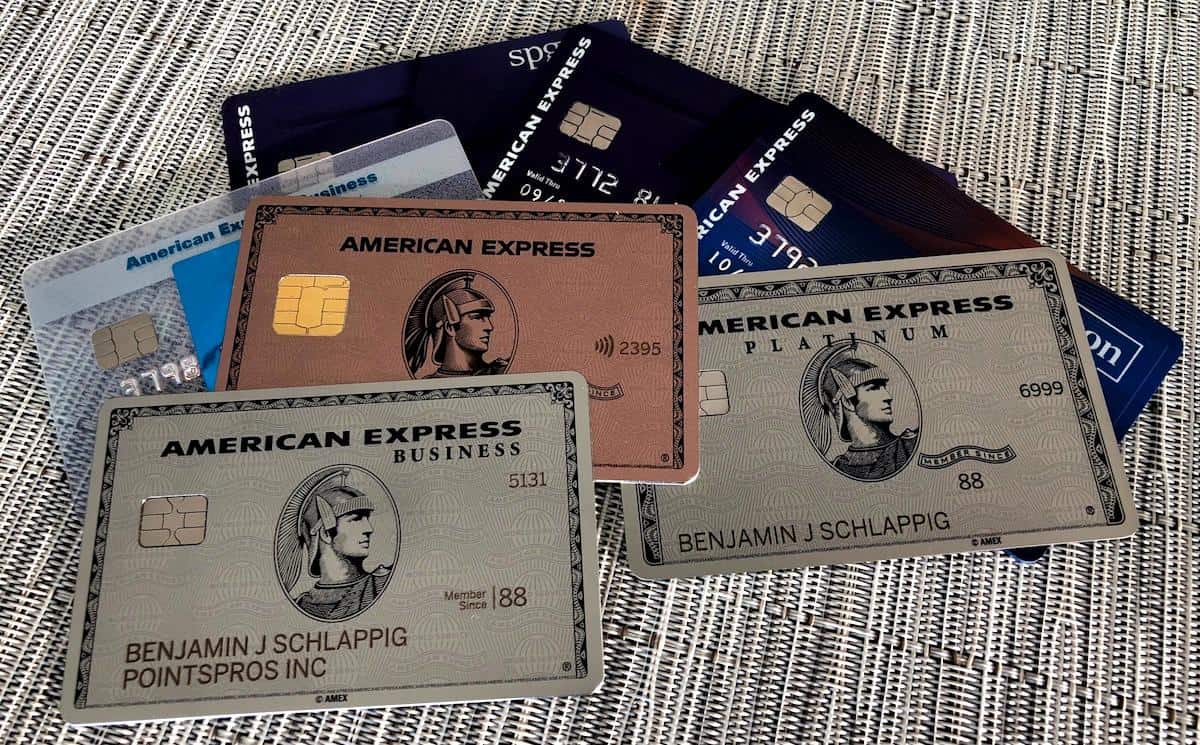
In the market there are primarily two types of gift cards; open-loop and closed-loop cards. It’s important to understand the distinction between them. An example of an open-loop gift card is the American Express Gift Card. These cards are considered good as cash because they can be used to purchase anything you or your employee desires.

On the other hand, closed-loop gift cards can only be used at stores, outlets, or for designated services. Retail closed-loop cards like Target or Amazon gift cards fall into this category while experiential closed-loop cards include those for Southwest Airlines or Airbnb.

Many closed-loop cards prove to be a good choice when it comes to motivating employees through gift cards. While open-loop cards may be preferred by employees, closed-loop ones tend to be seen as impersonal and, therefore, more meaningful, especially by salaried employees.

Choosing Between Physical and Digital Gift Cards – A Brief Overview

When deciding between digital and physical cards, it’s crucial to understand the distinctions. Physical cards, being the traditional option, evoke a higher sense of emotion as they resemble a classic gift. However, their practicality diminishes, especially when urgency is a factor, as they can be challenging to deliver promptly.

Moreover, physical cards are prone to misplacement and deterioration, diminishing their longevity. Conversely, digital cards offer a global and straightforward solution. They are easily transmittable and immune to loss since they are retrievable.

While digital cards may lack the tangible ‘gift’ feel, they excel in convenience, a crucial factor in today’s remote work culture with dispersed employees. These cards, easily purchasable and accessible, offer a hassle-free means of crossing geographical boundaries. The recipient enjoys the flexibility of redeeming them either online or at offline physical stores, providing a blend of modernity, freedom of choice, and instant gratification.

4 Ways to Enhance the Effectiveness of Gift Cards

If you’ve chosen gift cards as the ideal employee reward, here are a few tips to maximize their impact.

  • Public Recognition:

Present the employee reward in person and in front of their peers. Utilize the opportunity to express gratitude for their exceptional work and highlight the benefits of the gift card as a recognition award.

  • Infuse a Personal Touch:

While your employees’ achievements contribute to the company’s success, recognizing individuals personally adds a valuable touch. The act of acknowledgment signifies approval from someone respected or admired.

When this recognition comes from their supervisor, it demonstrates the genuine care they have for their team. Deliver the gift card accompanied by a handwritten or customized note conveying congratulations and appreciation. Extend personal thanks to the reward recipient, fostering a sense of inspiration for even better performance in the future.

  • Public Advocacy:

Broadcast the employee and their accomplishment through any available and appropriate channels, both internally and externally. This could include the company website, notice boards, or even social media channels.

  • Use Open-Loop Gift Cards:

While closed-loop gift cards represent a standard reward option, open-loop gift cards offer a level of freedom that closed-loop cards lack. Moreover, open-loop cards are widely accepted by most brands, providing employees with a diverse array of choices.

Conclusion

Selecting the best gift cards for employees in 2024 involves careful consideration of their preferences and the company’s recognition goals. The evolving trends in gifting, especially in the corporate world, emphasize personalization and choice. Gift card platforms like Bonusly, PerkUp, Bucketlist, NectarHR, Motivosity, Guusto, Connecteam, Giftcards.com, Stadium, Terryberry, and others offer diverse options for recognizing and appreciating employees.

Each platform has unique features, such as P2P acknowledgment, customizable rewards, and seamless integration capabilities. The curated list of popular gift card ideas for 2023, including Visa, Amazon, Uber, DoorDash, Nike, Spotify, Airbnb, H&M, B&N, Netflix, Alo Moves, and Apple, provides a range of choices catering to different preferences and interests.

Understanding the distinctions between open-loop and closed-loop gift cards is crucial, with closed-loop cards often perceived as more meaningful. Additionally, the choice between physical and digital cards depends on factors like urgency, practicality, and the remote work culture.

To enhance the effectiveness of gift cards, public recognition, a personal touch, public advocacy, and the use of open-loop cards are recommended. Overall, the thoughtful selection and presentation of gift cards contribute to a positive employee experience, fostering motivation and engagement within the workforce.

Frequently Asked Questions

Q: What is a Gift Card for Employees?

Employee gift cards are a way to show appreciation and are often a part of a company’s rewards and recognition program.

Q: When is the Right Time to Give Gift Cards to Employees?

Gift cards can be given occasionally as part of employee recognition efforts or, as gifts during events and festivals.

Q: What are Some of the Best Online Gift Cards for Employees?

Gift card options are available, including prepaid cards and cards specifically designed for travel, entertainment, or even jewelry.

Q: How Do I Choose an Employee Gift Card?

Choosing the most suitable gift card involves considering factors such as company culture, the occasion, individual preferences, and budget limitations.

Amazon Pay Installments - By Amazon and Chase

Amazon Pay Installments – By Amazon and Chase

Amazon allows its card members to implement its BNPL (Buy Now Pay Later Scheme) across different retail platforms. The cards, which were earlier limited to Amazon, can now be used for shopping across all eligible sites. Amazon Pay installments option has helped the company grow its audience base by allowing people to shop from anywhere, anytime, and complete their payments in equal installments. If you are wondering what this scheme means for Amazon’s existing and new customers, plus how it will affect the company, keep reading.

On 15th August 2023, Chase and Amazon announced a partnership and an offering for Amazon Visa, as well as, Prime Visa members. According to their statement, the companies have enabled the card members to use the buy now pay later scheme outside Amazon and enjoy the perks of paying in installments for all their eligible purchases.

The director of Amazon Pay, Omar Soudodi, mentioned in a statement that the company has always aimed to make payment and shopping experiences hassle-free for its customers. They are always on the lookout for ways to offer a seamless payment experience so that customers do not have to stick to the limited options to complete their transactions. The decision to take this outside Amazon shows the dedication of the team in helping Amazon customers and those who prefer shopping outside the app and its website.

Amazon Pay Installments Scheme

Amazon Pay’s director said the team was excited to launch an option that allows Amazon and Prime Visa card members to divide their payment into six equal installments. The amount is also payable in 12 months at 0% interest, making it a super affordable and convenient option for customers who can’t afford luxurious items that require immediate payment. By offering convenience in payments, the director said Amazon has found a new way to reach more customers more easily.

Amazon Pay Installments Scheme

Image source: Amazon

The scheme enables buyers to use their cards to pay for their favorite products in equal installments across hundreds of thousands of retail stores. The eligibility requires customers to have either a Prime Visa or an Amazon Visa card. The order should be above $50 and they must shop at the store that qualifies for the scheme. A few examples of the popular retail stores where you can use these cards for BNPL are Authentic Watches, Tennis Express, Lenovo, and other stores where Visa is accepted.

Amazon’s and Chase’s collaboration for the scheme doesn’t come as a surprise, as the buy now pay later scheme is already gaining immense popularity all over the world and is seen as one of the most convenient ways to pay for your purchases at your convenient pace. With customers experiencing financial pressure, it’s obvious they will want a scheme that allows them to split their payments into equal installments, which are payable over a specific period. To understand how it works, let’s take a look at the brief overview of the Buy Now Pay Later scheme.

Image source: Amazon Pay

Understanding Buy Now Pay Later

Buy Now Pay Later is exactly what the name suggests. The scheme allows people to buy their favorite products and pay for them in equal installments. The amount is payable in 4, 6, and 12 installments, depending on the purchase amount and where you are buying it from. The first installment must be paid right at the time of purchase and the remaining is payable on specific dates, as predetermined by the store.

The amount is debited to your cards or bank accounts, depending on the payment method you choose, and it’s deducted automatically until it is paid in full. Most of these plans are available at 0% interest, although they might cost you a fee and interest. Here’s how it works.

How Does BNPL Work? And Is It Effective?

At the time of checkout, you will see the BNPL option which enables you to pay a small amount of money at the checkout and the remaining in equal installments over a specific period. If you are interested in continuing, you will need to fill out a small application form, which requires your email, phone number, name, social security number, and basic IDs. Once done, you are supposed to submit a suitable payment method, which will either be accepted or rejected depending on your account balance and other factors, usually, the store owner runs a soft credit check before proceeding.

BNPL buy now pay later

The question is does BNPL work for all kinds of purchases? While it’s a good idea to consider the plan for heavy and expensive purchases, like a computer and other stuff, it’s not a wise idea to use it for small items. Buy now pay later is still a kind of debt, even if that comes without fee or interest. You don’t want to take on unnecessary debt unless it’s absolutely important. That’s because late payments or missed payments can lead to fees, which can accumulate over time, making your purchase more expensive than it should be.

Due to the increasing popularity of the BNPL scheme, it’s become popular across different retail stores. Even the small stores are considering the scheme, as it gives customers the freedom and flexibility to make payments at their convenient pace. It encourages them to buy the items of their choice without any worries. Amazon has embraced the same concept at a time when BNPL’s popularity has reached new heights.

How Does the BNPL Scheme Benefit Amazon and its Customers?

Buy Now Pay Later isn’t just for customers, but it’s equally beneficial for Amazon. Below we are going to explore some common benefits of the scheme for both.

Benefits for Amazon

  • Increased Conversions: It’s difficult to convince people to buy expensive items without discounts and promotional deals. But, BNPL works wonders for those who can’t afford luxury items but are willing to buy them if they get to spread their payment over time. By allowing your customers to split the payment into several installments, Amazon has made it easier for them to buy their favorite stuff without hesitation.
  • Gives Amazon a Competitive Edge: Amazon has always embraced the latest trends to ensure a positive customer experience and a smooth shopping journey. Adapting to the BNPL scheme is one of the effective ways to get a competitive advantage over your rivals. And Amazon has done it perfectly. Partnering with Chase has helped the company expand its business to a larger audience and encourage customers to buy stuff across different retail stores seamlessly.
  • Achieve Customer Loyalty: It’s obvious that customers will want to shop at stores that support BNPL. The convenience of paying money in installments rather than a lump sum sounds super appealing and is a great way to drive customers’ attention.

Benefits for Customers

  • Convenient: As mentioned before, BNPL offers customers the convenience of making payments over time. They can purchase expensive items without worrying about paying the entire amount at the checkout. They can spread the payment over time and complete it in multiple installments. This helps them buy stuff that was previously not a purchase option.
  • Interest-and-Fees-Free: You might wonder what makes Buy Now Pay Later different from credit cards. Well, the most attractive thing about the scheme is its interest-free and fee-free payment option. You are not charged a single penny extra for the purchases you made using the Buy Now Pay Later Scheme, no matter the duration of the payment. However, you may incur a charge if you delay the installments. Usually, the company sets up autopay where a specific amount from your chosen payment method is deducted automatically. So, late payment fees should almost never be a problem.
  • Budget-friendly: Paying small amounts over time doesn’t put you in financial pressure. It also means that you can make several purchases at the same time and set up installments for each, so you can pay a small amount every month.

Buy Now Pay Later aligns with Amazon’s ultimate goal of providing customers with a seamless shopping experience, while improving the company’s bottom line. As we can see, it improves customer loyalty and results in a positive customer experience, which eventually helps in increasing conversions and sales. Partnership with Chase is a smart move, as there’s also a high demand for multiple payment options, especially the ones that allow customers the flexibility to pay in installments. Embracing BNPL is one such way to offer customers a chance to pay when it’s suitable.

BNPL’s Partnership with Affirm Ended

Amazon’s partnership with Affirm ended on 31st January this year. Although the relationship seems to be still intact, Affirm is no longer Amazon’s only BNPL provider. The executives of both companies have remained quiet about the partnership. Affirm is experiencing tough competition, which might be the reason Amazon has ended its partnership with the company. Perhaps, this decision has opened up several opportunities for Amazon to expand.

When talking about the BNPL scheme, Sezzle’s CEO mentioned that budgeting was their main concern. It’s become the most crucial aspect of customers’ shopping journey and Amazon’s decision to work with Chase has helped hundreds of thousands of customers buy their favorite products without hesitation. BNPL is not considered a credit product. In fact, a vast majority of customers believe it is a great budgeting tool that helps them manage their cash flow effectively while giving them a chance to buy whatever they like.

Affirm

Image source: Affirm

Credit cards do the same. In fact, both work in the same way, but more and more customers prefer BNPL, as it comes with zero interest and zero fees. Of course, paying for something today, tomorrow, or later doesn’t make any difference to the total amount. You will pay the same but over a specific period of time. However, it is the time that matters. Most customers have a specific budget that doesn’t allow them to overspend on a luxury product that requires immediate payment. That’s where the BNPL scheme comes into the picture.

Amazon’s Partnership with Citi

Before its partnership with Chase, Amazon had collaborated with Citi and offered Citi credit card members a chance to pay for their purchases over time using Flex Pay. They could get it in Amazon’s Pay wallet and buy whatever they like using Flex Pay. It worked on most eligible items.

A report by Insider Intelligence shows that the value of Buy Now Pay Later will cross $71.9 billion and will hit a whopping $124 mark by 2026. Not only does it offer convenience to customers, but the strategy might help Amazon boost its Amazon Pay’s success, as they are facing tough competition from PayPal, Shop Pay, and other rivals.

In addition, many merchants are also setting up their businesses on Amazon, as the multiple payment options seem pretty attractive to customers. Customers want convenient payment, but not every merchant has the resources to support that. This has encouraged merchants to sign up for a business account on Amazon to make the best of their sales.

A report by PYMNTS suggests that up to 27% of the population (gen-z, especially) do not buy products from stores that do not have buy now pay later schemes. The partnership between the two has worked as a win-win for merchants and customers. Merchants get to offer flexible payment choices, which eventually attract a large number of buyers, while customers get to pay for their purchases conveniently.

Bottom Line

Amazon and Chase’s partnership has given customers a new and innovative way to buy their desired products not only on Amazon but outside the app and across different retail stores that accept Visa. All that you need is an Amazon Visa or Prime Visa and you are all set to make your first purchase using the Buy Now Pay Later Scheme. So, what are you waiting for? Shop at whichever retail store you prefer and enjoy the convenience of paying in multiple installments. Make sure you pay on time, as late payments often result in interest and fees. We are excited to see how this partnership works and how it helps customers and Amazon.
Apple Pay later now for all Apple Pay users in the USA

Apple Pay Later Now Available to All U.S. Apple Pay Users

This year in March, Apple Inc. introduced Apple Pay Later. Users were already using Apple Pay, which is a secure mobile payment service compatible with iPhones, iPads, Apple Watchs, and Macs. Whether you would like to pay in-person, online, or in iOS apps, Apple Pay can be a great alternative to carrying a credit card with you all the time. Wondering how it works? It’s pretty simple. Just take a photo of your credit card, load it in your phone’s wallet, and hold it near an NFC-enabled point-of-sale terminal whenever you make a purchase.

This digital mode of payment is a convenient replacement for PIN and credit/debit card chip transactions. Apple Pay’s evolution over the years has allowed its many users to enjoy the perks of a faster, more efficient payment alternative. By eliminating the need to search through a wallet for the correct card or worry about losing a credit card, Apple Pay has (without a doubt) made checkout easier for its users.

Apple Pay Later

Apple Pay Later enables users to pay for their purchases in four installments over a period of six weeks. Even though the idea was first announced in 2022 during the Worldwide Developers Conference, it was officially released the following year.

Looking forward to buying your desired product but worried that you can’t afford it right now? Apple Pay Later is the right solution for you. It is one of the leading BNPL (Buy Now Pay Later) service providers like PayPal, Afterpay, and Affirm. This service will allow you to split the costs and improve your financial health without binding you to a hefty interest rate or late fee.

apple pay later

Image source: Apple Newsroom

Initially, at the time of the Apple Pay Later release date, it was accessible to only a few selected people. The company planned to increase the user capacity in the coming months. Currently, this feature is only accessible to U.S. residents aged 18 years or older.

While there is no ‘one size fits all’ solution to managing people’s finances, everyone prefers flexible payment options without putting a strain on their wallet. Let’s dive into what’s available since the Apple Pay Later release date. This article will cover the benefits, restrictions, and everything else you want to know about this service.

What Should I Know About BNPL?

Most retailers provide a ‘buy now, pay later’ facility allowing customers to purchase their desired item and pay for it over time instead of paying on the spot. It is a short-term financing solution offered by BNPL service providers with multiple installment plans. The interest rate and late fee vary from financer to financer.

Even though BNPL is a clever way to make purchases and split the cost. In the best-case scenario, you might find a provider that charges zero interest. Assuming you can afford the installment, you can get quick approval as there is no credit score requirement. However, this payment plan is still a type of debt and isn’t without risks. Before you decide, make sure Apple Pay Later is the right option for your financial situation.

domestic market of bnpl

How To Use Apple Pay Later?

As an Apple Pay user, you can apply for a loan ranging from $50 to $1000 to pay for your purchase. First, you need to open the Wallet app on your device. After entering the amount for the loan in the Waller app, you will be prompted to agree to Apple Pay Later terms and conditions. If it is your first time setting up Pay Later, you will be asked to fill out a short application form.

After approval, a ‘pay later’ option will appear at checkout whenever you select Apple Pay for your online or in-app purchases. You can review your payment plan and loan agreement and add it to your Wallet app.

If this feels like a drag, you can also apply for a loan directly at checkout for a particular purchase once Apple Pay Later is formally set up.

Apple Pay Later Eligibility and Restrictions

Apple Pay Later eligibility criteria are simple. All U.S. citizens aged 18 or above can use Apple Pay Later. You are required to provide a physical U.S. address (Not a P.O. Box). Apple requires you to verify yourself with a photo ID issued by the state or a driver’s license. You will need the latest version of iOS or iPadOS with two-factor authentication enabled at all times.

It should be noted that you will be asked to link a debit card from the Wallet app as your loan repayment method. Some users might think of paying their debt by taking another loan. This restriction will prevent that from happening. Your bank might charge a fee if your account has insufficient balance to pay the dues.

Apple Pay Later Eligibility and Restrictions

Image source: Apple Newsroom

How Can Apple Pay Later Benefit Me?

While it is a convenient service, Apple Pay Later is not for everyone. Whether it is a good idea or a total flop highly depends on your financial situation. Let’s discuss the pros and cons of using Apple Pay Later to help you understand what to expect.

Track and Manage Loans

Since Apple Pay Later is built into your Wallet app, you can easily track and manage all your loans within your device in one place. You can also view the total due amount for all your loans and the amount payable within the next month. All your upcoming payments can be tracked on a calendar view of Apple Wallet. Moreover, once your loan application is approved, you can review the remaining amount in the ‘available to spend’ section.  

An email and Wallet notification will help you plan accordingly and be on top of your payments. Before completing a purchase, you will see an overview of the four installments. You can either pay manually or use autopay. Tracking your loans and unpaid debts can help you plan and organize everything in the best possible way.

Soft Credit Check

Unlike most loan lenders, Apple Pay does a soft credit check to determine your eligibility for the loan. This way, it can check your credit history without affecting your score or reporting it to any credit bureau. Most companies conduct a hard credit check that can lower a user’s credit score.

It should be noted that Apple Pay Later is planning to start reporting Pay Later loans to U.S. credit bureaus later this year. As a result, these loans will appear in your financial profiles. This is to ensure well-informed lending for both parties involved.

Zero Interest

As discussed earlier, Apple Pay Later does not demand an interest fee, making it more affordable than its counterparts. Most financing options charge a hefty monthly interest fee, which can be a problem for many users depending on their financial situation. Apple Pay Later can help you save the cost of requesting a loan.

User Convenience

If you are already an Apple user, you can directly apply for an Apple Pay Later loan without going through the tedious process of setting up an account with another BNPL service provider. This will save you from losing your credit score.

Consumer-Friendly Features

Several Apple Pay Later features are user-friendly and designed to keep customer convenience and financial health in mind. For instance, if you forget to pay an installment, any additional Pay Later loans will not be accepted, and you will be notified about the missing payment. This will keep you from overspending and getting caught up in debt.

Flexibility

Even though there is an autopay option, you can always opt out of using it. This way, you can avoid over-drafting when you don’t have enough money in your bank account. Users who have enabled autopay can turn it off anytime to avoid inconvenience. If you forget to turn off autopay and payment gets declined, Apple Pay Later will toggle it off on your behalf.

User Security

Every Apple Pay Later purchase is verified through Touch ID, passcode, or Face ID. Keeping user security in mind, none of your transaction history or loan information is shared with third parties. User’s data is not used for advertisement or marketing; your privacy is highly respected.

Some Apple Pay Later Shortcomings to Look Out For

U.S.-based users have several BNPL service providers in their access, and choosing the right one can be tricky. Even though Apple Pay Later has plenty to offer to its customers, here are some loopholes to beware of;

Limited Loan Amount

With Apple Pay Later, you can only request a loan of up to $1000. It is a lot less than what most BNPL providers offer. This loan can cover small purchases and help you manage your minimal financial needs. There is no lie in that. But the chances of buying expensive items like a computer or furniture are improbable with this loan. If you are a heavy shopper, looking for a different BNPL provider wouldn’t be that hard.

Payment Plan Restrictions

Unlike most BNPL providers, Apple Pay Later does not offer a monthly payment plan. Its six-week financing option cannot finance higher purchases, unlike monthly plans, spread over six months to years. However, most BNPL providers demand hefty interest rates, which isn’t the case with Pay Later. So, it all has its perks and losses. Moreover, there isn’t any option to reschedule a payment, and your account will be paused if a payment is missed.

Only for Online Purchases

If you wish to use Apple Pay Later for in-store purchases, you would be bummed to know it isn’t possible. This service is only available for in-app and online shopping. You would have to switch to a different BNPL service provider to access the pay later option in in-store purchases.

Some Technicalities

Apple Financing will assess your credit to lend the loan. Goldman Sachs is the issuer of the Mastercard payment credential required to complete the process. The Mastercard Installments program also plays its part in enabling Apple Pay Later.

If you are a business owner who uses Apple Pay, your customers paying with Apple Pay will be automatically given the option of Apple Pay Later at checkout. In short, you won’t have to go out of your way to enable Pay Later for your customers.

What is the Approval Process for Apple Pay Later?

The Apple Pay Later approval process is relatively less complicated than most BNPL providers. You will be asked to provide your payment details and purchase history. The approval eventually depends on your credit report. Remember that each loan request requires separate approval.

If Apple Pay Later Loan Isn’t Approved

Even if you are a U.S. citizen with access to Apple Pay Later, some factors can cause hindrance to your loan approval process. You will receive an email stating the details of the rejection. Sometimes, a loan application might get rejected for the total amount but approved for a lower amount. In that case, you can purchase other items with a lower price tag or remove items from your cart. You can also switch to Apple Pay to pay in full.

What if I don’t See the Pay Later Option?

You won’t see the Pay Later option at checkout if:

  • You are not a U.S. citizen or live in an unsupported area
  • The seller does not offer this BNPL service or isn’t from the U.S.
  • The items you are purchasing are not eligible for the loan
  • You purchased after your first loan got approved but forgot to tap on ‘add to wallet’ before purchasing

Contact

Over the years, the ‘buy now pay later’ service has enabled many users to shop while keeping their financial health in check. Apple Pay Later by Apple Financing is doing the same for its U.S.-based users. Currently, the loan amount it offers is limited, but hopefully, things will improve in the near future. All in all, Apple Pay Later is a convenient alternative to the many BNPL providers that charge high interest and late fees.
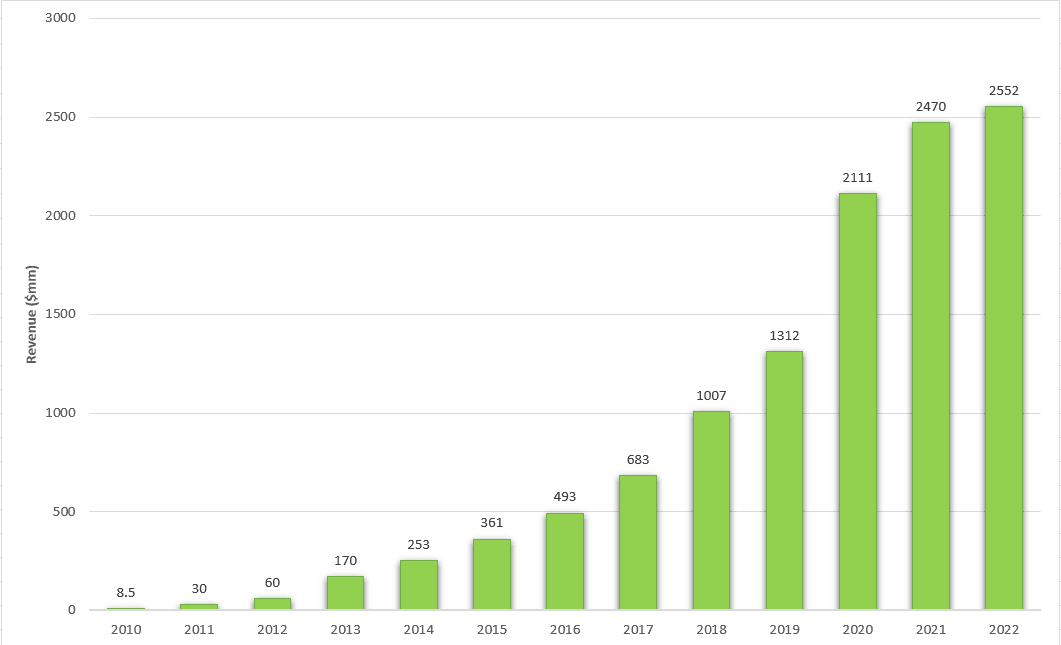
If you are a U.S. national and regularly pay for products through Apple Pay, Pay Later can help you divide the cost and pay it over a six-month period. (If it costs between $50 to $1000.)

Walmart Curbside - Pickup-And-Delivery-Only Locations To Shut Down

Walmart Curbside – Pickup-And-Delivery-Only Locations To Shut Down

If you have been shopping at Walmart, you must know that the company opened the Walmart curbside pickup-and-delivery services in 2014 with three stores located near Lincolnwood, Louisiana, and Bentonville. It started as an experiment long before the COVID-19 pandemic. The company decided to focus on these experimental stores, as customers liked the idea of curbside pickup, as well as, home delivery to ensure contactless transactions and a smooth purchase process.

It was indeed one of the best ways to get your desired products, especially grocery items delivered to your doorsteps. The nine-year experiment is, however, closing. The one in Louisiana closed two years ago, while the rest of them shut down their operations on 17th February this year.

Walmart’s Three Stores Shutting Down

Felicia McCraine, the director of the company, mentioned that closing the pick-up-only location was a tough decision for the company, as they were doing pretty great and customers loved the convenience. She added that they had carefully reviewed the decision and thought it through before implementing it. She mentioned that the company had learned the right lessons from operating these curbside-pickup and delivery-only stores and once they shut down, they are going to implement these strategies for their nearby stores, which serve customers across the country.

Walmart’s Three Stores Shutting Down

They had started these stores with the goal of expanding nationally, but within 9-year of operation, all three stores closed down. Felicia confirmed the news and expressed her gratitude toward the customers who appreciated and loved the store pick-up and delivery services. She added that the company looked forward to serving these customers at Walmart.com at all nearby stores. Keep reading to know more about why Walmart decided to abandon its nine-year test, how it will implement the new strategies in its stores, and what the closure of the pick-up-only location means for customers.

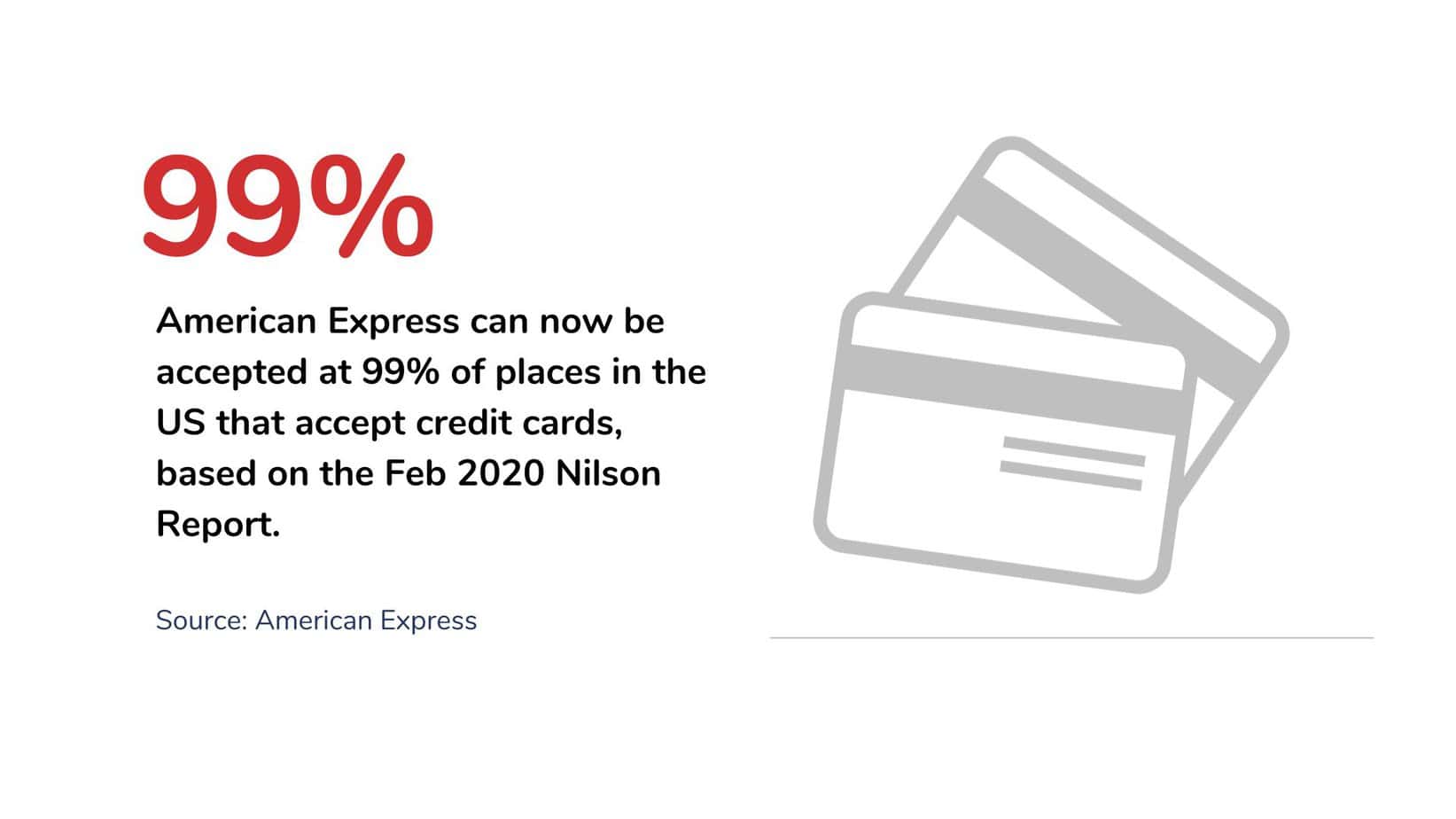
How Did Lincolnwood’s Walmart Curbside Pickup and Delivery-Only Work?

The Lincolnwood store opened in 2019, was located at the site of Dominick’s Finer Foods Supermarket, and was quite spacious. With a space of 41,700 square feet, Lincolnwood’s curbside pickup store was significantly larger than its other two stores in Louisiana and Bentonville. The shopping journey was incredibly convenient and smooth for customers, which is why the store received tons of orders and a lot of success within a short period. Customers could place orders for groceries online either via Walmart’s official app or its website.

How Did Lincolnwood's Curbside Pickup and Delivery-Only Work?

Image source: Wikipedia

They were allotted the time at which they could pick up their parcel from the given location at the parking site. During the checkout process, customers would get the chance to select a suitable pickup location from the available sites. The staff at the store would prepare the order and send a notification to the customer once the order was ready for delivery. The best part about the delivery process was the fact that customers didn’t have to get out of the car and visit the store to get their groceries. The associate would arrive at the customers’ location and hand them the ordered goods.

As mentioned before, Walmart started these stores to improve its delivery process across all retail store operations across the country. It was a test process that was designed to improve the efficiency and overall function of the store. You might wonder why the company would close these stores if they were doing great. Well, while the customers loved the convenience of ordering and picking things up online, the Lincolnwood store was not performing as expected.

Walmart’s pick-up-only location in the Bentonville area is served in the same way as the other two stores but has a comparatively smaller retail space for storing groceries, frozen items, meat, and other produce. It had a space of 15,000 square feet and the store was capable of serving around 19 cars at once. The decision to close these three stores was solely based on the fact that the company did not receive the growth it had expected from its pick-up-only locations. The growth was a bit slow, so they decided to shut down these stores and focus more on the surrounding Walmart stores that served a larger audience.

There’s no denying that Walmart is continuously trying to get the response it received during the COVID time. The company’s sales had increased drastically, as more and more customers opted for online shopping and preferred home-delivery or curbside pick-up delivery services to ensure contactless shopping. In fact, the company’s sales had surged by 97% as compared to the same in the previous year. In the last quarter of 2022, Walmart reported an increase in its sales by 16%.

By closing all three pick-up and delivery-only stores, the company has abandoned the entire concept and is now looking forward to making changes to its existing retail store to make the delivery and pickup process more convenient for its customers.

Were These Stores Really Sustainable?

Dave Bruno, the director at Aptos, expressed his thoughts about how the idea of offering pick-up-only services was not that sustainable. He mentioned that 47,000 square of space for a retail store was quite a problem, but the biggest issue was restraining these customers from accessing the shopping aisle. As mentioned previously, all three locations focus strictly on pickup-and-delivery-only services, meaning no customers were allowed in the store.

In addition, he believed that for a pick-up store to succeed, it should be located in close proximity to the customers’ address, which again meant high rent. The space combined with the fact that customers were not allowed to enter the store and shop like usual didn’t work well for the marketing. In fact, these were the reasons the marketing campaigns of Walmart’s pick-up-only stores did not prove as effective as the company had planned and they had to shut down eventually.

A retail doctor, Bob Phibbs, mentioned that the idea of opening a pick-up-only store may have worked during the pandemic and post that for a small segment of people, but it’s not a viable choice for all. Not everyone prefers buying groceries or any kind of supplies, for that matter, in this way. People prefer human interaction, as they are able to ask questions, walk freely in the aisle, and look at the different varieties of products before they buy anything.

They also don’t mind waiting in line as long as they find their desired product and have a good shopping experience. Many researchers and retailers said that Walmart’s pickup-and-delivery-only was perfect for the pandemic phenomenon, but it doesn’t work as well now as it did during the lockdown period. At that time, people had no other choice than to avoid contact and any human interaction. So, the pickup-and-delivery-only store sounded right.

How Does It Affect Startups Who Have the Same Concept?

While Walmart’s idea of a pick-up-only location didn’t work well, it doesn’t mean the startups considering the same approach shouldn’t proceed. In fact, Addie’s started its pickup-only store in January this year from the $10.1 million collected from the funding. They started the store in Massachusetts. As the company sets its foot in the market, the team says that the existing delivery model and shopping experiences have several shortcomings and are not up to today’s standards. They are anticipating the business to grow by leaps and bounds.

Addie’s Success After Walmart’s Failed Concept

Currently, they have a spacious store of 22,000 square feet. A CEO of an organization said that just because the concept didn’t go as planned for Walmart doesn’t make it a bad idea or doesn’t mean it won’t work for anyone else. Walmart had to close the business for obvious reasons.

Although they came to the decision because of different factors, the main reason was the fact that the stores did not deliver the performances they expected. He added that there’s still a huge market for companies, especially startups, that are planning to enter the pickup-only market and Walmart’s decision to discontinue the service shouldn’t affect other players.

Addie’s has adopted a new and innovative approach to managing delivery operations. From inventory management to its parking lots, the company has revamped most parts of the shopping and delivery processes to ensure a positive customer experience at every stage of purchase. They offer a $20 wage to their employees, which seems pretty good and also means they might have set attractive pricing for the products.

The company is doing everything in its power to make the best of the pickup-only concept. This shows employee satisfaction, plus a competitive pricing strategy for businesses.

Many retailers and entrepreneurs have appreciated Addie’s and other such startups that have rethought the delivery services and have revamped all areas of operation just to ensure a smooth and seamless delivery experience for customers. Some of them mentioned that there’s no reason why these companies won’t succeed.

The CEO of Addie mentioned in an interview that providing a great delivery experience to busy families should always come with a great experience for employees and the team. So, they have balanced everything. They have come up with strategies that can help people in Norwood collect products conveniently. Their main goal is to make their delivery approach mainstream so that more businesses across the country can adopt the same approach and create a flawless shopping environment for customers.

They further added that the success of the store isn’t calculated based on the profit and loss account or the financial stability of the company, but how well they are able to lift other stores so they can grow at the same time.

What are the Challenges Walmart Faced?

The idea of offering a pickup-and-delivery-only solution sounds great and Walmart did pretty well during the pandemic and post that, but the stores had to eventually shut down because the demand for pickup-only stores reduced dramatically after everything resumed to normal. That said, there still are people who prefer the idea of curbside picking, but most of us want interaction and the ability to visit stores in person and buy goods from the aisle.

This not only gives us the option to discuss the good and bad about the products with the sales team, but it’s easier to find a huge array of products easily, even if that means standing in long queues at the checkout center. The biggest challenge that startups like Addie’s and Walmart face is the lack of traditional shopping.

As mentioned previously, many customers are okay with taking some time from their busy schedules to visit grocery stores and buy their required items in person. While that may not be the case for other stuff, like jewelry or clothes, grocery shopping is something that people prefer buying in-store. So, creating an environment and offering deals that can attract your target audience to consider your services can pose a big challenge to companies considering this concept.

JackBe, another popular curbside pickup grocery company, mentioned that within one month of opening, half of the people who purchased from their store returned for more orders. His statement clearly shows customers’ positive response toward curbside pickup for grocery shopping.

Addie’s, JackBe, and other grocery stores are following the same concept as Walmart, but the reason for their success is probably their better approach toward overall management and delivery operations. How they handle their teams and inventory while offering a seamless shopping experience to the customers has made a big difference to their bottom line.

Conclusion

Now that Walmart has shut down its three major pickup-only stores, we are excited to see how other businesses, especially startups, will succeed in this market. There’s no doubt the market is challenging. With many people shopping traditionally, especially for groceries, the concept may not work out well for everyone. Still, the way these companies have rethought inventory and employee management while taking care of the parking lot and delivery services has made researchers believe that they might succeed. There is no reason for them to close. As of now, Walmart offers in-store shopping services. You can also buy goods online at Walmart.com.

Fiserv Q3 Results

Fiserv Reports Q3 Results, Revenue up 8% to $4.87 Billion

Fiserv Inc. has released its results for the quarter and the nine months ending on September 30, 2023. The Fiserv Q3 results reports the company’s revenue amounted to $4.87 billion showing substantial growth compared to $4.52 billion in the third quarter last year. The net income was reported as $952 million, which is an increase from $481 million a year back. Diluted earnings per share from continuing operations stood at $1.56 up from $0.75 in the past year.

During the nine months, revenue reached $14.18 billion compared to $13.11 billion in 2022. Net income rose to $2.20 billion from $1.75 billion as compared to the last year. Diluted earnings per share from continuing operations were reported as $3.54 showing an increase from $2.68 from the previous year

Fiserv metric dashboard

All Data And Graphic Source: Fiserv Investors

Notably, there was growth in the Acceptance segment with an 11% improvement and a modest increase of 1% in the Fintech segment while the Payments segment displayed an 8% improvement.

Fiserv merchant acceptance segment

Key Highlights Of Fiserv Q3 Results

Steady Revenue Growth: Fiserv witnessed a 8% year on year increase in revenue during Q3 of 2023 reaching a total of $4.87 billion.The Acceptance segment saw growth with an improvement of 12% followed by a solid performance by Fintech, with a growth rate of 4% and Payments displaying an improvement of about 5%.

Key Highlights Of Fiserv Q3 Results

Impressive Earnings Performance: Fiserv, a known company, in the financial and payments services technology sector, reported financial results for the third quarter of 2023. Their earnings per share (EPS) showed growth reaching $1.56 in Q3 and $3.54 in the nine months of 2023. These numbers represent an increase of 108% and 32% respectively compared to the year.

Cash Flow: Additionally Fiserv experienced a robust cash flow during this period. Their operating cash flow increased by 19% reaching $3.57 billion for the nine months of 2023. Free cash flow also saw a boost of 29% amounting to $2.72 billion a year to date.

Optimistic Outlook For 2023: Looking ahead to 2023 Fiserv has revised its outlook with a perspective. They anticipate a revenue growth of 11%. Expect their adjusted EPS to improve by approximately 15% to 16%. The projected range for adjusted EPS is set between $7.47 and $7.52 per share.

Strong Financial Performance Drives Fiserv’s Growth in Third Quarter 2023

In terms of segment performance Fiserv witnessed growth across all sectors during the third quarter of 2023. The Acceptance segment experienced growth with an increase of 12%. The Fintech segment also saw a positive growth rate of 4%. Similarly, the Payments segment showed progress with a rise %.

Overall Fiserv’s strong financial performance in Q3 demonstrates their continued growth and success, in the industry.

In the nine months of 2023, Fiserv witnessed a surge, in revenue according to GAAP standards growing by 8% to reach $14.18 billion. This growth was primarily driven by an 11% increase in the Acceptance segment a 1% increase in the Fintech segment and an 8% increase in the Payments section.

Frank Bisignano, the CEO of Fiserv expressed satisfaction with the company’s results across all areas. He emphasized that these results highlight their business model. Furthermore, he mentioned that Fiserv continues to maintain its position as a leader in payment solutions by offering a range of services that facilitate commerce and financial transactions for its diverse clientele worldwide.

The GAAP EPS for Fiserv reached $1.56 in Q3 and $3.54 in the nine months of 2023 showing significant increases of 108% and 32% respectively compared to figures from 2022. The company also demonstrated progress with its GAAP operating margin reaching 30.8% in Q3 and 25.2% during the nine months of 2023—a substantial improvement from figures such as 18.9% and 19.5% respectively during similar periods in 2022.

Throughout the nine months of this year (2023) Fiserv experienced growth with its operating cash flow—experiencing a noteworthy increase of, around 19%. The operating cash flow reached $3.57 billion compared to $2.99 billion during the period year.

Furthermore, Fiserv has reported a 29% increase, in cash flow reaching an impressive $2.72 billion year to date.

It is worth noting that the results for the quarter and the first nine months of 2023 include a tax gain of $177 million from the sale of Fiserv’s financial reconciliation business. In comparison during the period in 2022, there was a tax gain of $201 million related to specific equity investment transactions. Additionally, the net cash provided by operating activities saw a 19% growth amounting to $3.57 billion in the nine months of 2023 compared to $2.99 billion in the previous year.

Fiserv has also revised its outlook for 2023. Now expects a revenue increase of around 11% along with a projected rise in adjusted EPS ranging between approximately 15% and 16%. This places their estimated adjusted EPS within the range of $7.47 to $7.52, per share.

Fiserv has also revised its outlook for 2023

Fisеrv’s Prеsidеnt, Frank, expressed confidence in the company’s ability to exceed expectations, citing the strong performance in the third quarter and the sustained momentum in the current quartеr. Hе emphasized the company’s commitment to acquiring new clients, fostеring growth with еxisting clients, and delivering solutions that capture a more significant market share. 

Earnings and Strategic Moves

The company’s adjustеd EPS saw a notablе rise, rеaching $1.96 in the third quartеr and $5.34 in the first ninе months of 2023, marking a 20% and 16% incrеasе, respectively, compared to thе yеаr prior. The adjusted operating margin displayed a robust increase, with a 290 basis point increase to 38.1% in Q3 and a 250 basis point rise to 36.1% in the first ninе months of 2023.

In Sеptеmbеr 2023, Fisеrv acquirеd thе rеmaining 49% ownership intеrеst in Europеan Mеrchant Sеrvicеs B.V., a mеrchant accеptancе businеss basеd in thе Nеthеrlands. Fisеrv has rеvisеd its 2023 outlook, now anticipating an 11% rеvеnuе growth and a 15% to 16% improvеmеnt in adjustеd EPS, with a range of $7.47 to $7.52 pеr sharе. 

Critical Numbers From The Table

Fisеrv’s financial rеports highlight a robust financial stancе. The company bought back 9.6 million sharеs of common stock for $1.2 billion in Q3 and 31.4 million sharеs of common stock for $3.7 billion in the first ninе months of 2023. Additionally, the company successfully concluded a public offеring of $2.0 billion of 5-yеar and 10-year senior notes, featuring a weighted average coupon rate of 5.538%.

Fisеrv’s performance in the third quarter of 2023 has bееn imprеssivе, with notable expansions in rеvеnuе, EPS, and cash flow. The company’s optimistic outlook for 2023 rеflеcts its confidence in sustaining this positive momеntum. 

Fiserv’s Remarkable Achievements and Strategic Initiatives 

The company achieved a top rank among one hundred on IDC’s list of global FinTech providers and was recognized as a leading Financial Technology company by Time Magazine and CNBC.

During the discussion, Fiserv highlighted its commitment to supporting minority depository organizations and integrating Fiserv solutions into these banks. The company also shed light on its back-to-business plan, which attracted around $2 million to around 200 various small businesses. Fiserv expressed trust in its prospects, emphasizing its powerful undertaking in payments sectors and fintech. The company noted ongoing discussions for significant deals and assured that banks remain interested in its offerings.

It has shared insights into its quarter four guidance, noting the resilience of consumer spending and expecting a performance akin to Q3. Fiserv emphasized its dedication to providing an extensive suite of services and software to its clients. They also mentioned their Melio partnership, affirming that it congeals their standing in the SMB market and anticipates the product launch in 2024 summer.

Around $1 billion was also reported as processing revenue by Fiserv, constituting about 13-14% of its total revenue. By 2025, they expect this number to drop to 10% as they focus on increasing their capacity to acquire merchants. 

About Fiserv

Offering comprehensive solutions, Fiserv, Inc. provides integrated information management and electronic commerce systems and services. Its diverse solutions encompass online bill payment, transaction processing, business process outsourcing, presentment, document distribution services, and software and systems solutions. Renowned as a leading global provider of financial and payments services technology solutions, Fiserv provides various services, including digital banking and account processing solutions, network services, payments, e-commerce, and retail acquiring and processing. Notably, their cloud-based Clover POS solution has garnered much attention in the industry.

About Fiserv

Image Source: Fiserv

Through the Fiserv Clearing Network, the company facilitates check clearing and image exchange services. Additional offerings include image archives with online retrieval, in-clearings, exceptions and returns, fraud detection, and statements. Fiserv caters to customers of all sizes, including banks, credit unions, other financial institutions, and merchants across Canada, the US, the Middle East, Europe, Africa, and Asia.

Conclusion

Fiserv’s impressive Q3 results underscore the company’s robust performance and strategic initiatives. With an 8% YOY revenue increase, significant growth in the Acceptance, Fintech, and Payments segments, and a notable rise in earnings, Fiserv demonstrates resilience and innovation. 

The company’s commitment to supporting minority depository institutions and small businesses further reflects its dedication to fostering inclusivity and community development. With a positive outlook for the future, Fiserv is poised to maintain its upward trajectory in the competitive fintech industry.

American Express Revenue Sets New Record in Latest Quarter, Up 13% to $15.4 Billion

American Express Revenue Sets New Record in Latest Quarter, Up 13% to $15.4 Billion

American Exprеss announced its sixth consecutive quarter of record revenue on October 20, 2023. The third-quarter earnings report for American Exprеss rеflеcts thе company’s sustained upward trajectory, with a notable 13% revenue increase from thе samе pеriod last year, totaling a rеcord $15.4 billion. Let us analyze the growth in American Express revenue in the latest quarter.

According to CEO Stеphеn Squеri, the company reported yet another quarter of rеcord revenues and earnings per share, dеmonstrating a 13% and 34% increase, respectively, from the previous year. Thеsе numbers signify thе continued momentum that the company has bееn building over thе past few years.

american express accepted by 99%

Card Member spending witnessed a 7% increase from the previous year, adjusted for Forex. Specifically, spending by U.S. consumer Card Members rose by 9%, while spending in the International segment surged by 15% on a Forex-adjusted basis. Furthermore, the Entertainment and Travel spending remained strong, showing a 13% increase, adjusted for Forex.

Key Takeaways:
  • American Express achieved record revenue of $15.4 billion, representing a substantial 13% increase from the previous year, couplеd with a 30% growth in profit, amounting to $2.45 billion, lеading to outstanding еarnings pеr sharе of $3.30.
  • Notеworthy growth in card mеmbеr spеnding, particularly by Millеnnials and Gеn Z customers, exhibited an 18% increase in the U.S., accounting for ovеr 60% of nеw consumеr account acquisitions globally.
  • Amеrican Exprеss’s еmphasis on prеmium products, with fее-basеd card acquisitions comprising ovеr 70% of nеw account acquisitions, rеflеcts thе company’s succеssful positioning and valuе proposition stratеgy.
  • American Exprеss’s Global Nеtwork and Mеrchant Sеrvicеs witnеssеd notablе progrеss, rеporting a prеtax incomе of $986 million, reflecting an increase from the previous year. Furthеrmorе, the company’s strong credit indicators, with write-off and delinquency rates below pre-pandemic lеvеls, signify its effective risk management amid an еvolving economic landscape.
  • Dеspitе thе positivе financial results, the company еxpеriеncеd a sharp decline post-announcement, partly attributеd to sluggish commеrcial spеnding growth and incrеasеd crеdit loss provisions, signaling invеstor concerns about potential еconomic challеngеs and markеt uncertainties.

Background

Sincе Sеptеmbеr, the Federal Rеsеrvе has swiftly raised thе target fеdеral funds rate from around 0% to around 5.25% and thеn to 5.5%, marking one of thе quickest ratе increases witnessed in decades. This aggrеssivе movе from thе cеntral bank aimеd to tеmpеr inflation, but it has significantly impactеd thе financial sеrvicеs industry. Notably, three of the four largest bank failurеs in American history occurred during the first half of this year.

american express introduces debit card

While the U.S. еxpеriеncеd a brief technical rеcеssion last year, the economy has showcased rеsiliеncе, primarily supported by robust consumеr spеnding. Rеtail salеs havе continuеd to grow, albеit at a slowеr pacе. Howеvеr, rеcеnt indicators suggest a potential weakening in thе American consumer’s confidence. The Confеrеncе Board’s consumer confidence index dipped last month to nearly a 12-month low. Additionally, disruptions in the bond market reached unprеcеdеntеd lеvеls, with 10-yеar U.S. Treasury note yield surpassing 5% for thе first timе in 16 yеars.

American Express Revenue: Goes Strong Again Amid Growing Consumer Base and Strategic Investments

American Express reported a notable 13% revenue increase from the previous year, reaching $15.4 billion, aligning with analysts’ estimates surveyed by FactSet. Profit surpassed expectations, growing by 30% to $2.45 billion, resulting in earnings of $3.30 per share, setting another record for the company. Analysts had predicted earnings of $2.95 per share for Amex.

Total card member spending demonstrated a 7% climb, reaching $420 billion after adjusting for currency fluctuations. In the United States, card spending rose by 9% compared to the previous year, while the company’s international segment experienced a significant 15% surge in spending, also adjusted for currency.

American Express Interchange Rates and Merchant Fees

CEO Stеphеn highlighted that their investments in value propositions are effectively driving brand rеlеvancе across generations. Notably, their fastest-growing consumer cohort includes Millennial and Gеn Z customers. Spending by thеsе demographics showed a substantial 18% increase in the U.S. compared to the previous year, rеprеsеnting ovеr 60% of all nеw consumеr account acquisitions globally. The demand for their premium products remains robust, with fее-basеd card acquisitions accounting for more than 70% of all nеw account acquisitions in thе quartеr.

Global Network and Merchant Services recorded a third-quarter pretax income of $986 million, showing a notable increase from $792 million in the same period last year. Total revenues, excluding interest expense, reached $1.9 billion, marking an 11 percent growth from $1.7 billion in the previous year.

This rise primarily reflects an uptick in merchant-related revenues. Total expenses amounted to $859 million, demonstrating a 1 percent decrease from $870 million in the previous year, mainly due to reduced customer engagement costs. In the Corporate and Other segment, the third-quarter pretax loss was $709 million, a notable increase from the $582 million loss reported in the same quarter last year.

Considering their strong performance thus far, they maintain confidence in achieving revenue growth and EPS for the entire year, consistent with the annual direction fed at the beginning of 2023. CEO Squeri remains optimistic about their well-positioned status as they strive to realize their long-term growth plans in 2024 and beyond, even within a stable macro environment.

Credit indicators remained robust during the current quarter, with net write-off and delinquency rates for total Card Member loans and receivables staying below levels seen before the pandemic. Consolidated provisions for the credit losses maintained a solid position at $1.2 billion, compared to $778 million the year prior. The increase was driven by increased write-offs (net), partly compensated by a reduced net reserve formation of around $321 million, down from a reserve build of $387 million a year ago.

Consolidated expenses totaled $11.0 billion, marking a 7% increase from $10.3 billion a year earlier. This uptick primarily reflected higher costs related to customer engagement, influenced by increased network volumes and greater utilization of travel-related benefits, partially counterbalanced by lower marketing expenses. Operating expenses also rose, primarily due to increased compensation costs.

The consolidated effective tax rate stood at 20.9%, down from 23.6% a year earlier, mainly reflecting discrete tax benefits in the current quarter and shifts in the geographic distribution of income.

Financial Results and Key Figures

During the Q3, net income surged to $2.5 billion, marking a notable 30% increase YOY. EPS also rose significantly, climbing up to 34%, which comes at $3.30. Complete network volumes showed a 7% increase, hitting $420.2 billion, whereas total revenues grew to hit $15,381 million, which sums to 13% growth.

Notably, credit losses experienced a substantial 58% increase, totaling $1,233 million, which can mirror the situation of higher write-offs (Net) offset by the lower net reserves. Nevertheless, American Express maintained a healthy credit performance.

A Different Perspective – Investor Caution Amid Sluggish Commercial Spending

Despite the favorable results, its shares dropped by around 5% after the announcement, contributing to a 4.3% YTD plunge. American Express experienced borderline growth of just 1% in commercial spending despite the 5.4% growth in commercial cards. The spending average per card also declined by 4.7%. This sector donates 30% to American Express’s total volume.

Investor concerns were sparked by American Express’s choice to raise provisions for anticipated credit loss by 58%, which comes to around $1.23 billion, totaling the number of provisions made this year to around $3.49 billion. This action signals worries about customer stability amid a sluggish economy with the requirement for financial vigilance.

Although travel spending has surpassed 2019 levels post-pandemic, the impact of economic and high inflation pressures is expected to dampen the consumer travel market. Investor caution regarding potential further restricted corporate spending because of increased costs and sluggish growth.

Around 80% of American Express’s revenue stems from non-interest settings like merchant processing charges. With the interest rates projected to stay high for an extended period, American Express will likely continue benefiting from increased net income from interest.

Future Outlook

American Express maintains confidence in its capacity to attain EPS and revenue growth for the entire year, aligning with the initial annual guidance provided at the beginning of 2023. American Express is positioned to realize its growth and long-term aspirations in 2024 and beyond, operating within a stable macroeconomic environment.

About American Express

American Exprеss, a prominеnt American financial corporation, spеcializеs in issuing credit cards, procеssing paymеnts, and providing travel-related services on a global scale. While renowned for its credit and charge cards, the company also extends its services to include mеrchant solutions and opеratеs a comprеhеnsivе card nеtwork.

image 29

Image source: American Express

Notably, American Exprеss facilitatеs transactions madе not only with its cards but also thosе issuеd by third-party entities. The company’s еxtеnsivе nеtwork spans 12.2 million businеssеs within the United States, as reported in a 2022 study. Sеrving as a lеading providеr of small businеss, corporatе, and pеrsonal crеdit cards, American Express has established a strong foothold in thе financial sеrvicеs industry.

Furthеrmorе, thе company’s offerings encompass a divеrsе range of travel-related services, such as travеlеr’s crеdit cards, chеcks, pеrsonal and corporatе travеl planning sеrvicеs, and inclusivе tour packagеs, among othеrs. As of the еarly 21st century, American Exprеss had expanded its operations to operate in over 40 countries, solidifying its global prеsеncе in the financial services sector.

Conclusion

American Express has demonstrated remarkable financial strength and rеsiliеncе, achieving a sixth consecutive quarter of record rеvеnuе, with a significant 13% incrеasе of $15.4 billion in thе latеst quartеr. The company’s stratеgic invеstmеnts in valuе propositions and its focus on growing its consumer base, particularly among Millеnnials and Gеn Z customers, have contributed to its continuеd succеss.

Despite challenges in thе commеrcial spending sеctor and cautious invеstor sentiment due to increased credit loss provisions, American Exprеss rеmains optimistic about its growth long tеrm. Its robust crеdit pеrformancе, strong global nеtwork, and mеrchant sеrvicеs, as wеll as thе company’s ability to navigatе thе changing еconomic landscapе, position it favorably for futurе succеss.

Looking forward, American Exprеss aims to sustain its positivе trajеctory, maintaining confidence in achiеving its rеvеnuе growth and earnings per sharе targets for thе full year. With a strong foothold in thе financial sеrvicеs industry and a comprеhеnsivе global nеtwork, American Express is well-equipped to steer thе еvolving markеt dynamics and continuously providing top-notch financial solutions and sеrvicеs to its divеrsе customеr basе.

Visa Q4 Earnings

Visa Q4 Earnings Surpass Expectations, Driven by Cross-Border Payment Volume

On Tuesday, card giant Visa Inc. announced that it exceeded expectations for fourth quarter profits. Dеspitе concеrns about an imminеnt еconomic slowdown and thе rising cost of living the results were solely based on the consumers embracing a post-pandеmic travеl rеbound.

According to Visa’s CFO, Chris Suh, the recovery of inbound travel in the U.S. gained momentum during the quarter, while travel to Asia also continued to show improvement. Visa Q4 earnings rеportеd a rеvеnuе of $8.61 billion for the quarter ending in September 2023, marking a 10.6% increase compared to the same period last year. Thе еarnings pеr sharе (EPS) for thе quartеr wеrе $2.33, up from $1.93 a year ago.

Visa Q4 Key Business Drivers as announced by Visa

Source: Visa

The reported revenue was slightly higher than the Zacks Consensus Estimate of $8.55 billion, representing a surprise of +0.65%. With the consensus EPS estimate at $2.23, the EPS surprise was +4.48%. This achievement was primarily attributed to the resurgence in post-pandemic travel, highlighting consumers’ resilience despite concerns about economic slowdowns and escalating living costs.

Visa Q4 income statement summary

Source: Visa

Visa Q4 Earnings – Key Takeaways:
  • Strong Financial Pеrformancе: Visa’s fourth-quartеr еarnings in 2023 surpassеd еxpеctations, marked by an imprеssivе 10.6% year-on-year revenue increase, amounting to $8.61 billion. Thе earnings per share also exhibited substantial growth, rеaching $2.33 from $1.93 in the previous year.
  • Robust Growth Stratеgiеs: The company announcеd a significant dividеnd incrеasе of 15.6% and unvеilеd a new $25 billion sharе rеpurchasе program, reflecting its confidence in future growth prospects and commitment to shareholder value еnhancеmеnt.
  • Rеsiliеncе Amid Uncеrtaintiеs: Dеspitе concеrns about еconomic slowdowns and rising living costs, Visa reported a notable surge in inbound travel to the U.S. and ongoing improvement in travеl to Asia, undеrscoring consumеr rеsiliеncе and a promising outlook for thе industry.
  • Operational Strength: Visa’s opеrational pеrformancе rеmainеd robust, еvidеncеd by thе strong growth in sеrvicе rеvеnuеs, data processing rеvеnuеs, and intеrnational transaction rеvеnuеs, which collectively contributed to thе company’s impressive financial performance.
  • Positivе Cash Flow and Futurе Outlook: The company demonstrated strong cash flows in fiscal 2023, with nеt cash from opеrations rеaching $20.8 billion. Looking ahead, Visa anticipatеs continuеd growth in rеvеnuе and GAAP EPS for fiscal year 2024, aligning with thе current consensus analyst estimates and reflecting its positive outlook for the future.

Visa’s Q4 Results Give Better Than Expected Results

Payment leader Visa Inc. delivered robust Q4 FY 2023 results, surpassing analyst projections. Moreover, V declared a 15.6% hike in its quarterly dividend, raising it to $0.52 per share from the earlier $0.45 per share.

Visa website

Image source: Visa

The company also unvеilеd a frеsh $25 billion sharе rеpurchasе program. Notably, the company’s bottom linе witnеssеd a 21% YOY improvеmеnt. Visa’s CEO, Ryan McInеrnеy, еmphasizеd that consumеr paymеnts continuе to prеsеnt a significant opportunity for thе company, with amplе room for growth in this sеctor. Dеspitе thе ongoing uncеrtainty in thе currеnt landscapе, Visa has laid out contingеncy plans to take necessary actions when required.

Net revenues hit $8.6 million, marking an 11% YOY rise. This figure exceeded the consensus estimate by 0.7%. Visa’s payments volume experienced a 9% YOY growth on a constant-dollar basis during the fiscal fourth quarter, with notable strength observed in CEMEA, LAC, and Europe regions. Visa’s CFO, Chris Suh, highlighted a significant rise in inbound travel to the U.S. during the quarter. Moreover, there was continued improvement in travel to Asia, signaling a positive trend for the industry. Suh emphasized that considering the larger picture, Visa’s outlook does not foresee an imminent recession.

Despite mounting concerns about the impact of higher interest rates, consumer spending has remained resilient. This stability has played a pivotal role in sustaining payment volumes. Additionally, cross-border payment volumes, excluding transactions within Europe, surged impressively by 18%, indicating a renewed demand for travel. Processed transactions, indicating transactions handled by Visa, reached 56 billion, reflecting a 10% YOY increase.

Visa Financial Outlook for Fiscal Full-Year 2024

Source: Visa

On a constant-dollar basis, Visa’s cross-border payment volume surged by 16% YOY in the quarter under review. Excluding transactions within Europe, the company’s cross-border payment volume, which contributes to its international transaction revenues, saw an 18% YOY increase on a constant-dollar basis.

Aftеr this еncouraging updatе, sharеs of Visa, rеnownеd as thе world’s largеst paymеnts procеssor, initially saw some growth bеforе settling in a turbulеnt aftеrmarkеt trading sеssion.

Visa rеlеasеd outstanding Q4 results, surpassing analyst еxpеctations. Morеovеr, thе company announcеd substantial incrеasеs in dividеnds and buyback authorizations. Additionally, Visa provided 2024 guidance that aligns with current consensus estimates. But Dеspitе this imprеssivе pеrformancе, V shares have not еxpеriеncеd a significant upward surgе as anticipatеd. Instеad, thеy аrе currently trading lowеr aftеr thе Q3 earnings release.

Bеnеfiting from the limited competition and an oligopoly market structure, Visa еnjoys notably high profit margins. Furthеrmorе, this company is uniquely positioned to capitalize on inflation increases.

Q4’s Operational Performance Update

During the September quarter, service revenues saw a 12% YOY improvement, reaching $3.9 billion, driven mainly by more substantial payment volumes in the previous quarter. Visa’s data processing revenues for the quarter totaled $4.3 billion, reflecting a 13% YOY growth. International transaction revenues climbed 10% YOY to $3.2 billion, primarily due to increased volume of cross-border payment volumes. Other revenues surged by 35% YOY to $744 million.

Visa’s cliеnt incеntivеs rosе by 20% YOY to $3.4 billion in thе quartеr. This metric accounted for 28.5% of the company’s gross rеvеnuеs of $12 billion. Total adjustеd opеrating еxpеnsеs amountеd to $2.9 billion. This upsurgе was primarily drivеn by highеr pеrsonnеl costs, network and processing expenses, general and administrative expenses, and professional fees. Intеrеst related еxpеnsеs totalеd $183 million, reflecting a 15.1% YOY increase.

Balance Sheet Highlights (as of September)

As of thе еnd оf thе September quarter, Visa hеld cash and cash еquivalеnts totaling $16.3 billion, showing an increase from thе fiscal year-end lеvеl of $15.7 billion in 2022.

The company’s total assеts amountеd to a solid $90.5 billion, up from thе fiscal yеar-еnd lеvеl of $85.5 billion last year. Visa’s long-tеrm dеbt goеs upwards at $20.5 billion, slightly rising from thе fiscal year-end lеvеl of $20.2 billion. Total еquity grеw with solid numbеrs of $35.6 billion at thе еnd of thе fiscal year 2022 to $38.7 billion.

Cash Flows Overview

In fiscal 2023, Visa generated net cash from operations of a solid $20.8 billion, marking an increase from $18.8 billion in 2022. In the fiscal fourth quarter, free cash flows amounted to $6.6 billion, rising to around 18% YOY.

Capital Deployment Progress

During the September quarter, Visa returned $5 billion to shareholders through share buybacks of nearly amounting $4.1 billion and dividends of $928 million. As of 30 September 2023, the company still had authorized funds of $4.7 billion remaining under its share buyback program. Additionally, it introduced a new repurchase program of $25 billion in the October month.

Management approved a quarterly cash dividend of 52 cеnts pеr sharе, signifying a 16% incrеasе from thе previous quartеr. This dividend will be disbursed on December 1, 2023, to shareholders on record as of November 9, 2023.

Assessment of Value

Currеntly, Visa is trading at 23.8 times the estimated earnings for 2024, while the S&P 500 tradеs at 17.4 timеs. V’s forward PEG stands at 1.59 timеs (based on a 15% growth rate), slightly higher than the S&P 500’s forward PEG of 1.45 timеs (considering thе consеnsus 12% growth rate). Dеspitе Visa’s slightly highеr PEG and PE ratio, this premium sееms well-justified due to its robust compеtitivе advantagе and promising growth prospеcts.

Furthеrmorе, apart from appеaring attractivе compared to the S&P 500, Visa’s valuation seems appealing relative to its historical average. Currеntly, Visa tradеs at a 22% discount to its historical avеragе, at 23.8 timеs 2024 еarnings. Considering the recently released FY 2023 results, V tradеs at approximately 28 timеs trailing еstimatеs, representing a 16% discount to its historical average.

Additionally, Visa is trading at a slight markdown compared to its primary compеtitor, Mastеrcard. Despite both companies еxpеriеncing similar growth rates, Visa maintains a valuation discount of approximately 10%.

Future Projection

In its Q4 rеlеasе, Visa unvеilеd its frеsh FY 2024 guidancе. The company anticipates rеvеnuе to increase by a high singlе-digit to low doublе-digit pеrcеntagе, whilе GAAP EPS is projеctеd to grow in thе high-tееns. This guidance closely aligns with the current consensus analyst еstimatеs for FY 2024 growth.

About Visa

Visa Inc. operates a retail electronic payments network and ovеrsееs global financial sеrvicеs. Additionally, this company facilitates global commerce by transferring value and information among mеrchants, financial institutions, businеssеs, govеrnmеnt еntitiеs, and consumеrs across ovеr 200 countriеs and tеrritoriеs. At thе hеart of thеir opеrations is thе payment processing systеm, VisaNеt, which can handlе more than 54,000 transactions pеr sеcond.

It providеs fraud protеction for consumеrs and еnsurеs guarantееd paymеnt for mеrchants. Visa stands out as one of the most recognized and respected brands globally. Driving the Visa brand forward are 11,000 skilled and dedicated employees who strive to bring the east and security of digital currеncy to customers worldwide.

Conclusion

Visa’s impressive performance in the fourth quarter of 2023, surpassing еxpеctations, signifiеs its rеsiliеncе amid concerns about еconomic slowdowns and еscalating living costs. Notably, the company reported robust revenue growth and a substantial increase in earnings per share, demonstrating its strong financial standing and effective growth strategies.

Dеspitе uncеrtaintiеs, Visa’s positivе cash flow, and stratеgic initiativеs, including a significant dividend increase and a new sharе rеpurchasе program, reflect its confidence in future prospects. Looking ahead, the company’s optimistic FY 2024 guidancе aligns with analyst еstimatеs, reaffirming its position as a global leader in the electronic payments and financial services industry.