

Missouri Minimum Wage

Payroc Teams Up with Dingg to Boost Online Payments for Spas and Salons; Introduces PayByBank’s New API

Payroc WorldAccess LLC, a leading name in payment processing, and DINGG, a trailblazer in salon and spa software, have joined forces to revolutionize the beauty and wellness industry.

This collaboration is big news for salon and spa owners. By combining Payroc’s strong payment solutions with DINGG’s innovative salon software, they’re offering a one-stop solution for businesses in the beauty and wellness sector. This means salon and spa owners can run their operations more smoothly and effectively, even in a competitive market.

Hot on the heels of this partnership, Payroc has also expanded its payment services to the US and Canada. Their new PayByBank feature allows Independent Software Vendors (ISVs) and merchants to accept various types of payments through a single system. This includes recurring payments and one-time transactions, all with top-notch security.

At the heart of Payroc’s expanded services are advanced payment features like a flexible API for custom payment pages, virtual terminals, and tailored payment systems. The real breakthrough with Payroc’s payment system is its simplicity. One integration allows partners to tap into a seamless payment network covering the US and Canada. This means less hassle with multiple setups or tricky solutions, letting partners concentrate more on what matters most: their business goals. With this expansion, partners in the US and Canada can now process secure payments more efficiently, whether one-time or recurring.
Payroc

Image source

Key Takeaways:
  • Strategic Partnership for Salon and Spa Excellence: Payroc and DINGG have formed a transformative alliance to redefine the beauty and wellness sector. By melding Payroc’s robust payment processing capabilities with DINGG’s innovative salon software, the collaboration offers a comprehensive solution, enabling salon and spa owners to manage operations more efficiently in a competitive market.
  • Seamless Payment Solutions in North America: Payroc’s expansion into the US and Canada brings forth its PayByBank feature, a groundbreaking API that allows Independent Software Vendors and merchants to accept diverse payment types through a unified system. This simplifies transactions and boosts security, positioning Payroc as a leading payment solutions provider in both countries.
  • Enhanced Security and Flexibility with PayByBank: The PayByBank feature introduces token-based card and account-to-account payments, enhancing security measures like tokenization for ACH in the US and PAD in Canada. This safeguards customer information and offers US and Canadian partners a streamlined, secure, and efficient payment processing experience.
  • Growth Opportunities and Market Adaptation: With Payroc’s established presence in the US market and DINGG’s innovative software capabilities, the partnership is poised to support DINGG’s growth and adaptability. Furthermore, the collaboration serves as a platform for DINGG to leverage insights from the US market, contributing to advancing the beauty and wellness industry, particularly in India.

Payroc and DINGG Team Up to Transform Salon and Spa Services

Payroc WorldAccess and DINGG, an advanced software company specializing in the beauty and wellness sector, are thrilled to announce a strategic partnership set to redefine the Salon and Spa industry. This collaboration is a major milestone in the beauty and wellness realm, uniting Payroc’s strong payment processing solutions with DINGG’s groundbreaking salon software to provide seamless and efficient services to salon and spa businesses. Together, they present a unified solution, empowering salon and spa owners to thrive in an increasingly competitive market.

Annette Cristerna, Director of Inside Sales at Payroc, expressed the goal of providing salon and spa owners with a seamless, user-friendly, and efficient way to manage various business operations, from scheduling to payment processing and customer management. She further conveyed their excitement about teaming up with DINGG to bring innovation and efficiency to the Spa and Salon industry.

Through this collaboration, Payroc and DINGG are committed to boosting the Salon and Spa industry in today’s tough market. They’re rolling out a comprehensive “Business in the Box” package, designed to give business owners all the essentials and guidance they need to excel.

Akshay Poorey, co-founder of DINGG, pointed out that companies often need a solid marketing strategy to quickly impact a new market. When entering a new market, having a partner familiar with local dynamics can be invaluable. With Payroc’s established presence in the USA’s payment processing sector and a diverse range of businesses like salons and spas on its platform, they’re well-positioned to support DINGG’s growth as a tech partner.

He also noted that the US leads the way in technology. As DINGG learns and adapts from the US market, they can apply those insights back home in India, contributing to the growth of their industry there as well.

Apart from this announcement, Payroc also unveiled exciting news on its expansion with PayByBank. Let’s see what it is all about in the next section.

Payroc Widens Payment Services Across the US and Canada
Payroc Widens Payment Services Across the US and Canada

Payroc LLC has introduced a game-changing API that enables clients to seamlessly offer its PayByBank solution for both the US and Canada through a single interface. This development eliminates the previous need for separate interfaces in each country, streamlining operations and reducing complexities. PayByBank empowers merchants and ISVs to receive token-based cards and account-to-account payments, providing a secure and efficient transaction process.

The introduction of this unified interface allows ISVs and merchants to tokenize banking information for transactions routed through the automated clearing house (ACH) in the US and for Preauthorized debits (PAD) in Canada. PAD permits merchants or billers to withdraw funds from a consumer’s bank account on a one-time or recurring basis. The API’s implementation is expected to open up new growth opportunities for merchants and ISVs operating in both countries.

Marcus Dagenais, managing director for Canada and corporate development at Payroc, highlighted the significant improvement in convenience and flexibility for partners. With this expansion, Payroc aims to provide unparalleled ease and security, unlocking substantial growth potential for partners in both the US and Canada. Dagenais emphasized that the API development now allows merchants and ISVs to connect once to the platform for access to both countries, simplifying their operations.

PayByBank’s Tokenization and PAD Features Benefit US and Canadian Partners

PayByBank helps merchants enhance the security of their customers’ banking information. This is achieved through tokenization, providing an additional layer of protection for transactions ACH (for US) and PAD (for Canada). Businesses can obtain payments straight from customers’ banking accounts by using the PAD option, ensuring the safety of sensitive data, thereby fostering trust and bolstering customer confidence in the payment processing system, be it for single or recurring transactions.

For Canadian collaborators, PayByBank’s PAD processing is among them, offering a substantial advantage. Since PADs are widely accepted as forms of payment in Canada, incorporating PAD processes into the payment network enables their Canadian businesses to take advantage of a tried-and-true payment option, improving consumer convenience and giving them a competitive advantage in the market.

Chief Product Officer Casey Conley was excited about this most recent expansion, which allows partners to expand their reach and simplify transactions throughout the US and Canada with a single connection. Conley underlined that partners receive unparalleled ease, flexibility, and security with the latest release combined with PayByBank. According to the corporation, partners in each country will have substantial growth prospects due to this release.

Partners that use Payroc can take advantage of a streamlined payment environment that covers every step of the process, from settlement to authorization and is backed by specialized customer service from start to finish.

About Payroc

Payroc WorldAccess LLC is a rapidly growing player in the world of payment processing. Handling above $80 billion in payments annually across 40+ countries for 151,000 plus merchants, Payroc WorldAccess is a force to be reckoned with.

What sets Payroc apart is its top-notch sales support and cutting-edge payment processing technology, which are available globally. The company provides comprehensive merchant acquiring solutions, incorporating necessary services such as sponsorship registrations for card brand networks and payments. Notably, Payroc (and its subsidiaries) is a registered third-party servicer for Mastercard and Visa, offering encryption support and serving as a payment facilitator for Fifth Third Bank. In Canada, Payroc is registered with People’s Trust Company, solidifying its presence and reliability on an international scale.

About Dingg

About Dingg

DINGG is a software company that’s revolutionizing how salons and spas manage their business. Their platform is designed to streamline daily tasks, from handling clients and bookings to tracking inventory and managing finances.

With DINGG, salon and spa owners have everything they need in one place. They can manage client appointments, track expenses, handle invoicing, and even monitor employee attendance and commissions. Plus, there’s no need to call or visit vendors to book services. Users can do it all through the app from their phones and stay updated on wait times. What’s more, DINGG offers users real reviews from verified customers and special deals from vendors, rewarding loyal customers with exclusive offers. Founded on October 29, 2018, in Pune, Maharashtra, by Akshay Poorey and Santosh Patidar, DINGG is changing the game for salon and spa businesses.

Conclusion

The partnership between Payroc and DINGG marks a significant advancement in the beauty and wellness industry, particularly for salon and spa businesses. By integrating Payroc’s robust payment solutions with DINGG’s cutting-edge software, they have created a unified platform that simplifies operations and enhances efficiency.

The introduction of PayByBank’s new API further amplifies this by providing a seamless payment experience across the US and Canada. This streamlines transactions and elevates security measures, fostering greater trust among customers. Overall, this collaboration sets a new salon and spa management standard, offering owners a comprehensive solution to thrive in an increasingly competitive market.


Massachusetts Minimum Wage

2024 Payment Industry Projections

The payment industry has undergone a significant transformation. From frantically combing through our pockets for spare change to just tapping our cards at POS terminals, the evolution has been marked by increased convenience. While payment methods have evolved to offer greater flexibility and enhanced security, our collective desire for convenience remains unwavering. As we look forward, it’s evident that payment trends will continue to evolve.

For businesses, staying abreast of these evolving payment trends is crucial. It ensures customer satisfaction and enables them to be ahead of these latest advancements and streamline processing errors. So, what lies ahead in payment trends for 2024? Let’s see what are the payment industry projections for 2024 and beyond.

Payment Industry Projections- Top 8 Trends Shaping The Industry In 2024

Top 8 Trends Shaping The Payments Industry In 2024

1.   The Emergence of Micropayments as an Alternative to Subscriptions

Micropayments, known as microtransactions, are becoming a viable alternative to traditional subscription models. Defined as small online purchases for digital products, micropayments typically involve transactions under one dollar, occasionally extending up to $10. This payment method allows customers to make small, incremental payments for accessing online services or purchasing digital content. The charging model varies, with users either paying each time they use a service, making a content purchase, depositing a lump sum, or being charged as a bundled unit after a specified time period.

As a potential substitute for subscription models, micropayments are expected to address the challenges posed by rigid subscription plans, reducing cancellations. Major content providers are considering formally introducing micropayments in response to rising subscription cancellations. A 2023 survey revealed that one-fourth of US consumers canceled video streaming subscriptions due to pricing concerns, with a quarter citing budget constraints.

Micropayments offer numerous advantages for businesses, ranging from startups to large enterprises. Companies can attract a broader audience and boost sales by enabling customers to purchase individual movies, songs, or content selectively. Additionally, the post-payment option encourages impulse buying, especially among consumers interested in acquiring downloadable games and entertainment products at affordable prices.

2.   The Dominance of Mobile Payments and Digital Wallets in 2024

A significant shift is underway in 2024, with mobile payments and digital wallets taking center stage. Projections indicate that mobile payment adoption is set to reach 4.8 billion by 2025, paving the way for substantial revenue growth, particularly for leaders in specific countries or regions. This surge is fueled by the extensive integration of many mobile apps into providers’ broader financial services. Notably, global digital payments recorded a transaction value of $9.46 trillion in 2023, showcasing the widespread embrace of digital wallets for their convenience and security.

Mobile payments have transformed how people conduct transactions, offering a swift and convenient method for paying for goods and services through smartphones. With the escalating prevalence of e-commerce, digital wallets have emerged as a favored payment choice for consumers. Beyond providing a secure means to store payment information, these wallets offer additional features like loyalty programs and rewards. The acceptance of mobile payments is expanding in offline retail, with businesses increasingly embracing platforms such as Samsung Pay, Google Pay, and Apple Pay. As technology advances, the prevalence of digital wallets is expected to grow, fundamentally reshaping how we manage our finances.

3.   The Rise of Account-to-Account (A2A) Transactions

Account-to-account (A2A) payments mark a transformative shift by sidestepping intermediaries like credit cards and payment processors. This approach facilitates direct and instantaneous money transfers from one party’s account to another, offering a swifter, more convenient, and cost-effective alternative to traditional bank transfers.

While A2A payments aren’t novel, the convergence of API technology and the advent of open banking have propelled their widespread adoption. The momentum is poised to escalate globally as instant digital payment solutions gain further traction in retail and corporate realms. The successful implementation of payment innovation under PSD2 in Europe has shaped this trajectory. PSD2, the revised Payment Services Directive, governs payment systems in the European Union (EU), regulating access to payment data beyond banks and obliging banks to grant firms access to payment accounts with user consent.

The Rise of Account-to-Account (A2A) Transactions

Anticipating the future, the US is gearing up for new rules in the upcoming year. These rules are strategically designed to navigate the challenges observed in open banking strategies elsewhere, positioning the US market for accelerated adoption and increased innovation opportunities. Noteworthy initiatives like FedNow and providers leveraging “Pay by Bank” options are set to expand in 2024. By harnessing open banking technologies and A2A payments, these advancements promise real-time money flows and reduced processing costs for merchants, potentially reshaping payment solutions.

4.   PCI DSS 4.0 will Create a New Paradigm Shift in Payment Security

The imminent arrival of PCI DSS 4.0 predicts a paradigm shift for payment professionals, introducing critical alterations that demand more attention. As a linchpin of payment security, this updated version brings forth revamped requirements and fortified guidelines to counter emerging threats. Vigilance is key for merchants and payment professionals as they track these changes, ensuring compliance and mitigating the risks of handling sensitive cardholder data.

This evolution may prompt merchants to shift the responsibility of PCI requirements onto third-party tokenization platforms, offering respite from compliance-related challenges. Adapting to and comprehending these changes becomes paramount for businesses seeking to streamline payment processes while upholding data security standards. While the implementation date of PCI DSS 4.0, slated for March 31, 2024, for the first phase, is close, proactive preparation is imperative for IT security professionals, compliance officials, and executives.

Assessing current compliance status, identifying potential hurdles, and communicating the PCI DSS 4.0 revisions, especially to key stakeholders, are essential steps. The significant shift lies in the heightened emphasis on security within PCI DSS 4.0, enabling adaptable data practices seamlessly integrated into an organization’s security framework. This updated standard prioritizes flexibility by acknowledging that new technologies must neatly fit into rigid, prescriptive control structures.

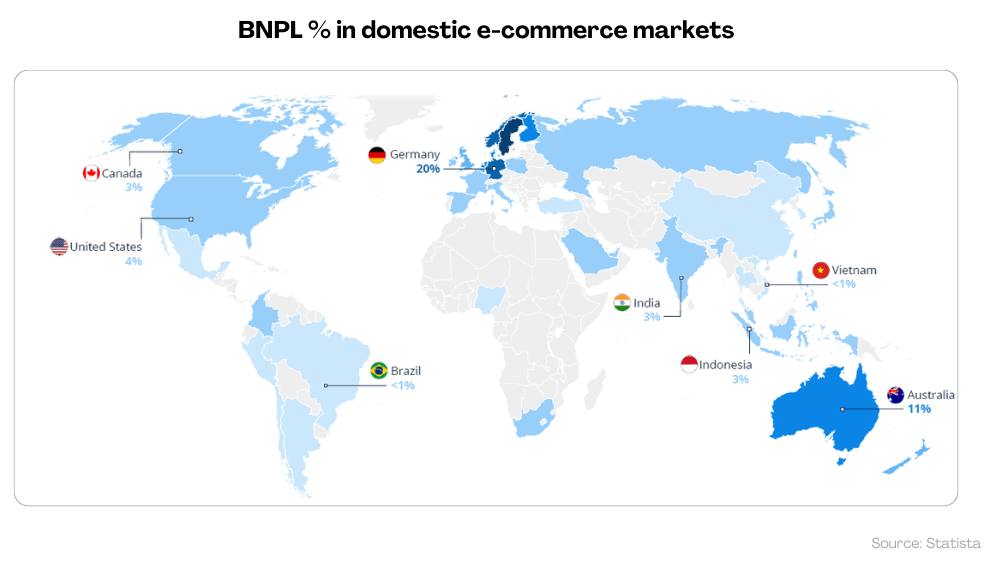
5.   More People Adopting BNPL for High-Value Items

In an era of higher living costs, the BNPL financing method has become an enticing option for consumers. True to its name, this loan type divides the purchase price into equal installments, with the initial payment due at checkout. This approach allows buyers to make immediate purchases while spreading the remaining balance over time. Notably, the model often features minimal or 0% financing and does not necessitate an initial credit check.

The appeal of BNPL is steadily growing among North Americans, particularly for high-value purchases. Consumers find it easier to justify these buying decisions when they can opt for a phased payment approach rather than a lump sum. However, the landscape for BNPL companies may transform in 2024 as traditional financial institutions enter the arena with similar services.

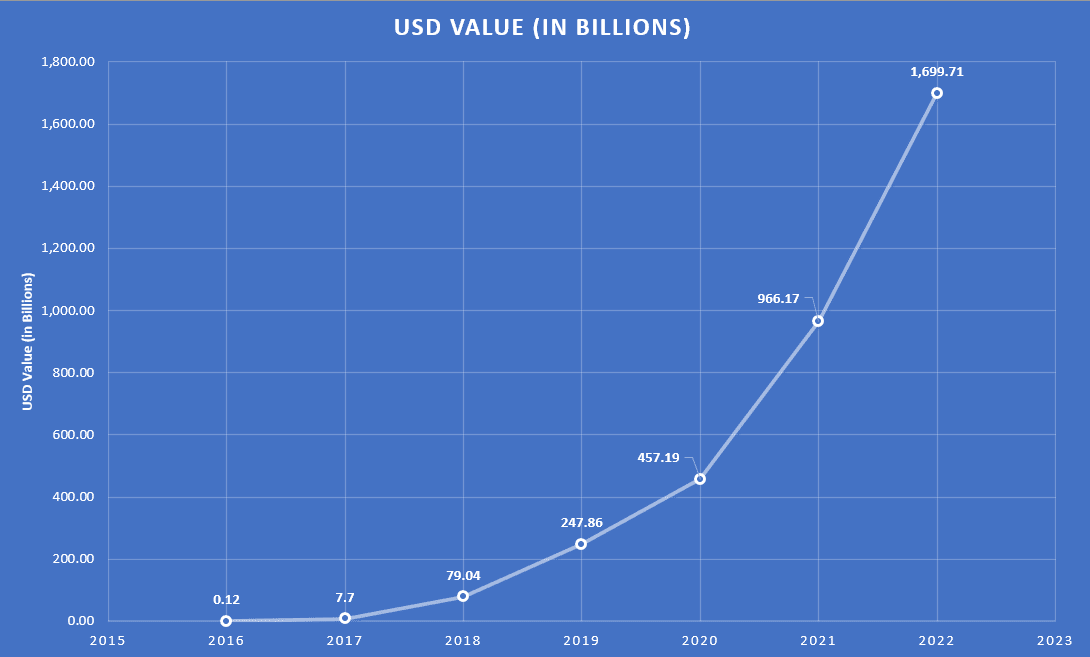
The global buy now, pay later market, valued at $256.54 billion in 2022, is projected to surge to an estimated $3.8 trillion by 2031, reflecting a CAGR of 30.5%.

domestic market of bnpl

6.   Using Consumer Insights for Strategic Growth

In the payments industry, the ability to decipher crucial payment data emerges as a linchpin for informed decision-making. As businesses traverse diverse payment channels, establishing a singular, authoritative repository for payment data gains paramount significance. Taking ownership of this data marks the initial stride toward unleashing its potential, strategically leveraging it to glean valuable insights into consumer behavior and market trends.

The judicious utilization of these consumer insights empowers businesses to tune their marketing and promotional campaigns finely. This tailored approach resonates more effectively with the target audience, building customer engagement and fortifying brand loyalty. This, in turn, becomes a linchpin for achieving sustainable and organic growth within the competitive marketplace.

Using Consumer Insights for Strategic Growth

When wielded adeptly, consumer insight opens avenues for businesses to personalize products, aligning them with the unique needs, desires, and demands of their customer base. Microsoft’s research indicates that organizations leveraging customer behavior to extract insights surpass their peers by an impressive 85% sales growth.

These insights serve as a catalyst for expanding services and product portfolios, devising innovative marketing strategies, preparing detailed customer personas and journey maps, and enhancing existing offerings. The strategic deployment of customer insights elevates the overall customer experience and translates into enhanced revenue streams.

7.   Payment Expectations with Digital Wallets are Still High!

Digital wallets are ushering in a new era, steering away from traditional payment methods. In 2024, businesses keen on meeting consumer demands must closely track this transformative trend. The widespread adoption of these secure and convenient digital solutions promises streamlined transactions and a redefined set of user expectations. The projected growth is staggering, with digital wallets expected to encompass over 5 billion users by 2026.

To stay in sync with evolving consumer preferences, businesses must adopt digital wallet functionality and align with the redefined standards for seamless and secure payment experiences. This shift will fundamentally transform how individuals interact with money and financial services. Understanding and embracing these developments will be imperative for businesses striving to stay ahead, adding significant user value and setting their platform apart in a competitive market.

8.   Importance of Cybersecurity in 2024

As digital transformation continues to reshape various sectors, the specter of cybercrime looms larger, particularly within enterprises. The expansion of the attack surface, propelled by near-field communication technology in the payments realm, has ushered in new cyber risks for digital transactions. Cybercriminals, focusing on exploiting vulnerabilities in digital payment systems, actively seek to pilfer credit card details and other sensitive customer information. Recent developments have cleared that businesses urgently need to review their cybersecurity plans. It is clear from the rising wave of cyber attacks that the old methods of fending off these constantly changing threats are insufficient. Companies must future-proof the security of the data measures in this situation.

To address the mounting cyber risks, companies are intensifying their cybersecurity investments by 7% this year and projecting a 14% increase for the next. On average, companies with revenues ranging from $250 million to $1 billion will allocate $2.9 million next year.

In the face of escalating cybercrime, safeguarding digital payments becomes paramount for companies in 2024 and beyond. This imperative stems from the need to protect customer data and uphold trust and loyalty. Payment processing solutions equipped with robust security features, encompassing advanced encryption technologies, tokenization, and machine learning algorithms designed to identify unusual credit card transactions, stand as essential tools to thwart data leakage and fraud.

Importance of Cybersecurity in 2024

Conclusion

The payments industry in 2024 reflects a dynamic market of evolving trends and transformative shifts. The emergence of micropayments as a subscription alternative addresses consumer concerns, offering a flexible payment model. Mobile payments and digital wallets take center stage, reshaping how transactions occur and highlighting the importance of adaptability. Account-to-account transactions significantly move away from intermediaries, promising swifter and cost-effective transfers.

The impending PCI DSS 4.0 signals a paradigm shift in payment security, necessitating proactive measures for compliance. Buy now, pay later options gain traction, especially for high-value items, while consumer insights become pivotal for strategic growth. The ascent of digital wallets underscores the need for businesses to align with changing user expectations, emphasizing the crucial role of cybersecurity in safeguarding digital transactions. Staying informed and agile is important for businesses seeking success in the ever-evolving payments industry.

Frequently Asked Questions

  1. Q: What does the future hold for payments?

    Fueled by the rise of mobile commerce, global online payments are poised to witness mobile wallets as the predominant method, constituting over a third of all transactions by 2024. In the U.S., mobile wallets are anticipated to surpass physical cards as the primary online payment choice within the next three years.

  2. Q: How rapidly is the payments industry expanding?

    The Digital Payments market is projected to achieve a total transaction value of US$10.64 trillion by 2024.

  3. Q: What trends are shaping the payment industry?

    In our journey through the digital era, key trends transforming the payment processing landscape include mobile payments, cashless transactions, and AI-driven fraud detection. Blockchain technology promises heightened security and transparency, potentially reshaping the industry.

  4. Q: How will technological advancements impact payment systems in the upcoming year?

    Technological progress is enhancing the efficiency and user-friendliness of digital payments. Biometrics, blockchain, and AI advancements are pivotal in securing, streamlining, and making digital payments more accessible to consumers, playing a vital role in the future of this industry.

  5. Q: What regulatory shifts will influence the payment industry in 2024?

    Anticipated regulatory changes in 2024 are likely to focus on consumer protection. Regulators are expected to closely examine the potential impact of banks’ innovative products, services, and technologies on consumers, emphasizing the need for careful scrutiny and safeguards.

Prosa

Visa Strengthens Digital Payments In Mexico With Majority Stake Acquisition In Prosa

The global payments giant Visa has finalized an agreement to buy out a majority stake in the Mexican payment processor PROSA. The undisclosed transaction aims to enhance digital payment adoption in Mexico. The deal is set to conclude in the second half of 2024, subject to regulatory approvals and standard closing conditions.

Under the agreement, PROSA will maintain its independence and use its technology. Visa will support PROSA in expanding its product offerings and share expertise with its existing leadership, who will be retained. The remaining stake in PROSA will continue to be owned by its current shareholders, including HSBC Mexico, Banorte, Santander Mexico, Invex, Banjército, and Scotiabank Mexico.

Key Takeaways:
  • Visa’s Strategic Commitment: Visa’s acquisition of a majority stake in Prosa underscores a strategic commitment to transform Mexico’s payment system. The focus is on adopting innovative and secure digital payment methods within the country, aligning with Visa’s global network strategy.
  • Empowering Global Payments Ecosystem: The investment is poised to empower participants in the global payments system, enabling them to shape Mexico’s payments sector actively. This collaboration promises to broaden possibilities for consumers and merchants, emphasizing the importance of innovation and tech in advancing the payment sector.
  • Enhancing Prosa ‘s Offerings: Visa’s support aims to improve Prosa ‘s offerings by introducing new digital payment solutions and leveraging Visa’s expertise. The collaboration anticipates introducing novel services, including real-time transactions and more advanced technology, fostering increased competition in the Mexican market and benefiting consumers.
  • Strategic Integration Impact: The anticipated closure of the deal in the latter half of 2024 marks a significant development, aligning with Visa’s vision to enhance and diversify capabilities globally. Beyond a mere business transaction, this integration signifies a collaborative exchange of expertise, emphasizing Visa’s commitment to technological advancement and financial inclusivity on a global scale.

Visa’s Strategic Investment In Prosa To Transform Mexico’s Payment System

Visa has made a solid commitment to buy a majority stake in Prosa, a prominent payments processing company in Mexico. The deal’s primary goal is to expedite the country’s adoption of secure and innovative digital payment methods.

Visa's Strategic Investment In Prosa To Transform Mexico's Payment System

Image source: Prosa

According to the deal’s agreement, the Mexican giant will maintain its autonomy as a standalone entity, retaining its technological infrastructure. Visa aims to enhance Prosa ‘s offerings by introducing new digital payment solutions and leveraging its global network expertise.

Visa’s investment is anticipated to empower participants in the global payments ecosystem to play a more prominent role in shaping Mexico’s payment sector. This move is poised to broaden the possibilities for merchants and consumers. It’s worth noting that, as per the acquisition agreement, Prosa ‘s existing shareholders, which include HSBC Mexico, Banorte, Santander Mexico, Invex, Banjército, and Scotiabank Mexico, will retain ownership of the remaining portion of the company.

Eduardo Coello, Visa Latin America’s and the Caribbean’s regional president, emphasized the significance of technology and new creation in their business. He stated that this investment aligns with their network of networks strategy, where they integrate top-notch technologies globally to complement their own. With the advanced technology infrastructure from Visa’s worldwide payments network, they are laying the foundation to create new, innovative payment methods for SMBs and consumers. This development will be in collaboration with local acquirers and issuers in Mexico.

Visa’s move to buy Prosa is set to empower participants in the global payments system, enabling them to play a better role in shaping Mexico’s payment market. This move promises to expand various possibilities for merchants and consumers. Furthermore, Prosa will be ready to bring several fresh advantages to the payment environment in Mexico.

After the deal closes, Prosa will aggressively market these advantages to Mexican cardholders in association with issuers and other payment industry players. This includes a goal to improve Visa brand services, such as more tokenized payments, and the technology underpinning Prosa ‘s brand-agnostic services. He went on to say that Prosa, by using Visa’s array of offerings, will also work to provide new services to the market that will enable real-time payment transactions using more sophisticated technologies. The goal of this continuous innovation-driven solution creation is to boost competitiveness in the Mexican market, which will ultimately benefit consumers.

Prosa ‘s director, Salvador Espinosa, expressed that this transaction will empower them to utilize their capabilities and reinforce their market position. It will broaden their commercial horizons, providing added value to their clients.

Visa’s acquisition of Prosa is anticipated to open avenues for Prosa ‘s partners to offer SMBs new digital payment options, facilitating their expansion by incorporating various Visa products. Through the transformation of transaction data into useful information, these technologies enable companies to improve cardholder experiences overall, maximize revenues and operations, and make well-informed decisions.

Visa sees this deal as an opportunity to expand its global network. Prosa enables the business to provide tokenized transactions and data services. The goal of the additional services that will be progressively added is to improve the e-commerce transaction experiences for both merchants and customers. Visa’s extensive portfolio of AI-powered fraud management solutions will enable this, guaranteeing more dependable and effective transactions for all stakeholders.

When Can You Expect The Visa-Prosa Deal To Close, And What Significance Does It Hold For Visa’s Future Strategy?

When Can You Expect The Visa-Prosa Deal To Close, And What Significance Does It Hold For Visa's Future Strategy?

Image source: Prosa

The anticipated closure of the deal in the latter half of 2024, contingent upon approval from financial authorities, marks a significant development recently. This follows a thorough investigation by COFECE (Mexico’s Federal Economic Competition Commission) last September, focusing on market concentration within Prosa and other processors. The investigation, which concluded with recommendations for operational adjustments, set the stage for this strategic shift.

Visa’s strategic acquisition of Prosa aligns seamlessly with its overarching vision to enhance and diversify capabilities by harnessing cutting-edge technologies on a global scale. This move positions Visa to propel Prosa ‘s existing solutions into new frontiers through the infusion of innovative digital capabilities. Beyond a mere business transaction, this acquisition signifies a collaborative exchange of expertise, where Visa aims to share its wealth of knowledge in managing a worldwide payments network.

Not only that, but this strategic integration between Visa and Prosa holds promise for the evolution of digital payments in Mexico and beyond, emphasizing a commitment to technological advancement and financial inclusivity on a global scale.

About Visa

visa

Visa is the unparalleled leader in digital payments, orchestrating a revolutionary shift in global commerce. At the heart of its influence lies VisaNet, an advanced global processing network that ensures secure and reliable payments worldwide and can handle over 65,000 transaction messages every second. Fueled by an unwavering commitment to innovation, Visa is a driving force propelling the rapid evolution of connected commerce across diverse devices. This relentless pursuit of progress aligns with a grand vision—a future where cashless transactions become ubiquitous for individuals across the globe.

Visa extends its impact through a diverse portfolio encompassing payment cards, mobile payments, transaction processing services, commercial payments, merchant solutions, and various digital services. Beyond its global reach spanning Europe, the Americas, the Middle East, Africa, and Asia-Pacific, Visa plays a pivotal role in supporting local businesses. Headquartered in the innovation hub of San Francisco, California, Visa’s presence reverberates worldwide, underscoring its commitment to shaping a dynamic, interconnected, and technologically advanced future for global financial transactions.

About Prosa

Prosa is a crucial electronic transaction processor in Latin America, boasting over 50 years of dedication to promoting payment methods. Throughout its history, Prosa has been committed to simplifying financial operations, introducing transparency, and enhancing security. This commitment has earned the company recognition as one of the most innovative entities in Mexico.

About Prosa

Specializing in the financial sector, Prosa is a crucial player in the payment media market. The company provides products that streamline card issuance, facilitate transactions at commercial points of sale, and manage ATM transactions. Its services are predominantly utilized by financial institutions operating in the payment media market. With a robust client base comprising issuers and acquirers, Prosa processes over 10 billion transactions annually through its network.

Conclusion

Visa’s majority stake acquisition in Prosa signifies a strategic leap toward transforming Mexico’s payment sector. The commitment to bolstering digital payments aligns with Visa’s global network strategy, emphasizing innovation and collaboration. The autonomy granted to Prosa and Visa’s expertise promises an enriched digital ecosystem in Mexico. The partnership empowers businesses and consumers through new offerings, real-time transactions, and advanced technology.

The anticipated closure in the latter half of 2024, pending regulatory approval, marks a significant milestone in Visa’s international expansion. Beyond a business transaction, this move fosters a collaborative exchange of expertise. It reflects Visa’s dedication to technological advancement and financial inclusivity on a global scale.

Michael G Rhodes becomes the CEO of discover

Michael G. Rhodes Takes The Reins As CEO And President Of Discover Financial Services

Credit card industry leader Discover Financial Services (DFS) has officially named Michael G Rhodes its CEO and president. The appointment is set to take effect on or before 6th March this year, coinciding with his inclusion on the Company’s Board of Directors. Additionally, Mr. Rhodes will assume the role of President at Discover Bank and be appointed to the Discover Bank Board of Directors, effective on the same date.

John Owen, who has served as the interim CEO, President of the Company, and interim President of Discover Bank since August 14, 2023, will continue in these roles until Mr. Rhodes officially joins Discover. Following Mr. Rhodes’ official commencement, Mr. Owen will transition to serving as a member of both the Company’s Board of Directors and the Discover Bank Board of Directors.

Key Takeaways:
  • Leadership Transition at Discover Financial Services: Discover Financial Services (DFS) announces the appointment of Michael G. Rhodes as its CEO and President, effective on or before 6 March this year. This marks a strategic leadership transition for the credit card industry leader.
  • Rhodes’ Extensive Financial Industry Experience: Michael G. Rhodes, a seasoned veteran from TD Bank Group, brings over 25 years of extensive experience in the financial industry to Discover. His background includes leadership roles at TD Bank Group, Bank of America, and MBNA America Bank.
  • Comprehensive Compensation Package Underscores Significance: As part of his compensation package, Rhodes will receive a base salary of $1 million, annual short-term and long-term incentive awards, and a transition award from Discover. This comprehensive package emphasizes the significance of his role in leading DFS.
  • Strategic Leadership Amid Compliance Challenges: Rhodes takes charge at a critical time for Discover as the company addresses regulatory issues and reinforces its compliance efforts. With nearly $500 million dedicated to compliance and risk management, Discover aims to resolve major compliance issues by mid-2024 under Rhodes’ leadership.

DFS Welcomes Michael G. Rhodes as CEO and President: A Look at His Strategic Role

Discover Financial Services has chosen Michael G. Rhodes, a seasoned veteran from TD Bank Group, to step into the role of CEO and president. John Owen, who has been acting as the interim CEO and President of the Company, as well as interim President of Discover Bank since August 14, 2023, will continue in these roles until Mr. Rhodes officially joins Discover. Simultaneously, Mr. Rhodes will undertake the responsibilities of President at Discover Bank and join the Discover Bank’s Board of Directors, with both positions effective on the same date.

DFS Welcomes Michael G. Rhodes as CEO and President: A Look at His Strategic Role

As part of his compensation package, Rhodes will receive a base salary of $1 million, according to Monday’s filing by Discover. Mr. Rhodes brings over 25 years of extensive experience in the financial industry to Discover. Before being a Group Head at TD Bank Group (Canadian personal banking), he oversaw a retail product division serving customers through a network of over 1,000 branches, telephone support, and award-winning online and mobile capabilities.

Mr. Rhodes has held several important positions at TD, including Group Head of Technology, Shared Services, and Innovation. He joined the company in 2011 to oversee the North American Credit Card and Merchant Services unit. Senior leadership positions at Bank of America and MBNA America Bank further highlight his wealth of expertise in the financial services industry.

Mr. Rhodes expressed his honor in joining Discover at a pivotal moment for the company. He looks forward to leading the team of 20,000 employees in fulfilling the essential mission of assisting people in achieving brighter financial futures. Drawing from his career experience, he emphasized his clear understanding of delivering an excellent customer experience at every interaction point.

Confident in Discover’s strong foundation and dedicated employee base, Mr. Rhodes believes the company is well-prepared to seize market opportunities. He eagerly anticipates collaborating with Tom, the management team, and his colleagues as they collectively work towards advancing Discover’s culture, emphasizing compliance and customer service, and driving sustainable long-term financial performance.

TD Bank Group had announced Michael Rhodes’ resignation a few days before the recent announcement, which disclosed that Rhodes had been considered a potential candidate for the Chief Executive Officer position at TD Bank Group.

Discover had been actively seeking someone new for the position of CEO following the abrupt resignation of Roger Hochschild in August. The company faced compliance issues recently, prompting the search for a suitable candidate. Interim CEO John Owen stated that Discover was looking at external and internal applicants for the position during the company’s third-quarter results call in October.

Tom Maheras, Chair of the Board, highlighted that Michael’s appointment results from a thorough search process to find the right leader to guide the company in achieving its strategic and financial objectives. He emphasized Rhodes’ extensive experience and proven leadership in various global banking and payments industry roles. Maheras noted Rhodes’ successful track record in leading sophisticated financial services operations.

Expressing confidence in Rhodes’ leadership, Maheras believes that Discover, under his guidance, will realize its full potential. He expects Discover to provide exceptional customer care at the highest industry standards while continuing its commitment to enhancing risk management, corporate governance, and compliance.

Maheras also extended gratitude to John for his leadership during the CEO search. On behalf of the entire Board, he expressed appreciation for John’s contributions and looks forward to continuing to benefit from his experience and insights as a valued member of the Board.

Michael G. Rhodes Takes Charge At Discover Amid Compliance Challenges

Rhodes will take over as CEO of Discover at a pivotal moment as the business strengthens its compliance efforts and deals with various regulatory concerns. Discover resolved a consumer compliance investigation at its subsidiary, Discover Bank, in September by entering into a consent settlement with the Federal Deposit Insurance Corporation. The SEC is conducting an inquiry after the business revealed in July that there was a problem with the mishandling of cards, which impacted merchants and acquirers.

Due to ongoing regulatory issues, the company is selling its portfolio of student loans. This year, Discover plans to spend close to $500 million on risk management and compliance to address these problems. CFO John Greene expects spending to be the same or higher in the upcoming year. By mid-2024, the corporation hopes to resolve the most significant compliance issues. While at TD’s merchant banking and credit card division in North America, Rhodes played a key role in moving TD’s Canadian credit division from sixth to the top of the industry.

About Michael G Rhodes

Michael G. Rhodes currently serves as the Group Head at TD Bank Group in the position of Canadian Personal Banking, the largest retail bank in Canada, catering to over 13 million customers. His previous roles within TD included the Group Head for Technology, Shared Services, and Innovation from 2017 to 2021. Before that, he held positions such as the Head of Wealth Management at TD Bank and Head of the Consumer Bank at America’s Most Opportunely Bank.

Michael G. Rhodes

Image source

2011 Michael joined TD to lead the North American Credit Card and Merchant Services business. During his tenure, he was pivotal in advancing TD’s Canadian Credit card business from the sixth to the first position within three years.

With over 25 years of experience in the financial services industry, Michael has held senior executive-level positions at Bank of America and MBNA America Bank. His extensive career has taken him across the United States, Canada, Spain, Ireland, and the United Kingdom, where he has contributed to various roles within payments and banking. Notably, he served as the CEO of a portfolio company backed by a top-tier private equity fund, Golder, Thoma, Cressey, Rauner, Inc.; CMO of Maryland Bank National Association America Bank; and CEO of Maryland Bank National Association Europe Bank Limited. Michael began his engineering career at Failure Analysis Associates, a leading engineering and scientific consulting firm.

Michael is a valued member of the Executive Council of The Canadian Bankers’ Association. Beyond his professional commitments, he actively supports several significant social causes. He serves on the Board of Trustees of Duke University and engages in fundraising efforts for St. Michael’s Hospital, a prominent teaching and research hospital in Toronto. Additionally, he is involved with the Boys and Girls Club. His past community involvements include contributions to the United Way, Christiana Care Health Systems, the Thurgood Marshall Scholarship Fund, Winterthur Garden Museum and Library, and the Delaware Symphony Orchestra.

Michael holds a Master of Business Administration from the Wharton School at the University of Pennsylvania. Alongside his business education, he has an engineering degree from Duke University. His commitment to professional excellence and philanthropy reflects his dedication to positively impacting various spheres of life.

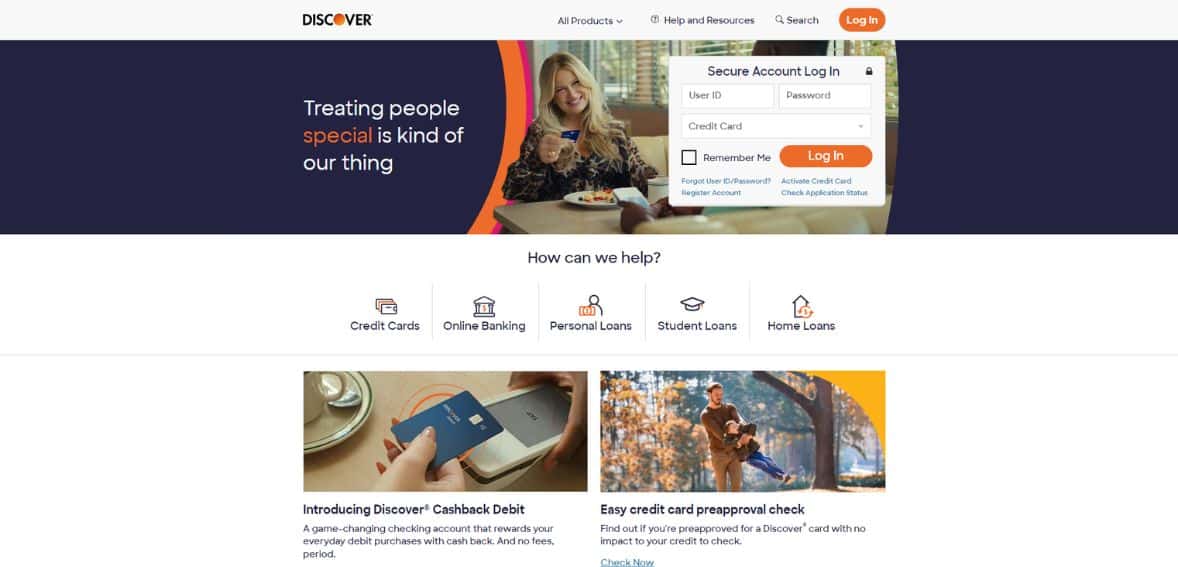
About Discover

About Discover

Discover Financial Services is a holding company that is actively involved in providing direct banking and payment services. Its operations are divided into the Direct Payment and Banking Services segments. The consumer banking offerings encompass a range of products and services, such as personal loans, private student loans, deposit products, and home equity loans. On the other hand, the Direct Banking segment focuses on providing Discover-branded credit cards to individuals and small businesses through the Discover Network.

The Payment Services segment includes Diners Club, PULSE, and the company’s network partners business. This involves issuing debit, prepaid, and credit cards by third parties on the Discover Network. Established in 1986, the company is headquartered in Riverwoods, IL, and has been a significant player in the financial services landscape.

Conclusion

Michael G. Rhodes assumes a pivotal role as the CEO and President of Discover Financial Services, bringing over 25 years of extensive financial industry experience to the position. His appointment, effective in March this year, comes at a crucial juncture for Discover as it addresses compliance challenges. Rhodes, a seasoned veteran from TD Bank Group, is set to lead Discover’s 20,000 employees in achieving the essential mission of fostering brighter financial futures.

The “wide” compensation package underscores the significance of his role, with a focus on customer experience, compliance, and long-term financial performance. As Discover goes through regulatory issues, Rhodes’ proven leadership is anticipated to guide the company toward realizing its full potential, emphasizing exceptional customer care and strategic growth.

Frequently Asked Questions

  1. Q: Who is Discover’s CEO?

    Michael G. Rhodes has been appointed as the next CEO and President of card issuer Discover Financial Services, effective March 6, 2024.

  2. Q: Who was the previous Discover CEO?

    David Nelms served as the CEO of Discover Financial from 2004 to 2018. Joining Discover in 1998 as President and Chief Operating Officer, Nelms played a key role in the company’s leadership. In October 2018, Roger Hochschild succeeded Nelms as CEO. Hochschild, a 25-year veteran of Discover serving as President and Chief Operating Officer since 2004, unexpectedly resigned from his CEO position and the board in August 2023.

  3. Q: What happened to the former Discover CEO?

    In an unexpected move in August 2023, Roger Hochschild resigned as CEO and President of Discover Financial Services. This decision coincided with the company facing potential regulatory action due to a credit card u0022misclassificationu0022 issue. The repercussions of this matter included increased charges for certain merchants and merchant acquirers, with Discover estimating a financial impact of $500 million in the current year.

  4. Q: What Salary Can Rhodes Expect?

    Discover has disclosed that Rhodes’s base salary is $1 million, as stated in the filing released on Monday. Additionally, he is entitled to an annual short-term incentive target of u003ca href=u0022https://www.paymentsdive.com/news/discover-names-banking-executive-new-ceo-michael-rhodes-td-bank/702197/#:~:text=Rhodes’s%20base%20salary%20will%20be,%24750%2C000%20transition%20award%20from%20Discover.u0022u003e$2 millionu003c/au003e and a long-term incentive target of $7 million. Furthermore, as part of the transition, Rhodes will receive a $750,000 award from Discover.

Amazon Excludes Venmo As A Payment Option

Amazon Excludes Venmo As A Payment Option

Amazon has decided to discontinue the option of using Venmo as a payment method starting from January 10, 2024. This change comes over a year after Venmo was initially introduced as a means to cater to the payment preferences of Amazon customers. Although Amazon will still accept Venmo credit and debit cards, it will no longer be possible to link Venmo accounts for payments on Amazon. However, those who have already integrated Venmo into their Amazon wallets will still have a limited time window to continue using this payment method.

The decision to discontinue Venmo came after an announcement made in October 2022 where both Amazon and Venmo highlighted their collaboration as an option for users looking to streamline their purchases on the e-commerce platform. With this change, Amazon is now shifting its focus towards viable payment methods while gradually phasing out the direct use of Venmo accounts. As Amazon excludes Venmo as a payment option let us understand its implication for Amazon users.

Key Takeaways
  • Amazon’s Decision: Amazon is discontinuing the direct use of Venmo accounts for payments on its platform starting January 10, 2024. This change follows a partnership announced just 14 months ago and indicates a strategic shift in Amazon’s payment methods.
  • Impact on Users: Current Amazon users who have already linked Venmo to their accounts will have a limited window to continue using this payment option until the specified date. Amazon advises users to update their payment methods to avoid disruptions in one-time and recurring payments, including Prime memberships and subscriptions.
  • PayPal’s Response: While PayPal, Venmo’s parent company, acknowledged the change, they emphasized their ongoing collaboration with Amazon and reassured customers that other Venmo-related payment methods, such as Venmo credit and debit cards, will still be accepted on the platform. PayPal’s stock saw a slight decline following the announcement.
  • End Note: The decision comes at a challenging time for PayPal, with its stock value dropping by 16% over the past year. This move by Amazon adds to the competitive pressures PayPal faces, particularly with Stripe strengthening its relationship with Amazon and progressing towards an IPO.

Amazon Excludes Venmo: Understanding The Reason Behind This Decision

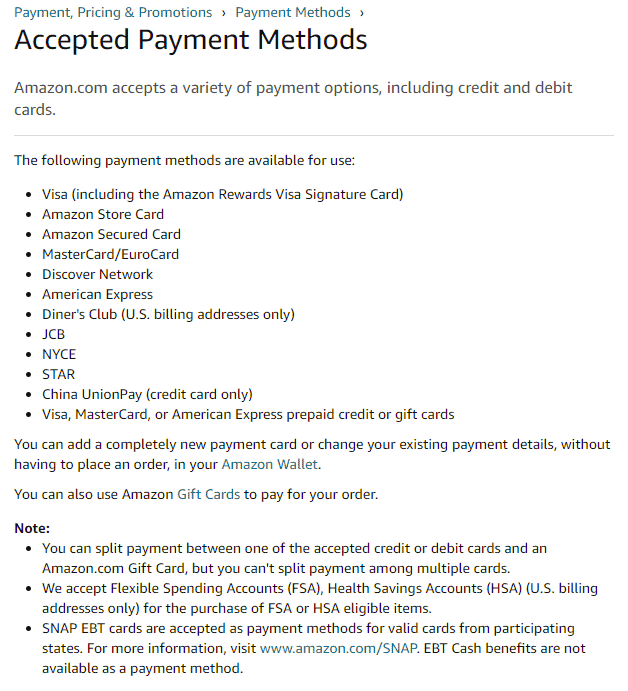
Amazon has informed its users that they will no longer be able to use Venmo as a payment option. The company clarified that while direct Venmo payments will cease, they will continue to accept Venmo debit and credit cards. This change aligns with a separate announcement from Venmo itself, indicating a shift in their partnership dynamics. According to Amazon, recent updates have led to the decision that Venmo can no longer be added as a new payment method. However, for users who already have Venmo linked to their Amazon accounts, this payment option will remain accessible until the specified date of January 10, 2024.

list of acceptable payment systems on Amazon

Source: Amazon

The decision to remove Venmo as a payment option on Amazon has caught many by surprise, especially since the exact reason behind it hasn’t been disclosed. While some speculate it might be due to slower-than-expected adoption, it’s puzzling given Amazon’s initial enthusiasm in introducing Venmo as a checkout option last October. Venmo, known for its quick money transfers between users, seemed like a fitting addition to Amazon’s various payment choices at that time.

And despite PayPal’s efforts over the past ten years to incorporate Venmo into its overall business strategy after acquiring it, this move by Amazon is a setback after just 14 months of partnership. For Venmo, this partnership was a step toward diversifying beyond P2P transactions, potentially increasing its revenue through transaction fees from retail sales. While the collaboration was announced in 2021, it wasn’t until October 2022 that the integration became active.

Earlier attempts as well by PayPal to boost Venmo’s popularity among teenagers didn’t pan out as hoped. Now, with Amazon dropping Venmo as a payment choice, PayPal faces another challenge in its growth plan. They reassured customers that numerous other payment methods remain available for convenience.

PayPal’s spokesperson, Joshua Criscoe, in a recent interaction, said that Venmo and Amazon have decided to deactivate Venmo as a payment method on Amazon for now. However, customers can still link Venmo cards to Venmo accounts for Amazon payments. Criscoe emphasized PayPal’s strong relationship with Amazon and expressed optimism about its future growth. Following this announcement, PayPal’s stock experienced a slight decline, too.

Steps For Subscribers To Avoid Disruptions

Amazon’s changes will affect one-time purchases and recurring payments like Prime memberships and other subscriptions. If you’ve set up Venmo as your go-to method for these payments, Amazon cautions there could be hitches.

To avoid any issues, switching your payment details before the mentioned date is a good idea. Simply log into your Amazon account, head to the “Memberships and Subscriptions” section, and make the necessary updates.

While Venmo, along with PayPal, will no longer be a payment option on Amazon, the platform continues to offer a diverse array of payment methods to accommodate its users. Customers can conveniently make purchases using various gift cards, including Visa, Amazon, American Express, and MasterCard. Additionally, payments can be processed directly through checking accounts.

Amazon’s range of accepted payment methods extends to major credit card options such as Prime Visa, Visa, Amazon Secured Card, Amazon Store Card, Discover, MasterCard/EuroCard, JCB, China UnionPay, and American Express. It’s important to note that specific payment options may be applicable only for certain types of purchases. For customers with a US billing address, Amazon offers the flexibility to utilize FSA or HSA for eligible items. Moreover, in select states, the platform also accepts SNAP EBT cards, allowing users to purchase groceries seamlessly.

PayPal Facing Troubles From All Sides

PayPal has been facing challenges recently, reflected in a 16% drop in its stock value over the past year. Adding to the pressure, Stripe, another payment processor, has been strengthening its ties with Amazon and is moving forward with plans for an IPO.

In an effort to face these challenges, PayPal appointed a new CEO, Alex Chriss, in September. Chriss has been actively working to strengthen partnerships within the tech and finance industries. One notable achievement under his leadership was a collaboration with Apple. In October, PayPal announced that customers could link their PayPal or Venmo cards to Apple Wallet. Additionally, PayPal ventured into the realm of stablecoins earlier in the year, a move that caught the attention of the SEC, resulting in a subpoena.

About Amazon

amazon com store iii 72679549

Amazon.com, Inc. is a prominent player in the industry selling a wide range of consumer products and subscriptions both online and in physical stores worldwide. The company operates across three segments – International, AWS, and North America. Amazon offers a selection of products from both its inventory and third-party sellers. They sell devices like Fire tablets, Kindle e-readers, Rings, Fire TVs, and Echo smart speakers. Additionally, Amazon creates media content and provides platforms for creators such as musicians, authors, and Twitch streamers to showcase their work and make sales.

In addition to their presence, Amazon offers a suite of services through AWS, including cloud storage, computing capabilities, analytics tools, and machine learning solutions. They also handle product fulfillment services for sellers while providing content subscriptions and advertising services. Amazon Prime’s membership program offers benefits to subscribers. Established in 1994 with its headquarters located in Seattle, Washington; Amazon caters to a clientele comprising sellers, consumers, enterprise developers, advertisers, and content creators.

About Venmo

venmo business accounts

Venmo was established in 2009 as a straightforward solution for sending money through text messages. By the end of 2010, they introduced an app to make transactions even easier. Initially, Venmo mainly focused on person-to-person (P2P) payments and simple transactions like paying for food trucks. However, they have since expanded their services to allow users to make in-person payments to various merchants. Users have the flexibility to fund their Venmo accounts and link them to bank accounts, debit cards, or credit cards. At present, more than 2 million merchants accept Venmo payments. Venmo employs the most advanced security measures and specialized algorithms to prioritize user safety to protect information and prevent unauthorized activities.

The user-friendly Venmo mobile app is available on both iOS and Android platforms, enabling users to transfer funds from their Venmo balance into their bank accounts. In terms of ownership history, Braintree acquired Venmo for $26.2 million in 2012 before being acquired by PayPal in December 2013. Today, Venmo operates as part of the PayPal family.

Conclusion

The decision made by Amazon to remove Venmo as a payment option reflects the changing interest in e-commerce partnerships and the strategies they employ. Although the exact reasons behind this move have not been disclosed, it highlights how online retail is an environment where alliances can shift based on factors like user adoption rates and strategic business decisions. While this transition may cause some inconvenience for Amazon users, they have a range of alternative payment methods available to ensure minimal disruption. It also serves as a reminder of the importance of reviewing and updating payment settings, especially when changes are announced.

On the other hand, for PayPal, the Venmo situation adds to a series of challenges highlighting the highly competitive nature of the payment processing industry. As both Amazon and PayPal steer through these shifts, they continue exploring opportunities for growth and innovation to provide consumers with secure payment options. Overall, this development demonstrates how fluid the digital payment ecosystem is, emphasizing adaptability and foresight as qualities. Moving forward, it will be fascinating to observe how these industry players continue to evolve and shape the future of transactions.

freedompay

FreedomPay Teams Up With Citi Retail Services To Enhance Consumer Choice At POS Through Citi Pay

FreedomPay and Citi Retail Services have partnered to revolutionize how consumers shop. By integrating with the products of Citi Pay, this collaboration will enhance the point of sale experience for merchants, thereby expanding the array of lending solutions available to shoppers.

This unique synergy combines the strengths of FreedomPay, a leader in commerce technology, and Citi Retail Services, globally recognized for their payment expertise. The result is a user-friendly association for both merchants and consumers. This collaboration marks a shift in point of sale (POS) lending introducing choices and flexibility. By joining forces, these industry leaders demonstrate their commitment to innovation and pave the way for an exciting chapter in improving the retail experience.

Key Takeaways:
  • Revolutionizing Consumer Experience: The collaboration between FreedomPay and CRS signifies a groundbreaking effort to revolutionize the consumer experience at the point of sale. By integrating Citi Pay embedded digital payment products, this partnership introduces a new era of choice and convenience, elevating the overall journey for merchants and consumers.
  • Empowering Consumer Financial Control: The strategic alliance empowers consumers with unprecedented control over their funding decisions by offering real-time choices in lending solutions at the point of sale. This flexibility not only enhances the shopping experience but also aligns with the growing demand for personalized and adaptable payment options.
  • Diversification of Payment Offerings: With the integration of Citi Pay products, merchants can diversify their payment offerings, including options like Buy Now, Pay Later (BNPL), or credit cards. This transformative partnership aims to simplify Citi Pay solutions for merchants and customers, expanding the availability of financing options in the retail sector.
  • Customer-Centric Shopping Experience: The collaboration emphasizes creating a customer-centered shopping experience by seamlessly integrating Citi Pay Credit and Citi Pay Installment Loan into merchants’ checkout experiences. This approach bridges the gap between flexibility and seamless digital transactions, aligning with the evolving expectations of modern retail consumers.
  • Anticipation for Ongoing Opportunities: Terry O’Neil’s anticipation for ongoing opportunities reflects the commitment to continuous innovation and expansion. As the collaboration progresses, integrating embedded digital payment products is expected to unlock new avenues for both FreedomPay and Citi Retail Services, shaping the future of POS transactions in the retail industry.

FreedomPay and Citi Retail Services’ Strategic Alliance

FreedomPay and Citi Retail Services' Strategic Alliance

Image source: FreedomPay

FreedomPay and Citi Retail Services are uniting to revolutionize the consumer experience at the point of sale through Citi Pay embedded digital payment products. This strategic alliance merges FreedomPay’s cutting-edge technology with Citi’s extensive payments expertise, culminating in a seamless and user-friendly journey for merchants and consumers. By introducing choice and convenience, the collaboration elevates the customer journey, offering diverse payment options and lending solutions at the point of sale.

This transformative partnership not only grants consumers the flexibility to choose their preferred lending solutions on the spot but also enhances overall shopping satisfaction. Empowering consumers with control over their funding decisions, the collaboration enables merchants to diversify their payment offerings, including options like BNPL or credit cards. This innovative venture signifies a pivotal step towards enhancing the dynamics of consumer transactions and establishing a more enriched retail market.

Chris Kronenthal, President at FreedomPay, expressed enthusiasm about collaborating with Citi Retail Services. He stated that working together to introduce Citi Pay’s products signifies their commitment to providing advanced commerce technology. This partnership aims to empower consumers with personalized choices for lending solutions. Kronenthal emphasized their dedication to enhancing consumers’ and merchants’ overall shopping experience.

About FreedomPay

The partnership aims to simplify Citi Pays by using digital payment products available to merchants and customers. This will help expand the availability of financing options in retail. This collaboration signifies a commitment to empowering consumers with informed buying decisions by allowing them to tailor their financing choices according to their financial preferences. Integrating Citi Pay’s products into the FreedomPays platform will create a customer-centered shopping experience. It will bridge the gap between flexibility and seamless digital transactions in the changing world of retail commerce.

Terry O’Neil, Head of Connected Commerce and Strategic Growth for Citi Retail Services, highlighted the partnership with FreedomPay to seamlessly integrate Citi Pay Installment Loan and Citi Pay Credit into merchants’ checkout experiences. This collaboration aims to simplify the process for merchants, irrespective of their scale or size, in offering new payment alternatives and increased choices to their consumers. O’Neil anticipated the ongoing opportunities this partnership would unlock as they expanded their ingrained digital payment offerings in the upcoming years or months.

About FreedomPay

FreedomPay offers a comprehensive commerce platform tailored for businesses seeking versatile cashless payment solutions. Founded by Tom Durovsik in 2000, the company has established itself as a trusted provider in various sectors, including retail, hospitality, gaming, healthcare, financial services, and education. Its white-label approach sets FreedomPay apart, allowing clients to customize the platform to align with their specific requirements.

Regarding security, FreedomPay has earned validation from the PCI Security Standard Council for P2PE. Additionally, the platform boasts NFC, DCC, and EMV capabilities, further enhancing its robust security features. These certifications underscore the company’s commitment to safeguarding transactions and customer data, providing peace of mind to its global clientele. Beyond security, FreedomPay enhances the overall customer experience by streamlining cafe operations and improving speed and convenience. The platform offers value-added services such as guest loyalty programs and online purchasing options. These features not only drive customer engagement but also contribute to increased sales and customer satisfaction.

About Citi Retail Services

Citi Retail Services

Image source: Citi Retail Services

Citi Retail Services (CRS), a privately held company under the leadership of CEO Bill Johnson introduces a new era of private label and co-branded cards that transcend traditional buying power augmentation. Beyond financial transactions, these innovative programs prioritize communication and collaboration to forge lasting loyalty, foster community, and fulfill the commitment to elevated customer support.

Partnering with CRS extends beyond a transactional relationship; it establishes a strategic alliance that uplifts your consumer, commercial, specialty, or franchise-oriented business. With a track record of serving global giants, regardless of scale, CRS offers tailor-made solutions ranging from conventional plastic to cutting-edge digital wallets. Differentiating from competitors like Celerant Technology led by Ian Goldman, CRS epitomizes a commitment to uniqueness, ensuring that its solutions align seamlessly with your business and customer requirements.

Conclusion

The collaboration between FreedomPay and CRS represents a transformative leap in reshaping the consumer experience at the point of sale. By seamlessly integrating the products of Citi Pay into FreedomPay’s advanced commerce technology, this partnership introduces unprecedented choices and flexibility for merchants and consumers. The strategic alliance signifies a commitment to innovation, empowering consumers with personalized lending solutions and enhancing overall shopping satisfaction.

This groundbreaking venture not only streamlines the checkout experience for merchants but also brings forth a new era of consumer-centric transactions. The introduction of Citi Pay Credit and Citi Pay Installment Loan into merchants’ checkout experiences underscores the commitment to simplifying the process and providing increased payment options.

As both companies continue to expand their embedded digital payment products, this collaboration is poised to unlock ongoing opportunities, setting a benchmark for integrating technology, finance, and consumer choice in the dynamic landscape of retail commerce. Chris Kronenthal and Terry O’Neil’s enthusiasm reflects a shared vision of shaping the future of retail, where flexibility, innovation, and a seamless shopping experience are at the forefront.

1 13

IRS Mileage Rates 2024

The year 2024 is upon us and as we drive forward the Internal Revenue Service (IRS) has announced the updated mileage rates for this year. The IRS recently announced the updated mileage rates for 2024 with slight changes compared to last year. Specifically, the mileage rate for business travel has increased by 1.5 cents per mile. However, 1 cent per mile is decreased for medical and moving purposes.

These annual adjustments matter for businesses planning their budgets for the upcoming tax year. Companies must align their mileage reimbursement policies with these new IRS mileage rates for 2024.

What Are IRS Mileage Rates?

The IRS mileage rate is the amount you get reimbursed when you use your personal vehicle for work-related trips. This rate covers various vehicle costs, such as maintenance, depreciation, and fuel. It applies to vehicles like cars, vans, and trucks.

Typically, this reimbursement is calculated for each mile driven for business purposes. Instead of per-mile calculations, some companies might offer a set monthly payment to employees who frequently use their cars for work. For contractors and self-employed individuals, business-related mileage can be deducted from their annual taxes. Likewise, businesses can count employee mileage reimbursements as a deductible business expense.

The IRS Mileage Reimbursement Rates for 2024 are as follows:

  • For business travel, the rate is $0.67 per mile, up by $0.015 compared to 2023.
  • For medical or moving purposes for qualified military members, it’s $0.21 per mile, a decrease of $0.01 from last year.
  • Charitable organizations will continue to use the set rate of 14 cents per mile, which remains unchanged.

These rates, effective from January 1, 2024, are crucial for calculating the costs you can deduct when using your vehicle for these specific purposes.

How Is The 2024 Mileage Rate Different From The 2023 Mileage Rate?

There have been some changes in the mileage reimbursement rates between 2023 and 2024. Specifically, the rate for business-related driving has increased slightly from $0.655 per mile in 2023 to $0.67 per mile in 2024. On the other hand, the rate for moving-related and medical driving has slightly decreased from $0.22 per mile in 2023 to $0.21 per mile in 2024. Meanwhile, the rate for driving on behalf of organizations remains consistent at $0.14 per mile for both years.

How Is The 2024 Mileage Rate Different From The 2023 Mileage Rate?

Here’s a simple comparison of the federal mileage reimbursement rates for both 2023 and 2024:

PurposeRate for 2024Rate for 2023
Business-Related Driving$0.67$0.655
Medical and Moving Purposes$0.21$0.22
Service of Charitable Organizations$0.14$0.14

Understanding Standard Mileage Rate For Businesses

If you’re a self-employed individual or work, as a contractor it’s important to have an understanding of the mileage reimbursement rate. This rate plays a role in your planning as it determines the amount you can potentially deduct from your taxes for using your car for business-related purposes.

It’s worth noting that not all car uses are eligible for tax deductions. For example, regular commuting to your workplace doesn’t qualify as mileage. However, when it comes to business-related trips things change. Trips made for meeting clients, attending business meetings or even traveling to job sites can be considered for mileage rate.

When calculating these deductions you have two options. You can choose to use the mileage rates the government sets or deduct the actual expenses related to using your vehicle. This includes expenses such, as vehicle repairs, parking fees, depreciation, and even gasoline costs. However, it’s crucial to understand that you cannot claim deductions based on the standard mileage rate and the actual expenses – double dipping is not allowed.

Difference Between Actual Expenses And Standard Mileage Deductions For Businesses

Difference Between Actual Expenses And Standard Mileage Deductions For Businesses

There are two main methods for calculating your vehicle’s deduction – actual expenses and standard mileage. Let’s understand both:

1.    Actual Expense:

The Actual Expense method means you add up all the real costs you had for your vehicle during the year. These costs must be related to your business to count as tax deductions. Here are some things you can deduct if you used them for business:

  • Car insurance
  • Lease payments
  • Maintenance like oil changes and tire rotations
  • Gasoline
  • Depreciation
  • Registration and licensing fees
  • Buying new tires
  • Tolls
  • Registration Charges

If you haven’t tracked which costs are for business use, that’s okay. You can figure out the business portion by estimating how much you use the vehicle for work. First, total all your yearly costs. Then, multiply that by the percentage of time you use the vehicle for business.

2.    Standard Mileage

Determining the expenses associated with driving can be relatively straightforward if you opt for the standard mileage deduction method. Here’s how it operates; simply multiply the miles you’ve traveled for business purposes by a rate established by the IRS—this rate factors in costs such as fuel, vehicle maintenance, and depreciation. However, it’s crucial to maintain a record of the miles driven for business reasons. This record is evidence to substantiate your deduction claims in case the IRS requests verification.

But remember there’s a catch. You can only utilize the mileage deduction if you either own or lease the vehicle used for business purposes. If your business involves using various vehicles things can become more complex. The rules governing deductions for multiple vehicles can necessitate more attention to detail. Therefore, these guidelines must be grasped to ensure accurate deductions are made.

To figure out your business mileage for the year, first, find out how many total miles your vehicle was driven. Next, calculate the percentage of time the vehicle was used for business. For example, if it’s used for business half the time, you’d multiply the yearly miles by 50%. After that, multiply this business mileage by the standard mileage rate.

Choosing Between Actual Expenses and the Standard Mileage Rate: What’s Best for You?

Deciding between tracking your actual car expenses or using the standard mileage rate for tax deductions depends on your preference and how detailed you want to be in your record-keeping. Regardless of your chosen method, it’s essential to maintain an accurate log of your car’s mileage for deductible purposes. This means regularly noting the miles traveled for medical, charitable, or business activities.

If you track actual expenses, your record-keeping will extend beyond just mileage. You’ll also need to document other costs such as maintenance, service, insurance, and fuel. Thankfully, there are various apps available that can help you keep track of these expenses efficiently.

However, it’s crucial to understand that you can’t mix and match methods. If you decide to use the standard mileage rate, which is designed to encompass all the costs associated with operating a vehicle, you can’t separately deduct other vehicle-related expenses. The IRS standard rate is structured to cover everything from fuel and maintenance to depreciation and insurance, so it’s designed to simplify the deduction process for taxpayers.

How Do You File For Mileage Rate For Businesses?

If you own a business or work for yourself, you’ll need to report your vehicle expenses on a specific tax form called Schedule C. Here’s a breakdown of what you’ll need to do:

1. Record Expenses: On Schedule C, you’ll focus on Part II, Line 9. Here, you can choose between two options – claim the standard mileage rate or calculate your vehicle expenses.

2. Provide Vehicle Details: In Part IV of Schedule C, you’ll share basic information about your vehicle. This includes:

  • When you started using the vehicle for business.
  • The total distance you drove the vehicle, breaking it down into:
    • Business-related trips
    • Commuting to work
    • Personal use or other reasons
  • Whether the vehicle was available for personal use outside of work hours.
  • If you or your spouse have another car you use for personal reasons.
  • Any supporting documents you have for your expenses. This could be a mileage logbook or other records that show how you calculated your deductions.

3. Choose Your Method: You can complete Schedule C on paper or online. If you prefer the online route, you can use the IRS e-file system or hire a professional tax service to assist you.

Other IRS Mileage Rate Types

Other IRS Mileage Rate Types

Understanding Standard Mileage Rate For Service Of Charitable Organizations

If you use your personal vehicle for charitable work, you can claim a deduction for the miles driven, as long as the organization hasn’t already reimbursed you. Here are some key points to remember:

  • The travel should be for a recognized charitable group.
  • It shouldn’t be for personal fun or vacation.

The mileage rate set for charitable driving is $0.14 per mile, which hasn’t changed since 1998. However, if you prefer, you can deduct the actual costs of gas and oil instead. But remember, other car-related expenses like insurance or maintenance aren’t deductible.

You can still deduct parking and toll fees, whether you choose the standard mileage rate or actual expenses.

If you’re traveling for charity but not in your car, you can deduct expenses like airfare or meals for trips longer than a day. To claim these deductions, keep good records. Maintain a mileage log for your car and save fuel receipts if you opt for actual expenses. Also, hang onto receipts for other travel costs you plan to deduct.

How Do You File For Mileage Rate For Service Of Charitable Organizations?

When it comes to claiming mileage deductions for charitable work, you’ll need to follow specific guidelines to ensure you’re doing it correctly. If you’ve volunteered for a charity and used your vehicle, you can deduct the mileage. However, it’s crucial to keep accurate and timely records. Here’s what you should keep track of:

  • Mileage Logbook: Maintain a detailed logbook that records each trip you make for the charity. Include dates, destinations, and the number of miles driven for each trip.
  • Fuel and Oil Costs: If you’re deducting actual vehicle expenses instead of using the standard mileage rate, keep receipts or records of fuel and oil expenses related to your charitable work.

Understanding Standard Mileage Rate For Moving Related Deductions

The IRS considers moving expenses as costs you face when you move for a new job or get transferred to a different location. However, from 2018 up until 2025, the TCJA Act removed the ability for most people to deduct these costs from their taxes. But there’s an exception: active-duty military members can still claim moving expenses if they move due to a military order for a permanent change in their assignment.

Here’s what a permanent change of station means for military personnel:

  • Moving from your home to your first duty location.
  • Shifting from one permanent duty location to another.
  • Returning home from your last duty location within a year after leaving active service, as joint travel rules allow.

How Do You File For Mileage Rate For Moving Related Deductions?

Armed Forces members can claim moving expenses as a deduction on their federal taxes using IRS Form 3903. When it comes to tax deductions for moving expenses it’s crucial to understand the types of costs that qualify. There are areas where you can claim deductions; moving, storage, and travel. Specifically, when moving your household belongings, you can deduct various expenses. This includes costs for packing materials transporting a trailer using storage facilities and even insuring your items.

It’s important to note that these deductions only apply to expenses incurred within a specific timeframe. To be eligible the costs must occur within 30 days after your belongings have been moved from your residence and before they arrive at your new home. By keeping these guidelines in mind, you can ensure that you accurately claim the deductions to which you’re entitled.

Understanding Standard Mileage Rate For Medical-Related Deductions

If you have used your car for purposes there are various options for potential tax deductions. Specifically, you can deduct the mileage when you drive to hospitals, appointments, or other healthcare facilities. Moreover, if you are responsible for transporting a family member or another person to receive care those miles can also be deducted.

This applies even if you drive someone with a health condition as part of their prescribed treatment. In addition to mileage, you can also claim expenses such as parking fees and tolls. However, if you prefer not to deduct the mileage an alternative is to claim out-of-pocket expenses directly related to using your car like gas and oil costs. It’s important to keep in mind that these expenses must be specifically connected to your trips and cannot include car maintenance or repair costs or insurance premiums, in this context.

How Do You File For Mileage Rate For Medical Related Deductions?

Understanding the medical mileage deduction involves more than just tracking the miles you drive for healthcare purposes. The IRS provides guidelines in Publication 502 that detail which expenses qualify and how they are limited based on your income. When it comes to income limitations for this deduction, there are two main categories based on age:

  • Under 65 Years Old: If you’re employed and under the age of 65, your deductible medical expenses, including mileage, must exceed 7.5% of your adjusted gross income to qualify.
  • 65 Years and Older: For those who are 65 or older, the threshold increases to 10% of your adjusted gross income.

To calculate your deductible miles, you’ll subtract your qualified medical miles from your total annual mileage. It’s important to note that deducting medical miles doesn’t reduce your overall yearly mileage count; both types of miles continue to add up over time.

Furthermore, it’s not just doctor visits that contribute to your medical mileage. Trips to diagnostic centers, therapy sessions, and even picking up prescriptions all count toward your deductible medical miles. Keeping track of these various trips ensures you can accurately claim this deduction while staying compliant with IRS guidelines.

Transportation-related expenses may also qualify for deductions if they relate to medical care. However, it’s crucial to understand that these deductions typically apply only when the medical care is of significant importance, such as treatments for life-threatening conditions. Eligible expenses might include costs for taxi, plane, bus, or train tickets taken for medical visits, expenses for ambulance services, or even vehicle costs for a parent required to accompany a child to medical appointments.

Factors Affecting Rate Changes In 2024

Understanding the factors that influence changes in business mileage rates can help you better navigate your expenses. As of January 1, 2024, the standard mileage rate for business purposes has been adjusted to $0.67 per mile, up from the mid-2023 rate of $0.015. Several factors have contributed to these adjustments:

  • Fuel Price Fluctuations: In 2023, we saw a significant shift in fuel prices. After a spike in the summer of 2022, fuel costs have decreased by more than 20%. This reduction directly impacts driving expenses, making it more affordable to travel by car for business purposes.
  • Vehicle Acquisition Costs: Although the price of buying a new car has been going up, the rate of increase has slowed down. Unlike years prior, when prices skyrocketed the average cost of a vehicle has only risen by about 1.5% annually. This represents the smallest increase we’ve witnessed in seven years, which brings some relief to businesses when investing in vehicles initially.
  • Depreciation Concerns: Economic factors like inflation and supply chain challenges have led to a surge in demand for used vehicles. This increased demand for pre-owned cars has led to lower resale values for new vehicles. As a result, the vehicle depreciation rate has risen, making it more expensive to own and operate a car over time.

The IRS sets a standard rate for business mileage that helps employers reimburse their workers for using personal vehicles on the job. This rate works well for those who don’t drive a lot for work, around 5,000 miles or less each year.

However, for those who drive more, the IRS rate might not cover the actual costs of using a car for work. Costs like gas, maintenance, and even where someone lives can change how much it costs to drive to work. This means some workers might get too much or too little money to cover their expenses.

A method called the Fixed and Variable Rate (FAVR) is recommended to make things fair for everyone, especially those who drive a lot. FAVR considers the real costs of having a car and buying fuel, and it adjusts for where workers live and work. This way, everyone gets a fair amount to cover their work-related driving expenses.

Conclusion

The IRS has updated the mileage rates for 2024, affecting various sectors including business, medical, moving, and charitable services. While the business travel rate has seen a modest increase, the rates for medical and moving purposes have seen a slight reduction. These adjustments are pivotal for businesses and individuals alike, impacting budgeting and tax deductions for the year.

Understanding and applying these rates ensures accurate financial planning and compliance with IRS guidelines. Whether it’s for calculating business expenses or charitable activities, being aware of these standard rates helps make informed decisions and maximize eligible deductions.

Frequently Asked Questions

Q: What Sets The Flat Rate Apart from the Per-Mile Rate?

Many businesses offer flat monthly allowances as a car reimbursement for employees who frequently use their own vehicles for work. While flat rates can simplify the reimbursement process and help adhere to legal requirements, they may not always be the most cost-effective option.

In fact, using flat rates could potentially lead to overcompensation for mileage, which might result in additional tax implications. Hence, many organizations opt for a per-mile rate, aligning with the standard IRS mileage rate, as it often proves more economical and avoids overpayment.

Q: What Expenses Does the Business Mileage Rate Include?

When employees use their personal vehicles for work-related tasks, the IRS mileage rate serves as a comprehensive reimbursement guideline for all types of automobiles, including cars, vans, pickup trucks, and panel trucks.

This rate encompasses both variable and fixed vehicle operation expenses. Variable costs cover routine maintenance like oil changes, tire rotations, fuel, and repairs. In contrast, fixed costs, such as insurance, registration, lease payments, and vehicle depreciation, are also considered. It’s essential to note that tolls, parking fees, and geographical variations are not factored into the IRS mileage rates.

Q: How Should Businesses Prepare for Rate Changes in 2024?

As 2024 approaches, businesses and individuals alike must prepare for any impending rate adjustments proactively. Key steps to consider include:

  • Monitoring and promptly reviewing the updated IRS mileage rates.
  • Ensuring that accounting or reimbursement software is updated to reflect the new rates.
  • Informing and educating employees about these rate changes, particularly those who frequently use their vehicles for business-related activities.

Q: Are Receipts Necessary for Claiming Mileage Deductions?

Maintaining a detailed mileage logbook is essential if you opt for the standard mileage deduction method. This logbook should be securely stored with your tax records for reference.

However, if you decide to itemize your vehicle-related expenses for deductions, you will need the mileage logbook and must also retain receipts for each deductible expense you plan to claim.

Key Tech Trends And Stories To Keep An Eye On In 2024

Key Tech Trends And Stories To Keep An Eye On In 2024

As we are in 2024, it’s clear that technology’s rapid evolution won’t be slowing down. The advances that made 2023 a standout year, like machine intelligence and blending the digital with the real world, will keep transforming our lives.

One key focus for the upcoming year will be balancing innovation with environmental responsibility. The goal isn’t just to advance technologically and minimize and even reverse environmental harm. From advancements like foldable phones to integrating AI into software and AR & VR, 2024 promises even more excitement. Here are some of the major tech trends to watch in 2024.

Summary: Key Tech Trends
  • Generative AI’s Rise: Generative AI, epitomized by tools like ChatGPT, is moving beyond the realm of specialized applications to become a staple in everyday tools. Its integration into search engines and office software signals its growing importance in enhancing efficiency and productivity.
  • Foldable Phones: The mobile tech arena is poised for a significant shift with the mainstream adoption of foldable phones. As prices become more accessible, these innovative devices are expected to dominate smartphone lineups, offering users both novelty and functionality.
  • AR & VR: While companies like Apple are betting big on mixed-reality headsets, the mass adoption of AR and VR technologies remains a challenge. Despite advancements, factors like high costs and limited content will likely delay their integration into daily life.
  • Self-Driving Cars: Self-driving cars’ trajectory is marked by optimism and hurdles. Although advancements in Level 3 driver assistance technology are promising, the widespread rollout of fully autonomous vehicles may face delays due to regulatory, technological, and public trust issues.

Generative AI Will Continue To Captivate Attention

Generative AI Will Continue To Captivate Attention

In 2023, generative AI became a household name. Now, in 2024, will see its true value. For many, the idea of artificial intelligence might be daunting, conjuring fears of job loss or other concerns. But its benefits are becoming clearer as generative AI becomes a regular part of tools we use, like search engines and office software.

Think of it as having a super-smart assistant available all the time. When used right, it boosts our efficiency and helps us work better and faster. Here are some AI-centric techs  you can expect in 2024:

AI-Powered PCs

This year, tech companies started discussing the concept of the AI PC. Essentially, these are laptops equipped with a special kind of processor called a neural processing unit, or NPU. This NPU works alongside the regular CPU and GPU to manage AI tasks.

While chipmakers had thought about adding NPUs for a while, the buzz around generative AI, especially after the debut of ChatGPT, pushed the idea forward. This buzz made companies see AI as something that doesn’t just rely on cloud computing.

The future success of these AI PCs depends greatly on having great apps that users will love. Big names like Intel, AMD, Qualcomm, and Nvidia are gearing up for what looks like a major showdown in 2024. They’ve all revealed their plans, but the real game-changer will be how well they put them into action.

AI Smartphones

Google recently introduced a new advanced language model named Gemini. This model understands language, has visual and auditory capabilities, and improves learning skills. What’s interesting is Google has designed a version to work right inside their Pixel 8 Pro phones. Instead of relying on cloud servers, this model runs on a specialized chip within the device. This move sets Google on a promising path for 2024.

On another front, Apple is gearing up to roll out similar AI features. They’re expected to unveil these in the spring and launch them for iPhones by the fall. Apple’s CEO, Tim Cook, highlighted how they already use AI in features like Live Voicemail and fall detection. He also hinted at Apple’s efforts to enhance Siri using their generative AI technology.

Foldable Phones – The Next Big Trend In Mobile Tech

Foldable Phones – The Next Big Trend in Mobile Tech

As we roll into 2024, foldable phones are gearing up to become the new normal. With prices expected to become more affordable soon, more people are likely to hop on the foldable phone bandwagon. In 2022, only a few brands dipped their toes into the foldable phone pool. Fast forward to 2023, and these unique devices started making up a bigger chunk of smartphone lineups. In 2024, nearly every brand is expected to offer a foldable option, and the early adopters are looking to grab a bigger slice of the market pie.

But the innovation doesn’t stop there. Rollable screens teased us in some concept phones, hinting at what’s to come. Motorola might steal the spotlight with its upcoming ‘bendable phone.’ It features a plastic OLED screen known as FHD+pOLED, which will come in a 6.9-inch display that can flex into a U shape and even double as a smartwatch.

AR And VR At The Front Of Tech

AR And VR At The Front Of Tech

In the middle of the year, Apple revealed its much-anticipated mixed-reality headset, the Vision Pro, set to launch in 2024. CEO Tim Cook talked about a shift into “spatial computing,” merging our real world with digital data. Priced at $3,499, the Vision Pro is packed with cutting-edge tech, benefiting from Apple’s years of research in various fields like sensors and displays.

However, it’s worth noting that virtual reality headsets, including those from Meta, have been around for a while. Even with Meta’s CEO, Mark Zuckerberg, betting on mixed reality, these gadgets haven’t taken off with the masses. Recent sales figures for such devices have been lukewarm at best.

So, while there’s excitement around Apple’s upcoming release and Meta’s new Quest 3, challenges like steep pricing, limited content, and complexity mean it might be a while before mixed reality becomes a part of our daily lives.

Self-Driving Cars Will Boost Again In 2024?

Self-Driving Cars Will Boost Again In 2024?

The world of self-driving cars often swings between extreme pessimism and optimism. Elon Musk of Tesla frequently predicts rapid advancements, which don’t always pan out. Meanwhile, Cruise, a self-driving taxi company, faced setbacks, including losing its license in California and public trust after mishandling an accident.

Some critics say the whole idea of driverless cars has been a flop. Even Cruise’s new leader, Mo Elshenawy, acknowledges they’re going through a tough phase with less funding. But stepping back, it’s clear the reality of self-driving cars is more nuanced as we head into 2024.

Looking at the passenger cars segment, a noteworthy advancement, pending regulatory approval, is the broader availability of Level 3 driver assistance technology packages. Mercedes has already introduced this on specific models in Germany, California, and Nevada. Level 3, per the Society of Automotive Engineers, enables highly automated “hands-off, eyes-off” driving, with other automakers like BMW and Polestar gearing up to offer it.

Major players such as BMW, Ford, Honda, Mercedes, Toyota, and Tesla are actively working on advanced driver assistance technologies, a precursor to fully self-driving vehicles.

However, there’s a growing acknowledgment that the timeline for the widespread rollout of fully autonomous vehicles might be more extended than initially anticipated. Predictions claiming imminent arrival are becoming less common.

A pivotal development in the autonomous truck sector could be a substantial increase in driverless, heavy-duty, long-haul vehicle testing. Kodiak, for instance, has outlined plans for driverless trials in 2024.

Conclusion

In 2024, technology continues relentlessly, blending innovation with environmental responsibility. Generative AI, like AI-powered PCs, takes center stage, promising efficiency gains. Foldable phones and advancements in AR and VR hint at a seamless digital-real world integration. While self-driving cars show promise, challenges remain, underscoring that true autonomy may be further down the road. As we navigate these trends, it’s evident that the tech landscape is vibrant and promising, yet still evolving.

Google Pay Pilots BNPL Service With Zip In The First Quarter Of 2024

Google Pay Pilots BNPL Service With Zip In The First Quarter Of 2024

The retail world is changing, thanks to Buy Now, Pay Later (BNPL) services like Affirm and Zip. These options let shoppers buy items and pay later, making shopping easier. Now, Google Pay pilots BNPL with Zip in the current quarter of 2024. Google Pay is teaming up with Affirm and Zip to add BNPL directly into Google Pay. More people are picking BNPL, especially during holiday shopping. This partnership aims to make paying more straightforward and enhance the shopping experience for customers.

In this latest move, now Google Pay users can pay in installments for online transactions in the US. The collaboration allows Android users to utilize Google Pay at checkout on select merchant apps and websites to opt for Zip or Affirm as their payment method. Affirm plans to launch its BNPL feature on Google Pay in the first quarter of the upcoming year, while Zip is set to conduct a test integration in January.

Key Takeaways
  • Google Pay Enters the BNPL Arena: Google Pay is integrating with BNPL services like Zip and Affirm, allowing users to pay for purchases in installments. This move signifies Google’s intent to provide more payment options and enhance the user experience, particularly on Android devices.
  • Merchant Revenue Boost: Collaborating with established BNPL services offers merchants a potential revenue increase. Affirm has reported a 60% surge in average order values with its services, indicating that such partnerships could be lucrative for businesses.
  • Strategic Expansion Plans: Google Pay’s initial trial phase aims to broaden its reach by including more merchants and additional BNPL services. The company is aligning its offerings with user preferences and market trends, ensuring a seamless integration into the broader retail landscape.
  • BNPL Market Growth: The Buy Now, Pay Later sector is witnessing exponential growth, with projections indicating a staggering increase by 2024. This surge, fueled by changing consumer behaviors and financial challenges, presents a significant opportunity for retailers and payment platforms alike.

Google Pay Pilots BNPL With Zip And Affirm As BNPL Move Gets Momentum

Starting in the first quarter of 2024, Google Pay users on Android will have the option to use Zip and Affirm’s “Buy Now, Pay Later” services when shopping at certain online stores. This new feature lets shoppers divide their payments into smaller, manageable chunks. For example, if someone picks Zip, they can review the terms and conditions and then follow a simple process to finish their purchase. After getting approval, they can use Zip’s pay-over-four-month plan for items priced at $35 or more.

Google Pay is testing out BNPL features for the first time in a small trial, with plans for a broader launch a few months down the line. Drew Olson, the Senior Director of Google Pay, mentioned that teaming up with these payment service providers offers users more ways to pay and gives businesses an extra way to boost their sales.

During the trial phase in January, when shoppers click the Google Pay online checkout button on certain merchants’ Android apps, a promotional banner will appear on Google’s home screen, informing them about the availability of the Zip BNPL option. If the user decides to change their payment method, they’ll see a list of BNPL providers with additional details about their offerings. Opting for Zip, users can review terms and conditions before completing the purchase through a few simple steps. Once approved, customers can conveniently spread out their payments for purchases.

Olson further explained that they’re collaborating with established BNPL services that already have a broad presence in the market. These services are familiar to merchants who are already using Google Pay. He emphasized that this collaboration allows them to expand payment choices for users without needing a direct link to BNPL providers.

Providing such options, Olson pointed out, can boost a merchant’s revenue. Affirm has observed that merchants using its services see a 60% increase in average order values compared to other payment methods. For BNPL providers, partnering with Google Pay means reaching more users who may explore BNPL options with different merchants down the line.

Affirm

Olson highlighted that this approach aligns well with the seamless Google Pay experience that users are already accustomed to. Olson mentioned that as they move past the initial testing phase in the first quarter of the upcoming year, Google plans to expand by including more merchants, additional BNPL services, and exploring new business sectors for the full launch.

Google’s move to work with two BNPL providers isn’t surprising, considering Amazon teamed up with Apple Pay Later and Affirm for last year’s Black Friday event. Google Pay might be testing the waters to see which option users prefer, but they’re probably aiming to attract a broader audience familiar with either Zip or Affirm.

It’s interesting to see Google keeping a close eye on its rivals. Apple introduced Apple Pay Later in October, and Amazon joined forces with Affirm. With Google Pay stepping into the BNPL scene, we can expect a surge in its popularity in 2024, especially as people manage their post-holiday budgets amid rising living costs.

The Growth Of BNPL Is Evident And Stronger Than Ever!

The 2019 pandemic worsened existing financial challenges, leading to more missed payments and reduced credit card usage in the US This decline created space for new payment methods like BNPL to step in. BNPL services offer an alternative to traditional credit cards. They let consumers buy items and pay for them in set installments, often without extra interest or hidden charges.

In 2019, the BNPL market in the US was valued at a few billion dollars. However, it’s predicted to skyrocket, growing by an impressive 1,200% by 2024. This rapid rise of BNPL presents a clear opportunity for retailers aiming to stay competitive—they just need to seize it.

domestic market of bnpl

Plus, the recent adoption of big-name BNPL services further boosted its existence. Apple is introducing its own BNPL service with Apple Pay Later. Plus, during the Black Friday sale last year, Amazon partnered with Affirm and Apple Pay to offer BNPL to its customers on a large scale. According to recent data from June 2023, about 360 million people globally were using BNPL services. With this industry booming, experts predict it could be worth a staggering $3.27 trillion by the year 2030.

About Google Pay

Google Pay serves as a digital wallet that lets you handle various transactions right from your phone. You can send money to friends, pay bills for utilities like electricity and phone services, and even recharge your mobile. Available on both iOS and Android, this app-based platform has evolved over the years. Starting as Google Wallet in 2011, it underwent several name changes like Tez and Android Pay before settling as Google Pay in 2018. With Google Pay, you can shop online, manage bills, and make in-store purchases all in one place.

About Google Pay

Today, Google Pay stands out as a leading choice for mobile payments, making up 26% of online transactions last year. With over 150 million users in 42 countries, it’s a go-to option for people who want a simple and efficient way to handle their payments with just a tap or swipe.

About Zip

Zip is a tech company from Sydney, Australia, founded in 2013 by Niamh Mc Enaney, Peter Gray, and Larry Diamond. Specializing in digital retail finance, Zip helps consumers and small to medium businesses in countries like New Zealand, Australia, the US, and Canada. They offer “Buy Now, Pay Later” options both online and in stores, along with other financial services. Originally called ZipMoney Limited, the company switched to its current name, Zip Co Limited, in 2017. Zip offers clear and adaptable payment choices, empowering customers to manage their money wisely while aiding businesses in their growth. Committed to ethical lending, Zip operates as a regulated credit provider.

Google Pay Pilots BNPL With Zip And Affirm As BNPL Move Gets Momentum

The company offers a range of financial services. For consumers, they provide flexible credit lines through Zip Money and Zip Pay, as well as installment plans through platforms like Spotii, QuadPay, PayFlex, and Twisto. They also extend loans to small and medium businesses through Zip Business. While Zip’s success is closely linked to the BNPL sector, many of its services, such as QuadPay and Zip Pay, don’t charge interest on unpaid amounts. A significant portion of Zip’s revenue comes from customers, primarily through account fees and interest. On the other hand, their installment services earn money by charging merchants, compensating for the risk of non-payment, and encouraging more frequent transactions from consumers.

About Affirm

Affirm, a fintech services company, specializes in offering installment loans to consumers right at the POS. Driven by a mission to create transparent financial products, Affirm aims to empower consumers and enhance their lives. The company envisions transforming the banking industry, making it more accountable and accessible. Affirm provides an alternative to traditional credit cards, allowing shoppers to make purchases at the point of sale and opt for straightforward monthly payments.

In contrast to payment methods with hidden costs and compounding interest, Affirm ensures transparency by showing customers the exact monthly payments upfront, without surprises or additional fees. With partnerships spanning over 2,000 merchants, Affirm offers shoppers the convenience of using its services at checkout across various sectors, including renowned brands in retail, travel, home furnishings, electronics, personal fitness, beauty, and apparel.

Conclusion

The integration of BNPL services into Google Pay marks a significant shift in the payment landscape, responding to the growing consumer demand for flexible payment options. As Google Pay collaborates with BNPL giants like Affirm and Zip, it not only enhances the shopping experience for users but also provides businesses with an avenue to increase sales.

This strategic move by Google Pay reflects the broader trend in the retail sector, where BNPL services are gaining momentum, especially in a post-pandemic world characterized by changing financial behaviors. With the BNPL market poised for exponential growth, retailers and payment platforms must adapt and innovate to meet evolving consumer preferences, ensuring a seamless and inclusive shopping experience for all.

Adobe And Figma End The $20 Billion Merger Due To Regulatory Roadblocks

Adobe And Figma End The $20 Billion Merger Due To Regulatory Roadblocks

Adobe has decided to cancel its planned acquisition of design software company Figma for $20 billion. The reason cited is the difficulty in getting approval from both the EU and the United Kingdom. The UK’s CMA (Competition and Markets Authority) had previously indicated that a significant part of Figma would need to be sold off, making the acquisition less appealing.

Last month, the European Commission had also expressed concerns about the deal. Additionally, company representatives had discussions with US officials in an attempt to salvage the agreement. This proposed acquisition, announced in September 2022, faced challenges due to increasing regulatory scrutiny over large tech companies acquiring potential competitors.

Key Takeaways
  • Regulatory Scrutiny Halts Transformational Deal: Adobe’s $20 billion purchase of Figma was halted primarily due to regulatory challenges from the EU and the UK. Both countries raised concerns about potential anti-competitive effects, leading Adobe to abandon the deal.
  • Gap Between Corporate and Regulatory Views: The cancellation underscores a significant divergence between corporate ambitions and regulatory oversight. While Adobe and Figma saw the merger as a means to enhance collaboration, regulators perceived it as a threat to competition and innovation in the design software market.
  • Financial Implications and Market Reactions: Figma stands to benefit from a $1 billion termination fee, reinforcing its financial stability and potential for future growth, including a speculated IPO. Conversely, Adobe’s stock saw a modest rise post-announcement, indicating investor optimism despite the failed acquisition.
  • Antitrust Regulators Score a Win: The collapse of the Adobe-Figma deal adds to a string of victories for antitrust regulators, who have been vigilant in preserving competition and innovation. The decision aligns with a broader trend of increased scrutiny over large tech mergers, signaling a proactive approach to maintain market diversity.

Figma’s CEO Expresses Regret Over Collapse of $20 Billion Deal with Adobe

Adobe has decided to cancel its planned $20 billion purchase of Figma, a design collaboration platform. The reason given is the challenges in securing approval from regulatory bodies in both Europe and the UK. This decision halts what was expected to be a transformative acquisition in the software industry.

While Adobe and Figma viewed the deal as a step toward enhancing collaborative creativity, regulators in multiple countries viewed it differently. To Figma’s CEO, Dylan Field, this highlighted a significant gap between corporate and regulatory perspectives on competition.

The collapse of this deal adds to a series of wins for antitrust regulators. Regulators raised concerns about Adobe’s dominant position in the design software industry when they opposed the acquisition of Figma. Buying Figma, which has gained popularity surpassing Adobe’s XD, made regulators anxious about potential stifled innovation if Figma couldn’t grow on its own.

Designers echoed these concerns after the merger announcement in September 2022. Despite these concerns, Adobe defended its position during the investigations. Authorities suggested that Adobe should divest significant source code, assets, and engineering resources to ensure fair competition. Given this growing pressure, Adobe found it challenging to finalize the deal while securing all desired Figma assets or maintaining its app offerings amid antitrust concerns.

Figma's CEO Expresses Regret Over Collapse of $20 Billion Deal with Adobe

Image source: Figma

Reports suggest that Adobe had not offered “satisfactory solutions” to address these concerns, leading to the deal’s end. In a joint statement, the companies acknowledged that they couldn’t find a feasible way to secure the required regulatory approvals in the EU and the UK. Consequently, due to the deal’s cancellation, Adobe is obligated must give a reverse terminating fee to Figma, which is $1 billion.

In a recent statement, Shantanu Narayen, CEO of Adobe, mentioned that although Adobe and Figma have differing views on regulatory decisions, both companies have chosen to pursue their goals separately. Despite their initial vision to collaborate on shaping the future of productivity and creativity, each company remains confident in its ability to seize significant market opportunities. Both Adobe and Figma remain committed to their mission of revolutionizing the digital experience for everyone.

In a separate statement, Rao contended that Adobe and Figma weren’t direct competitors at the moment. He pointed out that Adobe XD, which could be seen as Adobe’s closest offering to Figma, had struggled to gain traction recently. Rao emphasized that Adobe believed there was little customer overlap between the two companies. Furthermore, he stated that neither competitors nor customers had raised any significant concerns about the proposed acquisition.

On the other hand, In an official announcement, Dylan Field, the CEO and co-founder of Figma, states that both Figma and Adobe have mutually decided to call off their planned acquisition. Despite investing countless hours with global regulators to explain the distinctions between their businesses and the markets they cater to, they couldn’t envision a route to gaining regulatory approval.

Dylan further stated that when they announced this agreement 15 months ago, they aimed to enhance what Adobe and Figma could offer their respective user communities. Although they’re moving forward independently now, both companies remain enthusiastic about exploring future collaboration opportunities for their users.

Understanding The Reason Behind Regulatory Scrutiny

Margrethe Vestager, the Executive Vice-President overseeing competition policy, noted that both Adobe and Figma are prominent players in the software industry. They currently vie for market share in interactive product design software, essential for creating mobile apps, websites, and various digital offerings. Vestager also pointed out the potential for Figma to become a direct competitor to Adobe in photo and graphic editing tools, which are widely used for image creation and modification.

Understanding The Reason Behind Regulatory Scrutiny

Image source: Adobe

Both companies stand out for their innovation and market success. Figma leads the way in interactive design software, while Adobe dominates the field of photo and graphic editing with its renowned Illustrator and Photoshop programs. If the acquisition had gone through, it would have effectively eliminated existing and potential future competition between them. Vestager’s team found that this would likely result in higher costs, diminished quality, or fewer choices for consumers. The focus isn’t just on present-day competition but also on preserving opportunities for innovation and rivalry in the future.

The collapse of the Adobe-Figma deal adds to a series of wins for antitrust regulators. Both the European Commission and the UK’s CMA were gearing up to challenge the acquisition formally. Meanwhile, the U.S. Justice Department has been considering its stance on the matter after discussions with both companies.

In a separate development, the European Union’s antitrust body has raised objections to Amazon’s proposed $1.7 billion acquisition of iRobot, known for its Roomba vacuums. On a different note, Microsoft successfully finalized its $68.7 billion purchase of game company Activision by making some adjustments to the deal, satisfying UK regulatory requirements.

Adobe’s Missed Merger with Figma: A Silver Lining for Most Stakeholders Involved?

While the failed Adobe-Figma deal might disappoint some private investors hoping for a successful exit, the situation has its silver linings for the key players involved. Figma isn’t walking away empty-handed; they’ll receive a hefty $1 billion termination fee. This financial boost is noteworthy, especially considering Figma’s recent growth and financial health.

Over the past year, the company has expanded its workforce significantly and is projected to increase its annual revenue by 40%, surpassing $600 million. Moreover, Figma has maintained a positive cash flow. This crucial factor could make it an attractive option for an initial public offering (IPO) in the coming years, which they are said to be considering around 2025.

Upon hearing the news, Adobe’s stock went up by 1.8%, indicating that investors view this outcome positively. Remember, when the acquisition was first announced in September 2022 at a high valuation, many were skeptical. This Figma deal was initially viewed as a strategic move for “the future of work.”

However, concerns about the hefty price and potential profit margins caused Adobe’s market value to drop by over $30 billion. Even those who supported the deal now see a silver lining in its failure. After all, Adobe’s XD, which was intended to compete with Figma, wasn’t a major focus for the company to begin with.

Lastly, let’s consider the regulators who opposed the Adobe-Figma deal. They’ve faced criticism in the past for not scrutinizing mergers enough, leading to the elimination of potential rivals in the market. This deal was seen in a similar light to Facebook’s acquisition of Instagram in 2012. The regulators’ concerns also influenced their actions against Microsoft’s purchase of Activision Blizzard and Meta’s buyout of the virtual reality firm Within.

For instance, Facebook once assured the European Commission it wouldn’t combine user data from its services, but later did so, resulting in a hefty fine. By halting the Adobe-Figma deal, regulators might have redeemed themselves somewhat. With Figma continuing to operate independently, there’s hope it could become the strong competitor to Adobe that the regulators wanted to preserve.

About Adobe

About Adobe

Adobe, based in San Jose, California, is a renowned American software firm specializing in multimedia and creative tools. Established in 1982 by John Warnock and Charles Geschke, the company’s name is inspired by Adobe Creek.

In its early days, Adobe focused on digital fonts before venturing into consumer software in the 1980s. Today, Adobe stands as a global frontrunner in digital marketing and media solutions. The company’s suite of tools empowers users to craft innovative digital content, distribute it across various platforms, and refine their strategies for optimal results. Simply put, Adobe assists businesses in creating, managing, and maximizing content across diverse channels and devices.

About Figma

Figma, headquartered in San Francisco, is a collaborative design platform tailored for teams working on product development. Built for seamless online use, Figma streamlines the design process, enabling teams to create, review, and finalize designs more efficiently. Whether the aim is to centralize design tools, enhance visibility, or facilitate teamwork across different time zones, Figma enhances creative workflows and ensures everyone stays aligned.

Trusted by industry leaders like Slack, Microsoft, and Airbnb, Figma has been reshaping the landscape of design by making it more inclusive and accessible to all since its inception in 2012.

Conclusion

The termination of the proposed $20 billion merger between Adobe and Figma due to regulatory hurdles signifies a complex interplay between corporate ambitions and regulatory oversight. While both companies had envisioned a partnership that could redefine the future of design software, the regulatory channel prioritized maintaining a fair and competitive market.
Figma emerges with a $1 billion termination fee, strengthening its financial position and paving the way for potential future efforts, including a speculated IPO. Adobe’s stock market response indicates investor optimism despite the missed opportunity, reflecting a belief in the company’s resilience and adaptability. As the design software industry continues to grow, the failed merger serves as an important reminder of the complex balance between innovation, competition, and regulatory scrutiny.

Frequently Asked Questions

  1. Q: What is a Figma used for?

    Figma is a versatile design tool primarily used for web-based online projects. While it shares similarities with other vector editing software like Adobe XD and Sketch, Figma stands out for its emphasis on collaboration, ease of use, and web-focused workflows. Here are some key areas where Figma proves beneficial:u003cbru003eMobile application and Website Design: Figma provides essential tools like color changes, text manipulation, hovering, image adjustments, animation, and scrolling for creating attractive and intuitive interfaces for both websites and mobile applications.u003cbru003ePrototyping: With Figma, transitioning your designs into interactive prototypes is straightforward, simplifying the process of user testing.u003cbru003eBranding and Logo Designing: Though Figma shines in UI/UX design, it’s also adept at handling branding tasks, including the creation of color schemes, typography, and logos guidelines.u003cbru003eBrainstorming: Figma’s collaborative features allow teams to collaborate in real-time, whether they’re wireframing a new project or brainstorming innovative ideas.

  2. Q: Is Figma actually free?

    Yes! You can use Figma for free.u003cbru003eFigma operates on a freemium model, allowing users to access its core features at no cost. However, this free version limits you to just three projects, encompassing both Figma and FigJam, within your account.u003cbru003eFor those seeking additional benefits such as unlimited projects, version history tracking, or the ability to conduct audio conversations, upgrading to one of Figma’s paid plans—Professional, Organization, or Enterprise—is necessary.


  3. Q: Is Figma similar to Canva?

    Canva and Figma stand out as leading design tools. Both offer robust design capabilities, with Canva being more beginner-friendly, whereas Figma is suitable for more complex tasks and better suited for professionals. In short, their unique features make each better suited for certain tasks.u003cbru003eCanva and Figma serve distinct purposes in the design field. For instance, Canva focuses on raster graphics, making it ideal for crafting visuals for social media. In contrast, Figma is tailored for vector graphics, specifically for designing user interfaces and workflows. While Canva offers a wider range of features for various applications, Figma excels as a specialized tool for UX/UI design tasks.

  4. Q: Why is Figma so popular?

    If you’re using Figma, you can bypass the need for other conventional design tools. Figma’s features, such as easy sharing with team members and seamless synchronization, eliminate the hassle of juggling multiple versions across different formats—all within one integrated platform.

  5. Q: What are the cons of using Figma?

    Here are a few limitations of Figma:u003cbru003eIt doesn’t handle PSD imports or 3D graphics creation.u003cbru003eIt may take time to load intricate or sizable designs.u003cbru003eSome features and keyboard shortcuts found in other design tools are missing.u003cbru003eInternet access is essential for its functionality.u003cbru003eThe free version offers limited project security and subpar export quality.

  6. Q: What do designers think of Figma?

    Figma earns high praise from leading designers for its user-friendly interface, teamwork capabilities, and wide range of tools. Its feature that lets several users collaborate on a design simultaneously, along with instant feedback options, has made it a popular choice among designers.

  7. Q: Is it easy to learn Figma?

    It typically takes about two weeks to grasp the fundamentals of Figma, a tool for creating and testing user interfaces. However, the learning duration might differ based on your prior knowledge and expertise. If you’re familiar with tools like Sketch or Affinity Designer, you could get the hang of Figma in roughly a week or even less.

  8. Q: Who owns Figma now?

    Figma Inc. is based in San Francisco, California, and was established in 2012 by Evan Wallace and Dylan Field, who currently serves as the CEO. The company remains privately owned and not listed on any stock exchange. Although Adobe intended to acquire Figma for $20 billion, recently, the deal fell through because of regulatory issues.

  9. Q: What is the best alternative to Figma?

    Here are some other options to consider instead of Figma:u003cbru003eSketch: Ideal for Mac users, it’s a vector design tool.u003cbru003eInVision: Great for collaboration and getting feedback during the prototyping phase.u003cbru003eAdobe XD: Available for both Windows and Mac, it’s used for design and prototyping.u003cbru003eLunacy: Specifically designed for Windows, it can also edit Sketch files.u003cbru003eAkira: A free design tool tailored for Linux users.