
FedNow Service has 500 Plus Participating Institutions

FedNow Service has 500 Plus Participating Institutions

The convenience that new fintech tools offer is an important factor for user compliance, and that is why consumers in the United States are actively supporting them. To cater to these preferences, innovative payment options like P2P payment apps and autopay have become popular. One such platform, FedNow, was introduced last year with the aim of providing better convenience, speed,Β  and choice, and it has proven to be a notable addition.

As we begin 2024, six months after its launch, the FedNow Service is off to a start with 500 plus institutions actively participating as receivers or senders on the network. These institutions include a range of banks and credit unions headquartered in 45 states. The size of these institutions varies from $500 million to a staggering $3 trillion in assets.

Since its introduction in July with 35 participating institutions, the FedNow Service has witnessed wide adoption. The Federal Reserve Banks anticipate growth of the network throughout 2024 as they leverage their well-established connections with thousands of financial institutions across the country to ensure accessibility to the FedNow Service.
The Federal Reserve website screenshot

Image source

Key Takeaways
  • Impressive Participation: The FedNow Service, celebrating six months since its launch, boasts an active engagement from 500 plus institutions, ranging from banks to credit unions. This marks a significant upswing from its initial 35 participating institutions, indicating a strong initial adoption and foretelling further growth throughout 2024.
  • Industry Endorsement: The involvement of a diverse array of financial institutions across 45 states, with varying sizes and assets, underscores the financial industry’s endorsement of FedNow. While major banks like Citigroup and Bank of America are yet to join, the support from large institutions like JPMorgan, US Bank, and Wells Fargo showcases the increasing appeal of this contemporary instant payments system.
  • Gradual Adoption Challenges: Despite the positive momentum, the adoption of FedNow has been gradual, with a considerable number of credit unions and banks still pending integration. Many existing participants are currently only receiving payments, emphasizing the ongoing efforts needed to encourage broader participation and configuration for payment initiation.
  • Versatile Use Cases: The FedNow Service demonstrates its versatility through various innovative use cases. Fintech firms, such as Plaid, utilize the platform to provide instantaneous payouts for a variety of financial activities, tackling shared issues such as shortening micro-deposit settlement times. Public projects that demonstrate the wider societal consequences and variety of uses of FedNow include the Treasury Department of the Commonwealth of Virginia’s successful execution of rapid payments to charitable groups.

FedNow Service On Its Seventh Month – 500 Plus Participating Institutions Drive Instant Payments Adoption

In a significant update, the FedNow Service, marking six months since its launch, has entered the new year with an impressive participation of 500 plus institutions actively engaged as senders or receivers on its network. Representing a diverse range of banks and credit unions spanning 45 states, these institutions exhibit varying sizes, ranging from under $500 million to over $3 trillion in assets.

Launched initially with 35 participating institutions in July, the FedNow Service has experienced notable adoption, indicating the anticipation of strong network growth throughout 2024. As the Federal Reserve Banks strive to enhance accessibility to the FedNow Service, the increasing involvement underscores the financial industry’s endorsement of this contemporary instant payments system. However, it’s worth noting that major banks like Citigroup, Bank of America, Capital One Financial, and PNC, all among the nation’s top 10 largest banks, have yet to join FedNow, as per the latest list of participants released by the Fed.
image 25

First vice president of the Federal Reserve Bank of Boston and FedNow program executive Ken Montgomery stated that the FedNow Service is still in its early phases of development. He expressed his happiness with the significant uptake that was observed in the first few months, which signaled the end of the launch phase and the start of regular operations. Montgomery praised the growing number of service providers, financial institutions, and other companies that are a part of the payment ecosystem for realizing and seizing the significant opportunities presented by this cutting-edge instant payment system.

Launched in July, FedNow pledged to expedite transactions for both consumers and companies. Presently exclusive to banks, the Federal Reserve and its FedNow team have been actively promoting participation through public communications and webinars. The aim is to encourage more banks to integrate into the system as the network’s appeal grows with an expanding base of financial institutions, resulting in increased reach.

Cassie Burica, a Fed spokesperson, highlighted that some non-participating banks were involved in FedNow’s prior pilot program, indicating a potential future joining. Burica also mentioned that the CEOs of two major banks, Citi and Bank of America, affirmed during a hearing on the Senate Banking Committee last month that their respective banks plan to join the system in the upcoming months.

Certainly, the largest bank in the United States, JPMorgan, quickly integrated with FedNow from the outset, and US Bank and Wells Fargo have also become part of the network, showcasing support from major institutions. However, the adoption of FedNow has been gradual.

With nearly 11,600 credit unions and banks nationwide, the majority of them are yet to come on board. Among those that have connected, many are solely receiving payments and have not yet configured their systems to initiate payments. While the introduction of FedNow is encouraging increased participation, the US still trails behind other countries in developing instant payment systems. Some of these nations, including Brazil and India, have made significant strides by mandating the use of real-time systems.

Here is the list of all the financial institution added until the date this article was published.

Organization NameCityState
1st Bank YumaYumaArizona
1st Source BankSouth BendIndiana
ACCESSbankOmahaNebraska
Addition Financial Credit UnionLake MaryFlorida
Advantage One Credit UnionBrownstownMichigan
AdyenSan FranciscoCalifornia
Affinity Bank, National AssociationCovingtonGeorgia
Alliance BankCape GirardeauMissouri
American National BankOmahaNebraska
Americana Community BankSleepy EyeMinnesota
Apple Federal Credit UnionFairfaxVirginia
Arbor BankNebraska CityNebraska
Arcadian BankAlbert LeaMinnesota
Asian BankPhiladelphiaPennsylvania
Auburn Banking CompanyAuburnKentucky
Auburn Savings BankAuburnMaine
AVB BankBroken ArrowOklahoma
Avidia BankHudsonMassachusetts
BancFirstOklahoma CityOklahoma
Bangor Savings BankBangorMaine
Bank & Trust CompanyLitchfieldIllinois
Bank Five NineOconomowocWisconsin
Bank IndependentSheffieldAlabama
Bank IrvineIrvineCalifornia
Bank of AlmaAlmaWisconsin
Bank of BellevilleBellevilleIllinois
Bank of BurlingtonSouth BurlingtonVermont
Bank of Edmonson CountyBrownsvilleKentucky
Bank of Estes ParkEstes ParkColorado
Bank of Franklin CountyWashingtonMissouri
Bank of HillsboroHillsboroIllinois
Bank of HindmanHindmanKentucky
Bank of IberiaIberiaMissouri
Bank of JamestownJamestownKentucky
Bank of North DakotaBismarckNorth Dakota
Bank of OdessaOdessaMissouri
Bank of RantoulRantoulIllinois
Bank of TescottTescottKansas
Bank of the JamesLynchburgVirginia
Bank of WestonWestonMissouri
Bank of YorkYorkSouth Carolina
BankCDACoeur d’AleneIdaho
BankSouthGreensboroGeorgia
BCBankPhilippiWest Virginia
Beacon Credit UnionLynchburgVirginia
Belmont Bank & Trust CompanyChicagoIllinois
BNY MellonNew YorkNew York
Branson BankBransonMissouri
Bridge Community BankMechanicsvilleIowa
Bryant BankBirminghamAlabama
BTC BankBethanyMissouri
Buffalo Federal BankBuffaloWyoming
California Coast Credit UnionSan DiegoCalifornia
California International Bank, N.A.WestminsterCalifornia
CAMPUS USA Credit UnionGainesvilleFlorida
Cape Cod 5HyannisMassachusetts
Capitol Credit UnionAustinTexas
Carter Bank & TrustMartinsvilleVirginia
Carver Federal Savings BankNew YorkNew York
Casey State BankCaseyIllinois
CB&S BankRussellvilleAlabama
CBBC BankMaryvilleTennessee
CBI Bank & TrustMuscatineIowa
CBW BankWeirKansas
Central National BankJunction CityKansas
Century Bank of KentuckyLawrenceburgKentucky
Chain Bridge Bank, N.A.McLeanVirginia
Chesapeake BankKilmarnockVirginia
Citadel Federal Credit UnionExtonPennsylvania
Citizens Alliance BankClara CityMinnesota
Citizens BankMooresvilleIndiana
Citizens Bank & TrustGuntersvilleAlabama
Citizens Bank of EdmondEdmondOklahoma
Citizens Bank of Las CrucesLas CrucesNew Mexico
Citizens Bank of West VirginiaElkinsWest Virginia
Citizens First BankClintonIowa
Citizens Guaranty BankIrvineKentucky
Citizens National BankBlufftonOhio
Citizens National BankSeviervilleTennessee
Citizens National Bank of CheboyganCheboyganMichigan
Citizens Savings Bank and Trust CompanyNashvilleTennessee
Citizens State BankNew CastleIndiana
Citizens State BankRomaTexas
Citizens State Bank of La CrosseClaytonWisconsin
City BankLubbockTexas
City National BankMetropolisIllinois
City National BankColorado CityTexas
City National BankCharlestonWest Virginia
Claremont Savings BankClaremontNew Hampshire
CLB The Community BankJonesvilleLouisiana
Clearview Federal Credit UnionMoon TownshipPennsylvania
Clinton BankClintonKentucky
CNB BankCarlsbadNew Mexico
CNB Bank & Trust, N.A.CarlinvilleIllinois
Coconino FCUFlagstaffArizona
Colfax Banking CompanyColfaxLouisiana
Commencement BankTacomaWashington
Commerce BankCorinthMississippi
CommerceOne BankBirminghamAlabama
Commercial Savings BankCarrollIowa
Commercial State BankRepublican CityNebraska
Commonwealth Credit UnionFrankfortKentucky
Community Bank of MississippiForestMississippi
Community Bank of the BayOaklandCalifornia
Community Bank of the SouthMerritt IslandFlorida
Community Financial Services BankBentonKentucky
Community First BankMenahgaMinnesota
Community First BankBoscobelWisconsin
Community First Bank of IndianaKokomoIndiana
Community First Bank of the HeartlandMount VernonIllinois
Community Spirit BankRed BayAlabama
Community Unity BankBirminghamMichigan
Community Valley BankEl CentroCalifornia
Consumers Cooperative Credit UnionGurneeIllinois
Consumers National BankMinervaOhio
Conway BankConway SpringsKansas
Cornerstone National Bank & Trust CompanyPalatineIllinois
Corporate America Credit UnionIrondaleAlabama
Corporate One Federal Credit UnionColumbusOhio
Crane Credit UnionOdonIndiana
Cross Keys BankSt. JosephLouisiana
Cross River BankTeaneckNew Jersey
Crossroads BankEffinghamIllinois
CSE Federal Credit UnionSulphurLouisiana
Cumberland Security BankEubankKentucky
Cypress Bank & TrustMelbourneFlorida
Dart BankMasonMichigan
DATCUDentonTexas
Dean BankFranklinMassachusetts
Decatur County BankDecaturvilleTennessee
Dedicated Community BankDarlingtonSouth Carolina
Denison State BankHoltonKansas
Dolores State BankDoloresColorado
EasCorpBurlingtonMassachusetts
Elevations Credit UnionBoulderColorado
Empire State BankNewburghNew York
Enterprise BankAllison ParkPennsylvania
EntreBankBloomingtonMinnesota
Evergreen National BankEvergreenColorado
Exchange Bank of AlabamaAttallaAlabama
F&C BankHoldenMissouri
Fairfield National BankFairfieldIllinois
Farmers & Merchants BankBoswellIndiana
Farmers & Merchants BankSaint ClairMissouri
Farmers & Merchants Bank of North DakotaTolnaNorth Dakota
Farmers & Merchants State BankBushnellIlllinois
Farmers Trust & Savings BankMagnoliaArkansas
Farmers Bank & Trust CompanyMarionKentucky
Farmers Bank & Trust CompanyPrincetonKentucky
Farmers National BankLebanonKentucky
Farmers State BankGalvaKansas
Farmers State Bank of Alto PassHarrisburgIllinois
Farmers State Bank of CalhanCalhanColorado
Farmers Trust & Savings BankBuffalo CenterIowa
Farmers Trust & Savings BankSpencerIowa
FBT BankFordyceArkansas
FCN Bank NABrookvilleIndiana
FCNB BankSteelvilleMissouri
FFB BankFresnoCalifornia
First & Farmers National Bank, Inc.SomersetKentucky
First American Bank & TrustAthensGeorgia
First BankClewistonFlorida
First BankCarmiIllinois
First BankWeatherfordTexas
First Bethany Bank & TrustBethanyOklahoma
First Business BankMadisonWisconsin
First Citizens State BankWhitewaterWisconsin
First Community BankBluefieldVirginia
First Community Bank of the HeartlandClintonKentucky
First Community Bank of HillsboroHillsboroIllinois
First Community Credit UnionCoquilleOregon
First Federal BankTuscaloosaAlabama
First Federal Bank & TrustSheridanWyoming
First Fidelity BankOklahoma CityOklahoma
First Financial BankAbileneTexas
First Internet Bank of IndianaIndianapolisIndiana
First Kentucky BankMayfieldKentucky
First National BankDamariscottaMaine
First National BankWilliamsonWest Virgnia
First National Bank & TrustOkmulgeeOklahoma
First National Bank & Trust Co. of McAlesterMcAlesterOklahoma
First National Bank at St. JamesSt. JamesMinnesota
First National Bank ColoradoLas AnimasColorado
First National Bank CooperCooperTexas
First National Bank in FredoniaFredoniaKansas
First National Bank NorthWalkerMinnesota
First National Bank of BrooksvilleBrooksvilleKentucky
First National Bank of HerefordHerefordTexas
First National Bank of KentuckyCarrolltonKentucky
First National Bank of StantonStantonTexas
First Pioneers FCULafayetteLouisiana
First PREMIER BankSioux FallsSouth Dakota
First Seacoast BankDoverNew Hampshire
First Security State BankCranfills GapTexas
First Security Trust and Savings BankElmwood ParkIllinois
First Southern National BankStanfordKentucky
First Southern State BankStevensonAlabama
First State BankBuxtonNorth Dakota
First State BankBen WheelerTexas
First State BankGainesvilleTexas
First State BankGrahamTexas
First State BankSpearmanTexas
First State Bank & Trust Company, Inc.CaruthersvilleMissouri
First State Bank NebraskaLincolnNebraska
First State Bank of Beecher CityBeecher CityIllinois
First State Bank of DongolaDongolaIllinois
First State Bank of PorterPorterIndiana
First State Bank of the Florida KeysKey WestFlorida
First State Bank of WyomingWyomingMinnesota
First Trust and Savings BankWheatlandIowa
First United Bank and Trust CompanyMadisonvilleKentucky
First Western Bank & TrustMinotNorth Dakota
Fisher National BankFisherIllinois
Five Points Bank of HastingsHastingsNebraska
Five Star BankRosevilleCalifornia
Five Star Credit UnionDothanAlabama
Flagship BankOldsmarFlorida
Flatwater BankGothenburgNebraska
Flint Community BankAlbanyGeorgia
FM BankBreaux BridgeLouisiana
FNB BankMayfieldKentucky
FNB BankRomneyWest Virginia
FNB Community BankMidwest CityOklahoma
Fort Davis State BankFort DavisTexas
Fort Worth City Credit UnionFort WorthTexas
Fortifi BankBerlinWisconsin
Forward BankMarshfieldWisconsin
Founders BankWashingtonD.C.
Four Corners Community BankFarmingtonNew Mexico
Fourth Capital BankNashvilleTennessee
Franklin Bank & Trust CompanyFranklinKentucky
Franklin Savings BankFarmingtonMaine
FRB Federal Credit UnionWashingtonD.C.
Fredonia Valley BankFredoniaKentucky
Freedom BankBelingtonWest Virginia
Frontier Bank of TexasElginTexas
Georgia United Credit UnionDuluthGeorgia
Glenwood State BankGlenwoodMinnesota
Global Innovations BankKiesterMinnesota
Goldenwest Credit UnionOgdenUtah
Goodfield State BankGoodfieldIllinois
Goppert Financial BankLathropMissouri
Goppert State Service BankGarnettKansas
Granite BankCold SpringMinnesota
Great Plains Federal Credit UnionJoplinMissouri
Great Rivers BankBarryIllinois
GreenState Credit UnionNorth LibertyIowa
Grundy BankMorrisIllinois
Gulf Coast Bank & TrustNew OrleansLouisiana
Gulf Coast Business BankFort MyersFlorida
HawaiiUSA Federal Credit UnionHonoluluHawaii
Hawthorn BankJefferson CityMissouri
Heartland BankWhitehallOhio
Henderson State BankHendersonNebraska
Heritage BankErlangerKentucky
Heritage Bank & TrustColumbiaTennessee
Heritage Bank, NASpicerMinnesota
Heritage South Credit UnionSylacaugaAlabama
High Plains BankFlaglerColorado
Home Bank, SBMartinsvilleIndiana
Home Federal Savings & LoanGrand IslandNebraska
HomeBankPalmyraMissouri
Homebank TexasSeagovilleTexas
Hometown BankCorbinKentucky
Hometown National BankLa SalleIllinois
Horizon BankAustinTexas
INBSpringfieldIllinois
IncredibleBankWausauWisconsin
Indiana Members Credit UnionIndianapolisIndiana
Indiana University Credit UnionBloomingtonIndiana
Industrial Credit UnionBellinghamWashington
InFirst BankIndianaPennsylvania
InsBankNashvilleTennessee
INSOUTH BankBrownsvilleTennessee
Institution for SavingsNewburyportMassachusetts
Integrity Bank & TrustMonumentColorado
InTouch Credit UnionPlanoTexas
INTRUST Bank National AssociationWichitaKansas
Inwood National BankDallasTexas
Iowa State BankClarksvilleIowa
Iroquois FederalWatsekaIllinois
Jacksboro National BankJacksboroTexas
Jackson County BankMcKeeKentucky
Jarrettsville Federal Savings and Loan AssociationJarrettsvilleMaryland
JD BankJenningsLouisiana
Jones BankSewardNebraska
Jonestown Bank & Trust Co.CleonaPennsylvania
JPMorgan ChaseNew YorkNew York
Kimberly Clark Credit UnionMemphisTennessee
Kinecta Federal Credit UnionManhattan BeachCalifornia
Kish BankBellevillePennsylvania
La Salle State BankLa SalleIllinois
Lake Ridge BankCross PlainsWisconsin
Lakeview BankLakevilleMinnesota
Lea County State BankHobbsNew Mexico
Legence BankEldoradoIllinois
LGE Community Credit UnionAtlantaGeorgia
LNB Community BankLynnvilleIndiana
Lone Star Capital Bank, N.A.San AntonioTexas
Lowry State BankLowryMinnesota
M&F BankDurhamNorth Carolina
MA BankMaconMissouri
Main BankAlbuquerqueNew Mexico
Maine Community BankBiddefordMaine
Malaga BankPalos Verdes EstatesCalifornia
Manasquan BankWall TownshipNew Jersey
MAX Credit UnionMontgomeryAlabama
McCoy Federal Credit UnionOrlandoFlorida
MCNB Bank and Trust Co.WelchWest Virginia
Mediapolis Savings BankMediapolisIowa
Members 1st Federal Credit UnionEnolaPennsylvania
Mercantile BankGrand RapidsMichigan
Merchants & Farmers Bank of Greene CountyEutawAlabama
Merchants Bank of IndianaCarmelIndiana
Meredith Village Savings BankMeredithNew Hampshire
Meriwest Credit UnionSan JoseCalifornia
Merrimack County Savings BankConcordNew Hampshire
Metamora State BankMetamoraOhio
Metro BankPell CityAlabama
MidAmerica National BankCantonIllinois
Middlesex Savings BankNatickMassachusetts
Mid-Southern Savings Bank, FSBSalemIndiana
Midwest National BankSandovalIllinois
MidWestOne BankIowa CityIowa
Minnesota National BankSauk CentreMinnesota
MNB BankMcCookNebraska
Monticello Banking CompanyMonticelloKentucky
Moody National BankGalvestonTexas
Morgantown Bank & Trust Company Inc.MorgantownKentucky
Mountain America Credit UnionWest JordanUtah
Mountain Credit UnionWaynesvilleNorth Carolina
Movement BankDanvilleVirginia
MSU Federal Credit UnionEast LansingMichigan
Mt. McKinley BankFairbanksAlaska
Murphy-Wall State Bank and Trust CompanyPinckneyvilleIllinois
Mutual Savings BankFranklinIndiana
My Community Credit UnionMidlandTexas
Neighborhood Credit UnionDallasTexas
Neighborhood National BankMoraMinnesota
NESC Federal Credit UnionMethuenMassachusetts
Nicolet National BankGreen BayWisconsin
North Alabama BankHazel GreenAlabama
North American Banking CompanyRosevilleMinnesota
North Central BankHennepinIllinois
North Shore Bank of CommerceDuluthMinnesota
North State BankRaleighNorth Carolina
Northeast BankMinneapolisMinnesota
Northern Skies Federal Credit UnionAnchorageAlaska
Northwest Federal Credit UnionHerndonVirginia
Northfield BankStaten IslandNew York
Northwestern BankChippewa FallsWisconsin
Numerica Credit UnionSpokane ValleyWashington
Oak View National BankWarrentonVirginia
Oklahoma’s Credit UnionOklahoma CityOklahoma
OMB BankSpringfieldMissouri
One Florida BankOrlandoFlorida
Partner Colorado Credit UnionArvadaColorado
Pavillion BankRichardsonTexas
Pegasus BankDallasTexas
People Driven Credit UnionSouthfieldMichigan
People’s BankMedfordOregon
Peoples BankMagnoliaArkansas
Peoples BankRock ValleyIowa
Peoples BankMendenhallMississippi
Peoples BankCliftonTennessee
Peoples Bank Mt. WashingtonMount WashingtonKentucky
Peoples Bank of East TennesseeMadisonvilleTennessee
Peoples National Bank of KewaneeKewaneeIllinois
Peoples Savings BankRhinelandMissouri
Peoples Trust & Savings BankBoonvilleIndiana
Phenix-Girard BankPhenix CityAlabama
Pillar BankBaldwinWisconsin
Pima Federal Credit UnionTucsonArizona
Pine Bluff Cotton Belt FCUPine BluffArkansas
Pinnacle BankMarshalltownIowa
Platinum Federal Credit UnionDuluthGeorgia
Pleasants County BankSt. MarysWest Virginia
Poca Valley BankWaltonWest Virginia
Points West Community BankJulesburgColorado
Portage Community BankRavennaOhio
Preferred BankRothvilleMissouri
Premier BankOmahaNebraska
Princeville State BankPrincevilleIllinois
Progressive National BankMansfieldLouisiana
Range BankMarquetteMichigan
Redwood Credit UnionSanta RosaCalifornia
Republic Bank of ArizonaPhoenixArizona
River Bank & TrustPrattvilleAlabama
Riverfront Federal Credit UnionWyomissingPennsylvania
Rivertrust FCUPearlMississippi
Robertson Banking CompanyDemopolisAlabama
RockPointBankChattanoogaTennessee
Royal Banks of MissouriUniversity CityMissouri
Royal Credit UnionEau ClaireWisconsin
Rushville State BankRushvilleIllinois
Salem Five BankSalemMassachusetts
Savings Bank of WalpoleWalpoleNew Hampshire
Scenic Community Credit UnionHixsonTennessee
Scott State BankBethanyIllinois
Seaport Federal Credit UnionElizabethNew Jersey
Security BankSpringfieldIllinois
Security Bank of Pulaski CountySt. RobertMissouri
Security Federal BankAikenSouth Carolina
Security National BankWittIllinois
Sentry BankSt. JosephMinnesota
Service Credit UnionPortsmouthNew Hampshire
Sherburne State BankBeckerMinnesota
Signature Bank of ArkansasFayettevilleArkansas
Silver Lake BankSilver LakeKansas
Silver State Schools Credit UnionLas VegasNevada
South Georgia Banking CompanyTiftonGeorgia
South Louisiana BankHoumaLouisiana
Southern Bank of TennesseeMount JulietTennessee
Southern Independent BankOppAlabama
Southern Michigan Bank & TrustColdwaterMichigan
SouthernTrustBankGorevilleIllinois
Southwest Airlines Federal Credit UnionDallasTexas
SouthWest BankOdessaTexas
Spectra BankFort WorthTexas
Star One Credit UnionSunnyvaleCalifornia
State Bank NorthwestSpokane ValleyWashington
State Bank of CherryCherryIllinois
State Bank of NewburgNewburgVirginia
State Bank of WhittingtonWhittingtonIllinois
Stellar BankHoustonTexas
Stock Yards Bank & TrustLouisvilleKentucky
Studio BankNashvilleTennessee
SUMA Federal Credit UnionYonkersNew York
Sunrise BanksSt. PaulMinnesota
Susquehanna Community BankWest MiltonPennsylvania
T BankDallasTexas
Territorial Savings BankHonoluluHawaii
Texana BankLindenTexas
Texas Bank and Trust CompanyLongviewTexas
Texas First BankTexas CityTexas
Texas Heritage BankBoerneTexas
Texas Heritage National BankDaingerfieldTexas
Texas National BankSweetwaterTexas
Texas Republic Bank, N.A.FriscoTexas
TexasBankBrownwoodTexas
The Bankers BankOklahoma CityOklahoma
The Callaway BankFultonMissouri
The Cecilian BankCeciliaKentucky
The Citizens BankHickmanKentucky
The Citizens BankWestonWest Virginia
The Claxton BankClaxtonGeorgia
The Clay City Banking CompanyClay CityIllinois
The Colorado Bank & Trust CompanyLa JuntaColorado
The Community BankZanesvilleIowa
The Dime BankHonesdalePennsylvania
The Exchange BankSkiatookOklahoma
The Farmers State Bank and Trust CompanyJacksonvilleIllinois
The First Bank & Trust Company of MurphysboroMurphysboroIllinois
The First National Bank of BellevueBellevueOhio
TFNBMcGregorTexas
The First National Bank of MertzonMertzonTexas
The First Trust and Savings Bank of WatsekaWatsekaIllinois
The Harvard State BankHarvardIllinois
The HomeTown Bank of AlabamaOneontaAlabama
The Honesdale National BankHonesdalePennsylvania
The Iuka State BankSalemIllinois
The State BankLa JuntaColorado
The Waterford Commercial & Savings BankWaterfordOhio
Tompkins Community BankIthacaNew York
Tower Community BankJasperTennessee
Triad BankFrontenacMissouri
Tri-County Bank & TrustRoachdaleIndiana
Tru-Fi Credit UnionMacclennyFlorida
TruStone FinancialPlymouthMinnesota
Tulare County Federal Credit UnionTulareCalifornia
U.S. BankCincinnatiOhio
U.S. Department of the Treasury’s Bureau of the Fiscal ServiceWashingtonD.C.
UBankJellicoTennessee
UNCLE Credit UnionLivermoreCalifornia
Union State BankClay CenterKansas
United Bank of IowaIda GroveIowa
United Bankers’ BankBloomingtonMinnesota
United Community BankRacelandLouisiana
United Community BankPerhamMinnesota
United Cumberland BankWhitley CityKentucky
United Farmers State BankAdamsMinnesota
United Federal Credit UnionSt. JosephMichigan
United Nations Federal Credit UnionLong Island CityNew York
University of Michigan Credit UnionAnn ArborMichigan
USALLIANCE Financial Federal Credit UnionRyeNew York
Utah First Federal Credit UnionSalt Lake CityUtah
Valor BankEdmondOklahoma
Vantage West Credit UnionTucsonArizona
Veridian Credit UnionWaterlooIowa
Viking BankAlexandriaMinnesota
Village BankMidlothianVirginia
VISIONBankFargoNorth Dakota
Visions Federal Credit UnionEndicottNew York
Washington State BankEffinghamIllinois
Waterfall BankClearwaterFlorida
Waterford Bank, N.A.ToledoOhio
Wells Fargo Bank N.A.San FranciscoCalifornia
Wells River Savings BankWells RiverVermont
West BankWest Des MoinesIowa
West Plains Bank and Trust CompanyWest PlainsMissouri
West Shore BankLudingtonMichigan
West Union BankWest UnionWest Virginia
Western BankArtesiaNew Mexico
Western Cooperative Credit UnionWillistonNorth Dakota
Westside State BankHalburIowa
Whitesville State BankWhitesvilleWest Virginia
Williamstown Bank Inc.WilliamstownWest Virginia
Wilson & Muir Bank & Trust CompanyBardstownKentucky
Winter Park National ParkWinter ParkFlorida
WNB FinancialWinonaMinnesota
Wolf River Community BankHortonvilleWisconsin
Wyoming Bank and TrustCheyenneWyoming

The Future Outlook Looks Positive

Still, with the low initial response, FedNow has received positive feedback and strong uptake as it moves from the pilot phase to regular operations. Ken Montgomery, as mentioned earlier, says he’s happy with the initial results and thanks the industry stakeholders, service providers, and financial institutions for their support.

Throughout 2024, the Federal Reserve Banks plan to continue expanding its network by utilizing their vast network of contacts with hundreds of thousands of financial institutions around the country. This viewpoint supports the idea that FedNow is ideally positioned to handle the increasing demand for same-day payments.

The Numerous β€œUse Cases” Of FedNow

California-based fintech Plaid has made significant use of FedNow payment solutions in a creative way. Their application demonstrates the capacity to provide immediate payouts for a range of financial transactions, including microdeposits, insurance claims, payroll, investments, and loan disbursements. Plaid’s use of FedNow particularly solves a prevalent issue by shortening micro-deposit settlement times, offering a quick and effective fix.

The Treasury Department of the Commonwealth of Virginia demonstrates how the FedNow Service has an impact outside of the business sector. During a workplace giving campaign, the Treasury Department effectively executed rapid payments to charity organizations in cooperation with its human resources agency. This example demonstrates the FedNow Service’s varied use cases and wider societal ramifications, which extend to public activities.

Promising immediate payment use cases have been identified by a number of FedNow Service participants. These consist of expedited company payments, earned wage access, fast auto purchases, and A2A transfers for personal transactions. The variety of applications offered by FedNow Service highlights its adaptability to a broad range of financial situations and requirements.
The Numerous β€œUse Cases” Of FedNow

About FedNow

FedNow, the latest payment rail initiated by the Federal Reserve, facilitates swiffer bank payments for financial institutions of any size, operating seamlessly 365 days a year. Officially launched on July 20, 2023, FedNow is purposefully designed to empower financial institutions of all scales throughout the United States to offer secure and efficient instant payment services.

Through the engagement of financial institutions in the FedNow Service, businesses and individuals can send and receive instant payments in real-time, uninterrupted, every day of the year. The service empowers financial institutions and their service providers to deliver innovative instant payment solutions to customers. Recipients, in turn, gain immediate access to funds, providing enhanced financial flexibility for time-sensitive payments. FedNow is a tool to streamline customer, consumer, and employee payments, expediting B2B transactions. For consumers, the rapidity of payments, exemplified by FedNow, becomes a valuable resource for transferring funds between accounts, settling with friends and family, paying bills, and more.

Conclusion

As the FedNow Service marks its six-month milestone, the notable engagement of 500 plus institutions signifies its growing influence in reshaping the landscape of instant payments in the United States. This diverse participation, spanning banks and credit unions of varying sizes across 45 states, showcases a promising start and anticipates substantial network growth in 2024.

While major banks like Citigroup and Bank of America are behind to join, the positive response from industry stakeholders, financial institutions, and service providers highlights the potential of FedNow in becoming a crucial component of the country’s payment ecosystem. The gradual adoption and exploration of innovative use cases indicate a positive trajectory for the future of instant payments in the US.
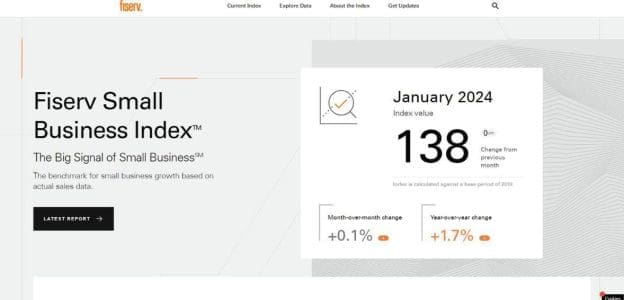

Fiserv Launches a Small Business Index

Fiserv Launches a Small Business Index

Fiserv, a company that provides technology for payments and financial services, has introduced the Fiserv Small Business Index. This unique tool evaluates the performance of businesses in the United States based on state and industry factors. Unlike other indexes, this index stands out because it directly uses data from around 2 million businesses in the US to provide faster and more comprehensive insights.

This index measures sales performance and customer traffic by analyzing point-of-sale transactions and assigns a value to consumer spending. According to the December 2023 index results, there has been an increase in business spending. Sectors such as Retail, Healthcare, and Food Services have shown growth. This Business Index has the potential to become a reference for understanding the current situation of small businesses.

Key Takeaways
  • Comprehensive Small Business Insights: Fiserv’s Small Business Index, leveraging consumer spending data from 2 million small businesses, provides a unique and comprehensive view of small business performance. It stands out by directly utilizing transaction data, offering faster and more detailed insights than traditional methods, and contributing to a timely understanding of economic trends.
  • Potential Standard Reference: The Small Business Index holds the potential to become a standard reference for assessing the state of small businesses. With monthly updates calibrated against 2019 data and covering 16 sectors and 34 sub-sectors, it offers a reliable and consistent measure of small business performance, even in industries dominated by larger enterprises.
  • December 2023 Highlights: The December 2023 index reveals a modest upswing in small business spending, particularly in sectors like Retail, Healthcare, and Food Services. Noteworthy improvements in consumer spending were observed in clothing, healthcare, and restaurant services, providing valuable signals about sector-specific trends.
  • User-Friendly Access: Fiserv’s commitment to empowering users is evident through the user-friendly interface of the Small Business Index, which is available on its website. Users can filter data by region, state, and business type, providing easy access for business owners, policymakers, lenders, analysts, economists, and investors to benchmark sales performance and make informed decisions based on timely insights.
Fiserv Small Business IndexTM

Fiserv Introduces Small Business Index To Comprehensively Gauge Small Business Performance

Fiserv facilitates payments for over six million merchants globally and maintains a presence in nearly every ZIP code in the US. Leveraging this extensive reach, the company introduces the Small Business Index, aiming to benefit reporters, analysts, and, most popularly, small businesses.

This Small Business Index is an interactive tool meticulously crafted to provide swift and accessible access to comprehensive small business performance data. Drawing data from millions of small businesses situated in the US, it enables users to get a deeper, more comprehensive understanding of the industry, state, and national performance metrics. This updated monthly index sheds light on consumer spending patterns across 2 million small businesses in the States.

It’s a direct compilation of consumer spending data from various transactions, encompassing cash, checks, and card payments, both online and in physical stores. Comparing this strategy to sentiment-based indices or traditional surveys provides a more accurate and instantaneous picture of small company activity. This special Index, scheduled for release during the first week of the month, offers deeper insights faster than other measures, enabling users to react quickly to new trends.

As the backbone of the US economy, small businesses account for nearly half of the jobs within the nation and provide 44% of the GDP, according to Frank Bisignano, President, Chairman, and CEO of Fiserv. The organization provides timely, thorough, and useful information based on consumer spending behavior through the Index. This index functions as a trustworthy new metric, providing insightful indications regarding the state of small enterprises in the US.
The Smaller Business Index seeks to provide data and insights useful to investors, policymakers, lenders, analysts, economists, and business owners. Its goal is to provide quick insights into the trends of particular industries within the ecosystem of small businesses, allowing users to gauge sales performance, make wise choices, and adjust to the changing market environment every month.

Fiserv Introduces Small Business Index To Comprehensively Gauge Small Business Performance

Source: Fiserv – Consumer Spending February 2024

The index, which measures consumer expenditure numerically and includes a transaction index that tracks customer traffic, is calibrated using data from 2019. The NAICS System allows users to filter this data easily by state, region, and business type. The index, which calculates a monthly score for 16 industries and 34 subsectors, is expected to establish itself as a standard tool for evaluating the situation of small enterprises. Even in markets where big enterprises dominate, it provides a timely, accurate, and consistent assessment of small business performance.

December 2023 Insights: Small Business Spending Trends and Sectoral Highlights

In December last year, the index pointed towards a slight uptick in consumer spending at small businesses. The index reached 138, indicating a modest 0.6% month-on-month and 2.6% yearly increase in spending. Noteworthy improvements were observed in clothing, healthcare, and restaurant services.

Prasanna Dhore, Chief Data Officer at Fiserv, highlighted that the uptick in small business sales during December mirrored consumers’ priorities as the year concluded, with a focus on food and drink, healthcare, and retail. Notably, the most significant gains in small business expenditure were observed in clothing, restaurants, and other accessories.

December 2023 Insights: Small Business Spending Trends and Sectoral Highlights

Source: Fiserv – Retail spotlight

The Drinking Places and Food Services category showcased robust performance in December, registering a six-point surge from November to reach an index of 128. This reflects a 4.9% monthly and 3.1% annual growth in sales. Additionally, customer visits exhibited an approximate 2.0% increase in both MOM and YOY.

The national retail index held steady at 142, with a marginal 0.3% dip in sales from November but a positive 1.6% increase compared to the previous year. Notably, the Accessories, Clothing, Jewelry, and Shoes sub-sector witnessed a noteworthy 6.1% surge in sales from November and a 5% uptick from December of the preceding year.

For easy access and analysis, the index by Fiserv is available on the company’s website, offering users a user-friendly interface to explore the data.

About Fiserv

Fiserv

Fiserv, Inc. is a company specializing in financial services technology. It operates across four main segments: Financial, Corporate, Payments, and Other. In the Payments segment, the focus is on delivering e-bill presentment and payment services, mobile and internet banking services and software, A2A transfers, credit and debit card processing services, P2P payment services, and various other electronic payment services and software solutions.

The Financial segment offers financial institutions source capture and item processing services, account processing services, servicing products, loan origination, consulting, cash management services, and other products supporting diverse financial transactions. The Corporate and Other segment includes intercompany eliminations, amortization of acquisition-related intangible assets, unallocated corporate expenses, and activities not factored into segment performance evaluations, like gains on sales of businesses and associated transition services. The company is headquartered in Wisconsin, founded in 1984 by George D. Dalton and Leslie M. Muma.

Conclusion

Fiserv’s launch of the Small Business Index marks a significant stride in providing timely and comprehensive insights into the performance of small businesses in the United States. This monthly index, utilizing direct consumer spending data from millions of small businesses, offers a nuanced understanding of industry, state, and national metrics. The December 2023 index indicated a modest uptick in small business spending, particularly in retail, healthcare, and food services.

With a commitment to delivering actionable insights, Fiserv aims to empower lenders, business owners, economists, policymakers, investors, and analysts to face the unprecedented market overview. The Small Business Index stands poised to become a standard reference for assessing the state of small businesses, offering a reliable measure even in industries dominated by larger enterprises.

What You Need to Know About Automated Invoice Processing

What You Need to Know About Automated Invoice Processing

Invoicing is critical to any business operation. But all of the manual work that goes into it can create a headache for your accounting team.

Enter automation, a process that’s helping countless businesses in various industries and sectors. Whether it’s digitizing paper documents or verifying invoices with prior documents, automating financial tasks can significantly help to streamline and optimize different processes.

Given that many companies are undergoing a transformation process, automation should be a key part of your strategy if you want to adapt to the demands of the modern business world. Just as enterprise transformation helps your company become more effective and productive – crucial in today’s competitive climate – automating your invoicing process will do the same.

Not sure how to get started? We’re here to help. In this article, you’ll find out what automated invoice processing entails, the tasks it relates to, and the key benefits for your team and business. Let’s dive in!

What is automated invoice processing?

Invoices are a hugely important part of a company’s financial operations and help ensure an accurate billing and payment process.

Traditionally, invoice processing has been done manually. Someone on the accounting team will receive an invoice (physical or digital) and match it to the right purchasing order (PO) before sending the invoice to the next touchpoint to be approved.

Depending on the invoice amount, this may require several rounds of approval. Once approval is granted, the invoice is registered in the books for payment.

What is automated invoice processing?

Free to use image sourced from Pexels

Automated invoice processing entails using software to reduce or eliminate several of the manual tasks involved in this process.

With so much competition today, it’s always worth stepping back and considering what areas you need to improve upon in your business.

For instance, your company might have a stellar content marketing strategy, complete with informative blog posts and downloadable guides. But if you serve international clients and are directing everyone to the same website, it could hamper efforts to target different demographics.

As a result, you might choose to buy and register different domain names using a provider like Only Domains. This helps you target the right audience in the right location, perhaps using .fr, .ca, or .sg to reach clients in France, Canada, and Singapore, respectively.

While this may not be a process you can automate, there are numerous ones you can. So analyzing which areas of your financial and invoicing systems can be streamlined will give you more time to focus on these other tasks.

Why use automation?

Digitization is taking over today – and automation has become a crucial part of the business transformation process.

If you’re skeptical of this process, remember that this isn’t a trend. Technology and software has been used in the industry for a while, as seen in the rise of paperless payments and the fintech solutions.

The idea is often to make the payment experience easier for consumers. But it also helps to improve efficiency and productivity among accounting teams. Those same teams can gain equal benefits with automated invoice processing. The technology streamlines the workflow of invoice processing, automating steps such as:

  • Data extraction
  • Data entry
  • Invoice validation
  • Processing system that tracks payments
  • Invoice reviews and approval (according to preset rules)
  • Automatically paying supplier invoices

By using advanced technologies and algorithms, automated invoice processing allows for quicker and more accurate verification and a speedier payment process.

That said, not all automated invoice processing systems are created equal. Depending on your business needs, there are various features that you should look out for when choosing the right invoice processing system.

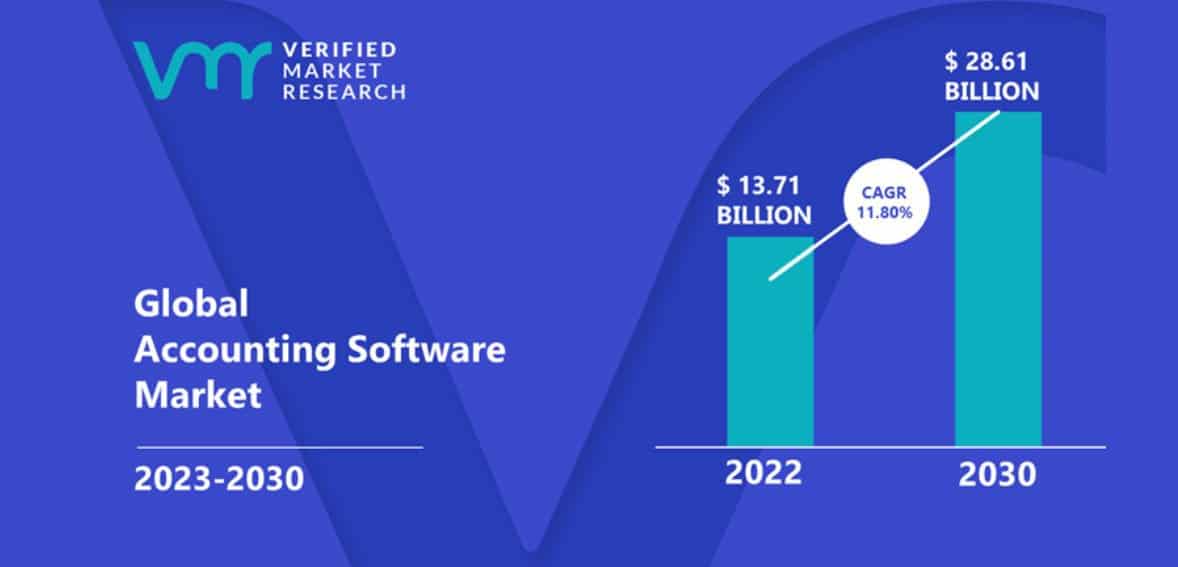
Global accounting software market graphic

Image Sourced from Verified Market Research

The best features of automated invoicing software

One of the main features you should look out for when considering which automated invoice processing system to use is artificial intelligence. AI is being increasingly used by businesses across various sectors and departments.

To take one example, many customer service teams use AI for call center solutions that automate menial tasks and allow customer service reps to focus on customers. In the same vein, AI helps automate menial tasks in the invoicing process, helping you increase productivity and efficiency.

Let’s explore other software features to look out for that help with automating invoices.

Multichannel invoice capture

This supports multiple vendors for vendors to send invoice data to, including PDF, electronic invoices, scanned invoices, paper copies, and XML formats.

Intuitive user interfaces

Easy-to-use software that requires little to no training is a must, as it greatly enhances the accessibility of invoice software.

KPI/SLA management

Having software that can track and manage key performance indicators and SLAs is highly beneficial. These insights allow you to track money flow and invoice status.

Integration

A software that integrates with other accounting systems will benefit your team by enhancing data flow.

Customisation

All businesses are different, with their own invoice routing processes. Customizable software lets you create the set-up that suits you best.

9 benefits of automated invoice processing

Whether it’s B2B payments or accounts payable, there are numerous benefits to automation. But let’s look at how it can improve your invoicing in particular.

1. Reduced manual entry

Automated invoice processing almost entirely eliminates the need for manual data entry. The software will scan invoices and data efficiently and accurately. When compared to the inevitable errors that can occur with manual entries, this improves the accuracy of data input and also saves time for your team.

2. Reliability

When everything is done manually, accountants and managers can often rush the invoice review and approval process to save time.

However, with automation, your teams will have access to all the information they need to authorize payments quickly and accurately. This greatly increases the reliability of the whole process.

3. Easy access to information

Automation digitizes and makes available all the necessary data your accounts team needs. By improving information flow and access to information, your team will be well equipped to handle discrepancies or issues as and when they arise.

Easy access to information with automated invoicing

Free to use image sourced from Pexels

4. Automated workflow

An automated workflow allows you to introduce rule-driven processes that send invoices through the proper steps.

For example, you may introduce a rule that establishes which invoices get sent to which person. Small costs, such as office supplies, will get sent to the appropriate department head. Meanwhile, the system will send high-cost invoices relating to, say, new office equipment to the CFO.

5. Early payment discounts

Some vendors offer so-called β€œearly bird” discounts to customers who make payments ahead of time. Typically, this means paying the invoice within 10 days of its issuing.

Automated invoice processing strengthens and optimizes your invoice process practices, which makes it easier to get ahead of the game and pay invoices early. Enjoy that discount!

6. Reduced audit preparation

Finance and accounting departments must comply with both their company’s policies and industry regulations.

Automated invoice processing systems ensure that data and invoices are captured and stored in a system that is both secure and easy to access. Moreover, they ensure this data is compliant with accounting policies and regulations. This level of compliance and ease of access greatly reduces the amount of time and effort required when preparing for an audit.

7. Cost savings

Those early-bird discounts aren’t the only ways that automated invoice processing can save you a buck or two!

For example, digital invoices can introduce sizable cost savings by freeing up your accounts team from menial jobs. This allows them to focus on more productive tasks.

5 1

Free to use image sourced from Pexels

8. Reduced business risk

A good automated invoice processing system will provide custom access controls and digital data security. Not only does this help with audit compliance, it also greatly reduces the risk of documents going missing or being misplaced.

9. Improved vendor relationship

Ironing out your invoicing procedures makes the process simpler for vendors. This can be instrumental in strengthening vendor relationships and enhancing trust with your business.

For example, important information is never far from hand if your vendor needs to check invoice details. Some software includes a vendor self-service portal that allows them to quickly upload invoices for a speedy approval that removes the fuss of manual processes. Even better, payment alerts and notifications mean that you won’t ever miss payment deadlines.

Final words

Automation is becoming an increasingly important aspect of business transformation – and financial teams could stand to reap some of the biggest benefits.

Automating the invoice process can significantly benefit your accounts team by helping them to streamline and digitize parts of the invoicing workflow. Freed up from doing menial, manual tasks, they can then focus on more productive tasks, such as creating budgets or exploring cost-effective payment processing solutions.

There are strong cost-saving benefits associated with automated invoice processing, too. You may enjoy early-bird discounts for processing invoices early. But just the fact that your team is more productive can pay off in more ways than one.

So whether it’s part of your digital transformation strategy or you want to revitalize your invoicing process, leverage the power of automation and get ahead of the game.

Fiserv Pursues Special Purpose Bank Charter

Fiserv Pursues Special Purpose Bank Charter

Fiserv aims to broaden its scope in handling processing tasks for merchants in the fiercely competitive payments market of a cost-conscious economy. The bank technology provider has sought a merchant acquirer limited purpose bank charter in Georgia. This move would allow Fiserv to oversee the entire payment process, encompassing the authorization, settlement, and clearing of debit and credit card transactions. Typically, Fiserv collaborates with bank partners as part of its payment processing operations.

This strategic move is a response to recent shifts in the market landscape. With third-party financial institutions, which traditionally acted as sponsor banks providing access to card networks, increasingly redirecting their focus to other aspects of their business, Fiserv is adapting its approach. It’s essential to note that Fiserv intends to transform into something other than a conventional financial institution or regional bank. Instead, it plans to maintain partnerships with financial institutions looking for continued market involvement as acquiring sponsors.

Key Takeaways
  • Strategic Shift in Merchant Acquiring: Fiserv’s application for a Merchant Acquirer Limited Purpose Bank Charter in Georgia indicates a strategic shift in its approach to payment processing. By seeking direct access to card networks, Fiserv aims to broaden its capacity and gain greater control over the entire payment process, including authorization, settlement, and clearing of transactions.
  • Response to Market Dynamics: Fiserv’s move is a response to recent shifts in the market where third-party financial institutions, traditionally acting as sponsor banks, are redirecting their focus. The evolving landscape has prompted Fiserv to adapt its approach, emphasizing a move towards maintaining partnerships with financial institutions while seeking direct access for merchant acquirers.
  • Potential Industry Trend: Fiserv’s application signals a possible trend in the payments industry, advocating for increased direct access to payment card networks for merchant acquirers. If successful, it could pave the way for other companies, such as Priority Technology and Global Payments, and competitors like Square and Stripe, to follow suit and explore the particular purpose bank charter option in Georgia.
  • Fiserv’s Vertical Integration Strategy: Under the leadership of CEO Frank Bisignano, Fiserv is considering a comprehensive vertical integration strategy. The acquisition of First Data in 2019 aligns with this strategy aimed at enhancing efficiency and gaining control. However, finding suitable bank partners may pose a challenge as financial institutions are cautious about engaging in non-core activities amid thin margins in the merchant sector.

Fiserv’s Application For Bank Charter Signals Potential Shift In Direct Access for Merchant Acquirers

Carat by Fiserv
Image source: Carat

In Georgia, the Merchant Acquirer Limited Purpose Bank Charter (MALPB) is a distinctive charter enabling companies to provide merchant payment processing services independently without relying on a partner bank. Despite its existence for 12 years, companies have faced challenges in utilizing it, primarily because card networks have yet to permit direct participation. However, this scenario might shift soon, particularly with Fiserv recently applying for a bank charter.

Fiserv seeks to broaden its capacity for handling processing tasks on behalf of merchants in a competitive payments market within a cost-conscious economy. On 12th January this year, Fiserv made a significant announcement, revealing its application filing with the state of Georgia for a MALPB charter. This application marks a noteworthy development and serves as a positive indicator for those advocating increased direct access to payment card networks for merchant acquirers in the US.
The potential MALPB charter promises to enable a company to provide merchant payment processing services without the need for a sponsoring partner bank. This includes things like joining card networks, authorizing and approving retailers to accept network-branded cards, assisting with transaction clearing and settlement via a card network, and providing access to and funding participation in card networks for clients of the MALPB, affiliates, or clients of affiliates.

Fiserv's Application For Bank Charter Signals Potential Shift In Direct Access for Merchant Acquirers

Image source

Fiserv has sought a merchant acquirer limited-purpose bank charter in Georgia to manage merchant authorization, settlement, and clearing independently without a partner bank. This is a strategic action driven by the growing emphasis that third-party financial institutions place on other areas of their operations, following in the footsteps of sponsor banks that have long provided access to card networks.

Under CEO Frank Bisignano’s leadership, Fiserv is considering a more extensive vertical integration strategy. Analysts suggest that Fiserv focuses on enhancing efficiency and gaining control where it is feasible. In 2019, Fiserv acquired First Data, previously in a joint venture with Bank of America, which was terminated a few months post-acquisition. The challenge for Fiserv might be finding suitable bank partners, as the offering may bring little benefit to financial institutions.

Banks may hesitate to engage in non-core activities in the current economic climate, where controlling expenses is crucial. The merchant sector faces thin and diminishing margins, making scale a critical factor for competitiveness. The larger the scale a company attains and the more costs it can streamline, the greater its likelihood of staying competitive.

A spokesperson from Fiserv stressed that the recent action doesn’t imply Fiserv’s intention to transform into a complete bank. Fiserv has yet to make plans to evolve into a conventional financial institution or a regional bank. Additionally, Fiserv will persist in collaborating with financial institutions that prefer to stay engaged in the market as acquiring sponsors.

Rivals May Follow The Path!

Fiserv’s application for a particular purpose bank charter in Georgia has generated significant interest in this charter option, prompting expectations of more companies following suit in the coming months. If Fiserv successfully secures the charter and gains access to card networks, it might pave the way for other merchant acquirers eagerly observing the situation.

Potential candidates for the charter could be large merchant acquirers headquartered in the state, such as Priority Technology and Global Payments. Payment competitors like Square and Stripe are also anticipated to pursue the charter, potentially establishing a presence in Georgia to meet the necessary application requirements.

About Fiserv

Fiserv is a leading company providing cutting-edge payment and financial services technology solutions. Operating across three key segmentsβ€”Financial Technology, Payments and Network, and Merchant Acceptanceβ€”the company offers diverse services. In the Merchant Acceptance segment, Fiserv provides POS merchant services, mobile payment solutions, digital commerce services, a cloud-based POS, fraud and security protection products,  and a business management platform, among other options.

The Financial Technology segment equips financial institutions with tools for processing customer deposit and loan accounts, managing general ledgers and central information files, and supporting various financial transactions, including digital banking and risk management. The Payments and Network segment delivers non-card digital payment software and services, encompassing bill payment, account-to-account transfers, person-to-person payments, electronic billing, and security and fraud protection products.

About Fiserv

Fiserv is a global company with over 13,000 clientele and 21,000 associates worldwide. Fiserv is well-known for its fintech services and creative solutions, and it is dedicated to helping clients achieve best-in-class outcomes. Fiserv has won awards for excellence in data analytics, risk management, online and mobile banking, payments, and core account processing. Fiserv is a company that takes pleasure in pushing the envelope in the financial services industry. Utilizing its extensive knowledge base and innovative solutions helps financial institutions, companies, and consumers move and manage money more quickly and easily.

Conclusion

Fiserv’s strategic move to pursue a Merchant Acquirer Limited Purpose Bank Charter in Georgia reflects its proactive response to evolving market dynamics. The application signifies Fiserv’s intent to gain greater control and efficiency in payment processing tasks, aligning with the changing landscape where sponsor banks are redirecting their focus. Under CEO Frank Bisignano’s leadership, this move suggests a potential vertical integration strategy to enhance operational capabilities.

While challenges may arise in finding suitable bank partners, the initiative signals a broader trend in the industry. The ripple effect could see other major players, such as Priority Technology, Global Payments, Square, and Stripe, exploring similar paths. Fiserv’s diversified services across Financial Technology, Payments and Networks, and Merchant Acceptance underscore its commitment to delivering innovative solutions in a competitive market.

Consumer Financial Protection Bureau To Cut Overdraft Fees To $3

Consumer Financial Protection Bureau To Cut Overdraft Fees To $3

The Consumer Financial Protection Bureau (CFPB) is working on a plan to lower overdraft fees. These are the fees Americans pay when their bank accounts run dry. As a part of the Biden Administration’s fee-reducing efforts, this could save Americans around $3.5 billion yearly.

Overdraft fees from banks and credit unions take billions from Americans each year. The proposed rule offers large financial bodies two choices. Either charge a flat fee for overdrafts matching the service cost or adhere to the same disclosures and protections required for credit cards and loans. The CFPB has yet to set a specific benchmark but could possibly lower it to $3. This initiative is designed to boost transparency and fairness in banks and shield consumers from overdraft fees.

CFPB To Cut Overdraft Fees – Key Takeaways
  • Cost Relief for Consumers: The CFPB’s choice to cap overdraft fees at a mere $3 is a big help for consumers. It might save more than $3.5 billion! The Biden administration’s goals to cut “extra” costs are aligned with this step. They’re especially concerned about overdraft fees, which have been demanding a lot from Americans’ pockets. 
  • Addressing Long-Standing Loopholes: The latest rule is designed to plug a “loophole.” For a decade, this hole allowed overdraft lending to avoid consumer protection laws. This regulation is needed because big banks abuse this loophole. They made hefty profits by charging customers overdraft fees. Annually, these fees add up to billions. Plugging these “loopholes” is a way to make banking fair and clear.
  • Promoting Transparency and Fairness: This new rule encourages banks to charge a set fee or follow existing laws. These include making important information transparent. The CFPB wants to grow transparency and fairness in banking. This isn’t just about protecting people from high overdraft fees. It’s also about creating an equal financial burden.
  • Future Outlook and Potential Challenges: The public comment has until April 1 until the final ruling. The rule is scheduled for October 1, 2025. But, a potential challenge lies ahead as the Supreme Court is set to decide on the constitutionality of the CFPB’s funding structure. Despite this, consumer advocates applaud the initiative as a crucial step toward steering banks away from exploitative fees, emphasizing quality service over profit-centric practices.

Background

image 7

Image source

The Biden Administration has launched several programs to curb high fees. In early 2022, the CFPB began to reduce these unnecessary charges to save Americans substantial amounts of money. This step has become widely popular since the very start, and over eighty thousand people responded, as most were upset about overdraft fees.

Recently, the CFPB told Atlantic Union to pay $6.2 million. The bank had tricked customers into misleading overdraft programs. In 2022, Regions Bank also got in trouble. They had to pay $191 million for unfair overdraft fees on ATM and debit card use. Wells Fargo also had a big fine from the CFPB – over $200 million.

This work goes beyond just banks. In October, the FTC proposed rules to stop surprise fees. Businesses would have to tell customers about fees ahead of time and in a clear manner. This includes places that sell tickets like Ticketmaster – they’re known for service fees. Big companies like Airbnb would also be impacted. They charge cleaning and service fees. The proposal also includes hospital bills. Sometimes, there are hidden fees from doctors that aren’t in the hospital’s network.Β 

The goal is to make things clear for consumers and protect them from unexpected fees in many sectors. In response to the CFPB’s push to cut high fees, a ton of banks changed their rules about overdrafts and minimum fund charges. These tweaks caused a big stir in the market. They saved people $3.5 billion a year just from lower overdraft fees. Plus, they saved an extra $2 billion on β€œnon-sufficient balance” fees.

CFPB’s Overdraft Fee Crackdown – Closing Gaps and Ensuring Transparency

Recently, the CFPB introduced a rule to tackle high overdraft fees charged by big banks across the country. This rule aims to seal a more than a decade-long “loophole.” The loophole lets overdraft lending bypass certain rules like the Truth in Lending Act (TILA). This step comes ahead as a protection against these charges, as for years, these banks have made lots of money from overdraft loans. They earn billions each year from only this!

With this new rule, these big banks can still offer overdraft loans. But, they must follow existing loan laws. This means they must tell people about all interest rates, for example. Other things include overdraft service charges, which can cost about $35 each time and can sometimes equal an APR of a staggering 16,000%!

Now, if banks opt to charge a fee to cover costs, it should be under the set benchmark, which is expected to be anywhere from $14, $7, $6, or even $3. Or they can calculate their own cost, but they have to be transparent and share this data with the customers. This idea supports both openness and fairness in banking. It also makes room for sensible overdraft strategies.

Rohit Chopra, the Director of the Consumer Financial Protection Bureau, highlighted that overdraft loans received special treatment decades ago to assist banks in covering paper checks, commonly sent through the mail. In the present day, the CFPB is putting forward rules to address a longstanding loophole that has allowed numerous large banks to turn overdrafts into a substantial and exploitative fee-generating system.

Regulations are being suggested that will affect banks and credit unions holding more than $10 billion in assets. This includes roughly 175 of the biggest financial firms nationwide. These firms could continue to charge genuine overdraft costs to their clients, but they would be less able to make large profits from this service.

President Biden pointed out that some banks apply ultra-high overdraft fees that can hit $30 or more. These steep fees hit the most underprivileged Americans very hard. Meanwhile, these banks build their wealth. They call it a service, but Biden sees it as an act of taking advantage.

What Can You Expect In The Future?

The public comment period on the CFPB proposal wraps up on April 1. The official start of the final rule is slated for October 1, 2025. It’s expected this fall after satisfying TILA mandates.

But to make the matter a little over the edge, a threat of legal issues looms over and might disrupt the proposal and its origin agency. This year, the Supreme Court will decide a case arguing over the CFPB’s funding structure.  Should the court favor this argument, the fate of the bureau and its regulations hangs in the balance.

Yet, some consumer champions applaud the proposal. They say that bank charges, seen more as a cash grab than a real service, typically hurt less wealthy customers most. This change urges banks to focus on excellent service, not on hitting customers with fees.

About The Consumer Financial Protection Bureau

The CFPB is a government body aimed at protecting the public. Its task is to oversee financial products and firms for safety. The CFPB’s goal is to ensure honesty and clarity in consumer finance, especially in areas like mortgages and credit cards.

Its job is to supervise various financial offerings available to the public. The CFPB includes several parts: operations, public relations and education, supervision, legal issues, fair lending and enforcement, monitoring, studies, and rules. These parts work together to protect and teach the public about different financial products and services. The CFPB plays an important part in applying and upholding Federal financial laws. Their aim is for markets to have openness, competitiveness, and justness.

Conclusion

By tackling overdraft charges, the CFPB plays a key role in lessening the financial stress for Americans. Their actions match those of the current Biden government, which aims to cut down high costs that might save individuals billions yearly. The CFPB’s plan? Limit overdraft fees to $3. It should make banks more open and fair. It’s not a standalone effort but part of a wider move to shield people from harsh fees.Β 

Several banks have faced penalties for sneaky tactics lately, highlighting the need for change. With the cutoff for public opinion nearing its end, people are waiting for the final rule, which is due in October.Β 

Truist Closing Branches - 72 Branches To Be closed by March 2024

Truist Closing 72 Branches by March 2024

Truist Financial plans to reduce its branch network by March as part of its cost-saving strategy. According to recently released data, Truist Financial operated a total of 2006 branches across 17 states and Washington, DC, as of December 29, 2023, and Truist closing branches could amount to around 4% of it.

Although TFC has not disclosed the branch locations that will be closed, recent applications submitted to the North Carolina Commission of Banks indicate that closures are expected in states such as Kentucky, Georgia, Maryland, Alabama, West Virginia, and North Carolina.

The spokesperson for Truist Financial stated that lower branch traffic and transaction volume are the factors behind these closures. Furthermore, they mentioned that nine branches in North Carolina and seven in the Washington, DC, area are scheduled for shutdown by March.

image 4

Image source

Truist Closing Branches: Key Takeaways
  • Strategic Cost-Cutting Initiative: Truist Financial’s decision to close 72 branches by March 2024 is a significant move aligned with its broader cost-cutting initiative of $750 million. This measure is part of the company’s strategic reset and expense reduction plan, reflecting the dynamic adjustments needed to navigate the evolving financial market.
  • Geographic Impact: While specific branch locations remain undisclosed, recent closure applications in several states, including Kentucky, Georgia, Maryland, Alabama, West Virginia, and North Carolina, indicate the geographic scope of Truist’s branch closures. The move reflects a nationwide strategy to optimize the branch network based on factors such as declining branch traffic and transaction volumes.
  • Operational Streamlining: Truist’s plan involves consolidating commercial and community banking regions, merging consumer and wholesale payments businesses, establishing a unified commercial real estate business, and resizing its board of directors. These measures indicate a comprehensive effort to streamline operations and enhance efficiency as part of the cost-cutting initiative.
  • Financial Impact and Timeline: Truist’s cost-cutting plan, led by CEO Bill Rogers, aims to limit the expense rise to no more than 1% in 2024. The $750 million initiative is set to be implemented over twelve to eighteen months, potentially concluding in the first quarter of 2025. The financial impact includes $300 million from job cuts, $250 million from organizational restructuring, and $200 million from reducing expenditures on technology, reflecting a focused approach to achieving financial goals.

Truist Financial’s Strategic Branch Closures: A Staggering $750 Million Cost-Cutting Initiative

image 5

Truist Financial has informed customers about its plan to close 72 branches in March as part of its broader cost-cutting initiative. The North Carolina-based company aims to close nearly 4% of its branch network around the States. As of December 29, 2023, Truist operated 2,006 branches across 17 states.

These closures align with Truist’s previously announced $750 million cost-cutting initiative, initiated four months ago. In response to the need for a strategic reset and expense reduction, the 543 billion dollar company has implemented various measures, including consolidating commercial and community banking regions, merging consumer and wholesale payments businesses, establishing a unified commercial real estate business, resizing its board of directors, expanding its executive management team, appointing a new chief operating officer, and hiring a new chief legal officer.

But which branches is Truist closing?

Truist, based in North Carolina, hasn’t yet provided a comprehensive list of upcoming branch closures in response to requests. However, recent closure applications submitted to the North Carolina Commission of Banks indicate impending shutdowns in various states, including Georgia, Alabama, Maryland, Kentucky, West Virginia, and North Carolina.

According to a Truist spokesperson via email, 7 branches are set to close in Washington, DC, and 9 branches are slated for closure in North Carolina. Truist plans to close 8 branches in Georgia, with 4 in Atlanta. These closures are attributed to declining branch traffic and transaction volume. On average, the locations earmarked for closure are about 2.5 miles away from another Truist branch. In the Washington area, the proximity is even smaller, with affected branches situated less than one mile away, on average, from another branch.

After the closures, Truist will maintain operations with over 1,900 branches and 2,900 ATMs. The company has not revealed the number of jobs affected by the shutdowns. Currently the seventh-largest US commercial bank by assets, Truist originated from the merger of equals between North Carolina, SunTrust Banks, and BB&T in December 2019, with headquarters in Winston-Salem and Atlanta.

Initially aiming for annual cost savings of $1.6 billion by the end of 2022, the expenses continued to rise. In July, executives projected a 7% YOY expense increase for 2023, marking one of the highest anticipated upticks among major banks. However, the current cost-cutting plan aims to limit the expense rise to no more than 1% in 2024.

Truist CEO Bill Rogers has outlined that the $750 million cost-cutting initiative will be implemented over twelve to eighteen months, potentially concluding in the first quarter of 2025. The major component, around $300 million, is anticipated to result from job cuts, with an additional $250 million stemming from organizational restructuring. The remaining $200 million will be achieved by reducing expenditures on technology.

About Truist

image 6

Truist is a company that offers banking and trust services, operating across three main segments: Consumer Wealth and Banking, Insurance Holdings, and Commercial and Corporate Banking. The Wealth and Consumer Banking segment provides various solutions, including borrowing, banking, insurance, investing, payments and consumer finance, mortgage, and wealth management.

The Commercial and Corporate Banking segment specializes in strategic advisory, risk management, capital raising, investment and liquidity, financing, deposits, lending, and cash management. The Insurance Holdings segment provides casualty and property, life insurance, employee benefits, and other solutions. Truist was formed through the merger of SunTrust and BB&T.

Conclusion

Ttruist branch closing amounting to a staggering 72 branches by March 2024 serves as a pivotal step in its comprehensive $750 million cost-cutting initiative. This strategic move, aligning with the need for a reset and expense reduction, reflects the company’s commitment to adapting to evolving market dynamics.

While specific branch locations remain undisclosed, pending closure applications in multiple states indicate the broad impact. Truist attributes these closures to declining branch traffic and transaction volumes. Post-closure, the company will operate over 1,900 branches and 2,900 ATMs. The cost-cutting plan, led by CEO Bill Rogers, aims to limit the expense rise to no more than 1% in 2024, focusing on job cuts, organizational restructuring, and technology expenditure reduction.

Visa Surcharge Crack Down On Businesses

Visa Cracks Down On Businesses Using Surcharge Programs

Visa, the largest global payment system, is making changes to its approach towards surcharges in order to be more stringent towards merchants who impose additional fees on customers using credit cards. In recent months, Visa has reduced the amount that retailers can charge customers when they use Visa cards. Additionally, the company has started conducting on-site inspections to ensure that stores are following its guidelines when implementing these surcharges.

Visas adjustments are in response to concerns raised by businesses that are facing financial strains due to the fees associated with accepting electronic payments from banks. As a result, many of these businesses have resorted to implementing interchange fees on card transactions as a way to offset these expenses. Let us understand how this Visa surcharge crackdown will impact small businesses.

Key Takeaways On Visa Surcharge Crack Down On Businesses
  • Visa’s Surcharge Regulations: Visa, a known credit card company is introducing rigorous policies regarding surcharges. This decision comes after businesses expressed their concerns about the burden of interchange fees. Visa is committed to maintaining limits on surcharges to ensure an experience for consumers amidst debates about interchange fees.
  • Enforcement Challenges for Merchants: The increased enforcement of surcharge regulations by Visa has met resistance from merchants and processing companies alike. While some merchants initially implemented surcharges many have reconsidered due to the impact it had on customer experience.
  • Legislative Landscape: Pending state and national surcharge legislation spans Kansas, Minnesota, New York, and Massachusetts. New Jersey and New York have enacted laws limiting surcharges, compelling merchants to disclose total credit card usage costs. Non-compliance can result in penalties, indicating a shifting regulatory landscape affecting businesses.
  • Impact of Interchange Fees and Surcharges: Interchange fees have been increasing significantly with Visa and Mastercard setting the rates while banks collect the fees. Although these costs may seem small per transaction they have doubled over time reaching $160.7 billion annually. Surcharges have become a practice for businesses across different industries as they help offset the expenses related to credit card transactions. By implementing surcharges according to practices merchants can effectively navigate the challenges presented by the evolving payment industry.
visa zero dollar verification fee

Visa’s Surcharge Regulations And Enforcement: A Look At The Implications For Merchants

Visa is widely recognized as among the most popular and accepted credit cards worldwide. Cardholders appreciate its reliability and secure payment transactions. And like any other card network, Visa charges interchange fees for each transaction made with their cards. This fee can vary depending on the type of card, data level, merchant category code, and more.

To ensure a more affordable experience for consumers Visa is encouraging merchants who accept Visa credit cards to adhere to a limit on surcharges. This move by Visa comes amidst a disagreement over interchange fees referred to as swipe fees. While merchants strive to keep these fees in control, Visa asserts its right to increase them. Surcharges come into play when merchants aim to recover the costs associated with interchange fees by adding a charge for customers using credit cards. Visa emphasizes the importance for merchants to abide by this surcharge limit in order to safeguard the consumers’ experience.

Last year, Ryan McInerney, Visa’s CEO, acknowledged that they are not thrilled about customers facing surcharges. However, he pointed out that merchants have the authority to impose such charges in specific US jurisdictions and other places worldwide, and some opt to do so. He further said that many merchants initially adopted this practice but later retracted it due to its negative impact on the customer experience, even though they must adhere to Visa’s rules regarding additional charges.

This alteration did not sit well with numerous sales agents and processing companies providing intermediary services for merchants processing credit card transactions. Some have gone on with legal action on this matter. However, many small businesses admit to having limited options when it comes to opposing Visa, the largest card network company in the U.S.

To expand its reach, a memo from the Priority Payment Systems division, which handles credit card payments in partnership with ISOs, highlighted Visas’s commitment to enforcing credit card surcharge regulations. Payment processors were explicitly informed that adherence to these guidelines would be closely monitored, and failure to comply could lead to fines ranging from $500,000 to $1 million.

The memo has conveyed that Priority and its sponsor banks follow card brand regulations. It has been noted that Visa is increasing its efforts to tighten its grip on the Surcharge Rules. To shield your affiliated merchants from fines imposed by card brands for non-compliance, conducting a comprehensive review of existing and new surcharge programs linked with your merchants is strongly recommended.

A Closer Look At Pending Legislation And Recent State-Level Developments

A Closer Look At Pending Legislation And Recent State-Level Developments

Throughout the country, state and national legislation concerning the surcharges merchants can levy on card transactions from Washington to North Carolina are pending. The organization responsible for tracking state legislation has identified six states where such legislation is currently marked as β€œpending” this year. However, much of it consists of bills introduced in the previous year, now carried over into the current legislative session. These states include Kansas, Minnesota, New York, and Massachusetts.

At the state level, New Jersey and New York have recently enacted laws compelling merchants to limit surcharges, ensuring that these charges do not surpass merchants’ costs for processing transactions.

Kathy Hochul, Governor of New York, recently approved the new law that restricts merchants in the state from imposing credit card surcharges exceeding the amount charged by the credit card company for each transaction. The law mandates merchants to disclose the total price for credit card usage, explicitly and prominently stating the surcharge amount. Non-compliance with these regulations can result in merchants facing a penalty of $500 per violation.

Surge In Interchange Fees And The Pervasive Adoption of Surcharges: Impacts on Businesses and Consumers

Surge In Interchange Fees And The Pervasive Adoption of Surcharges: Impacts on Businesses and Consumers

The focal point of the discussion revolves around interchange fees. While Visa and other processors like Mastercard establish the rates for these fees, the banks issuing the cards retain the majority of the fees. Despite often being just a few cents per transaction, these costs have increased in recent years due to the growing use of credit cards, which generally carry higher interchange fees than debit cards. The combined debit and credit card swipe fees have more than doubled in the past decade, reaching $160.7 billion annually. These fees translate to an average cost of over $1,000 annually for the typical American family.

The reliance on surcharges is not limited to small businesses; an expanding number of enterprises that traditionally received payments via checks or direct bank transfers, such as general contractors, lawn care, and consultant providers, are now implementing surcharges to offset the expenses associated with accepting credit cards.

For many merchants, the option to surcharge has become a prerequisite for accepting cards. When executed following established best practices, surcharging can serve as a viable means for numerous merchants to start accepting cards for the first time.

About Visa

Visa Inc. is a payment technology company in the United States and internationally. The company oversees VisaNet, a network that processes transactions by authorizing, clearing, and settling payment activities. In addition to providing debit, credit, and prepaid card products, Visa offers services like contactless (NFC), click-to-pay, and tokenization. Visa Direct, another solution by the company, facilitates the efficient delivery of funds to eligible cards, digital wallets, and deposit accounts.

Visa Inc. extends its reach with services like Visa B2B Connect, a multilateral cross-border payments network for businesses, and Cross-Border service, focusing on consumer payments across borders. The company’s DPS (Data Processing Services) arm offers various value-added services, including dispute management, fraud mitigation, campaign management, data analytics, digital solutions, and contact center services.

Visa Inc. operates under various brand names, such as Visa, Interlink, Visa Electron, PLUS, and V PAY. Its clientele includes merchants, financial institutions, and government entities. Established in 1958, Visa Inc. is headquartered in California.

Conclusion

Visa’s recent crackdown on businesses implementing surcharge programs reflects the ongoing challenges within the payment industry. As Visa, a global credit card giant, tightens its policies and conducts on-site inspections, merchants grapple with the financial strain of interchange fees. The critical takeaway emphasizes Visa’s commitment to maintaining a positive consumer experience, urging merchants to adhere to set limits on surcharges. However, this move has faced resistance from some merchants and processing companies, who are also grappling with the profits and are tied to imposing the charge onto the customers.

Meanwhile, the surge in interchange fees continues to impact businesses and consumers alike, with fees doubling in the past decade. The reliance on surcharges, once limited to small businesses, has expanded to various enterprises seeking to offset the rising costs of credit card transactions. As the industry grapples with these changes, merchants must carefully navigate the evolving regulations to ensure compliance and protect their businesses from potential fines.

Nuvei Integrates AR Automation And EPR Payments In Microsoft Dynamics 365

Nuvei Integrates AR Automation And EPR Payments In Microsoft Dynamics 365

Canadian fintech company Nuvei recently revealed its most recent connection with Dynamics 365, an ERP (Enterprise Resource Planning) system supplier designed specifically for small and medium-sized enterprises. Through this partnership, businesses globally may easily incorporate a range of payment options into their current Dynamics 365 Business Central division, including credit card payments, immediate bank transfers, and ACH transactions. Let us understand the dynamics of Nuvie Dynamics 365 Integration and how it will be useful for Nuvei in the long run.

The main goals of this integration are to increase the effectiveness of finance departments in industries including distribution, manufacturing, construction, and wholesale by streamlining accounting workflows and enhancing back-office reconciliation procedures.

With Nuvei’s connection, businesses may take advantage of features like exclusive cash acceleration and invoice matching capabilities designed to shorten the Day Sale Outstanding (DSO) cycle. Furthermore, it provides near-real-time payment information, speeding up and improving decision-making quality by enabling more effective financial data reconciliation across systems.

Key Takeaways Of Nuvie Dynamics 365 Integration
  • Seamless Integration of Advanced Payment Solutions: Nuvei’s collaboration with Microsoft Dynamics 365 enables businesses globally to effortlessly integrate various payment methods, including instant bank transfers, card payments (including ACH transactions in the US), and disbursement services into their existing Dynamics 365 segment. This integration eliminates friction in accounting workflows and streamlines performance for finance departments in distribution, manufacturing, construction, and wholesale.
  • Efficiency Enhancement through Cutting-Edge Technology: Nuvei’s integration introduces robust features such as exclusive cash acceleration devices and invoice matching, empowering businesses to achieve shorter receivables or DSO cycles. Accessibility to β€œalmost” immediate payment data is made possible by technology, which speeds up and improves decision-making by enabling the effective reconciling of financial information across systems.
  • Strategic Alignment with Nuvei’s Growth Initiatives: This initiative aligns with Nuvei’s strategic plan to broaden its portfolio of ERP integrations, contributing to the global payments collaboration between Microsoft and Nuvei. The announcement reflects Nuvei’s commitment to encouraging customer growth and diversifying its range of ERP integrations, tapping into the expansive $120 trillion B2B payments market.
  • Nuvei’s Ongoing Collaboration with Microsoft: The partnership signifies a significant achievement for Nuvei, leveraging its over two decades of experience in the B2B payments sector. Integrating with Dynamics 365 Business Central is the latest step in the global payments collaboration with Microsoft, showcasing Nuvei’s commitment to ongoing collaboration across various geographies and use cases. The endorsement by Microsoft’s Vice President of Dynamics 365 underscores the importance of combining AR automation in enhancing the ERP user experience.

Nuvei’s Advanced Payment Solutions in Microsoft Dynamics 365 Facilitating Seamless Integration

Businesses worldwide can now seamlessly incorporate various payment methods, including instant bank transfers, card payments (including ACH transactions in the US), and disbursement services, into their existing Dynamics 365 segment. Leveraging Nuvei’s profound expertise in embedded ERP payments and top-notch accounts receivable automation software, this integration aims to eliminate friction in accounting workflows and back-office reconciliation, streamlining performance for finance departments within Dynamics 365 Business Central customers in sectors like distribution, manufacturing, construction, and wholesale.

Nuvei’s robust integration and cutting-edge technology include exclusive cash acceleration devices and invoice matching, empowering businesses to achieve shorter receivables or DSO cycles. Furthermore, companies gain access to β€œalmost” real-time payment information, facilitating more efficient reconciliation of financial data across systems and supporting faster, more informed decision-making.

This integration empowers SMBs to seamlessly integrate a range of payment methods into their current ERP modules. This initiative aligns with Nuvei’s strategic plan to broaden its portfolio of ERP integrations and contributes to the global payments collaboration between Microsoft and Nuvei. This announcement also mirrors Nuvei’s commitment to encouraging customer growth and diversifying its range of ERP integrations, capitalizing on the expansive $120 trillion B2B payments market.

According to Nuvei CEO and Chair Philip Fayer, their objective is to empower customers to enhance their growth by fostering improved engagement with their clientele. Leveraging their technological proficiency in business-to-business payments and Enterprise Resource Planning systems, they facilitate businesses in providing integrated commerce platform payments, aiding them in reaching customers and optimizing internal efficiencies and working capital.

Microsoft Dynamics 365

Fayer further explained that by combining their payment technology with the top ERP market, they can reach millions of people worldwide and thousands of organizations in a market with a sizeable TAM. As they progress with growing their developing payments channel, this is a significant strategic milestone.

This announcement signifies another significant achievement for Nuvei as it leverages over two decades of experience in the B2B payments sector. During a phase of rapid industry growth, Nuvei is expanding its substantial portfolio of ERP integrations. The integration of Nuvei with Dynamics 365 Business Central, revealed last month, represents the latest step in the collaboration of global payments with Microsoft. Nuvei expresses its commitment to ongoing collaboration with Microsoft across various use cases and geographies as part of this partnership.

Mike Morton, Vice President of Dynamics 365 at Microsoft Payments, emphasized combining AR automation as a crucial element in the ERP user experience. He expressed enthusiasm about Nuvei’s integration of their payment platform with Microsoft Dynamics 365, enhancing the overall offering for their customers.

At the outset, this partnership saw Microsoft utilizing Nuvei’s payments technology in Africa and the Middle East to enhance individual transactions and recurring billing for Xbox and Office customers. Both entities have indicated their plans to broaden this collaboration to additional markets and investigate further use cases, including enhanced integration with Microsoft Dynamics 365 Business Central.

About Nuvei

About Nuvei

Image source

Nuvei or Nuvei Corp is a financial service provider specializing in payment processing solutions. Their services include payment processing, handling payment transactions, merchant services, payment software development, agent programs, transaction processing solutions, industry-leading services, and more. Nuvei is committed to providing dedicated chargeback resolution management, effective relationship management, telephone support services, advanced fraud protection consulting, POS service and support, cash advance services, and real-time online reporting.

Pivotal Payments, a subsidiary of Nuvei, offers cost-effective payment processing, multi-currency processing, payment server development, currency conversion, retail payment solutions, payment gateway services, business card processing, retail solutions, gateway services, and direct selling, among other services. Operating in the United States and Canada, Nuvei has its headquarters in Montreal, Canada.

Conclusion

Nuvei’s integration with Microsoft Dynamics 365 significantly advances ERP payments and accounts receivable automation. This strategic alliance enables businesses worldwide, especially those in the distribution, manufacturing, construction, and wholesale sectors, to effortlessly incorporate diverse payment methods and streamline accounting workflows. Leveraging Nuvei’s expertise, this integration facilitates shorter receivables cycles and provides real-time payment information, enabling more efficient reconciliation and informed decision-making.

As part of Nuvei’s commitment to customer growth, this initiative aligns with their broader plan to diversify ERP integrations, contributing to the expansive B2B payments market. With a focus on collaboration and ongoing advancements, Nuvei solidifies its position as a leader in the B2B payments sector, promising continued innovation and enhanced user experiences within Microsoft Dynamics 365 Business Central.

Mastercard TCH Partnership

Mastercard And The Clearing House Announce Extended Collaboration For Real-Time Payments

In keeping with their goal to transform the digital economy by implementing real-time payments (RTP) on the RTP network, Mastercard and TCH, or The Clearing House, have decided to prolong their multi-year relationship. With the help of this Mastercard TCH partnership, businesses, governments, and consumers will be able to navigate and prosper in the quickly changing digital landscape by utilizing cutting-edge instant payment use cases for various payment procedures.

Notably, Mastercard will continue to serve as TCH’s exclusive supplier of immediate payment software for its RTP network, allowing the integration of new instant payments for various uses across different entities. In 2017, both companies joined forces to introduce the RTP Network, marking the first new payments rail framed by Mastercard in four decades. Presently, the ongoing collaboration focuses on advancing real-time account-to-account technologies. These innovations facilitate the seamless transmission of data within the network, not only across the US but also on a global scale.

Mastercard TCH Partnership - Driving Next-Gen Instant Payment Capabilities
Key Takeaways
  • Enhanced Digital Economy Commitment: The extended partnership between Mastercard and The Clearing House reaffirms their dedication to transforming the digital economy by implementing real-time payment systems. This collaboration aims to introduce innovative instant payment use cases, providing advanced capabilities for businesses, governments, and consumers in the fast-moving world of payments.
  • Mastercard’s Exclusive Role: Mastercard continues to serve as the exclusive instant payments software provider for TCH’s RTP network, solidifying its position in advancing real-time account-to-account technologies. The collaboration focuses on integrating new instant payment not only within the US but also globally.
  • Real-Time Payments Impact Across Sectors: The partnership highlights the critical role of instant payments in elevating the value and efficiency of financial transactions across diverse sectors. RTP ensures immediate access and confidence in payment receipt for consumers, streamlines process for businesses, and activates local economies for governments through efficient disbursement and settlement processes.
  • Competition and Industry Recognition: The collaboration builds upon TCH’s efforts to expand its RTP network amidst competition from FedNow. The RTP network’s significant milestones, such as surpassing one million daily payments, reflect industry recognition of the advantages offered by real-time transactions. Financial institutions’ increasing usage of the RTP network demonstrates its effectiveness in addressing real-world challenges and innovation in payment processes.

Mastercard TCH Partnership – Driving Next-Gen Instant Payment Capabilities

Mastercard has recently declared the extension of its partnership with TCH, emphasizing the enhancement of user capabilities. In a multi-year collaboration initiated by Mastercard and TCH, the two entities are working jointly to introduce improved features for businesses, governments, and consumers. The primary goal is to facilitate the adoption of the digital economy through the implementation of RTP on the RTP network. Additionally, this partnership solidifies Mastercard’s exclusive role as the provider of instant payment software for TCH’s RTP network, enabling both entities to integrate additional instant payment.

RTP guarantees customers instant access and assurance that their payments will always be received. It promotes timely wage disbursements, optimizes capital workflows, improves liquidity management, and streamlines payment operations for enterprises. Governments might also gain from stimulating local economies by ensuring that settlement and distribution procedures are effective. The expanded collaboration emphasizes how important real-time payments are to improving the effectiveness and value of financial transactions in a variety of industries.

Mastercard TCH Partnership - Next-Gen Instant Payment

The Federal Reserve’s immediate payments system, FedNow, introduced last year, is a competitor to TCH’s RTP network expansion efforts. This partnership with Mastercard strengthens TCH’s present efforts in this regard. The year 2017 saw TCH, which is owned by significant US banks, launch its instant payment network services, RTP. In the United States, financial institutions that hold around 90% of the demand deposit accounts have access to the RTP network.

Linda Kirkpatrick, who is the President, of North America at Mastercard, highlighted the key role of advanced technology in offering businesses and consumers increased flexibility in payment methods. The enduring collaboration with TCH contributes to expanding payment options by enabling contemporary and widely accessible real-time channels for bank transactions. Kirkpatrick expressed satisfaction in extending and reinforcing their commitment to TCH and its owner banks, emphasizing the shared objectives of ensuring the dependability, efficiency, and security of instant payments.

The RTP network, TCH’s instant payments system accessible to all insured depository financial institutions in the US, achieved a significant milestone last September by surpassing one million daily payments. This milestone reflects the growing recognition among the institutions and their customers of the advantages offered by real-time transactions, such as payment confirmation, enhanced control over payment schedules, and immediate fund availability.

With over 60 million transactions processed each quarter, the RTP network is experiencing increased usage as financial institutions leverage its real-time payment capabilities to address real-world challenges in innovative ways.

FedNow is a real-time payment system that competes with the growing RTP network. Interest in the RTP network appears to have increased with the release of FedNow. FedNow and RTP are competing with each other for the business of financial institutions. Regarding the Fed’s fast payments system, Mastercard has taken a cautious position. Previously, despite the FedNow system’s early acceptance by significant corporations like Fiserv and JPMorgan Chase, Mastercard CEO Michael Miebach noted that it lacks capabilities and a consumer platform.

Lee Alexander, Executive Vice President and CIO at TCH mentioned that TCH and Mastercard collaborated on the creation of the RTP network, recognized as the leading instant payment platform in the US. With a robust history of successful collaboration in delivering scalable, secure, and innovative products, the extended partnership aims to facilitate the development of the next generation of real-time payment capabilities for financial institutions and their customers.

All in all, the RTP network was designed to cater to institutions of various sizes, providing a stage for innovation that enables them to introduce new services and products to their customers. Financial institutions have the flexibility to connect to the RTP network directly, utilize third-party providers, and collaborate with corporate credit unions and bankers’ banks.

About MasterCard

Mastercard, Inc. is a technology company deeply involved in the payments industry, serving as a vital link connecting consumers, financial institutions, merchants, governments, and businesses. Established in November 1966 and headquartered in Purchase, NY, Mastercard provides innovative payment solutions encompassing credit, debit, prepaid, commercial, and payment programs.

The company acts as a crucial network, facilitating transactions between issuing banks and acquiring banks to ensure authentication and fund transfers. Its role extends to enabling payments for various purposes, including shopping, travel, business operations, financial management, and more. Mastercard specializes in global digital payments and commerce, offering cutting-edge mobile payment processing solutions.

About MasterCard

In the fiscal year 2022, Mastercard achieved notable financial success, recording annual revenues of $22.23 billion and a net profit of $9.93 billion. As a technology-driven entity, Mastercard continues to play a significant role in shaping the face of modern payment solutions.

About The Clearing House

Founded in 1853, TCH stands as the oldest banking association and payments company in the United States. It is collectively owned by the world’s largest commercial banks, employing over two million individuals and holding more than half of all US deposits.

TCH Payments Company LLC plays a pivotal role by providing payment, clearing, and settlement services to its member banks and other financial institutions. Daily, it handles the clearing of almost $2 trillion, representing nearly half of the funds-transfer, ACH payments, and check-image payments made in the US.

About The Clearing House

Image source

On the advocacy front, TCH Association LLC operates as a nonpartisan organization, championing the interests of its owner banks. This is accomplished through regulatory comment letters, amicus briefs, and white papers, addressing a spectrum of systemically important banking issues.

Conclusion

The extended collaboration between Mastercard and The Clearing House marks a significant stride towards enhancing digital economy capabilities. Their commitment to RTP underscores a shared objective to propel businesses, governments, and consumers into a dynamic digital era. Mastercard’s role as the exclusive instant payments software provider for TCH’s RTP network positions them at the forefront of advancing real-time A2A technologies.

This partnership not only ensures immediate access for consumers and streamlined processes for businesses but also holds promise for efficient disbursement and settlement processes for governments. Amidst growing competition in the real-time payments realm, the enduring collaboration between Mastercard and TCH exemplifies a commitment to reliability, efficiency, and security in the evolving world of financial transactions.

ERC Withdrawal Procedure

IRS Unveils Withdrawal Procedure for ERC Claims

The IRS has repeatedly cautioned taxpayers about a rise in aggressive marketing related to questionable or fraudulent claims for the Employee Retention Credit (ERC). Initially, the IRS addressed ERC claims by including them in their Dirty Dozen list. Later, on September 14, 2023, the IRS took immediate action by placing a moratorium on processing new claims, which will continue at least until 2023.

The IRS is now providing a solution for taxpayers who have fallen prey to ERC scams and have yet to receive their refunds. On October 19, 2023, the IRS introduced an ERC withdrawal procedure. This initiative aims to assist businesses concerned about the eligibility of their claims.

The IRS instituted a β€œwithdrawal process” for specific small businesses that submitted ERC claims during the Covid and now think they might not be qualified. Once presented as a relief plan, this procedure is intended for small firms that legitimately applied for financial aid but were later approached by the Internal Revenue Service to question the validity of their claims. These companies now have to deal with interest, fines, or payback. Company owners that submit ERC claims need to be fully aware of the qualifying requirements and the possible repercussions of making inaccurate, fraudulent, or inappropriate claims.

Key Takeaways:
  • Introduction of a Targeted Solution: The IRS has responded to the surge in fraudulent Employee Retention Credit (ERC) claims by unveiling a withdrawal process on October 19, 2023. This targeted initiative is specifically designed to aid businesses that have fallen victim to ongoing scams and have concerns about the eligibility of their ERC claims.
  • Shielding Businesses from Audits and Penalties: The withdrawal procedure protects businesses influenced by third parties or misled into filing ineligible ERC claims. Businesses can shield themselves from potential audits and penalties by retracting these claims. Withdrawn claims will be treated as if they were never submitted, offering a means of rectification.
  • Eligibility Criteria for ERC Withdrawal: Businesses eligible for the ERC withdrawal process include those who have claimed the credit on specific employment tax return forms but have yet to receive a refund or have not cashed the refund. The withdrawal applies to businesses that filed adjusted returns solely for ERC claims without any other modifications.
  • Irreversible Nature of ERC Withdrawal: While the ERC withdrawal process benefits eligible businesses, it comes with a crucial caveat – once requested, the withdrawal is irreversible. The IRS emphasizes the importance of businesses approaching reputable tax providers for guidance before initiating a withdrawal, highlighting the permanent nature of this decision.

The Necessity Of ERC Withdrawal Procedure

Employee Retention Credit

In light of the financial difficulties posed by COVID-19, the ERC was created to support qualified small enterprises in keeping their workforces on board. Unfortunately, several tax consultants have abused the credit by using aggressive marketing strategies. These advisors lured small companies into making illegal tax credit claims and amending payroll tax forms. The IRS decided to halt assessing new ERC applications until the end of 2023 as an outcome of this misuse, which led to an increase in invalid filings.

The purpose of the unique withdrawal procedure is to enable companies that other people have influenced to withdraw their ERC claims. This move aims to protect them against more audits and fines. Claims that are withdrawn will be handled as though they were never filed. It is crucial to remember that the law does not shield companies who intentionally submitted false ERC claims or colluded to do this from possible criminal inquiries and legal action.

The IRS press release states that certain employers who submitted an ERC claim but have not received a refund yet can withdraw their application thanks to this recently added withdrawal option. They can avoid penalties, interest, and future payback by doing this. To avoid the possibility of getting an ineligible reimbursement, employers have the option to withdraw an ERC claim while it is still being processed.

The statement highlights that the IRS created the withdrawal option to support small company owners and other individuals who were duped or coerced into filing claims not eligible by ERC advertisers or promoters. Claims that are withdrawn will be regarded as never submitted, and the IRS won’t charge interest or penalties in these situations. It went on to say that it’s important to remember that anyone who intentionally made a bogus claim or who assisted or conspired to engage in such behavior should be informed that they could still face a criminal inquiry and prosecution if they decide to withdraw their fraudulent claim.

Who Is Eligible For The ERC Withdrawal Process?

A Look At The Current State of ERC

Businesses are eligible to utilize the ERC withdrawal process under the following conditions:

  • They filed a payroll return form for the employees (Form 941X, 943X, 944X, CT1X) claiming the ERC, but they have not received a refund, or if they have, they have not cashed the refund.
  • With no other changes, they filed an updated return only to claim ERC.
  • They plan to give up the ERC claim in its entirety.

Businesses can benefit from this unique ERC withdrawal method, but there’s a big catch and that is ERC removal is irreversible once requested.

IRS advises businesses who suspect the invalidity or inaccuracy of their claims to seek guidance from a trusted service provider with expertise in incentives and credits before initiating a withdrawal. This step ensures a thorough reassessment of refunds before making the irreversible decision to withdraw.

How To Initiate An ERC Withdrawal?

employee retention credit mistakes

The IRS has specific instructions for withdrawing Employee Retention Credit (ERC) claims. The withdrawal method depends on the status of your ERC claim; for instance, for those who haven’t received a refund and haven’t been informed your claim/application is under an audit, here are some steps you can take:

  • Create a duplicate of the adjusted return (e.g., 941X) containing the claim you intend to withdraw.
  • On the first page, inscribe “Withdrawn” in the left margin.
  • An authorized person should sign and date the right margin of the first page. Additionally, they should write their name and title next to their signature.
  • Fax the duly signed return to the IRS’s ERC claim dedicated withdrawal fax line at 8557387609. For those without access to a fax, the adjusted return can be mailed to the address specified in the return instructions.

If you have yet to receive a refund and have been informed that your ERC application is under audit, the withdrawal steps remain the same as outlined for Status 1. However, there is a requirement to mail or fax the request to a different location. Here’s a detailed breakdown:

  • Follow the same procedures as outlined for Status 1, which include copying the amended return containing the withdrawn claim, writing “Withdrawn” on the first page’s left margin, and having an authorized individual sign and date the right margin while putting their name and title next to the signature.
  • If your case has been assigned to an examiner, ask them how to mail or fax your withdrawal request directly to them.
  • If you would still like to be assigned an examiner, reply to the audit notice with your request to withdraw using the format specified.

In the scenario where you have received a rebate check but haven’t deposited or cashed it, follow these steps for the claim withdrawal:

  • Prepare the claim withdrawal request by following the procedures listed in Status 1. But please do not fax the request.
  • Mark “Void” in the endorsing section on the reverse of the return check.
  • With the voided check, include a message that reads “ERC Withdrawal” and explains why you returned the refund check.
  • Keep copies of all pertinent paperwork for your tax records, such as the signed and dated withdrawal request form, the explanation notes, and the front and reverse of the canceled check.
  • The voided check should not be bent, paper-clipped, or stapled. Enclose it with your request to withdraw your claim and send the package to the IRS through certified mail.

After reviewing your request, the IRS will notify you by letter regarding the acceptance or rejection of your request. It’s important to note that an approved request is only effective once the IRS has officially notified you of its acceptance.

If you have accepted a rebate check and have already deposited or cashed it, the withdrawal option is currently unavailable for claims associated with deposited or cashed refund checks. However, the IRS has indicated the possibility of implementing a program to address this scenario shortly.

Conclusion

The IRS has introduced a targeted withdrawal process for businesses ensnared by fraudulent or questionable claims related to the Employee Retention Credit (ERC). Recognizing the surge in misuse of the ERC, particularly by unscrupulous tax consultants, the IRS implemented a moratorium on new ERC claims and has now unveiled this withdrawal initiative.

This unique withdrawal process allows eligible businesses to retract their ERC claims, shielding them from potential audits and penalties. Emphasizing the irreversible nature of the withdrawal, the IRS urges caution and certainty in decision-making. Eligible businesses facing interest, penalties, or repayment concerns can initiate withdrawal following specific instructions provided by the IRS.

As the IRS strives to protect businesses from ERC scams, it underscores the importance of seeking guidance from reputable tax providers before making irreversible decisions. This tailored withdrawal process is crucial for rectifying inadvertent or coerced ERC claims, ensuring a fair and just resolution for affected businesses.