Four months into the new year, we are beginning to see more precise patterns in retail performance from the busy Q4 holiday shopping period, identifying which retailers thrived and which faced challenges.
Walmart has just become one of the low-cost retailers that have declared their shutdown. According to Business Insider, two Walmart stores in California and one in Maryland are scheduled to close. Additionally, according to the article, Walmart has already closed three other locations: two in California and one in Ohio. This information comes soon after Dollar Tree declared earlier this week that it would close almost 1,000 Family Dollar locations this year.
Walmart has been systematically closing shops that it deems to be “underperforming” in recent years. The retail behemoth shut down just a handful of shops nationwide in 2022, but in 2023, the number of closures surged to nearly two dozen. It seems that store closures are increasing again in 2024 after a brief dip. Continue reading for a complete list of Walmart stores closing in 2024.
Key Takeaways
Strategic Store Evaluations: Walmart’s recent closures in California, Ohio, and Maryland highlight the company’s strategic approach to evaluating store performance. Despite operating over 5,000 stores nationwide, Walmart closes locations that consistently fail to meet financial expectations. These closures align with Walmart’s strategy to optimize its store portfolio and ensure efficient operations.
Comprehensive Decision-Making Process: A thorough assessment procedure is applied to each closure, highlighting the fact that these choices are not made at random. Historical and current financial performance are among the factors taken into account, guaranteeing a thorough assessment prior to completing any closure. Walmart’s dedication to making well-informed decisions that support its long-term business objectives is shown in this systematic approach.
Employee Support and Continuity: Walmart prioritizes supporting affected employees by offering opportunities for transfers to other locations. The company guarantees pay for a specified period, ensuring a smooth transition for employees impacted by store closures. This commitment to employee welfare underscores Walmart’s values of fairness and responsibility towards its workforce.
Continued Customer Service: Walmart reiterates its dedication to servicing consumers through its remaining sites, online channels, and delivery services, even in the face of closures. By being a major player in local marketplaces, Walmart wants to continue satisfying customer needs and adjusting to changing retail trends. Walmart’s commitment to ensuring customer satisfaction highlights its adaptability and tenacity in the face of shifting market conditions.
Analyzing Walmart’s Recent Store Closures and Strategic Shifts
Walmart has closed two additional stores in California and one in Maryland, totaling six confirmed store closures this year. Previously, the company disclosed plans to open or start building 14 new locations. These recent closures, which include a store in Ohio and two in the San Diego metro area, were made because the locations failed to meet Walmart’s financial performance expectations.
Charles Crowson, the Director of Global Communications and Corporate Affairs at Walmart, stated that while the company operates over 5,000 Walmart stores and Neighborhood Markets across the U.S., some of these locations unfortunately do not meet their financial expectations. Despite a generally underlying solid business, these particular stores have underperformed.
Walmart does not arbitrarily decide on store closures. Instead, several variables are considered before deciding whether to close a business. Crowson stressed that these are serious decisions. They are the outcome of a thorough evaluation process, and several factors, including financial performance in the past and present, determine the decision to move forward with closures. These closings align with Walmart’s plan to close stores that do not meet expectations.
Walmart stated that employees affected by store closures are eligible for transfers to other locations. The company will continue to operate many stores and warehouse clubs in each local market. As of last October, Walmart had over 4,600 retail outlets in the US, including 3,548 supercenters, 356 discount stores, approximately 700 neighborhood markets, and other small-format stores, and around 600 Sam’s Club warehouses.
In January, Walmart announced plans to build or remodel over 150 stores over the next five years, with renovations planned for 650 locations this year. Last year, at least 22 Walmart stores across the US closed, including four in Chicago, and poor financial performance was cited as the reason. In 2023, Walmart was among at least 20 major retailers identified by Business Insider as having announced the closure of as many as 2,847 stores in the US.
Complete List of Walmart Stores Closing in 2024
2121 Imperial Avenue, San Diego:
The Walmart Neighborhood Market at 2121 Imperial Ave., San Diego, was one of the initial stores to close in 2024, shutting its doors on February 9, as previously reported by Best Life. Located in the Logan Heights area, its closure was keenly felt by local shoppers who were concerned about future shopping alternatives.
Despite the robust overall business, Walmart indicated that this store, along with the one on Fletcher Parkway, failed to meet financial expectations. The decision was made following an extensive review process. Furthermore, Walmart was unable to secure lease renewals with the property managers. The closure affected 125 employees at the San Diego store.
3579 S. High Street, Columbus, Ohio:
Walmart at 3579 S. High Street in Columbus, Ohio, recently ceased operations due to not meeting financial goals, CBS affiliate 10 WBNS reported. The closure occurred on February 16, as company spokesperson Brian Little confirmed in a statement to Best Life. Although the main store has closed, the pharmacy continued to operate until March 4.
The company has made provisions for the 180 affected employees, offering them opportunities to transfer to other locations and guaranteeing pay until May 3. Employees who choose not to transfer by that date will receive severance packages. Little expressed gratitude for the community’s patronage and assured that Walmart hopes to continue serving them at other area locations, through their website, and via home or business delivery services.
2753 E. Eastland Center Drive, West Covina, California:
Another upcoming closure has been announced for Walmart, this time at 2753 E. Eastland Center Drive in West Covina, California, as KTLA reported on February 26. This store is scheduled to close on March 29.
Walmart Communications Director Alicia Anger acknowledged the community’s support and expressed gratitude to customers. She reiterated the company’s commitment to continue serving customers at the remaining 16 locations in the area through its website and through delivery options.
605 Fletcher Parkway, El Cajon, California:
Similarly, another Walmart store closure occurred on February 9 in El Cajon, located at 605 Fletcher Parkway. Much like that of the Logan Heights store, this closure came as a surprise and disappointment to many customers, with concerns also arising about the potential for creating a food desert in the area.
The company attributed the closure of the El Cajon store to several factors, primarily financial underperformance. Walmart also mentioned that it could not reach a lease renewal agreement with the property owner, leading to the decision not to renew.
4080 Douglas Blvd., Granite Bay, California
California is slated for another store closure, with the Walmart Neighborhood Market in Granite Bay, a suburb of Sacramento, scheduled to shut down. The store, located at 4080 Douglas Blvd., will close its doors on April 12, 2024.
The Granite Bay store employs 81 individuals, all of whom Walmart has stated are eligible for transfer to other locations and will continue to receive their pay until June 14. Employees who have not transferred by then will receive severance packages. According to Walmart, the decision to close the store comes after it failed to meet the company’s financial expectations.
In a statement regarding the closure, Walmart thanked its Granite Bay customers for their patronage. It reiterated its commitment to continue serving them at seven other regional locations through its website and delivery services to their homes or businesses.
1238 Putty Hill Avenue, Towson, Maryland
On the East Coast, another Walmart store is preparing to close its doors, this time in Towson, Maryland. The Daily Record reports that the 1238 Putty Hill Avenue store is scheduled to close on April 5.
This store is one of the locations identified by Walmart as underperforming. Similar to other closures, the employees at this store will continue to be compensated through June 14. They can transfer to another Walmart location or accept severance packages.
In a statement, Walmart emphasized that the decision to close the store was not taken lightly and followed a detailed review process. Despite having nearly 5,000 stores nationwide, some do not meet financial expectations. Although the overall business remains robust, this particular store did not perform as anticipated. Walmart assures that all employees will be compensated through mid-June and have opportunities to transfer to other locations.
About Walmart
Walmart Inc. is a retail giant that manages various physical stores, including grocery stores, hypermarkets, supermarkets, discount stores, department stores, and neighborhood markets, alongside its eCommerce platforms. The company’s stores feature various products, including groceries, health and wellness items, consumables, office supplies, entertainment products, technology, apparel, and home goods, all offered at consistently low prices.
Additionally, Walmart operates warehouse clubs under the Sam’s Club brand. The company sells products under private labels and licensed brands such as Mainstays, Equate, Onn, George, Time and Tru, Wonder Nation, Parent’s Choice, and No Boundaries. Beyond retail, Walmart provides various services, including fuel stations, gift cards, and a suite of financial services such as prepaid cards, money orders, check cashing, bill payments, and money transfers. Walmart markets its products globally through e-commerce portals spanning the Americas, Africa, and Asia, with its headquarters located in Bentonville, Arkansas, USA.
Conclusion
Walmart’s decision to close several stores in 2024 reflects its strategic approach to optimizing its retail footprint. Despite robust overall business performance, some locations failed to meet financial expectations, leading to California, Ohio, and Maryland closures. While impacting local communities and employees, these closures align with Walmart’s commitment to maintaining a competitive edge in the retail landscape. Each closure results from a thorough evaluation process, ensuring that strategic decisions are made based on performance metrics.
Walmart remains dedicated to serving customers through its remaining stores, online platforms, and delivery services, reaffirming its position as a retail giant offering diverse products at consistently low prices. As the company continues its trajectory of growth and adaptation, these closures signify a calculated step towards optimizing operations and enhancing customer experiences.
Recently, the US House of Representatives passed a bill that mandates ByteDance, the Chinese parent company of TikTok, to divest its US assets within a year or face a nationwide ban. This significant move intensifies the pressure on TikTok’s operations in the United States. The bill is now pending the Senate’s approval. This legislative move quickens the implementation of a measure that TikTok has been contesting for weeks. Should the House’s stance prevail, TikTok might be compelled to find a new owner or the government may ban TikTok from the United States.
Key Takeaways
Legislative Threat to TikTok: The US House of Representatives passed a bill requiring ByteDance, TikTok’s parent company, to divest its US assets within a year or face a nationwide ban. This legislation, linked to significant foreign aid packages, signifies bipartisan concern over national security and data privacy.
TikTok’s Response and Backlash: TikTok has actively opposed the bill, urging users to contact lawmakers, but these efforts appear ineffective. Push notifications to users criticizing the bill’s impact have garnered negative attention, highlighting concerns over the platform’s influence, particularly on young users.
National Security Concerns: Congressional hearings have expressed worries that TikTok’s ties to China could lead to interference in US elections and data exploitation. The Department of Justice emphasized the risks posed by ByteDance’s Chinese headquarters, raising border security implications.
Projected Timeline and Potential Buyers: The proposed legislation to ban TikTok sets a timeline for its sale or closure, possibly coinciding with the US presidential inauguration. Potential buyers could shape TikTok’s future, including individuals like Steven Mnuchin and Kevin O’Leary, tech giants like Microsoft and Oracle/Walmart, and even Elon Musk. However, uncertainties remain regarding legal challenges and regulatory scrutiny.
Proposed Legislation Threatens TikTok’s Future in the US
Users in the US may soon see the platform change hands or face a potential TikTok ban. This past Saturday, the House approved a bill prohibiting TikTok from operating in the US unless its Chinese parent company, ByteDance, divests its stake within a year. The legislation is now set to go before the Senate, where it is likely to pass, partly because it is linked to a significant foreign aid package for Ukraine, Israel, and other US allies, which has broad bipartisan support.
Concerns have been raised about TikTok due to its addictive video content and its ownership by ByteDance. This ownership has led to worries among US lawmakers and security experts that the Chinese government could access the personal data of millions of American TikTok users.
In response, TikTok has been actively encouraging its users to contact their representatives to oppose the bill. Recently, TikTok even sent push notifications to some users, urging them to contact their lawmakers and claiming that the legislation threatens their constitutional right to access the platform. Despite this being a minimal-cost strategy, given its large user base, it appears to have backfired. Some legislators have pointed out that TikTok’s capability to send mass push notifications, often to a young audience, highlights the potential dangers of the app.
TikTok has criticized the legislative move, stating that it is regrettable that lawmakers are exploiting the guise of vital foreign and humanitarian aid to push through a bill that would infringe on the free speech of 170 million Americans, negatively impact 7 million businesses, and close down a platform that contributes $24 billion annually to the US economy.
The US House of Representatives voted 360 to 58 to allow the company up to a year to secure a buyer. Under the proposed bill, TikTok’s parent company would have nine months to secure a sale, with the possibility of an additional three-month extension, as detailed in the legislation introduced this month.
This timeline of the potential TikTok ban may coincide with mid-to-late January, overlapping with the US presidential inauguration. If former President Donald Trump is re-elected in November, he may adopt a markedly different approach to TikTok than the current administration.
The future of TikTok could become a pivotal issue for the next administration. The bill’s language suggests that Trump might not adhere to the objectives set by the Biden administration and could leverage the situation to negotiate with China.
This decision was made on the same day Congress voted on an aid package for Ukraine, Israel, and other American allies. Additionally, the bill includes provisions to impose sanctions on Iran.
Why Does the US Want to Ban TikTok?
During a recent congressional hearing, Director of National Intelligence Avril Haines expressed concerns that TikTok’s ties to the Chinese government could lead to interference in the 2024 US elections. Both Republican and Democratic lawmakers, along with the Biden administration, share worries about national security due to the potential for China to access data from TikTok’s millions of American users.
The Department of Justice emphasized the risk posed to American users by ByteDance’s Beijing headquarters, citing China’s history of surveillance and censorship. Throughout the five-hour hearing, various topics were discussed, focusing on TikTok’s security implications.
Privacy Concerns Arise from Chinese Influence
While not all Chinese apps face the same scrutiny, TikTok, in particular, has been embroiled in numerous controversies. A major issue surrounding TikTok is its connection to its parent company, the Chinese tech giant ByteDance. Given China’s close ties between government and businesses, there are worries that TikTok could serve as a tool for the Chinese government to gather and exploit user data or spread propaganda.
Vulnerability of Young TikTok Users
Recent data findings highlight TikTok as a particularly concerning social media platform, especially regarding younger users. Concerns arise over children encountering mature or inappropriate content and spending excessive time on the app. While TikTok does offer special protections for children aged 13 and under, such as restricted mode, which limits certain features, there remain worries about potential misuse or abuse of the application by young users.
Addictiveness
Although TikTok is known for its addictiveness, the platform includes a feature that prompts users to exit the app after 60 minutes.
Mental Health Concerns
The short video format of TikTok has been associated with reduced attention spans, particularly among users who spend over 90 minutes daily on the app.
This concern is heightened due to TikTok’s user demographics, with over 60% falling into the “Gen Z” category, aged between 11 and 26, during which the brain is still developing. Additionally, there’s worry about the promotion of harmful content related to eating disorders, tobacco use, and suicide.
Privacy Concerns
Like other social media platforms like Facebook, TikTok gathers user information, including profile details like age, language, contact information, content uploaded, and search history. While TikTok asserts it doesn’t sell data to brokers, the collection and potential use of unnecessary user data for profit remain a concern.
Data Security
Data leaks are risky across all online services, particularly in social media. Like other platforms, TikTok employs data access protocols to safeguard and categorize data based on its sensitivity.
Misinformation
TikTok maintains that it prohibits misinformation following its community guidelines and actively seeks to eliminate such content. Additionally, the platform does not permit political advertisements.
The bill is part of a broader $95 billion legislative package that also includes security aid for Israel, Taiwan, and Ukraine. The TikTok-related provision, introduced on March 5 by Republican Mike Gallagher, chair of the House’s select China committee, and Democrat Raja Krishnamoorthi, along with support from over a dozen other lawmakers, addresses concerns regarding the platform.
However, there are doubts about the bill’s ability to withstand legal challenges, particularly regarding the Constitution’s free speech protections. Several prominent House Democrats, including Alexandria Ocasio-Cortez, Pramila Jayapal, and Cori Bush, voted against the bill. Ocasio-Cortez emphasized that serious antitrust and privacy issues need addressing and that national security concerns should be transparently presented to the public before such votes are cast.
What is the Projected Timeline for a Potential TikTok Ban or Sale?
According to the proposed legislation, TikTok’s parent company would have nine months to negotiate a sale. The legislation introduced earlier this month outlines that this period could be extended by an additional three months.
However, Allen from Eurasia Group pointed out that this timeline could align with mid-to-late January, coinciding with the U.S. presidential inauguration. He suggested that if former President Donald Trump were re-elected in November, his approach to TikTok could differ significantly from the current administration’s policies.
The handling of TikTok’s future may be a significant issue for the incoming administration. Given the bill’s wording, it appears Trump may not feel compelled to follow the Biden administration’s desired path and could instead use the situation as a bargaining tool with China.
With TikTok’s valuation potentially reaching $100 billion, a figure more than double the $44 billion Elon Musk paid for Twitter in 2022—the pool of potential buyers narrows significantly. Only the wealthiest individuals, a group of investors, or major tech corporations could likely afford such a purchase. Several individuals and companies have either publicly or reportedly shown interest in forming a consortium to buy TikTok from ByteDance. Notable among them are:
Steven Mnuchin
Steven Mnuchin, the former Treasury Secretary under the Trump administration, has announced his plans to assemble an investor group aiming to acquire TikTok. He has not disclosed the identities of the investors who might join him in this venture.
Bobby Kotick
Now that Activision Blizzard’s sale to Microsoft is finalized, Bobby Kotick reportedly has shown interest in purchasing TikTok. According to recent reports, he reached out to ByteDance co-founder Zhang Yiming about a potential buyout and has discussed financing the deal with notable figures like OpenAI CEO Sam Altman.
Kevin O’Leary
Kevin O’Leary, the outspoken star of Shark Tank known as Mr. Wonderful, has boldly claimed that a TikTok banis not an option because he is going to buy it. Known for his flair for the dramatic, O’Leary is an unexpected candidate who enjoys the limelight. He has proposed appointing an American CEO and board for TikTok, relocating the app’s servers to the US, and modifying the code to eliminate any vulnerabilities that Chinese interests could exploit.
Microsoft
With a market capitalization exceeding $3 trillion, Microsoft certainly possesses the financial capability to purchase TikTok. The company nearly secured a deal in 2021, but it ultimately collapsed. Since introducing the new bill, Microsoft has shown no renewed interest in TikTok, especially as it navigates regulatory scrutiny over its ties with OpenAI.
Oracle/Walmart
In 2020, TikTok nearly passed into the hands of a consortium that included Oracle and Walmart. However, the transaction did not proceed after ByteDance successfully contested the forced sale in court, and the Biden administration paused any decisions, pending a review of the app’s national security implications.
Elon Musk
Elon Musk has not shown any interest in TikTok after he acquired Twitter for $44 billion in 2022. While not out of the question, Musk’s bid to purchase TikTok would be unpredictable, and his ownership of another major social media platform would likely attract regulatory attention.
Tech giants like Google and Meta have also been considered, though they might encounter antitrust obstacles.
TikTok is a mobile-centric video-sharing application that enables users to produce and disseminate brief videos on various topics. Users can also access TikTok via a web app primarily designed for smartphones. To enhance video content, the platform offers creative tools like stickers, filters, sound effects, background music, and voiceovers.
In China, TikTok operates under the name Douyin, which ranks as one of the country’s most popular applications. More than 1.5 billion people globally engage with the app every day. TikTok and Douyin maintain separate user statistics. Launched in 2016 by the Chinese tech firm ByteDance, TikTok connects users worldwide through a dynamic community of content creators, fostering connections among friends, family, and social networks through creative expression. The application, which is free to use, has offices in major cities across the globe, including Los Angeles, Beijing, Moscow, Seoul, and Tokyo.
Conclusion
The proposed legislation for the US TikTok ban marks a significant escalation in the ongoing battle between the popular social media platform and US lawmakers. The bill’s passage in the House of Representatives, coupled with its likely approval in the Senate, underscores the growing bipartisan concern over TikTok’s ties to its Chinese parent company, ByteDance, and the potential national security risks posed by the platform.
With the legislative process advancing swiftly, TikTok’s future in the US hangs in the balance. The possibility of a forced divestment by ByteDance or a complete ban on the platform raises profound questions about free speech, data privacy, and the role of foreign-owned technology companies in American society.
As stakeholders await further developments, including potential legal challenges and the emergence of new buyers for TikTok, the outcome of this high-stakes showdown will undoubtedly have far-reaching implications for both the social media landscape and US-China relations. Whether TikTok will find a path forward under new ownership or face expulsion from the American market remains to be seen, but the resolution of this controversy is poised to shape the digital landscape for years to come.
RealReal, a platform for luxury resale, said in an SEC filing that it fired 230 workers and shut down four locations last year in an effort to cut costs. This amounted to 7% of its personnel being laid off. Along with two more locations in Atlanta and Austin, the flagship stores in San Francisco and Chicago were among the ones to close. In addition, the business intends to reduce the size of its headquarters in New York City and San Francisco and close two consignment stores.
According to the filing, The RealReal will continue evaluating its real estate footprint to maximize efficiencies and react to macroeconomic and market developments.
Key Takeaways
Strategic Streamlining: Recent measures by The RealReal point to a strategic reorganization intended to improve operational effectiveness and adjust to changing market circumstances. In an effort to better align its resources with market trends and maximize its real estate footprint, the company is realigning its workforce by 7% and closing four stores, including flagship locations in well-known cities like San Francisco and Chicago.
Continuous Adaptation to Market Trends: The company’s resolve to be flexible and sensitive to shifting macroeconomic conditions and market conditions is demonstrated by its choice to evaluate and optimize its real estate holdings. This continuous assessment shows a proactive strategy to guarantee the business maintains its resilience and competitiveness in a changing business environment.
Financial Performance and Growth Strategies: Even with obstacles, including constant losses and changes in leadership, RealReal’s financial performance has begun to improve. Generating positive adjusted EBITDA and free cash flow for the first time since going public shows how well the company’s strategic shift to growing the consignment business worked. The company has a defined growth strategy with sustained profitability in mind, as evidenced by its focus on margin enhancement and viable supply sources.
Debt Management and Long-Term Viability: Recent private debt swap transactions show RealReal’s proactive attitude to managing its financial obligations and fortifying its balance sheet.The company is enhancing its long-term viability and financial stability by decreasing its overall debt and deferring the maturity of its obligations. This move positions the company for future growth and success in the luxury resale market.
A Strategic Restructuring: The RealReal’s Response to Market Shifts and Operational Optimization
The luxury resale platform revealed in an SEC filing last year that it would reduce staff by 230, or 7% of its total personnel, with most of the layoffs taking place in the first quarter. The business also intended to shrink its real estate holdings, including closing its local stores in Atlanta and Austin and its flagship locations in Chicago and San Francisco. There were also plans to close premium consignment offices in Miami and Washington, D.C. In addition, the corporation planned to reduce its office space in New York and San Francisco and leave its co-located logistical hubs.
The SEC filing also noted that the company will continue reassessing its real estate holdings to increase efficiency and respond to market and macroeconomic trends. This restructuring follows significant changes at The RealReal, which has been operational for 11 years. Founder Julie Wainwright departed in June, with John Koryl stepping in as her successor in January. More recently, the company announced that CEO Robert Julian will resign in October 2023, effective January 31, or upon the appointment of a new CFO, after a two-year tenure.
Notwithstanding these obstacles, The RealReal has seen a noticeable increase in sales, which can be attributed to consumers’ increased comfort level with used goods and their desire for sustainable purchase habits in the face of escalating climate change worries. Though it only marginally improved from the prior year, the corporation still struggles to profit, reporting losses of $151.2 million for the current year.
The RealReal, the biggest online marketplace for verified secondhand luxury items, also released its financial results for the fourth quarter and the full year 2023, which ends on December 31. In contrast to a $39 million loss during the same period in 2022, the company’s fourth-quarter 2023 net loss of $22 million represents an improvement. With a positive adjusted EBITDA of $1.4 million for the fourth quarter, it improved $22 million over the same period last year. The RealReal reported a net loss of $168 million for the entire year of 2023, down from a loss of $196 million in 2022, and an adjusted EBITDA of negative $55 million, up from a loss of negative $112 million the year before.
John Koryl, CEO of The RealReal, commented that the fourth quarter of 2023 saw the company achieving positive adjusted EBITDA and free cash flow for the first time since its IPO in 2019. He attributed these milestones to a strategic pivot towards enhancing the consignment business, significantly bolstering their financial results.
Koryl noted that the company has refined its growth model to emphasize profitable supply sources and has substantially improved its margin structure. He expressed intentions to maintain these improved margins as the company aims to accelerate its growth moving forward.
Additionally, The RealReal disclosed that it has engaged in private debt exchange transactions with certain creditors holding more than $145 million in total principal of its 3.00% Convertible Senior Notes due in 2025 and over $6 million of its 1.00% Convertible Senior Notes due in 2028. As part of the agreement, these creditors swapped their existing notes for $135 million in principal of new 4.25%/8.75% PIK/Cash Senior Secured Notes maturing in 2029.
Additionally, they received warrants to buy up to 7,894,737 shares of the company’s common stock at a strike price of $1.71, equivalent to the stock’s closing price on February 28, 2024, along with accrued and unpaid interest. This strategic move allowed The RealReal to reduce its total debt by over $17 million and effectively extend the maturity of a substantial portion of its obligations originally due in 2025.
The RealReal, Inc. is a leading online marketplace for reselling luxury goods in the United States. The platform features a wide range of product categories such as women’s and men’s fashion, jewelry, and watches. As of September 30, 2023, it boasts over 34 million members and has facilitated the sale of nearly 36 million items.
The RealReal operates both online and through physical retail stores, offering a secure and dependable environment for buying and selling high-end items. Additionally, the company promotes sustainability in the fashion industry by revitalizing pieces from hundreds of distinguished brands, including Gucci and Cartier. Founded in 2011, The RealReal is based in San Francisco, California.
Conclusion
The RealReal’s strategic restructuring, including store closures and workforce reductions, reflects its commitment to cost-saving measures amidst a shifting market landscape. These adjustments, outlined in an SEC filing, signify the company’s proactive response to economic challenges and its dedication to operational efficiency. Despite leadership changes and financial losses, The RealReal remains resilient, buoyed by increasing consumer interest in sustainable luxury consumption.
The recent disclosure of improved financial performance, marked by positive adjusted EBITDA and reduced debt, underscores the effectiveness of its strategic pivots. As the company continues to refine its growth model and capitalize on profitable supply sources, it positions itself for sustained success in the competitive luxury resale market.
Walgreens has yet again announced layoffs of hundreds of employees across two states. The company plans to downsize its branches as part of its cost-cutting efforts. This move will affect almost 650 jobs in Dayville and Orlando, as Walgreens plans to close branches on May 17.
This news comes after the recent layoffs in February this year when Walgreens fired 145 of its employees.
Key Takeaways
Cost-Cutting Measures Lead to Layoffs and Store Closures: Walgreens’ approach of closing stores and cutting expenses is coupled with the company’s recent announcement of layoffs that will impact around 650 workers in two states.
Strategic Business Restructuring in Response to Performance Challenges: Walgreens began a comprehensive review of its costs and business plan in response to poor performance and falling stock prices. This includes intentions to close 450 stores worldwide and the closure of two distribution sites.
Transition Towards Healthcare Services: Walgreens’ shift from traditional retail pharmacy operations to more extensive healthcare services, including pharmacy operations aimed at serving payers, providers, and pharmaceutical clients, is a strategic response to evolving consumer demands. However, this transition has encountered challenges, as indicated by “growing pains” in the US Healthcare segment.
CEO Leadership and Strategic Direction: With the appointment of Tim Wentworth as CEO, Walgreens aims to navigate a challenging consumer environment while exploring strategic options to drive sustainable long-term shareholder value. Wentworth’s leadership comes at a crucial time as the company focuses on adjusting costs.
Walgreens Store Closure Plans and Workforce Reductions
Earlier in March, Walgreens announced the closure of two distribution centers, one in Orlando, Florida, and another in Dayville, Connecticut, affecting a total of 646 employees. The Deerfield-based retail, pharmacy, and healthcare company will shut down the Orlando facility, resulting in layoffs for 324 workers and the Dayville location, impacting 322 workers, according to Walgreens spokesperson Marty Maloney. The final day of operations for both sites is set for May 17. Maloney stated that all affected employees will receive severance and additional separation compensation.
A company official stated that they are dedicated to restructuring their operational framework to optimally serve their customers and patients. This involves assessing their distribution center operations to support their stores more efficiently. Following a thorough evaluation, the difficult decision was made to close the distribution centers in Orlando, Florida, and Dayville, Connecticut. This action will result in the termination of approximately 646 positions.
Towards the end of last year, after experiencing several quarters of lackluster performance and a declining stock price, the retailer began reassessing its expenses and identifying potential cost reductions.
After serving as CEO for two and a half years, Rosalind Brewer left Walgreens in September. The company has been concentrating on providing more comprehensive healthcare services instead of its conventional retail pharmacy activities. Walgreens announced in October that it would reduce expenses by $1 billion. The company expects to see the savings during the current fiscal year’s second quarter, which begins in 2024.
The company plans to shut down 450 stores—300 in the United Kingdom and 150 in the US—as part of broader cost-cutting measures. At the same time, it announced a “restructuring” of the organization. This strategy includes reducing non-essential expenditures, contracted services, and project work and optimizing the company’s transportation network.
The pharmacy chain ended a year that saw many store closures, a prior round of layoffs, and notable changes in the C-suite, including the departures of the CIO, CFO, CEO, chief marketing officer, and chief medical officer, by terminating 5% of its corporate workers in November.
In January, the company reported a net loss of $67 million for the first quarter, a decrease from the $3.7 billion loss recorded in the same quarter the previous year. This was followed by the announcement of over 140 employee layoffs in February and the decision to close all of its Village MD clinics in Florida and six clinics in Illinois.
According to Tim Wentworth, the company’s new CEO, the company was dealing with a challenging consumer environment. At the time, he stated that the business was investigating all strategic options to promote long-term, stable shareholder value. This involved prioritizing capital allocation in a balanced manner and acting quickly to improve cash flow and adjust costs.
Walgreens has been enhancing its pharmacy operations to provide healthcare services to payers, providers, and pharmaceutical clients. However, the retailer has encountered “growing pains” in its US Healthcare segment, according to Tim Wentworth, a former Cigna executive who recently assumed the CEO role at the pharmacy giant. He discussed these challenges during an earnings call last month.
For the first quarter, the unit generated sales of $1.9 billion, a significant increase from $989 million in the same period last year. Despite this growth, the US Healthcare segment still reported an adjusted operating loss of $96 million, which, while an improvement, is down from a $152 million loss in the previous year.
Walgreens Boots Alliance, Inc. is a multinational corporation involved in the pharmacy, retail, and healthcare sectors, with operations in several countries, including the United States, Germany, the UK, and others. The company has three primary divisions: International, US Healthcare, and US Retail Pharmacy. The US Retail Pharmacy division operates drugstores, offering health and wellness services and specialty and home delivery pharmacy services, and sells products ranging from health and wellness items to personal care, beauty products, general merchandise, and consumables.
The International division oversees the sales of prescription drugs and consumer health products and manages pharmacy-led health and beauty retail stores under the Boots brand in Ireland, Thailand, and the United Kingdom, as well as the Benavides brand in Mexico and the Ahumada brand in Chile. The US Healthcare division includes VillageMD, which provides value-based primary and multi-specialty care through clinics, home visits, and online platforms; Shields, which enhances specialty pharmacy services for hospitals; and CareCentrix, which specializes in managing post-acute and home care. Established in 1909, Walgreens Boots Alliance, Inc. is headquartered in Deerfield, Illinois.
Conclusion
Walgreens’ recent announcement of layoffs and store closures underscores the company’s commitment to strategic restructuring amidst performance challenges and evolving consumer demands. The decision to reduce its workforce and shutter distribution centers reflects a concerted effort to streamline operations and optimize costs in response to lackluster financial results and declining stock prices.
With a focus on transitioning towards healthcare services and enhancing pharmacy operations, Walgreens aims to navigate a challenging consumer environment under the leadership of CEO Tim Wentworth. Despite encountering “growing pains” in its US Healthcare segment, the company remains dedicated to fostering sustainable long-term shareholder value while providing its customers essential health and wellness services. As Walgreens continues to adapt its business model and prioritize operational efficiency, it remains a key player in the pharmacy, retail, and healthcare sectors, serving communities across multiple countries.
The point-of-sale (POS) system has evolved into an indispensable tool for retailers, far surpassing its original function of simply processing sales. Today, POS systems integrate capabilities such as employee scheduling, gathering critical sales data, and monitoring inventory levels across diverse selling platforms. Retailers must stay up-to-date on point-of-sale trends in 2024 to maintain expertise and authority in the ever-evolving retail technologies. With the rise of cloud-based solutions and the expansion of mobile payment options seeing broad adoption, keeping your POS system up-to-date is essential for securing a competitive edge in today’s dynamic retail environment.
While a POS once served primarily as a cash register, today’s systems take on a strategic role by streamlining operations and offering actionable business intelligence to help retailers make informed decisions. From tracking best-selling items to analyzing customer purchasing patterns, the data collected through a POS yields key insights to guide merchandise planning and marketing strategies. To be at the top of your game, tracking POS trends across 2024 is essential.
Notable Point-of-Sale Trends You Can Expect in 2024
Here are some of the notable trends that you can expect in 2024:
1. The Rise Of Mobile POS
As we look ahead to 2024, it brings many changes to transaction processing. Mobile POS systems are one of them; they now transform how businesses handle payments. With their convenience and flexibility, these innovative mobile devices prove essential for retailers and wholesalers. Sales associates make transactions on the go, no longer tied to counters or fixed locations. Outdoor markets, Pop-up shops, and special events find practical mobile solutions that traditional systems cannot follow.
Real-time sales insights also empower informed choices, and up-to-the-minute revenue and item data guide inventory and marketing decisions. Whether tracking best sellers or monitoring stock levels, business owners get live feedback to optimize strategies with a mobile POS. Adaptability and insights combine in mobile technology, setting a new standard for transaction handling as 2024 unfolds its opportunities and challenges.
The projected transaction value in the Mobile POS Payments market is expected to soar to $3.78 trillion by 2024, highlighting the growing importance of this technology in the business world. Furthermore, with their affordability compared to traditional POS systems, mobile POS solutions are a cost-effective option for small businesses and startups looking to streamline their operations and enhance customer experience through seamless payment processing capabilities.
2. Companies Transitioning to Cloud-based POS systems
Cloud-based POS systems paired with POS hardware have drastically changed retail business. These mobile POS solutions backup and sync data to the cloud using a distant server. It’s like a safe, central locker for sales and inventory details. This makes it easier to safeguard and update key business data. Not only that, but it also lets you see important info in real time from anywhere on the internet.
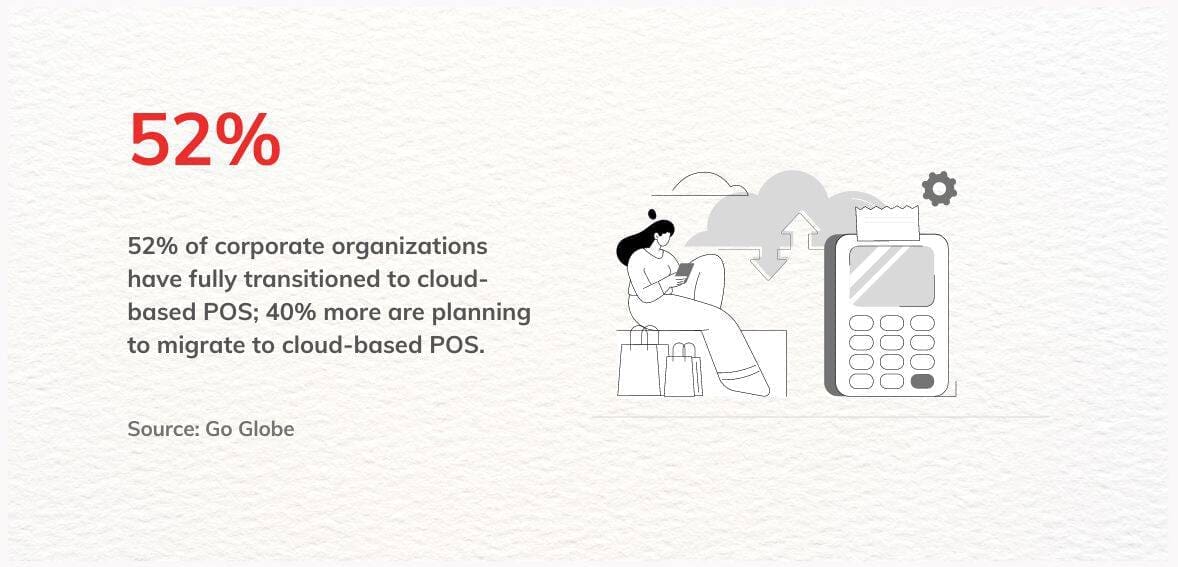
About half (52%) of businesses are all-in on cloud-based POS, and another 40% plan to shift soon. This handy mobile POS software lets bosses and workers check daily sales, report summaries, and how much inventory is left, all from their devices. It allows them to make smart choices, even when out and about. All in all, having cloud-based POS systems work together with mobile features gives the most flexibility and time-saving benefits for today’s retail work.
3. Enabling Seamless Omnichannel Experiences
Omnichannel experiences involve integrating in-person, mobile, ecommerce, and social sales, offering a comprehensive view of customer relationships across various channels at any time. While not a new trend, POS technologies empower retailers to enhance customer experience across all touchpoints. Shopping has changed a lot nowadays – People don’t always buy things in a straight line anymore. For example, a customer might discover a product on social media, like Instagram. Then, they might check it out at a store. But in the end, they decide to buy it online from the seller’s website. This way of shopping has shaken up even the old-school, physical stores.
This is why physical stores, too, are getting more digital. Online shopping is becoming just another part of physical store shopping. Experts think it could make up almost one-fourth of all store sales worldwide by 2027. Because of this, stores are working hard on their online platforms. A whopping 96% boosted their online shopping budgets in 2022 alone. Services like curbside pickup and BOPIS are also getting more popular. People like these because they’re convenient and flexible. BOPIS especially has been booming – in 2022 alone, it brought in more than $95 billion in the US. And experts think this could go beyond $150 billion by 2025.
Point-of-sale technology is crucial for small businesses, allowing them to compete effectively with larger counterparts. Tools such as Square POS and Shopify POS enable customers to initiate their shopping online and conclude it in-store, or vice versa.
4. Customer Satisfaction is Important
At the core of any successful retail business lies the customer experience. Savvy retailers now realize that the point-of-sale system should be developed with the customer’s needs in mind to guarantee an expedited, cohesive checkout. Research demonstrates that the vast majority of shoppers, some 86% to be exact, are ready to pay a premium for exceptional customer care. Indeed, those who have pleasant retail encounters often spend considerably more money – up to 140% more – than unhappy customers who recount negative interactions. This focus on the client’s journey from browsing to purchase underscores how crucial seamlessness and satisfaction are at the register. Retailers can foster loyalty while driving higher revenues by prioritizing simplicity, speed, and service across the checkout process.
By integrating these systems with customer loyalty programs, businesses can elevate their service to new heights. The integration allows for real-time rewards and discounts, giving customers a personalized and engaging experience that keeps them returning for more. This degree of personalization boosts customer satisfaction and fosters brand loyalty in today’s cutthroat retail environment, both of which contribute to increased sales and long-term business success.
5. No Limitations
In a typical retail environment, transactions take place at the checkout counter. However, using a modern POS system removes this restriction. Businesses aren’t even limited to their store. Mobile POS systems let people place orders outside the store, on the street, or at a trade show. Companies can even send employees around the store with handheld devices and fulfill sales on the spot for customers.
A POS system with no limitations allows customers to place an order for delivery or to pick up something in the store. More than 50% of retailers accept that implementing additional delivery and pickup choices for customers was a priority for 2021, and there’s strong evidence this will continue into 2023.
6. Alternative Payment Methods
New payment methods are entering the mainstream industry every day. Modern customers want to choose how they pay for things, and they prefer having plenty of options.
Alternative payment methods are an excellent way for a POS system to shine. The system’s flexibility means it can handle multiple payment methods simultaneously. This means greater versatility in how people pay for things, which helps secure more sales and drive up customer retention.
At the end of the day, a business must adjust to meet the customer’s needs rather than the other way around. This means that businesses that implement alternative payment methods in conjunction with a POS system are far more likely to see significant sales increases.
7. Using Data Analytics
The strength of a good POS system is its use of analytics. Because a system can take continuous data inputs, it can use that to create a comprehensive set of analytics.
Analytics is a core part of a business because it provides essential information about how certain areas of the company are doing. Analytics allow for informed decisions, which means it is possible to act methodically to improve areas lacking in analytics. Because a POS system constantly tracks data, it is in a solid position to deliver quality analytics.
8. The Need For Integrations
To maximize efficiency and accuracy when managing various aspects of business operations, POS systems must be highly integrated with other key software solutions that are commonly used. POS systems must seamlessly connect with enterprise resource planning (ERP), accounting, and inventory management software. This tight integration allows businesses to streamline many of their daily processes since necessary data can automatically and accurately transfer between different platforms. Additionally, linking POS systems with e-commerce platforms has become progressively more important in today’s digital era.
This connectivity effectively allows companies to oversee online and in-person sales from one centralized location. Combined sales data provides leadership with a comprehensive outlook of the business’ total sales performance. Furthermore, the capability for POS systems to interface with other commonly used applications like accounting tools, order fulfillment tools, ecommerce tools, and Internet of Things solutions that include sensors and POS databases broadens their functionality. The expanded interoperability renders POS systems indispensable instruments for contemporary businesses aiming to optimize and enhance operations.
9. AI and Automation
While artificial intelligence and automation are poised to revolutionize point-of-sale systems in the coming years, many uncertainties remain. Machine learning advancements open new opportunities for businesses to interact with customers in more personalized ways. AI-powered systems have the potential to gain insights from vast troves of customer data in real-time, enabling targeted recommendations and messages tailored for each individual. Such customized engagement could heighten customer satisfaction and loyalty.
Beyond marketing, automation may streamline inventory management and order fulfillment through AI. These solutions promise to reduce human errors while freeing staff for strategic tasks requiring creativity and judgment. However, integrating AI fully into POS presents challenges. Technical and organizational obstacles could slow widespread adoption, though the long-term trend seems inevitable. As technologies evolve, retailers worldwide will adapt operations to remain competitive in an AI-transformed landscape.
Conclusion
The point-of-sale system is reaching incredible levels of proficiency and usage, which means smart businesses will implement it sooner rather than later. Having access to software designed to generate the best results is vital. Customers no longer take a traditional sales journey to purchase an item, so the system used to fulfill sales has to be modern. Thankfully, the modern POS system is up to the challenge, and a sensible business will look into investing in the technology for 2024 and beyond.
Frequently Asked Questions
What are POS trends?
POS trends encompass upcoming features, experiences, and options designed to enhance business effectiveness and efficiency for point-of-sale system users.
What are the retail POS trends in 2024?
Exciting POS trends in 2024 include the emergence of mobile and cloud-based POS systems, integrating alternative payment methods, and ongoing software enhancements with impressive integrations.
What is the future of the POS industry?
The future of POS terminal payments is characterized by innovation and customer-centric solutions. Businesses are moving towards widespread adoption of mobile POS systems and integrating blockchain for heightened security, offering more seamless, secure, and personalized payment experiences.
Can a POS be used for a website?
Indeed, POS systems exhibit versatility and can be employed in both physical stores and online e-commerce websites. They provide various features to improve business efficiency, including credit card payment processing, sales tracking, and inventory management.
Sustaining and expanding your business involves both creativity and systematic planning. In the initial stages, when working alone or with a small team, it’s common to overlook the importance of establishing transparent processes. You may rely on your intuition and memory to manage daily operations and foster growth. But, for your business to scale to higher levels of success, it’s crucial to develop and document robust business processes. Here are some essential business processes to support and grow your business.
What Exactly are Business Processes?
A business process is a series of sequential tasks/activities carried out by a specific department of a company. These automated or manual tasks are completed in an organized manner to achieve a predetermined objective. When these “tasks” are processed efficiently and smoothly, they directly contribute to a business’s success and expansion.
Simply put, a business process is a series of activities and tasks to achieve a company’s objectives.
These processes cover a wide range of activities, including production management, financial management, staff management, product management, and many others—basically, all your company needs to keep running. Once all these methods work in synergy and are supplemented, you can be amazed at how efficiently your business will run.
Why are Business Processes Important?
A set of business processes is critical for running things smoothly and, crucially, improving the speed of work and reducing errors among your staff. Without clearly defined processes, there’s no assurance that tasks will be completed consistently. Without this consistency, business can lead to “not so good” product or service quality, inconsistent data collection, and potential legal compliance issues.
Likewise, establishing processes promotes consistency, enabling you to deliver higher-quality services, customer support, and products. Well-crafted business processes also enhance efficiency within your company. When employees understand how tasks should be performed, they can complete them more quickly and with fewer errors.
Efficiency and quality are just two of the benefits of refining business processes. Other advantages include:
Enhanced Communication: A focused business process can help you communicate more effectively within the company and the clients through market research and feedback.
Enhanced Time Management: With strategic planning in place, a systematic process can streamline certain tasks, saving a lot of resources.
Technology Adaptation: Integrating the latest technologies can enhance business processes. For instance, tools like HubSpot and OptinMonster can automate and speed up lead generation.
Lowering Risks and Costs: A business process shows the best way to do a task while considering possible future problems. This reduces risk and saves time and money.
Less Mistakes by Employees: A business process reduces the chance of errors by assigning tasks to those who are skilled at them.
Boosting Productivity: Business processes make work more efficient by clearly outlining what moves and steps to take.
Customer Focused: A well-planned and executed business process keeps your company in line with the customers’ real needs regarding the products or services they receive.
Teamwork: When everyone works together in a process, the business runs smoothly and better.
Key Processes to Support a Growing Business in 2024
Although business conditions are becoming more brutal nowadays, the proverb “It’s not only what you do, but how you do it” applies perfectly to the current challenging global business market. This concerns your company’s modus operandi as a differentiator or having a competitive edge – a systematic approach to different business processes can help you become a differentiator among your competitors.
When business processes are improved, tasks can be executed more effectively and accurately. This has other advantages, such as enhanced communication. Plus, strategic planning helps maximize time use and streamline the process.
Here are some of the essential business processes:
1. Lead Generation Processes
Lead generation varies depending on the business. It involves identifying potential customers for a company or service. Lead generation plays a pivotal role in today’s business landscape, primarily by driving website traffic and converting leads into paying customers, thereby boosting profits.
Devoid of lead generation strategies, business teams would be kept in the loop regarding their audience’s preferences and interests. Moreover, they need help differentiating themselves from competitors and effectively presenting their offerings. By employing lead generation tactics, marketers can better target their customer base and create websites tailored to their needs. The lead generation process varies for each business, but here’s a general overview of how it typically unfolds:
1. Scrutinize and Plan
To kickstart lead generation, it’s crucial to define your goals. List the outcomes you aim for and establish KPIs to gauge progress. For instance, you might work backward from sales targets to determine the required number of leads per month, adjusting your budget accordingly.
Assign responsibilities for various tasks. Lead generation encompasses writing, research, and analysis so that you may allocate roles such as:
Copywriter for crafting email, ad, and social media content
VP of Marketing to synchronize sales and marketing strategies
Members of the marketing team to explore competitor tactics and target audiences
Analytics team members to gather and provide accurate sales data
Additionally, crafting an Ideal Customer Profile (ICP) is essential. ICPs act as a guide for identifying leads that match your top customers’ typical demographic, firmographic, and technographic traits, including their industry, business stage, and preferred tools.
It’s important not to confuse ICPs with buyer personas. While the latter represents the individual who will make the purchase, the ICP identifies the person who influences the buying decision.
2. Know Your Target Audience
Another crucial aspect of your lead generation process involves defining your target audience. Conducting comprehensive market research, which entails identifying current and potential customers while understanding their needs, is the next logical step toward crafting a successful lead-generation strategy. Pay close attention to recurring patterns, such as joint pain points or usage scenarios, and strategically position your product as a viable solution.
Please comprehend the audience you wish to attract to avoid leaving you in the dark about their content preferences and preferred demand generation channels. Remember, regardless of how excellent your brand, product, or service may be, it’s futile if your customers cannot locate you. To target the right audience effectively, establish workflows to monitor incoming leads and implement dashboards to track their progress through the sales cycle.
3. Creating Content that Resonates with Audience
Informative, compelling, and easily shareable content is potent for attracting potential customers. By providing solutions to your audience’s problems through content, you establish credibility and trust. Consider publishing content in various formats, such as blog posts, graphics, social media updates, flow charts, infographics, or eBooks, to diversify your approach and appeal to different audience preferences.
Strategize content for each stage of the sales funnel. Increase awareness with SEO-optimized blog posts, infographics, and social media posts. Encourage conversion later through personalized emails and PDFs that detail your products/services. Dedicate up to 15 minutes for each lead for research and at least 30 minutes to compose a customized message, which can significantly boost response rates and lead qualification.
4. Ensure Optimal Distribution Channels
After conducting thorough research and crafting compelling content, placing it on the right platforms is vital to maximize its visibility. Even exceptional content may only be noticed if strategically distributed.
Share your content on platforms like Instagram, Facebook, X, LinkedIn, your blog, or wherever your target audience is most active. Identify the channels your audience frequents and learn how to leverage them effectively to enhance your demand generation efforts.
5. Cultivate and Evaluate Existing Connections
Once someone joins your email list or enters your system to manage leads, it’s essential to keep the connection strong over time. Gently guide them through the buying process or encourage them to purchase. Send personalized emails that suggest they try a free sample or test a product.
Remember, not all leads are created equal. Your marketing and sales teams should examine each lead closely to determine which could use your services. Also, watch leads who interact with your business, like those who read your content or visit your website often. Put more energy into leads that could significantly boost your sales and profits.
6. Handoff Leads to Your Sales Team
The initial stages involve marketing efforts to convert a subscriber into a lead. Now, it’s the sales team’s turn to transform a customer’s interest into a sale. Once someone has made a purchase, your sales team must enhance their experience and keep them engaged with your company for the long haul.
And don’t forget that you should constantly evaluate the performance that your lead generation efforts are getting. You can determine it with the help of evaluators like conversion rate, cost-per-lead, lead-to-customer rate, bounce rate, etc.
2. Sales Processes
Every business requires an effective system to facilitate sales and ensure customer satisfaction.
The selling process involves the exchange between a seller and a potential buyer or client. It is a reliable method that businesses can replicate to maintain consistent performance among sales personnel. Employing the seven common steps of the selling process enables businesses to secure sales and sustain profitability over time:
1. Prospecting
Most people confuse prospecting and lead generation, thinking the terms are interchangeable, but that is untrue. As mentioned above, lead generation is a broader strategy for attracting potential customers through marketing efforts. The goal is to capture leads who have shown initial interest.
Meanwhile, prospecting involves a more targeted approach where sales professionals directly identify and reach out to potential customers who align with a specific ideal buyer profile. During this stage, the sales department actively seeks out potential customers and assesses whether they possess a need for the product or service and the ability to afford it. This process of evaluation, known as qualifying, involves screening prospects based on criteria such as business ownership, homeownership, or suitable income levels relative to the product’s price.
2. Preparing
The subsequent step involves preparing for the first interaction with a potential customer. This entails thorough market research and gathering all pertinent details about your product or service. Prepare your presentation customized to the specific needs of your potential client.
Adequate preparation is essential to position yourself for success. The deeper your understanding of the prospect and their requirements, the more effectively you can address their concerns and differentiate yourself from competitors.
3. Approaching
In the approach stage of the selling process, you initiate your first personal interaction with the potential customer. This phase involves engaging the potential customer to establish rapport through personalized interactions. Pose questions to encourage the customer’s involvement in the conversation.
For instance, if you’re selling Project Management Software, you might inquire:
Do you currently utilize any project management tools within your team?
What are the primary challenges you encounter when managing multiple projects?
How crucial is real-time collaboration for your team’s success?
Have you explored solutions offering features like task delegation, progress tracking, and communication tools?
Additionally, as a subscription-based tool, you can offer small gestures to attract customers, like a $10 discount on the first month or providing a 15-day trial period. This lets the prospect experience the benefits firsthand before committing to a larger investment and reinforces confidence in your product.
4. Presenting
You’ve gained insight into your prospect’s needs and desires at this stage of the selling process. You can tailor your presentation or demonstration to illustrate how your product or service can effectively address those needs and wishes.
During the presentation phase, you actively showcase how your offering aligns with your potential customer’s requirements. While the term “presentation” may evoke images of PowerPoint slides and sales pitches, it doesn’t always have to follow that format. Instead, it’s essential to actively listen to your customer’s needs and respond accordingly, ensuring a personalized approach.
5. Handling Objections
Encountering objections with each sale is a natural and valuable aspect of the selling process. Rather than seeing objections as hurdles, consider them opportunities to understand your prospect better. By addressing these concerns, you can convert hesitant consumers into satisfied customers. Adequate research and preparation ensure you have the information to overcome objections effectively.
6. Closing
After addressing objections, it’s time to finalize the sale. The objective is to secure the prospect’s commitment and progress toward the next phase. The key is to facilitate an affirmative response from the prospect. Prepare the prospect by reinforcing how their goals will be achieved through your product or service. To close the deal:
Ask directly if you’re ready to move forward with the agreement now.
Inquire less straightforwardly if the proposal meets your expectations.
Sweeten the deal by adding a bonus for signing up.
Introduce a cost-free trial period, suggesting you try it out for a week.
Emphasize the exclusivity and time sensitivity of the offer, mentioning it’s only available for a limited period.
Inquire about any additional requirements the prospect may have to finalize their decision. Once the prospect commits to the purchase, address any remaining inquiries and outline the next steps. Furnish a written agreement and recap of the discussion for their review, ensuring accuracy before involving other stakeholders.
7. Follow-up
Post-sale engagement is crucial in the sales cycle, strengthening the bond between the buyer and seller while ensuring the buyer’s satisfaction. This stage focuses on nurturing the existing relationship rather than making further sales. Activities during this phase may include expressing gratitude through a thank-you message or contacting the customer for feedback on their purchase. Encouraging customers to share their experiences through testimonials for your website or a review on platforms like BBB is also common.
Additionally, this follow-up may include finalizing sale details such as executing extra agreements, arranging product delivery, or setting up services. Effectively managing this phase can rejuvenate the sales cycle by generating repeat business, attracting new customers through referrals, or garnering positive reviews.
3. HR Processes
Human Resources (HR) procedures encompass recruitment, motivation management, personnel qualification oversight, and fostering corporate culture. These practices are standard across all HR departments and are not contingent on the size or nature of your business.
However, if any of these processes appear missing, it indicates a need for a proper management system. As a company expands, it becomes crucial to address these gaps to prevent disorderly HR management. Here are some essential HR processes a company should follow:
1. Recruitment
HR teams should continually explore modern technologies to enhance their recruitment strategies. This involves simplifying procedures through online job platforms and applicant tracking systems to ensure a positive candidate experience.
In today’s competitive market, prospective talent is highly selective. They start evaluating your company right from the initial interview. Therefore, how you engage with top candidates, beginning with their first interview and their organization holds significant importance.
2. Onboarding and Offboarding
Onboarding refers to the process of integrating newly hired employees into the company. When done effectively, it ensures new employees understand your brand values, feel supported, and become part of the business family. Ensuring employees feel valued right from their first day is crucial. This is important for two main reasons:
It enhances employee engagement and satisfaction while boosting job productivity.
When employees feel welcomed, they are more motivated to learn, contribute, and excel in their roles.
On the flip side, employee offboarding occurs when an employee departs from your business. This process should leave former employees with a positive impression of your company, fostering word-of-mouth marketing and enhancing brand perception.
3. Workforce Planning
Workforce planning involves strategic HR practices as well as daily employee management. It encompasses determining staffing requirements, managing absences, scheduling shifts, and overseeing overtime.
4. Talent and Performance Management
Companies often hire talented individuals but fail to provide ongoing support, relying solely on occasional performance reviews. However, more than this approach is needed for retaining top employees. Talent management aims to nurture employees, helping them develop new skills, maximize their potential, and improve performance.
And speaking of performance, an effective performance management process should benefit both the company and the employee. Traditionally, companies set annual performance metrics and goals, addressing issues only during the yearly review, which often proved too late to enact changes. Forward-thinking companies now opt for more frequent and continuous performance management processes.
5. Training and Development
Prioritizing training and development is essential for your business, acting as a proactive measure rather than a reactive solution. Offering growth opportunities elevates employee morale and enhances your company’s ability to retain staff. Investing in learning and development equips your business with the necessary skills for expansion and future challenges, ensuring you’re prepared even if key talent departs.
To build an effective learning and development strategy, consider the following steps:
Align educational programs with your organization’s staffing strategies and objectives.
Utilize insights from your performance evaluation system to pinpoint specific training needs that align with individual and company goals.
Evaluate the effectiveness of your training programs by setting and monitoring key HR metrics.
4. Financial Processes
Financial processes involve companies’ tasks and activities to transfer financial assets within different parts of the business. Financial departments typically manage these processes, which oversee a company’s financial operations. Here are some core financial processes:
1. Budgeting
The budgeting process involves reviewing past budgets and forecasting revenue to plan for the future. It also involves collaborating with upper management (like FP&A branches, which we will discuss in the next section) to analyze budget data and set goals to manage spending effectively.
Here are steps to create a financial budget:
Estimate projected income
Determine expected expenses
Establish goals
Categorize costs
Monitor budget components
2. Analyzing and Reporting
Analyzing and reporting are pivotal elements within a company’s foundational financial practices. They shed light on a business’s economic health, helping create and make savvy business choices. The process unfolds through several key steps:
Accumulation of financial data: This involves collecting essential financial documents such as income statements, balance sheets, and cash flow statements.
Data organization: This step focuses on systematizing the gathered data to facilitate analysis and enable straightforward comparisons.
Examination of financial statements: This involves thoroughly reviewing the financial information to pinpoint strengths, trends, potential areas for enhancement, and weaknesses.
Understanding the outcomes: This stage involves deciphering the results to gauge the company’s financial condition and identify potential opportunities or risks.
Reporting: This involves drafting detailed reports encapsulating the analysis, highlighting crucial financial indicators and insights.
Information dissemination: The final reports are then shared with key stakeholders—investors, regulatory authorities, and management—to support informed decision-making and ensure transparency.
Decision-making: The insights from analysis and reporting are leveraged to inform strategic and operational decisions, fostering the business’s growth.
3. Cash Flow Management
Optimizing cash flow is critical for sustaining a company’s financial health and ensuring liquidity. Here are some strategies to enhance cash management:
Regular cash flow monitoring: Diligently track all cash movements, outflows and inflows to maintain control over finances.
Develop a cash flow projection: Forecast future cash movements to identify potential deficits or excesses in advance.
Minimize expenses: Adopt measures to reduce costs and practice effective budgeting to maximize available cash.
Streamline receivables and payables: Set definitive terms for the prompt collection of dues and negotiate advantageous terms with suppliers to improve cash flow timing.
Invest surplus cash wisely: Look for investment options to put idle cash to work and earn additional revenue.
For further improvement in cash management, businesses can harness technology to gain clearer financial insights and automate financial tasks, including invoicing and cash flow reconciliation. Continuously revising and refining cash management tactics will aid in navigating evolving market dynamics and boosting the company’s financial well-being.
4. Compliance and Audit
Compliance and audit are critical for managing finances accurately and transparently. To strengthen these processes, companies must develop and enforce policies that prevent fraud, errors, and non-compliance. Regular audits are essential to verify these controls’ effectiveness and identify areas for improvement.
It is crucial to maintain accurate records and stay informed about financial regulations. Educating employees about compliance and audit procedures is essential to promoting transparency and accountability. Robust compliance and audit processes can safeguard a company’s reputation and financial health.
5. Product Testing Process
Every company that makes or buys products on white labels needs to test them first to ensure they will sell or are market-fit. This means making sure people want your product, and you can sell it at a high price to make money after covering your costs.
Testing your product and asking potential customers what they think about it helps you understand how people might react to it and what they think about its features before you start selling it.
1. Executing Your Idea
While having innovative conceptualization is valuable, their successful implementation holds the key. Through concept testing, you can assess the potential success of your new product by gathering feedback from your intended market.
For example, you could survey 100 individuals to explore your idea, gather their insights, and interpret the feedback using different measures before committing to manufacturing. This blend of concept testing with surveys unveils the strengths and weaknesses of certain design aspects of your product, guiding you toward the subsequent phase:
2. Highlighting Product Features
What truly matters to consumers is not the features themselves but the benefits they provide, highlighting this phase’s importance in the product testing process. Identifying the attributes of your target market values involves conducting customer needs analysis research. This approach pinpoints consumers’ precise needs and preferences regarding a service or product and can be applied at various stages of product testing and development.
After pinpointing the features that align with your audience’s preferences, you’re set to refine your product further, conduct additional tests, enhance it, and eventually launch it in the market.
3. Establishing Your Price Point
With your research finalized and product features decided, the next critical step is establishing a price your target market is willing to pay. The price point you set is the standard retail price. It’s a balance that ensures affordability for your target audience, enables you to remain competitive, and provides flexibility to adjust pricing as needed.
However, setting a product’s price involves more than fixing an average price point or considering what your audience can afford. You have a range of pricing strategies at your disposal like:
Premium Pricing involves consistently high prices for a product throughout its life cycle to convey a perception of superior quality compared to competitors.
Competitive Pricing: In competitive pricing, prices are set based on those of competitors, especially for similar products in competitive markets.
Cost-Plus Pricing: With cost-plus pricing, a fixed markup is added to the total production costs to ensure the company profits on each sale.
Value-Based Pricing: Here, the product’s price is determined by the perceived value it offers customers rather than its production cost. This strategy is often seen in niche industries and for customized products.
Price Skimming: This strategy involves initially setting the highest price for a product and gradually lowering it over time. It allows the company to attract different customer segments.
Penetration Pricing: In this approach, a company sets a low introductory price for a high-quality product to capture a significant market share.
Dynamic Pricing: Also known as time-based or surge pricing, this strategy adjusts prices based on customer demand and market conditions. It is commonly used for utility-based products.
6. Client Satisfaction Process
Client/customer satisfaction assesses how effectively a company’s products and services align with customers’ expectations. It indicates your business’ performance by revealing how much your products meet customers’ needs.
1. Develop a Plan
Measuring customer satisfaction without a plan is futile. Therefore, it’s essential to create a plan and establish clear objectives. Gathering data requires both time and effort from both you and your customers. If you’re investing in this process, ensure there’s a purpose behind it. There’s no point in inconveniencing yourself (and your customers) without a valid reason.
The primary goals you can define include:
Enhancing the quality of the product line or service
Improving customer support
Enhancing any other customer touchpoint
2. Select a Metric
Choosing the right measurement tool is crucial. We’ve gathered a list of top metrics to help you better understand clients’ opinions and assess their overall satisfaction. One such metric is the Net Promoter Score (NPS), which assesses how likely customers are to recommend your company to others.
With just one question, the NPS metric delves into consumers’ emotional connection to a brand, indicating whether their loyalty is strong enough to make them regular customers at your store.
3. Craft a Survey
Once you’ve established your goals and metrics, creating a survey becomes more straightforward. Before diving into survey creation, consider the most suitable research method. Choose the appropriate customer satisfaction tool and determine the optimal survey distribution channel that resonates with your target audience. Whether it’s targeted website surveys, mobile app surveys, email surveys, in-message surveys, or another approach like cold-calling customers, select the best method for your needs.
While any distribution channel can work, remember that online channels are typically more effective and preferred by customers, as this is where they spend most of their time nowadays.
4. Gather Responses
Newcomers to survey analysis may be eager to collect a few responses, which is understandable. However, waiting for a larger sample size is advisable before concluding the survey results. The minimum sample size required often depends on the number of customers surveyed.
For most companies, achieving statistical significance may be challenging, and a few hundred responses, or even less, should suffice. While obtaining over 100 responses can be daunting for tiny companies, it’s essential not to be discouraged from measuring customer satisfaction.
5. Collect Feedback and Examine the Results
Without analysis, there are no actionable insights. The analysis process is key to identifying a business’s strong points and areas for improvement. Acquiring this insight is crucial for enhancing those less vital areas. In scrutinizing the shortcomings of your business, consider the following queries:
At which point in the customer’s journey did problems arise?
To which department or aspect of your business do these issues pertain?
What directly led to the customer’s negative feedback?
What are the simplest yet most impactful resolutions you could adopt?
6. Acting on Customer Feedback
Analyzing feedback isn’t solely about gaining knowledge; it also empowers you to take educated steps toward enhancing customer happiness. Including this phase in customer-focused surveys is imperative, as it plays a crucial role in accurately gauging customer contentment. Should there be complaints regarding customer service quality, investigate to pinpoint potential improvements.
Could the same service representative deal with those voicing dissatisfaction? If grievances concern the website, develop a strategy for enhancements and consult with your team to resolve these problems.
7. New Vendor Onboarding Process
Supplier onboarding is vital for businesses that depend on a network of suppliers and service providers to function smoothly. It involves welcoming and integrating a new vendor into the company’s operations, fostering a seamless and productive collaboration. Effective supplier onboarding goes beyond paperwork; it lays the foundation for a successful and mutually beneficial partnership.
1. Establish an Evaluation and Approval Process
Supplier evaluation involves asking pertinent questions to ascertain whether a vendor can fulfill your organization’s inventory requirements while mitigating unnecessary risks. Several standards can be set for the supplier evaluation process, including:
Clearly outline your requirements from the vendor, such as products, services, or raw materials.
Selecting vendors based on criteria like quality, reliability, and pricing.
Developing standardized vendor onboarding forms and agreements to simplify the process.
2. Verify Their Documents
The subsequent step in the process involves document verification. The verification team evaluates the vendor’s information and documents against the company’s standards to determine their suitability for collaboration. Necessary documentation you may need to gather includes:
Ownership documentation
Tax information and identification numbers
Insurance policies
Non-disclosure agreements (NDA)
Sourcing reports
Outsourced functions, subcontractors, and fourth parties
Supplier diversity certifications
Credit history/Financial records
Regulatory compliance
Security certifications
ACH forms
Required business licensing
3. Effectively Communicate Your Requirements and Expectations
The onboarding team will outline the entire operational process to the vendors, ensuring they understand the company’s expectations. This ensures alignment with company policies and delivers satisfactory results. To facilitate this, the team asks and verifies questions such as:
What is your current production capacity?
How quickly can you fulfill deliveries?
How robust is your quality assurance process, and what error margin should we anticipate in your products and services?
Do you have a customer service team available to coordinate with our procurement team in case of issues?
How does your pricing fluctuate during peak seasons with increased product demand?
Moreover, a trial of a supplier’s services allows for a comprehensive vendor evaluation before finalizing a contract.
4. Foster Long-Term Relationships
When you engage with a vendor repeatedly, aim to cultivate a relationship that allows for confident communication. Establishing a solid business relationship ensures mutual understanding of your supplier’s capabilities and your organization’s needs.
It’s about fostering trust between both parties to nurture a lasting and beneficial relationship. Additionally, timely payments to suppliers are key to maintaining a positive relationship and encouraging them to prioritize your orders. While most suppliers require an upfront deposit and the remainder upon delivery, any delays in payment after project completion can impact your supplier’s cash flow and potentially strain the relationship.
8. Inventory Management Process
Managing inventory involves efficiently overseeing the flow of products in and out of a company. It encompasses controlling every aspect of the inventory process, from acquiring goods from suppliers to storing, selling, and delivering them.
This also includes overseeing inventory for items essential to a company’s daily operations, such as hardware, stationery, and inventory management software. Effective inventory management ensures that a company maintains the right amount of inventory at the appropriate times, reducing costs associated with stockouts or excess inventory and facilitating smooth operations.
1. Receive and Verify Products
The initial phase of inventory management begins with receiving the order from the supplier. This step is pivotal for the subsequent processes to run smoothly. Upon the order’s arrival, the first task is to inspect the products.
Verifying that the quantity, product, and serial code are all accurate. Additionally, ensure that handling conditions, such as temperature for perishables, are appropriate and that all products are in good condition.
2. Organize and Store Products
Once the products have been inspected, they must be correctly stored in the warehouse and recorded in your inventory management system. During this phase, it’s wise to strategize about product storage. Employing warehouse slotting techniques, such as organizing products by SKU and product type, can be advantageous.
Additionally, it’s essential to minimize the distance to top-selling products by storing them in the most accessible areas.
3. Processing Customer Orders
Following the inventory management procedure is the acceptance of customer orders. These orders are usually managed via a POS that handles order processing and payment acceptance.
The POS system may come equipped with features for managing inventory, or it might be linked with external inventory management software, allowing warehouse personnel to access order information.
4. Completing, Packaging, and Dispatching the Order
After receiving a customer’s order, the subsequent action involves swiftly and accurately preparing, packaging, and dispatching the item. If the preceding step was efficiently executed, locating and picking the products from the warehouse should be simple.
Key factors to consider during packaging include enhancing the customer’s unboxing experience, ensuring the product’s durability during transit, and evaluating environmental sustainability. Upon shipping the item, it’s crucial to provide the customer with a confirmation email with the tracking details.
5. Restocking Inventory
Ensuring the accuracy of the timing and quantity of inventory restocks is essential. Utilizing the reorder point formula helps reduce the likelihood of encountering either stock shortages or surplus inventory, which can adversely affect your profit margins.
Advanced inventory management systems offer automation for the restocking process, which saves time and reduces the chances of errors due to manual intervention.
9. Performance Evaluation Process
An employee performance evaluation, often referred to as a “performance review,” is a process organizations utilize to provide employees with feedback regarding their job performance and formally document it. While companies establish their evaluation schedules, most conduct performance evaluations annually. Some companies also perform evaluations when employees complete their initial probationary period, with successful assessment resulting in removing probationary status.
Information from evaluations is retained in the employee’s record and may be requested by prospective employers or educational institutions. The structure and format of performance evaluations vary widely across industries and companies. They may incorporate rating scales, self-assessment checklists, formal observations, or performance tasks. Typically, evaluations include a review of outcome metrics or progress toward previously established goals.
1. Preparing for Your Performance Review
Just as your employer is likely to come prepared with documentation or notes to support evaluation ratings, it’s wise for you to gather similar information as well. This could include work samples, past evaluations, customer feedback, or a list of your achievements.
Reviewing this beforehand allows you to reflect on the past year and provides you with talking points for potential performance-related questions from your employer. Additionally, there might be projects or accomplishments that your manager overlooks, so having this information ensures that all your hard work is recognized and accounted for.
2. Setting Objectives and Identifying Support Needs
Reflecting on your aspirations for the meeting and your objectives for the forthcoming year is a crucial step in preparing for your performance review. Think about how your employer could assist you in achieving these aims. This might involve being paired with a mentor or participating in a new project to enhance your abilities.
Proactively contemplating these aspects positions you to advocate effectively for your advancement. Your employer will likely value your detailed suggestions and overall readiness.
3. Compile a Set of Inquiries
Given that your performance review offers your employer focused attention, it’s an ideal time to seek clarity on any uncertainties regarding the company, your specific department, or your role.
For instance, if there have been recent shifts in the company’s leadership, it might be pertinent to inquire about the potential impacts on your job. Preparing your questions beforehand ensures you utilize the evaluation session to its fullest potential.
4. Gear Up for Interactive Dialogue
Many individuals enter performance evaluations filled with nervousness, eagerly awaiting the feedback they will receive. However, it’s crucial to remember that these sessions are meant to be dialogues, not one-sided critiques.
These discussions are as much about receiving input on areas for improvement as they are about voicing your own needs and aspirations for success and advancement within the company. You should be ready to ask about pathways for career progression, compensation, and the necessary steps to fulfill your professional objectives.
Such meetings are key moments to fortify the communication and relationship with your manager. Use this opportunity to set clear goals and expectations, discuss potential obstacles to reaching these goals, and highlight any additional training or support you might require.
Conclusion
As your business embarks on the journey of growth and expansion, embracing a structured approach to managing its core processes becomes non-negotiable. From the intricate details of lead generation and sales strategies to the nuanced realms of HR, financial management, and product testing, each element is pivotal in steering your business toward its objectives. These processes are the lifeblood that fuels your company’s operations, driving efficiency, innovation, and customer satisfaction.
The essence of successful business management lies in the meticulous development, implementation, and continuous refinement of these processes. By establishing clear, efficient, and adaptable processes, you lay the foundation for scalable growth, enabling your business to navigate the challenges of expansion with agility and resilience.
Moreover, prioritizing these essential processes fosters a culture of continuous improvement, encourages teamwork, and aligns your organization’s efforts toward achieving collective goals. As you progress, let these processes be your guideposts, ensuring that every step you take is a step towards tremendous success. Remember, it’s not just the goals you set but also the processes you refine and follow that will distinguish your venture and propel it to new heights.
Recently, the Visa high-risk fee for registration was raised, affecting the bottom line of merchants considered high-risk. In a landscape where payment processing fees are substantial, merchants must proactively tackle these challenges to protect their profits. This blog post highlights the updated Visa Integrity Risk Program (VIRP), which will soon introduce new high-risk tiers and associated pricing adjustments set to take effect in 2024, providing essential insights into the basics and what merchants can expect moving forward.
Understanding the VIRP is crucial for high-risk merchants, as it significantly impacts their success by ensuring the integrity and security of Visa’s payment system. The program mandates that acquirers and their associated entities, including payment facilitators, independent sales organizations (ISOs), and wallets, maintain robust controls to prevent illegal transactions.
What is Considered a High-Risk Business?
Determining whether a business is categorized as a high-risk merchant is based on several factors assessed by banks or payment service providers (PSPs). Some factors include monthly processing amount or volume, transaction type (international or local), or any inherent reason to consider the business a high-risk.
Volume plays a significant role, with high monthly processing amounts or a high per-transaction rate potentially leading to a high-risk classification. Engaging in international transactions increases the risk of fraud, which could prompt processors to label a business as high-risk. Additionally, a new business with no credit card processing history or a low credit score may elevate the risk status.
Certain industries inherently carry higher risks due to their nature. Subscription-based businesses, for example, often face a higher risk due to potential customer cancellations. Industries like gambling, entertainment, travel, pharmaceuticals, dating, cryptocurrency, subscription services, CBD and vape products, and debt collection agencies are commonly designated as high-risk due to the nature of their operations.
What is the Visa Integrity Risk Program?
On May 1st, 2023, Visa unveiled the Visa Integrity Risk Program (VIRP), which aimed to strengthen the integrity and security of its payment system by implementing updated requirements for acquirers and their designated agents. This program replaced Visa’s Global Brand Protection Program (GBP), initially appearing as a mere rebranding effort with minimal alterations.
However, upon closer examination, it becomes evident that Visa has made modifications, particularly in categorizing business types based on risk. The revised VIRP now divides high-risk merchants into multiple tiers, each tailored to reflect their perceived level of risk. These tiers classify businesses according to their specific risk profiles.
Understanding the Requirements for Visa Integrity Risk Program
Under the Visa Integrity Risk Program (VIRP), acquirers must meet certain registration requirements. All merchants operating in HIR categories must be registered via the high-integrity risk registration (HIRR) system. Acquirers seeking approval for Tier 1, 2, or 3 must undergo separate registration processes. Approval for Tier 1 includes Tier 2 and 3; Tier 2 includes Tier 3, and Tier 3 stands alone.
Previously, acquirers handling high-brand risk merchants under the GBPP program may continue processing Tier 1 and 2 HIR merchants if transactions were processed for these merchants within the last 12 months preceding April 6, 2023. However, separate approvals are necessary for each Tier 1 category merchant not currently processed.
Acquirers engaging third-party agents, such as ISOs, payment facilitators, or digital wallet operators, must register these agents to onboard HIR merchants. To ensure compliance with Visa requirements, they must conduct thorough due diligence on agents, including their onboarding and monitoring processes. These processes must undergo assurance and formal oversight at least annually.
An Overview of MCCs Under Different Tiers
Below, we have outlined the HIR MCCs, which specifically pertain to card-absent transactions, meaning those conducted without the physical presence of the card.
Tier 1:
High Integrity Risk (HIR) Merchants categorized as ‘Tier 1’ are the ones whose businesses operate in sectors with a heightened risk of illicit activities occurring without proper controls. These activities can potentially cause significant harm, either directly or indirectly, to individuals’ health, safety, and well-being. Industries falling under this tier may include but are not limited to:
MCC 7273 Dating Services, MCC 7995 Betting (including Casino Gaming Chips, Lottery Tickets, Wagers at Race Tracks, games of chance to win prizes of monetary value, Off-Track Betting, etc.),
MCC 5122 Drugs, Drug Proprietaries, and Druggist Sundries,
MCC 5912 Drug Stores and Pharmacies.
Tier 2:
HIR Merchants categorized as ‘Tier 2’ are the ones whose businesses operate in sectors with a heightened risk of illicit activities occurring without proper controls. These activities can potentially cause financial or other economic harm to individuals. Industries falling under this tier may include:
MCC 6012 Services, Debt Repayment, and Merchandise—Financial Institutions,
MCC 4816 Information Services/Computer Network,
MCC 5816 Games—Digital Goods.
Tier 3:
HIR Merchants in Tier 3 include businesses beyond the scope of Tier 1 and Tier 2. If adequate controls are in place, these establishments can avoid non-compliance with relevant regulations or engaging in deceptive marketing practices.
What are the Visa Integrity Risk Program Charges 2024?
Visa, MasterCard, and other similar card networks have established particular criteria for high-risk businesses to handle the risks associated with their operations. Among these criteria is the imposition of a high-risk fee, which specific merchants must pay for credit card processing on the Visa or Mastercard networks. While the registration fee pertains to all high-risk merchants, the transaction fee is applicable only to select merchants.
This registration fee, which was $500 for both Visa and MasterCard, from April 1, 2024, will be subject to change by Visa under the Visa Integrity Risk Program across Central Europe, Asia Pacific, Africa, Latin America, and the Middle East. By requiring acquirers to follow appropriate and effective methods and protocols to stop non-compliant payments within the Visa network, this effort seeks to protect the confidentiality and safety of the Visa system for payment. For each merchant registration, the new registration charge is $950.
The Visa Integrity Risk Program registration fees vary depending on the tier classification. Tier 1 and Tier 2 merchants are subject to an application fee of $100,000, which is non-refundable, while Tier 3 merchants pay $25,000. There is also an annual renewal fee of $50,000 for Tier 1 and Tier 2; the same $25,000 applies to Tier 3 merchants. The acquirer’s yearly renewal fee, a new addition, will be invoiced based on the registration date.
Furthermore, specific high-risk merchants, such as those under MCC 5967 and MCC 7273, will incur additional charges. They will be billed $0.10 per transaction and 10 basis points for the volume processed. Failure to comply with the program’s standards may result in non-compliance assessments for the participants. Visa urges participants to review the pre-released version of the upcoming Visa Rules for further details.
What are the Non-Compliance Assessments?
Non-Compliance Assessments (NCAs) are essential components of VIRP and are designed to maintain the integrity and security of the Visa payment system. These assessments ensure that acquirers and merchants comply with the program’s requirements, and penalties may be imposed for non-compliance.
Penalties for non-registered HIR acquirers who violate the law can amount to $100,000 per calendar month. Likewise, failure to comply may result in fines of $2,000 per merchant each calendar month for non-registered HIR merchants. Penalties for VIRP Non-Compliant Merchants might be as high as $400,000 or $50,000. Acquirers must apply and obtain approval to Acquire before conducting business with HIR merchants. Those who are not eligible to acquire HIR must stop handling HIR-related transactions.
Visa registration is a prerequisite for all HIR merchants to submit HIR transactions. NCAs of as much as $50,000 per recognized merchant or every merchant URL (up to $150,000) may be assessed on acquirers in instances of non-compliance resulting in illicit transactions. When law enforcement verifies the existence of child pornographic materials, remediation measures must be implemented right away, and Visa must get confirmation of the plans within a day. Moreover, for identifications connected to child pornographic materials, NCAs of no less than $400,000 will be charged for each recognized merchant or merchant URL.
Visa High-Risk Fee Raised: What Merchants Should Do Next?
After learning about the VIRP program and the new registration fee, it’s important to determine whether this approach suits your business needs. Ensuring that all fees and rates are clearly outlined in the contract and understood from the beginning is crucial. If your business falls under the affected categories, you should evaluate the potential financial implications of this fee adjustment. You may need to consider adjusting your prices to offset any financial challenges.
Your payment processor can help you manage any necessary adjustments to your payment processing setup. Payment processors play a crucial role in dealing with high-risk fees. They serve as intermediaries between merchants and payment networks by carefully assessing high-risk merchants for compliance with legal requirements and industry best practices. Additionally, they assist merchants in implementing the latest fraud prevention measures to reduce chargeback rates.
Having the correct MCC to manage risk and revenue in payment processing is crucial. To ensure your business is classified accurately and whether it will be affected by Visa’s high-risk fee change, consult your merchant service provider. Suppose you are an MSP or ISO managing a portfolio of merchants. In that case, it is essential to note that as merchants expand their operations, they may adjust their products and services, which can change their risk and revenue profile. Therefore, regularly monitoring merchants who have signed up for merchant accounts is critical to ensuring compliance and reducing unnecessary fees.
Conclusion
Visa’s adjustment to the high-risk registration fee under the Visa Integrity Risk Program (VIRP) is a significant development for high-risk merchants. The VIRP imposes stringent requirements for acquirers and designated agents to enhance payment system integrity and security. Merchants, especially those in high-risk categories, must take proactive measures to engage with the latest updates.
Merchants should evaluate the revised fee structure’s impact on their profits and ensure compliance with program requirements to safeguard their business interests. They should also collaborate with payment processors and monitor merchant accounts diligently to manage risk and mitigate potential financial implications. By staying informed and taking proactive steps, merchants can navigate the changing payment processing landscape and ensure the continued success of their businesses in an ever-evolving regulatory environment.
Frequently Asked Questions
How does Visa determine the tier classification for high-risk merchants under the VIRP?
Visa determines the tier classification based on various factors, including the nature of the business, volume of transactions, engagement in international transactions, credit history, and industry type.u003cbru003eMerchants are categorized into different tiers (Tier 1, Tier 2, Tier 3) based on their specific risk profiles, with Tier 1 representing the highest risk and Tier 3 the lowest.
What are the registration requirements for acquirers and their associated entities under the VIRP?
Acquirers and their associated entities, such as payment facilitators, independent sales organizations (ISOs), and wallets, must meet specific registration requirements under the Visa Integrity Risk Program.u003cbru003eThese requirements may include undergoing separate registration processes for different tiers, conducting thorough due diligence on agents, and ensuring compliance with Visa’s standards and protocols.
How do the Visa Integrity Risk Program charges vary across different tiers of high-risk merchants?
The charges under the Visa Integrity Risk Program vary depending on the tier classification of high-risk merchants.u003cbru003eTier 1 and Tier 2 merchants typically incur higher registration and transaction fees than Tier 3 merchants. Specific high-risk merchants may also face additional charges based on their Merchant Category Code (MCC).
What measures should high-risk merchants take to ensure compliance with the VIRP and avoid non-compliance penalties?
High-risk merchants should take proactive measures to ensure compliance with the Visa Integrity Risk Program. This may include accurately assessing their risk profile, maintaining proper controls to prevent illegal transactions, adhering to registration requirements, collaborating with payment processors to implement fraud prevention measures, and staying informed about program updates and regulations. By prioritizing compliance, merchants can mitigate the risk of non-compliance penalties and safeguard their business interests.
On January 11, 2024, Google announced that it would expand the support for Real-Money Gaming (RMG) apps on Google Play. After several years of test programs, Google Play will permanently offer more RMG apps in nations like Brazil, Mexico, and India. Plans are also in place to expand into more areas. The change follows successful trial programs and positive input from users and developers. More game categories and operators will be included beyond current licensed frameworks. By June, Google aims to make the expanded real-money gaming support available to developers in Brazil, Mexico, and India.
This revised approach tries balancing user protection with new business opportunities worldwide for developers. It also lets developers keep their products on Google Play after their earlier trial involvement with real-money gaming in Mexico and India.
Key Takeaways
Google Expands RMG Access: With aspirations for worldwide expansion, Google extends Play Store support for real-money gambling, starting in Mexico, Brazil, and India.
Success in the RMG Industry: Successful RMG apps require developers to follow Google’s guidelines, comprehend local markets, monitor cost structures, and use Google’s resources.
Comprehending Local Regions: To successfully enter and expand in various regions, apps must be customized to local tastes and regulatory needs.
Using Google’s Resources: In the real-money gaming sector, developers can use Google’s tools and resources for marketing, insights, and improving user experience.
Google’s Policy Shift: Expanding Real-Money Gaming Access and Opportunities
Real-money games like Rummy have become increasingly popular, prompting Google to adjust its Play Store policy. Karan Gambhir, director of Global Trust and Safety Partnerships at Google, explained in a blog post that, to accommodate developer innovation while ensuring user safety, they’ve conducted various pilot programs to explore how to support more RMG operators and game types. Gambhir highlighted India as an example, noting the eagerness of developers in the country to expand RMG apps to more Android users.
With plans for further international expansion, Google revealed that the extended real-money gaming program will debut in June in Mexico, Brazil, and India. Google is also considering a different service cost structure for in-app purchases and subscriptions. The All India Gaming Federation (AIGF) CEO, Roland Landers, praised Google’s choice and described it as progressive.
According to industry executives, real-money gaming companies like Games 24×7 or Dream11 have had access to the Play Store until now because their games fall under the fantasy and rummy categories.
Google launched a test program in India in September 2022, permitting gaming companies to offer rummy and daily fantasy sports (DFS) apps for one year via the Play Store. This pilot program was extended until January 15 of last year, and it has now been extended until June 30 of this year, in line with the implementation of the new policy.
Google is also contemplating a new service fee model for real-money games. Currently, it charges a service fee of 15-30% on in-app purchases and subscriptions. Developers opting for an alternative billing system pay 11-26% to Google. However, actual gaming firms are currently exempt from commission payments because the project is in the pilot stage. It remains uncertain what kind of new service fee Google will impose on real-money gaming apps after June 30.
Previously, Google’s policy only permitted RMG apps that adhered to established governmental regulatory frameworks. The Play Store relied on these regulations to determine whether an app was approved or rejected. This approach meant that Google didn’t allow legally permissible games but needed explicit regulations governing their availability.
Soon, Google Play will expand its support to include RMG game types and operators not covered by existing licensing frameworks, provided they are otherwise legal. This expansion will increase RMG availability in more countries. Developers must comply with all existing local guidelines and Google’s policies.
Only RMG apps that have been around long enough to be subject to regulations are presently accepted in the Play Store. This covers Daily Fantasy Sports, Lotteries, Online Sports Betting, and Casino Games. Adult age restriction and geo-gating, which limits the availability of apps to areas where they are permitted, are examples of current safety precautions. State-by-state restrictions govern availability in the US, and a forthcoming reform will not allow apps that break the law.
Gambhir stated that their support is in line with this approach and is hopeful that it would substantially impact India’s online gaming market, which generates more than 70% of its revenue via “Pay to Play” platforms.
He’s optimistic that this initiative will pave the way for responsible innovation, significantly broadening the choices available to consumers in India. It’s expected to serve as a pivotal boost for MSMEs and budding developers/platforms, enabling them to hold their ground against well-established players. This could lead to lower costs in areas like user acquisition. The anticipation of collaborating with Google to refine its policy framework is high, with hopes pinned on fostering a policy to ensure fair growth opportunities within India’s online gaming sector.
By June, the industry anticipates clarity on regulations concerning online gaming firms, with potential notifications from the government regarding self-regulatory organizations (SROs). Google’s policy adjustment unlocks new opportunities for developers and advertisers and serves as a gateway to untapped markets and revenue streams.
However, expansion necessitates strict adherence to Google’s evolving policies, especially local laws. The potential entry into the US market could further accelerate the industry’s growth trajectory. The global real money skill games market was valued at $15 billion in 2022 and is projected to reach $48 billion by 2031, with a CAGR of 13.92%. This figure is expected to soar with the integration of RMG apps on the Play Store.
Critical Considerations for Success in the RMG Industry
RMG game producers should plan ahead for this expansion in light of the announcements. Gaining a competitive edge in the changing landscape will depend heavily on being ahead of legislative revisions and market developments. These are essential tactics that developers should think about:
Adhering to Google’s Existing Developer Policies
Compliance with Google’s developer policies is the foundational step for companies aiming to expand their apps’ reach. This compliance is not just a formality but a crucial factor in unlocking access to a broader audience and catalyzing growth. Considerations such as age restrictions, geographical limitations, and communication safeguards are essential.
For instance, it is advisable to implement age-gating to restrict RMG to adults and use geo-gating to offer RMG apps solely in regions where they are legally permitted. The potential risk of being banned from the Play Store before even starting underscores the importance of these considerations.
Grasping Local Market Dynamics
Every market exhibits distinct traits, consumer preferences, and legal landscapes. Developers are encouraged to delve into the cultural, gaming inclinations, and regulatory frameworks specific to countries such as Brazil, Mexico, and India, where they plan to launch initially.
Acquiring this insight is pivotal for tailoring apps to resonate with local preferences and ensuring they align with the legal requirements of each region.
Navigating Google’s Evolving Service Fee Models
While the specifics are yet to be fully outlined, it’s important for companies to monitor the changing fee structures related to their presence on the Play Store, especially for RMG services.
Google is positioning itself to capitalize on the lucrative RMG sector by introducing service fees that could significantly impact profit margins. Staying informed and adaptable to these evolving fee models is essential for maintaining a profitable and compliant presence on the platform.
Utilizing Google’s Resources
Google provides a wealth of resources and tools designed to assist developers in refining their apps. These resources span user analytics, advertising services, and tools for tracking app performance. By taking advantage of these offerings, developers can gain valuable insights into their audience, fine-tune their marketing strategies, and improve the overall user experience.
About Google
Google LLC, a key subsidiary of Alphabet Inc., specializes in internet search and advertising services. This American tech giant focuses on search engine technology, consumer electronics, artificial intelligence (AI), and cloud computing. It was founded in 1998 by Larry Page and Sergey Brin, two American computer scientists pursuing their PhDs at Stanford University. Initially named “BackRub,” the company soon adopted the name “Google”—a play on the word “googol,” which signifies a 1 followed by 100 zeros, symbolizing the vast array of search outcomes the engine aims to offer.
Google boasts an extensive range of products and services, including Google Chrome, Google Search, Google Calendar, Google Docs, Google Meet, Google Photos, Google Finance, Google Drive, Google News, Google Play Books, Google Ad Manager, Google Earth, AdMob, Google Play, AdSense, Google Maps, Google Groups, Gmail, and YouTube, among others. Google’s headquarters are located in California, USA, with a global footprint that spans the Americas, Asia-Pacific, Europe, the Middle East, and Africa.
Conclusion
Google’s recent announcement to expand support for Real Money Gaming (RMG) apps on the Play Store marks a significant shift in its policy. With pilot programs paving the way, this expansion will offer developers in India, Mexico, Brazil, and beyond new avenues for innovation and growth.
As Google prepares to roll out these changes, developers must prioritize compliance with evolving policies, understand local market dynamics, adapt to changing service fee models, and leverage Google’s resources. By doing so, they can position themselves for success in an industry poised for substantial growth, unlocking new opportunities and revenue streams in the global RMG market.
Since their inception in 2014, Non-fungible Tokens (NFTs) have captured global attention, leading to record sales and transforming perceptions in sports, music, and art. As we move into 2024, several emerging NFT trends in the market are poised to revolutionize these industries further. NFTs are cryptographic tokens that establish the ownership or authenticity of specific digital or physical items. This breakthrough has significantly impacted various sectors, offering new opportunities and challenges, particularly in graphic design and collectibles.
By tokenizing their digital creations, artists can offer unique, marketable products, opening up a new revenue stream for creators of virtual artwork through direct sales. NFTs also boast impressive programmability, enhancing transparency and facilitating trustless digital ownership across multiple industries. To thrive in this dynamic environment, stakeholders in the NFT space must stay informed about the latest trends and technological advancements. This article aims to provide an overview of the 2024 NFT trends surrounding Non-Fungible Tokens, helping readers navigate this vibrant landscape.
Top NFT Trends That You Can Expect in 2024
Here are the top NFT trends that you can expect throughout 2024 and beyond:
1. The Introduction to AI-Generated NFT
AI-generated NFT collections can potentially transform the digital art world in 2024 by strategically using sophisticated algorithms. By studying huge volumes of data, AI gains valuable insights into individual preferences and emerging NFT trends. AI can craft visually stunning NFT collections customized for specific tastes with these insights.
This personalized approach guarantees high levels of user involvement while helping artists and collectors discover novel works they may have missed. As the algorithms are consistently optimized, AI stays on the cutting edge of innovation when strategically selecting NFTs. The end result is a seamless, tailored experience for all parties browsing curated collections.
2. NFT-Based Games in the Rise
Gaming NFTs have substantially changed how players interact virtually with the games they love most. It used to be common knowledge that long hours spent strengthening up and gathering cash or swords in video games weren’t appreciated. But now that blockchain-powered games like Axie Infinity and Spliterlands are becoming more popular, players have a real chance to exchange and own the digital assets they get from playing.
According to statistics, the NFT gaming market was estimated to be worth $471.90 billion in 2024 alone. According to projections, the market is expected to reach an estimated $942.58 billion by 2029, expanding at an average yearly rate of 14.84% annually as more games integrate blockchain-based virtual goods trading and play-to-earn mechanics. While games have long allowed the collection of virtual possessions, NFTs allow players to store value in their accomplishments and freely trade rare or powerful items they amass over many hours of questing and battles. This new ability has spurred huge interest and financial activity in games integrating non-fungible tokens.
Utilizing blockchain technology can securely store these virtual items in a user’s wallet and exchange them for real money on secondary markets. This innovative P2E model enables players to profit from their gaming efforts and provides game developers with an additional source of income. Integrating NFT into online gaming has opened up new possibilities for gamers and creators alike, creating a more dynamic and lucrative gaming ecosystem.
3. Hybrid NFT for More Liquidation
Hybrid NFTs present an exciting development that combines key aspects of FTs and NFTs. This new type of digital asset, called a Hybrid NFT, leverages the ERC404 standard. ERC404 merges elements of ERC20 and ERC721 tokens, enabling fractional ownership of digital assets.
Traditional NFTs only allow for whole ownership of high-priced digital items. Many interested buyers cannot afford to purchase an entire NFT. The Hybrid NFT model addresses this liquidity issue through fractionalization. Investors can now acquire a portion of valuable art, collectibles, real estate, and other virtual assets. This lowers the entry barrier for previously inaccessible markets to most.
The fusion of FT and NFT features unlocks new opportunities. Hybrid NFTs extend inclusion and accessibility around digital property rights. Their versatility also means endless potential applications across industries. A future with diversified ownership models may be on the horizon. Hybrid NFTs provide a glimpse of this through fractionalized, liquid digital assets. Their emergence shows how innovation can adapt protocols to changing needs. This combination of NFT uniqueness and FT divisibility in the ERC404 standard represents a groundbreaking development with significant implications. Hybrid NFTs present compelling advantages that could reshape markets in the future.
4. NFT Music
While music has significantly evolved thanks to technological advancements, moving past CDs into today’s digital age where it is consumed online, the emergence of music NFTs and NFT marketplaces has catalyzed further industrial revolution. NFTs allow artists to uniquely represent their work on the blockchain, offering a new form of digital ownership and potential solutions for musicians facing limited performance chances due to the pandemic. The music NFT industry is experiencing significant growth and is projected to reach $80 billion by 2025.
Through NFT songs and streaming, creators can explore innovative alternatives to traditional revenue models and ownership structures like direct sales of beats. This includes exclusive album releases distributed similarly to stock and breaking down entry barriers in a rapidly changing landscape. By developing their own NFT music marketplace or leveraging an existing one, musicians can access many opportunities while building engaged communities around their art. Embracing NFT technology benefits the music world, such as direct music sales, virtual merchandising, stock-type distribution systems, and more.
5. Enabling Social Perks and New Subscription Models
NFTs help in bringing top-class programmability to reality. It is one of the most lucrative attributes of technology, and it offers a wide range of advanced utilities to the end-users. This also opens the opportunity to develop new subscription models and online social benefits.
For instance, Time magazine in the United States of America is at the forefront of the established publishing companies experimenting with NFTs to serve as an alternative digital subscription model.
TIMEPieces, launched in 2021, provides NFTs from over 40 unique artists while making the owner a community member. It serves as an alternative to Time’s digital subscription. It helps unveil all content for NFT holders while offering them access to unique digital events and experiences.
6. Disruption of Conventional Industries with Asset Tokenization
In addition to creating NFTs and their assets in the metaverse, NFTs can be utilized to tokenize both intangible and tangible assets. Every NFT functions as a traceable and censorship-resistant ownership certificate for an asset. The blockchain ledger helps unveil the most significant information about the asset publicly.
Therefore, NFTs can be utilized to tokenize even real-world assets, including real estate. For example, LABS, an Indonesian real estate investment ecosystem, delivers access to fractionalized NFTs of timeshare resorts. For every resort, LABS offers auctions for calendar days in the form of NFTs to ensure real estate investments are more accessible to the general public. Similar initiatives can become famous. Ultimately, it would result in a highly democratized real estate investment era.
7. Creation of Fundraising Opportunities for Global Charities
As people worldwide realize the importance of tokenization, global charity organizations are also exploring NFTs and their potential in the industry. NFTs can help set up charity initiatives online and decentralized with minimal overhead compared to traditional auctions.
Applying smart contracts to NFTs has led to more profitable charitable events. This is because algorithms can program NFTs to transfer funds to charitable causes automatically with every transaction. Furthermore, smart contracts and NFT algorithms are secured with the help of blockchain technology. This helps offer a transparent database that can be publicly traced to guarantee that funds are reaching the pre-decided charity organization. Additionally, charity payments that are executed with cryptocurrency help reduce transaction fees and provide near-instant settlements.
Applying NFTs to charitable initiatives helps introduce companies to new revenue streams. For example, tokenizing and programming an awareness video can automatically send royalty payments every time it is played or shared.
8. NFT Ticketing for Various Events
Exclusive access tokens and NFT tickets are revolutionizing how attendees engage with live events by granting them unique advantages and special privileges. Through blockchain technology, these digital assets allow holders to obtain valuable perks that traditionally were not associated with event tickets. For example, NFT ticket owners may receive VIP entrance, backstage meet-and-greets with performers, or limited edition commemorative merchandise. This transition toward a more involved experience for guests through ticket ownership is disrupting standard practices in the live entertainment industry.
In response to growing interest in NFT tickets, other sectors are exploring the integration of this technology. Hotels and resorts see the potential benefits of enabling digital bookings and payments through non-fungible tokens. This would streamline the reservation process for guests while guaranteeing compensation for service providers. Looking ahead, hotels may issue unique NFT room keys conferring special perks. Beyond mere accommodation, NFT bookings could entitle guests to on-site amenities or rewards at partner establishments.
Adapting innovations like NFTs reflects foresight among industry leaders. Not only would it affirm revenue streams for businesses, but flexible digital assets also empower consumers through new options for managing travel. As blockchain-backed tickets and reservations develop, consumers may enjoy enhanced choice and involvement across the live entertainment and hospitality domains.
9. NFT in Real Estate
NFT in real estate could be a game-changer in buying, selling, and owning property. It makes it easy to store property ownership documents as digital tokens using Blockchain technology, reducing the cumbersome process of filling out many papers, similar to other traditional real estate transactions. Virtual sales of real estate NFTs rose 180% year on year in 2022, from $0.5 billion in 2021 to over $1.4 billion.
This innovative method not only simplifies the transfer of assets but also enhances transparency and security within the industry. This technology lets buyers and sellers confirm ownership quickly and maintain document integrity through unalterable systems. The future regarding real estate is yet uncertain for NFTs, but there’s potential for significant long-term investments that could transform the sector over time.
Conclusion
The NFT landscape is changing quickly, with several essential shifts likely in 2024. AI-made NFTs could provide personalized, visually impressive art, reshaping digital imagery. NFT games transform gaming, letting players own in-game items and fueling a booming market.
Hybrid NFTs address liquidity and enable fractional ownership of digital items, unlocking opportunities and inclusivity. NFTs also reshape music, providing artists with new revenue models and ownership. Social perks and subscriptions like TIMEPieces showcase NFT’s adaptability.
NFTs go beyond digital, changing usual industries by tokenizing assets, letting people invest in real estate worldwide, and fundraising globally for charities. NFT tickets also change live shows, giving attendants special perks and moving to hospitality. NFTs are updating real estate deals – they make transactions clear and may change how homes are bought and sold. As these NFT trends unfold, NFT creators must pay attention. This helps them use what this changing space can offer.
Frequently Asked Questions
Can NFTs lose value?
Yes, NFTs can experience a decline in value. However, one contributing factor to the potential increase in NFT value is its ownership history. The previous owners of NFTs can significantly impact their overall value, primarily if owned by individuals famous within the market.
What type of NFT is the most popular?
The most popular NFTs to buy are Dokyo, Star Atlas, Sharx, and Axie Infinity
Are NFTs still profitable in 2024?
In the dynamic realm of the digital landscape, Non-Fungible Tokens (NFTs) remain a transformative force as we enter 2024. Continuing to gain momentum, NFTs present new opportunities for entrepreneurs and businesses in this ever-evolving space.
Is there a future in NFT?
Experts predict a different environment than the 2021 bull run, but there is hope for the NFT market’s possible comeback in 2024. Projects that prioritize utility and values, innovative teamwork, and the increasing need for practical applications are the main drivers of this optimistic view.
Last year, Shift4, a leading payment processing and financial technology solutions provider, announced its interest in potential acquisition offers. Jared Isaacman, while disclosing the news at that time, revealed that the company had received several proposals from interested parties. However, a recent staff memo revealed its change of plans, as all the proposals did not rightly value the company’s true worth. Therefore, the Shift4 CEO deemed the buyout offers insufficient and decided to hold out for a better offer that would mirror its rightful valuation.
Although several bids offered more than the company’s current stock price, the board and CEO Jared Isaacman felt that the bids didn’t justify the correct value. According to the company’s board, Shift4 has excellent potential with bright prospects.
Shift4 CEO Deemed the Buyout Offers Insufficient – Key Takeaways
Shift4 CEO Displeased with Buyout Offers: Jared Isaacman, the CEO of Shift4 Payments Inc., expressed his dissatisfaction with recent outcomes in a staff memo, indicating they have undervalued the company. Despite receiving multiple offers above its current share price, the board concluded that none adequately valued Shift4’s business or prospects.
Market Response to Speculation: The anticipation of acquisition interest caused fluctuations in Shift4’s stock price, with shares surging by 12% on February 28th, reaching a two-year high. However, the stock reversed its gains after potential acquirers like Amadeus Group clarified their disinterest in the transaction, showcasing the volatile nature of market speculation.
Consistent Strategic Focus: Isaacman’s approach aligns with past communications to shareholders, emphasizing the pursuit of strategic opportunities to reduce disruptions while maximizing advantages for the company, its employees, and shareholders. This decision underscores Shift4’s commitment to sustained prosperity and growth.
Broader Industry Trends: Shift4’s situation occurs amid a wave of significant transactions within the financial services sector, including rumors of Nuvei’s potential acquisition by Advent International. These developments highlight the industry’s dynamic nature and the strategic importance of companies like Shift4 in the evolving payment processing landscape.
Shift4 CEO Rejects Buyout Offers, Emphasizes Strategic Direction
Shift4 Payments Inc. CEO Jared Isaacman has expressed dissatisfaction with potential buyers’ bids, stating that they need to value the payments firm adequately. In a letter to shareholders last year, Isaacman mentioned that the company is actively exploring strategic opportunities and alternatives to enhance its focus and benefit its stakeholders. Although Shift4 received multiple offers above its current share price, the board determined that none sufficiently valued the business or its prospects.
Following this news, Shift4 stock declined below the 50-day moving average, dropping to as low as $69.77. However, shares recovered slightly, ending the day down 6.7% at $72.33. Despite earlier reports suggesting interest from companies like Amadeus Group and Fiserv in acquiring Shift4 Payments, which had a $7 billion market valuation then, Global Payments (GPN) denied being in talks for such an acquisition in late 2023.
The anticipation of acquisition interest caused Shift4’s shares to surge by 12% on 28th Feb, reaching a two-year high of $92.30 on 29th Feb. However, the stock reversed its gains after Amadeus Group stated that it was not interested in the transaction despite rumors. Similarly, Fiserv indicated that its acquisition strategy primarily focuses on moderate-sized deals; as of 1st April, the share price currently stands at $64.85 with a -1.85% 1-day decline.
Isaacman’s approach remains consistent with his past communications to shareholders, highlighting the pursuit of strategic opportunities and alternatives focused on reducing disruptions while maximizing advantages for the company, its employees, and shareholders.
This decision aims to reduce distractions and focus on Shift4’s sustained prosperity, benefiting its workforce and shareholders. The company’s management is dedicated to realizing value and ensuring that any prospective strategic initiatives align with Shift4’s fundamental mission and ambitions for growth.
The initial market reaction to speculations about acquisition interest from prominent players such as Fiserv Inc. and Amadeus IT Group SA highlighted Shift4’s esteemed value and strategic position in the payments industry. Even though Amadeus later clarified its position, the surge of interest and the resulting movements in stock prices illustrate the industry’s vibrant character and the crucial strategic role of entities like Shift4.
To manage their payments, Shift4 gathers fees from various clients, including restaurants, casinos, hotels, and sports teams like the San Francisco 49ers. According to its website, it handles over $200 billion of transactions annually for more than 200,000 customers.
This update arrives amid rumors that Nuvei, another payment industry firm, is nearing a takeover by Advent International, a private equity firm. Should this transaction proceed, it would rank among the most significant private equity acquisitions recently, given Nuvei’s market value of $3 billion, based in Canada.
If these transactions are completed, they represent the newest developments in a wave of deals within the financial services sector. This includes Capital One’s move to buy Discover, Nasdaq’s acquisition of Adenza, and GTCR’s acquisition of a majority share in Worldpay.
Shift4 Payments Inc. (Shift4) is a fintech entity that offers payment processing solutions. Its suite of products encompasses VenueNext, SkyTab POS, SkyTab Mobile, The Giving Block, Lighthouse, and Shift4Shop. This firm facilitates payments without contact, utilizing mobile devices and QR codes for transactions via POS devices.
Additionally, it provides services for booking and paying for flights and hotels, crafting and developing online stores, and handling payments for casinos and digital gaming through its comprehensive platform. Shift4 caters to sectors like hospitality and travel, drinks and food, leisure and sports, gaming and cryptocurrency, e-commerce, charitable organizations, retail, and other fields. The company’s main office is situated in Pennsylvania, in the US.
Conclusion
Shift4 Payments Inc. CEO Jared Isaacman’s stance against recent buyout offers underscores its steadfast commitment to realizing its full value and potential. Despite receiving bids surpassing its current stock price, Shift4’s board remains steadfast in its belief that these offers fail to accurately reflect the company’s worth or future prospects. This decision aligns with Isaacman’s previous communications to shareholders, emphasizing the pursuit of strategic opportunities that enhance shareholder value while minimizing disruptions.
The market’s reaction to acquisition speculation highlights Shift4’s esteemed position in the payments industry despite subsequent clarifications from potential suitors like Amadeus Group. As Shift4 continues to navigate potential strategic initiatives, its dedication to sustaining prosperity for employees and shareholders remains unwavering. Amidst industry-wide acquisition rumors, Shift4’s steadfast approach underscores its resilience and strategic importance within the financial services sector.