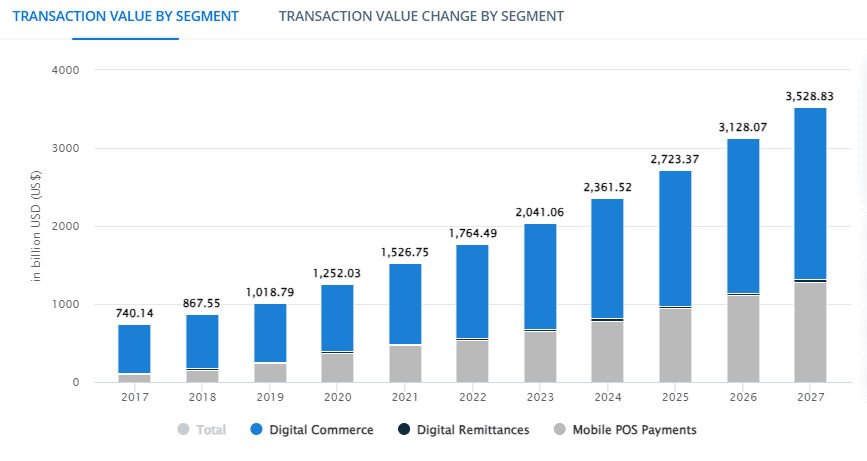


4 3

Retail Shopping Trends for the Holiday Season 2025

The US holiday retail season in 2025 is expected to be dynamic and fast-changing. Consumers, retailers, payment processors, and analysts alike are gearing up for a season influenced by new technologies, shifting behaviors, and economic realities.

In this blog, we break down the most important trends – from the balance of e-commerce and in-store shopping to the rise of AI, new payment methods, social commerce, logistics innovations, sustainability efforts, economic pressures, and cutting-edge retail innovations.

Top 9 Retail Shopping Trends For the 2025 Holiday Season

E-Commerce vs In-Store: Blending Channels in 2025

Is Holiday Shopping Still Vital for Retailers?

Even post-pandemic, brick-and-mortar stores remain crucial – about 80% of US holiday retail spending still happens in physical channels. However, online shopping keeps growing its share steadily. Holiday 2024 saw online sales surge 6.7% year-over-year, far outpacing the 2.9% growth of in-store sales. E-commerce accounted for roughly 19–20% of total holiday sales last year, a proportion that edges upward annually. This doesn’t mean stores are irrelevant – quite the opposite.

A whopping 93% of consumers surveyed said they plan to shop both online and in-person for the holidays, indicating an omnichannel approach. Shoppers enjoy browsing online for deals and inspiration, then perhaps visiting stores for the tactile experience or immediate pickup. Services that blend channels have boomed – for example, “buy online, pick up in-store” (BOPIS) orders doubled during the weekend before Christmas 2024, making up nearly 40% of all online transactions in those last-minute days.

Retailers like Walmart and Target leaned into this by beefing up store pickup and curbside options, effectively using their stores as fulfillment hubs.

AI, Personalization, and Smart Recommendations

Artificial intelligence is set to play its biggest holiday role yet in 2025. Retailers have been investing heavily in AI-driven personalization – using algorithms to tailor product recommendations, marketing emails, and even pricing to individual shoppers. Consumers are noticing the benefits. In a recent survey, nearly 90% of shoppers said they planned to use AI tools in some form for holiday shopping. Many will be interacting with AI chatbots to find sales or gift ideas – about 73% of shoppers reported using AI chatbots to hunt for deals and discounts in 2024.

This year, those chatbots are smarter and more human-like, thanks to advances in generative AI. For instance, some retail websites now feature virtual gift assistants that can ask you questions and then suggest the perfect gift. AI’s impact goes beyond chatbots – recommendation engines have become hyper-personal. Shoppers scrolling a retailer’s app might see a “For You” section powered by their past browsing and purchasing data. These AI recommendations can boost sales by surfacing relevant products (and reducing the paradox of choice for consumers). Retailers are also using AI on the back-end – for example, to forecast inventory so that hot items don’t stock out, and to automate customer service via voice AI.

Surveys after the 2024 season showed 56% of shoppers felt happier with their holiday experience thanks to AI tools, as AI helped them find gifts faster and track deliveries. In 2025, expect AI to be an invisible Santa’s helper underpinning many shopping journeys, making them more personalized, efficient, and even a bit more fun. The key for retailers is to use AI in a way that enhances convenience without feeling intrusive or gimmicky.

Next-Gen Payments: Digital Wallets, BNPL, and Real-Time Options

Top 7 Retail Shopping Trends - Retailers Shouldn't Miss This Season

How shoppers pay for gifts is also changing rapidly. Digital wallets like Apple Pay, Google Pay, and PayPal are now mainstream at checkout. In the US, roughly 37% of online transactions and 15% of in-store point-of-sale transactions are now made via digital wallets – a number that keeps climbing as more people get comfortable tapping their phones or using one-click online pay.

Shoppers appreciate the speed and security of these methods, and many younger consumers hardly carry cash or even physical cards anymore. This holiday season, more retailers will promote digital wallet payments (with incentives like extra rewards or cashback) to speed up lines and reduce friction. Another payment trend that’s booming is Buy Now, Pay Later (BNPL). Services like Affirm, Afterpay, and Klarna let shoppers split purchases into installments, often interest-free. During the holidays, with big gift purchases, this is especially tempting. About 20% of US holiday shoppers used BNPL in 2023, and total BNPL holiday purchase volume was around $18.5 billion in 2024 (up 11% year-over-year).

We saw BNPL usage hit record levels on big sale days – for example, shoppers financed nearly $1 billion via BNPL on Cyber Monday 2024, a 27% jump from the prior year. In an inflationary environment, spreading payments out helps consumers manage budgets, and retailers often see higher average order values when BNPL is used. In 2025, expect even more checkout options to “buy now, pay later,” and possibly more transparent disclosures to shoppers about payment schedules as regulators keep an eye on this sector.

The real-time payments revolution is also on the horizon. The US recently launched FedNow (July 2023), and the private RTP network has expanded, enabling instant bank-to-bank money transfers. By late 2024, over 1,200 banks were already onboard with FedNow. This opens the door for instant payments in retail – for example, imagine paying directly from your bank app and the merchant getting funds immediately, without card networks in between. While we likely won’t see mass adoption of bank-to-bank payment at the checkout by holiday 2025, some early examples are emerging. Certain bills and invoices can now be paid in real-time, and fintech apps might start offering “pay by bank” options for online shopping. Real-time payouts could also mean things like instant refunds or faster loyalty reward redemptions.

Social Commerce and Influencer Marketing

Social media isn’t just for inspiration anymore – it’s a direct shopping channel. Around 89% of consumers say social media impacts their holiday purchase decisions, making platforms like Instagram, TikTok, and YouTube pivotal in 2025’s holiday marketing. Scrolling feeds and stories, shoppers discover trending products and gift ideas, often through influencers. In fact, social platforms have become the primary source of gift inspiration for 30% of holiday shoppers, even ahead of recommendations from friends and family.

This year, over half of shoppers (52%) report having made a holiday purchase based on an influencer’s recommendation. Whether it’s a tech reviewer’s YouTube gift guide or a TikTok creator’s try-on haul showcasing a new fashion line, influencers are driving product discovery and trust. Platforms are catering to this trend by adding seamless shopping features. TikTok launched in-app shopping (TikTok Shop) in the US, allowing users to buy products they see in a video without leaving the app. TikTok is expected to be the top social commerce platform for Gen Z (54% of whom prefer it for direct purchases) and Millennials (47%) in 2025. Instagram and Facebook have integrated shops as well. Even Pinterest has “buy” buttons on pins.

Essentially, the line between content and commerce has blurred – you can see a product and immediately tap to purchase. Influencer marketing around the holidays has also ramped up in sophistication. Brands are collaborating with creators for limited-edition product lines, holiday live-shopping events, and viral challenges to promote deals.

For example, a beauty brand might have a popular makeup YouTuber host a live “holiday look” tutorial where viewers can click to buy the featured items. User-generated content (UGC) is hugely influential too – 79% of consumers say UGC (like reviews and unboxing videos) impacts their purchases. Social proof matters when shoppers are choosing between gift options. In 2025, retailers will allocate more ad budget to social channels and empower influencers as a core part of their holiday campaigns. For consumers, this means your social feeds will be filled with gift ideas, and checking Instagram or TikTok might be just as important as visiting a store when it comes to holiday shopping.

Faster Fulfillment and Shipping Innovations

Online Shopping Gains Further Momentum

Getting gifts delivered on time (and cheaply) is always a holiday concern. The good news is that retailers and carriers have been innovating to speed up fulfillment. Delivery logistics are more efficient in 2025 than ever before. As an example, average delivery times in November 2024 were about 3.7 days from order to doorstep – a 27% improvement in speed compared to the year prior.

Years of investment in more local warehouses, better software for route optimization, and larger carrier networks have paid off, so customers can procrastinate a bit longer and still get their packages by Christmas. Amazon’s push for same-day and next-day delivery as the norm has pressured the whole industry to step up. We’re seeing major retailers offer guarantees like “order by Dec 22, get it by Dec 24” thanks to these logistics gains. To avoid bottlenecks, companies have also expanded alternative delivery options. Curbside and in-store pickup remain popular for those who don’t want to risk shipping delays – and as noted, BOPIS orders spiked in late 2024.

Parcel carriers and local delivery startups are working together; for instance, regional carriers (OnTrac, LaserShip, etc.) are handling overflow in addition to UPS, FedEx, and USPS. Retailers on average used more carriers in 2024 (about two additional carriers per shipper vs. a couple of years ago) to ensure capacity during peak season. This diversification reduces the chance of any one carrier’s delays impacting customers. We’re also seeing exciting last-mile innovations. While still in pilot phases, drone deliveries and robot couriers are expanding. Amazon’s Prime Air drones, for example, started operating in a few US towns and are slated to expand further; the company even envisions potentially millions of drone deliveries per year by late this decade.

Other retailers like Walmart have tested drone drop-offs for small packages. On the ground, autonomous delivery robots roam some city sidewalks (typically carrying takeout or groceries) – these could one day carry gifts to your door. For most Americans, these won’t be mainstream in 2025’s holidays, but it shows the direction of travel. Additionally, the industry has learned to cope with returns (which spike after the holidays).

“Reverse logistics” improvements mean easier drop-off points for returns and quicker processing, which indirectly helps consumers feel confident buying online. All told, shipping is faster and more reliable this season than it’s been in years, though consumers still need to mind retailer cutoff dates. The expectation now is instant gratification – if a site or store can’t promise quick, trackable delivery, shoppers might go to a competitor who can. Speed and convenience in fulfillment have become as much of a differentiator as price or product selection in the battle for holiday customers.

Sustainability and Ethical Shopping

Holiday shoppers in 2025 aren’t just looking for the best deal; many are also considering the planet and ethical factors in their purchases. There’s a noticeable shift toward sustainability and conscious consumption. For instance, consumers increasingly seek out eco-friendly gifts, whether that means items made from recycled materials, products that are built to last (reducing waste), or even opting to gift experiences instead of physical goods.

According to global surveys, despite tighter budgets, people are willing to pay around 10% more on average for products that are sustainably produced or sourced. Climate concerns are top of mind for younger shoppers, especially many of whom have witnessed extreme weather events and want to support brands that are part of the solution. About 85% of consumers say they have personally felt the effects of climate change and are prioritizing sustainable practices in their shopping.

This holiday season, expect to see retailers advertising their green credentials, such as carbon-neutral shipping, recyclable gift wrap, or take-back programs for old electronics and toys. More brands are promoting ethical sourcing, too, like fair-trade certified goods or donations to social causes with each purchase. “Buy local” movements have gained momentum, as shoppers choose local artisans or small businesses to reduce the carbon footprint of long-distance shipping (and to support community businesses). Some consumers are also turning to resale and thrift platforms for gifts, which is the ultimate form of recycling – a trend known as “re-commerce.”

Gently used designer handbags or vintage vinyl records can make unique, sustainable presents. Ethical shopping extends to how companies treat workers as well. Shoppers are paying attention to whether their gifts are made in safe factories with fair wages. The holidays have sometimes been associated with excess and waste, but today’s consumers are increasingly mindful. Many families are making sustainable choices like using reusable gift bags, LED holiday lights to save energy, or sending digital gift cards (reducing plastic).

A recent survey noted consumers willing to pay a sustainability premium of nearly 10% even amidst inflation, which signals that values can trump price sensitivity for a significant segment of buyers. In response, retailers that authentically embrace sustainability and ethics, not just greenwashing, are likely to win customer loyalty. 2025’s holiday shoppers are looking to feel good about their purchases on multiple levels – a great gift, a great price, and aligned with their values.

Inflation, Deals, and the Consumer Spending Outlook

Economic undercurrents in 2025 are shaping how much people will spend and what they’ll buy. After a few years of high inflation eating into household budgets, consumers remain cost-conscious. Many shoppers are hunting for deals more aggressively – over half say promotions heavily motivate their holiday purchases. In 2024, retailers noted that 52% of consumers were actively seeking discounts, and 42% planned to buy fewer gifts due to rising prices.

That trend continues into 2025 as buyers are expected to be very value-driven. We may see slightly fewer frivolous impulse buys and more focus on getting the most bang for the buck. In practice, this means longer comparison shopping, waiting for major sale days (like Black Friday/Cyber Monday or even last-minute clearance), and perhaps prioritizing practical gifts. Retailers, aware of this mindset, started holiday promotions early and will likely offer generous price matching and bundle deals to entice hesitant spenders. Overall holiday sales are still projected to grow, but modestly.

Major analysts forecast around 3%–4% growth in US retail sales for the holiday season 2024, which was below the historical average. Preliminary data showed total 2024 holiday retail sales up 3.8%, and a similar modest growth rate is expected for 2025, given the economic backdrop. Essentially, people are spending, but they’re being careful and stretching their dollars. High interest rates and record credit card debt levels mean some consumers will rein in purchases to avoid January bill shock. We’re also seeing a bit of a bifurcation as higher-income households largely sustained their spending, while lower-income households are cutting back or trading down to cheaper options. Despite the caution, the holidays remain a priority – families are simply finding ways to celebrate within their means.

Surveys by Deloitte and others indicate most consumers intend to spend about the same as last year on gifts, with some shifting what they spend on (for example, more gift cards or necessities as gifts). Gift budgets in 2023 averaged around $920 per person in the US, slightly down from prior years, and 2025 will likely be in that ballpark. To accommodate economic pressures, retailers are focusing on “extended holiday value.” That includes everything from layaway programs to emphasizing their budget lines to promoting secondhand or refurbished items.

Dollar stores and discount chains might see increased traffic for stocking stuffers and decor. Meanwhile, experiences (like event tickets or subscriptions) can be appealing gifts that offer good value.

Immersive Shopping: AR, VR, and Virtual Experiences

One of the more futuristic trends hitting retail by holiday 2025 is the rise of augmented reality (AR) and virtual reality (VR) in shopping. These technologies are making shopping more immersive and interactive, almost like a blend of gaming and commerce. A significant chunk of consumers (especially younger ones) are curious about these experiences; around 31% of US consumers expressed interest in shopping via VR as an alternative to physical stores.

Retailers have taken note, with over half of brands (55%) planning to boost investments in immersive experiences through 2026. This holiday season, we’re seeing some creative implementations. Amazon launched a “Virtual Holiday Shop,” a 3D platform where customers can walk through themed virtual showrooms and browse lifelike digital products. Think of it as a virtual mall – you could navigate a winter wonderland scene, click on a virtual TV in a living room display, and see details or buy it. It’s an experiment to make online shopping more experiential.

Similarly, IKEA opened a virtual store in the Roblox metaverse platform, letting people wander a digital IKEA with pixelated furniture and even interact with virtual staff. These efforts are early, but they aim to capture some of the discovery joy you get from real window-shopping, translated into the online realm. AR is even more widespread as many retailers offer AR features in their mobile apps or websites. For example, you can use your phone camera to visualize how a piece of furniture or holiday décor would look in your living room before buying. Cosmetics brands have AR “try-on” tools so you can see how a certain makeup shade looks on your face digitally.

For holiday shoppers, AR can be a helpful tool to ensure gifts like a painting or a lamp will fit the recipient’s space or style. On the fun side, some toy stores have AR games for kids to hunt for virtual prizes in the aisle, and sneaker brands might release limited-edition virtual shoes that can be “worn” by your avatar in a game. While mass adoption of full VR shopping is still a bit away, these immersive technologies are laying the groundwork for a new way to shop. They particularly resonate with Gen Z, who are comfortable in virtual environments. And as hardware (like AR glasses or VR headsets) becomes more accessible, more shoppers could join virtual Black Friday crowds from their couches.

Importantly, these tools also help retailers gather data on what virtual products or layouts attract interest, which can inform real-world merchandising. For holiday 2025, consider trying one of these AR/VR experiences if you haven’t – they might add a novel twist to your shopping routine and help you explore products in a whole new light.

Retail Media Networks Come of Age

An often behind-the-scenes trend that’s exploding in retail is the rise of retail media networks – essentially, retailers selling ad space using their customer data. If you’ve shopped on Amazon and seen sponsored products, or browsed Walmart’s site and noticed banner ads for a brand, that’s retail media in action. By 2025, this will have become big business. Retail media networks (led by players like Amazon, Walmart, Target, etc.) are expected to account for about 20% of all worldwide digital ad spend in 2024, roughly $140 billion, and forecasts show it climbing to $166 billion in 2025.

In the US, the holiday period is prime time for these networks as brands pay to get in front of shoppers researching gifts. Why does this matter for the consumer? In some ways, it means you’ll see even more targeted ads on retail sites and apps. The positive spin is that these ads (powered by retailers’ purchase data) might surface relevant deals or complementary products you need. The caution is that sometimes search results on a retailer’s site prioritize whoever paid for placement. Shoppers should be aware that the “top pick” or first results might be sponsored – essentially an ad – though usually labeled as such.

For retailers, the holiday season 2025 will likely break records for retail media. Impressions (ad views) in retail media hit a record 75 billion in Q4 2024 in the US, up 4% from the prior year, and that was without even counting Amazon’s sheer volume (Amazon is so large it’s often reported separately). More retailers, even outside traditional retail, are launching media networks. For example, Uber and airlines have started selling ad placements leveraging their customer data, blurring into what’s called “commerce media” beyond retail. But within retail, expect to see grocery chains, convenience stores, and specialty stores all touting their ability to show ads to shoppers on their digital platforms.

For instance, a pet food brand might buy space on Chewy’s website or app to promote a new treat during the peak gift-buying weeks for pet owners. The result is a new revenue stream that can bolster retailers’ margins (some retailers now generate a sizable chunk of profit from advertising). Walmart, for one, has seen its ad business (Walmart Connect) grow nearly 30% year-over-year, contributing meaningfully to its income.

This trend indirectly benefits consumers if retailers reinvest ad profits into lower prices or better services. We might also see more integration of content and commerce, like recipe sites partnering with grocery retail media so you can click to add ingredients to the cart.

Conclusion

The 2025 holiday season in the US will be a balancing act between innovation and tradition. Shoppers are blending e-commerce with store visits, leveraging AI-powered tools for convenience, trying new payment methods, and scrolling social feeds for inspiration. Retailers are pulling out all the stops – from turbocharging logistics to ensure gifts arrive on time, to trumpeting their sustainability efforts, and embracing emerging tech like AR/VR and retail media to stay ahead.

Economic factors have made consumers more value-conscious, yet the spirit of holiday shopping – finding that perfect something for loved ones – remains strong. All these trends point to a holiday shopping experience that is more connected, data-driven, and personalized than ever before. Whether you’re a consumer mapping out your gift list, a retailer strategizing for peak season, or a payments professional watching transaction volumes soar, the key trends of 2025 highlight an industry continually adapting. The way we shop in December 2025 reflects not just the season’s cheer but a retail landscape that’s smarter, faster, and increasingly shaped by technology and consumer values.


Retail Shopping Trends for the Holiday Season 2024

Retail Shopping Trends for the Holiday Season 2024

For consumers and businesses, the holiday season is an enchanting yet hectic time filled with the excitement of gift-giving, special offers, and holiday cheer. However, it is also marked by fierce competition and heightened consumer expectations.

Retailers face a critical opportunity to boost sales and cultivate lasting customer bonds during this peak season. However, successfully maneuvering through the holiday shopping chaos demands a strategic approach and preparedness for busy retail shopping trends, economic shifts, and technological innovations.

Is Holiday Shopping Still Vital for Retailers?

Is Holiday Shopping Still Vital for Retailers?

With Black Friday falling later in November this year and shoppers starting earlier, some might wonder if the traditional holiday shopping season is losing significance. Not at all. While consumers may begin their gift hunts earlier in the fall, holiday spending remains a key driver for retailers, and projections show an upward trend in overall expenditures.

Retail data consistently highlights the holiday season, traditionally spanning November and December, as a major contributor to annual sales. In the U.S., this period typically accounts for about 16.7% of total retail sales, with some years reaching 18.4%. These numbers underscore the season’s critical role in the retail industry’s success.

Will the Recent Election Have Any Effect on the Retail Industry?

The recent re-election of President Donald Trump is expected to bring major changes to the retail industry, driven by proposed tariffs, potential disruptions to supply chains, and inflationary pressures.

  • Tariffs: The Trump administration plans to introduce a baseline tariff of 10% on all imports, with significantly higher rates—ranging from 60% to 100%—for goods from countries accused of unfair trade practices, especially China. While these tariffs aim to safeguard domestic industries, they will likely result in higher consumer prices. Retailers such as Finally Home Furnishings and Tarptent have already encouraged shoppers to make purchases before the tariffs take effect, warning of substantial price hikes.
  • Supply Chain Disruptions: Higher tariffs on imports, particularly from China, are expected to destabilize established supply chains. To reduce the impact of the tariffs, retailers may explore alternative sourcing options in countries with lower labor costs, such as Bangladesh, India, and Pakistan. However, transitioning production is a complex process that may only partially prevent price increases or delays, potentially leading to shortages of certain products.
  • Inflationary Pressures: The proposed tariffs are also expected to contribute to rising inflation by increasing the costs of imported goods. According to the National Retail Federation, these measures could impose an additional $46 billion to $78 billion annual burden on American consumers. Apparel prices alone could increase by 12.5% to 20.6%, significantly affecting consumer purchasing power. This will likely hit lower-income households the hardest, driving a shift in spending toward discount retailers and reducing overall discretionary spending.

Top 7 Retail Shopping Trends – Retailers Shouldn’t Miss This Season

Top 7 Retail Shopping Trends - Retailers Shouldn't Miss This Season

1. The Shopping Season Is Expanding

Traditionally, the holiday shopping season in the United States has spanned November and December, anchored by major events like Thanksgiving, Black Friday, Cyber Monday, Christmas, and New Year’s Eve. However, in recent years, the season has steadily grown longer, with significant shopping events now kicking off as early as October.

A critical component of the holiday shopping calendar remains the Cyber Five—the five days from Thanksgiving through Cyber Monday. These days hold substantial weight in holiday retail, with 2024 projections suggesting they will contribute 15.5% of U.S. holiday e-commerce sales. Cyber Monday, in particular, continues to dominate as the biggest online shopping day; in 2023, it raked in $13.93 billion, accounting for a third of Cyber Five’s e-commerce sales. This figure is expected to climb by 5.6% in 2024.

The trend toward an earlier shopping season gained traction in 2022 when Amazon introduced a second Prime Day event in October alongside its traditional July sale. This initiative encouraged consumers to start their holiday shopping weeks earlier than usual. The October event proved so successful that Amazon repeated it in 2023 and this year, branding it as Prime Big Deal Days. To compete, other major retailers like Walmart and Target followed suit, launching their October sales events to align with Amazon’s schedule.

In 2024, Amazon’s Prime Big Deal Days were set for October 8-9, solidifying October as the unofficial kickoff to the holiday shopping season. These early events extended the shopping timeline and shifted some consumer spending away from the traditionally dominant Cyber Five period.

As a response to this evolving trend, retailers are increasingly unveiling promotions and discounts earlier than ever, aiming to capture the attention of consumers eager to get a head start on their holiday purchases.

2. Holiday Spending will Not Slow Down

Despite economic uncertainties in 2024, holiday spending is projected to remain strong. Approximately 71% of Americans plan to spend as much or more on gifts as they did in 2023, reflecting resilient consumer confidence and a commitment to meaningful gifting, even amid financial challenges.

Retailers must prioritize delivering seamless, enjoyable shopping experiences to meet shopper expectations. Timely, efficient, and personalized support is essential to ensuring satisfaction and fostering loyalty during the holiday season.

3. Online Shopping Gains Further Momentum

Online Shopping Gains Further Momentum

In 2024, the shift toward online shopping continues accelerating, driven by growing consumer reliance on digital platforms. Online retail spending in the U.S. is projected to increase by approximately 8.4%, reaching an estimated $240.8 billion. Notably, mobile devices are set to account for over 53% of these transactions, underscoring the pivotal role of smartphones in shaping the modern shopping experience.

While physical stores remain relevant for their tactile appeal, only a tiny fraction—7% of shoppers—plan to shop exclusively online. However, a vast majority, around 82%, now incorporate online shopping into their purchasing habits at least occasionally, reflecting the deep integration of e-commerce into daily life.

The rise of mobile shopping platforms is a key factor in this trend. With a substantial share of global e-commerce sales originating from mobile devices, the convenience and accessibility of smartphone shopping are expected to drive even greater adoption in the years ahead.

Online shopping also aligns with evolving consumer preferences for home delivery, a favored option compared to alternatives like in-store pickup. This preference highlights the value consumers place on convenience and streamlined experiences.

For retailers, the challenge lies in refining the online shopping journey to meet rising expectations. This includes implementing more personalized services and adopting mobile-first strategies to cater to the growing base of smartphone shoppers. By enhancing these digital touchpoints, retailers can better capture the opportunities presented by the sustained growth in e-commerce.

4. Last-Minute and Post-Holiday Deals Opportunities

As the 2024 holiday shopping season unfolds, consumers are increasingly planning and budgeting their purchases earlier. Yet, despite this trend, December remains a crucial month for retailers, with several key shopping days surpassing Cyber Monday in sales volume. Significant spending continues well into the year’s final month, reaffirming its importance in the retail calendar.

Retailers also benefit from a lucrative post-Christmas period. During the 2022 holiday season, U.S. consumers spent over $47 billion in the two weeks following December 25. Notably, about half of these purchases were made by shoppers buying for themselves. Their motivations included taking advantage of year-end sales, indulging self-rewards, and replacing essential items.

This post-holiday shopping behavior presents a significant opportunity for retailers to drive additional sales beyond the traditional holiday season. Extending deals and promotions into the new year can help capture this spending, mainly as consumers use gift cards, holiday bonuses, and leftover budgets to purchase.

5. Flexible Payment Options Dominate Holiday Shopping

The popularity of flexible payment options, mainly Buy Now, Pay Later (BNPL) services, has surged in 2024, becoming a defining feature of the holiday shopping season. Cyber Monday is projected to be the peak day for BNPL transactions, with spending expected to reach approximately $993 million. Remarkably, around 75% of these transactions are predicted via mobile devices, reflecting smartphones’ central role in modern shopping behaviors.

This spike in BNPL usage coincides with broader trends in e-commerce. Adobe projects record-breaking online retail spending for the 2024 holiday season, with total sales expected to hit $241 billion—a year-over-year increase of 8.4%. Mobile commerce is a significant driver of this growth, accounting for an estimated $128 billion, or 53.2% of all online holiday purchases.

The widespread adoption of BNPL underscores a broader shift in consumer behavior. Shoppers are increasingly focused on budgeting and planning their purchases, prioritizing deals and discounts, and leveraging the flexibility offered by BNPL services to manage their finances better. These payment options are particularly appealing during high-spending periods, allowing consumers to spread costs over time while taking advantage of holiday sales.

As BNPL continues to reshape consumer spending habits, it highlights the growing influence of technology and innovative payment solutions in the retail landscape. Retailers that embrace and promote flexible payment options stand to capture a larger share of the holiday shopping market in 2024 and beyond.

6. AI Offers Critical Advantage for Retailers

Artificial intelligence (AI) has become a vital retailer tool, offering a competitive edge during holiday shopping. In 2024, AI will be leveraged to enhance customer experiences and streamline operations. Its applications are diverse, with 61% of deployments focused on predictive analytics to anticipate consumer spending trends and 51% aimed at optimizing pricing and promotions. Furthermore, 58.5% of retailers now use AI-driven chatbots to assist customers, underscoring its growing role in customer service.

Despite these advancements, many retailers remain cautious about fully adopting AI. Challenges include a lack of employee expertise (57.5%), concerns about data privacy and security (55%), and discomfort with integrating AI into established workflows (52%).

AI’s influence extends beyond operational improvements, directly shaping the consumer experience. Personalized product recommendations and tailored promotions are becoming standard expectations among shoppers. These AI-driven features enhance the shopping experience, boost customer loyalty, and encourage repeat purchases.

For retailers, strategically integrating AI into customer service, inventory management, and promotional strategies is becoming essential. By embracing AI, businesses can better navigate the competitive holiday market, stay responsive to consumer demands, and position themselves for sustained success.

7. The Rise of “Slow Shopping”: A Shift Toward Thoughtful Consumption

The concept of “slow shopping” is gaining momentum, particularly among Gen Z consumers. This approach emphasizes deliberate and mindful purchasing, where individuals carefully distinguish between needs and wants. It reflects a broader movement toward thoughtful consumption, encouraging buyers to evaluate the necessity and emotional drivers behind their purchases while resisting the “fear of missing out” on deals.

Gen Z plays a pivotal role in driving this trend. They seek authenticity and personalization in their shopping experiences, favoring brands that align with their values and foster a sense of community and ethical engagement. Social media is critical in this process, serving as a platform for Gen Z to discover, research, and evaluate products before purchasing. This digital-savvy generation is pushing retailers to develop seamless, omnichannel experiences that cater to their preferences for thoughtfulness and connectivity.

The shift toward mindful shopping also aligns with the growing demand for sustainable and ethical consumer practices. Younger shoppers, in particular, are willing to pay a premium for environmentally friendly products that resonate with their values. This focus on sustainability adds another layer to the “slow shopping” movement, where purchasing decisions are informed not only by personal needs but also by their broader social and environmental impact.

Retailers that adapt to these evolving expectations by offering meaningful, personalized, and sustainable experiences will be well-positioned to capture the loyalty of this influential demographic.

Conclusion

The 2024 holiday season presents challenges and opportunities for retailers as consumer behavior evolves. While traditional shopping patterns expand into earlier months, the core period remains essential, contributing significantly to annual sales. Factors such as economic shifts, technological advancements, and changing consumer priorities—especially among Gen Z—demand strategic adaptation.

Retailers face increasing pressure to refine their approach. Early promotions, robust online platforms, flexible payment options, and AI integration will play critical roles. Meanwhile, the rise of mindful consumption and sustainability trends highlights the importance of aligning with shopper values. Successfully navigating this complex landscape will require a focus on delivering seamless, personalized experiences that resonate with modern consumers.

Ultimately, businesses that anticipate trends, address challenges proactively, and prioritize customer-centric strategies will be well-positioned for a successful holiday season.

Holiday E-commerce Trends for 2024

Holiday E-commerce Trends to Watch in 2024

The holiday season is an exhilarating time for families and friends and a critical period for businesses, particularly those in e-commerce. Shoppers are projected to spend a staggering $241 billion online during the 2024 holiday season, marking an 8.4% increase compared to 2023. This season presents a unique opportunity for creativity and growth, yet the competition can be formidable. To succeed, brands must stay ahead of customer preferences and behaviors and adopt innovative technologies.

If you are ready to have a blast in revenue numbers this season, you’ve come to the right place. We’re excited to share some exclusive insights into the top holiday e-commerce trends for 2024. These trends are essential for shaping your holiday marketing strategies effectively. Understanding these trends early can give a peak on what to expect and save time as you prepare for the season.

Top Holiday E-commerce Trends for 2024 You Should Not Miss this Holiday Season

Top Holiday E-commerce Trends for 2024 You Should Not Miss this Holiday Season

1. The Holiday Season has Already Begun!

The holiday shopping season is transforming in 2024 as major retailers like Amazon and Walmart lead the charge in reshaping the traditional Black Friday frenzy into a prolonged shopping period as early as October. This trend, often dubbed “holiday creep,” extends the holiday buying experience into a multi-month affair, with major sales events launching well before Halloween.

This year, Walmart and Amazon jumpstarted their holiday campaigns with pre-Black Friday sales beginning on October 10. These early promotions attract deal-conscious shoppers and set the tone for the season, prompting other retailers to adopt similar strategies.

Against what some economists call a “vibe-cession”—a period where consumers maintain purchasing power but approach spending cautiously—these early deals provide a strategic advantage for shoppers and retailers. Consumers benefit by spreading their holiday expenses over a longer timeframe, which helps with budgeting. Meanwhile, retailers capitalize on the growing e-commerce market, projected to see a 7% to 9% increase in sales this year.

2. Mobile Shopping will Dominate the Market

Mobile shopping continues to gain momentum, solidifying its role as a dominant force in holiday retail. This year, 53% of all online holiday purchases are projected to come from mobile devices, contributing an estimated $128 billion in sales. Several factors fuel this growth, with convenience leading the charge. Shoppers increasingly rely on their smartphones to browse, compare, and buy products wherever and whenever they want. Enhanced mobile experiences—such as faster checkout processes and seamless payment options like Apple Pay and Google Pay—further drive this trend.

For retailers, the pressure to refine mobile platforms has never been greater. Priorities include faster load times, responsive designs, and intuitive navigation to ensure a frictionless shopping journey. Offering mobile-exclusive deals is another powerful strategy to draw customers, particularly during peak sales events like Black Friday and Cyber Monday.

According to Adobe’s 2024 holiday shopping forecast, mobile shopping will not only dominate in terms of volume but will also shape consumer behavior. The ability to snag on-the-go deals and participate in time-sensitive promotions has positioned mobile as a key driver of holiday retail success. As smartphones become the preferred shopping tool, retailers prioritizing mobile optimization stand to gain a competitive edge in this ever-evolving market.

3. Customers will Look for Better Deals

Customers will Look for Better Deals

The 2024 holiday shopping season is marked by heightened price sensitivity as inflation squeezes consumer budgets. According to recent surveys, 59% of shoppers report that price will be a critical factor in their holiday spending decisions. This growing emphasis on value has led many consumers to seek deals and consider selling to more affordable brands or products.

Retailers are adapting to this cost-conscious mindset with aggressive discount strategies, particularly during October and November. A recent report forecasts significant markdowns leading to Thanksgiving, with the steepest price cuts expected around Black Friday and Cyber Monday. Early sales have become a key tactic, with major players like Target reducing prices on holiday meal essentials and other staples to appeal to budget-conscious consumers.

Brands must prioritize value-focused promotions to succeed in this competitive and price-driven landscape. Highlighting early discounts and delivering compelling deals well before traditional peak shopping days will be crucial. With 66% of U.S. consumers emphasizing the importance of better prices, brands that cater to this demand for affordability will be well-positioned to capture a larger share of the holiday shopping market.

4. AI Revolutionizes Holiday Shopping

Artificial intelligence (AI) will shape the 2024 holiday shopping season. A significant 73% of consumers agree that AI enhances their shopping experience by saving time (73%) and providing added convenience (66%). AI has become a cornerstone of modern retail strategies.

Retailers leverage AI to deliver personalized experiences, drive customer engagement, and boost sales. By analyzing consumer behavior and preferences, AI powers tailored product recommendations, targeted promotions, and precise marketing campaigns. These tools are particularly critical when engaging shoppers is key during the competitive holiday season.

AI also optimizes the shopping process itself. From refining e-commerce strategies to ensuring promotions are relevant and timely, AI enhances usability and improves the overall experience. Additionally, its platform integration has enabled holiday promotions to launch earlier—often as soon as October—capturing early shoppers and sustaining momentum throughout the season.

5. Sustainability Takes the Spotlight

Sustainability Takes the Spotlight

The 2024 holiday shopping season marks a decisive move toward sustainability, with more consumers prioritizing eco-friendly choices in their purchasing decisions. Shoppers are increasingly supporting brands that embrace sustainable practices, such as using eco-conscious packaging and offering carbon-neutral shipping, reflecting a collective effort to celebrate the holidays while minimizing environmental impact.

“Green Friday” is emerging as a popular alternative to Black Friday, promoting environmentally and socially responsible shopping. This initiative highlights sustainable products and ethical practices, encouraging consumers to make mindful purchases. Additionally, zero-waste gifting is rising, with many opting for upcycled, reusable, and waste-free gift options.

To attract and retain eco-conscious shoppers, brands must emphasize their sustainability efforts. Clear labeling, credible certifications, and dedicated sections for eco-friendly products on online platforms are effective strategies. Prioritizing sustainability aligns with consumer values, strengthens brand loyalty, and drives meaningful engagement during the holiday season.

6. Free Shipping, Fast Delivery, and Easy Returns…Is All That Consumers Expect After Ordering

As the 2024 holiday shopping season unfolds, seamless shopping experiences are more critical than ever. Research shows that 77% of consumers prioritize free shipping with delivery times of two days or less. Additionally, 96% are likelier to remain loyal to brands offering simple, hassle-free return policies.

To effectively capture holiday sales, retailers must provide free or affordable shipping, ensure quick delivery, and optimize return processes. Simplified checkouts and transparent communication about shipping policies are also key to retaining customers and reducing the likelihood of losing them to competitors.

Retailers should also prepare for the holiday surge by ensuring their websites can handle increased traffic, deploying targeted online marketing strategies, and leveraging email and social media promotions to maximize engagement and drive sales.

7. Subscription Gifts and Digital Products Gain Popularity

Subscription Gifts and Digital Products Gain Popularity

The 2024 holiday season is seeing a surge in the popularity of subscription services and digital products as gifting options. These choices resonate particularly with younger generations, including Gen Z and Millennials, who increasingly prioritize experiences over traditional physical gifts.

Subscription boxes—from wine and coffee clubs to skincare and fitness packages—are in high demand. They offer recipients a gift that continues to delight long after the holidays. These curated experiences cater to diverse interests and provide a thoughtful, lasting impact.

Digital gifts like ebooks, online courses, and software subscriptions are also rising. They appeal to tech-savvy recipients and offer a practical solution for last-minute shoppers, with instant delivery and wide-ranging appeal.

These options reflect a shift toward meaningful, experience-driven gifting that aligns with modern lifestyles and consumer preferences.

8. The Power of Video Marketing

Video marketing continues to play a pivotal role in shaping consumer behavior. Around 64% of shoppers are more likely to purchase after watching a social video, underscoring the effectiveness of video content in driving sales. Platforms like YouTube and TikTok have become essential for brands aiming to boost engagement and conversions through social media campaigns.

Beyond immediate sales, video content is instrumental in product education and brand connection. An impressive 97% of marketers believe that videos are very helpful for learning about products or services, while 89% strongly prefer more video content from brands. Tutorials, product reviews, and other informative videos are particularly valued, helping shoppers make confident purchasing decisions.

Incorporating video into marketing strategies is no longer optional—it’s a key driver of engagement, trust, and sales in today’s competitive retail environment.

Conclusion

The 2024 holiday e-commerce presents both challenges and opportunities for retailers. Early shopping trends, mobile dominance, price sensitivity, and the increasing influence of AI are reshaping how consumers approach holiday spending. Sustainability and customer expectations around shipping and returns are crucial factors for success. Additionally, the rising popularity of subscription gifts and digital products reflects a shift toward personalized, experience-driven gifting.

To stay competitive, brands must adapt to these trends by optimizing mobile platforms, offering value-driven promotions, and leveraging AI for personalized marketing. Emphasizing sustainability and providing seamless shopping experiences will further enhance customer loyalty. Finally, integrating video marketing can drive engagement and influence purchasing decisions, making it an essential tool in any retailer’s strategy.

CFPB Tightens Regulatory Control on Digital Payment Services, Targeting Platforms Like PayPal and Apple Pay

CFPB Tightens Regulatory Control on Digital Payment Services, Targeting Platforms Like PayPal and Apple Pay

In late 2024, the CFPB finalized a rule to extend federal supervision to popular digital payment platforms. The Consumer Financial Protection Bureau (CFPB) has escalated its oversight of digital payment services, implementing a new rule that brings Big Tech payment platforms under stricter federal supervision. This move, finalized in November 2024, targets widely-used services such as PayPal, Apple Pay, Google Pay, Venmo, Cash App, and others that handle over 50 million transactions per year.

By treating these nonbank payment providers more like traditional banks, the CFPB aims to protect consumer data, reduce fraud, and prevent unfair account freezes in an industry that now processes over 13 billion transactions annually. Digital wallets and peer-to-peer (P2P) payment apps have evolved from novelties into everyday financial tools, even rivaling credit and debit cards for daily transactions. With an estimated three-quarters of U.S. adults using P2P apps – especially among younger and lower-income consumers – regulators are responding to the growing importance of these platforms in Americans’ financial lives.

Final Rule Extends CFPB Oversight to Payment Apps

CFPB New Rules

In late 2024, the CFPB finalized a landmark rule expanding its supervisory authority to cover large digital payment app providers. Effective January 9, 2025, the rule defines “larger participants” in a new market category of “general-use digital consumer payment applications.” In practical terms, this means any nonbank company facilitating at least 50 million consumer payment transactions per year now falls under CFPB supervision.

The Bureau estimated this threshold captures the seven largest providers, including Google Pay, Apple Pay, Samsung Pay, PayPal (and its P2P service Venmo), Block’s Cash App, and Meta’s Facebook Pay, collectively accounting for about 98% of the nonbank payments market. Notably, the CFPB raised the threshold from an initially proposed 5 million transactions – thereby excluding smaller fintechs and cryptocurrency wallets – and limited the scope to payments in U.S. dollars (explicitly omitting crypto transactions).

Under this rule, the CFPB can now conduct examinations and oversight of these tech companies’ payment operations similar to how it oversees large banks. Examiners will review compliance with consumer financial laws – such as the Electronic Fund Transfer Act (Regulation E) and Gramm-Leach-Bliley Act privacy rules – ensuring that payment apps adhere to protections against fraud, unauthorized transfers, data misuse, and unfair or deceptive practices. According to CFPB Director Rohit Chopra, digital payments have shifted from being a mere curiosity to an everyday essential—and regulatory scrutiny needs to keep pace with that change. It emphasizes that big tech firms handling billions in transactions should be held to the same standards as banks and credit unions.

The Bureau stressed that supervision would help guard consumer privacy, prevent fraud, and stop illegal ‘de-banking’ – the abrupt closure of accounts without explanation. Regulators and consumer advocates argue this closing of the oversight gap is long overdue. Payment apps rapidly gained popularity, a trend accelerated by the pandemic – by 2022 about 76% of Americans had used a major mobile payment app, and some surveys put digital payment usage as high as 90% of consumers.

These services collectively now process hundreds of billions – even trillions – of dollars annually. For example, Zelle (the bank-operated P2P network) alone reported handling 3.6 billion transactions worth over $1 trillion in 2024, a 25% jump in volume from the prior year. Rival services like Venmo processed $275 billion in 2023, and overall transaction volume across nonbank payment apps neared $893 billion in 2022, a figure projected to reach $1.6 trillion by 2027. With so much money flowing outside of traditional banking rails, concerns mounted about consumer protections on these platforms. Key issues include fraud and scams (losses to P2P payment scams surged 62% from 2021 to 2023, according to Consumer Reports), data privacy, and potential regulatory arbitrage by tech firms offering quasi-banking services without bank-like oversight. Supporters of the CFPB’s action say it fills a regulatory vacuum. Unlike banks, fintech payment providers until now faced no routine federal supervision of their consumer protection practices.

Banks and credit unions already undergo CFPB exams for their payment services, so bringing big tech under supervision “levels the playing field”, as traditional financial institutions had long urged. Consumer advocates likewise hailed the rule as closing a loophole: it ensures popular payment apps can be held accountable for issues like mishandling fraud claims or misusing personal data. “It closes a loophole that permits non-bank payment app companies to operate without supervisory reviews,” noted Consumer Reports in praising the move.

Without such oversight, users complaining about problems might be “left with little recourse beyond asking a chatbot for help,” warned the Consumer Federation of America, which stresses that supervision is essential to protect consumers in the Wild West of fintech.

Early Implementation and Enforcement Actions by the CFPB

CFPB

When the rule took effect in early January 2025, the CFPB gained the authority to begin examining the targeted companies. In practice, this meant those firms would need to bolster compliance programs and prepare for CFPB audits. Legal advisors noted that providers designated as “larger participants” should enhance their compliance management systems and be ready to demonstrate robust policies and procedures during CFPB exams.

The Bureau signaled it would be scrutinizing areas such as how these apps handle fraud reports, protect users’ data, and decide to freeze or close accounts. Notably, CFPB examiners could potentially look beyond just the payment app itself – if a company also offers related financial products (like credit cards, buy-now-pay-later loans, or crypto features linked to the app), those could come under review as well.

This comprehensive oversight approach put Big Tech firms on notice to tighten up controls across their fintech offerings. Even before any routine examinations began, the CFPB wasted no time in flexing its enforcement muscle on issues the rule was designed to address. In January 2025, the Bureau took action against Block, Inc., the operator of Cash App, for mishandling fraud disputes on its platform. The CFPB announced a consent order on January 16, 2025, requiring the Cash App operator to pay up to $175 million in restitution and penalties.

According to the CFPB’s findings, the company had systematically failed to adequately investigate and resolve consumer fraud claims – for years it lacked sufficient live customer support, had weak fraud detection procedures, and often misdirected scam victims by telling them to seek chargebacks from their banks instead of investigating complaints itself.

These practices violated Regulation E’s error resolution requirements, with the CFPB citing multiple breaches: not timely investigating fraud reports, not providing provisional credits during investigations, and not explaining denial decisions to customers. Under the settlement, Block’s Cash App must implement 24/7 live customer service, improve fraud monitoring, refund at least $75 million to defrauded users, and pay a $55 million civil penalty.

This enforcement action – one of the largest of its kind – underscores the CFPB’s resolve to crack down on fraud and customer service failures in peer-to-peer payment platforms. It also reinforces why the new supervisory rule matters: had the rule been in place earlier, regulators might have spotted Cash App’s issues sooner through exams rather than relying on after-the-fact enforcement. CFPB officials have emphasized protecting consumers from P2P fraud as a top priority, noting that consumers reported losing over $210 million to scams via payment apps in 2023 (median loss of $500).

Through supervision, the Bureau intends to ensure companies are proactively preventing fraud and treating victimized customers fairly – for example, by not unfairly blaming customers or denying relief when scams occur.

If the rule survives, we can expect the CFPB to conduct regular examinations of the likes of PayPal, Apple, Google, and others, and to demand corrective action where it finds legal violations. That said, the implementation of the rule hit a sudden pause in early 2025 due to shifting political winds. Following a change in administration in January, new CFPB leadership temporarily hit the brakes on enforcing the new oversight authority. In a March 2025 court filing, the Bureau told a federal judge it “doesn’t intend to use its new supervisory authority” under the rule for at least 60 days while the agency’s new leaders review the policy.

This came as the CFPB requested more time to respond to an industry lawsuit (filed in January – detailed below), noting that fresh leadership needed to reconsider various late-stage regulatory actions.

Effectively, the CFPB put examinations on hold through spring 2025 as it re-evaluated the rule amid the legal and political challenges. This creates some uncertainty – depending on the outcome of those challenges, the CFPB’s ambitious oversight program for payment apps may either ramp up later in 2025 or never fully materialize.

credit debit cards

Tech Industry Pushback: Lawsuits and Legislative Challenges

Apple Pay advertisement – Tech companies argue that services like Apple Pay simply transmit payment credentials and should not be regulated like banks. The CFPB disagrees, citing the need for accountability as these wallets become ubiquitous. The CFPB’s bid to regulate Big Tech payment platforms provoked an immediate backlash from the tech industry and its allies, setting the stage for a fight on multiple fronts. Less than two months after the rule was finalized, a coalition of technology companies led by trade groups TechNet and NetChoice filed a lawsuit on January 16, 2025, to block the rule.

These two industry associations – whose members include giants like Apple, Google, Meta, PayPal, and others – argue that the CFPB overstepped its authority and acted arbitrarily in imposing bank-like regulation on digital wallets. The complaint asserts that digital wallet apps (like Apple Pay or Google Pay) merely pass along a user’s credit or debit card details to facilitate a purchase, rather than directly handling the payment themselves.

Therefore, the plaintiffs claim, “it isn’t Google Pay or Apple Pay making the payment,” – and lumping these services together with full-fledged payment processors is an “unlawful power grab” outside the CFPB’s remit.

By grouping different models of payments (from stored-balance apps like Cash App and Venmo to credential-pass-through wallets like Apple Pay) under one umbrella, the suit alleges the Bureau is “regulating outside the bounds of the law.” Industry representatives did not mince words. Chris Marchese, litigation director at NetChoice, called the rule “an unlawful power grab that could stifle innovation, reduce competition, and raise prices.” Carl Holshouser, Executive VP at TechNet, similarly criticized the CFPB for overreaching and trying to turn itself into a “general technology regulator instead of a financial one,” arguing the rule doesn’t demonstrably benefit consumers.

The lawsuit (TechNet et al. v. CFPB) seeks to have the rule vacated as a violation of the Administrative Procedure Act, claiming the Bureau failed to show sufficient evidence of consumer harm to justify the new supervision. Tech firms also worry the CFPB’s broad definition could let examiners probe “all aspects of their business,” possibly even beyond payments into areas like e-commerce or taxes, which they say goes beyond the CFPB’s mission. Spokespeople for Apple and Google declined to comment publicly on the litigation, but the legal action speaks to Big Tech’s strong interest in stopping the rule. On the other hand, consumer advocates have blasted the lawsuit as a thinly veiled attempt to evade accountability through semantics, noting that regardless of technical mechanisms, these companies interface with consumers’ money and data and thus bear responsibility for keeping those safe.

At the same time, opponents of the CFPB’s rule launched a parallel effort in Congress to nullify the regulation. In February 2025, Republican lawmakers introduced resolutions in the House and Senate under the Congressional Review Act (CRA) – a fast-track process to overturn recent federal regulations. Senator Pete Ricketts and Representative Mike Flood of Nebraska sponsored the measures (S.J.Res. 28 and H.J.Res. 64) specifically aimed at rescinding the CFPB’s “Larger Participant” rule on digital payment apps.

These resolutions quickly gained traction in the new Congress. On March 5, 2025, the Senate voted 51-47 to disapprove the CFPB rule, with all Democrats (and one Republican, Sen. Josh Hawley) voting against the repeal. The following month, on April 10, 2025, the House of Representatives approved the companion resolution on a near party-line 219-211 vote (all Democrats opposed).

This legislative push was backed by the same industry groups suing in court – TechNet and NetChoice lauded the Senate and House votes, suggesting that a successful CRA override would render their lawsuit moot.

“Today’s vote is a win for consumers, small businesses, and the future of financial innovation,” declared Penny Lee, CEO of the Financial Technology Association (another fintech lobby group), celebrating Congress’ rejection of an “overreaching and duplicative” rule. NetChoice’s Chris Marchese applauded lawmakers “for sticking up for American innovators over power-hungry Biden bureaucrats.”

On the flip side, consumer advocates and some policymakers decried the rollback effort. Just before the Senate vote, Consumer Reports warned that voiding the rule would “create a blind spot” in oversight, leaving users of payment apps with scant recourse when things go wrong.

After the House vote, the Consumer Federation of America lamented that Congress was “cementing a regulatory blind spot” for Big Tech payment apps, effectively ensuring that “no one is watching when they move fast and break things.” Despite these warnings, the momentum in Congress signaled that the rule was in serious jeopardy. Under the CRA process, once both chambers pass a disapproval resolution, all that remains is the President’s signature to officially repeal the rule.

The then-incoming administration had already indicated support for the repeal –, on the day of the Senate vote, President Donald Trump stated he would sign the resolution if it reached his desk. This suggests that the CFPB’s new authority over digital wallets could be short-lived. (Notably, a CRA repeal not only nullifies the current rule but also blocks the CFPB from issuing any “substantially similar” rule in the future, barring Congress from reintroducing oversight via rulemaking down the line.)

Industry and Consumer Impact

Even as the legal and political battles play out, the push for tighter regulation has already prompted robust debate about the impact on the payments industry and its customers. From the perspective of fintech companies and tech platforms, the CFPB’s rule represents a significant new compliance burden. Covered firms would need to invest in beefed-up compliance teams, documentation, and possibly adjust product features to meet regulators’ expectations. Industry groups argue that these costs could ultimately raise prices or limit innovation for consumers.

For example, if payment apps are forced to take on greater liability for fraud losses (similar to how banks reimburse unauthorized transactions), companies might respond by introducing more fees or friction in P2P transfers to cover those risks. The Financial Technology Association warned that the CFPB’s one-size-fits-all approach might inhibit the rollout of new features and payment products by making experimentation riskier.

Smaller fintech startups (even if currently under the 50-million transaction threshold) have also watched warily, as they could be swept in later or face higher compliance expectations due to standards set by this rule.

On the consumer side, however, many believe the rule’s potential benefits outweigh the costs. Greater regulatory scrutiny could pressure companies to improve their customer service and fraud response, as evidenced by the hefty CFPB action against Cash App for its past failures. If the rule were enforced, users might see more responsive support and fairer dispute resolution when reporting a fraud or error on these platforms. Additionally, CFPB oversight might deter some of the more opaque data-sharing practices; payment apps would know examiners are checking whether they properly disclose and limit how they use consumers’ financial data.

Another possible outcome is increased consistency in protections. Today, whether a consumer is made whole after a scam on a payment app can depend on the company’s policies, which vary widely. Under supervisory oversight, the CFPB could push all major providers toward stronger, standardized protections akin to those banks follow, such as investigating fraud claims within 10 days and providing provisional credits for disputed transactions.

Simply put, advocates see the rule as a path to bring accountability and trust to an industry that has outgrown the old caveat emptor (buyer beware) approach. It’s important to note that the CFPB’s move is part of a broader effort to modernize financial rules for the digital age. In mid-2023, as a precursor to the rule, the CFPB issued a consumer advisory warning that funds stored on P2P apps may lack federal deposit insurance, unlike money in bank accounts. That advisory highlighted the risks if a payment company were to fail, and it urged users to transfer excess balances to insured bank accounts.

The Bureau also pointed out that usage of payment apps had quadrupled from 2018 to 2022 in dollar volume, and hinted that regulators were “sharpening their focus” on tech firms that “sidestep safeguards” traditional banks adhere to. Now, with the supervision rule, the CFPB took a concrete step to apply those safeguards, only to encounter the current resistance. The outcome remains to be seen. If the CRA repeal is finalized and the rule is struck down in court, the CFPB may have to explore alternative avenues (such as targeted enforcement or new legislation from Congress) to address the consumer protection issues in digital payments.

On the other hand, if the rule survives (against the odds), payment companies will be entering a new era of federal oversight, likely requiring some adjustments but potentially resulting in a safer ecosystem for the millions of people who use these services daily.

Conclusion

The CFPB’s rule extending supervision over large digital payment apps reflects a growing recognition that services like PayPal, Apple Pay, and Cash App now function as critical financial tools for millions of Americans. While the rule was designed to close a regulatory gap and ensure consumers receive protections similar to those offered by banks, it has faced stiff resistance from both the tech industry and lawmakers.

The outcome of this fight, currently playing out in courts and Congress, will determine whether digital payment platforms remain largely self-regulated or become subject to regular federal oversight. Regardless of how the legal and political challenges unfold, the debate has already highlighted major concerns around fraud, customer service, and data privacy in an industry that has seen explosive growth but limited accountability. Whether through this rule or another path, pressure is mounting for stronger consumer safeguards in the digital payments space.

Alex Chriss

Alex Chriss to Lead PayPal’s Transition from a Payments Company to a Commerce Platform

Alex Chriss has been leading the company for a little over a year and has made significant strides in reshaping it. In his short time as CEO, Chriss overhauled PayPal’s front with a tight noose on the pace of acquisitions. And this series of drastic steps is far from over, as PayPal is setting its sights beyond payment services. As the 26-year-old tech company enters the next decade, it plans to pursue its objectives with greater focus and determination.

Key Takeaways
  • Strategic Shift Beyond Payments: Alex Chriss aims to reposition PayPal as a comprehensive commerce platform, expanding services for merchants and enhancing personalized consumer experiences.
  • Innovation and Technology Focus: PayPal has introduced features like one-click checkout systems and generative AI tools, improving transaction speeds, security, and merchant support.
  • Strengthening Partnerships: Notable collaborations with companies like Amazon, Shopify, and Apple Pay are broadening PayPal’s market reach and competitive edge.
  • Support for Small Businesses: Initiatives targeting SMBs, such as enhanced Venmo features and AI-driven tools, aim to help smaller merchants grow and compete effectively in the digital marketplace.

Alex Chriss’s Vision: Transforming PayPal into a Global Commerce Leader

Alex Chriss

Image source

Since taking the helm at PayPal in September 2023, CEO Alex Chriss has been steering the company through a significant transition. Traditionally known as a payments company, PayPal is now evolving into a comprehensive commerce platform. Under Chriss’s leadership, several strategic initiatives have been launched to enhance the company’s innovation capacity and broaden its footprint in global commerce.

Alex Chriss, formerly an executive at Intuit, brought to PayPal a wealth of experience in leading high-growth businesses and driving customer-centric innovation. Recognizing that PayPal had “lost its way a little bit from an innovation standpoint,” Chriss set out to reposition the company beyond its established identity as a payments processor.

In a recent interview, Chriss discussed his vision for the company as a catalyst in assisting merchants to effectively engage with consumers globally. Chriss’s current focus is on expanding the range of services offered to merchants and increasing their number of PayPal clients. He believes that these efforts will enhance the personalized consumer experiences that drive commerce.

His strategy builds on leveraging PayPal’s extensive network, which includes around 400 million consumer accounts and around 35 million merchant accounts. Chriss emphasized the importance of utilizing PayPal’s competitive edge to personalize interactions and commerce experiences between merchants and consumers.

PayPal

Image source

“We have hundreds of millions of consumers and tens of millions of merchants, and we are the one company that can connect the dots between them,” Chriss explained.

In January 2024, PayPal unveiled a new “one-click” checkout system to improve merchants’ transaction speeds and user experience drastically. This system introduced passkeys for seamless authentication and reduced latency by up to 50%, allowing customers to complete their purchases twice as fast.

Furthermore, to improve the guest checkout experience, PayPal launched ‘Fastlane,’ a one-click solution for users who prefer not to register an account, competing with services like Apple Pay. Early results showed a 70% recognition rate for guest users and a checkout process nearly 40% faster than traditional methods. This rollout includes an exciting partnership with Adyen too, a company generally seen as a competitor.

Additionally, Chriss highlighted that PayPal, mirroring global trends, has integrated generative AI into its operations for the past decade, primarily to enhance security measures against risk and fraud. By introducing new AI-driven functionalities such as “Smart Receipts,” which offer personalized recommendations that merchants can extend to their clients, Chriss aims to support small businesses that typically lack the resources to exploit AI technology fully. By utilizing PayPal’s extensive data and scale, Chriss believes it is both an opportunity and a responsibility for the company to assist these merchants in leveraging AI to their advantage.

Under Chriss’s leadership, PayPal has forged significant collaborations to expand its reach in strategic partnerships. Chriss has introduced new figures from outside the company, including Jamie Miller, the former CFO of General Electric. With a newly formed executive team in place, he streamlined operations by cutting projects to concentrate on larger, more impactful initiatives and accelerate execution.

Notable among these are partnerships with Amazon, integrating PayPal’s payment options into Amazon’s Buy with Prime feature, and with Shopify, where PayPal has become an additional processor for credit and debit card transactions on Shopify Payments. Plus, PayPal has made strides in the U.S. point-of-sale payment market by integrating its debit card with Apple Pay, allowing users to make in-person purchases and enjoy competitive cashback rewards.

PayPal has also focused on supporting small and medium-sized businesses (SMBs) through various initiatives. Enhancements to Venmo’s business profiles, such as profile rankings and promotional offers, aim to boost SMB visibility and customer interaction. Initiatives like Venmo debit cards, which offer cashback and are seeing significant adoption, and “pay with Venmo” checkouts are part of the strategy to monetize Venmo more effectively.

PayPal New CEO, Alex Chriss: Background

Chriss has highlighted the importance of SMBs in PayPal’s ecosystem and is committed to providing them with advanced payment solutions and personalized marketing tools to help them thrive in the digital marketplace. These efforts are designed to empower SMBs to compete more effectively and attract and retain customers.

Alex Chriss has recently completed his inaugural year as CEO of PayPal, which he capped off with his fourth quarterly earnings call. The immediate market response to this earnings report was slightly negative; however, this was primarily attributed to normal market fluctuations rather than any fundamental issues and, thus, not a significant concern for long-term investors.

During Chriss’s tenure, PayPal’s stock has experienced a noteworthy uptick, increasing by approximately 56% over the past year. PayPal’s underlying business fundamentals are robust, with key performance indicators (KPIs) showing positive trends that suggest the company’s operations are healthy despite any short-term volatility in the stock market.

This past quarter presented some challenges, with a revenue increase of only 6% year-over-year, falling slightly short of expectations. Nevertheless, PayPal has raised its non-GAAP earnings guidance. Although the company is experiencing some pressure in payment transactions, it is effectively managing to adjust its business strategy and capitalize on monetization opportunities.

About PayPal

PayPal has been at the forefront of digital payments for 26 years, driving the shift toward convenient, secure, and accessible online financial transactions. Through innovative technology, PayPal makes connecting easier for consumers and businesses, offering various services, from secure payment processing and e-commerce tools to peer-to-peer money transfers. Its focus on staying ahead in the digital payment space has made it a trusted partner for individuals and businesses, enabling smooth and reliable transactions across the globe.

In 2023, PayPal served about 426 million active accounts in nearly 200 markets, promoting financial inclusion and empowering people to engage in the digital economy. Its portfolio includes well-known brands like Venmo and Braintree, which enhance its reach and functionality. By prioritizing sustainability, responsible innovation, and global connectivity, PayPal continues to shape the future of payments while contributing to global economic growth.

Conclusion

Under Alex Chriss’s leadership, PayPal has transformed from a traditional payment processor to a comprehensive global commerce platform. Chriss aims to position PayPal as a leader in the evolving digital economy by focusing on innovation, strategic partnerships, and small business support.

Despite market fluctuations and near-term challenges, PayPal’s long-term strategy emphasizes growth, adaptability, and delivering value to merchants and consumers. This approach reflects a renewed commitment to innovation and a clear vision for the company’s future.

The US Economy Is Set to Outperform Predictions in 2025

The US Economy Is Set to Outperform Predictions in 2025

As we approach 2025, the US economic outlook is showing robust growth. With President-elect Donald Trump at the helm, outlining a series of policy initiatives throughout his campaign, expectations are high that the economy will continue to surpass forecasts. Concerns about a recession are easing, inflation is stabilizing around 2%, and the job market is steady.

Experts at Goldman Sachs Research anticipate the GDP will grow by 2.5% over the year, outpacing the 1.9% growth predicted by economists polled by Bloomberg.

Key Takeaways
  • Expected Economic Growth: The U.S. economy is projected to grow by 2.5% in 2025, surpassing the 1.9% consensus forecast. This growth is supported by stabilizing inflation around the Federal Reserve’s 2% target and a strong job market.
  • Policy Changes Under New Administration: Anticipated shifts include increased tariffs, tightened immigration policies, and extended tax cuts. These changes could boost economic activity and pose inflationary risks and potential impacts on GDP.
  • Labor Market Strength: A robust job market, characterized by low unemployment and steady growth, is crucial for maintaining consumer confidence and spending. However, reduced immigration may affect labor supply dynamics.
  • Potential Risks and Challenges: While the outlook is positive, uncertainties remain. Increased tariffs could raise inflation, and fiscal concerns persist due to a high debt-to-GDP ratio. Despite the optimistic forecast, businesses and investors should be cautious of potential economic headwinds.

US Economic Outlook for 2025: Strong Growth, Policy Shifts, and Market Trends

US Economic Outlook for 2025: Strong Growth, Policy Shifts, and Market Trends

Looking ahead to 2025, the U.S. economy is expected to exceed expectations, with Goldman Sachs Research forecasting a 2.5% growth in the gross domestic product (GDP) for the full year. This projection exceeds the 1.9% growth consensus among economists surveyed by Bloomberg.

David Mericle, the chief U.S. economist at Goldman Sachs Research, shared some positive insights. “The U.S. economy is in a good place,” he noted in a recent company release. The economic outlook remains promising, with reduced concerns about a recession, inflation moving back towards the 2% target, and a strong, well-balanced labor market.

Heading into a new phase, the U.S. economy is showing signs of solid performance, strengthened by several key factors:

  • Stabilizing Economic Conditions: Fears of a recession are subsiding, with inflation gradually aligning with the Federal Reserve’s target of 2%. Goldman Sachs Research estimates a 15% likelihood of a U.S. recession occurring within the next 12 months, which aligns closely with historical averages. This positive trend is restoring confidence among consumers and businesses, sparking increased spending and investment.
  • A Strong Labor Market: The job market remains robust, characterized by low unemployment and consistent job growth. This stability is crucial in sustaining consumer spending and is essential for ongoing economic expansion.
  • Anticipated Policy Shifts with the New Administration: With the recent Republican victories in Washington, significant policy shifts are expected:
  • Tariff Adjustments: Plans are underway to increase tariffs on imports from China and automobiles, potentially raising the effective tariff rate by 3 to 4 percentage points.
    • Immigration Policies: The proposed tightening of immigration policies could reduce annual net immigration to 750,000, down from the pre-pandemic average of 1 million.
    • Tax Legislation: The administration aims to extend the 2017 tax cuts and introduce modest additional reductions, which could further invigorate economic activity.

David Mericle noted that changes in economic indicators might first become evident in inflation metrics. Wage pressures are easing, and inflation expectations have normalized. Any persistent high inflation is likely just catching up from previous lags.

Goldman Sachs Research projects that by the end of 2025, core personal consumption expenditure (PCE) inflation, which excludes tariff effects, will decrease to 2.1%. However, tariffs could temporarily raise this inflation measure to 2.4% as a one-time effect.

central bank

From past analyses during the first Trump administration, the economists at Goldman Sachs have observed that each one-percentage point increase in the effective tariff rate tends to lift core PCE prices by 0.1 percentage points.

David Mericle comments that although definitive signs of labor market stabilization are still forthcoming, the current pace of job growth seems robust enough to gradually reduce the unemployment rate, especially as immigration rates decline.

The U.S. stock market has shown remarkable resilience, with the S&P 500 climbing over 24% in 2024, driven mainly by strong performance in the technology sector. Analysts are optimistic that this momentum will continue into 2025, with large-cap U.S. stocks potentially delivering total returns exceeding 25% for a second consecutive year.

Consumer confidence has surged to a 16-month peak. This sentiment is reflected in the Conference Board’s consumer confidence index, which rose to 111.7 in November from 109.6 in October, signaling a positive economic outlook for the coming year.

Internationally, the global economy is expected to experience solid growth in 2025 despite ongoing trade tensions. U.S. trade policies, including increased tariffs, are anticipated to have a mixed impact, potentially reducing U.S. GDP by 0.3% but impacting the euro area by up to 0.9%.

Despite a generally positive forecast, significant policy uncertainties remain. A proposed 10% universal tariff, significantly larger than the China-specific tariffs that unsettled markets in 2019, could drive inflation above 3% and negatively affect GDP growth.

Additionally, there are growing concerns about fiscal sustainability. According to the report from Goldman Sachs Research, the debt-to-GDP ratio is approaching historic highs, there is a significantly wider deficit than typical, and real interest rates exceeding previous forecasts could heighten market anxieties.

US Economy growing chart

S&P Global Ratings also maintains its economic outlook for 2025, adopting a “probabilistic” approach and factoring in partial implementation of campaign promises. Their projection for annual average real GDP growth in 2025 and 2026 is set at 2.0% each, following an expected growth of 2.7% this year. They predict a slight deceleration in growth to 2.3% by the end of 2024 and 1.9% in 2025, down from 3.2% in late 2023.

Inflation is expected to remain above the 2% target for an extended period. Due to these inflation concerns, the likelihood of a shift away from the Federal Reserve’s easing bias has increased.

Higher interest rates, prompted by escalated inflation expectations and potential retaliatory measures from trade partners, could increase risk aversion in global financial markets. Additionally, inflation could erode the purchasing power gains from proposed tax cuts, potentially resulting in a net negative impact on economic output and job creation.

Implementing tariffs could initially cause a significant, though one-time, increase in consumer prices over the first 12-18 months. The Federal Reserve may respond by moderating its current policy easing, informed by the persistent inflation seen in 2021-2022.

S&P’s forecast incorporates a stable 3.5% yield on U.S. 10-year Treasury notes, factoring in a 1.1% real neutral rate, a 2% long-term inflation target, and a 40-basis-point term premium. They expect the term premium to rise due to the gradual unwinding of central bank balance sheets.

JPMorgan predicts a slight economic slowdown in 2025, with growth tapering to 2% and a minor increase in unemployment to 4.5%.

Conclusion

The outlook for the U.S. economy in 2025 remains cautiously optimistic. Expected GDP growth of 2.5% surpasses the broader consensus. Stabilizing inflation, a robust labor market, and consumer confidence signal a resilient economic environment. However, key policy changes, particularly in tariffs and immigration, may introduce uncertainties.

While the proposed policies aim to stimulate growth, they also carry inflationary risks and fiscal challenges. Businesses and investors should stay prepared for shifts in market conditions, balancing optimism with awareness of potential economic headwinds.

How to Start an Online Clothing Store: Tips for Fashion Entrepreneurs

Dick Durbin’s Proposal to Reform the Credit Card System

Senator Dick Durbin of Illinois, the Senate Majority Whip and a member of the Democratic Party is actively advocating for changes in the credit-card industry. During Congress’s current lame-duck session, he is championing a bill that proposes shifting the cost of processing card transactions from retailers to consumers. His goal is to boost competition, lower fees for both merchants and consumers and tackle the dominance of major credit cards networks such as Visa and Mastercard. At the heart of his efforts is the Credit Card Competition Act, which he introduced two years ago.

The proposed Credit Card Competition Act would mandate that card issuers facilitate payments on at least two networks, one of which must be an alternative to Visa or Mastercard. The legislation would exempt issuers with assets under $100 billion, but it would still impact over 83% of cardholders.

As he nears the end of his tenure as Judiciary Committee chairman, Senator Durbin is focusing on promoting this bill. In a recent hearing, he referred to it as a potential remedy for inflation, highlighting its significance in the current economic climate.

Key Takeaways
  • Challenging Visa and Mastercard’s Dominance: The Credit Card Competition Act aims to reduce Visa and Mastercard’s market power, which handles over 80% of U.S. credit card transactions, by requiring large banks to support at least one alternative payment network.
  • Reducing Merchant Costs: The proposed legislation seeks to lower merchant interchange fees (swipe fees) by promoting competition. This could potentially reduce consumer prices and ease financial pressure on small businesses.
  • Bipartisan Support with Challenges: Although the bill has backing from both parties, it faces strong opposition from major credit card companies and industry groups, which argue it could disrupt systems and affect popular rewards programs.
  • Potential Consumer Impact: Proponents argue that increased competition could save consumers billions annually, but critics warn about potential reductions in credit card rewards and other consumer benefits if the reforms are implemented.

Senate Dick Durbin Pushes for Credit Card Competition to Lower Swipe Fees and Consumer Costs

Senate Dick Durbin Pushes for Credit Card Competition to Lower Swipe Fees and Consumer Costs

The U.S. credit card market is largely dominated by Visa and Mastercard, which handle over 80% of all credit card transactions. This has raised concerns over the high interchange fees, commonly referred to as swipe fees, that merchants incur with each transaction. These costs often trickle down to consumers, contributing to higher prices. In 2023, merchants forked over $100 billion in swipe fees on cards branded by these two giants.

Senator Dick Durbin, a Democrat from Illinois, is using his final days in a majority leadership position to push for greater competition within the credit card network market. As his party prepares to relinquish control of the Senate in January, Durbin is making a concerted effort to address this issue.

A hearing titled “Breaking the Visa-Mastercard Duopoly: Bringing Competition and Lower Fees to the Credit Card System” was scheduled earlier this month. The announcement provided just the basics—title, time, and location—with no details on the agenda or who might testify.

Senator Durbin’s motivation for pushing these reforms comes from a deep-seated desire to encourage more competition in the credit card network market, lower fees, and deliver cost savings to consumers. His past legislative work includes the Durbin Amendment in the Dodd-Frank Wall Street Reform and Consumer Protection Act of 2010, which aimed to cap debit card interchange fees. The Credit Card Competition Act of 2022 continues its efforts toward financial reform.

This act is a bipartisan initiative co-sponsored by Senators Peter Welch (D-VT), J.D. Vance (R-OH), and Roger Marshall (R-KS). The proposed legislation aims to reduce Visa and Mastercard’s market control, foster increased competition, and offer more options within the credit card network industry.

Senators Peter Welch (D-VT), J.D. Vance (R-OH), and Roger Marshall (R-KS)

Senator Durbin highlighted an often-overlooked factor that affects the prices we pay for everyday items, from furniture to eggs: credit card swipe fees. He aims to lessen credit card networks’ pricing power and advocate relief for consumers feeling the pinch.

Morgan Harper, Policy and Advocacy Director at the American Economic Liberties Project stated that the control Visa and Mastercard have over the credit card network market effectively acts as an unseen tax on every American family and small business. This dominance leads to inflated prices on essentials like groceries and gas while channeling billions into corporate coffers. Harper advocates for the Credit Card Competition Act, asserting it would bring much-needed competition into the market, potentially saving consumers and businesses over $16 billion annually without compromising security or rewards. She dismisses the credit card industry’s dire warnings and baseless claims as mere tactics to maintain their monopoly against even slight competition. She calls for Congress to adopt this practical solution.

Senator Durbin echoed this sentiment, noting bipartisan agreement among the most conservative and liberal members that action is needed to support small business owners nationwide. He warned Visa and Mastercard, saying, “You awakened a sleeping giant. Retailers and merchants across America have had enough.” Durbin highlighted that these businesses struggle to survive in an inflationary environment without relief. His proposal emphasizes the need for competition regarding swipe fees, urging the provision of alternative processing options beyond just Visa and Mastercard to alleviate the financial burden on merchants.

Key provisions of the act include:

  • Network Choice Requirement: The proposed bill mandates that major credit card-issuing banks, specifically those with assets exceeding $100 billion, provide at least two network options for processing electronic credit transactions. Crucially, one of these networks must be an alternative to Visa or Mastercard. This requirement aims to disrupt the prevalent situation where these two dominant networks predominantly process transactions.
  • Prohibition of Routing Restrictions: The act prohibits credit card issuers from imposing limitations on routing electronic credit transactions. This means merchants would be free to choose the network through which a transaction is processed, potentially opting for networks that offer lower fees.
  • Security Considerations: The Federal Reserve would design payment card networks that pose a security risk to the United States or are owned, operated, or sponsored by a foreign state entity. This measure ensures that introducing new networks does not compromise national security.

Despite its bipartisan support, the Credit Card Competition Act has faced significant challenges in Congress. Since its introduction, the bill has been stymied by opposition from major credit card companies, banks, and some industry groups. These entities argue that the legislation could disrupt existing systems and potentially harm consumers by reducing the availability of credit card rewards programs.

In response to these concerns, Senator Durbin has emphasized that the act promotes competition and lowers fees without eliminating consumer benefits. He has pointed to the success of similar reforms in the debit card market, where increased competition led to reduced fees and maintained consumer access to debit card services.

Impact on Consumers and Merchants

Impact on Consumers and Merchants

Proponents of the Credit Card Competition Act argue that increased competition among credit card networks would lead to lower interchange fees, which could result in lower consumer prices. Merchants, particularly small businesses, would benefit from reduced operating costs, allowing them to invest more in their businesses and potentially pass savings on to customers.

However, critics contend that the reduction in fees could lead banks and credit card companies to cut back on rewards programs, such as cashback offers and travel points, which are popular among consumers. Airlines and other companies that partner with credit card issuers have expressed concerns that the act could undermine the financial viability of these programs.

Additionally, the Durbin Amendment, part of the Dodd-Frank Wall Street Reform and Consumer Protection Act, aimed to boost competition in the debit card sector by capping interchange fees and regulating how transactions are routed. Despite being in place for over ten years, its effectiveness is now under scrutiny. In September 2024, the U.S. Department of Justice launched an antitrust lawsuit against Visa, alleging that the company has monopolized the debit card transaction market. This monopoly is said to have hindered competition and resulted in elevated fees for both merchants and consumers.

The timing of the hearing, just as Donald Trump is set to assume the presidency and with both chambers of Congress soon to be under Republican control, seems particularly bold. The Republican Party traditionally prefers less regulation, aligning with Trump’s calls for minimal government interference in business.

This legislative push is especially daring given the committee’s pressing agenda to confirm as many federal judges as possible before the end of the congressional session. With limited days left before the holiday recess, this move underscores the Democrats’ urgency to maximize their influence while they still can.

Conclusion

As of November 2024, the Credit Card Competition Act has not been enacted. Senator Durbin continues to advocate for its passage, highlighting the need for competition within the credit card market to protect consumers and small businesses from high fees. The bill remains a topic of debate in Congress, with ongoing discussions about its potential impact on the financial industry and consumers.

Senator Dick Durbin credit card reform proposal through the Credit Card Competition Act represents a significant effort to introduce competition into a market dominated by a few major players. While the legislation faces challenges, its proponents argue it could lead to lower fees and benefits for merchants and consumers. The act’s future will depend on legislative negotiations and the balance between promoting competition and preserving consumer benefits.

Best 3PL Providers

Best 3PL Providers

Choosing the right third-party logistics providers is essential for enhancing the accuracy and cost-efficiency of your online store’s fulfillment processes, which include warehousing, distribution, and transportation management. With numerous providers available, it can be challenging to know where to begin.

Recognizing the qualities that distinguish leading companies in the 3PL industry is important. This knowledge will assist you in selecting a provider that best meets your needs. The following sections will examine some of the foremost fulfillment providers. We will discuss their services and other key factors to help you identify your business’s most suitable 3PL partner.

Key Qualities of Top Third-Party Logistics Providers

Third-Party Logistics Providers

Choosing the right 3PL provider is essential for businesses looking to streamline their supply chains and ensure reliable, cost-effective delivery of goods. Here are the critical attributes to look for in the best 3PL providers:

  • Comprehensive Service Offerings

Top 3PLs provide a full range of logistics services, including transportation, warehousing, distribution, and additional value-added solutions. This end-to-end approach reduces the need to work with multiple providers, simplifying operations. For example, companies like DHL Supply Chain and UPS offer integrated solutions covering every aspect of supply chain management.

  • Technological Expertise

Advanced technology is a defining feature of leading 3PLs. These providers use real-time tracking, automated inventory management, and route optimization to improve efficiency and visibility. Companies such as XPO Logistics leverage proprietary platforms to provide actionable insights, helping clients manage transportation and logistics more effectively.

  • Customer-Focused Approach

Strong customer service is a hallmark of top 3PLs. Providers like C.H. Robinson and Ryder prioritize understanding clients’ goals and delivering tailored solutions. Clear communication, responsiveness, and adaptability to unique requirements set these companies apart.

  • Extensive Network Reach

Scaling your business requires a 3PL with strategically located warehouses, both domestically and internationally. This lets you position inventory closer to your customers, reducing shipping times and costs. When evaluating 3PLs, consider their warehouse locations and whether they align with your growth plans for the next 1–3 years. A strong 3PL will help you determine the best locations for storing inventory to optimize delivery speeds.

  • Scalability and Flexibility

Businesses grow and face seasonal changes, and top 3PLs can adapt accordingly. Flexible logistics providers can scale their services up or down based on demand, keeping costs manageable while maintaining efficiency.

  • Integrations and APIs

A 3PL should support seamless integrations with major ecommerce platforms like BigCommerce, Shopify, and WooCommerce, as well as marketplaces like eBay and Amazon. Tech-savvy providers also offer open APIs, enabling you to build custom solutions tailored to your needs. This ensures smooth data flow between your systems and the 3PL’s network, simplifying operations and enhancing efficiency.

  • Industry Expertise

Specialization in specific industries is a significant advantage. 3PLs with in-depth knowledge of particular sectors can address unique challenges and tailor their strategies to meet industry-specific needs, improving overall supply chain performance.

  • Financial Stability

Financially strong 3PLs ensure consistent service quality and have the resources to invest in advanced technologies and infrastructure. Partnering with a stable provider minimizes risks and ensures long-term reliability.

  • Regulatory Compliance

Compliance with industry standards and regulations is non-negotiable for 3PL providers. Leading companies stay updated on legal requirements to ensure smooth operations and reduce risks related to compliance issues.

  • Intuitive Software

The software provided by the 3PL should offer real-time updates on orders, inventory, and shipping costs, making outsourcing more manageable. Look for advanced features like detailed order management, inventory tracking, and robust analytics, all presented in an easy-to-use interface. A strong software platform ensures transparency and better control over your fulfillment process.

15 Major Players in Third-Party Logistics

15 Major Players in Third-Party Logistics

This list of the largest U.S. 3PL providers is ranked solely according to their Gross Logistics Revenue.

1. Amazon

(Gross Logistics Revenue: $140 billion)

Amazon, founded in 1994 by Jeff Bezos, has grown to become a major player in e-commerce. It offers a wide range of products and services, such as cloud computing, streaming, and artificial intelligence.

A key component of Amazon’s business is its 3PL services, mainly through its Fulfillment by Amazon (FBA) program. With FBA, sellers can store their products in Amazon’s warehouses, and Amazon handles the storage, picking, packing, and shipping directly to customers. This setup simplifies logistics for sellers, giving them access to Amazon’s vast distribution network.

Amazon also offers extensive transportation management, last-mile delivery solutions, and return handling through Amazon Logistics, which is essential for efficient delivery and customer satisfaction.

Further, Amazon’s Multi-Channel Fulfillment (MCF) provides 3PL services that help businesses fulfill orders from various sales channels beyond Amazon, such as their websites. MCF enables sellers to benefit from Amazon’s fulfillment network for orders not made on Amazon’s platform, enhancing their flexibility and ability to scale.

2. C.H. Robinson

(Gross Logistics Revenue: $16.74 billion)

C.H. Robinson, founded in 1905, started as a modest produce brokerage in North Dakota and has become a leading global 3PL provider. The company delivers various services, including transportation management, freight forwarding, customs brokerage, and warehousing.

As a non-asset-based provider, C.H. Robinson leverages a vast network of over 450,000 contract carriers and its technology platform, Navisphere, to enhance supply chain efficiency. This method allows the company to offer scalable solutions customized for businesses of different sizes.
To grow further, C.H. Robinson focuses on increasing its international presence through strategic acquisitions and investments in technology. This strategy helps the company maintain its specialization in goods transportation while offering integrated supply chain solutions.
3. J.B. Hunt Transport Services

(Gross Logistics Revenue: $12.51 billion)

J.B. Hunt Transport Services, founded in 1961 by Johnnie Bryan Hunt, began as a small-scale rice hull transport business and has since evolved into one of North America’s leading transportation and logistics companies. The company provides various services, including intermodal transport, dedicated contract services, truckload, and final-mile delivery.

At the heart of J.B. Hunt’s operations is its Integrated Capacity Solutions (ICS) division, which offers third-party logistics services like transportation management, freight brokerage, and comprehensive supply chain solutions. This asset-light division utilizes a large network of carriers and cutting-edge technology to streamline supply chains for companies of all sizes.

J.B. Hunt excels due to its varied service options and adeptness at multiple shipping methods. The integration of services such as dedicated contracts, intermodal, and final mile delivery enables J.B. Hunt to provide adaptable and scalable logistics solutions that meet the specific needs of its customers.

The company has grown through strategic acquisitions and substantial technological investments, including developing the J.B. Hunt 360° platform. This platform has improved cargo visibility and shipping efficiency, smoothed the logistics process, and enhanced the overall customer experience.

4. United Parcel Service (UPS)

(Gross Logistics Revenue: $11.46 billion)

UPS, founded in 1907, has become a premier global entity in package delivery and supply chain management, with operations in over 200 countries and territories.

UPS’s robust ground and air transport network, supported by advanced technology, facilitates efficient logistics solutions. UPS delivers an array of 3PL services through its Supply Chain Solutions division, including transportation management, warehousing, distribution, and freight forwarding.

Furthermore, UPS offers services such as customs brokerage, contract logistics, supply chain design and optimization, and returns management. These capabilities enable UPS to provide comprehensive end-to-end logistics solutions, making it a top provider in North America and worldwide.

5. GXO Logistics

(Gross Logistics Revenue: $9.77 billion)

GXO Logistics, launched in 2021 as an offshoot of XPO Logistics, has quickly become a top global contract logistics provider. The company focuses on sophisticated warehouse management, reverse logistics, and cutting-edge supply chain solutions.

GXO offers comprehensive 3PL services that include e-commerce fulfillment, omnichannel retail support, and advanced automation in its warehouses. The company employs artificial intelligence, robotics, and machine learning to refine operations and boost efficiency.

Dedicated to providing customized, high-value services, GXO continually adapts to changing market conditions, establishing itself as a formidable player in the 3PL sector. Its commitment to leveraging technology drives its efforts to innovate and enhance logistics.

6. Kuehne + Nagel

(Gross Logistics Revenue: $9.61 billion)

Kuehne + Nagel, founded in 1890 and based in Schindellegi, Switzerland, is a leading global logistics provider. The company has a robust network across over 100 countries and delivers various 3PL services to various industries.

The company specializes in sea and air freight forwarding, helping clients move goods internationally. Their services cover everything from selecting carriers and optimizing routes to handling customs clearances. This ensures that deliveries are both timely and efficient. Additionally, Kuehne + Nagel manages several warehousing facilities equipped to cater to the unique needs of different industries. These facilities support inventory management, order fulfillment, and distribution, helping clients streamline their supply chains.

The company also provides road logistics in North America, offering both full truckload (FTL) and less-than-truckload (LTL) shipping options. These services are flexible and designed to adjust to changing market conditions, manage volume fluctuations, and maximize route efficiency for cost-effectiveness.

Furthermore, as a fourth-party logistics (4PL) provider, Kuehne + Nagel handles complete supply chain management. This service includes managing suppliers and inventory, providing aftermarket services, and integrating supply chain technologies. Clients benefit from having a single point of contact for all their logistics needs, simplifying their operations and enhancing efficiency.

7. Expeditors International

(Gross Logistics Revenue: $9.3 billion)

Expeditors International of Washington, Inc., founded in 1979 and based in Bellevue, Washington, is a prominent global logistics company. The company provides various 3PL services to the retail, healthcare, technology, and automotive industries.

Expeditors offer comprehensive air, ocean, and ground freight services, enabling efficient global goods movement. The company’s extensive network and industry knowledge allow it to deliver reliable and cost-effective transportation solutions. Understanding global and local regulations, Expeditors also provides customs brokerage services to ensure that cross-border shipments comply with all regulations.

Additionally, Expeditors operates a series of warehousing facilities that support services such as inventory management, order fulfillment, and distribution. The company also offers integrated supply chain solutions that include order, delivery, and risk management.

Expeditors have invested in developing proprietary technology systems to enhance its logistics services. Its unified global information technology platform ensures real-time visibility and connectivity, allowing for detailed reporting and more effective logistics operations management.

8. Ryder Supply Chain Solutions

(Gross Logistics Revenue: $7.7 billion)

Founded in 1933, Ryder System, Inc. has grown into a premier commercial fleet management and supply chain solutions provider. Ryder operates as both an asset-based and non-asset-based provider, allowing it to customize its services to meet each client’s specific needs. The company has broadened its scope through strategic acquisitions, emphasizing e-commerce fulfillment and last-mile delivery services to serve modern business demands better.

Ryder has also introduced RyderShare, a platform designed to enhance visibility and collaboration across the supply chain, reflecting its dedication to leveraging technology for operational improvement. Furthermore, Ryder is committed to sustainability, actively integrating alternative fuel vehicles into its fleet and adopting environmentally friendly practices to reduce its ecological footprint.

9. Total Quality Logistics (TQL)

(Gross Logistics Revenue: $6.86 billion)

TQL, established in 1997 by Ken Oaks in Cincinnati, Ohio, has evolved into one of North America’s leading freight brokerage and third-party logistics companies. TQL connects customers with shipping needs to carriers with the necessary capacity, providing efficient transportation solutions across multiple industries.

The company manages full truckload shipments that utilize the complete truck capacity for direct and prompt deliveries, while its less-than-truckload service consolidates smaller shipments from various customers into a single truckload to optimize costs and efficiency. Additionally, TQL handles intermodal transport, combining rail and truck transportation for long-distance freight efficiency, and offers drayage services for short hauls, especially in and around port and rail terminals.

TQL also provides global shipping solutions through its air and ocean freight services and caters to specialized needs with services such as drop trailer programs, handling of oversized or overweight shipments, partial loads, warehousing, customs brokerage, and cross-border services to Canada and Mexico, including hazardous materials handling.

Technology is crucial at TQL, particularly through its TQL TRAX platform. This platform enhances the logistics experience by offering real-time load tracking, quote requests, load tendering, and invoice management, thus improving transparency and operational efficiency for both customers and carriers. By 2024, TQL had expanded its operations to include over 60 offices across 26 states and employed more than 9,000 individuals. The company’s recognition as a Fortune 100 Best Company to Work For multiple times highlights its dedication to fostering a positive workplace culture.

Furthermore, TQL is committed to corporate social responsibility and actively participates in charitable activities and community support programs. Through its Moves That Matter program, TQL covers the transportation costs for donated freight, underscoring its dedication to community involvement and support.

10. DSV (America)

(Gross Logistics Revenue: $6 billion)

Founded in 1976 and headquartered in Denmark, DSV is a leading global transport and logistics company. In North America, DSV provides a broad spectrum of 3PL services, including air and sea freight, road transport, and warehousing solutions.

DSV’s air and sea freight services facilitate the international movement of goods by optimizing routes, selecting carriers, and handling customs clearances to ensure timely and efficient deliveries. DSV handles both FTL and LTL shipments across North America in road transport. The company benefits from a network of over 125 offices across the U.S., Canada, and Mexico, which provides strong local market knowledge and a wide-ranging support network.

DSV also operates numerous warehousing facilities that offer storage solutions tailored to specific industry needs. These facilities support inventory management, order fulfillment, and distribution, helping clients streamline their supply chains. Additionally, DSV facilitates cross-border transportation between the U.S., Mexico, and Canada, providing expertise in customs clearance and regulatory compliance to ensure smooth operations.

Technology is a cornerstone of DSV’s operations. The company has developed proprietary technology systems, including a global information technology platform offering real-time visibility, detailed reporting, and connectivity, helping clients manage their logistics and supply chains effectively.

11. Transportation Insight

(Gross Logistics Revenue: $5.27 billion)

Transportation Insight, founded in 2000 and based in Atlanta, Georgia, offers a wide array of logistics services, such as transportation management, freight brokerage, and supply chain consulting, to diverse industries, including retail, manufacturing, and distribution.

The company’s transportation management services focus on strategic carrier sourcing, custom reporting and analysis, and parcel and freight billing auditing. These offerings help clients optimize transportation networks, reduce freight costs, and ensure timely deliveries. Transportation Insight also provides multimodal freight brokerage services, facilitating the movement of goods using various transport modes like truckload, LTL, and intermodal options. This flexibility allows clients to select the most efficient and cost-effective shipping solutions.

Regarding supply chain consulting, Transportation Insight specializes in optimizing complex supply chains. Their expertise in network design, process improvement, and technology integration aids clients in enhancing operational efficiency and cutting costs. The company’s proprietary Beon Digital Logistics Platform is a single access point to a vast network of over 15,000 shippers and 80,000 carriers. This platform offers real-time visibility, data analytics, and streamlined communication, significantly enhancing supply chain transparency and decision-making.

Further expanding its capabilities, Transportation Insight has grown through strategic acquisitions, including the Nolan Transportation Group (NTG) and BirdDog Logistics, broadening its service offerings and market reach.

12. Uber Freight

(Gross Logistics Revenue: $5.24 billion)

Launched in 2017 as a division of Uber Technologies, Uber Freight is a digital freight brokerage platform that connects shippers with carriers to transport goods efficiently. The platform uses Uber’s technological expertise to enhance logistics operations with real-time load matching, transparent pricing, and continuous visibility throughout the shipping process.

Uber Freight provides a suite of services to accommodate various logistics needs. These include FTL and LTL shipping, offering instant quotes and easy booking for different freight sizes and requirements. For businesses looking for more comprehensive solutions, Uber Freight’s managed transportation services cover transportation planning, carrier procurement, and execution across various transport modes. Additionally, the platform has branched out into international freight services, providing ocean and air freight options to support global supply chains.

At the core of Uber Freight’s operations is its advanced digital platform, which features efficient real-time load matching through sophisticated algorithms that help reduce empty miles and maximize capacity utilization. The platform ensures transparent pricing, provides clear cost information upfront to shippers and carriers, streamlines negotiations, and builds trust. It also offers enhanced shipment visibility, enabling all stakeholders to track and receive shipment updates in real-time.

Since its establishment, Uber Freight has grown to serve regions across North America and Europe, becoming a key player in the logistics industry. The platform works with a broad network of carriers and shippers, from small businesses to large enterprises, facilitating efficient freight movement.

In a significant development, Uber Freight partnered with autonomous trucking company Waabi in September 2024. This collaboration introduced an industry-first autonomous truck deployment solution.

13. DHL Supply Chain (North America)

(Gross Logistics Revenue: $5.02 billion)

DHL Supply Chain, part of Deutsche Post DHL Group, is a premier provider of contract logistics services in North America. The company delivers various 3PL solutions across various sectors, including automotive, consumer goods, retail, technology, and life sciences. These solutions encompass warehousing, transportation management, and a variety of value-added services such as packaging, kitting, assembly, and returns management, all designed to enhance supply chain efficiency and meet diverse customer needs.

The company operates a vast network of warehousing and distribution facilities, offering specialized storage, inventory management, and order fulfillment services tailored to the specific requirements of different industries. Its transportation management services optimize the movement of goods through effective carrier selection, route optimization, and freight consolidation, aiming to enhance efficiency and cost-effectiveness.

DHL Supply Chain is also at the forefront of integrating advanced technologies into its operations. This includes the deployment of collaborative robotics, autonomous guided vehicles, and smart wearables to streamline processes and minimize errors. Furthermore, the company leverages data analytics to improve operational efficiencies and enhance customer experiences.

Recent developments at DHL Supply Chain include a significant leadership transition. Patrick Kelleher will become the new CEO for North America starting July 1, 2024, succeeding Scott Sureddin, who retired after 20 years of service. In December 2023, the company’s facility in Memphis, TN, was distinguished as a Global Lighthouse by the World Economic Forum for its exceptional use of advanced Fourth Industrial Revolution technologies to boost operational performance and sustainability.

14. Lineage Logistics

(Gross Logistics Revenue: $5 billion)

Founded in 2012 and based in Novi, Michigan, Lineage Logistics is a leading global temperature-controlled warehousing and logistics provider. The company manages over 450 facilities in 18 countries, catering to various industries such as food and beverage, retail, and pharmaceuticals. Lineage offers a comprehensive suite of services to optimize the cold chain, including cold storage warehousing to maintain product integrity, end-to-end transportation solutions encompassing drayage and transportation management, and port-centric warehousing near major ports to enhance import and export processes. The company also employs advanced automation technologies to increase operational efficiency and accuracy in its warehouses.

Innovation is at the core of Lineage’s operations, highlighted by its use of data science and analytics to optimize supply chain operations and reduce waste, as well as its implementation of automated storage and retrieval systems to improve efficiency and precision. Over the years, Lineage has significantly expanded its global presence through strategic acquisitions, such as purchasing VersaCold Logistics to boost its presence in Canada in April 2022, acquiring Mandai Link Logistics to enter the Singapore market in May 2022, and strengthening its European network by acquiring Grupo Fuentes in August 2023.

Lineage is committed to environmental responsibility, enhancing energy efficiency across its facilities and investing in renewable energy sources to reduce its carbon footprint. In a notable recent development, Lineage completed its initial public offering (IPO) on the Nasdaq in July 2024, raising approximately $4.5 billion and valuing the company at over $18 billion. This marks a significant milestone in Lineage’s history, reflecting its growth and prominence in logistics.

15. GEODIS (North America)

(Gross Logistics Revenue: $4.3 billion)

GEODIS, headquartered in France, is a prominent global logistics provider with substantial operations in North America, based in Brentwood, Tennessee. The company offers a wide array of third-party logistics services, including contract logistics, freight forwarding, supply chain optimization, and transportation management.

GEODIS operates over 150 warehouse facilities across the United States in its contract logistics sector, offering more than 50 million square feet of warehousing space. These facilities are tailored to meet the needs of retail, e-commerce, and manufacturing industries, providing inventory management, order fulfillment, and distribution services. For freight forwarding, GEODIS offers extensive air and ocean freight services, including route optimization, carrier selection, and customs clearance, ensuring efficient and timely international goods movement.

GEODIS’ transportation management solutions feature carrier management, utilizing best-in-class technology for optimization and cost reduction, adapting to market conditions, managing volume fluctuations, and optimizing routes for cost savings. The company also provides integrated supply chain solutions that enhance order, delivery, and risk management, using advanced technology and industry expertise to optimize client supply chains, improve visibility, and achieve operational excellence.

Recently, in May 2023, GEODIS expanded its drayage services by acquiring Southern Companies, a leading U.S. provider, enhancing its end-to-end supply chain capabilities. In another development, in September 2024, GEODIS announced plans to hire 3,700 seasonal workers across its U.S. and Canada campuses to bolster operational capabilities and prepare for the upcoming holiday season. These initiatives underline GEODIS’ commitment to strengthening its logistical services and expanding its market presence in North America.

Recent Challenges and Responses in the 3PL Industry

Recent Challenges and Responses in the 3PL Industry

The 3PL sector faced multiple challenges in 2023, such as declining transportation rates, escalating fuel costs, labor shortages, limited warehouse space, increased regulations, intense competition, and frequent supply chain disruptions. Shippers responded by optimizing inventories and reducing logistics costs.

The “State of Logistics Survey 2024” highlights the current primary challenges in the 3PL industry, which include an economic downturn, increased costs, and heightened competition. The rise in costs is linked to growing concerns about the economic environment affecting the 3PL market.

Armstrong & Associates, a top U.S. 3PL consultancy, noted that rising central bank policy rates aimed at curbing inflation are pressuring 3PLs and compressing profit margins. The Transportation Intermediaries Association reported decreased shipments and revenue in Q4 2023 compared to Q3 2023, with gross margin percentages still below the previous year’s.

New entrants in e-commerce fulfillment have intensified price competition, pushing 3PLs to offer more competitive rates. Amazon’s clear fee structure and multi-channel fulfillment options encourage cost estimation and profit potential for sellers. To stay competitive, 3PLs are focusing on innovative pricing strategies and value-added services.

A&A’s ranking showed Amazon leading the top global 3PLs by gross revenue in 2023, significantly ahead of DHL Supply Chain & Global Forwarding and Kuehne + Nagel, marking the first year Amazon was included in the list due to its large warehousing footprint and focus on e-commerce fulfillment.

A survey noted a significant increase in warehouse operational costs since the pandemic, with most respondents reporting higher costs. While costs are still rising, the rate of increase is decelerating as the global economy recovers. The supply and demand imbalance, especially in Western regions with low vacancy rates, is pushing up rental costs.

The industry has adapted to pandemic-related and geopolitical risks by developing more flexible supply chains that source from multiple countries. Increased cross-border trade with Mexico and contracts with transparent costs have helped 3PLs mitigate inflationary pressures.

A&A’s research indicates that international transportation management 3PLs saw rapid declines in demand and rates in air and ocean transport in 2023, with a slight recovery in the latter half of the year. Meanwhile, domestic transportation management 3PLs have shifted focus towards contractual transportation management due to decreased truckload demand.

The rise of e-commerce fulfillment has heightened customer expectations for rapid, multi-channel deliveries. 3PLs are investing in technology and operational efficiency to meet these demands and remain competitive against major players like Amazon and Walmart.

Conclusion

The dynamic landscape of third-party logistics demands a strategic approach to selecting the right 3PL provider. As businesses strive to improve their fulfillment processes and expand their operational capabilities, understanding the key qualities of top providers becomes crucial. These include comprehensive service offerings, technological expertise, customer-focused solutions, extensive network reach, and the ability to scale and adapt services flexibly.

Each of the discussed companies brings unique strengths to the table, from Amazon’s expansive network and technological innovations to specialized services provided by companies like C.H. Robinson and J.B. Hunt. Making an informed choice will involve considering factors such as technological integration, industry expertise, scalability, and financial stability and ensuring that the provider’s capabilities align with your business goals.

By carefully evaluating these aspects, you can identify a 3PL partner that meets your current logistics needs and supports your future growth. The key to success in this choice is a thorough understanding of your requirements and a clear strategy for integrating a 3PL into your operations to enhance overall efficiency, reduce costs, and improve customer satisfaction.

Frequently Asked Questions

  1. How can a 3PL provider’s technological capabilities impact my business operations?

    A 3PL provider with advanced technology, like real-time tracking and automated inventory management, improves supply chain efficiency. These tools enhance visibility and streamline operations, helping businesses optimize logistics and meet customer demands effectively.

  2. What role does a 3PL provider’s network reach play in scaling my business?

    A 3PL with a wide network of warehouses allows you to store inventory closer to customers, reducing shipping costs and delivery times. This capability supports business growth and ensures efficient delivery as you expand operations.

  3. How does a 3PL provider’s industry expertise benefit my specific business sector?

    A 3PL with sector-specific knowledge can offer customized solutions for your industry’s unique challenges. This expertise enhances supply chain performance and operational efficiency, especially in e-commerce fulfillment or specialized logistics.

reduce your tax bill

Tips to Lower Your 2024 Tax Bill

With only five weeks until 2025, it’s crucial to take action on key year-end tax strategies to maximize savings and prevent a large tax bill on April 15. This includes taking advantage of credits that could be reduced in 2025 under proposed changes by President Donald Trump and Republicans in Congress.

For business owners, high earners, and retirees, there are specific measures you can take to decrease your taxable income and capital gains taxes for 2024. Strategies include maximizing contributions to retirement accounts and making charitable donations. These steps can help reduce your tax bill for the year.

8 Simple Ways to Reduce Your 2024 Tax Bill

8 Simple Ways to Reduce Your 2024 Tax Bill

Reducing your tax bill doesn’t have to be complicated. Taking a few straightforward steps can lower your tax burden and keep more of your earnings. Here are eight practical strategies to help you save on your 2024 taxes.

1. Max Your Contributions to Your Retirement Account

By increasing your contributions to your retirement accounts by the end of the year, you can reduce your taxable income and boost your retirement savings. For 2024, the IRS has established these contribution limits:

  • 401(k) Plans: The maximum employee contribution limit is $23,000. Individuals aged 50 or older can make an additional catch-up contribution of $7,500, increasing the total to $30,500.
  • Individual Retirement Accounts (IRAs): The contribution limit is $7,000, with an extra $1,000 catch-up contribution for those 50 or older, for a total of $8,000.

It’s crucial to remember that contributions to a 401(k) must typically be made by December 31, 2024, whereas you can make IRA contributions for the 2024 tax year until April 15, 2025.

If you received a salary increase mid-year or started a job later in the year, consider making additional contributions before year-end to meet these limits. You can contribute to both within the same year if you have a 401(k) and an IRA. However, keep in mind that income limits could affect the deductibility of your IRA contributions if you have access to a workplace retirement plan.

Check your contributions to date to ensure you’re making the most of your retirement savings within these limits. Adjusting your contributions before year-end can help you maximize the tax benefits of these accounts.

Suggestions for Top Providers
  1. Charles Schwab

Charles Schwab offers various accounts with different minimum balance requirements and fees. For instance, the Schwab One® Brokerage Account does not require a minimum deposit, whereas the Schwab Intelligent Portfolios®, an automated investing service, requires a minimum of $5,000.

Charles Schwab does not charge commission fees for online stock and ETF trades, transaction fees for over 4,000 mutual funds, and charges a $0.65 fee per options contract. The investment vehicles available include Robo-advisor services like Schwab Intelligent Portfolios® and Intelligent Portfolios Premium™, various types of IRAs such as Roth, Traditional, Inherited, Rollover, and Custodial IRAs, and a Personal Choice Retirement Account® (PCRA).

Additionally, Schwab offers brokerage and trading accounts like the Schwab One® Brokerage Account, Organization Account, Global Account, and Schwab Trading Powered by Ameritrade. For investment options, customers can choose from bonds, stocks, certificates of deposit (CDs), mutual funds, and exchange-traded funds (ETFs). Charles Schwab also provides comprehensive retirement planning tools and resources to assist investors in managing and planning their retirement savings effectively.

  1. Fidelity Investments

Fidelity Investments offers a range of account options with varying requirements and fees. To open a Fidelity Go® account, no initial deposit is required, but a minimum balance of $10 is needed to start investing based on the selected strategy. Fidelity charges no commission fees for online stock, ETF, and options trades and no transaction fees for over 3,400 mutual funds. However, options trades do incur a $0.65 fee per contract. Fidelity Go® waives advisory fees for accounts under $25,000; accounts exceeding this balance are subject to a 0.35% annual fee, including unlimited one-on-one coaching calls with a Fidelity advisor.

Regarding investment vehicles, Fidelity offers the Robo-advisor service Fidelity Go®, a variety of IRAs, including Traditional, Roth, and Rollover IRAs, and standard brokerage and trading accounts under Fidelity Investments Trading. They also provide specialized accounts like the Fidelity Investments 529 College Savings and Fidelity HSA®. Investors can choose from various investment options, including stocks, bonds, ETFs, mutual funds, CDs, options, and fractional shares.

Additionally, Fidelity provides extensive educational resources, including tools and in-depth research from over 20 independent providers, designed to help investors make informed decisions.

2. Adjust Your W-4 Form

The W-4 form, known as the “Employee’s Withholding Certificate,” is used by U.S. employees to tell their employers how much federal income tax to deduct from their wages. Filling out this form correctly ensures that the right amount of tax is withheld, matching your actual tax liability. If you have previously received a large tax bill and want to avoid a similar situation, consider increasing the amount withheld to reduce what you owe at tax time. This means more tax will be taken from each paycheck, which could decrease the amount you owe when you file your taxes.

If you tend to get large refunds, it may be because too much tax is being withheld. Decreasing your withholding will allow you to keep more money throughout the year instead of getting it back as a refund after you file your taxes.

It’s smart to check and possibly update your W-4 after major life or financial changes, including:

  • Marriage or Divorce: Changes in your marital status can affect your taxes.
  • Birth or Adoption of a Child: New dependents can make you eligible for more tax credits.
  • New Job or Job Loss: Changes in employment can affect your income and taxes.
  • Significant Income Changes: Major increases or decreases in your income can change your tax liability.

Keeping your W-4 current helps ensure that your withholdings are accurate, preventing unexpected tax bills or excessive refunds. You can update your W-4 at any time by giving a new form to your employer. The IRS also offers a Tax Withholding Estimator to help you determine the right withholding amount based on your financial situation.

3. Using the Tax-Loss Harvesting Strategy

Using the Tax-Loss Harvesting Strategy

Tax-loss harvesting is a method where investors sell off investments that have decreased in value to counterbalance capital gains, effectively reducing their taxable income. This strategy proves beneficial during years when some investments perform poorly, even if the overall market posts gains. The process begins by reviewing your portfolio to identify underperforming investments.

When these are identified, selling them results in a capital loss. This loss can offset any capital gains from other investments. If your capital losses are greater than your gains, you can deduct up to $3,000 ($1,500 if married and filing separately) of the surplus losses against your regular income each year. Any leftover losses can be carried over to subsequent tax years.

To maintain your investment strategy, you should consider reinvesting in similar, yet not identical, assets shortly after selling, careful to avoid the wash sale rule. This rule prevents claiming a tax deduction if you repurchase the same or a nearly identical asset within 30 days of the sale.

There’s a notable exception for cryptocurrencies; currently, they are not subject to the wash sale rule because they are treated as property rather than securities. This classification allows investors to sell cryptocurrencies at a loss and repurchase them immediately, maintaining their position while still realizing the tax loss.

However, there are ongoing legislative discussions about potentially applying the wash sale rule to cryptocurrencies, so staying informed about these changes is crucial. Given the complexities and potential changes in tax laws, consulting with a tax professional is recommended to ensure that you use tax-loss harvesting effectively and by the law.

4. Claiming Tax Credits

Tax credits are vital tools that lower your tax bill with a dollar-for-dollar reduction. These differ from deductions as they decrease your tax due rather than just your taxable income. Several key tax credits are accessible to U.S. taxpayers:

  • The Child Tax Credit (CTC) for 2024 and 2025 offers up to $2,000 per qualifying child under 17. The full credit is available for single filers earning up to $200,000 and joint filers up to $400,000, beyond which the credit gradually reduces. Up to $1,700 of this credit is refundable, increasing your tax refund even if you have no tax liability.
  • The Earned Income Tax Credit (EITC) supports low- to moderate-income workers and varies depending on income, filing status, and the number of qualifying children. For 2024, the maximum credit ranges from $632 with no qualifying children to $7,830 with three or more. Eligibility for the EITC requires earned income and adhering to specific income limits, with a cap on investment income at $11,000 for the year.
  • The American Opportunity Tax Credit (AOTC) provides up to $2,500 per student for the first four years of higher education for those pursuing a degree or recognized credential, enrolled at least half-time, and without a felony drug conviction. Forty percent of the AOTC, up to $1,000, is refundable.
  • The Lifetime Learning Credit (LLC) offers 20% of the first $10,000 in qualified education expenses, up to a maximum of $2,000 per return. It is available for all years of post-secondary education, and for courses to improve or acquire job skills, with no limit on the number of years, it can be claimed. The credit phases out for incomes between $80,000 and $90,000 for single filers and between $160,000 and $180,000 for joint filers.
  • Lastly, the Saver’s Credit encourages low- to moderate-income individuals to save for retirement by offering a credit worth 10%, 20%, or 50% of contributions to retirement accounts, up to $2,000 ($4,000 if filing jointly), based on your adjusted gross income. This credit is available to individuals 18 years or older who are not full-time students nor claimed as dependents on another person’s tax return.

5. Contribute to a Health Savings Account

A Health Savings Account (HSA) is an effective tool for individuals with high-deductible health plans to allocate funds for medical expenses. These accounts offer three significant tax benefits.

  • Firstly, contributions are pre-tax when made through an employer and tax-deductible when the account is set up independently.
  • Secondly, the account balance can grow without incurring taxes if invested.
  • Lastly, withdrawals are tax-free when spent on qualified medical costs, such as deductibles, copays, or coinsurance. An advantage of HSAs is that any remaining funds carry over annually, promoting long-term savings.

For 2024, the IRS has established HSA contribution limits at $4,150 for individuals and $8,300 for families, with an additional $1,000 catch-up allowance for those 55 or older. If your employer offers an HSA, verifying whether they contribute or match employee contributions is beneficial. Remember, employer contributions are included in the annual cap.

Employers may also provide Flexible Spending Accounts (FSAs), which allow pre-tax contributions to reduce taxable income. Unlike HSAs, FSA funds cannot be invested, and unused funds usually do not carry over to the next year. FSAs depend on employment status, and you could lose access to the account upon changing jobs. The FSA contribution limit for 2024 is $3,200.

Both HSAs and FSAs provide effective ways to manage healthcare expenses, yet HSAs offer more flexibility and the potential for financial growth over time.

6. Deduct the Student Loan Interest You’ve Paid

Paying off student loans is financially challenging, but the interest you pay on these loans might provide some tax benefits. For the 2024 tax year, individuals with a modified adjusted gross income (MAGI) under $75,000, or $150,000 for joint filers, can deduct up to $2,500 of student loan interest from their taxable income. This deduction applies to both federal and private student loans, including those managed by servicers such as SoFi or Earnest.

If your MAGI is above these limits, the deduction decreases gradually. For single filers, it phases out between a MAGI of $75,000 and $90,000; for joint filers, it is between $150,000 and $180,000. You’re ineligible for this deduction once your income exceeds $90,000 (single) or $180,000 (joint).

Federal student loan payments and interest accrual were suspended from March 2020 until October 2023. If you paid interest between October and December 2023, you can deduct that interest on your 2023 tax return, which you’ll file in 2024. Likewise, any interest paid in 2024 is deductible on your 2024 tax return, which you’ll file in 2025, as long as you meet the income and filing status criteria.

To claim this deduction, itemizing isn’t necessary; it’s an “above-the-line” adjustment to income. This reduces your taxable income directly. Make sure to get Form 1098-E from your loan servicer, which documents the interest paid during the year, to claim this benefit properly.

7. Donate Assets to Charity

Donate Assets to Charity

Making charitable donations can help reduce your taxable income while allowing you to support important causes. To utilize these deductions, you need to itemize your deductions, meaning the total—including mortgage interest, charitable gifts, and certain medical expenses—must be higher than the standard deduction. For the 2024 tax year, the standard deduction is $14,600 for single filers and $29,200 for married couples filing jointly. Additionally, those aged 65 or older or blind qualify for an additional standard deduction.

Due to the higher standard deductions established by the Tax Cuts and Jobs Act, fewer taxpayers benefit from itemizing. If itemizing deductions is advantageous, consider donating assets like bonds, stocks, or real estate that have been appreciated. Donating these assets directly to a qualified charity allows you to avoid capital gains tax and deduct the fair market value at the time of donation.

You can also donate tangible items such as furniture, clothing, and vehicles to increase your itemized deductions. It’s important that these non-cash donations are in good condition and that you obtain a receipt from the charity. For donations valued over $500, you must fill out Form 8283 and attach it to your tax return.

To claim these deductions, ensure your contributions go to qualified organizations and keep accurate documentation. Consulting a tax professional can help you understand these rules and maximize your tax advantages.

8. Open a 529 College Savings Plan

Opening a 529 plan is an effective method for saving for education, applicable for both yourself and your loved ones. These state-sponsored investment accounts grow tax-deferred, and withdrawals are tax-free if used for qualified educational expenses such as tuition, room and board, books, and supplies. While contributions to a 529 plan do not yield a federal income tax deduction, several states offer tax incentives to residents who invest in a state plan. For example, New York and Ohio allow deductions up to a specified contribution limit.

It’s important to carefully plan your contributions based on expected educational costs and the tax consequences of non-qualified withdrawals, which may incur income tax on the earnings and a 10% penalty. Notably, the SECURE Act 2.0, effective in December 2022, has added flexibility to 529 plans. From 2024, it is possible to transfer unused 529 funds into a Roth IRA for the same beneficiary under certain conditions:

  • The 529 account must have been established for at least 15 years.
  • The funds, including contributions and earnings, must have been in the account for at least five years.
  • The annual Roth IRA contribution limits the transfer and cannot exceed a lifetime maximum of $35,000 per beneficiary.

These changes allow for converting unused education funds into retirement savings, thus extending the benefits of 529 plans. Before contributing, consider the specific tax advantages your state offers and perhaps consult a financial advisor to ensure your investment strategy aligns with your educational and financial objectives.

Conclusion

Taking proactive steps now can significantly impact your 2024 tax liability. By implementing strategies such as maximizing retirement contributions, adjusting your W-4, and exploring available tax credits, you can reduce your owe and keep more of your hard-earned income.

For more complex strategies like tax-loss harvesting or charitable donations of assets, consulting a tax professional can ensure you comply with tax laws while maximizing your benefits. The time to act is now—review your financial situation and make adjustments before the year ends to set yourself up for a smoother tax season in 2025.

Frequently Asked Questions

  1. How can I use tax-loss harvesting effectively to offset capital gains, and what should I be cautious about?

    Tax-loss harvesting involves selling underperforming investments to offset capital gains and reduce taxable income. Losses beyond gains can offset up to $3,000 of ordinary income, carrying the excess forward. Be cautious of the wash sale rule, which disallows repurchasing similar assets within 30 days. Consult a tax professional for guidance.

  2. Are there any specific strategies for retirees to lower their tax liability in 2024?

    Retirees can reduce taxes by using strategies like Qualified Charitable Distributions (QCDs) to lower taxable income from RMDs, converting traditional IRAs to Roth IRAs during low-tax years, or offsetting gains with losses in taxable accounts. Exploring state-specific benefits can also help minimize tax liability.

  3. How can high earners reduce their adjusted gross income (AGI) to lower their tax bill?

    High earners can lower AGI by maximizing retirement contributions, contributing to HSAs, donating appreciated assets, or deferring income. Business owners can claim expense deductions and tax-loss harvesting can offset gains. Working with a financial advisor ensures compliance and effective implementation.

Spirit Airlines Filing for Bankruptcy

Spirit Airlines Filing for Bankruptcy

Spirit Airlines has filed for bankruptcy protection, aiming to restructure as it deals with the downturn in travel caused by the pandemic and unsuccessful efforts to merge with or sell to other airlines. The bankruptcy filing comes amid significant financial losses, unsustainable debt levels, and heightened competition for cost-conscious passengers, leaving the airline with few alternatives.

Since the beginning of 2020, the airline has accumulated losses exceeding $2.5 billion and is facing upcoming debt repayments of over $1 billion in 2025 and 2026. The uncertainty generated by the bankruptcy filing might prompt some travelers to seek alternative airlines, especially with the approaching busy holiday season.

Key Takeaways
  • Bankruptcy Filing and Operational Continuity: Spirit Airlines filed for Chapter 11 bankruptcy on November 18, 2024, to address financial difficulties, including $2.5 billion in accumulated losses since 2020. Despite the filing, the airline plans to continue normal operations, with tickets, credits, and loyalty points remaining valid.
  • Financial and Competitive Challenges: The airline’s financial struggles stem from rising operating costs, intense competition from major carriers, and market overcapacity. Failed merger attempts with JetBlue Airways and Frontier Airlines also compounded its issues, leaving Spirit unable to meet over $1 billion in upcoming debt obligations.
  • Restructuring Support and Financing: Spirit secured a $350 million equity investment and a $300 million loan from bondholders as part of a prearranged restructuring agreement. This financing and converting $795 million in debt to equity will support the airline’s reorganization efforts.
  • Impact on Stakeholders: Spirit’s employees will not face changes to wages or benefits, and most flights are expected to proceed as scheduled. However, travelers are advised to monitor potential updates as restructuring progresses, especially regarding flight schedules and loyalty programs.

Spirit Airlines Files for Chapter 11 Bankruptcy Amid Financial Challenges and Industry Pressures

Spirit Airlines Files for Chapter 11 Bankruptcy Amid Financial Challenges and Industry Pressures

Image source

Spirit Airlines, an ultra-low-cost carrier in the United States, filed for Chapter 11 bankruptcy protection on November 18, 2024, with plans to emerge from it in the first quarter of 2025. The company faced significant challenges, including substantial losses, burdensome debt, intense competition for cost-conscious travelers, and failed attempts to merge with other airlines, leaving it few options.

Initially established in 1983 as Charter One, the airline rebranded to Spirit Airlines in 1992. Over time, it became a significant budget airline, serving routes across the U.S., the Caribbean, and Latin America. Spirit is recognized for its bright yellow planes and à la carte pricing strategy, offering economical travel choices to millions of passengers annually.

The airline announced it would maintain regular operations during its structured Chapter 11 bankruptcy process, ensuring customers can still book flights and travel without disruption. The company has assured that passengers can continue to book flights and travel as usual, and all tickets, credits, and loyalty points will remain valid.

According to the airline, this bankruptcy process will also not affect the wages or benefits of Spirit’s employees.

With accumulated losses exceeding $2.5 billion since 2020, it faces imminent debt repayments of over $1 billion in the next year, a financial obligation it was unlikely to fulfill. The anticipation of bankruptcy proceedings was high.

This marks the first significant U.S. airline to enter Chapter 11 bankruptcy in over ten years, following the collapse of a proposed $3.8 billion merger with JetBlue Airways in January.

Spirit Airlines filed for Chapter 11 bankruptcy protection in the U.S. Bankruptcy Court for the Southern District of New York. The filing is part of a “prearranged” restructuring support agreement to address the airline’s financial challenges. The airline announced that it secured a $350 million equity investment from its current bondholders and will convert $795 million of their debt into stock in the reorganized company. Additionally, the bondholders will provide a $300 million loan. With Spirit’s available cash, this financing will support the airline during its restructuring phase.

After bondholders discussed a potential bankruptcy, Spirit’s shares, based in Miramar, Florida, fell 25% on Friday. This downturn is part of a larger trend, with the stock plunging 97% since late 2018 when Spirit was still profitable.

In August, CEO Ted Christie acknowledged the negotiations with bondholder advisors regarding looming debt deadlines, emphasizing the urgency and the company’s efforts to swiftly secure the best possible terms.

According to the airline, this bankruptcy process will also not affect the wages or benefits of Spirit's employees.

In the first six months of 2024, despite a 2% increase in passenger miles compared to the first half of 2023, the airline saw a 10% decrease in revenue per mile and an almost 20% reduction in fare revenue per mile, contributing to persistent financial losses.

Several elements have exacerbated Spirit’s financial issues:

  • Increased Operating Costs: Growing labor and other operational costs have eroded profitability.
  • Competitive Pressure: Major U.S. airlines have captured budget-sensitive travelers by introducing basic economy fares, increasing competition in the low-cost market segment.
  • Market Overcapacity: A surplus of flight options in the U.S. leisure travel market has reduced fares, diminishing revenue.

In August 2024, Spirit launched bundled fare options to counter these challenges, including priority boarding, larger seats, internet access, free baggage, and refreshments. To align with broader industry practices, Spirit also eliminated cancellation fees.

Furthermore, Spirit plans to cut its flight schedule by nearly 20% from October to December 2024 compared to the previous year to help stabilize fares. However, analysts believe this reduction might benefit competitors like Frontier, JetBlue, and Southwest, which share many routes with Spirit.

Operational hurdles have added to Spirit’s difficulties. Required repairs on Pratt & Whitney engines have forced several Airbus aircraft to be grounded, resulting in pilot furloughs and further financial burdens.

Spirit’s relatively modern fleet previously positioned it as a desirable partner for a merger. In 2022, Frontier Airlines made a merger proposal, but JetBlue Airways offered a higher bid of $3.8 billion. The merger, however, was halted in early 2024 after the U.S. Department of Justice raised antitrust concerns, leading to the abandonment of the deal.

Spirit’s bankruptcy highlights ultra-low-cost carriers’ challenges in a competitive and evolving airline industry. The airline’s struggles underscore the difficulties in maintaining profitability amid rising costs and intense competition. Additionally, the failed merger attempts with JetBlue and Frontier reflect the complexities of consolidation in the airline sector, particularly concerning regulatory approvals and antitrust considerations.

What Happens to Already Booked Flights?

What Happens to Already Booked Flights?

As mentioned before, Spirit Airlines focuses on maintaining regular operations throughout its restructuring period. Therefore, most flights should occur as originally planned in the short term. Yet, schedule changes or potential flight cancellations might occur as the restructuring process advances, especially in the next few months. Travelers with reservations on Spirit should stay alert to any airline updates regarding their flight details.

The U.S. Department of Transportation (DOT) mandates that airlines issue full refunds for canceled or significantly delayed flights. A significant delay is defined as exceeding three hours for domestic flights and more than six hours for international flights. These refunds apply if passengers decide not to proceed with the delayed flight or decline an alternate flight plan proposed by the airline.

Passengers should acquaint themselves with these DOT regulations to better understand their rights in case of flight cancellations or substantial delays. Being informed and prepared can help manage travel plans more effectively during these changes.

Can You Transfer Your Spirit Loyalty Miles/Points to Another Airline?

Can You Transfer Your Spirit Loyalty Miles/Points to Another Airline?

Typically, airline loyalty points, such as those from Spirit Airlines’ Free Spirit program, cannot be moved between airlines. You cannot transfer your Free Spirit points directly to another airline’s frequent flyer program.

Loyalty programs are important assets, particularly in bankruptcy situations. They represent a committed customer base and can be appealing to potential investors or partners in a merger. For Spirit, the Free Spirit program is a valuable asset that could influence the airline’s restructuring efforts.

If Spirit Airlines were to merge with another airline, the Free Spirit program would probably be combined with that airline’s loyalty program. Such integration would aim to maintain the value of accumulated points and ensure members’ continuity. For instance, during the talks about a merger between Spirit and JetBlue, there were discussions on merging their loyalty programs.

Although you cannot directly transfer Free Spirit points to another airline, the program’s value remains stable, especially in scenarios involving mergers or acquisitions. Members should keep updated on any developments to know how their points might be affected.

About Spirit Airlines

About Spirit Airlines

Spirit Airlines Inc., founded in 1964 by Ned Homfeld, is an American airline headquartered in Miramar, Florida. The airline flies to over 90 destinations in the United States, Latin America, and the Caribbean, covering around 15 countries.

The airline is recognized for its ultra-low-cost business model, offering basic fares that do not include additional services. Passengers can pay extra for carry-on and checked luggage, seat selection, and in-flight snacks and drinks, allowing them to customize their travel based on their budget. By the end of 2023, Spirit was operating 205 Airbus single-aisle planes, noted for being among the youngest and most fuel-efficient fleets in the U.S.

In November 2024, Spirit Airlines declared Chapter 11 bankruptcy due to financial struggles, marked by consistent quarterly losses and unsuccessful merger talks with JetBlue Airways and Frontier Airlines. Despite these difficulties, Spirit intends to maintain its flight operations while it works on restructuring its financial commitments.

Conclusion

Spirit Airlines’ Chapter 11 bankruptcy filing underscores the difficulties faced by ultra-low-cost carriers in a challenging and competitive industry. The airline’s financial struggles, exacerbated by rising operational costs, increased competition, and failed merger attempts, highlight the complexities of sustaining profitability in this sector. Despite its current challenges, Spirit plans to maintain flight operations and uphold customer commitments during the restructuring process.

As the airline works to stabilize its finances with new investments and debt restructuring, its future will depend on adapting to market demands and overcoming operational hurdles. Passengers and stakeholders are advised to stay informed about developments, particularly regarding travel plans and loyalty programs, as Spirit navigates this critical phase of its history.