Barclays Bank is currently negotiating with Brookfield Asset Management to transfer 80% of its merchant acquiring division. The valuation of this Barclays division remains a point of contention, with estimates ranging between less than $1 billion and $2.5 billion. These talks are still in progress, and a final agreement is not yet on the horizon.
Reports indicate that setting a price has been problematic, as potential investors are cautious about the initial costs. In December 2023, Barclays decreased the valuation of this business by £300 million. Additionally, Global Payments’ recent purchase of Barclays’ affiliate Takepayments might affect future revenues.
Key Takeaways
Barclays’ Strategic Move: Barclays is negotiating to sell an 80% stake in its merchant acquiring division to Brookfield Asset Management while retaining a 20% interest. This potential sale is a key part of Barclays’ strategy to streamline operations and refocus on core banking activities, marking a significant shift in its business structure.
Valuation Challenges: The division’s valuation has proven inconsistent, ranging between $1 billion and $2.5 billion. In December 2023, Barclays reduced the unit’s value by £300 million ($392 million), complicating investor confidence.
Industry Competition and Context: The merchant acquiring sector faces intense competition from fintech firms like Adyen and Stripe. This competitive landscape, coupled with the potential modernization Brookfield’s involvement could bring, aligns with broader industry trends in which traditional banks adapt or divest to stay competitive.
Brookfield’s Role: With extensive asset management experience and recent payments industry ventures, Brookfield will invest in upgrading Barclays’ payment systems. Immediate cash payments are unlikely, as Brookfield focuses on long-term development and operational improvements.
Barclays Nears Deal to Sell Majority Stake in Payment Division to Brookfield
Barclays Bank is nearing a deal to sell 80% of its merchant acquiring division to Brookfield Asset Management while keeping a 20% interest. The value of this part of Barclays’ business is estimated to be between less than $1 billion and $2.5 billion.
This division of Barclays processes payment transactions for companies, allowing them to receive customer card payments. It has encountered stiff competition from fintech firms such as Adyen, Stripe, and Dojo, which have introduced new payment technologies. As a result, Barclays has been assessing ways to improve this unit’s performance and market value. The negotiations are happening at a time when Barclays is performing well, led by CEO CS Venkatakrishnan. Last December, the bank indicated that it was considering its strategic options for the operation of this payment and had reduced its valuation by £300 million ($392 million).
It is important to note that Barclays is unlikely to receive a cash payment upfront; Brookfield would take on expenses related to expanding and updating the business.
Valuation issues have been problematic for Barclays, as potential investors are reluctant to invest heavily in a recently devalued business. In December, Barclays lowered the business’s valuation by £300 million. Furthermore, Global Payments’ acquisition of Barclays’ partner, Takepayments, has added complexity to the deal, potentially impacting revenue streams.
Brookfield will not provide immediate financial compensation for the acquisition. Instead, it must invest significantly in improving its products and updating outdated payment systems.
This deal reflects Barclays’ continuous strategy of refining its business model and concentrating on its core business or businesses with more growth potential. In 2024, Barclays sold its German consumer finance business and Italian mortgage portfolio, indicating a strategic shift towards core banking activities. The partnership with Brookfield is expected to provide the merchant-acquiring unit with the necessary resources and expertise to compete.
Brookfield Asset Management, a Canadian firm managing over $825 billion in assets, has experience in the payments industry, notably through its acquisition of Network International in 2023. Brookfield’s involvement is anticipated to bring strategic insights and investment to modernize Barclays’ merchant acquiring unit.
The European payments sector has encountered challenges, with companies such as Nexi, Adyen, and Worldline facing revenue issues. Barclays’ decision to restructure its payments business highlights a broader trend in the industry, where traditional financial institutions are either partnering with or divesting from specialized firms. This shift aims to adapt to technological advancements and increasing competitive pressures.
About Barclays Bank
Barclays Bank US is a subsidiary of the British universal bank Barclays and provides various financial services in the United States. These include credit cards tailored for individuals and small businesses, installment loans, online savings accounts, and CDs. Furthermore, Barclays Bank US extends to corporate banking, investment banking, and wealth management. As part of its parent company’s global operations, Barclays Bank US aligns with the broader objective of focusing on the financial needs of its customers, clients, and communities worldwide.
About Brookfield Asset Management
Brookfield Asset Management (BAM) is a leading global alternative asset manager with investments in various asset classes, such as real estate, infrastructure, renewable energy, private equity, and credit. BAM provides a broad spectrum of investment products and services tailored to public and private clients, including private funds, listed issuers, and public securities. Additionally, it delivers structured transaction services and offers platforms that assist businesses and governments in reducing their carbon emissions.
BAM serves a diverse client base, including public and private pension plans, endowments, foundations, sovereign wealth funds, financial institutions, insurance companies, and private wealth investors. The company operates globally, with corporate offices in the Americas, Asia Pacific, and EMEA. Its headquarters are in Toronto, Ontario, Canada, and it has locations in the US, UK, Canada, China, India, Australia, UAE, Brazil, and Colombia.
Conclusion
The potential sale of an 80% stake in Barclays’ merchant acquiring unit to Brookfield Asset Management reflects Barclays’ strategic shift toward core banking operations and growth areas. Despite valuation challenges and competitive pressures, the partnership with Brookfield could bring essential resources and expertise to modernize the division, potentially enhancing its future performance.
This move highlights broader industry trends where traditional banks collaborate with specialized firms to adapt to evolving market demands. If finalized, the deal could strengthen Barclays’ focus on its primary business, which holds significant growth potential, while positioning the payment division for future competitiveness.
Goldman Sachs is taking steps to transform institutional trading by implementing blockchain technology. The company announced its plan to spin off its wholly owned technology platform, GS DAP®, from its Digital Assets division into a separate entity owned by the industry. This move is pending regulatory approval.
In addition, Goldman Sachs has initiated a partnership with major industry players to highlight the collective effort to utilize distributed ledger technology throughout financial markets. The GS DAP platform, developed by Goldman Sachs’ Digital Assets business, is tailored to support the requirements of participants in digital capital markets.
Key Takeaways
GS DAP® Spin-Off Initiative: Goldman Sachs intends to separate its blockchain-enabled GS DAP® solution from internal operations, establishing it as a stand-alone entity collectively owned by industry participants. This approach supports cooperative efforts throughout the financial sector while easing worries over exclusive oversight.
Strategic Partnerships: The bank has partnered with Tradeweb Markets Inc. to integrate trading and liquidity services across the fixed-income spectrum. This partnership combines traditional financial mechanisms with blockchain technology to improve market connectivity and create new business opportunities.
Focus on Permissioned Blockchain Technology: GS DAP® operates on permissioned distributed ledger technology (DLT), which provides controlled access for institutional participants and ensures compliance, privacy, and scalability in financial markets.
Broader Blockchain Adoption: This effort reflects a continuing movement toward incorporating blockchain approaches into financial applications. This can be seen in GS DAP®’s achievements involving major projects—the distribution of tokenized bond instruments—and its work with the Canton Network trial, designed to assess instantaneous reconciliation and alignment across financial frameworks.
Goldman Sachs to Establish GS DAP® as an Independent Blockchain Platform
Goldman Sachs plans to spin its proprietary blockchain-based technology platform, GS DAP®, into an independent, industry-owned entity. This move is a strategic effort to enhance collaboration among financial institutions and foster broader adoption of blockchain technology in the financial sector. Pending regulatory approvals, the transition is expected within the next 12 to 18 months.
GS DAP®, for Goldman Sachs Digital Asset Platform, leverages blockchain technology to enable various financial services, including issuing digital bonds and managing tokenized assets. By spinning off GS DAP® into a separate entity, Goldman Sachs aims to eliminate the hesitancy of using platforms owned by potential competitors and create a more neutral, widely accessible platform.
First conceived inside the Digital Assets group at Goldman Sachs, this platform has proven essential in facilitating key operations, including arranging a €100 million tokenized bond for the EIB (European Investment Bank). This accomplishment underscores GS DAP®’s effectiveness in managing intricate, large-scale deals while meeting every necessary regulatory standard.
Making GS DAP® an industry-owned solution reflects a broader trend toward using permissioned distributed ledger technology (DLT) in financial markets. Unlike public blockchains, which allow users to participate in and verify transactions, permissioned blockchains have control mechanisms to restrict who can participate in the network, making them more suited for institutional use where privacy and compliance are paramount.
Matthew McDermott, the global head of Digital Assets at Goldman Sachs, expressed that the firm believes permissioned distributed technologies represent a significant shift in financial markets and is actively showcasing its practical advantages.
Goldman Sachs has partnered with Tradeweb Markets Inc. as the initial strategic partner for its platform. This partnership will integrate Tradeweb’s trading and liquidity services across the fixed-income spectrum, aiming to generate new business opportunities for the Goldman Sachs Digital Assets Platform.
Tradeweb is a leader in electronic trading platforms, and their involvement is expected to bring valuable expertise in integrating traditional financial market mechanisms with new blockchain-based technologies.
The potential separation of GS DAP from Goldman Sachs marks a move towards developing a distributed network. This network is designed to improve interoperability among users efficiently and effectively. Making GS DAP an independent entity separate from Goldman Sachs aims to create a specialized, enduring structure that advances the future of digital financial services.
Matthew McDermott commented that implementing distributed technology solutions for various financial market players could transform market connectivity and infrastructure flexibility and open up new commercial possibilities for buyers and sellers. He emphasized that this development is a critical progression in the industry as they expand their digital asset services for clients.
Chris Bruner, TradeWeb’s CPO, indicated they intend to create and introduce a platform to provide expanded accessibility, integrated capabilities, and stronger liquidity across today’s financial arenas. The overarching goal is to incorporate fresh attributes into this environment, refining operational frameworks while strengthening interconnectedness.
The spin-out of GS DAP® is part of Goldman Sachs’ dual strategy of advancing its blockchain capabilities while continuing to grow its overall Digital Assets business. The bank remains actively involved in the digital assets market, evidenced by its substantial activity in Bitcoin ETFs, and plans to resume Bitcoin-backed lending operations.
This strategic move by Goldman Sachs aims to advance the adoption of blockchain technology across the financial industry and drive innovation, efficiency, and transparency in financial markets.
Goldman Sachs participated in a pilot project concluded in March with thirty-six other entities, aiming to challenge prevailing views on the application of blockchain technology in conventional finance.
Called the Canton Network, this initiative brought together fifteen asset management firms, thirteen banking institutions, four organizations handling custody services, three trading exchanges, and the stablecoin provider Paxos Trust Co. Its primary goal was to examine a privacy-oriented open blockchain platform designed for real-time transaction processing and immediate system-to-system reconciliation.
The results demonstrated that blockchain technology can enhance the efficiency and synchronization of financial applications while complying with security, data privacy, and asset control regulations.
Institutional interest in cryptocurrencies has risen markedly this year due to significant developments in the sector, such as the approval of spot bitcoin exchange-traded funds and the election of Donald Trump, who has positioned himself as a cryptocurrency supporter. Recently, Trump appointed former PayPal executive David Sacks as the AI and crypto czar.
About Goldman Sachs
Goldman Sachs Group, Inc. is a global leader in investment banking, securities, and investment management, offering various financial services. The company is organized into four main business segments: Global Markets, Investment Banking, Consumer & Wealth Management, and Asset Management. The Global Markets segment provides trading and investment services, helping clients buy and sell financial products and managing risks and funding. The Investment Banking segment offers financial advisory services. It assists both public and private clients globally in raising capital to enhance and expand their operations and providing financing solutions to corporate clients.
The Consumer & Wealth Management segment provides tailored financial planning and advisory services to help individual clients meet their financial objectives. The Asset Management segment delivers services designed to maintain and increase client’s financial investments. Marcus Goldman established Goldman Sachs in 1869 and is based in New York, NY.
Conclusion
The planned spin-off of GS DAP® into an independent entity underscores Goldman Sachs’ commitment to advancing blockchain technology and fostering collaboration within the financial industry. By transforming GS DAP® into an industry-owned platform, the company seeks to address concerns about proprietary control while creating a neutral framework for digital asset management and tokenized transactions.
This initiative highlights the growing importance of distributed ledger technology in reshaping financial markets. With partnerships like the one with Tradeweb Markets, Goldman Sachs aims to bridge the gap between traditional financial systems and blockchain-based innovations, improving market connectivity, efficiency, and transparency.
As blockchain solutions gain acceptance in the financial sector, Goldman Sachs positions itself as a leading participant in guiding this shift. It uses its expertise and partnerships to support the adoption of digital assets responsibly and effectively.
A critical issue is the use of a new method involving near-field communication (NFC) by cybercriminals to withdraw large amounts of money from victims’ accounts. This tactic, known as Ghost Tap, enables criminals to execute remote financial transactions using stolen payment card details facilitated by a local accomplice.
The Ghost Tap cybercrime operation is reportedly responsible for significant global losses from mobile payment platforms like Google Play and Apple Pay. This latest method allows criminals to distribute NFC card data to collaborators across the globe, enabling widespread financial theft.
Key Takeaways
Exploitation of NFC Technology: The “Ghost Tap” technique uses NFC to enable remote financial fraud, allowing cybercriminals to conduct unauthorized transactions without possessing the victim’s physical card or device.
Global Accomplice Network: Criminals distribute stolen payment card data to money mules worldwide, who act as proxies to complete transactions at retail locations, complicating detection and prevention efforts.
Sophisticated Malware Integration: These attacks often start with mobile banking malware that steals credentials and one-time passwords, enabling the linking of compromised cards to digital wallets like Apple Pay and Google Pay.
Detection Challenges: Ghost Tap attacks are hard to identify because they mimic legitimate transactions, involve geographically dispersed accomplices, and often use small amounts to avoid triggering fraud detection systems.
Cybercriminals Exploit NFC Technology with “Ghost Tap” for Remote Financial Fraud
Cybercriminals use a new “Ghost Tap” technique to exploit NFC (Near Field Communication) technology for fraudulent financial transactions. This method lets them make unauthorized purchases using stolen payment card details linked to mobile payment platforms like Apple Pay and Google Pay—all without needing the victim’s card or phone.
NFC is a wireless communication system that works within a short range of about 4 centimeters. It’s widely used for contactless payments, allowing devices like smartphones or credit cards to communicate with payment terminals. NFC operates at a frequency of 13.56 MHz and supports data transfer speeds ranging from 106 to 848 kbit/s. Its simplicity and convenience have made it popular in mobile payment systems.
The Ghost Tap approach has its roots in earlier technologies like NFCGate, an application initially developed by students at the Technical University of Darmstadt in Germany. NFCGate was meant to study NFC communications but was later misused by criminals. The app allowed the relay of NFC signals from payment cards, enabling transactions from a distance. Ghost Tap takes this concept further, allowing cybercriminals to remotely process payments without direct access to the victim’s device or card.
Ghost Tap’s subtle nature makes it particularly tricky to detect. Criminals don’t need continuous access to the victim or their devices. Instead, they rely on “money mules” who act as intermediaries to interact with point-of-sale (POS) terminals and complete the fraudulent transactions.
Cybercriminals often start these attacks by tricking victims into downloading malicious mobile apps to steal sensitive banking information. These apps target login details and one-time passwords (OTPs) through phishing emails, fake websites, keylogging, malware programs, or by manipulating the victim directly using social engineering tactics. Once installed, the malware can intercept OTPs sent via text messages or app notifications, allowing criminals to take over accounts or link stolen cards to mobile payment systems.
After obtaining the card details, the attackers add the card to a digital wallet like Google Pay or Apple Pay. They then use customized versions of tools like NFCGate to set up a communication link between their device and the device of a “money mule”—a person they’ve recruited to carry out financial transactions. This connection makes it look as if the mule’s device is the actual cardholder’s device. The mule can then use the stolen card details to make purchases or withdraw money at payment terminals without triggering alerts or deactivations by the bank.
In this type of cyber attack, the person acting as the “money mule” goes to different stores to make purchases. They use data sent over a special connection that relies on NFC technology, which allows devices to communicate when they’re close to each other. A relay server set up by the attackers helps the mule’s device talk with the attacker’s device in real-time. This setup lets the mule make purchases without needing the actual physical card, essentially allowing unauthorized transactions undetected.
Threatfabric, a company that identified its adoption by street-level criminals and coined the term “Ghost Tap,” reported that a cybercriminal possessing a stolen card could initiate transactions from a different location, even from another country, and use the same card across various locations within a brief timeframe.
How do you detect ghost tap attacks and counter them?
Detecting Ghost Tap attacks can be difficult for several reasons, making them a significant challenge for banks and fraud detection systems.
First, these attacks make the fraudulent transactions look like they come from trusted devices. Because the transactions appear legitimate, it becomes incredibly hard to identify any unusual behavior that might suggest fraud. To the bank or payment processor, everything seems normal.
Second, the people carrying out these transactions, known as “money mules,” often operate in different locations. This geographical spread means the fraudulent transactions don’t happen in one area, making it tough to notice patterns that could help identify the attack. For example, a transaction might happen in one country, followed by another in a completely different place, adding layers of confusion to the investigation.
Lastly, the attackers are smart about keeping their transactions small. By making only minor purchases, they avoid triggering alarms in fraud detection systems, often set up to look for unusually large or suspicious spending. These small, low-risk transactions fly under the radar, allowing the criminals to carry out their schemes without drawing attention.
Financial institutions and consumers can adopt several key measures to counter Ghost Tap attacks. Enhanced monitoring is essential; institutions should closely watch for unusual activities, such as cards linked to unfamiliar devices, especially those connected with known malware.
Behavioral analysis offers another layer of protection by using behavioral biometrics to detect deviations from typical user behavior, which can help identify potential fraud. Consumers also play a critical role by staying vigilant—regularly reviewing account statements for unauthorized transactions and promptly reporting any suspicious activity to their banks. Additionally, updating mobile devices and payment applications can guard against security vulnerabilities that attackers might exploit.
Conclusion
The emergence of “Ghost Tap” NFC attacks highlights a significant and evolving threat to modern payment systems. Cybercriminals can conduct remote financial transactions without a physical card or device by exploiting NFC technology and leveraging stolen payment card details. The involvement of global accomplices further complicates detection and prevention efforts.
As this method becomes more sophisticated, it underscores the urgent need for enhanced security measures in mobile payment platforms and stricter monitoring of NFC transactions. Financial institutions and consumers alike must stay vigilant and adopt proactive strategies to mitigate the risks posed by these advanced cyber threats.
A point-of-sale (POS) system is an essential tool for your business. It serves multiple functions beyond processing payments. It helps manage inventory, customer interactions, sales, and reporting from one platform. While POS systems have evolved significantly from traditional cash registers, they continue to be a focus of technological advancements. This blog will discuss key trends in the point-of-sale market projected for 2025. This information will assist you in making well-informed decisions about buying a new system, negotiating with suppliers, or upgrading your current setup.
What Is a POS system?
A point-of-sale system, or POS system, includes both hardware and software designed to process payments swiftly. However, its capabilities extend beyond payment processing. A POS system can also manage inventory, handle customer relationships, and generate sales reports.
Fundamentally, a POS system acts as the operational hub for physical stores, with various models available to suit different types of businesses.
Key elements of a POS system include hardware and software components that work together to facilitate efficient transactions:
Hardware Components
Card Reader: This device processes payments by reading the card details and swiping, tapping, or inserting the card. Some POS terminals can also serve as card readers, and certain software allows mobile phones to function in this capacity.
POS Terminal: This is the primary device used for processing sales. It can be a computer, tablet, mobile phone, or a specialized POS terminal. This terminal runs the POS software and connects to various other hardware elements.
Barcode Scanner: This device speeds up the checkout process by scanning product barcodes, which helps reduce errors and input product information quickly.
Receipt Printer: It prints physical receipts detailing customers’ purchases. Many modern systems also offer the option to send digital receipts via email or text.
Cash Drawer: This drawer is connected to the POS terminal and opens automatically upon cash payment processing. It securely stores cash from transactions securely.
These hardware components are often available as separate devices, though some suppliers provide integrated terminals that include a card reader, receipt printer, and barcode scanner.
Software Components
POS Software: This is the core application that operates the POS system, which can be installed on the device locally or accessed via the cloud.
Customer Relationship Management (CRM): This component stores customer data such as purchase history, preferences, and contact details, which helps provide personalized service and implement effective marketing strategies.
Inventory Management: Not all POS systems include inventory management, but those that do can track stock levels, automatically update quantities as sales occur, and alert when stock is low.
Sales Reporting: This feature generates detailed reports on sales trends, employee performance, and other crucial metrics. While all POS systems include reporting functions, the complexity and insights vary, ranging from simple daily sales summaries to intricate analytical reports.
Current Overview of the Point-of-Sale Market
The POS market is growing significantly worldwide, with projections showing continued strong growth. In 2023, the global market was valued at about $29.02 billion and is expected to rise to $33.41 billion in 2024, reaching approximately $110.22 billion by 2032. This represents an annual growth rate of about 16.1% over the forecast period.
In the U.S., the POS market was valued at $4.97 billion in 2022 and is predicted to grow to $5.61 billion in 2023, with estimates suggesting it will reach $13.49 billion by 2030. This corresponds to an annual growth rate of 13.3% during the forecast period. The growth is primarily driven by the increased use of digital payment methods and mobile wallets, which improve the overall user experience.
Several factors are driving this market growth, such as the increase in NFC and contactless payments, government initiatives promoting digital payments, and quick developments in payment technologies. Additionally, the retail sector gains significantly from using advanced POS systems, which save time and costs and provide immediate data on sales performance.
Key Trends Shaping the Growth of POS Market Outlook
1. Cloud-Based POS Systems Are Taking Over
The way we use POS systems is changing fast. By 2025, it’s expected that most businesses will use cloud-based POS systems. These systems are great because they let you run your business from anywhere and keep your data the same across different locations. Cloud POS systems can handle it all, whether it’s a small family-owned shop or a big franchise with multiple locations. They’re easy to grow with your business, secure your data well, and are cheaper to keep up. In 2020, over 60% of new POS system purchases were cloud-based, popular especially among retailers and restaurants.
Cloud POS systems let you see your sales and stock information in real time, which is crucial for managing your business well. You can use these systems on any device that connects to the internet, whether running a single store or a chain of restaurants. This flexibility is great for today’s shopping and dining environments, adapting to varied buying behaviors like finding a product online and buying it in a store or vice versa.
2. AI Enhancements in POS Systems
Artificial intelligence (AI) has changed the way retail works. By 2025, AI will revolutionize POS systems, making shopping more personal, business operations more efficient, and decision-making smarter through predictive analytics and automation. About 15% of U.S. businesses use POS systems with AI capabilities, and around 40% plan to start using AI-based POS systems within the next year.
In 2021, nearly 40% of retailers whose customers are aged 18 to 24 have adopted AI-driven POS systems to meet customer expectations better and boost their sales.
AI in POS systems will enable dynamic pricing, adjusting prices in real-time based on the market and customers’ actions. This flexibility helps businesses keep up with market changes, keeps customers happy by offering fair prices, and helps retailers increase their sales.
Additionally, AI-driven POS systems will take over key business tasks like managing inventory and processing transactions, saving time and reducing mistakes. These systems can handle complicated tasks like accepting payments across different platforms, including online and through mobile apps, making everything more streamlined.
For customers, AI means more personalized shopping experiences. AI can analyze data from past purchases and browsing habits to provide custom recommendations and special offers. This personal touch builds stronger customer loyalty and drives sales by targeting marketing more effectively.
3. Growth and Adoption of Contactless Payments Technologies
The popularity of contactless payments is soaring, especially with technologies like Near Field Communication (NFC), which make transactions easy and secure. By 2026, the market for contactless payments is expected to be worth about $100 billion, a 15% increase each year from 2020. This growth is fueled by more people using mobile and wearable tech, the addition of biometric security features, and more smartphones equipped with NFC.
As digital payments evolve, sectors like retail, transportation, and hospitality quickly adopt these technologies to make transactions faster and improve customer satisfaction. In 2021, 67% of retailers provided at least one form of contactless payment, up from 40% in 2019. Additionally, over 80% of consumers have utilized NFC contactless payments. The adoption of these methods is facilitated by the common use of integrated POS terminals, which support various payment options, including mobile payments and card transactions. This shift is influenced by the demand for enhanced security and quicker transaction processing.
4. The Impact of Mobile Payments on the POS System Is Still On!
By 2025, mobile payments are expected to be essential at POS terminals, driven by technological advances and changing consumer tastes. The adoption of mobile payment methods like Google Pay, Apple Pay, and Samsung Pay has transformed transaction processes by offering both convenience and improved security through biometric authentication and tokenization. This shift is particularly notable among younger customers who value speed and convenience in their financial transactions.
The mobile POS payments market is expected to grow substantially. Transaction values are forecasted to reach $10.85 trillion in 2024 and grow at an annual rate of 16.72%, reaching about $23.50 trillion by 2029.
Additionally, further developments in POS technology will likely emphasize mobile and contactless payment options to meet increasing consumer demand. Businesses are advised to upgrade their payment systems to support mobile and contactless transactions, positioning themselves to serve customers increasingly turning to digital wallets and contactless payment methods.
5. Industry-Specific POS Systems Are Gaining Traction
POS systems are becoming more specific to industries such as retail, hospitality, and healthcare. Companies want systems that meet their unique needs.
In retail, POS systems now include features like inventory tracking, loyalty programs, and customer relationship management. These systems can handle many transactions simultaneously and work well with other retail technologies to make operations smoother and improve the customer experience.
For restaurants and hotels, POS systems are being developed to better manage orders, handle payments, and improve customer service. Common features now include managing tables, taking online orders, and handling reservations. These systems help make service faster and more accurate, which makes customers happier.
In healthcare, POS systems focus on billing patients, processing payments securely, and connecting with health management systems. They are designed to run smoothly and meet strict rules.
Industries like manufacturing are also getting POS systems made for their needs. These systems help manage complex inventories, increase productivity, and provide detailed information that helps make business decisions.
6. Rise of Subscription-Based POS Software Solutions
More businesses, especially small—to medium-sized ones—are choosing subscription-based POS software to save money upfront and increase flexibility.
For smaller businesses, paying for these systems monthly or yearly is easier than paying a lot all at once. These systems also update regularly, have better security, and can adjust to how much the business needs them. They are starting to include more features, like managing inventory, maintaining customer relationships, and analyzing data. These features help businesses understand how they operate and their customers’ actions. The trend towards these cloud-based systems is expected to continue as they bring many benefits to businesses.
7. Self-Service Kiosks and Automated Checkouts Are Changing the Retail Game
Self-service kiosks and automated checkout systems are changing the way stores operate. In 2023, the market for these systems was worth $4.62 billion, and it is expected to grow to $15.49 billion by 2032. This growth, which will happen at a rate of 14.42% each year, is due to the greater need for automation to smooth store operations, cut labor costs, and make shopping more convenient for customers.
Stores are using these systems to speed up the shopping process, lessen wait times, and reduce the need for cashiers. Checkouts are becoming more advanced, with features like motion sensors and AI to recognize items better and interact with customers. This not only speeds up the checkout but also helps prevent theft and fraud by improving security.
8. Integrating POS Systems with Loyalty Programs for Enhanced Customer Engagement
Modern POS systems are often combined with loyalty programs, making tracking rewards easier and offering customized deals that keep customers coming back. By 2025, this integration will become essential for businesses offering a smooth and personalized checkout experience. Loyalty programs are not just for rewarding frequent customers; they also help businesses gather important data about what and how customers buy. This information is useful for creating better marketing strategies and promotions.
These integrated systems update data across different sales channels in real-time, smoothing transactions and improving the shopping experience by instantly rewarding customers and acknowledging their loyalty. They also connect directly with CRM systems and other business tools, making business operations more unified and efficient. This connectivity gives businesses more detailed insights into customers’ preferences and behavior.
Conclusion
As the POS market advances, businesses have opportunities to enhance their operations through smarter, more efficient, and customer-centric systems. Trends such as adopting cloud-based systems, AI integration, mobile payment technologies, and industry-specific solutions highlight the evolving needs of diverse sectors. The growing focus on automation, subscription-based models, and loyalty program integration demonstrates the shift toward seamless functionality and improved customer engagement.
By staying informed about these developments, businesses can better align their strategies to meet future demands, ensuring that their POS systems remain an asset in achieving operational excellence and customer satisfaction. Whether upgrading existing systems or investing in new solutions, understanding the trends shaping the market in 2025 will help make informed, strategic decisions.
At a hearing titled “Breaking the Visa-Mastercard Duopoly: Bringing Competition and Lower Fees to the Credit Card System” on November 19, 2024, the Senate expressed concerns about card interchange fees, commonly called swipe fees. They argued that these fees financially strain consumers and businesses, increasing prices for goods and services. The hearing focused on Visa and Mastercard’s market control and highlighted how swipe fees affect merchants and customers.
As consumers increasingly use credit and debit cards over cash, and as the volume of purchases requiring payment networks grows, swipe fees have become more significant for retailers. These fees are a percentage of each transaction taken by the payment networks, impacting the cost of doing business.
Key Takeaway
Market Dominance and Fee Concerns: Visa and Mastercard control approximately 80% of the U.S. credit card market, significantly influencing interchange fees. Senators criticized this “duopoly” for imposing high costs on merchants, often passed on to consumers through higher prices.
Impact on Small Businesses: Small business owners highlighted the financial burden of swipe fees, one of their largest expenses. Senators emphasized that these fees strain businesses and reduce their competitiveness.
Legislative Proposals for Competition: The bipartisan CCCA seeks to lessen Visa and Mastercard’s market dominance by mandating that banks with assets exceeding $100 billion offer alternative payment networks. Critics caution about possible unforeseen consequences, while supporters contend that this would reduce prices for retailers and customers.
Defenses and Counterarguments from Visa and Mastercard: Company representatives defended the fees necessary to maintain payment system security and infrastructure. They argued that reducing fees or imposing alternatives could harm competition, limit consumer choice, and increase operational costs.
Senate Examines Interchange Fees and Visa-Mastercard’s Market Dominance
Interchange fees are costs merchants incur each time a customer uses a credit or debit card to purchase. Card networks like Visa and Mastercard in the United States determine these fees, which typically range from 1% to 3% of the transaction amount. By contrast, European regulations limit these fees to 0.3% for credit card transactions.
Last month, the Senate Judiciary Committee held a hearing to discuss concerns over Visa and Mastercard’s dominant market position, often called a “duopoly.” Members of the committee, spanning both Republican and Democratic parties, pointed out that this market dominance leaves retailers and small businesses with little power to negotiate these fees.
Senator Dick Durbin of Illinois, the committee chair, highlighted the unusual consensus across the political spectrum, noting that both very conservative and very liberal members agree on the need to address this issue.
Visa and Mastercard hold about 83% (over $1 trillion) of the general-purpose credit card market in the U.S., with nearly 576 million cards issued. This dominant position allows them to set interchange fees with little competition, increasing merchant costs. These costs are frequently passed on to consumers as higher prices for goods and services.
In 2023, Visa and Mastercard assessed merchants more than $100 billion in fees, primarily interchange fees, according to research presented to the committee by Senator Dick Durbin.
During the hearing, South Carolina Republican Senator Lindsey Graham expressed uncertainty about her stance, stating that she remains unconvinced that the fees are set with consumer interests in mind.
Senator John Kennedy from Louisiana questioned Visa’s senior advisor, Bill Sheedy, on why CEO Ryan McInerney did not personally attend the hearing. Kennedy emphasized the need for dialogue, warning that Congress might intervene if the issues are not resolved. He expressed concern over how high prices are affecting Americans.
Senator Peter Welch from Vermont criticized the interchange fees as excessively high and pointed out that the CEOs of Visa and Mastercard each earn over $20 million a year. He stated that these practices are detrimental to small businesses in the U.S.
Senator Josh Hawley characterized Visa and Mastercard’s behavior as monopolistic and collusive, noting that they control approximately 80% of the market. He stressed that such dominance is unsustainable.
The hearing also included statements from small business owners and executives at Visa and Mastercard.
Small business representatives shared their experiences with the financial challenges caused by high interchange fees. Chris Callahan, co-owner of Battenkill Books in Cambridge, New York, highlighted that swipe fees represent one of the largest expenses for small retailers, significantly affecting their financial health.
Senator Durbin and Senator Roger Marshall from Kansas introduced the bipartisan Credit Card Competition Act (CCCA) to address this conflict. The bill proposes that banks with assets over $100 billion must include an alternative payment network in addition to Visa and Mastercard on their cards.
Senator Durbin explained that this legislation would give small businesses the necessary options to manage costs better. They could continue using Visa or Mastercard and absorb the high interchange fees, which are often one of their largest expenses, or they could opt for a more affordable alternative.
During the Senate hearing, representatives from Visa and Mastercard defended their fee structures, emphasizing that interchange fees fund essential infrastructure and security measures that benefit merchants and consumers.
Bill Sheedy, senior advisor to Visa’s CEO, explained that interchange fees are primarily bank-to-bank payments for credit and debit transactions, with the direction of the fee varying in certain cases, like ATM transactions. He stressed that Visa aims to maintain these fees at reasonable levels to ensure the smooth functioning of transactions, which is crucial for its business. Over the past five years, Visa has invested $11 billion in enhancing cybersecurity and has prevented $40 billion in fraudulent transactions.
Meanwhile, Linda Kirkpatrick, Mastercard’s President of the Americas, argued in her testimony that the proposed CCCA would actually reduce competition by imposing unnecessary controls on a functioning system. She asserted that the legislation could disadvantage Mastercard in favor of American Express, reduce consumer choices, and not necessarily benefit merchants.
She referenced the 2010 legislation capping debit card fees, which did not result in lower prices for consumers as intended. Kirkpatrick also highlighted the emergence of companies like PayPal, which offer consumers and merchants more options and encourage competitive ecosystems. She cautioned that the proposed bill would necessitate reissuing hundreds of millions of cards and developing new infrastructure to accommodate different merchant routing options, incurring billions in costs.
In 2010, the Durbin Amendment, part of the Dodd-Frank Act, was enacted to cap debit card interchange fees for banks holding over $10 billion in assets, aiming to reduce costs for merchants accepting debit cards. Despite this, credit card interchange fees have not been similarly regulated, leading to continued discussions and proposals for comparable regulations in the credit card industry.
High interchange fees indirectly affect consumers as merchants typically offset these costs by charging higher prices for goods and services. Additionally, the limited competition in the credit card network market can inhibit innovation and reduce options available to consumers. Supporters of the Credit Card Competition Act believe that pumping more competition would help decrease fees, potentially lowering consumer prices and offering choices in payment processing methods.
In March, Visa and Mastercard agreed to a $30 billion settlement designed to decrease their swipe fees by four basis points over three years. However, this settlement was overturned by a federal judge in June, who stated that they (Visa and Mastercard) could afford to offer better reductions. Additionally, Visa is currently toiled in a legal battle with the Justice Department, which filed a lawsuit against them in September. The lawsuit accuses Visa of unlawfully monopolizing the debit card payment networks.
Conclusion
The Senate hearing underscored bipartisan concerns about the impact of high interchange fees and Visa and Mastercard’s concentrated market power. Lawmakers, small business owners, and legal experts highlighted the financial burden these fees place on merchants and consumers. While Visa and Mastercard defended their fee structures as necessary for maintaining security and infrastructure, critics argued for increased competition to reduce costs.
The introduction of the Credit Card Competition Act represents a potential legislative step toward addressing these concerns, but its broader implications on the industry remain a subject of debate. This issue will likely continue to garner attention as stakeholders push for a balance between innovation, affordability, and fair competition.
2025 is expected to be an important year for the payments industry, driven by new technologies, evolving regulations, and changing consumer needs. Artificial intelligence (AI) will continue to be crucial in transforming the sector, but it is only one among many trends that will shape how businesses and consumers manage payments. Developments such as increased automation in digital payments, the expansion of embedded financial services, and potential deregulation allow more types of banking transactions as Trump prepares to take office next year.
This blog outlines several major trends redefining the payments field as we move into the next year. Whether you are involved in payments or financial services or looking to start or expand your business in FinTech, this blog provides valuable insights to help you and your company prepare for what lies ahead.
Top Payment Trends That You Should Know
AI to Become a Central Focus in FinTech in 2025 and Beyond
Artificial Intelligence (AI) is now a critical component in the financial technology sector, enhancing numerous functions with its ability to handle large datasets quickly. This technology improves fraud detection, automates regulatory compliance, and tailors user experiences. AI’s role extends to customer service and marketing, improving security against fraud through advanced AI models, including generative AI. Data show a marked rise in the use of AI within financial services. A 2024 survey reported that 65% of organizations have adopted AI in at least one area of operations.
Additionally, 91% of financial services companies actively explore or use AI in their systems. Among these, 55% are investigating generative AI for tasks like generating reports and enhancing customer interaction.
Generative AI is used to create content and compile investment research, helping streamline tasks and lessen the need for manual labor. In fraud prevention, AI evaluates transaction patterns to detect and halt suspicious activities. For example, the Commonwealth Bank of Australia uses AI to monitor 20 million transactions daily, sending alerts to over twenty thousand retailers to reduce fraud-related losses.
AI-powered chatbots and virtual assistants efficiently manage customer queries, shorten response times, and raise the quality of service. JPMorgan Chase has introduced a generative AI tool, the LLM Suite, to boost its team’s productivity. AI also supports real-time oversight and reporting, which helps financial firms meet regulatory demands and manage risks more effectively. This technology is increasingly used to streamline compliance operations, improving overall business efficiency.
The influence of AI in fintech is set to grow, with forecasts suggesting that the AI market within this sector will surpass $50 billion by 2029. Financial institutions will likely boost their investment in AI technologies to enhance operational efficiency, better customer experiences, and stay competitive in a quickly changing market.
Deregulation, More Competition, Introduction of Crypto Policies, CFPB Scrutiny, and More — All Under Trump’s Reign
Donald Trump’s election as president is expected to significantly impact the payments industry, particularly in areas such as stablecoins, earned wage access policies, and federal antitrust priorities. As the industry experiences rapid changes, the administration’s actions in terms of legislation and regulation will be key in shaping the future of digital payments and cryptocurrency initiatives.
The administration will also influence the competitive environment between emerging fintech companies like Stripe and Block and established corporations such as Visa and Amazon.
Consumer Financial Protection Bureau (CFPB) Leadership Changes
Despite attempts by some conservative lawmakers to dismantle the CFPB, a recent Supreme Court ruling has confirmed that the agency will continue to operate. Under Trump’s presidency, it is expected that there will be significant changes in leadership and policy direction at the CFPB.
Current Director Rohit Chopra is likely to be replaced before the end of his term, enabling Trump to nominate a successor who aligns with his administration’s goals. With the Senate under Republican control, the confirmation of this new leader is probable.
Potential Rollback of CFPB Rules
Unimplemented rules might be reconsidered or reversed. For example, the stocks of buy now, pay later (BNPL) companies recently surged, reflecting investor expectations that Trump’s CFPB would ease proposed BNPL regulations.
The future of the agency’s open banking rule is also in question, particularly following resistance from the industry. However, Republican support for open banking may keep this rule active under the new administration.
Cryptocurrency Policies
Trump has expressed support for cryptocurrency during his campaign, aiming to make the U.S. a major center for cryptocurrency activities. His position is likely to increase cryptocurrency ownership and enhance crypto payments’ adoption. After his election, Bitcoin’s price hit a record high, almost touching $100,000 before settling at $95,000, signaling strong consumer interest in cryptocurrency during his presidency.
Stablecoins, specifically from specialized cryptocurrency markets, play a significant role in mainstream financial systems. By 2025, stablecoins are expected to be widely used for daily transactions, especially in cross-border payments, because they offer fast, transparent, and cost-efficient transaction methods. This adoption is mainly due to their stability, achieved through collateralization and algorithmic adjustments, making them a dependable choice for financial planning and transactions.
Several major financial institutions have already started using stablecoins within their operational frameworks. JPMorgan Chase, for example, employs its blockchain-based JPM Coin to improve settlement processes and manage liquidity. BBVA uses the USD Coin (USDC) to facilitate real-time currency exchange and custody services. In Japan, leading banks such as MUFG, SMBC, and Mizuho use stablecoins in Project Pax to enable trade payments without depending on traditional correspondent banking networks.
The use of stablecoins is expected to increase significantly with the development of regulatory frameworks that boost confidence in these digital currencies. By 2025, the transaction volumes of global stablecoins are expected to reach trillions of dollars, making them fundamental elements of international payment systems.
Regulation of Junk Fees and Credit Card Interest Rates
The Biden administration’s CFPB tried to eliminate junk fees, such as credit card late fees and other charges considered burdensome to American households. On this issue, Trump’s proposals may show some alignment. He proposed a temporary 10% cap on credit card interest rates during his campaign.
Additionally, Vice President-Elect J.D. Vance sponsored the Credit Card Competition Act, which would have required banks issuing credit cards to offer an alternative network to Visa or Mastercard for processing transactions. However, reports suggest Vance has since rescinded support for this proposal.
Embedded Expansion
The term “embedded” is crucial in today’s financial innovations, especially in payment systems. This method integrates financial services directly into various platforms, improving user experiences and operational efficiency.
Embedded finance brings financial services such as payments, lending, insurance, and banking into non-financial platforms. This allows users to access financial services within their applications, removing the need to switch between different platforms. For example, ride-hailing apps that offer in-app payment options are a clear demonstration of this model.
The use of embedded finance is growing rapidly, with estimates predicting that the U.S. market will expand at a compound annual growth rate (CAGR) of 23.8% from 2024 to 2029.
In the early 2010s, companies like Uber pioneered the idea of “invisible” payments, where transactions are processed without the user’s active involvement at the point of sale. This idea has developed into “embedded” finance, where financial services are integrated smoothly and an integral part of the user journey, increasing engagement and satisfaction.
However, simply adding financial services to platforms is not enough. The focus now is on ensuring these services operate effectively and meet user expectations. A Payrix study points out that embedded payments’ success depends on minimizing disruptions for the customer, thus enhancing the overall user experience.
The future of embedded finance suggests that its integration is merely an initial step. The priority now lies in how these services are executed and the additional benefits they deliver to users. As technology progresses, we can anticipate more innovative uses of embedded finance, increasingly integrating financial services into daily activities.
The Rising Need for Customized Payment Solutions
As we approach 2025, consumer demand for payment solutions that cater to their unique preferences and behaviors is noticeable. In response, companies are using data-driven approaches to customize payment interactions to improve operational efficiency, enhance privacy protections, and boost customer acquisition and retention.
Customizing payments goes beyond mere convenience; it’s about developing user-focused experiences that resonate with consumers. Companies use detailed item-level data to provide payment options that match individual purchasing patterns. AI plays a crucial role in this shift, enabling businesses to sift through extensive data sets to discern customer preferences and behaviors, thereby supporting the delivery of customized payment experiences.
The benefits of customization also impact customer acquisition and retention. According to a Statista report, 80% of global business leaders recognize that customizing experiences to customer preferences increases spending, while 62% noted a positive effect on customer retention. Payment processors and neobanks that successfully employ customization strategies can stand out in a competitive market. By providing customized payment solutions, these entities can forge stronger, lasting connections with their customers, addressing the changing expectations of Millennials and Gen Z consumers.
A2A Payments Will Continue to Grow
Unlike traditional card-based transactions, A2A payments facilitate direct transfers between bank accounts, cutting out intermediaries and potentially reducing transaction costs. Particularly in emerging economies, A2A adoption is accelerating. In India, the Unified Payments Interface (UPI) has drastically increased digital transactions, reaching nearly 15 billion in August 2024 alone. Brazil’s Pix payment system, launched by the central bank, now dominates retail transactions, making up over a third of the total. In China, platforms like Alipay and WeChat Pay have added A2A capabilities, noticeably decreasing the reliance on cash. These systems are favored for their speed, low costs, and security, benefiting consumers and businesses.
Meanwhile, developed markets have been slower in adopting A2A payments, generally preferring digital wallets like Apple Pay and Google Pay. However, the development of real-time payment infrastructures such as the U.S. FedNow and The Clearing House’s Real-Time Payments (RTP) network is changing this trend. Additionally, businesses are increasingly drawn to A2A payments to bypass card processing fees and access funds more quickly, and consumers are seeking more accessible and user-friendly payment options.
Looking forward, the A2A payment sector is expected to see significant growth. Juniper Research predicts that the value of global A2A transactions will increase from $1.7 trillion in 2024 to $5.7 trillion by 2029, a 230% rise. Furthermore, the Capgemini World Payments Report 2025 suggests that A2A instant payments may reduce the growth of card transactions by 15-25%, indicating a major shift in payment methods. This expansion will likely affect cross-border and business-to-business transactions, with regulatory discussions and pilot programs initiated in 2024 setting the stage for considerable advancements in 2025.
Various monetization strategies could prove lucrative for businesses developing payment applications. These include offering premium features for a fee, charging a small percentage per transaction, engaging in affiliate marketing, introducing in-app purchases and membership fees, and selling source codes and APIs to other developers.
M&A Activity will Rise Among AI-Focused FinTechs
The fintech sector is seeing a significant rise in mergers and acquisitions (M&A), fueled by the adoption of AI and the drive for technological innovation. In 2023, the value of M&A deals reached approximately $58.8 billion in fintech investments worldwide, outstripping other types of investments within the industry. Companies are actively purchasing firms with advanced AI expertise to strengthen their technology infrastructure, exemplified by Robinhood’s acquisition of Pluto, an AI-driven fintech firm.
AI is pivotal in enhancing the efficiency of post-merger integrations, helping companies simplify operations and manage increasingly complex payment ecosystems effectively. This growing consolidation trend is altering the competitive dynamics of the fintech landscape, necessitating that companies adapt their strategies to stay competitive.
Digital wallets are currently seeing a dramatic increase in usage, expanding their functions beyond simple payment processing to include aspects of digital identity management. This broadening of capabilities transforms how users interact with financial systems and digital platforms.
Regarding e-commerce and point-of-sale (POS) transactions, digital wallets have emerged as the preferred payment method. In 2023, they accounted for around 50% of the global e-commerce transaction value, expected to increase to 61% by 2027. Similarly, digital wallets constituted about 30% of the global POS transaction value in 2023, outperforming credit and debit cards. Projections for 2027 suggest that digital wallets will facilitate around 46% of all POS transactions, translating to an estimated $19.6 trillion in spending.
The European Union is actively developing the European Digital Identity Wallet in response to these trends. This tool will allow EU citizens and businesses to verify their identities and exchange electronic documents across member states. Furthermore, major companies like Apple are integrating digital identity capabilities into their wallet applications, enabling features such as the storage of digital driver’s licenses.
Fraud Prevention Still a Critical Issue
Merchants increasingly focus on fraud prevention and regulatory compliance as they confront new challenges in the payment landscape. Around 63% of merchants view fraud prevention as their top concern, closely followed by regulatory compliance, which concerns 60%.
Fraud prevention has become a critical issue as the rise in online transactions has led to more sophisticated fraud tactics. Alongside this, merchants must navigate complex and ever-evolving payment regulations, which demand significant resources and expertise. Cybersecurity is another major concern, with 46% of merchants worried about threats that could result in data breaches and financial losses. Additionally, 44% of merchants report difficulties integrating AI into their systems despite its potential to enhance fraud detection and operational efficiency. Furthermore, cross-border transactions present challenges for 10% of merchants, such as dealing with currency conversion and varied regulations.
To address these issues, merchants are enhancing their payment strategies to balance consumer demands for convenience and flexibility with the need to tackle fraud and ensure compliance. This includes investing in advanced fraud detection systems, keeping up-to-date with regulatory changes, and implementing secure payment technologies.
Web 3.0 to Change the Scene of the Payments System
The next evolution of the internet, Web 3.0, is set to significantly alter the landscape of payment systems by incorporating advanced technologies such as blockchain, artificial intelligence (AI), and decentralized finance (DeFi). These developments aim to craft smarter, more personalized, and more secure user payment experiences. Web 3.0 uses AI and machine learning to improve payment processes in several ways.
For instance, through natural language processing (NLP) and voice commands, users can initiate payments using voice instructions, simplifying transactions and enhancing the user experience. Additionally, systems can now analyze past payment behaviors and preferences to offer personalized payment recommendations and deals that meet individual user needs.
DeFi, a key aspect of Web 3.0, leverages blockchain technology to offer decentralized financial services that promote inclusivity by providing access to financial services without traditional intermediaries. It also supports the creation of innovative financial products. For example, tokenizing real-world assets and developing yield-bearing stablecoins are expanding opportunities within the DeFi ecosystem. The global market for Web 3.0 is anticipated to experience substantial growth, with projections suggesting a CAGR of 49.3% from 2024 to 2030.
Conclusion
As 2025 approaches, the payments industry is on the cusp of significant transformation driven by technological advancements, regulatory shifts, and evolving consumer demands. Artificial intelligence, embedded finance, and customized payment solutions will play key roles in shaping the future, enhancing efficiency and security while meeting individual preferences. Meanwhile, changes under the new U.S. administration, especially in cryptocurrency policies and financial regulation, will create new business opportunities and challenges.
Additionally, the rise of direct account-to-account transfers, expanding use of digital wallets, and developments in Web 3.0 indicate a more integrated and decentralized payment ecosystem. As competition intensifies, businesses must adapt to these trends by investing in innovative solutions and robust fraud prevention strategies to stay ahead. Understanding and preparing for these changes will be crucial for companies to remain competitive and responsive in this dynamic environment.
The U.S. restaurant industry is projecting growth in restaurant holiday outlook 2025, with economists forecasting $1.5 trillion in annual sales. This optimism extends into the holiday season, as consumers show enthusiasm for dining out. Reports from last year show that roughly two-thirds of adults (63%) planned to dine out over the holidays, while about half (48%) planned to order takeout or delivery.
Successful restaurant operators recognize the value of aligning their offerings with holiday dining trends to build brand visibility, attract new customers, and drive revenue. With 80% of diners willing to try a new restaurant when offered a discount or promotion, leveraging holiday-specific deals can attract new patrons and encourage customer loyalty. This holiday outlook explores the opportunities available to restaurants during the 2025 holiday season.
Industry sales for the November–December period grew modestly, as some reports expected. The National Retail Federation (NRF) projected the U.S. holiday sales (all retail, including restaurants) to rise 2.5–3.5% in 2024.
Restaurant operators generally mirror this trend – the NRA reports that a strong majority of consumers would use restaurants more if they had more money. Many operators are planning promotions to boost traffic in 2025 – nearly half (47%) will add new discounts or value deals to attract customers.
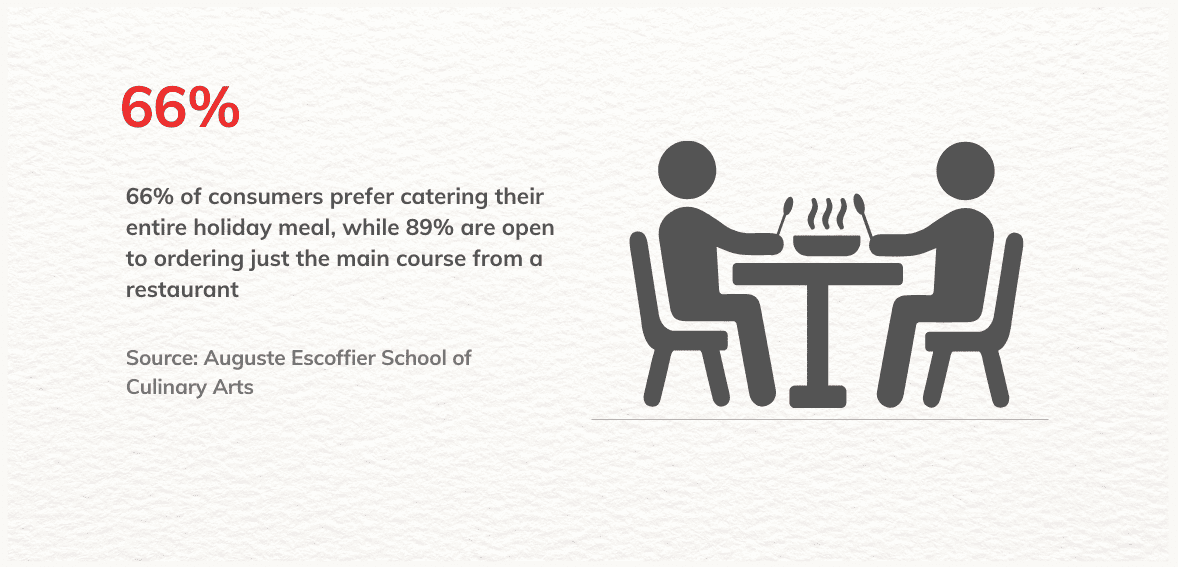
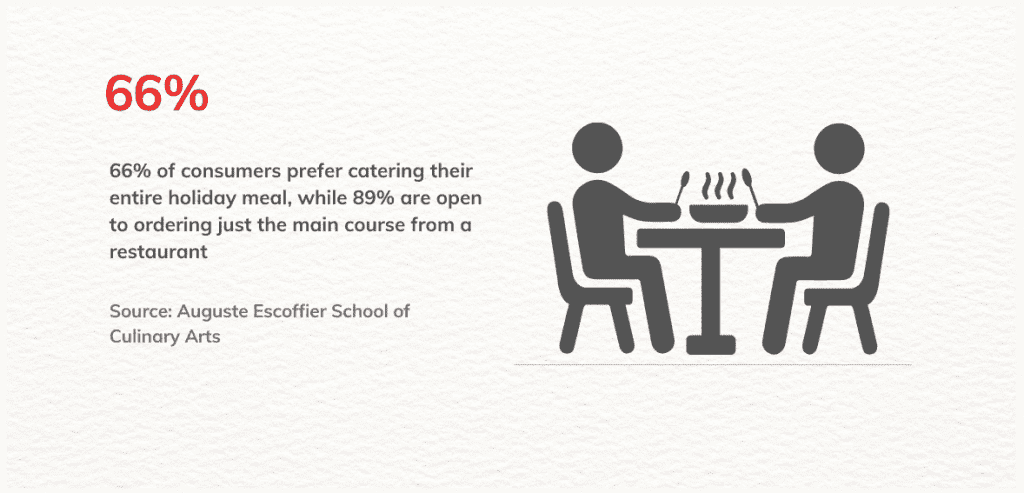
Holiday diners are seeking both convenience and experiences. In late-2023 surveys, 66% of consumers ordering holiday meals planned to buy entire meal bundles from restaurants, and 89% would rely on restaurants for at least the main course (vs. sides, appetizers, dessert). Generation gaps are evident, just for example, 82% of millennials factor in takeout/delivery options when choosing a restaurant, compared to only 53% of baby boomers. Younger diners are also more likely to use restaurants to avoid holiday grocery shopping (75% of millennials, 65% of Gen Z) than older groups (57% of boomers). These preferences suggest restaurants that emphasize off-premises convenience (curbside pickup, easy meal kits) as well as enticing in-restaurant experiences can capture a broad audience.
Historical holiday events also drive demand. Thanksgiving and New Year’s Eve remain key occasions. According to a survey, 36% of diners plan to celebrate Thanksgiving at a restaurant, whereas 88% plan to celebrate at home (ordering in or visiting family). In contrast, New Year’s Eve is hugely popular for dining out, with over 60% of diners planning to visit a restaurant or bar on New Year’s Eve and 55% on New Year’s Day. Operators can leverage these peaks by offering special New Year’s menus or holiday feast packages (dine-in and takeout) to maximize revenue.
Popularity of Thanksgiving dishes in the U.S. (2024 Survey)
Dish
% Americans who say it is a favorite
Turkey
74%
Mashed Potatoes
67%
Stuffing
64%
These top Thanksgiving items (turkey, mashed potatoes, stuffing) remain perennial favorites, indicating demand for classic holiday menus. Regional variations do occur, for example, 50% of Northeasterners list apple pie as a favorite Thanksgiving dessert, while Southerners favor pecan pie (40%) and green bean casserole (43%). Such insights help operators tailor menus and promotions by region.
Christmas Preferences
For Christmas, roasted potatoes were the most popular dish, winning 76% of head-to-head matchups. Mashed potatoes followed closely at 75%, with turkey at 73%.
Consumer Dining Preferences for 2025 Holidays
Cost remains on consumers’ minds. A holiday survey found nearly half (44%) of shoppers were concerned about budget, and 91% planned to spend the same or less than last year. 52% said they expect to go out to restaurants less during the holidays than in prior years. To reach budget-conscious guests, many restaurants are highlighting deals, loyalty rewards, and bundled pricing (e.g., family feast packages). Indeed, 47% of operators intend to add new discounts, deals, or value promotions in 2025 to drive traffic.
Takeout and delivery remain crucial. A US Foods survey found that about 57% of Americans prefer ordering takeout/delivery over dining out. Holiday surveys echo this, as in 2023, 48% said they would order holiday meals to-go. Younger diners especially prize convenience, as 82% of millennials and 86% of Gen Z look for off-premise options. Restaurants are responding by improving online ordering, partnering with delivery platforms, and offering contactless pickup. For example, many eateries now offer order-ahead holiday packages (e.g., pre-cooked turkeys or multi-course dinners to finish at home) through their websites or apps.
Despite budget concerns, consumers seek memorable experiences. A 2025 outlook reports that 64% of full-service customers (and 47% of limited-service) prioritize the experience over price. A survey found 67% of holiday diners want more than a standard reservation – they crave themed dinners, tasting menus, pop-up events or at-home experiences. Many restaurants plan special holiday events (wine pairing dinners, cooking classes, festive buffets) to capture this demand. Indeed, such “special experiences” often generate 30% more revenue than ordinary covers. Operators offering unique holiday concepts (e.g. a New Year’s Eve tasting menu or Hanukkah feast at home) can stand out and drive higher ticket values.
Economic Outlook and Restaurant Spending
The broader U.S. economy in 2025 is expected to decelerate. National Restaurant Association economists project real GDP growth of only 1.2% in 2025 (down from 3% in 2023-24). Labor market expansion is expected to continue, but at a more modest pace (about 1 million new jobs in 2025). Unemployment remains low (4.2% as of April 2025), which supports consumer spending, but wage-driven inflation is “sticky.” The NRA expects overall inflation (CPI) to be 3.6% in 2025, above the Fed target.
Rising prices are straining household budgets. NRA data show disposable personal income growth slowing (projected +1.4% in 2025, down from +2.7% in 2024). Retail and restaurant spending growth has cooled accordingly. In mid-2024, inflation-adjusted restaurant sales were flat to down slightly, despite rising menu prices. Consumers say they will be prudent because a study found 91% of shoppers plan to spend the same or less on this year’s holidays compared to last year. Many will seek deals, with 43% saying they’ll shop at retailers offering the steepest discounts.
These trends likely extend to restaurant dining as price promotions, early-bird specials, and bundled offerings can appeal to value-driven guests.
Not all signals are negative. The NRA’s State of the Industry report notes that 9 in 10 adults enjoy going to restaurants, often for meals they can’t easily cook at home. On-premises dining is the long-term growth focus for most operators, as 90% of fine-dining and 87% of casual operators say increasing in-restaurant business is more important than off-premises. As consumer confidence ebbs and flows, restaurants that deliver good value and a compelling experience should remain attractive. Loyalty programs and targeted marketing will be key; 36% of operators are prioritizing digital loyalty and promotion tools in 2025.
Catering, Takeout, and Online-Ordering Trends
The corporate and private holiday party season is rebounding. In 2024, 81% of employees planned to attend company holiday parties (up from 69% in 2023), and 43% of businesses were boosting budgets, averaging about $44 per guest.
Food is the highlight, as 78% of employees say they’re most excited about the food at workplace holiday parties. This trend from 2024 will continue to strengthen into 2025. Restaurants can capitalize by marketing corporate catering and party packages. Heavy appetizers (34%) and station-based spreads (28%) are popular at parties, and informal “grazing” stations or portable buffet items are in demand for office events.
Simultaneously, many consumers are hosting more casual gatherings at home. Data suggest nearly 36% of people will celebrate Thanksgiving or other holidays in a restaurant or bar, whereas a large majority (88%) plan to celebrate at home (through gatherings or ordering in). This points to robust takeout opportunities. Savvy operators offer heat-and-eat family meals (turkey dinners, party platters, etc.) to cater to home hosts.
Restaurants often package items (e.g. take-and-bake dinners, sandwich kits) for easy at-home finishing. Adding value through bundled sides, desserts, or “next-day” options (leftover sandwiches, brunch kits) can boost the per-order ticket. Consumer preferences for outsourcing holiday meals vary:
Main Courses: 89% prefer to buy the main course from restaurants.
Side Dishes: 86% prefer to buy side dishes.
Appetizers: 74% prefer to outsource appetizers.
Whole Meals: 66% would rather buy the entire meal.
Desserts: 63% prefer to buy desserts, such as pies.
Online ordering and third-party delivery remain essential. While 2024 saw talk of “post-pandemic” normalization, consumers continue to crave convenience: surveys indicate that roughly 30–50% of Americans use delivery or takeout a few times per month.
During the holidays, operators report increases in delivery orders: In a 2023 NRA survey, 34% of operators saw an uptick in takeout/delivery orders. To manage this, many restaurants are streamlining digital channels. Some chains are building omnichannel platforms (own apps + partners) to reduce commission costs. Others invest in in-house staff or “ghost kitchens” dedicated to off-premises. Technology upgrades are underway: about 17% of restaurants plan POS/back-office system upgrades, 7% are adding automation (kiosks, robotics). These investments help process higher volumes and improve accuracy during holiday peaks.
The holidays are also big for digital gift cards. In 2024 NRA surveys, 59% of adults said they planned to give restaurant gift cards for the holidays. Younger generations lead this trend. For example, 74% of Gen Z and 70% of Millennials said they would give restaurant gift cards, versus 54% of Gen X and 44% of Baby Boomers.
This aligns with data showing a resurgence in gift card sales. According to a report, there was a 13.2% jump in dollars spent per card on Black Friday 2024 vs 2023, and a 17.7% higher spend over the Thanksgiving weekend. Notably, data showed that in-store (physical) gift card sales ($7.8M) outpaced digital ($7.3M) in late 2024, indicating renewed interest in traditional gift-card purchases at checkout. Offering promotions on gift cards (e.g., bonus value, multi-buy deals) can drive holiday revenue and future visits.
The percentage of U.S. adults using restaurant gift cards
Generation
% Who gave restaurant gift cards
Gen Z (18–25)
74%
Millennials
70%
Gen X (40s–50s)
54%
Baby Boomers
44%
Spending Patterns and Demographic Shifts
Surveys indicate consumers remain cautious. 52% of shoppers intend to dine out less during the holidays. Although many still plan modestly higher spending on food and gifts (43–44% of households say they’ll splurge on these categories), the overall trend is flat-to-down. For restaurants, this means that attracting price-sensitive diners is critical. Operators are emphasizing loyalty programs and partnerships (e.g. credit card rewards, dining subscriptions) to capture spending that might otherwise go to retail.
Millennials and Gen Z dominate holiday restaurant usage, while older diners are more conservative. For instance, only 63% of boomers expected to dine out over the holidays vs. 86% of Gen Z. Younger diners are also more experimental, they’re more likely to try new menu items (in a familiar format) and follow social media food trends during the holidays. By contrast, older segments stick to classics and known favorites. These shifts are shaping menu decisions, many chains are introducing “TikTok-inspired” sandwiches or desserts to appeal to younger guests, while maintaining traditional holiday entrees for longtime patrons.
Geography still matters for holiday menus. In the Midwest and South, comfort sides like green bean casserole (43% favorably) and candied yams are extremely popular, while the West shows higher interest in lighter sides (e.g., salads at 36%). Restaurants with multi-state footprints are adjusting – a casual chain might push holiday salads and smoothies in its California locations, while highlighting classic pies and decadent sides in Texas. Understanding these regional tastes – gleaned from point-of-sale data and national surveys – helps tailor holiday offerings and marketing.
The table that follows highlights key metrics for Americans’ dining-out expenses: it shows the average monthly spend per person in 2024 along with projected amounts for 2025, calculated using both a 4.1% rise in full-service meal prices and a broader 3.8% increase in all away-from-home food costs. It also presents the average cost per holiday meal in 2024 and its corresponding estimates for 2025 under each inflation assumption.
Metric
2024 Actual
2025 Projection (4.1% inflation)
2025 Projection (3.8% inflation)
Average monthly dining-out spend
$191
$199
$198.50
Average holiday meal cost per meal
$24.28
$25.27
$25.20
Regional & Traditional Holiday Foods
Turkey still reigns supreme as 74% of Americans ranked it as their favorite Thanksgiving dish. Other staples follow with mashed potatoes (67%), stuffing (64%). Even so, some sides and desserts polarize by generation and region. For example, cranberry sauce was cited as a top 5 least favorite by 27% of Americans, while mac & cheese is scorned by Boomers (27% least favorite) but beloved by younger families. Restaurant operators tap into these insights by balancing menus, offering alternative mains (e.g., prime rib, vegetarian loaves) and modern twists (like sweet potato salads) alongside traditionals to appeal broadly.
Beyond Thanksgiving, holiday menus span cultural traditions. Comfort dishes like sweet pies, mulled cider, and spiced desserts trend during Christmas and New Year’s. Some operators report rising demand for international holiday fare (e.g. Peruvian tamales, Filipino pancit, Middle Eastern mezze platters), reflecting demographic shifts. Chefs are also spotlighting regional American specialties – Cajun-style turkey, Tex-Mex side dishes, or New England clam chowder as a Christmas starter. These diverse offerings can draw customers seeking both comfort and novelty during the holidays.
Seasonal beverages drive gift cards and after-dinner sales. Eggnog, hot cocoa, and festive craft cocktails top holiday drink menus. A recent survey noted that appetizers and sides from restaurants are highly valued, with 86% of holiday meal planners intending to trust restaurants for sides, and 63% for desserts. Restaurants can capitalize by featuring shareable appetizers (holiday charcuterie boards, mini tartlets) and themed desserts (gingerbread cheesecake, bourbon pecan pie) as add-ons to take-home meals or to-go boxes.
Experiential Dining and Technology Trends
As noted, creating special experiences is key. A majority of restaurants are offering themed dinners, live music nights, chef’s tables, and gift-cardable events. Data show these sell well; holiday experiences (tasting menus, wine pairings, cooking classes) generated 30% higher revenue than standard reservations. Even off-premises, experiential elements matter: example strategies include sending diners home with a decorated turkey (complete with recipe cards), virtual cooking classes bundled with meal kits, or holiday playlist QR codes.
Technology aids holiday execution. Many operators have upgraded POS and online-ordering systems (17% planned upgrades in 2025). Contactless payments, digital receipts, and online gift cards streamline holiday transactions. Back-office tools (inventory trackers, scheduling apps) help manage the complexity of holiday menus and staffing. On the guest side, restaurants are using targeted digital marketing. 61% of shoppers in one study looked for digital coupons or retailer apps for holiday deals, so restaurants are similarly pushing email/mobile coupons and holiday e-gift campaigns to grab attention.
Environmental and social concerns remain front of mind. While not unique to holidays, 65% of operators have adopted green practices (food waste tracking, sustainable packaging), which can appeal to eco-conscious holiday diners. Holiday menus may spotlight locally sourced ingredients or charitable promotions (e.g., donating meals for every gift card sold). Digital platforms also enable “making the spirit of giving” visible; restaurants highlight community efforts and gift-card programs that benefit local causes during the holidays.
Operational Challenges and Strategies
The biggest operational challenges cited by operators are labor and food costs. In 2024, 88% of restaurant managers reported higher labor costs (with 79% expecting further increases in 2025). Similarly, 87% saw food costs rise in 2024 (82% expect more inflation in 2025). These pressures force tough decisions as many menus have fewer options or higher prices. Operators are managing by renegotiating supplier contracts, substituting ingredients, and adjusting menu engineering (e.g., offering more vegetable-based dishes if protein costs spike). Some restaurants are creatively extending limited menus or brunch/lunch specials to maximize the usage of ingredients and labor.
Staffing remains a persistent hurdle. In the NRA survey, 32% of operators named staffing as their top challenge in 2024. Turnover rates vary widely (11% to over 75%), reflecting continued churn. To stabilize the workforce, many restaurants are boosting wages, offering signing/retention bonuses, and improving work culture. Training and career growth initiatives are on the rise: over 50% of restaurants now cross-train employees to boost flexibility and efficiency, and 45% use in-person mentorship (“shoulder-to-shoulder”) to onboard staff. Industry groups report a growing emphasis on recruiting from social media and alumni networks, as well as re-engaging former employees.
Holiday crowds mean peak service challenges. 37% of diners say an overcrowded restaurant hurts their experience. Restaurants counter this by strategic planning – some offer staggered seating times, special pre-fixe menus, or partial buffets (to speed service). Technology helps too – for instance, using reservation systems to manage large parties and avoid bottlenecks. Many chains also lock in staffing via holiday bonuses or guaranteed schedules to ensure adequate coverage.
To offset holiday uncertainties, restaurants are diversifying revenue streams. According to NRA data, 27% of operators plan to expand catering services, and 22% are adding special events or promotions. For example, cafés may host gift-wrapping stations; bars might run holiday-themed drink nights or New Year’s Eve parties; bakeries offer cookie-making kits. Some chains introduce branded merchandise (9% of operators report launching gift-worthy products). These initiatives not only boost income but also deepen customer engagement.
Finally, standing out during the holidays is harder than ever, as more establishments vie for a share. Restaurants must cut through the noise with smart marketing using data (loyalty metrics, reservation trends) to target promotions, collaborating with community events, and optimizing online visibility (holiday menu SEO, social media specials). Rewards programs are expanded – 36% of operators are focusing on loyalty tools – since returning customers are the most reliable revenue source in tight times. Word-of-mouth remains powerful; many operators have shifted to “experience” marketing (e.g., Instagram-worthy dish presentation, charitable partnerships) to generate buzz in place of simply competing on price.
Conclusion
The 2025 holiday season looks to be one of cautious optimism for U.S. restaurants. Consumers are eager for the convenience and joy of dining out after the busy year, but economic pressures will temper spending. Restaurants that emphasize value, adapt to varied consumer preferences, and manage costs effectively should be poised to capture holiday business.
By leveraging data-driven insights (demographics, regional tastes, off-premises trends), offering compelling holiday experiences, and addressing operational challenges head-on, the industry can close the year on a high note.
The holiday season presents a significant opportunity for restaurants to boost customer traffic and sales. Studies show that 66% of consumers prefer catering their entire holiday meal, while 89% are open to ordering just the main course from a restaurant. These trends highlight the growing demand for convenience during the holidays, creating a prime environment for restaurants to capitalize on.
Successful restaurant operators recognize the value of aligning their offerings with holiday dining trends to build brand visibility, attract new customers, and drive revenue. With 80% of diners willing to try a new restaurant when offered a discount or promotion, leveraging holiday-specific deals can attract new patrons and encourage customer loyalty. This restaurant holiday outlook explores the opportunities available during the 2024 holiday season.
Mixed signals characterize the economic environment in 2024. While inflation rates have moderated, prices remain elevated, leading to cautious consumer spending. The term “vibe-cession” has been coined to describe this scenario, where consumers possess purchasing power but are selective in their expenditures, focusing more on essential items over discretionary spending.
Holiday sales forecasts reflect this cautious sentiment. Bain projects a 3% growth, Deloitte estimates between 2.3% and 3.3%, and the National Retail Federation anticipates a 2.5% to 3.5% increase—which equates to $977.6 billion to $989 billion. These figures fall below the pre-pandemic average growth rate of 5.1%, indicating tempered seasonal expectations.
Consumer Dining Preferences: Customers Balancing Between Home Meals and Restaurant Visits
Recent surveys reveal shifts in dining preferences during the holidays. A study by 84.51° indicates that 52% of consumers plan to reduce spending on restaurant dining, opting instead for home gatherings and grocery purchases. This trend suggests a pivot towards home-prepared meals, with consumers seeking cost-effective ways to celebrate.
Conversely, data from Tock shows that 68% of diners intend to engage with restaurants and bars during the holiday season, with over 60% planning to visit these establishments on New Year’s Eve. This indicates that while some consumers are cutting back, a significant portion still values dining out as part of their holiday experience.
Trends in Outsourcing Holiday Meal Preparations
Restaurants are experiencing increased demand for catering and takeout options as consumers look to simplify holiday preparations. Offering curated holiday menus for home consumption has become a strategic approach for many establishments. Catering services are expected to increase demand by 20-25% as more families opt for professionally prepared meals for gatherings. Offering diverse and customizable catering options can help restaurants meet this growing need.
Plus, 70% of consumers prefer online ordering for holiday catering. A seamless online catering ordering system can cater to this preference and boost sales. Consumer preferences for outsourcing holiday meals vary:
Main Courses: 89% prefer to buy the main course from restaurants.
Side Dishes: 86% prefer to buy side dishes.
Appetizers: 74% prefer to outsource appetizers.
Whole Meals: 66% would rather buy the entire meal.
Desserts: 63% prefer to buy desserts, such as pies.
Despite the trend toward outsourcing, desserts are still the least likely to be purchased from restaurants, indicating a strong attachment to traditional homemade dessert recipes. The reasons consumers choose to rely on restaurants during the holidays include:
Supporting Local Businesses: 88% see ordering from restaurants as a way to support local businesses.
Reducing Stress: 82% say that buying prepared foods reduces holiday stress.
Maximizing Family Time: 78% believe it allows for more quality time with family by reducing the time spent on cooking and cleaning.
How Much Do People Plan to Spend on Holiday Meals Out?
In 2024, Americans’ dining habits have shifted, showing distinct spending patterns and preferences changes, particularly during the holiday season. A survey from US Foods reveals that the average monthly spending per person on dining out has climbed to $191, up from $166 in 2023. This increase is primarily attributed to inflation affecting menu prices. In a shift from previous years, women now spend 33% more on dining out than men, compared to 2023, when men spent 19% more.
The survey also breaks down the spending per individual meal:
$10–$20 per meal: 50% of respondents
$21–$30 per meal: 24%
$31–$40 per meal: 11%
$41 and above per meal: 15%
These figures show that most Americans generally spend between $10 and $30 per meal when dining out.
Which Holiday Foods are Consumer Favorites?
Recent surveys have provided updated insights into Americans’ favorite holiday dishes, highlighting traditional preferences and emerging trends.
Thanksgiving Favorites
A 2024 survey revealed the following top Thanksgiving dishes:
Turkey: Preferred by 74% of Americans, turkey remains the centerpiece of Thanksgiving meals.
Mashed Potatoes: 67% of respondents enjoy mashed potatoes as a staple side dish.
Stuffing: Favored by 64%, stuffing continues to be a traditional accompaniment.
Interestingly, cranberry sauce was identified as the least favorite dish, with 27% of participants expressing a dislike for it.
Christmas Preferences
For Christmas, roasted potatoes were the most popular dish, winning 76% of head-to-head matchups. Mashed potatoes followed closely at 75%, with turkey at 73%.
Regional Variations
Regional differences also influence holiday food preferences. For instance, apple pie is most favored in the Northeast, with 50% listing it as their top dessert, while pecan pie finds more support in the South, with 40% favoring it.
These insights suggest that restaurants should focus on traditional dishes like turkey, mashed potatoes, and stuffing during the holiday season to align with consumer preferences. Offering regional favorites can also cater to local tastes. Depending on clientele interest, less popular options, such as duck (33% favorability) and goose (28%), might be included selectively.
Additional Trends in Holiday Dining
The holiday season is critical for the restaurant industry, presenting opportunities and challenges. In 2024, restaurants are poised to experience significant growth in online sales, catering services, and gift card purchases. However, operators must adopt strategic measures to enhance customer experience and operational efficiency to capitalize on these trends. Several notable trends are shaping holiday dining in 2024:
Increase in Online Sales
Online holiday sales are projected to rise by up to 24% year-over-year, driven by consumers’ preference for convenience during the busy season. This surge underscores the importance of robust online ordering systems and user-friendly digital platforms.
Experiential Dining:
Despite economic pressures, consumers are willing to invest in unique dining experiences. Restaurants offering special holiday-themed events or exclusive menus are attracting patrons seeking memorable outings.
Health and Safety Priorities:
Ongoing health concerns continue to influence dining choices. Establishments emphasizing safety protocols and offering flexible dining options, such as outdoor seating or private dining areas, are more likely to appeal to cautious consumers.
Rise in Gift Card Sales
Gift card purchases are anticipated to grow by 15-20%, making them a valuable revenue stream. Promoting both digital and physical gift cards can capitalize on this trend.
Increased Use of Technology
Around 50% of businesses plan to utilize technology to monitor deliveries and manage the holiday rush efficiently. Implementing integrated restaurant solutions can streamline operations and enhance customer satisfaction.
Preference for Online Catering Orders
A significant 70% of consumers prefer online ordering for holiday catering. A seamless online catering ordering system can cater to this preference and boost sales.
Operational Challenges and Strategies
The restaurant industry faces several operational challenges during the holiday season:
Labor Shortages: Staffing is critical, impacting service quality and operational efficiency. Investing in employee retention strategies and leveraging technology to streamline operations are essential.
Supply Chain Disruptions: Fluctuations in supply availability can affect menu offerings and pricing. Maintaining strong supplier relationships and adopting flexible menu planning can help mitigate these disruptions.
Technological Integration: Adopting AI and automation transforms restaurant operations, from reservation systems to personalized marketing. Embracing these technologies can enhance customer engagement and operational efficiency.
Conclusion
The 2024 holiday season presents both opportunities and challenges for the restaurant industry. While cautious consumer spending and a preference for home-cooked meals may temper expectations, there remains significant potential in catering, takeout, and special dining experiences. Restaurants can capitalize on these trends by offering targeted promotions, enhancing online ordering systems, and curating holiday-specific menus that reflect traditional favorites and regional preferences. Addressing operational challenges, such as staffing and supply chain disruptions, through strategic planning and technology integration will be crucial for success. By aligning their offerings with evolving consumer needs, restaurants can attract new patrons, strengthen customer loyalty, and drive revenue during the holiday season.
A successful growth marketing strategy can result in consistent revenue and long-term growth. However, it’s essential to identify which methods are worth the investment and which may not meet expectations. Finding the best approach can be challenging, as no one-size-fits-all solution exists. Most businesses will require a combination of tactics to achieve sustainable results. Fortunately, there are numerous strategies to consider.
Here are key growth marketing tactics you can integrate into your plan immediately:
New Marketing Ideas to Help Your Business
1. Audit Your Website (and Optimize It)
Your website serves as the core of your marketing efforts. If it has issues, your marketing performance may suffer. Start by examining critical aspects like page speed, mobile responsiveness, and navigation. Slow-loading pages, confusing menus, or poor mobile design can deter visitors and hurt your search engine ranking. Use tools such as Google PageSpeed Insights and Google’s Mobile-Friendly Test to identify and address these problems, helping your site meet user expectations and search engine standards.
Next, assess your site’s content. Outdated or irrelevant information can harm both user experience and SEO. Update pages with accurate details, ensure keywords align with current search trends, and optimize meta tags. Also, check for duplicate or broken content, which can reduce credibility and rankings. Tools like Yoast SEO and Semrush can help pinpoint issues and suggest improvements.
Finally, review your site’s technical structure. Verify that redirects are set up correctly, internal links are well-organized, and the overall site architecture allows users and search engines to navigate smoothly. Ensure all security measures, such as SSL certificates, are active to protect your site and its visitors.
2. Set Up a Free Google My Business Profile
Setting up a Google Business Profile is a practical marketing strategy for local businesses. It provides a no-cost option for increased visibility. When you register your business, it appears in Google Maps, local search results, and the Knowledge Panel during branded searches.
The importance of this tool lies in its ability to attract local customers. Statistics show that around 70% of individuals searching locally visit a business within a five-mile radius. By maintaining accurate and current information on your Google Business Profile, you can draw in these local searchers and turn them into customers.
Optimizing your listing for a better presence in Google Maps and local searches is vital to enhance the effectiveness of your Google Business Profile. Establish a Google account specifically for your business, which helps keep personal and business data separate. Access your profile via the Google Business Profile site by selecting “Manage now.” You’ll need to verify your business by entering its name; if it isn’t listed, you can add it manually. Choose your business category carefully to ensure Google accurately connects you with the intended audience.
Further details such as your physical location, service areas, contact information, and website should be added next. These elements are key to your visibility in local searches and on Google Maps. To confirm ownership and unlock more features, Google offers verification options, including a postcard, phone, or email. Keeping your profile updated with the latest information, events, and promotions, and interacting with customer reviews enhances trust and engagement, boosts your local search ranking, and makes it easier for customers to discover and engage with your business.
3. Use Social Media Strategically
Social media marketing is an essential element of modern business strategies, serving as a platform for sharing promotional content and interacting with a large audience. With approximately 4.89 billion active users globally, social media offers various opportunities to connect with potential customers.
Different platforms target specific user groups:
Facebook: Facebook has more than 3 billion active users monthly, predominantly aged 25-34.
Instagram: Attracts a younger demographic, especially those aged 18-29.
Snapchat: Mainly used by people aged 18-24.
LinkedIn: Focuses on professionals, making it suitable for B2B marketing.
YouTube: Acts as the second most popular search engine after Google, appealing to a wide audience.
Knowing these demographics helps businesses to distribute their social media marketing budgets more effectively, aiming to reach the right audience. Different platforms necessitate different content strategies:
Facebook and Instagram are best suited for visual content like images and videos.
LinkedIn is ideal for sharing professional articles and industry insights.
Snapchat and TikTok favor short, engaging videos that attract younger viewers.
Creating content that matches the characteristics of each platform and meets audience expectations can increase engagement and improve conversion rates. For example, Audi effectively uses social media to maintain a consistent brand image across different platforms. On Instagram, they post high-quality images of their vehicles in attractive settings, strengthening their luxury brand image. This strategy has helped them build a significant following and showcases the effectiveness of well-tailored content that upholds brand values.
4. Harness Short-Form Video and Social Media Trends
Short-form video has become the dominant content format across social platforms in 2025. Platforms like TikTok, Instagram Reels, and YouTube Shorts continue to explode in popularity, with global consumption of short videos up 75% in the past year. Video content is expected to account for 82% of all internet traffic by 2025. Brands can’t afford to ignore this trend – engaging video content is now essential to capture attention.
Create bite-sized videos regularly: Demonstrate your product, share quick how-tos, or jump on trending audio challenges. These fun, easily digestible videos can dramatically boost your visibility in social feeds. Social videos generate 1,200% more shares than text and images combined, which can amplify your reach through viral sharing.
Leverage platform features: Use TikTok’s editing effects, Instagram’s interactive stickers, or YouTube Shorts’ captions to make videos more engaging. Interactive content is on the rise – for example, live-stream shopping events are gaining traction, with global live commerce sales projected to hit $500 billion by 2025. Consider hosting a live demo or Q&A to drive real-time engagement and even direct sales.
Diversify across channels: Don’t put all your effort into one network. Trends can shift quickly (note the uncertainty around TikTok’s regulatory status). A multi-platform strategy (e.g. Instagram + TikTok, or YouTube + Facebook) ensures you’ll reach your audience even if one algorithm changes. The key is to be where your customers are consuming content – and today, that’s overwhelmingly on mobile video.
Above all, keep it short, authentic, and frequent. A steady drumbeat of video content will keep your brand in front of followers as algorithms favor active creators. Monitor what’s trending each week and find creative ways to participate that align with your brand. Done right, a single clever video can drive huge end-of-year momentum.
5. Use Holiday-Based Visuals
In 2025, you must use holiday-themed visuals and posts to engage your audience during the festive season. Highlight special offers, create seasonal content, and tailor your messaging to reflect the celebrations. This approach can boost engagement, encourage sharing, and strengthen your brand’s connection with your audience.
As people indulge in holiday traditions like decorations, themed attire, or special treats, brands can participate by adding holiday-specific content to their social media strategies.
Create static images and videos that reflect popular holiday motifs, such as seasonal patterns, iconic imagery, and color schemes. These posts should align with your brand’s identity while adding fresh and timely elements that connect with the festive mood. Ensure consistency in your holiday content to present a cohesive look that enhances your audience’s experience. Each piece should also follow your brand guidelines to ensure your branding remains professional and recognizable throughout the season.
6. Automate and Streamline Your Content and Campaigns with AI
The rise of artificial intelligence is a game-changer for marketing in 2025. AI tools are helping businesses produce content, analyze data, and personalize campaigns faster and cheaper than ever. Over 56% of marketers report their companies are currently using AI in some marketing capacity, and some surveys put usage even higher. Embracing AI can give you a competitive edge in both efficiency and creativity.
Generative AI tools can help you brainstorm social posts, write ad copy variants, or even draft blog outlines. This speeds up your workflow while maintaining quality. For example, Meta’s new AI Sandbox for advertisers auto-generates multiple ad text variations and images, saving creative teams time.
You can use AI to A/B test different messages and quickly double down on what resonates with your audience. Plus, today’s AI chatbots are far more advanced than the clunky bots of a few years ago. With natural language processing, they can handle customer inquiries, recommend products, or capture leads 24/7 in a very human-like way. Implementing an AI-driven chatbot on your site or Facebook Messenger (now Meta Messenger) can improve customer service and free your team from repetitive Q&A. Many businesses also use chatbots for instant support on WhatsApp or other messaging apps, meeting customers where they are with immediate answers.
You can also take advantage of AI in your data analysis and ad targeting. Platforms like Google and Meta have AI-powered campaign tools (e.g., Google’s Performance Max or Meta’s Advantage+ ads) that automatically optimize your ad placements and budget across channels. AI crunches the numbers faster than any human, identifying which audience segments or creative elements drive the best results.
Marketers who leverage these can often stretch their budget further by letting the algorithm allocate spend to top-performing areas. Additionally, AI-driven analytics dashboards can spot trends in customer behavior (like an emerging product interest) and suggest actions, helping you stay agile in the last stretch of the year.
7. Collaborate with Influencers and Creators
Influencer marketing has matured by 2025 into a powerhouse channel for driving brand awareness and sales, when done thoughtfully. The industry has grown exponentially: it’s projected to reach $32.5 billion globally by the end of 2025, up from just $9.7 billion in 2020. Plus, over 80% of marketers now find influencer campaigns highly effective.
If you haven’t revisited your influencer strategy recently, now is the time. A well-chosen partnership in the last stretch of the year can expand your reach to new customers right when they’re primed to spend. Micro and nano-influencers (those with smaller, highly engaged followings) continue to be secret weapons for businesses. They often deliver better engagement rates and trust with audiences compared to big celebrities. Micro-influencers on Instagram (often defined as under ~50k followers) see stronger interaction rates, and they make up the vast majority of creators.
For a modest budget, you could partner with several niche influencers who speak directly to your target demographic. For example, if you sell fitness gear, collaborating with a few up-and-coming fitness coaches or yoga enthusiasts on Instagram/TikTok can yield authentic product shoutouts that followers trust. Authenticity is crucial – audiences today are quick to sniff out inauthentic paid posts. Look for partners who genuinely align with your brand’s niche or values.
When planning campaigns, give influencers creative freedom to present your product/service in their voice. They know what resonates with their followers. Whether it’s a TikTok challenge, an unboxing video, a tutorial, or a heartfelt story, content feels more genuine when the creator’s personality shines. Ensure disclosures are in place (transparency is a must), but aside from that, collaborate rather than dictate. The result will be content that audiences enjoy, which translates into higher engagement and conversions. Remember, consumers often see influencers as peers; one study found people view user/influencer content as more impactful in purchasing decisions than traditional brand content.
Consider timing and special campaigns for the end of the year. Perhaps line up an influencer “holiday gift picks” post featuring your product, or a New Year’s challenge that organically involves your service. Influencers can create a sense of trendiness or urgency around your offerings (“I’m using this planner to crush my 2025 goals, you guys have to try it!”). Their endorsement provides social proof to hesitant buyers. And it’s not just B2C – even B2B companies are leveraging influencers (or industry thought leaders) via webinars, LinkedIn posts, or podcasts to sway decision-makers.
If you’re concerned about budget, note that not all partnerships require hefty fees. Some micro-influencers will work in exchange for free products or commissions through affiliate links. Track the results (use unique discount codes or affiliate links for each influencer to measure sales they drive) and focus on return on investment. As with any marketing effort, some experiments will perform better than others. The goal by year-end is to identify 1-2 influencer relationships that pay off, then nurture those going forward. With smart collaboration, influencers and creators can introduce your business to new, eager audiences and add momentum to your Q4 marketing push.
8. Respond to All Reviews
Managing your business’s online reputation is crucial, as 93% of consumers consult online reviews before purchasing. It’s important to actively monitor and engage with both positive and negative reviews to build customer trust and loyalty. Promptly addressing negative feedback is key; acknowledging customer concerns, apologizing when appropriate, and suggesting a solution or further discussion offline show a commitment to customer satisfaction and can help protect your reputation.
Similarly, responding to positive reviews with gratitude can strengthen customer relationships and promote repeat business. Simply thanking customers can enhance community feelings among your clientele. Best practices in managing online reviews include responding quickly—53% of consumers expect businesses to reply to negative feedback within a week. Personalizing responses to address specific comments demonstrates genuine engagement while maintaining a professional tone, even in response to criticism, which is essential for keeping interactions respectful and constructive.
9. Maximize Email Marketing (and SMS) ROI
Email remains one of the highest-ROI marketing channels in 2025 – a reliable workhorse that should be in your year-end strategy. Nearly 4.5 billion people worldwide use email in 2025, and that number keeps growing. Crucially, email consistently delivers great returns: for every $1 spent on email marketing, the average return is about $36.
To finish strong, double down on email campaigns and refine them using today’s best practices. First, refresh your email list and content. Make sure you’re reaching an engaged audience – remove inactive subscribers and use a signup push (e.g., via your social media or website) to capture new leads before holiday promotions. An up-to-date list means better open rates and deliverability. Speaking of opens, note that 88% of users check email multiple times per day, so a compelling subject line or timely offer can quickly catch attention.
Aim for concise, value-driven email content that respects busy inboxes. Personalization is key in 2025 (consumers are tired of generic blasts). Simple touches like addressing recipients by name and segmenting your list by interest or purchase history go a long way. If you have the data, try dynamic content – for example, show different product recommendations to different segments within the same email. Remember, nearly 60% of consumers say marketing emails influence their purchase decisions, but they won’t be swayed by irrelevant content. Tailor your messaging to each audience subset for maximum impact.
Don’t overlook automation and triggered emails to capture low-hanging fruit. Set up or refine your automated flows: a welcome series for new subscribers, cart abandonment reminders for shoppers who left items in their basket, re-engagement emails to win back dormant customers, etc. Automated emails can generate 320% more revenue than non-automated sends by targeting the right person at the right moment.
As Q4 kicks in, consider a drip campaign counting down to year-end deals or offering tips that naturally lead into your product/service as the solution. Finally, consider SMS and messaging apps as a complement to email. Text messages have extraordinary open rates (often well above 90% within minutes). An SMS alert about a flash sale or an exclusive coupon code for your VIP customers can drive immediate action, especially during the holiday rush. Likewise, if you serve markets where WhatsApp or Telegram are popular, you can broadcast updates or deals there (just be mindful of not spamming and always get opt-in). These direct channels cut through the noise – for example, a short “Last chance for 25% off – today only!” text can nudge indecisive customers to convert before year-end.
10. Boost Holiday Engagement with User-Generated Content
Utilizing user-generated content (UGC) during the holiday season is an effective way to display your brand’s products through authentic customer experiences. UGC, such as customer-shared videos or photos of your products in festive settings, offers a realistic view that traditional advertisements often do not provide.
To encourage user participation, start conversations with your audience about their holiday plans and discuss how your products could enhance their celebrations. For example, a food company could invite customers to post recipes or photos of their holiday meals, including their products. Additionally, practice social listening by monitoring social media for organic mentions of your brand, and when you find positive posts, ask permission to share them on your official channels. This amplifies genuine customer voices.
The benefits of user-generated content are significant. UGC not only builds trust among potential customers, who generally view peer recommendations as more credible than traditional ads, but it also offers a cost-effective marketing strategy by reducing the need to produce costly original content. Moreover, sharing UGC enhances engagement by fostering a sense of community and encouraging more customers to interact with your brand, boosting overall involvement and loyalty.
11. Personalize the Customer Experience at Scale
One marketing approach that will not survive in 2025 is one-size-fits-all mass marketing. Today’s consumers expect personalization – they want to feel like you understand their needs and preferences. If you treat all customers the same, you risk blending into the background. On the other hand, tailoring your outreach can pay huge dividends. Consider that 49% of consumers say they’re more likely to become repeat buyers after a personalized shopping experience, and a vast majority of marketers report that personalization has a direct impact on improving sales. The message is clear: to finish strong, make your marketing messages as relevant and personal as possible. Start with your customer data.
Hopefully, over the years, you’ve been collecting first-party data – emails, purchase history, browsing behavior, survey responses, etc. Use this data to segment your audience into meaningful groups. For example, you might create segments like “loyal repeat buyers,” “high potential leads who haven’t purchased,” “customers interested in Category X but haven’t tried Category Y,” and so on. Then craft campaigns specific to each segment. A repeat buyer could receive an exclusive loyalty offer or early access to a new product (playing on their loyalty and FOMO).
A high-potential lead might get a targeted message addressing common objections and offering a first-time buyer discount. When customers feel you get them, they respond. 70% of customers expect companies to understand their individual needs in 2025’s market – if you don’t, your competitor might. Dynamic content and recommendations are powerful tools for personalization. On your website or in emails, you can use algorithms (or simpler rule-based systems) to show products or content based on what that person has viewed or purchased before.
Think of how Netflix or Amazon surfaces recommendations just for you – you can mimic this on a smaller scale. For instance, your e-commerce site can showcase a “Recommended for you” section, or your email to a user who bought product A can highlight accessories or related items to complement their purchase. Personalized product recs can increase conversion rates and basket sizes by suggesting exactly what the customer was likely looking for. Don’t forget about personalizing the experience beyond just products. Tailor the channel and timing to customer preferences. Some customers might prefer texts for urgent alerts (as mentioned earlier), others long-form content via email, and some might engage more with social media DMs or a phone call from a rep for B2B. Use preference centers or past interaction data to honor these choices. Also, ensure your website and ads use localization if relevant – for example, showing local store info or pricing in the customer’s currency/language.
These details make the experience feel bespoke. Another aspect of personalization is leveraging zero-party data, which is information customers voluntarily share about their preferences (through quizzes, wish lists, account settings, etc.). If a customer tells you their style, size, or business goals, make sure you use it. For instance, if you run a clothing box service and a subscriber indicates they dislike a certain color or pattern, your year-end marketing should highlight items that align with their stated tastes. It shows you listen and care. Implementing personalization at scale is made much easier with modern marketing tech – many email platforms, CRM systems, and e-commerce tools have built-in personalization and automation features.
If you have a modest list, even simple mail-merge personalization and a few segmented email versions can do the trick.
The important part is the mindset: think customer-first. Before sending any marketing message in Q4, ask “Is this relevant to this recipient? Does it address their interests or needs?” If not, rework it or don’t send it. As HubSpot’s research succinctly put it, mass-blast marketing needs to be abandoned. In its place, focus on quality interactions. By delivering the right message at the right time to the right people, you’ll not only boost your year-end sales but also lay the groundwork for stronger customer relationships in 2026. Personalization and attentiveness make customers feel valued, and a valued customer is likely to stick around (and spend more).
12. Creating a Referral Marketing Strategy to Motivate Existing Customers
Referral marketing proves highly effective, with 92% of people showing a preference for recommendations from friends over other marketing forms. This strong preference highlights the significant role of word-of-mouth (WOM) advertising. Known for its effectiveness, WOM advertising, however, presents challenges in its generation.
WOM advertising takes two main forms:
Organic WOM: This happens naturally when customers are satisfied with a product or service and share their experiences spontaneously.
Incentivized WOM: This involves referral programs and campaigns that actively encourage customers to talk about their experiences, thereby accelerating WOM within existing or new social groups.
These two forms work together; a robust marketing campaign enhances WOM and also draws new leads organically. Statistics show that 77% of consumers trust reviews over direct advertising from brands. With billions online, a single positive review can greatly influence your brand’s image. Although establishing WOM for a new brand can be demanding, certain tactics can improve this aspect of marketing.
Developing a referral program that rewards customers for sharing their experiences can be very beneficial. Possible rewards include discounts, gift cards, or other benefits that demonstrate appreciation and put the customer’s experience first, which is key to any inbound marketing strategy.
As your brand develops, generating WOM tends to become more manageable. Starting community groups centered around your brand can also support this environment. Over time, pleased customers often turn into brand advocates, promoting your brand through social media and other channels without additional prompting.
It’s crucial to ensure that every aspect of customer interaction, from navigating the website to completing a purchase, is positive. A strong foundation in customer service increases the chances of customers sharing good experiences, thus promoting your brand naturally.
13. Boost Engagement with Seasonal Content Strategies for Your Business
Developing seasonal content for your website can greatly increase audience engagement, especially during crucial times such as holidays. Here’s a strategy to apply this concept across various businesses:
Spas: With holidays often bringing stress, spas can offer content on relaxation and wellness tips to help visitors de-stress. Articles providing practical advice on handling holiday pressures can be particularly useful.
Auto Repair Shops: Publish articles that offer advice on preparing cars for colder conditions. Topics might include how to winterize cars and what essential items to keep in vehicles during winter, such as blankets and jumper cables.
Restaurants: Post holiday-themed recipes or cooking tips that feature your restaurant’s specialties. You could also promote special holiday menus or discounts and encourage customers to share their meal photos with a unique hashtag.
Fitness Centers: Create content around holiday fitness challenges or tips for maintaining health during the festive period. Showcase success stories or fitness journeys submitted by users to motivate your community.
Bookstores: Recommend holiday reading lists tailored to various ages or interests. Invite customers to post photos of their holiday reading nooks or favorite cozy spots to read your books.
Travel Agencies: Offer guides on top holiday destinations or tips for safe travel during the peak season. Include customer photos from trips organized through your agency to highlight authentic travel stories.
Home Services: Provide articles on preparing homes for seasonal changes. Suggestions on how to weather-proof homes or set up for holiday guests can be particularly engaging.
By preparing this content, you can publish it when it is most likely to attract attention. Keeping the content timely and updated each year is vital, ensuring it remains relevant to your audience’s interests and needs. Additionally, balancing evergreen content with seasonal topics can keep your website pertinent all year while addressing specific interests and trends during particular times.
14. Focus on Customer Retention and Loyalty Programs
Remember that retaining and upselling your existing customers can be one of the fastest ways to boost revenue as the year ends. There’s a famous business axiom that acquiring a new customer can cost five times more than retaining an existing one, and it holds in 2025. By late in the year, you’ve hopefully built up a base of customers; turning them into repeat buyers or subscribers can yield big wins. Even a small increase in retention can have an outsized effect on profits. (For example, a Harvard Business Review study found that increasing customer retention by just 5% can boost profits by 25% to 95%!) So, let’s capitalize on that.
Loyalty or rewards programs are a proven way to incentivize repeat business. If you don’t have one yet, consider launching a simple loyalty initiative for Q4: it could be as straightforward as “Spend $100, get a $10 coupon” or a points system for each purchase that unlocks a discount or freebie. If a formal program isn’t feasible immediately, even a limited-time VIP sale for past customers or a thank-you bonus (like a free upgrade or gift with their next purchase) can make your customers feel appreciated.
The goal is to say “thank you” to those who have supported you and give them a reason to choose you again for their needs. Exclusive access is another tactic – for instance, send loyal customers an early catalog of holiday deals or invite them to a closed preview of a new feature if you’re a software provider. Personal check-ins can also go a long way for retention. For B2B or higher-value B2C, have your sales or account team personally reach out to top clients with a year-end greeting and perhaps a special offer for renewal or upgrade. In the e-commerce world, a personalized “we miss you” email with a small discount can re-engage lapsed customers.
Showing that you remember them and want them back is often flattering to the customer. Use that to your advantage: for instance, “It’s been a while – here’s 20% off if you’d like to come back and see what’s new” can reactivate dormant accounts.
Upselling and cross-selling to current customers is typically easier than converting a cold prospect – these people already trust your brand. Analyze customer purchase patterns and see what complementary products or higher tiers of service might benefit them. Then reach out with personalized suggestions (“Since you enjoyed X, you might love our new Y” or “Upgrade now to lock in 2025 pricing for 2026”).
Because they know your value, they’ll be more open to these recommendations, especially if you frame them as helpful tips rather than pure sales pitches. Don’t forget to also keep your best customers engaged with non-sales interactions. Build community and loyalty by providing value: share a “year-in-review” insightful newsletter, host a customer appreciation event or webinar, or engage on social media by highlighting customer stories (tying back to UGC). Loyal customers are often happy to advocate for you – you might even implement a referral program in Q4, rewarding customers who refer a friend with a discount for both. This not only retains the existing customer (they get a perk) but also acquires a new one cost-effectively.
Keep an eye on customer service quality as well during the year-end rush. Nothing drives customers away faster than a poor support experience. Make sure your support team is prepared to handle holiday queries or issues quickly and kindly. A positive resolution turns a potential detractor into a loyal fan. To sum up, nurture the customers you already have. They are your easiest source of incremental revenue.
By rewarding loyalty, offering tailored suggestions, and making your existing customers feel valued, you’ll encourage repeat purchases that bolster your Q4 numbers. Plus, those happy customers can turn into ambassadors for your brand, seeding growth for the new year. Remember the adage: take care of your customers, and they’ll take care of your business.
15. Prepare Your 2026 Marketing Plan
To begin your marketing planning for the next year effectively, it is essential first to assess the current status of your marketing efforts. This approach allows adequate time to strategize and optimize for the upcoming year. Start by evaluating your existing marketing strategies and reviewing your performance metrics from this year to pinpoint what was successful and what was not. This analysis will help you identify areas for improvement and those where you have excelled.
Next, it’s crucial to set SMART goals for 2026, which should be specific, measurable, achievable, relevant, and time-bound. For example, you might aim to increase website traffic by 30% or expand your email list by 20,000 subscribers. These goals should include quantifiable benchmarks, such as monthly sales targets or weekly lead generation numbers, and should align with your overall business objectives and market conditions.
Social media will likely play a significant role in your marketing efforts for 2026, so establish specific SMART goals for this area as well, like boosting engagement rates or increasing your follower count. Additionally, schedule regular posts and ensure timely responses to enhance customer interaction.
Identify key milestones for the year, such as launching new products or entering new markets. Setting these milestones on a timeline will help you visualize the sequence of objectives throughout the year. Also, translate your objectives into concrete numbers, including projected revenue increases, customer acquisition targets, and expected market share growth, to provide clear targets and measure the success of your strategies.
Develop a detailed action plan for each SMART goal, specifying campaigns, budget allocations, and roles and responsibilities within your marketing team. Include necessary resources, such as digital tools or additional staff. Continuously monitor your progress and regularly adjust your strategies in response to market changes, performance data, and new opportunities.
Conclusion
2025’s marketing landscape is fast-paced and ever-evolving, but the core principle remains: focus on strategies that genuinely connect with your audience. By leveraging current trends – from short-form video and AI tools to influencer collaborations and personalization – you can cut through the noise and make a memorable impact. Just as importantly, doubling down on fundamentals like email marketing and customer retention ensures you’re not leaving easy wins on the table.
As the year winds down, be prepared to adapt quickly, measure what’s working, and iterate. Marketing is part art and part science: use the latest data and tech (as we’ve cited throughout) to inform your moves, but also trust your understanding of your customers. A professional, no-nonsense approach that delivers real value to your audience will always age well. Implement these ideas with confidence and creativity, and you’ll be well on your way to finishing 2025 with strong results, setting yourself up for an even more successful 2026.
A successful marketing strategy can result in consistent revenue and long-term growth. However, it’s essential to identify which methods are worth the investment and which may not meet expectations. Finding the best approach can be challenging, as no one-size-fits-all solution exists. Most businesses will require a combination of tactics to achieve sustainable results. Fortunately, there are numerous strategies to consider.
Here are some new marketing ideas that you can integrate into your plan immediately:
New Marketing Ideas to Help Your Business
1. Audit Your Website (and Optimize It)
Your website serves as the core of your marketing efforts. If it has issues, your marketing performance may suffer. Start by examining critical aspects like page speed, mobile responsiveness, and navigation. Slow-loading pages, confusing menus, or poor mobile design can deter visitors and hurt your search engine ranking. Use tools like Google PageSpeed Insights and Google’s Mobile-Friendly Test to identify and address these problems, helping your site meet user expectations and search engine standards.
Next, assess your site’s content. Outdated or irrelevant information can harm both user experience and SEO. Update pages with accurate details, ensure keywords align with current search trends, and optimize meta tags. Also, check for duplicate or broken content, which can reduce credibility and rankings. Tools like Yoast SEO and Semrush can help pinpoint issues and suggest improvements.
Finally, review your site’s technical structure. Verify that redirects are set up correctly, internal links are well-organized, and the overall site architecture allows users and search engines to navigate smoothly. Ensure all security measures, such as SSL certificates, are active to protect your site and visitors.
2. Set Up a Free Google My Business Profile
Setting up a Google Business Profile is a practical marketing strategy for local businesses. It provides a no-cost option for increased visibility. When you register your business, it appears in Google Maps, local search results, and the Knowledge Panel during branded searches.
The importance of this tool lies in its ability to attract local customers. Statistics show that around 70% of individuals searching locally visit a business within a five-mile radius. Maintaining accurate and current information on your Google Business Profile allows you to draw in these local searchers and turn them into customers.
Optimizing your listing for a better presence in Google Maps and local searches is vital to enhance the effectiveness of your Google Business Profile. Establish a Google account specifically for your business, which helps keep personal and business data separate. Access your profile via the Google Business Profile site by selecting “Manage now.” You’ll need to verify your business by entering its name; if it isn’t listed, you can add it manually. Choose your business category carefully to ensure Google accurately connects you with the intended audience.
Further details such as your physical location, service areas, contact information, and website should be added next. These elements are key to your visibility in local searches and Google Maps. To confirm ownership and unlock more features, Google offers verification options, including postcard, phone, or email. Keeping your profile updated with the latest information, events, and promotions and interacting with customer reviews enhances trust and engagement, boosts your local search ranking, and makes it easier for customers to discover and engage with your business.
3. Use Social Media Strategically
Social media marketing is an essential element of modern business strategies. It serves as a platform for sharing promotional content and interacting with a large audience. With approximately 4.89 billion active users globally, social media offers various opportunities to connect with potential customers.
Different platforms target specific user groups:
Facebook: Facebook has more than 3 billion active users monthly, predominantly ages 25-34.
Instagram: Attracts a younger demographic, especially those aged 18-29.
Snapchat: Mainly used by people aged 18-24.
LinkedIn: Focuses on professionals, making it suitable for B2B marketing.
YouTube: It is the second most popular search engine after Google, appealing to a wide audience.
Knowing these demographics helps businesses distribute their social media marketing budgets more effectively, aiming to reach the right audience. Different platforms necessitate different content strategies:
Facebook and Instagram are best suited for visual content like images and videos.
LinkedIn is ideal for sharing professional articles and industry insights.
Snapchat and TikTok favor short, engaging videos that attract younger viewers.
Creating content that matches the characteristics of each platform and meets audience expectations can increase engagement and improve conversion rates. For example, Audi effectively uses social media to maintain a consistent brand image across different platforms. On Instagram, they post high-quality images of their vehicles in attractive settings, strengthening their luxury brand image. This strategy has helped them build a significant following and showcases the effectiveness of well-tailored content that upholds brand values.
4. Use Holiday-Based Visuals
As we approach 2025, you must use holiday-themed visuals and posts to engage your audience during the festive season. Highlight special offers, create seasonal content, and tailor your messaging to reflect the celebrations. This approach can boost engagement, encourage sharing, and strengthen your brand’s connection with your audience.
As people indulge in holiday traditions like decorations, themed attire, or special treats, brands can participate by adding holiday-specific content to their social media strategies.
Create static images and videos that reflect popular holiday motifs, such as seasonal patterns, iconic imagery, and color schemes. These posts should align with your brand’s identity while adding fresh and timely elements that connect with the festive mood. Ensure consistency in your holiday content to present a cohesive look that enhances your audience’s experience. Each piece should also follow your brand guidelines to ensure your branding remains professional and recognizable throughout the season.
5. Respond to All Reviews
Managing your business’s online reputation is crucial, as 93% of consumers consult online reviews before purchasing. It’s important to actively monitor and engage with positive and negative reviews to build customer trust and loyalty. Promptly addressing negative feedback is key; acknowledging customer concerns, apologizing when appropriate, and suggesting a solution or further discussion offline show a commitment to customer satisfaction and can help protect your reputation.
Similarly, responding to positive reviews with gratitude can strengthen customer relationships and promote repeat business. Simply thanking customers can enhance community feelings among your clientele. Best practices in managing online reviews include responding quickly—53% of consumers expect businesses to reply to negative feedback within a week. Personalizing responses to address specific comments demonstrates genuine engagement while maintaining a professional tone, even in response to criticism, which is essential for keeping interactions respectful and constructive.
6. Maximizing Engagement with Effective Email Marketing
Email marketing is a highly effective tool that integrates well with both inbound and outbound marketing strategies, helping to increase customer engagement and boost revenue. It remains a prevalent mode of communication, with daily email users numbering 4.37 billion, a figure expected to rise to 4.89 billion. Notably, segmented email campaigns have been shown to increase revenue by up to 760%, and over the past year, more than 78% of marketers have seen a rise in email engagement.
For B2B marketers, 31% have found email newsletters to be the most effective for lead generation, and 81% consider them a central part of their content marketing strategies. An effective email marketing strategy involves choosing between inbound campaigns that build relationships through valuable, informative content and outbound campaigns that focus on direct promotions. This choice should be tailored to both the audience and specific marketing goals.
Personalization and segmentation of content are key to enhancing engagement and conversion rates. Adding personal touches, like addressing recipients by name or referencing previous interactions, can significantly foster trust and familiarity. Effective content strategies include distributing newsletters with updates or insights, announcing new products or features, sending invitations to events, or encouraging social media interactions.
Optimizing emails for mobile devices is also crucial, as nearly half of all emails are opened on smartphones. Timing emails for when recipients are most likely to read them and maintaining consistency in branding through professional email signatures are essential practices. Ultimately, the focus should always be on delivering value in every message, prioritizing quality over quantity.
7. Boost Holiday Engagement with User-Generated Content
Utilizing user-generated content (UGC) during the holiday season effectively displays your brand’s products through authentic customer experiences. UGC, such as customer-shared videos or photos of your products in festive settings, offers a realistic view that traditional advertisements often do not provide.
To encourage user participation, start conversations with your audience about holiday plans and discuss how your products could enhance their celebrations. For example, a food company could invite customers to post recipes or photos of their holiday meals, including their products. Additionally, practice social listening by monitoring social media for organic mentions of your brand, and when you find positive posts, ask permission to share them on your official channels. This amplifies genuine customer voices.
The benefits of user-generated content are significant. UGC not only builds trust among potential customers, who generally view peer recommendations as more credible than traditional ads, but it also offers a cost-effective marketing strategy by reducing the need to produce costly original content. Moreover, sharing UGC enhances engagement by fostering a sense of community and encouraging more customers to interact with your brand, boosting overall involvement and loyalty.
8. Creating a Referral Marketing Strategy to Motivate Existing Customers
Referral marketing proves highly effective, with 92% of people showing a preference for recommendations from friends over other marketing forms. This strong preference highlights the significant role of word-of-mouth (WOM) advertising. Known for its effectiveness, WOM advertising, however, presents challenges in its generation.
WOM advertising takes two main forms:
Organic WOM: This happens naturally when customers are satisfied with a product or service and share their experiences spontaneously.
Incentivized WOM: This involves referral programs and campaigns encouraging customers to talk about their experiences, accelerating WOM within existing or new social groups.
These two forms work together; a robust marketing campaign enhances WOM and organically draws new leads. Statistics show that 77% of consumers trust reviews over direct brand advertising. With billions online, a single positive review can significantly influence your brand’s image. Although establishing WOM for a new brand can be demanding, specific tactics can improve this aspect of marketing.
Developing a referral program that rewards customers for sharing their experiences can be very beneficial. Possible rewards include discounts, gift cards, or other benefits demonstrating appreciation and prioritizing the customer’s experience, which is key to any inbound marketing strategy.
As your brand develops, generating WOM tends to become more manageable. Starting community groups centered around your brand can also support this environment. Over time, pleased customers often become brand advocates, promoting your brand through social media and other channels without additional prompting.
It’s crucial to ensure that every aspect of customer interaction, from navigating the website to completing a purchase, is positive. A strong foundation in customer service increases the chances of customers sharing good experiences, thus naturally promoting your brand.
9. Boost Engagement with Seasonal Content Strategies for Your Business
Developing seasonal content for your website can greatly increase audience engagement, especially during crucial times such as holidays. Here’s a strategy to apply this concept across various businesses:
Spas: With holidays often bringing stress, spas can offer content on relaxation and wellness tips to help visitors de-stress. Articles providing practical advice on handling holiday pressures can be particularly useful.
Auto Repair Shops: Publish articles that offer advice on preparing cars for colder conditions. Topics might include how to winterize cars and what essential items to keep in vehicles during winter, such as blankets and jumper cables.
Restaurants: Post holiday-themed recipes or cooking tips that feature your restaurant’s specialties. You could also promote special holiday menus or discounts and encourage customers to share their meal photos with a unique hashtag.
Fitness Centers: Create content around holiday fitness challenges or tips for maintaining health during the festive period. Showcase success stories or fitness journeys submitted by users to motivate your community.
Bookstores: Recommend holiday reading lists tailored to various ages or interests. Invite customers to post photos of their holiday reading nooks or favorite cozy spots to read your books.
Travel Agencies: Offer guides on top holiday destinations or tips for safe travel during the peak season. Include customer photos from trips organized through your agency to highlight authentic travel stories.
Home Services: Provide articles on preparing homes for seasonal changes. Suggestions on how to weather-proof homes or set up for holiday guests can be particularly engaging.
Preparing this content allows you to publish it when it attracts attention. Keeping the content timely and updated each year is vital to ensuring it remains relevant to your audience’s interests and needs. Additionally, balancing evergreen content with seasonal topics can keep your website pertinent all year while addressing specific interests and trends during particular times.
10. Prepare Your 2025 Marketing Plan
To begin your 2025 marketing planning effectively, it is essential first to assess the current status of your marketing efforts. This approach allows adequate time to strategize and optimize for the upcoming year. Start by evaluating your existing marketing strategies and reviewing your performance metrics from this year to pinpoint what was successful and what was not. This analysis will help you identify areas for improvement and those where you have excelled.
Next, it’s crucial to set SMART goals for 2025, which should be specific, measurable, achievable, relevant, and time-bound. For example, you might aim to increase website traffic by 30% or expand your email list by 20,000 subscribers. These goals should include quantifiable benchmarks, such as monthly sales targets or weekly lead generation numbers, and should align with your overall business objectives and market conditions.
Social media will likely play a significant role in your 2025 marketing efforts, so establish specific SMART goals for this area, like boosting engagement rates or increasing your follower count. Additionally, schedule regular posts and ensure timely responses to enhance customer interaction.
Identify key milestones for the year, such as launching new products or entering new markets. Setting these milestones on a timeline will help you visualize the sequence of objectives throughout the year. Also, translate your objectives into concrete numbers, including projected revenue increases, customer acquisition targets, and expected market share growth, to provide clear targets and measure the success of your strategies.
Develop a detailed action plan for each SMART goal, specifying campaigns, budget allocations, and roles and responsibilities within your marketing team. Include necessary resources, such as digital tools or additional staff. Finally, throughout 2025, continuously monitor your progress and adjust your strategies in response to market changes, performance data, and new opportunities.
Conclusion
As you approach the final stretch in 2024, implementing strategic marketing ideas can help your business maintain momentum and achieve strong results. Focusing on key areas—such as optimizing your website, leveraging local search through Google My Business, and using social media effectively—will create a solid foundation for growth. Seasonal content, user-generated material, and responsive customer engagement further enhance these efforts by connecting with your audience meaningfully.
Email marketing and referral strategies can also build lasting relationships and foster loyalty, ensuring consistent engagement. By applying these targeted approaches, your business can finish 2024 with a strong presence and set the stage for continued success in the coming year.