
NFC Enabled Payment Devices

Hot NFC-Enabled Payment Devices Your Business Should Consider

In the present-day retail and service economy, staying ahead means offering customers multiple ways to pay quickly and securely. With the growing popularity of contactless payment methods such as NFC-enabled cards, Apple Pay, Google Pay, and other mobile wallet solutions—businesses need robust, secure, and versatile payment devices that process transactions quickly and integrate seamlessly with their existing systems.

Below, we review the top 8 NFC-enabled payment devices that are revolutionizing how businesses manage point-of-sale transactions. Whether you run a small boutique, a bustling restaurant, or an enterprise-level retail chain, these devices have been designed with modern connectivity, high security, and user-friendly features in mind.

What Is NFC?

What Is NFC

​NFC (near-Field Communication) is a short-range wireless technology that enables communication between devices over distances typically less than 4 centimeters. Operating at a frequency of 13.56 MHz, NFC supports data transfer rates ranging from 106 kbit/s to 424 kbit/s. It facilitates various applications, including contactless payments, data exchange, and access control, by allowing devices to connect simply by being nearby. ​

NFC technology builds upon existing RFID (Radio Frequency Identification) systems by enabling secure two-way communication between devices. This capability allows NFC to support various applications over short distances, from contactless payments to data exchange and access control.

How Does NFC Payments Work?

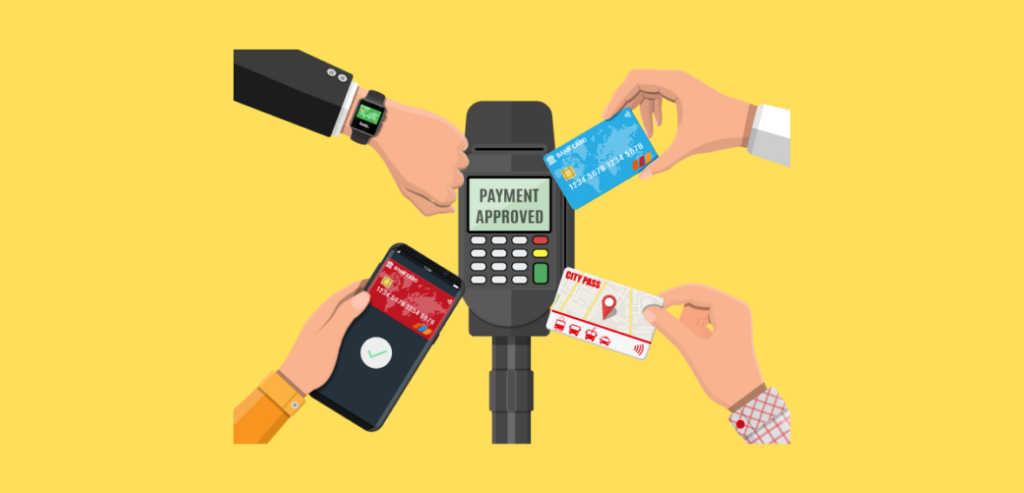
As mentioned, NFC technology enables two NFC-enabled devices to connect when they’re close—typically just a few inches apart—to transmit payment information securely. Two-way encryption sets NFC mobile payments apart from traditional card transactions, making them a significantly more secure option than swiping or inserting a credit or debit card.

The card details are encrypted and sent to the payment terminal when a transaction is initiated. At the same time, the mobile device requires user authentication—such as Face ID, fingerprint recognition, or a passcode—to authorize the transaction. Once verified, the device sends a randomly generated, one-time-use code to the NFC terminal instead of the card number. This tokenization ensures that no usable card data is exposed.

Because the card information isn’t transmitted in a reusable format and the one-time code is rendered useless after the transaction, it’s tough for hackers to intercept or exploit the data. Additionally, the requirement for close-range communication and user authentication means that transactions can’t be triggered accidentally, adding another layer of security and control for both the customer and the merchant.

Top 8 NFC-Enabled Payment Devices Your Business Should Consider

1. Ingenico AXIUM EX8000

top NFC-Enabled Payment Devices - Ingenico AXIUM EX8000

Image source

The Ingenico AXIUM EX8000 is a premium, enterprise-grade mobile payment and commerce solution designed for large retailers and businesses that require robust processing power and high security. Powered by Android 10, this terminal leverages the latest mobile apps from the Ingenico Appstore while offering a comprehensive range of payment methods—from EMV chip and PIN to contactless, magstripe, and even QR-code payments.

The device features a large 6-inch high-definition touchscreen with an ergonomic and visually appealing interface. Thanks to its high resolution and responsive design, it is easy for both staff and customers to navigate through transactions. Under the hood, it is powered by an ARM Quad-core Cortex A53 processor running at 1.3GHz. It also offers enhanced memory options, with up to 3GB RAM and 32GB Flash storage configurations, and support for MicroSD expansion. This ensures smooth and fast transaction processing, effectively minimizing wait times at checkout.

The device supports various connectivity options, including 4G, 3G, GPRS, Bluetooth, and WiFi, guaranteeing reliable performance even in remote locations. It also has integrated NFC capabilities, allowing for tap-to-pay and other digital wallet transactions. Security is a top priority, with the device being PCI PTS v6 compliant and equipped with advanced hardware and software protection. It supports end-to-end encryption to secure sensitive card data and personal information.

Additional features include dual cameras—a 2MP front camera for customer ID verification and an 8MP rear camera for efficient barcode scanning. Its long-lasting 4040mAh battery ensures uninterrupted use throughout long working hours. The device also supports a full range of accessories, such as protective cases and gang chargers, enhancing its adaptability across various business environments.

Who Should Choose the AXIUM EX8000?

The AXIUM EX8000 is a powerhouse for retailers looking to seamlessly extend the digital payment experience across the entire point of sale. Its speed, connectivity, and comprehensive payment support make it ideal for high-volume, enterprise-level environments where efficiency and security are paramount.

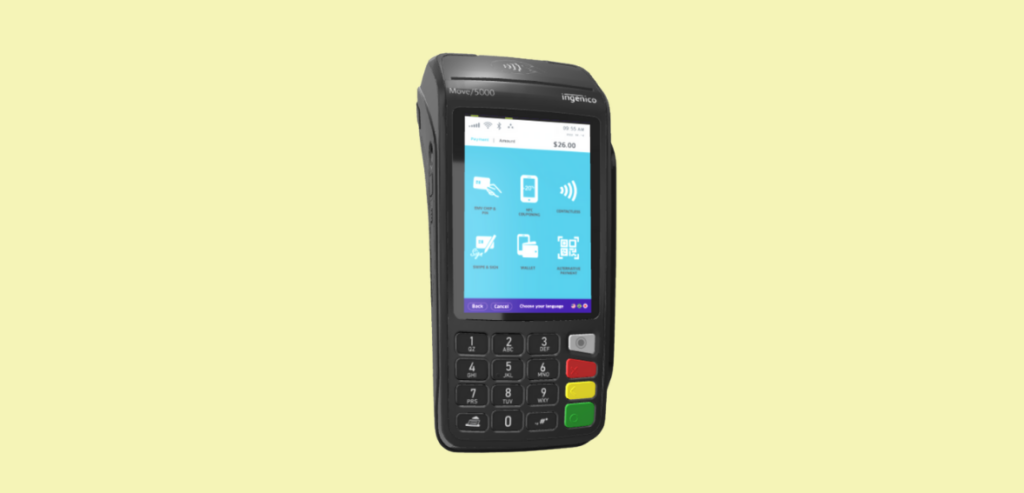
2. Ingenico Move 5000
best NFC-Enabled Payment Devices - Ingenico Move 5000

Image source

Engineered for mobility and versatility, the Ingenico Move 5000 is designed for businesses on the go. Whether used in restaurants, retail outlets, or outdoor pop-up events, this mobile payment terminal provides an elegant and intuitive user experience emphasizing connectivity and ease of use.

The Ingenico Move 5000 has a 3.5-inch color backlit touchscreen featuring an HVGA resolution of 480×320 pixels, providing clear visuals even in low-light settings. Complementing the touchscreen is an intuitive rubber keypad that ensures secure PIN entry and enables quicker transactions.

Running on the reliable Telium TETRA operating system, the device integrates smoothly with Ingenico’s service ecosystem. A Cortex A5 processor powers it and includes 512 MB of Flash and 512 MB of RAM. Support for MicroSD cards allows storage expansion of up to 32GB.

Regarding connectivity, the Move 5000 offers robust wireless options, including WiFi, 4G/LTE, 3G/GPRS, Bluetooth, and dual SIM support, ensuring stable network access and seamless switching between carriers. It also includes integrated GPS functionality, which enhances its effectiveness in mobile and field-based operations.

The terminal supports various payment methods, including EMV chip and PIN, NFC contactless (compatible with Apple Pay, Google Pay, and similar wallets), magnetic stripe, and QR-code-based payments. Optional accessories like a built-in barcode scanner and a high-speed thermal printer make quick and efficient transactions convenient.

The device is powered by a durable lithium-ion battery with a capacity of around 2900mAh, providing enough power to last a full business day. Its rugged design ensures it performs reliably in both indoor and outdoor environments.

Who Should Choose the Move 5000?

The Ingenico Move 5000 stands out for businesses that need the freedom to move without sacrificing functionality. Its seamless connectivity and diverse payment acceptance make it ideal for the hospitality, retail, and mobile service industries.

The option for additional features like a barcode scanner and receipt printer further adds to its value proposition, ensuring that you’re equipped to handle every transaction scenario.

3. Verifone P400
Verifone P400

Image source

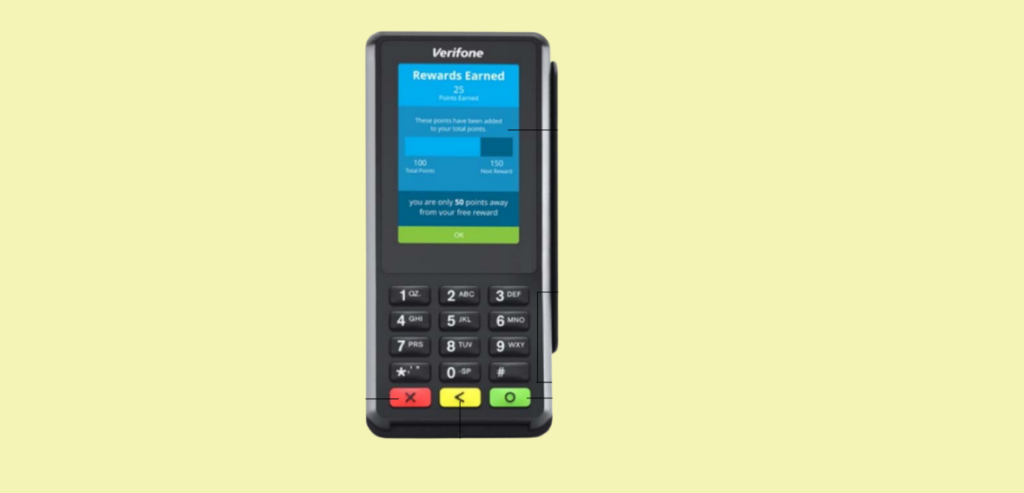
Verifone has long been synonymous with secure and reliable payment solutions. The Verifone P400 is a premium countertop PIN pad designed for a professional environment. Its compact yet feature-rich design caters to various payment methods while ensuring a seamless customer experience.

The Verifone P400 is designed to deliver a seamless payment experience with its 3.5-inch capacitive touchscreen, featuring LED backlighting and a resolution of 320×480 pixels for clear and vibrant visuals. It also includes a tactile, backlit 15-key keypad that enhances usability during manual PIN entry and other input-heavy transactions.

Under the hood, the P400 is powered by a 600 MHz ARM Cortex-A9 processor (1500 MIPS), delivering fast and secure processing performance. It comes with 1024 MB of memory, comprising 512 MB Flash and 512 MB SDRAM, with higher memory configurations available in select models to accommodate more demanding applications.

Connectivity options include Ethernet, USB, and RS232, allowing seamless integration into various point-of-sale systems. The terminal supports a wide range of payment methods with its triple-track magnetic stripe reader, EMVCo-approved smart card reader, and built-in NFC/contactless payment capability, making it compatible with digital wallets and tap-to-pay transactions.

Security is a key strength of the Verifone P400, as it is PCI PTS 5.x approved, ensuring it meets high data encryption and transaction security standards. It runs on a stable and secure Linux-based operating system, further reinforcing its reliability.

Compact in design, with dimensions around 167 mm in length, 80mm in width, and 44mm in height, the P400 is well-suited for countertop setups in fast-paced retail and hospitality environments. Optional accessories like mounting brackets and privacy shields enhance usability and customer privacy.

Who Should Choose the P400?

The Verifone P400 is ideal for businesses that require a reliable and secure countertop payment terminal.

Its robust performance, diverse connectivity options, and comprehensive security features make it a trusted choice for industries that process a high volume of transactions. Whether you are in retail, hospitality, or any environment that values data security and efficiency, the P400 delivers consistently.

4. PAX A920 Mobile Payment Terminal
NFC-Enabled Payment Devices for business - PAX A920

Image source

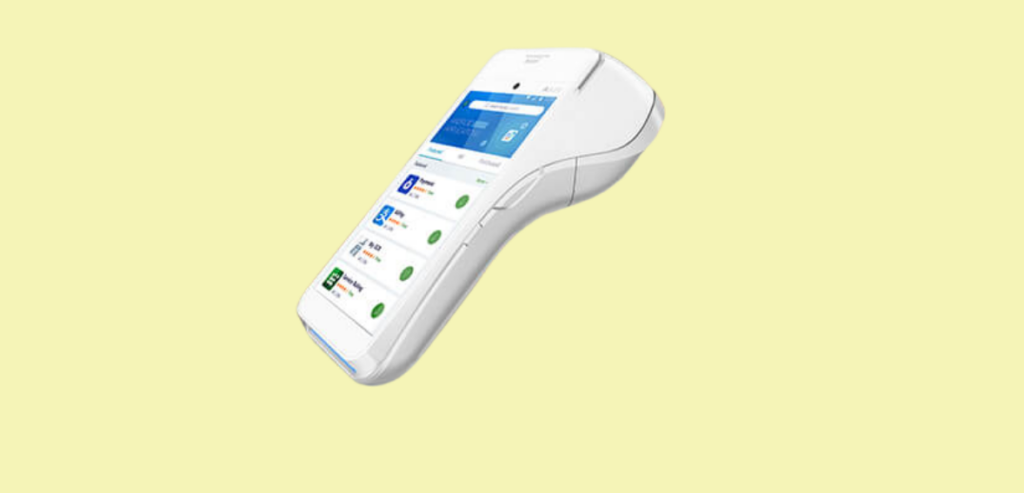
The PAX A920 is a revolutionary mobile payment terminal that merges the functionality of an Android tablet with a dedicated payment device. Its sleek design, powerful performance, and versatile connectivity options make it perfect for in-store and on-the-go transactions. With support for multiple payment methods, the A920 is built to streamline operations and enhance the customer experience.

The PAX A920 mobile payment terminal is designed for both functionality and portability. It features a vibrant 5-inch IPS touchscreen with a 720 x 1280 pixels resolution. Its intuitive interface makes interactions smooth and visually engaging, while its compact and lightweight design—approximately 11.3 oz, including the battery—makes it ideal for on-the-go transactions.

Powered by PAXBiz®, which runs on Android (typically version 7.1 with some models supporting newer updates), the device operates on an ARM Cortex-A7 quad-core processor at around 1.1GHz. It includes 1GB of RAM and 8GB of Flash storage, with the option to expand memory via a MicroSD card slot supporting up to 32GB, allowing for flexibility in handling apps and data.

The A920 supports various payment methods, including EMV chip cards, contactless NFC payments (compatible with Apple Pay, Google Pay, and Samsung Pay), magnetic stripe cards, and even manual key entries. It features integrated dual cameras: a 5MP autofocus rear camera for barcode scanning and a 0.3MP front camera for customer identification or signature capture.

Connectivity is robust, with options including 4G LTE, WiFi, Bluetooth, and short-range wireless communication, ensuring stable performance across various environments. A powerful 5250mAh lithium-ion battery offers an average life of 8 to 10 hours, making it well-suited for a full day of operation without recharging.

Additional features include a high-speed thermal printer capable of printing receipts at 80mm per second, dual SIM slots, and a Micro USB port, enhancing the device’s adaptability across network configurations and business needs.

Who Should Choose the PAX A920?

The PAX A920 is an excellent solution for businesses that demand mobility without compromising on functionality. Its all-in-one design—combining a tablet, payment terminal, and barcode scanner—makes it ideal for diverse environments such as retail stores, restaurants, and service-based industries.

With its robust connectivity and multi-payment support, the A920 ensures that your business can capture every sale, whether you’re in-store or on the move.

5. Dejavoo Z9
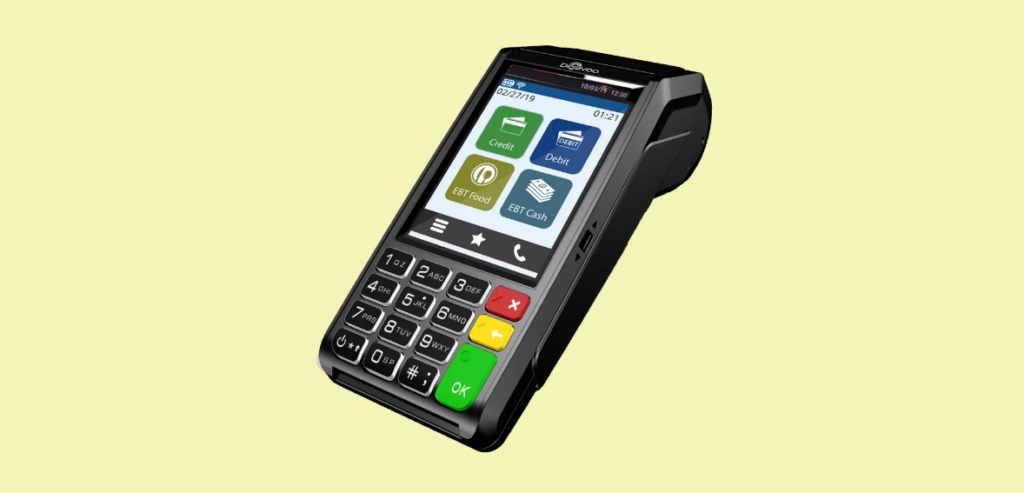
NFC-Enabled Payment Devices for busines- Dejavoo z9

Image source

The Dejavoo Z9 is a versatile, compact wireless payment terminal designed for countertop and mobile business environments. With its robust processing capabilities and wide range of connectivity options, the Z9 stands out as a reliable terminal for businesses looking to accept multiple forms of payment in dynamic environments.

The Dejavoo Z9 is a versatile payment terminal designed for mobility and ease of use. It features a 3.5-inch color TFT-LCD touchscreen with a capacitive touch panel and a 320 x 480 pixels resolution, providing a transparent and responsive interface. A virtual keypad is integrated directly into the touchscreen for secure and seamless PIN entry.

Powered by a 32-bit 400MHz secure microprocessor and running on a Linux-based operating system, the Z9 offers reliable performance for everyday payment processing. It comes with 256MB of Flash memory, 128MB of DDR RAM, and a MicroSD socket for expandable storage—ideal for handling larger transaction volumes or additional applications.

Connectivity is a significant strength of the Z9, offering WiFi, 4G LTE (or 3G/GPRS in some models), Ethernet, and Bluetooth. This wide range of options ensures reliable performance even in areas with inconsistent network coverage, making it suitable for fixed and mobile business environments.

The terminal supports a full suite of payment options, including magnetic stripe cards, EMV chip cards, and NFC payments such as Google Pay and Apple Pay. It also features triple-track magnetic stripe reading for broader compatibility across card types.

Security is robust, with PCI PTS 5—x certification and EMV Level 1/L2 compliance, ensuring secure transaction handling. The device also incorporates advanced encryption and tokenization to protect sensitive cardholder data.

Additional features include a built-in thermal printer capable of printing at speeds between 50 and 100mm per second for fast receipt generation. Its rugged yet compact design—measuring approximately 6.7 inches in length, 3.1 inches in width, and 2.3 inches in height and weighing about 0.74 lbs—makes it an excellent option for countertop and mobile use. An optional dual SIM configuration provides extended network coverage, enhancing flexibility in various operating conditions.

Who Should Choose the Dejavoo Z9?

The Dejavoo Z9 is perfect for businesses that require a compact yet powerful payment solution. Its robust connectivity options and security features make it well-suited for industries such as restaurants (for pay-at-the-table solutions), retail pop-ups, and mobile service providers.

With its versatile payment acceptance and user-friendly interface, the Z9 ensures that transactions can be processed quickly and securely wherever your business takes you.

6. SwipeSimple B350 Card Reader

best NFC-Enabled Payment Devices - SwipeSimple B350

The SwipeSimple B350 Card Reader is a modern, lightweight, and portable device that transforms your smartphone or tablet into a fully functional payment terminal. Designed with small businesses in mind, the B350 offers comprehensive support for various payment methods and features an intuitive design that is easy to use on the go.

The SwipeSimple B350 card reader is designed for portability and durability. Its compact and lightweight design makes it ideal for mobile businesses, while its rugged construction ensures it can handle the wear and tear of daily operations in dynamic environments.

This device supports various payment methods, including EMV chip cards, NFC contactless payments (such as Apple Pay and Google Pay), and traditional magnetic stripe cards. It pairs effortlessly with iOS and Android devices via Bluetooth Low Energy (BLE), offering a fast and reliable connection. Additionally, it supports WiFi connectivity, making it versatile enough to adapt to various business setups.

The B350 has a long-lasting rechargeable battery that can handle hundreds of transactions on a single charge, making it dependable for high-traffic days. It integrates seamlessly with the SwipeSimple mobile app, known for its intuitive and user-friendly interface. Setup is simple and requires little technical expertise, allowing users to begin accepting payments quickly.

Optimized for fast and secure transactions, the B350 also supports features like cash discount pricing and easy firmware updates through the app. It’s compatible with a variety of third-party software solutions, making it a valuable tool for payment processing, inventory management, and customer management.

Who Should Choose the SwipeSimple B350?

The SwipeSimple B350 Card Reader is an excellent choice for small businesses and mobile vendors who need an affordable yet robust payment solution.

Its ease of use, broad payment compatibility, and reliable wireless connectivity make it a favorite among entrepreneurs looking to simplify their point-of-sale operations without sacrificing security or functionality.

7. Square Reader for Contactless and Chip (2nd Generation)

Square has become a household name in the payment processing industry, and the Square Reader for Contactless and Chip (2nd generation) is one of its standout products. This compact, sleek reader is designed for businesses that value simplicity, affordability, and the ability to accept multiple forms of payment—all without the need for cumbersome cables or constant pairing.

The Square Reader for Contactless and Chip (2nd Generation) is a sleek, glossy white device that combines elegance with durability. Designed to be compact and pocketable, it’s ideal for mobile businesses, while its ergonomic form ensures a comfortable and secure grip during use.

This updated reader supports modern payment methods, accepting EMV chip cards through dipping and contactless payments via Apple Pay, Google Pay, and other NFC-enabled wallets. Unlike earlier magstripe-only models, this generation is built to handle today’s faster and more secure transaction standards.

The device connects wirelessly to iOS and Android devices via Bluetooth Low Energy (BLE), maintaining a stable connection throughout the day without frequent re-pairing. Its built-in battery is designed to last through busy workdays and can even support offline transactions for up to 24 hours, ensuring uninterrupted service even without WiFi access.

Seamlessly integrated with the free Square Point of Sale app, the reader provides powerful business tools, including inventory management, tipping options, customer analytics, and real-time reporting. Automatic software updates ensure the device stays current with the latest features and security enhancements.

The Square Reader is extremely user-friendly, with intuitive LED indicators to guide the setup and charging process. Its flat-rate pricing model, with no monthly fees, makes it especially appealing for small businesses and startups looking for a simple, reliable payment solution.

Why Choose the Square Reader for Contactless and Chip?

The Square Reader for Contactless and Chip (2nd generation) is hard to beat for businesses looking for a reliable, user-friendly, cost-effective payment solution. Its ability to accept a wide range of payment types and its seamless integration with the Square ecosystem ensure you can capture every sale with minimal fuss.

Whether you’re a retail store, a food truck, or a service provider, this reader helps keep your transactions secure and your operations smooth.

8. Payanywhere NFC-Enabled Reader

Payanywhere offers a suite of payment devices tailored to modern business needs, and its NFC-enabled reader is a standout product. Designed to transform any smartphone or tablet into a full-featured point-of-sale terminal, the Payanywhere NFC-Enabled Reader supports a variety of payment methods while integrating with a robust online merchant portal.

The Payanywhere NFC-Enabled Reader is a lightweight and compact device built for portability, making it an excellent choice for mobile businesses and service providers. It pairs effortlessly via Bluetooth with iOS and Android devices, allowing for a quick and seamless setup process.

This reader supports all primary payment methods, including magstripe, EMV chip cards, and NFC contactless payments such as Apple Pay, Google Pay, and Samsung Pay. Its integration with the Payanywhere platform also accommodates more advanced payment functions like split payments, pre-authorizations, and discounts, offering flexibility for a wide range of business needs.

Connectivity is reliable, with Bluetooth and optional WiFi capabilities enabling real-time transaction processing from virtually any location. A robust battery supports extended usage, making it ideal for businesses constantly on the move.

The reader integrates smoothly with the Payanywhere mobile app and merchant portal, known as “Payanywhere Inside,” which provides access to reporting, invoicing, and customer management tools. Security is a top priority, with built-in encryption and tokenization technologies safeguarding every transaction.

Designed to work with existing hardware and software setups, the reader offers an easy upgrade path for businesses looking to expand their payment options without major infrastructure changes. With no monthly hardware fees and a competitive transaction-based pricing model, it’s a cost-effective solution that grows with your business.

Why Choose the Payanywhere NFC-Enabled Reader?

The Payanywhere NFC-Enabled Reader is an excellent option for small-to-medium businesses looking for an all-in-one payment solution. Its versatility in accepting various payment methods—combined with the robust backend support provided by the Payanywhere platform—ensures you have a complete and secure solution for managing in-person and online sales.

Its ability to pair with existing mobile devices and seamless integration with comprehensive business management tools make it a great choice for any modern enterprise.

Conclusion

Today, offering secure, convenient, and flexible payment options is no longer a luxury—it’s a necessity. NFC-enabled payment devices provide a robust solution by combining speed, reliability, and advanced security features that protect both businesses and customers. From compact mobile readers to full-featured countertop terminals, the range of options available today ensures that every business—whether a pop-up shop, a food truck, or a multi-location retail chain—can find a device that fits its needs.

The eight NFC-enabled devices featured in this guide stand out for their innovation, ease of use, and adaptability across various business environments. With enhanced encryption, faster transaction times, and seamless integration with modern POS systems, investing in an NFC-capable terminal is wise for businesses looking to future-proof their payment infrastructure. As contactless payments continue to grow in popularity, choosing the correct device today means you’re ready for the evolving expectations of tomorrow’s customers.
Federal credit cards

DOGE Has Terminated 300,000 Federal Credit Cards Following the Implementation of Spending Limits

DOGE, or the Department of Government Efficiency, is in full action, taking significant steps to streamline operations by restricting or fully deactivating Federal credit cards designated for travel and procurement purposes across multiple agencies.

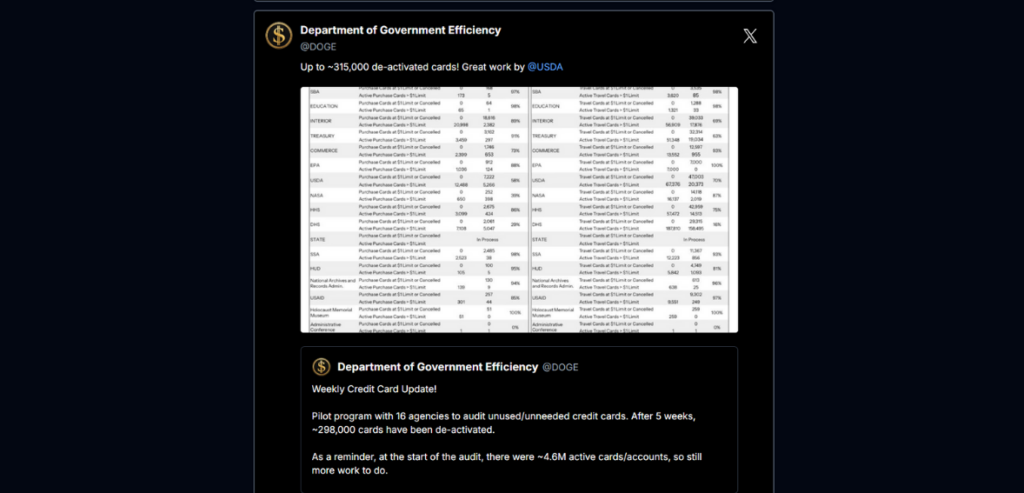
As of last week, DOGE reported (via X) that 298,903 credit cards had either been reduced to a $1 limit or entirely disabled. These include 35,493 procurement-related cards and 263,410 travel-related cards.

The restrictions have impacted numerous independent agencies, such as the Office of Personnel Management, General Services Administration, Environmental Protection Agency, Small Business Administration, NASA, and Social Security Administration. Several Cabinet-level departments have been affected, including Homeland Security, Labor, Agriculture, Interior, Education, Treasury, Commerce, State, Health and Human Services, and Housing and Urban Development.

To date, DOGE has completed audits on 55,587 purchase cards and 501,798 travel cards, with the current restrictions affecting more than half of the audited cards. However, this is only the initial phase of DOGE’s ongoing initiative, as the department ultimately plans to audit approximately 4.6 million federal credit cards spanning various agencies and departments.

Key Takeaways
  • DOGE has disabled or severely restricted approximately 300,000 federal credit cards (263,410 travel and 35,493 purchase cards) to curb unnecessary government spending.
  • Affected agencies include NASA, the Environmental Protection Agency, and various Cabinet-level departments such as Agriculture, Interior, Health and Human Services, and Homeland Security, prompting them to reassess internal spending practices.
  • DOGE has audited over 550,000 credit cards to date, with the current limitations impacting over half of these audited cards. The department plans further audits across nearly 4.6 million government-issued credit cards.
  • Supporters see this initiative as crucial for fiscal accountability, while critics express concerns over potential disruptions to agency operations and essential public services. The exact savings for taxpayers are not yet known.

DOGE Deactivates 300,000 Government Credit Cards in Federal Spending Crackdown

​In a decisive move to curb federal expenditures, the Elon Musk-backed DOGE has deactivated approximately 300,000 government-issued credit cards. This action aligns with the administration’s broader strategy to enforce stringent spending limits across federal agencies. ​

DOGE Deactivates 300,000 Federal Credit Cards

Image source

DOGE’s recent initiative targeted purchase and travel cards across multiple federal agencies. Specifically, over 263,000 travel cards and more than 35,000 purchase cards were either canceled or had their spending limits reduced to $1. This measure is part of a pilot program involving 16 agencies to audit and eliminate unused or unnecessary credit cards.​

The primary objective of this mass deactivation is to identify and eliminate wasteful spending within the federal government. By scrutinizing and reducing the number of active government credit cards, DOGE aims to enhance fiscal responsibility and ensure that taxpayer dollars are utilized effectively. Elon Musk emphasized that such audits are just the beginning of a comprehensive effort to streamline government operations and reduce unnecessary expenditures. ​

As mentioned, deactivating these credit cards has significant implications for various federal agencies. For instance, the Department of the Interior saw 18,636 purchase cards affected, while the Department of Agriculture had 47,003 travel cards canceled or limited. Similarly, the Departments of Health and Human Services and the Department of the Interior experienced limitations on 42,959 and 39,213 travel cards, respectively. ​

These changes have prompted agencies to reassess their spending practices and implement more stringent expenditure controls. While the immediate effect may be increased administrative adjustments, the long-term goal is encouraging accountability and efficiency within federal operations.​

The initiative has garnered mixed reactions from various stakeholders. Supporters argue that it is a necessary step toward reducing government waste and promoting fiscal discipline. They believe that such measures will lead to more transparent and responsible use of public funds.​

DOGE deactivates government credit cards

Conversely, critics contend that the abrupt deactivation of a large number of credit cards could hinder the daily operations of federal agencies. They express concerns about potential disruptions in procurement processes and delays in essential services. Additionally, some view this move as part of a broader pattern of aggressive cost-cutting measures that may overlook the nuanced needs of various government departments. ​

The exact savings to taxpayers resulting from these cancellations remain uncertain. According to DOGE, approximately 4.6 million government-issued credit cards were involved in 90 million individual transactions, amounting to roughly $40 billion in expenditures during fiscal year 2024.

This action by DOGE is part of a series of measures to overhaul government spending practices. The administration has previously implemented spending freezes and imposed stringent limits on government-issued credit cards. Furthermore, the administration has sought to centralize payment systems and increase transparency in government expenditures. An executive order mandated federal agencies to establish centralized systems to record and justify all payments, aiming to enhance accountability and reduce opportunities for waste and fraud. ​

Last month, Elon Musk spoke at former President Donald Trump’s inaugural Cabinet meeting, highlighting DOGE’s goal to identify $1 trillion in savings to reduce America’s nearly $36.5 trillion national debt significantly.

Musk specifically criticized the approximately $2 trillion annual deficit, warning that the United States “simply cannot sustain” such massive borrowing levels.

Musk cautioned, “If this trend continues, the country risks becoming effectively bankrupt.” He emphasized that DOGE was not merely an optional measure but a crucial element for meaningful economic reform.

Over the weekend, DOGE revealed a concerning discovery involving millions in questionable loans. The agency found that nearly 5,600 loans, totaling about $312 million, were issued by the Small Business Administration (SBA) to recipients whose sole listed owner was 11 years old or younger at the time. These loans, distributed during 2020 and 2021 amidst the COVID-19 pandemic, raise serious questions regarding their legitimacy and intended purpose.

About DOGE

About DOGE

​The Department of Government Efficiency (DOGE) is a federal initiative established by President Donald Trump through Executive Order 14158 on January 20, 2025. This department was created to implement the President’s agenda of modernizing federal technology and software to maximize governmental efficiency and productivity. Elon Musk, appointed to lead DOGE, has been instrumental in driving its mission to streamline government operations and reduce unnecessary expenditures. ​

DOGE’s approach involves embedding specialized teams within federal agencies to audit and optimize operations. These teams, known as “DOGE Teams,” consist of professionals such as engineers, human resources specialists, and attorneys. They are tasked with reviewing existing contracts, grants, and internal processes to identify areas where spending can be reduced or reallocated to promote efficiency. This initiative reflects a commitment to enhancing transparency and accountability in government spending, ensuring that taxpayer dollars are utilized effectively.

Conclusion

The DOGE’s large-scale deactivation of nearly 300,000 federal credit cards marks a significant step in its effort to curb unnecessary government spending. DOGE aims to promote fiscal responsibility and enhance transparency in federal operations by limiting or disabling travel and procurement cards across multiple agencies.

While the initiative has already impacted many agencies, it is only the beginning of a broader campaign to audit and streamline the government’s financial practices. With plans to review millions of federal credit cards, DOGE is positioned to reshape spending protocols further and enforce stricter financial controls.

Though the long-term savings and operational impacts remain, this move signals a firm commitment to reducing waste and ensuring more accountable use of taxpayer dollars.

POS Tech Trends

Point of Sale Technologies to Watch in 2025

As we enter 2025, point-of-sale (POS) systems—the tools businesses use to complete sales transactions—are evolving quickly. Modern POS platforms are no longer cash registers; they are smart, connected hubs that blend hardware and software innovations. From a bustling retail boutique to a popular restaurant (and even hospitals and hotels), POS technology is shaping customer experiences and streamlining operations.

In this blog, we’ll explore the top POS tech trends to watch in 2025, focusing on the retail and restaurant sectors and how other industries like healthcare, hospitality, and service businesses are embracing them. Each trend is backed by insights from recent reports and expert articles, highlighting how these technologies boost customer convenience, business efficiency, and revenue.

Top 8 POS Tech Trends to Watch in 2026

Cloud-Based POS Systems Go Mainstream

top POS Tech Trends - Cloud-Based POS

In 2025, cloud-based POS systems have moved from cutting-edge to the new normal. Unlike traditional on-site POS that locks data in a back-office server, cloud POS solutions securely online store sales and inventory information – accessible from anywhere. This means a store manager can check real-time sales across multiple locations, or a restaurant owner can update the menu on all terminals from home.

It’s no wonder analysts predicted cloud POS would dominate the market by 2025​. The global cloud POS software market was valued at $2.24 billion in 2020 and is on track to reach $13+ billion by 2028​, reflecting how rapidly businesses embrace this flexibility.

But why are cloud POS systems so popular? Key advantages include:

  • Remote management and real-time updates: Owners can monitor sales, inventory, and even employee performance across all stores in real time from any device with internet access. For example, Shake Shack uses a cloud POS to manage orders and inventory consistently across its global outlets​.
  • Lower upfront costs and easy setup: Cloud POS often works on off-the-shelf hardware (like tablets or PCs) with software as a service. Businesses can install an app or use a web browser​to avoid expensive dedicated terminals. Instead of hefty upfront fees, many cloud POS charge a subscription, allowing even small retailers to access advanced tools without breaking the bank.
  • Automatic updates and scalability: Because everything runs through the cloud, software updates roll out automatically, and adding a new store or terminal is plug-and-play. The system grows with your business, whether you’re a single boutique or a fast-growing franchise.

All of this translates to efficiency. Retailers and restaurants using cloud POS spend less time on IT maintenance and more time serving customers. And it’s not just retail and dining—hospitality venues and even healthcare providers appreciate cloud POS for multi-location coordination. A hotel group can oversee all its property gift shops centrally, and a healthcare clinic network can ensure consistent billing processes across offices. With cloud systems projected to make up over half of the POS market by mid-decade​, it’s clear this trend is here to stay.

Mobile POS Puts Sales in the Palm of Your Hand

top POS Tech Trends 2025 - Mobile POS

Mobility is another huge theme in 2025’s POS trends. Mobile POS refers to using tablets or smartphones as checkout devices, freeing staff from the fixed cashier counter. This has been a game-changer in retail and food service. Imagine a clothing store associate who can check you out on a tablet right in the aisle or a restaurant server using a handheld device to take orders and payments tableside – no more running back and forth. This convenience is boosting both customer satisfaction and sales. According to one industry survey, 43% of businesses not already using mobile POS planned to deploy POS software on mobile devices​, highlighting strong interest in going cordless.

Tablets and handheld printers turn anywhere in a store or restaurant into a checkout counter, as seen with this tablet POS showing real-time sales insights. Mobile POS devices like these give staff flexibility and instant access to data, improving service speed. Retail giants and small shops alike are adopting mobile POS.

Apple Stores famously armed employees with iPhones to ring up customers anywhere in the store years ago. Everyone from big-box retailers to local boutiques is doing the same to eliminate checkout lines. In restaurants, mobile POS (like Toast’s popular handhelds for waitstaff) let servers swipe cards or tap phones right at the table, so diners never have to flag someone down for the bill. This speeds up table turn times and often increases sales. Restaurants that use mobile ordering and payment systems have seen a 9% boost in average check size​ – likely because it’s so easy for customers to add that extra item or dessert on a device.

Faster service and small upsells mean higher revenue and tips, a win-win for businesses and staff. Other industries are taking note. Hospitality venues use mobile POS for pop-up bars at events or poolside service at resorts. Healthcare providers are beginning to use tablets for bedside bill payment and check-out, bringing the payment process to the patient for comfort and speed. And many service businesses – from salon stylists to food trucks – rely on a phone or tablet with a card reader (think Square or Clover mobile readers) to take payments on the go.

The mobile POS terminals market was valued at around $36 billion in 2024 and is projected to triple by 2030​, reflecting how ubiquitous this tech is becoming. In short, cutting the cord from the cash register lets businesses bring the checkout to the customer, wherever they are, and that convenience is driving higher satisfaction and sales.

Contactless Payments Become the Norm

POS Tech Trends 2025 - Contactless Payments

Contactless payments, such as tap-to-pay cards and mobile wallets like Apple Pay and Google Pay, have become the norm. Once a novelty, they are now expected at most POS terminals. Shoppers appreciate the speed and convenience, while businesses benefit from faster checkouts. For example, Starbucks uses NFC-enabled POS readers, allowing customers to pay by tapping their phone or smartwatch, reducing wait times during busy hours.

This trend extends beyond retail and dining. In 2024, 92% of US consumers used some form of digital payment, a record high. Hospitals and clinics have adopted the technology, letting patients check-in or pay bills by tapping their phones or scanning a QR code, reducing paperwork and wait times. In hospitality, flexible payment options are now a deciding factor—55% of travelers won’t book a hotel if their preferred payment method isn’t available.

Both customer demand and improved accessibility drive the widespread use of contactless payments. Most new POS terminals include NFC readers, and providers like Square, Clover, and Shopify POS offer built-in contactless capabilities, making it easy for small businesses to accept digital payments. Security is also strong, with encrypted tokenization protecting customer data.

With contactless payments handling a growing share of transactions, businesses that don’t offer them risk falling behind. Accepting digital wallets and tap cards is now essential for meeting customer expectations and staying competitive.

AI-Powered Analytics Deliver Smarter Insights

POS Tech Trends of 2025 - AI-Powered Analytics

Artificial intelligence is making POS systems brainier. AI-powered analytics in POS software means the system doesn’t just record sales – it can learn from them. Retailers and restaurants increasingly use AI and machine learning to analyze the troves of data coming through their POS. This trend is transforming everything from inventory management to personalized marketing.

A survey revealed that 71% of restaurant owners utilize data from their Point of Sale systems to enhance menus, simplify payment processes, and increase digital interaction with customers. In other words, businesses are hungry for data-driven decision-making, and POS systems are serving it up. What can AI do at the point of sale? A lot, it turns out. Here are some powerful examples of how AI analytics are being applied:

  • Demand forecasting & inventory optimization: By analyzing past sales patterns, seasonal trends, and even factors like weather, AI-enabled POS can forecast demand so businesses stock the right products in the right quantities. This is huge for restaurants and retailers looking to reduce waste and avoid running out of popular items. With AI insights, a cafe might notice iced coffee sales spike during unexpected warm weeks and adjust inventory accordingly​. A clothing store can predict which styles will be hot sellers next month and pre-stock sizes.
  • Personalized promotions & customer insights: Modern POS systems often link with loyalty programs, allowing AI to crunch an individual’s purchase history and preferences. The system can then recommend tailored promotions – for instance, offering a discount on a customer’s most-purchased brand or printing a coupon for dog treats on a pet shop receipt if you frequently buy pet food. Sephora has experimented with AI-driven POS that analyzes buying patterns and suggests custom offers, which drives sales and boosts customer satisfaction through personalization​.
  • Operational efficiency & staffing: AI analytics help managers see patterns humans might miss. For example, a fast-food chain’s POS data might reveal that certain hours consistently have spikes in drive-thru orders. The AI can suggest optimal staffing schedules or dynamic menu adjustments (promoting quicker-to-make items during peak times). It can also flag anomalies, like an unusual string of voided transactions that could indicate a training issue or fraud.

Crucially, AI is not just for retail giants. Thanks to cloud POS and user-friendly software, even independent businesses can tap into advanced analytics without a data science team. Companies like Square and Lightspeed build analytics dashboards into their POS offerings, showing key metrics and trends with a click. Many small businesses already rely on these: about 50% of small businesses say the analytics and reporting in their POS system is integral to their operations​.

And industries beyond retail are leveraging AI insights too. Hotels use POS-linked AI to analyze guest spending and refine their services. Healthcare providers might use AI analytics to spot billing patterns or clinic patient flow inefficiencies. The common thread is that AI-driven POS systems turn raw transaction data into actionable intelligence. In 2025, adopting AI in POS is less about sci-fi and more about staying competitive, as those who leverage these “smart” insights can optimize their offerings, cut costs, and better delight their customers​.

Smart POS Hardware and the IoT Revolution

Best POS Tech Trends of 2025 - Smart POS Hardware

POS hardware is evolving in 2025, moving away from bulky cash registers and multiple devices to streamlined, all-in-one systems and IoT-connected gadgets. Modern setups include sleek touchscreen terminals, handheld card readers, self-service kiosks, and smartwatches or voice assistants handling orders. This shift reduces counter clutter and adds new functionality at the point of sale.

A key trend is hardware consolidation. Companies like Square, Clover, and Lightspeed offer all-in-one systems that combine ordering, payments, receipts, and loyalty programs into a single device. For example, Square Register and Clover Station feature a large customer-facing display, built-in card reader, receipt printer, and cash drawer in one unit. This reduces the need for multiple devices, making maintenance simpler. Smaller merchants can use a single iPad with a portable receipt printer or go paperless by emailing receipts. This is especially useful for restaurants and hotels where counter space is limited.

Self-service kiosks and customer-facing screens are also becoming more common. Fast-food chains like McDonald’s use touchscreen kiosks that let customers independently place and pay for orders, reducing wait times and improving accuracy. Retailers are adding screens at checkout that display real-time pricing and allow customers to enter loyalty information or request email receipts, making transactions more transparent.

Beyond the counter, IoT integration is expanding POS capabilities. Smart scales and RFID scanners automatically add items when weighed or scanned to the sale, which is ideal for grocery and retail. In restaurants, kitchen display systems (KDS) sync with the POS to instantly show orders on a screen, eliminating the need for paper tickets. Some stores test sensors that track product movement and update inventory in real-time. Unattended POS systems, like Amazon’s Just Walk Out stores, use cameras and sensors to detect items taken by customers, automatically processing the transaction.

New POS hardware is also more user-friendly and durable. Touch interfaces replace complex keypads, and mobile device management (MDM) tools allow businesses to monitor and update devices remotely. The result is faster checkouts, fewer technical issues, and more flexible service options, like self-service or mobile checkout. For customers, it means quicker, smoother transactions without the frustration of outdated hardware.

Biometric Authentication Enhances Security and Speed

 POS Tech Trends of 2025 - Biometric Authentication

As cybersecurity concerns grow, POS systems increasingly adopt biometric authentication—using fingerprints, facial recognition, palm scans, or other biological traits—to secure transactions and improve efficiency. What once seemed futuristic, like paying with a fingerprint or unlocking a register with facial recognition, is quickly becoming standard. By 2025, security experts predict biometrics, encryption, and tokenization will be essential for protecting customer data.

Biometrics adds a layer of verification that is difficult to fake, making transactions safer and faster. Amazon’s palm-scanning payment system, Amazon One, is a prominent example. By the end of 2023, all 500+ Whole Foods Market stores in the U.S. offered palm payment, allowing customers to pay by hovering their hand over a scanner. The system links the palm signature to a credit card and loyalty account, automatically applying Prime discounts. Amazon encrypts the palm data for security, and the widespread adoption of this technology highlights the growing role of biometrics in everyday commerce.

Fingerprint and facial recognition payments are also gaining traction. Many payment apps and POS systems let customers authenticate purchases using their phone’s biometric security instead of a PIN. On the merchant side, biometrics can control access to prevent fraud. For example, restaurants can require a manager’s fingerprint to approve voided transactions or open the cash drawer, replacing easily shared or guessed PIN codes. Biometric authentication also speeds up the process, reducing the time spent on password entry.

Beyond retail, industries like hospitality and healthcare are exploring biometrics for identity verification and payments. Some hotels use facial recognition for faster check-ins and room access, with payment cards linked to guest profiles. Gyms and spas may use fingerprint or vein scanners for membership check-in and service payments. In healthcare, biometrics help confirm patient identities, which could eventually extend to bill payments or pharmacy pickups.

Biometric POS solutions offer both security and convenience. They reduce the risks of stolen PINs, lost cards, or unauthorized employee activity. When properly implemented, they also make transactions faster and more seamless—effectively turning a customer’s physical traits into the payment method. However, privacy concerns remain, and businesses must handle biometric data carefully and transparently. Still, as the technology matures, biometric payments are expected to become more common, particularly in settings where speed and security are critical.

Blockchain and Crypto Find a Niche in POS

Blockchain technology is starting to influence POS systems, offering secure, tamper-proof transaction records and new payment options. While still emerging, its presence is expected to grow in 2025, particularly in crypto payments, loyalty programs, and data security.

One area where blockchain adoption is seen is cryptocurrency payments. Payment providers like BitPay and NOWPayments offer crypto POS solutions that let brick-and-mortar stores accept Bitcoin or Ethereum. Customers can pay using their crypto wallets, while merchants receive the equivalent in local currency, avoiding the risk of crypto volatility. Though not yet mainstream, some tech-savvy retailers, restaurants, and hotels are adding crypto payment options to attract digital currency users and position themselves as innovators. As regulations around crypto evolve, more businesses may follow suit.

Beyond payments, blockchain is improving loyalty programs. Traditionally, reward points are tracked in centralized databases, but blockchain enables points to be securely managed and even transferred between partners. For example, in the future, customers could convert coffee shop points into airline miles if both programs run on interoperable blockchain tokens. Blockchain’s transparency also makes auditing and preventing fraud in complex systems, such as multi-location franchises or vendor marketplaces, easier.

In healthcare, blockchain is being tested for payments and insurance claims. A shared blockchain ledger could let patients, providers, and insurers track claims and costs in real-time, with smart contracts automatically releasing payments when conditions are met. This could reduce errors and streamline the often slow, complex billing process. In retail, similar systems could be used for supply chain payments or vendor commissions, ensuring accuracy and reducing disputes.

For most businesses, blockchain’s impact in 2025 will be subtle. Customers may not even realize it’s being used behind the scenes. However, companies are already testing blockchain-based gift cards, cross-border payments, and fraud prevention measures. Because blockchain records are encrypted and distributed, they are harder to tamper with, offering added security. For example, logging each POS transaction on a blockchain could help detect and deter unauthorized changes.

While blockchain won’t replace traditional POS systems anytime soon, it is quietly making transactions more secure, transparent, and flexible—especially in crypto payments and loyalty management areas.

Omnichannel Integration for a Unified Experience

In 2025, omnichannel integration is becoming essential for businesses, linking online and offline experiences into a unified shopping journey. Modern POS systems play a key role by syncing with e-commerce platforms, mobile apps, and third-party services, ensuring customers can move seamlessly between channels.

For example, retail stores with omnichannel POS can support services like “buy online, pick up in-store” (BOPIS). When a customer reserves an item online, the system automatically updates the inventory and prepares the product for pickup. In-store, the POS retrieves the order with a quick scan or reference number, processes the payment, and ties it to the customer’s profile. Target uses this approach, allowing customers to pick up online orders in-store or return online purchases at physical locations. The POS handles refunds and updates stock levels across both channels in real-time.

Restaurants also embrace omnichannel POS to manage dine-in, takeout, and delivery orders from one system. By integrating with delivery apps, the POS ensures accurate order tracking, prevents double bookings, and correctly applies loyalty points regardless of how the order was placed. Many restaurants also link table reservations to their POS, so when guests check in, their table is pre-assigned, and any orders are automatically connected to their reservation. According to industry surveys, nearly half of restaurateurs aim to upgrade their POS for better omnichannel functionality.

Other industries benefit from this integration as well. In hospitality, hotel POS systems sync with property management software, allowing guests to charge restaurant meals, spa services, or gift shop purchases directly to their rooms. Salons and service businesses connect their POS with online booking systems, ensuring that when customers pay in-store, their profile is updated with the service history, and receipts are sent digitally. Even in healthcare, clinics use omnichannel POS setups to let patients pay bills online or at a kiosk, with all records updated instantly across systems.

The impact on customer experience is significant. Omnichannel POS systems prevent frustrating disconnects, such as being told, “Our online system is separate—we can’t look up your order here.” Instead, customers enjoy flexibility, whether they want to shop online, in-store, or mix the two. For businesses, this integration improves efficiency, prevents lost sales by locating out-of-stock items across locations, and enables better marketing. For example, if a customer abandons their cart online, the POS can trigger a reminder at checkout during their next store visit.

Conclusion

As we move through 2025, point-of-sale technology is becoming more innovative, faster, and adaptable. From cloud-based systems enabling real-time management to mobile POS devices putting sales in employees’ hands, the focus is on convenience and efficiency. Contactless payments have become the standard, while AI-powered analytics are helping businesses make smarter, data-driven decisions. Meanwhile, innovations like biometric authentication and blockchain enhance security and expand payment options.

For businesses, keeping up with these POS trends is no longer optional—it’s essential for staying competitive. Whether a minor retailer upgrades to a mobile-friendly POS or a large restaurant chain uses AI to optimize operations, leveraging these technologies helps improve customer experiences, streamline processes, and boost revenue. As POS systems evolve, businesses that embrace these innovations will be better positioned to meet the demands of a rapidly changing marketplace.

Payment Trends in Healthcare

Payment Trends in Healthcare for 2025

Healthcare payments evolve rapidly as technology advances, policies change, and patient expectations grow. In 2025, providers, payers, and patients are all navigating new ways to handle medical bills and reimbursements.

Below, we explore the top payment trends in healthcare – from digital wallets and blockchain to shifting insurance models, new regulations, changing patient behaviors, and innovations in billing through automation and AI. The goal is to demystify these trends in a conversational, easy-to-understand way.

Top Payment Trends in Healthcare

Digital Payment Solutions Are Becoming Mainstream

Payment Trends in Healthcare 2025 - Digital Payment

Digital payment methods – from contactless card readers to smartphone apps – are becoming increasingly common at clinics and hospitals. The COVID-19 pandemic accelerated contactless payments in healthcare, and that momentum continues into 2025. Whether tapping a phone or card at the front desk or paying a bill through a mobile app, patients now expect the same convenient payment options in healthcare that they use in retail.

92% of U.S. consumers reported using some form of digital payment in 2024, an all-time high​. Healthcare providers are catching up to this consumer trend by offering tap-to-pay, mobile wallets, and online bill-pay options. One significant development is the rise of digital wallets and mobile payments for medical bills. Many patients prefer to pay electronically instead of mailing checks or filling out paper forms. Nearly three-quarters of consumers (73%) say they prefer to pay medical bills online​, and digital wallets (like Apple Pay, Google Pay, PayPal, or Venmo) are surging. Globally, digital wallet transactions are projected to grow 73% between 2024 and 2029​.

In the U.S., almost half of consumers (48%) have used a digital wallet in the past 90 days, a jump of 12 percentage points from the previous year​. We can expect more hospitals and clinics to let patients pay by scanning their phone or clicking a link, eliminating the need to handle cash or physical cards. These methods offer speed and convenience, and they come with multi-layered security (like tokenization, which replaces card numbers with encrypted tokens) to protect patient financial data​.

Another cutting-edge trend is the exploration of blockchain technology for healthcare payments. Blockchain – a secure, decentralized ledger – has the potential to make transactions more transparent and tamper-proof. In the insurance industry, the blockchain market is expected to grow about 60% in 2025, reaching $3.11 billion​, and healthcare is starting to follow suit. Blockchain can streamline claims processing by providing a shared, real-time view of the claim status for all parties​. This means providers, insurers, and patients could track payments and approvals instantly, reducing back-and-forth phone calls and errors.

Smart contracts (self-executing agreements on a blockchain) are also being tested to automate payments – for example, automatically releasing funds to a provider once a claim meets specific criteria​. By locking each transaction into an immutable ledger, blockchain helps prevent fraud and duplicate billing​. While still emerging, these technologies promise a more secure and efficient payment process in the future.

Shifts in Insurance Reimbursement Models

top Payment Trends in Healthcare 2025 - Insurance Reimbursement

Paying for healthcare isn’t just about patients handing over a credit card – a huge part of the system is how insurance companies reimburse providers. In 2025, we see a continued movement from the traditional fee-for-service model (where providers are paid for each test or visit) toward value-based care models that reward better outcomes and cost-efficiency. The U.S. government and private insurers alike have been pushing this transition. The Centers for Medicare & Medicaid Services (CMS) aims to have all Medicare beneficiaries in value-based care arrangements by 2030​.

Progress is being made: as of 2024, 54% of Medicare beneficiaries were enrolled in Medicare Advantage plans (managed care), up from previous years​. Medicare Advantage and similar programs often use capitated payments or bonuses for quality, incentivizing providers to focus on preventive care and avoid unnecessary procedures.

Beyond Medicare, many private payers and health systems are experimenting with hybrid payment models. For example, accountable care organizations (ACOs) and bundled payment programs pay providers a set amount for managing a patient’s care for a specific condition or period. These models will continue to expand in 2025, covering areas from primary care to specialty procedures. CMS is rolling out new initiatives like the GUIDE model for dementia care, introducing payments for care planning and caregiver education that weren’t reimbursed​.

The idea is to pay for the overall management of a condition, not just discrete visits, thereby improving patient outcomes and potentially lowering costs in the long run. Another notable shift is the normalization of telehealth and remote care reimbursement. After the telehealth boom during the pandemic, insurers have been adjusting their payment policies. Medicare and other payers temporarily allowed broad telehealth coverage; many flexibilities have been extended through 2024 and into 2025​.

For instance, Medicare beneficiaries can continue to have telehealth visits from home (not just in rural areas) at least through March 2025​. In addition, CMS has proposed new billing codes for digital health services. In the 2025 Physician Fee Schedule proposal, CMS introduced new codes to reimburse digital therapeutics – software applications that treat health conditions – especially for mental health treatment​.

This is a big step, as it signals that virtual care tools and apps could be covered just like medications or medical devices. Overall, insurance payment models are evolving to cover a broader array of services (like care coordination, remote monitoring, and virtual care) and tie payments more closely to quality and outcomes rather than the volume of services.

Regulatory Updates Affecting Healthcare Payments

Changing government regulations in the U.S. will significantly impact healthcare payments in 2025. One of the most impactful is the ongoing drive for price transparency. There’s strong public and bipartisan support for policies that make healthcare costs clear before a patient gets a bill—95% of Americans support more excellent price transparency rules to ensure prices are available to patients​. In response, the federal government has implemented rules requiring hospitals to post their prices online and insurers to provide cost estimate tools.

However, compliance has been mixed. Reports indicate that roughly only 36% to 66% of hospitals have been fully compliant with the Hospital Price Transparency rule so far​, meaning many patients still struggle to find out what a service will cost. Enforcement is ramping up, and regulators are increasing penalties for non-compliance. The expectation is that by 2025, patients will have better access to upfront pricing, whether through hospital websites or their insurance company’s online tools.

This helps patients shop for non-emergency services and avoid nasty surprises. Speaking of surprises, the No Surprises Act is another key regulatory development. Enacted in 2022, this law protects patients from surprise medical bills – those extra bills from an out-of-network doctor or facility you didn’t know was involved in your care (standard, for example, after an ER visit or surgery).

By 2025, the No Surprises Act’s processes will be in full effect: patients are generally only responsible for in-network cost-sharing amounts in emergency situations or when they don’t have a choice of provider. Any out-of-network payment disputes now go to arbitration between insurers and providers, keeping the patient out of the fight. This law was a response to the fact that 76% of consumers reported receiving an unexpected medical bill at some point​.

Early data suggests the law reduces those surprises, giving patients more predictability in what they owe. Regulators are also adapting rules to changing technology. Telehealth policy is a good example, as mentioned above – Congress and CMS have extended Medicare telehealth coverage and are debating making some expansions permanent.

Additionally, there’s a focus on data security and privacy in payments. Healthcare organizations must follow HIPAA regulations to safeguard patient information, and with more digital payments, ensuring PCI compliance (payment card industry standards) and cybersecurity is critical. In 2024, healthcare faced a sharp rise in cyberattacks (over 2,400 attacks per week on average, up 81% from the previous year)​. Regulators and industry groups in 2025 are emphasizing secure payment systems to protect patient data and maintain trust.

Finally, government policy can indirectly affect payments through insurance coverage expansions or cuts. A looming issue is the scheduled expiration of enhanced Affordable Care Act subsidies at the end of 2025, which could increase uninsured rates if not renewed​. More uninsured patients would mean more hospital uncompensated care and potential shifts in how providers approach patient billing (possibly leading to more need for charity care or payment plans). In summary, the regulatory landscape in 2025 is pushing for greater transparency, fairness, and adaptation to new care delivery models, all influencing how payments flow in healthcare.

Patient Payment Behaviors and Expectations

top Payment Trends in Healthcare - Patient Payment Behaviors

Perhaps the biggest driver of change is patient expectations. Healthcare consumers today approach medical bills with a mindset shaped by their experiences in other industries – they want transparency, convenience, and flexibility. One clear trend is that patients expect digital payment options. Most people already pay their utility or credit card bills online and now demand that same ease for medical bills. Surveys show that 91% of consumers prefer to pay healthcare bills electronically (credit/debit cards, online portals, etc.)​. Yet, historically, many healthcare providers have been behind the curve. As recently as a couple of years ago, 35% of consumers said they had no option but to pay their medical bills online​.

In 2025, providers are rapidly adding online payment portals, mobile payment links via text/email, and office kiosks to meet this demand. Mobile-friendly billing is essential since over half of patients prefer to engage via mobile devices for healthcare tasks​. Many hospitals now offer smartphone apps or mobile web portals where patients can view statements, set up payment plans, and pay bills with a few taps.

Another major factor is affordability concerns. Medical costs have been rising; even insured patients often have high deductibles and copays. About 50% of Americans (including those with insurance) worry about affording out-of-pocket healthcare costs and other expenses​. Medical debt remains a widespread issue – more than 100 million people in America (41% of adults) have some form of healthcare debt​. Because of this, patients are increasingly cost-conscious and proactive about managing bills. Many now ask for cost estimates upfront. (86% of consumers say it’s important to know costs before a provider visits​, but only 21% always get that information​, which ties back to the push for price transparency.)

Patients are also more willing to shop around for non-urgent procedures or use telehealth if it’s cheaper than an in-person visit. Payment plans and financing options have grown in popularity to help manage bills. Rather than one large medical bill that strains a household budget, patients appreciate being able to pay over time. Nearly 46% of consumers have used a no-interest payment plan to pay a medical bill​, indicating almost half have taken advantage of installment arrangements.

Providers in 2025 often partner with financing companies or offer in-house payment plans that break a bill into monthly payments, sometimes without fees or interest. This helps patients get needed care without delay, and providers find it can improve collection rates by making bills more affordable. Hospitals are also increasingly storing credit card information on file (securely via tokenization) to automate payments for those plans or recurring charges​. Patients’ customer service expectations have risen as well.

They want medical billing to be understandable and user-friendly. However, there’s a lot of room for improvement: about 71% of consumers find their medical bills confusing​. They often struggle to decipher insurance jargon or see what they’re being charged for. This confusion can lead to frustration and delays in payment. In response, many providers are redesigning bills to be more explicit – using plain language, showing itemized charges in a patient-friendly way, and integrating insurance information and adjustments on the same statement.

Better communication is key. Some healthcare systems now provide 24/7 billing support through chat or phone and send reminders via text or email, acknowledging that patients appreciate the kind of follow-up they’d get from any service business. With so many options available, patient satisfaction with the billing experience matters – in one survey, 79% of consumers said they would consider switching providers for a better healthcare payment experience​. In 2025, that message has hit home, and healthcare organizations prioritize the patient’s financial experience as part of overall care quality.

Innovations in Billing Processes, Automation, and AI Integration

Behind the scenes, healthcare finance departments are undergoing a tech revolution. Automation and AI (artificial intelligence) are deployed to make billing more efficient, accurate, and patient-friendly. This is crucial because the current process has plenty of inefficiencies – nearly 80% of medical bills in the U.S. contain errors​, from simple typos to coding mistakes. These errors cause claim denials and billing headaches for both providers and patients. In 2025, hospitals and billing companies are investing in advanced software to streamline every step of the revenue cycle, from charge capture to collections. Some key innovations include:

  • Error Reduction and Coding Assistance:

Given the high error rate in manual billing, AI tools are now helping to catch mistakes and code claims properly. AI with natural language processing can scan clinical documentation and automatically assign the correct billing codes for procedures and diagnoses​.

This speeds up the coding process and ensures accuracy so providers don’t accidentally under or overbill. By reviewing records in real time, AI can flag inconsistencies (for example, if a drug that was administered didn’t get added to the bill) and suggest fixes before the claim is submitted. These technologies help maximize legitimate reimbursement while maintaining compliance.

  • Predictive Analytics for Revenue Cycle Management:

Advanced analytics are being used to predict and improve financial outcomes. Machine learning algorithms analyze past billing data to forecast trends in reimbursements and denials​. For instance, analytics might reveal that specific insurance claims often get denied for technical reasons – allowing a billing team to address those in advance.

Predictive models can also identify which patients might have difficulty paying so staff can proactively offer financial counseling or payment plans. By spotting patterns (like seasonal cash flow dips or rising patient balances), healthcare finance teams can strategize better and intervene early to keep revenue flowing.

  • Real-Time Insurance Verification and Claims Processing:

Automation is speeding up interactions with insurers. Rather than staff manually checking a patient’s insurance eligibility or calling an insurance company about a claim, automated systems can do these tasks in seconds.

Real-time payment systems are also emerging – about 83% of healthcare organizations have sent or received instant payments in the last year as the industry explores faster real-time payment (RTP) networks​. Faster claims approval means providers get paid sooner, and patients get their bills faster. In some cases, insurers are beginning to use AI to auto-adjudicate claims (approve or deny) within minutes if all info checks out instead of taking weeks. These innovations reduce the traditional lag between a service and when payment is received.

  • AI-Powered Patient Engagement:

Automation isn’t just for back-office efficiency; it’s also improving how providers interact with patients about bills. AI chatbots and virtual assistants are increasingly used to answer common billing questions and help patients navigate their payments​.

For example, a patient might ask a chatbot, “Why does my bill say I owe $100?” and the chatbot can access their account, see that it’s a copay not covered by insurance, and explain that in simple terms – or direct them to a human rep if needed. These tools provide 24/7 support and can handle routine inquiries (“Did you receive my last payment?”, “What financing options do I have?”), freeing up staff to handle more complex cases. Early use of AI in customer service has shown promise in increasing patient satisfaction by giving quick answers. Providers are also using automated texting systems to send reminders about balances due or offer payment plan sign-ups, meeting patients on their preferred communication channels.

Looking at the bigger picture, integrating AI and automation is expected to cut administrative costs and speed up payment cycles significantly. Some estimates claim that AI-driven automation could reduce healthcare billing administrative costs by 40% and speed up claim processing by 80%​.

While those figures may vary across organizations, there’s no doubt that the financial side of healthcare is becoming more high-tech. In 2025, about 45% of medical groups plan to deploy new AI solutions in their revenue cycle (up from just 21% a couple of years prior)​. This includes everything from robotic process automation (RPA) bots that automatically post payments and adjust accounts to AI tools that help detect fraud. For example, AI can flag suspicious billing patterns that might indicate upcoding or insurance fraud before making payments​.

These innovations aim to reduce manual work, accelerate reimbursements, and ensure that billing is accurate, secure, and as seamless as possible for everyone involved.

Conclusion

Healthcare payment systems in 2025 are undergoing transformative change. Digital payment solutions are making it easier for patients to pay and for providers to get paid quickly, whether through a tap on a phone or a blockchain-verified transaction. Insurance reimbursement models are gradually shifting to reward value and incorporating new forms of care while regulatory changes push for transparency and fairness in billing.

Meanwhile, patients are more empowered and vocal about wanting convenient, straightforward, and affordable payment options, leading providers to elevate the financial experience as a core part of healthcare service. On the operations side, billing departments are embracing automation and AI to eliminate errors and inefficiencies that have long plagued the system. These trends intertwine toward a common goal: creating a more consumer-friendly, efficient, and transparent healthcare payment ecosystem. Medical bills and insurance payments may never be anyone’s favorite topic, but by 2025 and beyond, they should be a lot less of a pain point than in the past. Hospitals and clinics will continue to innovate – from offering a one-click payment on your patient portal to sending you a cost estimate before a procedure – making the financial side of healthcare more straightforward to navigate.

For patients, this means less confusion and more control. It means modernizing processes to reduce costs and improve cash flow for providers and payers. While challenges like rising healthcare costs and cyber threats remain, the payment trends of 2025 indicate an industry actively working to meet the needs of the digital age. By staying on top of these trends, all stakeholders can better prepare for a future where paying for healthcare is as seamless as the care itself.

POS Tech Trends

Point of Sale Technologies to Watch in 2026

As we enter 2025, point-of-sale (POS) systems—the tools businesses use to complete sales transactions—are evolving quickly. Modern POS platforms are no longer cash registers; they are smart, connected hubs that blend hardware and software innovations. From a bustling retail boutique to a popular restaurant (and even hospitals and hotels), POS technology is shaping customer experiences and streamlining operations.

In this blog, we’ll explore the top POS tech trends to watch in 2025, focusing on the retail and restaurant sectors and how other industries like healthcare, hospitality, and service businesses are embracing them. Each trend is backed by insights from recent reports and expert articles, highlighting how these technologies boost customer convenience, business efficiency, and revenue.

Top 8 POS Tech Trends to Watch in 2026

Cloud-Based POS Systems Go Mainstream

top POS Tech Trends - Cloud-Based POS

In 2025, cloud-based POS systems have moved from cutting-edge to the new normal. Unlike traditional on-site POS that locks data in a back-office server, cloud POS solutions securely online store sales and inventory information – accessible from anywhere. This means a store manager can check real-time sales across multiple locations, or a restaurant owner can update the menu on all terminals from home.

It’s no wonder analysts predicted cloud POS would dominate the market by 2025​. The global cloud POS software market was valued at $2.24 billion in 2020 and is on track to reach $13+ billion by 2028​, reflecting how rapidly businesses embrace this flexibility.

But why are cloud POS systems so popular? Key advantages include:

  • Remote management and real-time updates: Owners can monitor sales, inventory, and even employee performance across all stores in real time from any device with internet access. For example, Shake Shack uses a cloud POS to manage orders and inventory consistently across its global outlets​.
  • Lower upfront costs and easy setup: Cloud POS often works on off-the-shelf hardware (like tablets or PCs) with software as a service. Businesses can install an app or use a web browser​to avoid expensive dedicated terminals. Instead of hefty upfront fees, many cloud POS charge a subscription, allowing even small retailers to access advanced tools without breaking the bank.
  • Automatic updates and scalability: Because everything runs through the cloud, software updates roll out automatically, and adding a new store or terminal is plug-and-play. The system grows with your business, whether you’re a single boutique or a fast-growing franchise.

All of this translates to efficiency. Retailers and restaurants using cloud POS spend less time on IT maintenance and more time serving customers. And it’s not just retail and dining—hospitality venues and even healthcare providers appreciate cloud POS for multi-location coordination. A hotel group can oversee all its property gift shops centrally, and a healthcare clinic network can ensure consistent billing processes across offices. With cloud systems projected to make up over half of the POS market by mid-decade​, it’s clear this trend is here to stay.
Mobile POS Puts Sales in the Palm of Your Hand

top POS Tech Trends 2025 - Mobile POS

Mobility is another huge theme in 2025’s POS trends. Mobile POS refers to using tablets or smartphones as checkout devices, freeing staff from the fixed cashier counter. This has been a game-changer in retail and food service. Imagine a clothing store associate who can check you out on a tablet right in the aisle or a restaurant server using a handheld device to take orders and payments tableside – no more running back and forth. This convenience is boosting both customer satisfaction and sales. According to one industry survey, 43% of businesses not already using mobile POS planned to deploy POS software on mobile devices​, highlighting strong interest in going cordless.

Tablets and handheld printers turn anywhere in a store or restaurant into a checkout counter, as seen with this tablet POS showing real-time sales insights. Mobile POS devices like these give staff flexibility and instant access to data, improving service speed. Retail giants and small shops alike are adopting mobile POS.

Apple Stores famously armed employees with iPhones to ring up customers anywhere in the store years ago. Everyone from big-box retailers to local boutiques is doing the same to eliminate checkout lines. In restaurants, mobile POS (like Toast’s popular handhelds for waitstaff) let servers swipe cards or tap phones right at the table, so diners never have to flag someone down for the bill. This speeds up table turn times and often increases sales. Restaurants that use mobile ordering and payment systems have seen a 9% boost in average check size​ – likely because it’s so easy for customers to add that extra item or dessert on a device.

Faster service and small upsells mean higher revenue and tips, a win-win for businesses and staff. Other industries are taking note. Hospitality venues use mobile POS for pop-up bars at events or poolside service at resorts. Healthcare providers are beginning to use tablets for bedside bill payment and check-out, bringing the payment process to the patient for comfort and speed. And many service businesses – from salon stylists to food trucks – rely on a phone or tablet with a card reader (think Square or Clover mobile readers) to take payments on the go.

The mobile POS terminals market was valued at around $36 billion in 2024 and is projected to triple by 2030​, reflecting how ubiquitous this tech is becoming. In short, cutting the cord from the cash register lets businesses bring the checkout to the customer, wherever they are, and that convenience is driving higher satisfaction and sales.

Contactless Payments Become the Norm

POS Tech Trends 2025 - Contactless Payments

Contactless payments, such as tap-to-pay cards and mobile wallets like Apple Pay and Google Pay, have become the norm. Once a novelty, they are now expected at most POS terminals. Shoppers appreciate the speed and convenience, while businesses benefit from faster checkouts. For example, Starbucks uses NFC-enabled POS readers, allowing customers to pay by tapping their phone or smartwatch, reducing wait times during busy hours.

This trend extends beyond retail and dining. In 2024, 92% of US consumers used some form of digital payment, a record high. Hospitals and clinics have adopted the technology, letting patients check-in or pay bills by tapping their phones or scanning a QR code, reducing paperwork and wait times. In hospitality, flexible payment options are now a deciding factor—55% of travelers won’t book a hotel if their preferred payment method isn’t available.

Both customer demand and improved accessibility drive the widespread use of contactless payments. Most new POS terminals include NFC readers, and providers like Square, Clover, and Shopify POS offer built-in contactless capabilities, making it easy for small businesses to accept digital payments. Security is also strong, with encrypted tokenization protecting customer data.

With contactless payments handling a growing share of transactions, businesses that don’t offer them risk falling behind. Accepting digital wallets and tap cards is now essential for meeting customer expectations and staying competitive.

AI-Powered Analytics Deliver Smarter Insights

POS Tech Trends of 2025 - AI-Powered Analytics

Artificial intelligence is making POS systems brainier. AI-powered analytics in POS software means the system doesn’t just record sales – it can learn from them. Retailers and restaurants increasingly use AI and machine learning to analyze the troves of data coming through their POS. This trend is transforming everything from inventory management to personalized marketing.

A survey revealed that 71% of restaurant owners utilize data from their Point of Sale systems to enhance menus, simplify payment processes, and increase digital interaction with customers. In other words, businesses are hungry for data-driven decision-making, and POS systems are serving it up. What can AI do at the point of sale? A lot, it turns out. Here are some powerful examples of how AI analytics are being applied:

  • Demand forecasting & inventory optimization: By analyzing past sales patterns, seasonal trends, and even factors like weather, AI-enabled POS can forecast demand so businesses stock the right products in the right quantities. This is huge for restaurants and retailers looking to reduce waste and avoid running out of popular items. With AI insights, a cafe might notice iced coffee sales spike during unexpected warm weeks and adjust inventory accordingly​. A clothing store can predict which styles will be hot sellers next month and pre-stock sizes.
  • Personalized promotions & customer insights: Modern POS systems often link with loyalty programs, allowing AI to crunch an individual’s purchase history and preferences. The system can then recommend tailored promotions – for instance, offering a discount on a customer’s most-purchased brand or printing a coupon for dog treats on a pet shop receipt if you frequently buy pet food. Sephora has experimented with AI-driven POS that analyzes buying patterns and suggests custom offers, which drives sales and boosts customer satisfaction through personalization​.
  • Operational efficiency & staffing: AI analytics help managers see patterns humans might miss. For example, a fast-food chain’s POS data might reveal that certain hours consistently have spikes in drive-thru orders. The AI can suggest optimal staffing schedules or dynamic menu adjustments (promoting quicker-to-make items during peak times). It can also flag anomalies, like an unusual string of voided transactions that could indicate a training issue or fraud.

Crucially, AI is not just for retail giants. Thanks to cloud POS and user-friendly software, even independent businesses can tap into advanced analytics without a data science team. Companies like Square and Lightspeed build analytics dashboards into their POS offerings, showing key metrics and trends with a click. Many small businesses already rely on these: about 50% of small businesses say the analytics and reporting in their POS system is integral to their operations​.

And industries beyond retail are leveraging AI insights too. Hotels use POS-linked AI to analyze guest spending and refine their services. Healthcare providers might use AI analytics to spot billing patterns or clinic patient flow inefficiencies. The common thread is that AI-driven POS systems turn raw transaction data into actionable intelligence. In 2025, adopting AI in POS is less about sci-fi and more about staying competitive, as those who leverage these “smart” insights can optimize their offerings, cut costs, and better delight their customers​.

Smart POS Hardware and the IoT Revolution

Best POS Tech Trends of 2025 - Smart POS Hardware

POS hardware is evolving in 2025, moving away from bulky cash registers and multiple devices to streamlined, all-in-one systems and IoT-connected gadgets. Modern setups include sleek touchscreen terminals, handheld card readers, self-service kiosks, and smartwatches or voice assistants handling orders. This shift reduces counter clutter and adds new functionality at the point of sale.

A key trend is hardware consolidation. Companies like Square, Clover, and Lightspeed offer all-in-one systems that combine ordering, payments, receipts, and loyalty programs into a single device. For example, Square Register and Clover Station feature a large customer-facing display, built-in card reader, receipt printer, and cash drawer in one unit. This reduces the need for multiple devices, making maintenance simpler. Smaller merchants can use a single iPad with a portable receipt printer or go paperless by emailing receipts. This is especially useful for restaurants and hotels where counter space is limited.

Self-service kiosks and customer-facing screens are also becoming more common. Fast-food chains like McDonald’s use touchscreen kiosks that let customers independently place and pay for orders, reducing wait times and improving accuracy. Retailers are adding screens at checkout that display real-time pricing and allow customers to enter loyalty information or request email receipts, making transactions more transparent.

Beyond the counter, IoT integration is expanding POS capabilities. Smart scales and RFID scanners automatically add items when weighed or scanned to the sale, which is ideal for grocery and retail. In restaurants, kitchen display systems (KDS) sync with the POS to instantly show orders on a screen, eliminating the need for paper tickets. Some stores test sensors that track product movement and update inventory in real-time. Unattended POS systems, like Amazon’s Just Walk Out stores, use cameras and sensors to detect items taken by customers, automatically processing the transaction.

New POS hardware is also more user-friendly and durable. Touch interfaces replace complex keypads, and mobile device management (MDM) tools allow businesses to monitor and update devices remotely. The result is faster checkouts, fewer technical issues, and more flexible service options, like self-service or mobile checkout. For customers, it means quicker, smoother transactions without the frustration of outdated hardware.

Biometric Authentication Enhances Security and Speed

 POS Tech Trends of 2025 - Biometric Authentication

As cybersecurity concerns grow, POS systems increasingly adopt biometric authentication—using fingerprints, facial recognition, palm scans, or other biological traits—to secure transactions and improve efficiency. What once seemed futuristic, like paying with a fingerprint or unlocking a register with facial recognition, is quickly becoming standard. By 2025, security experts predict biometrics, encryption, and tokenization will be essential for protecting customer data.

Biometrics adds a layer of verification that is difficult to fake, making transactions safer and faster. Amazon’s palm-scanning payment system, Amazon One, is a prominent example. By the end of 2023, all 500+ Whole Foods Market stores in the U.S. offered palm payment, allowing customers to pay by hovering their hand over a scanner. The system links the palm signature to a credit card and loyalty account, automatically applying Prime discounts. Amazon encrypts the palm data for security, and the widespread adoption of this technology highlights the growing role of biometrics in everyday commerce.

Fingerprint and facial recognition payments are also gaining traction. Many payment apps and POS systems let customers authenticate purchases using their phone’s biometric security instead of a PIN. On the merchant side, biometrics can control access to prevent fraud. For example, restaurants can require a manager’s fingerprint to approve voided transactions or open the cash drawer, replacing easily shared or guessed PIN codes. Biometric authentication also speeds up the process, reducing the time spent on password entry.

Beyond retail, industries like hospitality and healthcare are exploring biometrics for identity verification and payments. Some hotels use facial recognition for faster check-ins and room access, with payment cards linked to guest profiles. Gyms and spas may use fingerprint or vein scanners for membership check-in and service payments. In healthcare, biometrics help confirm patient identities, which could eventually extend to bill payments or pharmacy pickups.

Biometric POS solutions offer both security and convenience. They reduce the risks of stolen PINs, lost cards, or unauthorized employee activity. When properly implemented, they also make transactions faster and more seamless—effectively turning a customer’s physical traits into the payment method. However, privacy concerns remain, and businesses must handle biometric data carefully and transparently. Still, as the technology matures, biometric payments are expected to become more common, particularly in settings where speed and security are critical.

Blockchain and Crypto Find a Niche in POS

Blockchain technology is starting to influence POS systems, offering secure, tamper-proof transaction records and new payment options. While still emerging, its presence is expected to grow in 2025, particularly in crypto payments, loyalty programs, and data security.

One area where blockchain adoption is seen is cryptocurrency payments. Payment providers like BitPay and NOWPayments offer crypto POS solutions that let brick-and-mortar stores accept Bitcoin or Ethereum. Customers can pay using their crypto wallets, while merchants receive the equivalent in local currency, avoiding the risk of crypto volatility. Though not yet mainstream, some tech-savvy retailers, restaurants, and hotels are adding crypto payment options to attract digital currency users and position themselves as innovators. As regulations around crypto evolve, more businesses may follow suit.

Beyond payments, blockchain is improving loyalty programs. Traditionally, reward points are tracked in centralized databases, but blockchain enables points to be securely managed and even transferred between partners. For example, in the future, customers could convert coffee shop points into airline miles if both programs run on interoperable blockchain tokens. Blockchain’s transparency also makes auditing and preventing fraud in complex systems, such as multi-location franchises or vendor marketplaces, easier.

In healthcare, blockchain is being tested for payments and insurance claims. A shared blockchain ledger could let patients, providers, and insurers track claims and costs in real-time, with smart contracts automatically releasing payments when conditions are met. This could reduce errors and streamline the often slow, complex billing process. In retail, similar systems could be used for supply chain payments or vendor commissions, ensuring accuracy and reducing disputes.

For most businesses, blockchain’s impact in 2025 will be subtle. Customers may not even realize it’s being used behind the scenes. However, companies are already testing blockchain-based gift cards, cross-border payments, and fraud prevention measures. Because blockchain records are encrypted and distributed, they are harder to tamper with, offering added security. For example, logging each POS transaction on a blockchain could help detect and deter unauthorized changes.

While blockchain won’t replace traditional POS systems anytime soon, it is quietly making transactions more secure, transparent, and flexible—especially in crypto payments and loyalty management areas.

Omnichannel Integration for a Unified Experience

In 2025, omnichannel integration is becoming essential for businesses, linking online and offline experiences into a unified shopping journey. Modern POS systems play a key role by syncing with e-commerce platforms, mobile apps, and third-party services, ensuring customers can move seamlessly between channels.

For example, retail stores with omnichannel POS can support services like “buy online, pick up in-store” (BOPIS). When a customer reserves an item online, the system automatically updates the inventory and prepares the product for pickup. In-store, the POS retrieves the order with a quick scan or reference number, processes the payment, and ties it to the customer’s profile. Target uses this approach, allowing customers to pick up online orders in-store or return online purchases at physical locations. The POS handles refunds and updates stock levels across both channels in real-time.

Restaurants also embrace omnichannel POS to manage dine-in, takeout, and delivery orders from one system. By integrating with delivery apps, the POS ensures accurate order tracking, prevents double bookings, and correctly applies loyalty points regardless of how the order was placed. Many restaurants also link table reservations to their POS, so when guests check in, their table is pre-assigned, and any orders are automatically connected to their reservation. According to industry surveys, nearly half of restaurateurs aim to upgrade their POS for better omnichannel functionality.

Other industries benefit from this integration as well. In hospitality, hotel POS systems sync with property management software, allowing guests to charge restaurant meals, spa services, or gift shop purchases directly to their rooms. Salons and service businesses connect their POS with online booking systems, ensuring that when customers pay in-store, their profile is updated with the service history, and receipts are sent digitally. Even in healthcare, clinics use omnichannel POS setups to let patients pay bills online or at a kiosk, with all records updated instantly across systems.

The impact on customer experience is significant. Omnichannel POS systems prevent frustrating disconnects, such as being told, “Our online system is separate—we can’t look up your order here.” Instead, customers enjoy flexibility, whether they want to shop online, in-store, or mix the two. For businesses, this integration improves efficiency, prevents lost sales by locating out-of-stock items across locations, and enables better marketing. For example, if a customer abandons their cart online, the POS can trigger a reminder at checkout during their next store visit.

Conclusion

As we move through 2025, point-of-sale technology is becoming more innovative, faster, and adaptable. From cloud-based systems enabling real-time management to mobile POS devices putting sales in employees’ hands, the focus is on convenience and efficiency. Contactless payments have become the standard, while AI-powered analytics are helping businesses make smarter, data-driven decisions. Meanwhile, innovations like biometric authentication and blockchain enhance security and expand payment options.

For businesses, keeping up with these POS trends is no longer optional—it’s essential for staying competitive. Whether a minor retailer upgrades to a mobile-friendly POS or a large restaurant chain uses AI to optimize operations, leveraging these technologies helps improve customer experiences, streamline processes, and boost revenue. As POS systems evolve, businesses that embrace these innovations will be better positioned to meet the demands of a rapidly changing marketplace.

Restaurant Business Trends

Restaurant Business Trends for 2026

Nowadays, dining out is not just about having a nice meal; it’s more about a social experience—connecting with loved ones, savoring extraordinary dishes crafted by skilled chefs, and boosting the local economy.

Restaurant owners kicked off 2025 with a strong sense of optimism. As expenses continue to climb and time is at a premium, businesses embrace fresh approaches to streamline operations, elevate the customer experience, and boost profitability.

This year, the restaurant industry is undergoing a significant transformation fueled by technological innovations. Artificial intelligence is at the forefront, and diner demands are changing. Integrating advanced systems and a shift towards sustainability are introducing new methods to improve efficiency and enhance the dining experience. Here’s a look at the leading trends redefining the restaurant industry in 2025.

Top 6 Restaurant Business Trends for 2026

Restaurants Are Increasingly Adopting Technology to Boost Efficiency

​In 2025, restaurant owners increasingly leverage advanced technologies to address operational challenges and enhance efficiency. Despite a reported 60% of operators finding hiring easier this year compared to last, the demands of running a restaurant remain high. Many owners report dedicating more time to business operations than in previous years, focusing significantly on business strategy, management, and marketing.​

To streamline these processes and reduce administrative burdens, restaurateurs are adopting various technological solutions:​

  • Self-Service Kiosks: Implementing self-service kiosks allows customers to place orders and make payments independently, reducing wait times and minimizing order errors. This technology not only enhances the customer experience but also alleviates the workload on staff, allowing them to focus on other critical tasks.​
  • AI-Powered Scheduling: Artificial intelligence assists in creating optimized staff schedules, ensuring adequate coverage during peak hours while preventing overstaffing during slower periods. Considering individual preferences and availability improves labor efficiency and enhances employee satisfaction.​
  • All-in-One Management Systems: Comprehensive platforms integrate various aspects of restaurant operations, including inventory management, sales tracking, and customer relationship management. By consolidating these functions, owners gain real-time insights and can make data-driven decisions to boost profitability.​
  • AI-Driven Customer Interactions: Restaurants are utilizing AI to manage reservations, answer customer inquiries, and provide personalized dining recommendations, thereby improving customer engagement and satisfaction.​
  • Real-Time Data Analytics and IoT Integration: Modern systems provide actionable insights—from monitoring kitchen performance to tracking customer trends—allowing operators to make informed decisions that drive efficiency and profitability.
  • Staff Training for Digital Transition: As technology becomes more embedded in day-to-day operations, many restaurants are investing in training programs to ensure that both management and frontline staff can effectively leverage these tools.

Improving the Dining Experience with AI-Driven Personalization

Restaurant Business Trends 2025 - AI-Driven Personalization

In 2025, personalization is no longer a luxury – it’s an expectation. AI is revolutionizing how restaurants interact with their guests by turning raw customer data into bespoke experiences that truly resonate. Rather than relying on generic promotions, modern restaurants harness sophisticated algorithms that analyze everything from purchase history and dietary preferences to real-time contexts like weather and local events. Every recommendation, whether a tailored menu suggestion or a personalized loyalty offer, feels uniquely crafted for each diner.

AI-driven personalization is transforming the dining experience by offering hyper-targeted menu recommendations. Restaurants now dynamically use granular data to curate menus, tailoring suggestions based on diners’ past orders, current weather conditions, and local events. For instance, mobile ordering apps can recommend warm beverages on a chilly day or highlight popular dishes during nearby events. Companies like Starbucks have successfully leveraged this technology, increasing average check sizes and boosting customer satisfaction.

Loyalty programs have also become more effective with AI integration. Instead of offering generic rewards, restaurants can deliver personalized promotions, such as discounts on a customer’s favorite drink or bonus points for recurring orders. These customized offers foster a stronger emotional connection, encouraging repeat visits and enhancing long-term brand loyalty.

AI further optimizes customer engagement across multiple channels. Whether through in-app push notifications, voice assistants at drive-thrus, or interactive digital kiosks, AI ensures a consistent and personalized experience. By synchronizing data from various touchpoints, restaurants can anticipate guest needs, reduce friction, and improve overall satisfaction.

Moreover, AI enables real-time adjustments for maximum impact. It continuously refines its recommendations based on emerging trends and customer behavior. This flexibility allows restaurants to dynamically adjust promotions, ensuring the right message reaches the right customer at the right moment. For example, they can offer flash sales during slow periods or promote trending dishes during peak hours, driving sales and customer engagement.

Sustainability on the Menu Is No Longer an Option – It’s a Must

top Restaurant Business Trends 2025 - Sustainability on the Menu

Sustainability significantly influences modern dining experiences, with consumers increasingly prioritizing eco-friendly practices. Over 70% of diners will pay more for sustainably produced food. For restaurant owners, adopting sustainable practices is an ethical decision and an innovative business strategy that can enhance customer loyalty and profitability.

One key aspect of sustainable dining is local sourcing and community engagement. By partnering with local farms and artisanal producers, restaurants can reduce food miles, cut carbon emissions, and offer fresher, more flavorful ingredients. This practice also strengthens the local economy and creates a meaningful narrative that resonates with diners, transforming each meal into a celebration of community and craftsmanship.

Innovative waste management and upcycling are also becoming essential sustainability strategies. Advanced inventory management systems and first-in, first-out (FIFO) storage methods help restaurants minimize spoilage. Emerging technologies, such as smart sensors that monitor perishable items in real-time, further reduce waste. Some restaurants are even turning food scraps into new ingredients or converting them into energy, generating additional revenue while reducing their environmental impact. Every dollar spent on cutting food waste can yield up to $8 in savings.

Another impactful step is the adoption of eco-friendly packaging and circular solutions. Shifting to biodegradable or reusable takeout containers reduces waste and reinforces a restaurant’s commitment to sustainability. As consumers become more eco-conscious, packaging made from natural materials like seaweed or recycled fibers can help restaurants stand out. This shift lessens the environmental footprint and enhances the brand’s reputation.

Finally, integrating sustainability into the overall brand experience is becoming a competitive advantage. Restaurants that communicate their eco-friendly efforts—whether through menu storytelling, social media, or on-site displays—build trust and transparency with their customers. Highlighting initiatives like local sourcing, energy-efficient kitchens, and waste reduction programs builds trust and loyalty, transforming sustainability into a unique selling proposition that benefits your customers and your bottom line.
Autonomous Delivery and Virtual Brands Are Reshaping Food Service

top Restaurant Business Trends - Autonomous Delivery

The food delivery service is undergoing a significant shift with the introduction of autonomous technologies and the growing influence of virtual brands. These innovations are improving efficiency and transforming the customer experience.

Autonomous delivery vehicles, including self-driving cars, drones, and sidewalk robots, are becoming more common. Companies like Uber are testing self-driving cars for food delivery, while significant chains like Wendy’s are experimenting with drone technology to reduce service times.

These systems offer significant financial benefits by lowering labor costs and minimizing human error. Many autonomous vehicles also use electric or low-emission technology, helping reduce the carbon footprint of delivery operations. Equipped with AI-powered route optimization and real-time tracking, these delivery methods can quickly adapt to changing traffic conditions, weather, and demand, ensuring fast, reliable service that meets modern expectations for contactless convenience.

Alongside autonomous delivery, virtual brands are becoming more prominent. These restaurants operate exclusively online, using ghost kitchens rather than physical dine-in locations. This model reduces overhead costs and allows businesses to experiment with menus, cater to specific dietary trends, and adapt to regional preferences.

With the help of AI and data analytics, virtual brands can fine-tune their offerings, anticipate customer cravings, and quickly adjust to shifting market trends. This flexibility enables them to test new concepts rapidly while offering personalized, high-quality dining experiences.

Loyalty Programs Is the Engine Behind Restaurant Growth in 2025

Loyalty programs have become a strategic necessity for restaurants rather than just a bonus. Survey data indicate that 83% of restaurant leaders with active loyalty programs report larger orders and repeat visits, while 71% of operators plan to increase their investments in rewards initiatives. This trend highlights the critical role customer engagement plays in driving revenue. Modern loyalty programs rely on advanced analytics and integrated POS tools to analyze sales patterns and understand customer preferences.

By examining past purchasing behavior, restaurants can offer exclusive deals, discounts, and members-only perks that resonate with their community, boosting visit frequency and enhancing the overall dining experience. Additionally, today’s successful programs operate across multiple channels—whether through mobile apps, in-restaurant digital kiosks, or online ordering platforms—enabling real-time rewards, instant notifications, and flexible adjustments to offers based on current trends and inventory levels, all of which keep customers engaged and orders flowing quickly.

Diversifying Revenue Streams Is Necessary to Remain Profitable

In 2025, restaurants are shifting their focus beyond traditional dining to create new revenue streams. Relying solely on food service is no longer enough, so many leaders are expanding into retail products and additional services as part of their growth strategy. Recent surveys reveal that 76% of restaurant executives believe that broadening their offerings can unlock significant new income, and more than half of diners have already bought off-menu items, from gourmet sauces to branded apparel.

Digital tools are equipping restaurant owners to manage multiple revenue channels easily. By establishing an online store, restaurants offer everything from signature sauces and spice blends to limited-edition merchandise. These platforms simplify inventory and sales tracking while providing real-time analytics that allows owners to adjust their offerings based on customer behavior.

Restaurants also experiment with virtual brands and ghost kitchens to create fresh business models. These agile setups let operators test new menus or exclusive collaborations in a low-risk environment, allowing them to explore niche concepts or regional specialties without the costs of a full-service location. In addition, creative partnerships are on the rise; establishments are hosting themed event nights, cooking classes, and pop-up tasting sessions that generate immediate sales while strengthening customer loyalty through memorable experiences beyond the dining room.

Conclusion

Technological advancements, changing consumer expectations, and a growing focus on sustainability are shaping the restaurant industry in 2025. From AI-driven personalization and streamlined operations to eco-friendly practices and autonomous delivery, restaurants adopt innovative strategies to remain competitive and profitable. Loyalty programs and diversified revenue streams also play a key role in driving customer retention and boosting overall growth.

As the industry evolves, restaurants prioritizing efficiency, adaptability, and customer-centric experiences will be best positioned for long-term success. By leveraging technology, embracing sustainable practices, and expanding their service models, they can meet the demands of modern diners while improving profitability and staying ahead of industry trends.

Fight Chargeback

How to Win Card Present Chargebacks Every Time

Chargebacks were initially developed to safeguard credit card users from fraudulent or unauthorized transactions, serving as a critical measure to prevent financial loss for consumers. However, they often hurt businesses. Companies typically incur an additional $3.75 in fees and operational costs for every dollar lost to fraud. The average business cost to fight chargeback rose from $156 in 2021 to $165 in 2022.
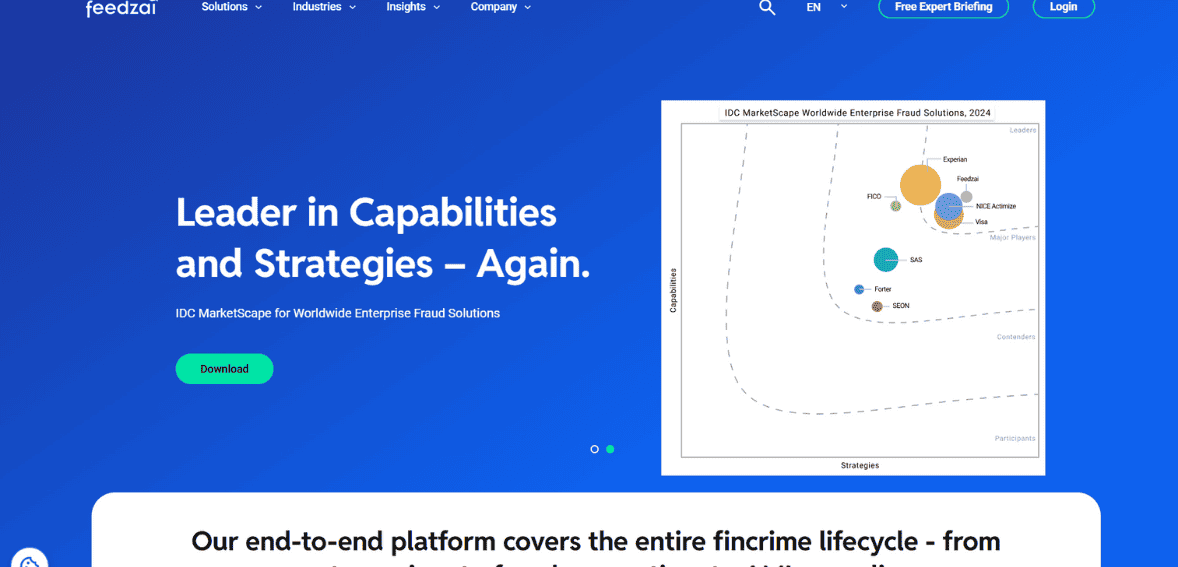
By 2023, chargebacks had cost U.S. merchants an estimated $11 billion. Chargebacks often impact businesses adversely, notably since 49% are filed accidentally and could be avoided with appropriate preventative strategies. Although there’s no sure way for a seller to prevail in a chargeback dispute, even when rightfully entitled, several measures can notably improve their likelihood of success.

What Is a Chargeback? Why Does It Happen?

What Is a Chargeback

To effectively manage chargebacks, it’s crucial to grasp what they are and why they occur. A chargeback is a safeguard for consumers, allowing them to initiate a dispute if they do not recognize a charge on their account statement.

When a cardholder disputes a transaction, suspecting it might be fraudulent, the bank that issued the card investigates the claim to ascertain its validity.

When faced with a chargeback, merchants have the burden of proof to demonstrate the transaction’s legitimacy. Failing to convince the issuing bank can result in the transaction being deemed fraudulent, leading to the reversal of the transaction amount to the customer. Additionally, the merchant may incur a fee of upwards of $100, depending on the bank’s policies.

Chargebacks typically stem from one of three sources:

  • Merchant Error occurs when errors are made during the transaction process or in managing customer interactions. Overlooking these mistakes may prompt customers to request a chargeback.
  • Criminal Fraud: This type of fraud involves the unauthorized use of a cardholder’s payment details to make purchases, often leading to a chargeback since the cardholder did not authorize the transaction.
  • Friendly Fraud: This happens when the chargeback process is misused, either through deliberate deceit to secure free goods or due to a genuine misunderstanding by the cardholder.

Understanding the reasons behind a chargeback is not merely bureaucratic but offers valuable insights. Knowing the root cause allows merchants to address and rectify the underlying issues, encouraging more sustainable solutions rather than temporary fixes.

Understanding Chargeback Reversals

A chargeback reversal occurs when a merchant challenges a customer’s chargeback claim to recover lost revenue. It involves presenting evidence that the original transaction was legitimate and should not have been disputed. A successful reversal restores the funds initially withdrawn due to the chargeback.

The payment industry lacks standardized terminology, resulting in multiple terms describing the same process. Common synonyms include:

  • Chargeback dispute
  • Chargeback representment
  • Chargeback response
  • Dispute response

Regardless of terminology, each phrase refers to the merchant’s action to dispute an invalid chargeback and reclaim lost funds.

With a clear understanding of chargeback reversals, you can now explore when and how to exercise your right to respond effectively.

What Qualifies as Strong Evidence for a Chargeback Reversals

Evidence for a Chargeback Reversals

Compelling evidence refers to the documentation merchants submit to dispute chargebacks. It demonstrates that a transaction was legitimate and counters the customer’s claims. The nature of compelling evidence depends on the specific reason code, which details the customer’s rationale for disputing the transaction. Successfully addressing the reason code with relevant documentation is essential for effectively resolving disputes.

Common Examples of Compelling Evidence

  • Transaction Records: Signed receipts, invoices, or contracts clearly showing the customer consented to the transaction.
  • Delivery Documentation: Shipping records or delivery confirmations, ideally accompanied by customer signatures or photographic proof of delivery.
  • Digital Evidence: IP addresses, device identifiers, and geolocation data linking customers to online purchases.
  • Communication Logs: Emails, chat transcripts, or call recordings illustrating interactions and agreements with the customer.
  • Authentication Records: Documentation of successful Address Verification System (AVS) and Card Verification Value (CVV) matches, along with evidence of two-factor authentication.

Matching Evidence to Specific Chargeback Reasons

  • Unauthorized Transactions: Provide identity verification data, including AVS/CVV matches and digital records (IP address, device ID) connecting the cardholder to the purchase.
  • Merchandise Not Received: Supply shipment tracking and delivery confirmations showing successful delivery to the customer’s verified address.
  • Product Not as Described or Defective: Submit accurate product descriptions, original listing images, and any communications in which the customer acknowledges receipt or expresses satisfaction.
  • Credit Not Processed: Offer clear documentation confirming the refund was issued, specifying transaction dates, refunded amounts, and customer interactions regarding the refund.

Visa introduced Compelling Evidence 3.0 in April 2023, enabling merchants to leverage a cardholder’s purchase history when disputing chargebacks. Merchants can strengthen their defense against friendly fraud by providing evidence of two prior undisputed transactions sharing specific data points (IP address or device ID) with the transaction.

When You Can’t Fight Chargeback as a Business?

​As a business, there are specific situations where disputing a chargeback may not be possible or advisable. Understanding these scenarios can help you manage chargebacks more effectively:​

  • Missed Response Deadlines: Each card network and issuing bank sets specific time limits for merchants to respond to chargebacks, commonly around 30 days from the date the chargeback was filed. If you fail to respond within this timeframe, you forfeit the right to dispute, resulting in an automatic loss of revenue from the disputed transaction.
  • Merchant Error: Chargebacks arising from merchant errors—such as duplicate charges, incorrect amounts, or non-compliance with card network rules—are typically the merchant’s responsibility. Disputing these chargebacks is generally unsuccessful, as the error originated from the business’s operations.
  • Valid Customer Disputes: When a customer has a legitimate reason for a chargeback, such as not receiving the product or receiving a defective item, disputing may not be appropriate. In these cases, it’s often better to accept the chargeback and address the underlying issue to prevent future occurrences.
  • High Chargeback Ratios: Consistently high chargeback ratios can lead to penalties from card networks and acquiring banks, including higher fees or terminating your merchant account. If your business experiences frequent chargebacks, it may be more prudent to focus on identifying and addressing the root causes rather than disputing individual cases.
  • Lack of Compelling Evidence: To successfully dispute a chargeback, you must provide compelling evidence that the transaction was legitimate. Disputing the chargeback is unlikely to succeed if such evidence is unavailable or insufficient.

How to Fight Chargebacks: A Step-by-Step Process

How to Fight Chargeback

When it’s time to dispute a chargeback, follow these steps to maximize your chances of successfully reversing the chargeback and reclaiming your lost revenue:

1. Know When You’ve Received a Chargeback

Fighting a chargeback effectively is impossible if you aren’t aware one has been filed. Notification methods vary by payment processor, ranging from traditional mail and email notifications to online merchant portals. Identify your processor’s notification method clearly and regularly monitor your account or inbox to ensure no dispute slips past your attention.

First, set up alerts if your payment processor or bank offers them. Enabling notifications via email or SMS will help you stay informed about any new chargeback activity. Second, make it a habit to check regularly.

Establishing a daily or weekly routine to review chargeback activity for merchants handling multiple accounts can help catch issues early. Lastly, consider automating your tracking. Tools or services that centralize chargeback data and send immediate alerts can streamline the process, allowing you to respond quickly and efficiently.

2. Check the Chargeback Reason Code

Every chargeback includes a reason code provided by the cardholder’s bank, indicating why the transaction is disputed. Knowing the reason code is critical as it guides your response strategy by informing you exactly what type of compelling evidence is required.

When handling a chargeback, take the following actions. First, immediately review the reason code when you receive the chargeback notice. This code explains why the chargeback was filed. Next, use a reason code reference or database, such as the guides provided by Mastercard, Visa, AmEx, or Discover, to understand the specific requirements for that code. Finally, gather relevant evidence based on the reason code. This may include delivery confirmation, identity verification records, or detailed product descriptions to strengthen your case.

3. Check the Expiration Date

Chargebacks have strict deadlines. If you miss the deadline, you automatically forfeit your right to dispute, and the case will not proceed. Response times typically range from as short as 2 days to as long as 20 days from receipt of the notification, depending on your processor.

As soon as you receive a chargeback notice, identify the deadline for your response. To avoid last-minute issues, submit your chargeback response three days before the deadline. This buffer accounts for potential delays or unexpected complications. Lastly, avoid spending time and resources on disputes that have already expired. Instead, focus your efforts on active cases where you still have a chance to recover funds.

4. Calculate and Evaluate the ROI

Before fighting a chargeback, carefully evaluate whether disputing it is financially worthwhile by calculating the potential Return on Investment (ROI). This involves comparing the cost of resources needed (such as time, labor, or fees) against the transaction amount in dispute.

When evaluating chargebacks, consider the return on investment (ROI). Start by clearly defining your threshold—determine the minimum transaction amount worth disputing based on your internal resources and costs. Focus on cases where the potential recovery is significantly higher than the expense of fighting the chargeback to maintain a positive ROI. Finally, regularly reassess your process. As your system becomes more efficient, you may be able to lower your threshold, making it profitable to dispute a more significant number of cases.

5. Collect Compelling Evidence

Winning a chargeback dispute largely depends on providing strong and compelling evidence. The evidence must specifically counter the claim outlined by the reason code. General or irrelevant evidence will undermine your case, so tailor your documentation accordingly.

Examples by transaction type include:

  1. Physical Goods:
  • Product descriptions and invoices.
  • Signed delivery confirmations or tracking records.
  • Proof of customer acknowledgment of receipt (emails, signed forms).
  1. Digital Goods:
  • Records of user logins, downloads, or usage activity.
  • IP addresses and geolocation data connecting the cardholder to the transaction.
  • Evidence of security measures, such as periodic login verifications.
  1. Services:
  • Customer-signed contracts or agreements.
  • Documentation proving delivery or fulfillment of the service.
  • Evidence of related customer activities (ticket scans, follow-up purchases).

Remember, never reuse generic evidence across different disputes. Constantly tailor your evidence directly to the specific dispute at hand.

6. Write a Strong, Clear Rebuttal Letter

The rebuttal letter is your primary means of communicating your case. It summarizes your strongest points, clarifies why the chargeback is invalid, and introduces your evidence in an easily understandable format.

Include the following key components to create a strong rebuttal letter for a chargeback. Start with a clear summary explaining why the chargeback claim is invalid. Reference the specific reason code and directly address the cardholder’s claims. Highlight your most compelling evidence, such as delivery confirmation, transaction logs, or communication records. Finally, keep the language concise and professional, ensuring the letter is easily read and effectively communicates your case.

7. Submit Your Response

Submission might seem straightforward, but in practice, it can be complex. Your response first goes to your payment processor, which reviews and decides whether to forward it to the cardholder’s bank. Therefore, presenting your dispute package professionally is critical.

To ensure a smooth submission process, organize your evidence logically and follow the processor’s guidelines, such as using the correct file types and arranging the documents properly. Clearly label your rebuttal letter and any supporting documents to avoid confusion. Submit the materials through your processor’s preferred method, whether an online portal, email, or fax, as this can help speed up the processing time. Finally, double-check your submission for completeness to prevent any delays or rejections caused by missing documents.

8. Monitor the Results

Chargeback dispute results are not always communicated quickly, and processors typically do not provide detailed outcome reports. However, actively tracking dispute outcomes is essential for refining future chargeback strategies.

Check with your processor regularly for updates on the status of your disputes. Internally document the outcomes, including win/loss ratios and case details, to maintain accurate records. Use this information to refine and strengthen your ongoing dispute strategy.

9. Analyze and Refine Your Process

Each chargeback offers valuable insights that can help you improve your strategy. Continuously analyze your performance to find areas for improvement. Refine processes based on your success and failure patterns, optimizing your efficiency and success rate over time.

To effectively track and analyze your chargeback disputes, focus on key metrics. Monitor reason codes to identify which dispute types you consistently win or lose. Analyze product types or categories to see if certain items are more prone to chargebacks. Review issuer trends by examining BINs (Bank Identification Numbers) to anticipate issuer decisions. Additionally, evaluate your internal processes to determine if specific team members or procedures lead to better outcomes.

Continuous improvement is essential. Regularly adjust your strategy, test new approaches, analyze the results, and repeat the process. This cycle helps enhance your dispute efforts and maximize your return on investment.

Conclusion

Winning card-present chargebacks requires a combination of proactive prevention, thorough documentation, and a strategic response process. While it is impossible to guarantee a victory in every dispute, merchants can significantly improve their chances by understanding the common causes of chargebacks, gathering compelling evidence, and following a structured dispute strategy.

Businesses can minimize chargeback losses and protect their revenue by staying vigilant with regular monitoring, meeting response deadlines, and continuously refining their processes. Additionally, using tools and services to streamline chargeback management can help merchants respond quickly and effectively. Ultimately, a well-prepared and informed approach is the key to reducing the financial impact of chargebacks on your business.

Frequently Asked Questions

  1. How Can I Build a Tailored Evidence Package for Chargeback Disputes?

    Collect evidence specific to the chargeback reason code. For example, if it’s an “unauthorized transaction,” gather identity verification details, device IDs, and two-factor authentication records. “merchandise not received” includes shipping records, delivery confirmations, and customer acknowledgment.

  2. How Do I Calculate the ROI of Disputing a Chargeback?

    To calculate ROI, compare the cost of disputing a chargeback (fees, labor, etc.) with the transaction amount you aim to recover. Only dispute chargebacks where the recovery outweighs the costs, and consider factors like potential penalties and efficiency of your process.

  3. What Strategies Can Automate Chargeback Management?

    Automation helps streamline chargeback management. Set up real-time alerts for new chargebacks, use chargeback management software to organize evidence, and analyze past disputes to optimize your process. Automation reduces errors and ensures timely responses, increasing success rates.

klarna ipo 1

Klarna Files for IPO to Raise $1 Billion at a $15 Billion Valuation

The Swedish fintech company Klarna has moved forward with its much-awaited US IPO by publicly releasing its F-1 prospectus on Friday. This document provides crucial insights into Klarna’s business operations and financial standing. According to a Bloomberg report published last week, Klarna IPO aims to secure at least $1 billion through this public offering, targeting a valuation of approximately $15 billion.

In its latest financial disclosures, Klarna highlighted significant improvements, recording revenues of $2.81 billion in 2024, a substantial increase of 24% compared to the previous year. This is especially crucial as the company achieved profitability for the first time, reporting a net profit of $21 million after enduring substantial losses in prior periods.

However, specific details regarding the number of shares to be offered and their anticipated price range have not yet been disclosed. Investors and market watchers will have to wait until these critical aspects are defined, typically roughly a month or longer after the initial filing, to gauge whether Klarna can successfully meet its targeted fundraising goals.

Key Takeaways
  • The Swedish fintech company has filed for an IPO in the US, aiming to raise at least $1 billion. This move comes as Klarna seeks to capitalize on its recent financial rebound and strengthen its position in the competitive BNPL market.
  • Klarna reported revenues of $2.81 billion in 2024, reflecting a 24% increase from the previous year. Notably, the company achieved profitability for the first time, recording a net profit of $21 million, a significant turnaround from its $244 million loss in 2023.
  • Ahead of the IPO, Klarna secured an exclusive partnership with Walmart, replacing Affirm Holdings as its BNPL provider. This collaboration is expected to expand Klarna’s reach and boost its market presence in the US.
  • While Klarna’s IPO could set the tone for other fintech listings, it faces challenges from intensifying competition and growing regulatory scrutiny. Rival firms such as Affirm, Afterpay, and PayPal aggressively vied for market share, adding pressure on Klarna to maintain its growth momentum.

Klarna IPO For $15 Billion Valuation: A Bold Move Amidst Fintech Volatility

Klarna, the Swedish fintech giant renowned for its “buy now, pay later” (BNPL) services, has officially filed for an initial public offering (IPO) in the United States. The company aims to raise over $1 billion through the offering, positioning Klarna’s valuation at approximately $15 billion. This IPO underscores Klarna’s resilience and adaptability in the fintech sector while highlighting the growing prominence of BNPL services in global markets.

Klarna

Image source

Klarna’s prominent shareholders include Sequoia Capital, co-founder Victor Jacobsson, and Heartland A/S, an investment firm led by Danish fashion entrepreneur Anders Holch Povlsen. Before Klarna’s recent offering, Sequoia Capital held 78.8 million shares, representing more than 5% of the company’s outstanding shares. Heartland A/S, associated with the family behind fashion retailer Bestseller, owned 37.1 million shares, while Jacobsson held 31.4 million.

Additionally, Klarna maintains strategic partnerships with several leading global brands, including cosmetics retailer Sephora, sportswear leader Nike, and accommodation platform Airbnb.

Established in 2005 by Sebastian Siemiatkowski, Victor Jacobsson, and Niklas Adalberth, Klarna set out to revolutionize online shopping by simplifying payment processes. The company’s BNPL model allows consumers to split purchases into manageable installments, offering an attractive alternative to traditional credit systems. Over the years, Klarna has significantly expanded its services, catering to over 150 million users globally and partnering with more than 675,000 merchants, including prominent retailers such as H&M, Saks, Sephora, Macy’s, Ikea, Expedia Group, Nike, and Airbnb.

Klarna’s financial trajectory has experienced significant fluctuations. During the fintech boom in 2021, the company reached a peak valuation of $45.6 billion before suffering an 85% drop to $6.7 billion the following year amid a broader downturn affecting prominent fintech firms.

Despite these setbacks, Klarna demonstrated remarkable resilience. In 2024, the company reported revenues of $2.81 billion, marking a 24% increase compared to the previous year. More notably, Klarna achieved a net profit of $21 million in 2024—a substantial turnaround from the $244 million loss recorded in 2023.

In a bold move to consolidate its market position ahead of the IPO, Klarna secured an exclusive partnership with Walmart, effectively replacing its competitor Affirm Holdings. This collaboration aims to offer installment loan financing to Walmart’s vast customer base in the United States, enhancing the retail giant’s payment flexibility and potentially boosting sales. Following the announcement of this partnership, Affirm’s stock value dropped significantly by 11%, underscoring intense competitive dynamics within the BNPL market.

Klarna has engaged 15 banks for its upcoming IPO. Prominent financial institutions—including Goldman Sachs, JPMorgan, and Morgan Stanley—are the lead underwriters, supported by 11 financial institutions managing the offering. Klarna’s decision to list its shares on the New York Stock Exchange under the ” KLAR ” ticker comes amid market volatility and economic uncertainty.

klarna nyse

The company confidentially submitted IPO paperwork to the U.S. Securities and Exchange Commission in November 2024, and the public filing occurred in March 2025.

The BNPL sector has experienced rapid growth, attracting significant attention from consumers and investors. Klarna’s IPO is poised to be a litmus test for the fintech industry’s ability to navigate public markets amid current economic headwinds. A successful listing could pave the way for other fintech companies to consider public offerings, signaling investor confidence in the sustainability of the BNPL business model.

While Klarna’s financial rebound and strategic partnerships are commendable, the company still faces considerable challenges. The BNPL industry is becoming increasingly crowded, with competitors such as Affirm, Afterpay (acquired by Block), and PayPal intensifying the race for market share. Additionally, regulatory scrutiny is mounting globally as authorities closely assess the potential implications of BNPL services on consumer debt and financial stability.

In June, Klarna agreed to sell its Checkout payments division for approximately $520 million and acquired assets from New Zealand-based Laybuy in August. The company has deepened its ties with major technology players, announcing in November that it would provide BNPL services to U.S. consumers using Google Pay—just one month after finalizing a similar partnership with Apple Inc.

Klarna IPO date

Klarna also disclosed it is currently finalizing a partnership with a second banking institution in the U.S., enabling the rollout of its Fair Financing products. Additionally, negotiations with another payment network are underway, with plans to launch the Klarna card in selected markets. Klarna anticipates finalizing binding agreements with these partners by the first quarter and the second half of 2025.

The Swedish payments firm has further expanded its collaborations with mainstream payment processors, including Adyen NV, Xero, and Worldpay Inc. To further strengthen its market presence, Klarna entered a strategic partnership with JPMorgan Chase & Co.’s payment division, enabling approximately 900,000 merchant businesses to offer their customers Klarna’s instant credit solutions.

Conclusion

Klarna’s decision to move forward with its US IPO marks a significant milestone in the company’s evolution and highlights the growing influence of BNPL services in the financial sector. With plans to raise over $1 billion at a $15 billion valuation, Klarna is positioning itself as a key player in the increasingly competitive fintech landscape. The company’s financial turnaround—achieving profitability for the first time in 2024—demonstrates its resilience after facing substantial losses and a sharp valuation drop in previous years.

However, the IPO comes at a time of market uncertainty, and Klarna’s success will depend on investor confidence in the sustainability of the BNPL model. The outcome of this offering could serve as a benchmark for other fintech firms considering public listings. Moving forward, Klarna’s strategic partnerships, including its collaboration with Walmart and its ongoing expansion efforts, will be critical in maintaining its market position. Yet, with growing regulatory scrutiny and intensified competition, Klarna will need to continue demonstrating strong financial performance and adaptability to secure long-term growth and investor trust.

Frequently Asked Questions

  1. How much will Klarna seek to raise in its IPO?

    Klarna aims to raise over $1 billion USD in its IPO, valuing the company at approximately $15 billion.

  2. What is Klarna’s stock ticker?

    Klarna will trade its stock under the ticker symbol u0022KLARu0022.

  3. When is Klarna’s IPO date?

    Klarna has not yet announced an official IPO date. However, the company publicly filed its IPO paperwork with the U.S. Securities and Exchange Commission (SEC) in March 2025, following a confidential submission in November 2024. The IPO is expected to occur later this year, pending regulatory approval and market conditions.

  4. What stock exchange will Klarna trade on?

    Klarna plans to list its shares on the New York Stock Exchange (NYSE).

tokenization security

Visa to Introduce Tokenization and Digital Wallet Features for Fleet Cards

In its recent announcements, Visa has taken significant steps to improve and enhance its fleet card services by introducing tokenization and digital wallet features. Card issuers and other fintech companies can incorporate secure, tokenized card data into Apple Pay mobile wallets.

Visa tokenization and digital wallet integration will streamline payment processes and align with the growing digitalization trend in financial operations. The enhanced security measures inherent in tokenization further safeguard against potential fraud, offering businesses greater peace of mind in their financial dealings.

Key Takeaways
  • With tokenization, Visa will replace sensitive payment information with unique identifiers. This will significantly reduce the risk of data breaches and fraud in fleet transactions.
  • One of the most valuable features Visa has announced is that users can add fleet cards to mobile wallets like Apple Pay. It will offer convenience and secure payment methods, a much better option than physical cards, which are more prone to getting lost or stolen.
  • Features such as including fleet data tags during token provisioning and the ability to push digital credentials into mobile wallets streamline payment processes, enhancing the user experience for drivers and offering fleet managers better control over expenses. ​
  • Visa’s pilot program with Highnote demonstrated that these enhancements empower fleet drivers by modernizing payment processes, indicating a significant shift towards more efficient and secure fleet payment systems.

Visa Tokenization and Digital Wallet Integration: Enhanced Fleet Card Security

Visa Digital Wallet

Visa has announced plans to integrate tokenization and digital wallet capabilities into its fleet cards. This new integration will enhance payment security and streamline operations for commercial fleet managers and drivers. ​

Tokenization is a data security process that replaces sensitive information, such as credit card numbers, with a unique identifier or “token.” This token holds no exploitable value, ensuring the original data remains secure even if intercepted. This technology is pivotal in safeguarding payment information during transactions. ​

Digital wallets, on the other hand, are electronic devices or software platforms that allow users to make transactions electronically. They store payment information securely and facilitate seamless transactions, reducing the need for physical cards. By integrating tokenization with digital wallets, payment processes become secure and efficient.​

Visa’s integration of tokenization and digital wallet capabilities into its fleet cards is set to revolutionize fleet payments. This enhancement allows issuers and fintech companies to embed encrypted and tokenized card information into mobile wallets like Apple Pay. Consequently, commercial fleet drivers and managers can expect a more seamless and secure payment experience. ​

During token provisioning, fleet data tags can be added to ensure token payments and relevant fleet information are transmitted to the POS (point of sale). Additionally, the capability to integrate digital credentials with card-on-file merchants, Click to Pay systems, and mobile wallets can reduce time to market and enhance operational efficiency.

These advancements address existing challenges in fleet management by enabling instant issuance, improving the user experience for drivers, and providing better controls for fleet managers.​

The combination of virtual cards and digital wallets also allows chief financial officers to manage corporate expenditures, particularly unexpected ones. A virtual corporate card can be assigned directly to an employee’s mobile phone through a digital wallet controlled by the company and used for contactless digital transactions.

Fleet Card Security

In the published announcement, Gloria Colgan stated that this breakthrough addresses a significant problem currently faced by the fleet industry, offering numerous advantages for clients, such as immediate issuance, an enhanced driver experience, and stronger controls and features for fleet managers.

Visa piloted these enhancements from April to November with Highnote, a U.S.-based issuer-processor and program manager. The initiative showed that these technological advancements enhance fleet drivers’ capabilities by updating payment processes. John MacIlwaine, CEO and co-founder of Highnote commented that the fleet payments industry has been overdue for modernization, and these changes are swiftly taking effect.

MacIlwaine mentioned that they have empowered fleet drivers globally by putting control of payments into their hands.

Visa’s initiative supports its broader goal of spearheading innovation in payments. The company’s wide-ranging tokenization solutions equip banks, merchants, and the entire payments ecosystem with tools to enhance authorization rates and encourage innovation. Through the Visa Token Service, which replaces traditional card numbers with secure tokens, Visa delivers safer and more streamlined digital payment experiences worldwide.

About Visa

About Visa

Visa Inc. stands as a leading force in the global payments technology landscape, driving the advancement of digital transactions worldwide. The company connects a diverse network of consumers, businesses, financial entities, and governmental bodies across over 200 countries, advocating for inclusive, secure, and efficient payment mechanisms. Visa’s commitment to democratizing digital payments is evident in its efforts to enhance economic and community growth by broadening access to its services. It oversees the operation of VisaNet, a highly sophisticated processing network that manages services such as authorization, clearing, and settlement. It offers a variety of products like credit, debit, and prepaid cards.

A robust commitment to innovation and technological integration is at the heart of Visa’s operational strategy. The company maintains multiple innovation hubs worldwide and has initiated programs such as the Fintech Fast-Track Program to bolster startups. This initiative partners with industry experts to facilitate the swift integration of emerging businesses into Visa’s extensive network. Additionally, Visa invests significantly in leading-edge technologies, including artificial intelligence, to enhance fraud detection and digital security, ensuring the reliability of its payment services. This fusion of comprehensive infrastructure and advanced technology supports Visa’s ability to process billions of transactions, reinforcing its significant global footprint.

Conclusion

Visa’s introduction of tokenization and digital wallet features for fleet cards marks a significant step toward modernizing fleet payment systems. These advancements address key challenges in fleet management by enhancing security, reducing fraud risks, and offering greater convenience through mobile wallets like Apple Pay.

The successful pilot program with Highnote demonstrates these innovations’ potential to improve efficiency for drivers and fleet managers. As Visa continues to invest in payment technology, its tokenization services will likely play a crucial role in shaping the future of secure and streamlined digital transactions in the fleet industry.

Mastercard-Feedzai Partnership

Mastercard Teams Up with Feedzai to Prevent AI-Driven Scams

Artificial intelligence has transformed how financial crimes are carried out, making scam detection more sophisticated and complex. Fraudsters use AI to create deepfake voices, manipulate transaction patterns, and bypass traditional security measures. As financial institutions work to stay ahead, advanced fraud detection solutions are becoming essential. Companies are investing in AI-powered tools to identify suspicious activity in real time and protect consumers from emerging threats.

The Mastercard-Feedzai partnership has formed a company specializing in AI-driven risk management to strengthen fraud prevention efforts. This partnership will enhance security by leveraging machine learning to detect and stop fraudulent transactions before they cause harm. Combining Mastercard’s global network with Feedzai’s advanced analytics, the two companies are working to protect financial systems from increasingly complex scams.

Key Takeaways
  • As fraudsters increasingly exploit AI to develop sophisticated scams—ranging from deepfake voices to manipulated transaction patterns—traditional fraud prevention methods are no longer sufficient, creating an urgent need for real-time, AI-powered risk management.
  • Mastercard has joined forces with Feedzai, leveraging Mastercard’s vast global network alongside Feedzai’s cutting-edge, machine learning–driven analytics to detect and intercept fraudulent transactions as they occur.
  • The integration of Mastercard’s Consumer Fraud Risk solution with Feedzai’s platform has already demonstrated tangible results, such as a 12% reduction in authorized push payment scams in the UK, highlighting the effectiveness of AI-based fraud prevention.
  • This alliance underscores the importance of responsible AI and cross-industry collaboration in financial security. It ensures that advanced technology boosts efficiency and customer trust and adheres to high standards of ethical data usage and regulatory compliance.

Mastercard-Feedzai Partnership Join Forces to Strengthen AI-Powered Fraud Prevention

Today, digital transactions have become the backbone of global commerce, and fraudsters’ sophistication has also evolved in tandem with technological advancements. Integrating artificial intelligence (AI) into financial systems, while offering numerous benefits, has opened new avenues for fraudulent activities. Recognizing the pressing need to combat these AI-driven scams, Mastercard has partnered with Feedzai, a leader in AI-based financial crime prevention, to bolster defenses against such threats.​

AI-Powered Fraud Prevention

The collaboration between Mastercard and Feedzai is timely, considering the alarming statistics surrounding financial fraud. In fact, last year, fraudulent schemes resulted in losses exceeding $1 trillion; over half of all consumers reported encountering a scam at least weekly.

The financial sector has witnessed a seismic shift toward electronic transactions, with businesses and consumers increasingly relying on them. While enhancing convenience, this transition has also expanded the attack surface for cybercriminals. Traditional fraud detection mechanisms, often reactive and rule-based, are proving inadequate against modern fraudsters’ dynamic and adaptive strategies. The rise of AI has further complicated this scenario, as malicious actors leverage machine learning algorithms to craft sophisticated scams that can bypass conventional security measures.​

In response to these escalating threats, Mastercard announced on February 18, 2025, a strategic collaboration with Feedzai to enhance fraud prevention capabilities globally. This partnership empowers financial institutions with advanced tools to identify and stop fraud in real time, safeguarding businesses and consumers from financial losses. ​

Mastercard’s Consumer Fraud Risk (CFR) solution, an AI-driven system designed to provide real-time risk assessments for transactions, is at the heart of this collaboration. By integrating Feedzai’s advanced fraud detection platform, which operates in more than 90 countries, Mastercard seeks to accelerate the deployment of CFR across key markets worldwide. This integration enables sending and receiving financial institutions to access intelligence that helps recognize and prevent fraudulent activities during account-to-account payments. ​

The effectiveness of CFR was demonstrated in the United Kingdom, where its implementation in 2023 led to a significant reduction in authorized push payment (APP) scams. According to data from the UK’s Payment Systems Regulator (PSR), the value of APP scams decreased by 12% following the CFR deployment. This success underscores the potential of AI-driven solutions in mitigating fraud and protecting consumers. ​

Johan Gerber, Mastercard’s Head of Security Solutions and Executive Vice President, noted that scam fraud now touches over half of the global population, inflicting severe damage on consumers and generating losses that eclipse the GDP of many individual countries. He emphasized that by harnessing Feedzai’s global platform, they plan to roll out their groundbreaking scams solution across additional markets, enabling financial institutions to counter financial crime more swiftly and effectively than ever.

Top financial institutions already trust Feedzai’s AI-driven Financial Crime Prevention Platform. It safeguards over one billion consumers and secures upwards of $8 trillion in transactions annually.

Nuno Sebastiao, CEO of Feedzai, expressed enthusiasm about expanding the partnership with Mastercard to tackle the rising tide of financial crime. He highlighted that the rapid increase in scams makes it imperative for financial institutions to embrace real-time, AI-powered solutions. This collaboration marks the first time Mastercard’s proven Consumer Fraud Risk score will be introduced to new markets, enhancing security and resilience against financial threats on a global scale.

Feedzai’s AI-driven Financial Crime Prevention Platform is central to this collaboration. It scrutinizes every digital transaction, from card purchases to instant transfers, evaluating various real-time risk indicators. By integrating network data, device intelligence, and behavioral biometrics, the platform rapidly detects suspicious activities, allowing financial institutions to act swiftly before economic losses occur. This proactive strategy is essential for combating AI-powered fraud, where rapid and precise response is critical. ​

The integration of AI in fraud prevention offers several advantages. AI systems can process vast amounts of data at unprecedented speeds, identifying patterns and anomalies that may elude human analysts. This capability is particularly vital in real-time transactions, where delays in detection can result in substantial financial losses. Moreover, AI-driven solutions can adapt to emerging threats, continuously learning from new data to enhance their predictive accuracy.​

However, deploying AI in fraud prevention is not without challenges. Ensuring the ethical use of AI, maintaining data privacy, and addressing potential biases in AI algorithms are critical considerations. Both Mastercard and Feedzai have emphasized their commitment to responsible AI practices, ensuring that their solutions protect against fraud and uphold the highest standards of integrity and fairness.​

Julie Conroy, CIO at Datos Insights, emphasized that global fraud and scams have spurred an urgent demand for next-generation technology solutions. She urged financial institutions to integrate third-party data into their fraud defense strategies to counteract these escalating threats. By leveraging Mastercard’s well-established Consumer Fraud Risk score alongside Feedzai’s specialized risk scoring technology, this partnership offers a compelling fusion of Mastercard’s expansive data expertise and Feedzai’s targeted, purpose-built capabilities.

The partnership also highlights the importance of collaboration in combating financial crime. By leveraging Feedzai’s expertise in AI-based fraud detection and Mastercard’s extensive network and resources, the two companies aim to create a more secure financial ecosystem. This collaborative approach extends beyond technology, encompassing shared intelligence, best practices, and coordinated responses to emerging threats.​

Looking ahead, the integration of AI in financial systems is expected to deepen, offering both opportunities and challenges. While AI can enhance efficiency, customer experience, and security, it also necessitates robust governance frameworks to manage the risks associated with its use. Financial institutions must balance innovation with caution, ensuring that technological advancements do not outpace their capacity to manage potential vulnerabilities.

This initiative is a key component of Mastercard’s comprehensive security blueprint, which aims to phase out traditional passwords in favor of biometric authentication by 2030. Recent enhancements to its Identity Check program complement this initiative. These advancements signal a broader trend among financial institutions toward adopting behavioral biometrics as they work to curb the rising tide of digital payment fraud.

About Mastercard

about mastercard

Mastercard is a global technology company in the payments industry, dedicated to powering a connected and inclusive digital economy. At its core, Mastercard facilitates secure, seamless transactions between consumers, merchants, and financial institutions worldwide. By licensing its renowned brands to banks and partnering with fintech innovators, it processes millions of credit, debit, and prepaid transactions daily across more than 200 countries and in over 160 currencies.

The company’s robust network and state-of-the-art digital solutions streamline everyday purchases and set the standard for secure, reliable, and efficient payment processing in a rapidly evolving financial landscape.

Driven by a commitment to innovation and social impact, Mastercard continuously invests in cutting-edge technologies such as biometric authentication, tokenization, and open banking solutions to stay ahead of emerging threats and market demands. Its forward-thinking initiatives aim to eliminate payment friction while enhancing security and reducing fraud, paving the way for a cashless future. Beyond its technological prowess, Mastercard is equally focused on fostering financial inclusion and community empowerment through diverse corporate programs and partnerships that promote global economic growth and sustainability.

About Feedzai

About Feedzai

Image source

Feedzai is a leading global fintech company specializing in real-time financial crime prevention through advanced artificial intelligence and machine learning technologies. Founded in 2011 and headquartered in Coimbra, Portugal—with significant operations in the US and other key markets—the company has rapidly emerged as a trusted partner for banks, payment service providers, and retailers worldwide. Feedzai’s flagship RiskOps platform harnesses big data and predictive analytics to detect, prevent, and manage fraud across various financial transactions, enabling clients to safeguard trillions in payment while reducing operational risks and compliance costs.

Committed to constant innovation and excellence, Feedzai continuously evolves its suite of solutions to meet the complex challenges of a digital economy. Its technology enhances the accuracy and speed of fraud detection and adapts dynamically to emerging threats, ensuring a secure and seamless customer experience. By integrating state-of-the-art biometrics, real-time transaction monitoring, and automated regulatory compliance tools, Feedzai is at the forefront of the battle against financial crime, empowering institutions to protect millions of consumers and maintain trust in an increasingly interconnected financial ecosystem.

Conclusion

The partnership between Mastercard and Feedzai marks a significant step in the fight against AI-driven fraud. As digital transactions continue to grow, so do cybercriminals’ tactics, making real-time fraud detection more important than ever. By combining Mastercard’s global network with Feedzai’s AI-powered analytics, financial institutions gain more potent tools to identify and stop fraudulent activities before they cause harm. The early success of their collaboration, particularly in reducing authorized push payment scams in the UK, highlights the potential of AI in safeguarding financial transactions.

Looking ahead, this partnership reflects a broader trend in the financial industry—leveraging AI to enhance security while maintaining ethical standards in fraud prevention. As scams become more sophisticated, financial institutions must continuously adapt, integrating advanced technology to stay ahead of emerging threats. Mastercard and Feedzai’s collaboration sets a precedent for how AI can be used responsibly to protect businesses and consumers. With ongoing innovation and a focus on real-time prevention, their efforts will play a key role in shaping the future of financial security.