

2

Fintech Disruptors 2025: New Payment Innovations for Small Businesses

Financial technology (“fintech”) is revolutionizing the way small businesses manage their finances. In the wake of the pandemic, many local shops and startups learned that going digital was not just a fad – it was a lifeline. The small businesses that survived – and even thrived – during lockdowns were often those that were quick to embrace electronic payments, e-commerce, and other digital tools.

Fast forward to 2025, and a new wave of fintech disruptors is bringing even more payment innovations within reach of Main Street entrepreneurs. From contactless taps to instant transfers, small businesses today have an expanding toolbox of payment options that are faster, smarter, and more customer-friendly than ever. We’ll break down what these fintech trends mean for everyday business owners.

Top Fintech Disruptors Poised to Redefine Small Business Commerce in 2025.

Mobile and Contactless Payments Become Standard

Small businesses can now accept contactless payments via a simple tap on their phone.

Contactless Payments

One of the most visible fintech disruptions is the explosion of contactless and mobile payments. Paying with a tap or a wave has quickly transitioned from novelty to the norm. Contactless payments now account for more than two-thirds of all in-person purchases on one major card network.

Shoppers have grown to expect the convenience of tapping their card, phone, or smartwatch instead of swiping or handing over cash. For small businesses, this means upgrading checkout to accept contactless cards and mobile wallets has become less optional and more essential. What’s game-changing is how easy it is now for even the tiniest business to take a tap-to-pay. New “tap on phone” technology can turn any smartphone into a payment terminal.

In a real-life scenario, a solo entrepreneur or market vendor can use an app on their phone to accept a customer’s contactless card or digital wallet payment – no bulky register or extra hardware needed. This democratizes payment acceptance for everyone from food truck operators to craft fair artisans. Customers enjoy a faster checkout, and businesses can meet them where they are – at a pop-up stand or on a delivery drop-off – and still get paid on the spot.

The rise of mobile point-of-sale apps and handy card readers (think of those little phone dongles) in the past decade was just the beginning. Now, with just a tapped phone, sales can happen anywhere. Small businesses are also embracing QR codes and payment links as part of this mobile payment wave. It’s increasingly common to see a QR code at a farmer’s market stall or food cart that lets customers scan and pay via a mobile app. Peer-to-peer payment apps are also expanding into the business realm – for example, some micro-businesses now accept payments via popular P2P services that were once used primarily among friends.

All these methods offer more flexibility than cash and often lower fees than traditional credit card setups. The bottom line is that going cashless and frictionless is now within easy reach for businesses of any size, and consumers are loving the speed and ease it brings to everyday transactions.

Digital Wallets and Alternative Payment Methods on the Rise
Mobile payment and digital wallet icon for Host Merchant Services.

Beyond basic card swipes, alternative payment methods are flourishing in 2025’s fintech landscape. Digital wallets, “buy now, pay later” plans, and even cryptocurrencies are gaining traction, providing consumers with new payment options and businesses with new ways to make a sale. For small business owners, staying up-to-date with these options can be crucial in attracting customers who have moved beyond the traditional swipe-and-sign routine. Digital wallets are one of the most significant shifts. These apps securely store a user’s payment cards, bank accounts, or other funds, allowing quick payments with a phone or a few clicks online. While wallets originally started as a consumer convenience, they’re also becoming essential tools for small businesses.

Services like Apple Pay, Google Pay, and PayPal are now widely used by U.S. shoppers, so enabling those at checkout (in-store or on your website) can boost sales. Roughly nine in ten U.S. consumers have used some form of digital payment in the past year (approximately 92% according to recent surveys), indicating how mainstream these methods have become. Instead of fumbling for cash or typing in card numbers, customers can pay with a tap of their phone – a speedy experience that often leads to higher satisfaction and fewer abandoned carts. For merchants, digital wallets also bring security benefits: they use tokenization (replacing card numbers with encrypted tokens), which significantly cuts down fraud risk (one study found tokenization reduced fraud by about 34% on average).

Another disruptor, Buy Now, Pay Later (BNPL), has surged in popularity as consumers seek more flexibility in managing purchases. Originally popular for online shopping, BNPL services let customers split a purchase into smaller installments, often interest-free. By 2025, these payment plans are expected to expand into new sectors, including groceries, utilities, auto repairs, and travel. Forward-thinking small retailers and service providers are partnering with BNPL providers to let customers “buy now and pay later” for larger or unexpected expenses.

Shoppers might be more willing to commit to a pricier product or service if they can pay over time, and businesses can see increased conversion as a result. A local bike shop, for example, might close more sales on a $500 bicycle if customers can break the cost into monthly chunks at checkout.

Of course, merchants need to weigh the fees and be mindful of encouraging excessive consumer debt. Still, many are finding BNPL a valuable tool to drive revenue without acting as the lender. Other alternative methods are also emerging. Direct account-to-account (A2A) payments — essentially transferring funds straight from a customer’s bank to the merchant’s — are gaining steam as open banking initiatives make bank transfers faster and user-friendly.

These can eliminate middleman fees from card networks, which is appealing for businesses operating on tight margins. And no discussion of fintech innovation would be complete without cryptocurrency: a few adventurous small companies have started accepting payments in Bitcoin or stablecoins (digital currencies pegged to the dollar) for goods and services. Crypto payments aren’t yet mainstream for everyday businesses, but they offer potential benefits, such as ultra-low transaction fees and no chargebacks.

More importantly, the underlying blockchain tech is beginning to improve payment infrastructure behind the scenes. For instance, some fintech providers utilize stablecoins to expedite cross-border transactions and lower costs for small exporters. In 2025, betting on blockchain to enhance payment speed and security, especially for business-to-business transfers, is no longer far-fetched, even if most corner cafés aren’t ringing up sales in crypto just yet.

Real-Time Payments Speed Up Cash Flow

Fast payment processing icon with clock and credit card for Host Merchant Services.

For small businesses, faster access to funds can be a game-changer. Traditional payments often involve waiting – a couple of days for credit card batches to be deposited, or, heaven forbid, weeks for a mailed check to clear. Fintech disruptors are tackling this pain point head-on with real-time payments. Real-time payment (RTP) networks enable money to be transferred from one bank account to another within seconds, 24 hours a day, 7 days a week. By 2025, these systems are maturing worldwide, with an estimated 575 billion real-time transactions expected annually by 2028 (about 27% of all electronic payments globally).

In the U.S., the major news was the launch of the Federal Reserve’s FedNow service in mid-2023 – a nationwide instant payments platform that operates around the clock. FedNow’s arrival marks a significant step in modernizing the U.S. payments infrastructure, enabling even small community banks to offer instant transfers. Industry insiders are even calling 2025 “the year of the send” for instant payment networks, which shows how rapidly these capabilities are becoming standard. Surveys back this up: by 2024, 86% of businesses and 74% of consumers reported using faster or instant payments, a clear sign these options are quickly becoming mainstream.

Imagine a local contractor finishing a job and getting paid via an instant bank-to-bank app before leaving the customer’s driveway. With real-time payments, a business could invoice a client and receive the money in minutes, not days. That means improved cash flow and no more “the check is in the mail” anxiety. Small firms often live or die by their cash flow, so the ability to get funds immediately, on weekends, holidays, anytime, is a huge win. One day soon, slow two-day ACH transfers or waiting 24 hours for a credit card settlement will feel as outdated as dial-up internet. Instant pay isn’t just for getting money in, either – it’s useful for outgoing funds.

Many small companies are discovering the benefits of paying suppliers, vendors, or gig workers via real-time methods. It provides certainty (the payment can’t bounce once cleared) and builds goodwill with partners who appreciate prompt payment. Services like Zelle have already shown how eager people are for quick peer-to-peer payments, and now with networks like FedNow, that same speed is coming to everyday business transactions. The message for small businesses: in 2025, time is money, and moving money faster means doing better business.

Embedded Finance and All-in-One Platforms

Secure payment processing icon for Host Merchant Services.

Handling payments used to mean juggling multiple systems – one for the cash register, another for invoicing, another for accounting, and so on. That’s changing as embedded finance and integrated platforms become the norm for small businesses. The idea behind embedded finance is straightforward: bring financial services directly into the software and tools businesses already use, rather than requiring companies or customers to navigate a separate bank or website. In practice, this means everything from payments to loans to insurance can be seamlessly built into point-of-sale systems, e-commerce sites, and business management apps.

The year 2025 is seeing a boom in all-in-one solutions tailored for entrepreneurs who don’t have time to play tech support. Technology that was once out of reach for a mom-and-pop shop is now available in a single app or platform on a subscription, often accessible from a smartphone. Many small and mid-sized merchants are gravitating toward integrated software providers that bundle operational tools with payments.

Rather than using a separate app for inventory and a card reader, an integrated solution can handle inventory tracking, online orders, and payment processing all in one dashboard. This not only simplifies life for the owner but also ensures that the various components communicate with each other effectively. No wonder over 81% of SMBs say they are open to adopting integrated payment systems that unify their needs. Today, an average small business may juggle two or three different systems to manage day-to-day operations, and the smallest firms often patch together multiple solutions for tasks such as point-of-sale, billing, and bookkeeping. Fintech providers see the opportunity here: in 2025, disruptors are rolling out centralized platforms uniquely tailored to the needs of small businesses, consolidating all key financial tools under one roof.

What does this look like on the ground? Take, for example, a boutique shop that utilizes a single cloud platform to manage its in-store sales, website orders, and inventory, and also accepts payments via card, mobile wallet, or sends out payment links for invoices. All sales data flows automatically into an accounting module, and the same system may even offer built-in loyalty rewards or marketing tools to engage customers. These unified systems are increasingly tailored by industry – a café might use one designed for restaurants with menu and table management. In contrast, a freelance consultant may use a platform designed for easy invoicing and client payments.

The key is simplicity and scalability: a small business owner can start with basic features and then add more services as they grow, all without needing to migrate to new software. Embedded finance also opens the door for small businesses to access services that were previously reserved for large companies. For example, many e-commerce platforms now offer one-click options for sellers to obtain a working capital loan or purchase insurance for a shipment, all within the same interface they use to manage their store. Instead of a lengthy bank application, financing is offered exactly when and where it’s needed, often based on the business’s real-time sales data.

About 37% of small businesses say they’re highly interested in switching to providers that offer embedded lending options (for example, giving customers financing at checkout or getting business loans integrated into their sales platform). Even routine tasks, such as payroll or expense management, are being integrated into these ecosystems. The total market for embedded finance targeting small businesses is projected to be substantial, exceeding $100 billion in the next couple of years, highlighting the value of all these add-on services now being delivered in context. Ultimately, this trend means less time spent on administrative headaches and more time spent growing the business.

Smarter Security with AI and Biometric Tech

Payment Innovations for Small Businesses - Biometrics and AI

All these new payment methods and digital platforms bring tremendous convenience, but what about security? The good news is that fintech innovation isn’t just making payments faster and more flexible; it’s also making them more secure. One of the unsung heroes in this area is advanced artificial intelligence. Banks and payment processors are utilizing AI and machine learning to detect fraud in real-time and safeguard transactions. With cybercriminals also getting more sophisticated (even using AI themselves to craft scams), the industry is in an arms race to protect businesses and consumers.

Fortunately, the AI tools are proving effective: cutting-edge fraud detection models can analyze massive amounts of data in milliseconds and flag unusual transactions far better than any human. For example, some systems using generative AI can scan over a trillion data points and predict in under 50 milliseconds whether a transaction is legitimate, boosting fraud detection rates by an average of 20%, and as much as 300% in some cases.

Small businesses benefit from this invisible AI shield, as it means fewer chargebacks and less money lost to fraudsters. Another innovation expected to secure payments in 2025 is the broader adoption of tokenization and biometrics. We touched on tokenization earlier, in the context of digital wallets: it replaces sensitive card information with random tokens, so that a data breach won’t expose actual card numbers. Additionally, biometric authentication – utilizing a fingerprint, face ID, or other unique identifiers – has become mainstream for unlocking phones and verifying payments.

Forget typing passwords or PIN codes; customers can now authorize purchases with a quick fingerprint tap or a glance at their phone. The adoption of passkeys (password-less login technology often tied to device biometrics) is expected to gain momentum in 2025, meaning both merchants and shoppers will rely less on vulnerable passwords and more on secure, convenient logins. Major payment providers report that tokenization and biometric verifications have significantly reduced fraud compared to old magnetic-stripe or manual entry methods.

Paying digitally in 2025 can be safer than old-school cash or cards, as long as businesses take advantage of these new security tools. Security isn’t just about stopping fraud – it’s also about maintaining customer trust. Fintech innovations, such as digital identity verification and more intelligent authentication flows, are also contributing to this effort. For example, instead of requiring online customers to jump through annoying hoops, new systems can verify identity in the background or use one-time links that strike a balance between security and a smooth experience.

All these layers of protection ensure that, as a small business adopts modern payment technology, it isn’t opening the door to new risks. Embracing technologies like chip cards, contactless payments, and encrypted online checkouts typically reduces risk compared to holding onto outdated methods. The takeaway: fintech is making payments not just faster and more convenient, but also safer, fortifying the trust that underpins every transaction.

Final Thoughts

Fintech disruptors in 2025 are redefining what’s possible for small business payments. Just a few years ago, many of the tools we discussed – instant money transfers at 2 AM, tap-to-pay phone terminals, all-in-one finance platforms – might have sounded futuristic or out of reach for a neighborhood business. Now they’re increasingly part of the everyday toolkit for savvy entrepreneurs. The common thread across these innovations is empowerment: they empower small businesses to serve customers better, manage their cash flow more effectively, and streamline operations without needing an army of tech staff.

For a general audience, the takeaway is that the way we all buy and sell is evolving rapidly, and even the corner bakery or local handyman is being impacted by this change. If you run a small business, it’s worth keeping an eye on these trends – not every shiny new app will be right for you, but understanding the landscape means you won’t miss game-changing opportunities. Adopting digital payments or offering new options like BNPL might attract a new segment of customers. Using real-time payouts could be the difference between scrambling to make payroll and having funds on hand. Leveraging an integrated fintech platform might save hours of administrative work each week.

Significantly, these innovations also level the playing field. In many ways, a solo online craft seller now has access to nearly the same payment and financial capabilities as a big-box retailer, from global payment acceptance to sophisticated fraud prevention, thanks to user-friendly fintech solutions. This democratization of finance is fueling a renaissance for small businesses, enabling them to compete effectively.

As we look beyond 2025, expect the lines between tech and finance to blur even further. Small businesses that embrace these changes will be well-positioned to thrive in the new payment era, delighting customers with convenience and reaping the efficiencies of digital operations. In the end, fintech innovation isn’t about tech for tech’s sake – it’s about making business simpler, faster, and more secure for everyone.

1

The Rise of Digital Wallets: Adapting Your Business for Wallet Payments in 2025

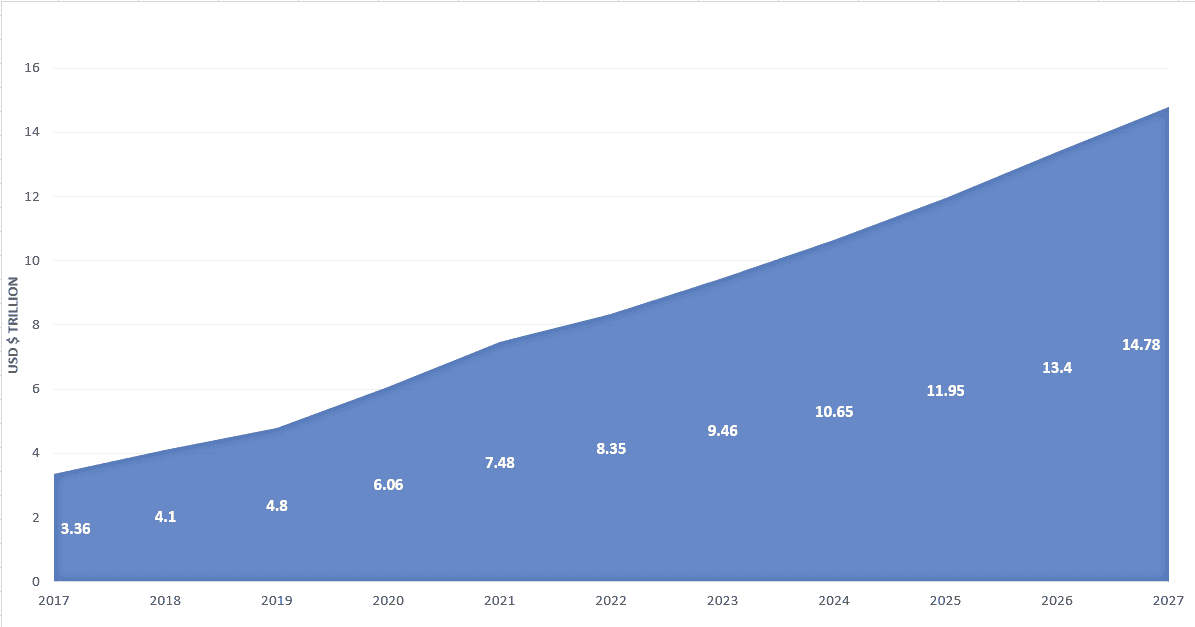
Digital wallets have become a cornerstone of modern commerce, transforming how people pay for goods and services. Over the past few years, we’ve seen a surge in the usage of wallet payments. By 2025, it is expected that over 5.2 billion people worldwide will be using digital wallets. This explosion is driven by the convenience of tap-to-pay and one-touch checkout, along with strong security measures. Recent data suggests that around 65% of U.S. adults used a digital wallet in mid-2024.

Today’s shoppers increasingly expect to pay with their phones or watches instead of cards or cash. Smartphones and other devices now double as payment terminals. Innovations like Apple’s Tap-to-Pay (introduced in iOS 18) allow merchants to accept contactless wallet payments directly through an iPhone or compatible Android device. This means even small shops or pop-up stands can tap-and-go without needing to purchase specialized hardware. In brick-and-mortar stores, contactless acceptance is already mainstream: by 2022, 92% of U.S. small businesses are expected to accept NFC/contactless payments.

And remember, contactless cards and wallets are not only fast – they’re more secure (card numbers never appear to the cashier, and fraud is reduced). All of this sets the stage for digital wallets to continue growing.

Market Growth and Consumer Adoption

The rise of digital wallets is a global trend. Industry forecasts predict that by 2025, roughly half the world’s population will use e-wallets. Another study found that global spending via digital wallets could reach $10 trillion by 2025, roughly double the 2020 level. In online commerce, wallets are gaining popularity: research indicates that by 2025, more than 50% of all e-commerce spending worldwide will be processed through digital wallets. Paying with an app has become a mainstream practice.

In the U.S., mobile wallet usage has jumped dramatically. Approximately 65% of Americans purchased with a digital wallet in July 2024. Younger shoppers lead the way: roughly 91% of U.S. consumers aged 18–26 now use a mobile wallet as their primary payment method. Millennials and Gen Z often expect a fast tap-and-pay checkout, and data show these groups will abandon purchases if their preferred wallet option isn’t available. For example, Generation Z is twice as likely to cancel a transaction if they can’t pay contactlessly.

Regional patterns vary. Asia-Pacific still leads in sheer wallet use (Alipay, WeChat Pay, Paytm, and others are ubiquitous), while North America and Europe are catching up via Apple Pay, Google Pay, PayPal, Venmo, and the like. Markets like the U.K., where contactless cards are widely used, are already ahead of the U.S. in terms of pure tap-to-pay adoption. However, U.S. consumers are rapidly closing the gap: an estimated 49% of U.S. smartphone owners tapped to pay in 2024. These figures tell a simple story: wallets aren’t a novelty anymore – they are the new normal, especially online and on mobile devices.

Why Digital Wallets Matter for Your Business

Mobile payment technology for Host Merchant Services, secure transaction solutions.

For business owners, the rise of wallets is more than a tech trend – it changes customer expectations and sales dynamics. Adapting your payment offerings to include wallets has several key benefits:

  • Faster checkouts and higher sales:

Digital wallets streamline the checkout process – customers can tap or click a one-touch button instead of manually entering their card details. This speed cuts down cart abandonment (especially online) and can significantly boost conversions.

Simply put, a faster, smoother checkout means more completed sales. Even in stores, customers appreciate the quick tap-and-go experience.

  • Lower fraud and processing risk:

Wallet transactions are tokenized and encrypted, so sensitive card data never reaches the merchant. In practice, this means the actual card number is never exposed to the store or its systems. Plus, contactless payments use the same secure EMV standards as chip cards.

For you, that means fewer chargebacks and less fraud liability to worry about. The built-in security of wallets can effectively reduce your payment losses.

  • Consumer data and loyalty:

When customers pay with wallets, you gain valuable data (with permission) about their buying habits. Wallets can also integrate loyalty programs and coupons, making rewards automatic at checkout.

For example, a retailer’s branded app might store points or discounts that apply whenever a customer pays through that wallet. In short, supporting digital payments can deepen customer relationships. It also signals a modern, tech-savvy brand image, which can be a competitive advantage in itself.

  • Cost savings:

Many wallet payments still route over the traditional card networks, but alternatives are emerging. For instance, some apps allow customers to pay directly from their bank accounts (ACH, FedNow, UPI, etc.) at lower fees.

In any case, by focusing on the top 3–4 payment methods your customers prefer (and adding wallets to that mix), you can optimize processing fees and speed. Downsizing cash and check handling also cuts internal costs (handling cash can have hidden security and accounting expenses).

  • Stay competitive

As wallets become the norm, businesses that don’t offer them risk falling behind. Companies without digital wallet options can lose customers and market share to rivals that do.

Think of it this way: if your competitors let customers tap their phones and you make them swipe cards or hand over cash, you’ll miss sales. Adopting wallets is about meeting customer expectations and staying competitive.

Popular Digital Wallets to Consider

Mobile payment processing with Host Merchant Services.

By 2025, customers will have many wallet options at their fingertips. You’ll want to make sure you cover the major ones:

1.    Apple Pay

Used on iPhones and Apple Watches, Apple Pay enables customers to make in-store, app, and website payments using Face ID or a fingerprint. It has hundreds of millions of users globally (over 500 million reported).

Most U.S. retail terminals already accept it, and adding an “Apple Pay” button online is usually a one-click process with modern checkout systems.

2.    Google Pay

Available on Android phones and Wear OS devices, Google Pay similarly enables NFC and in-app payments.

With around 150 million users worldwide, it covers the other half of smartphone users. Like Apple Pay, it works with linked credit/debit cards or bank accounts for quick mobile checkout.

3.    PayPal/Venmo

These long-established e-wallets remain huge for online payments. PayPal alone has 435 million active accounts globally. By integrating PayPal or Venmo in your checkout, customers can pay with one click from their balances or saved cards.

Many people keep funds in PayPal or prefer its buyer protections, so offering it can win that segment of shoppers.

4.    Samsung Pay

For merchants, Samsung Pay is similar to Google Pay but with a twist: it can mimic a magnetic stripe (MST) on older terminals, extending contactless coverage. It serves Samsung phone users – a significant chunk of the U.S. market.

5.    Other wallets

Closed-loop wallets (e.g., Amazon Pay, retailer-specific apps) also play a role. For instance, Starbucks customers can pay via the Starbucks app, and about 26% of all U.S. store transactions were made by that app in late 2023.

In travel, banking, or hospitality, you may also see specialized wallets. Even cryptocurrency wallets (for Bitcoin or Ethereum) are cropping up; currently, only a few merchants accept crypto payments, but they do exist as a niche payment option.

Notably, most modern payment platforms allow users to have multiple wallets simultaneously. In practice, a single POS terminal or payment gateway (Stripe, Square, etc.) can enable Apple Pay, Google Pay, Samsung Pay, and standard contactless cards in one go.

Implementing Wallet Payments at Your Business

Easy Mobile Payment Solutions with Host Merchant Services.

To prepare for 2025, take concrete steps to accept wallet payments:

  • Upgrade or verify your POS:

Ensure your in-store terminals support NFC/contactless transactions. Nearly all chip-and-PIN card readers sold in the last few years do. If you rely on mobile checkout (using a tablet or phone), consider SoftPOS apps – these enable you to accept tap-to-pay directly on a standard smartphone or tablet without requiring extra hardware.

  • Enable tap-to-pay on mobile devices:

New smartphones can function as payment terminals. For example, Apple’s Tap-to-Pay (iOS 18+) and equivalent Android services allow a merchant’s phone to accept wallet payments with just an app install.

This is great for mobile vendors or pop-up shops: download the softPOS app from your processor, register, and start taking Apple Pay, Google Pay, and contactless cards.

  • Integrate wallets into your online checkout:

If you sell online or in an app, add wallet buttons (e.g,. “Pay with Apple Pay/Google Pay”) at checkout. Most e-commerce platforms and payment gateways offer easy plugins for this.

Once enabled, customers can skip entering card numbers – they tap their phone and the wallet handles the rest, reducing form-filling errors and speeding up purchase completion.

  • Train staff and inform customers:

Ensure your team is familiar with processing wallet payments and can provide assistance to customers as needed. Display signage or digital receipts that say “Apple Pay accepted here” (with Apple logos) to signal readiness. The more seamless the experience, the more your customers will use it.

  • Ensure security and compliance:

Although wallets handle the encryption, you still need up-to-date software and PCI compliance. Verify that your payment provider meets security standards (tokenization, fraud monitoring, etc.). Keep your systems patched and secure – for example, ensure your terminals have the latest contactless firmware. This protects both you and your customers.

  • Consider QR code payments:

In some scenarios (food trucks, outdoor markets, restaurant tables) you might offer a QR code that customers scan with their digital wallet to pay. QR payments are prevalent in parts of Asia and are growing in the U.S. as a contactless alternative.

This requires minimal setup (usually just printing or displaying a static code tied to your merchant account) and can complement NFC acceptance.

Future Trends to Watch

Efficient Host Merchant Services payment processing solutions for businesses.

The wallet evolution continues beyond just payments. Expect advanced features, such as biometric locks (fingerprint, face ID), to become standard for authorizing transactions. Wallets may also leverage AI to offer personalized deals or budgeting tools within the app. Some companies are even exploring voice-activated payments or augmented reality shopping experiences at checkout. Another trend is the rise of “super wallets” or super-apps.

In Asia, apps like WeChat and Alipay integrate payments with messaging, shopping, and other services, allowing users to seamlessly manage their financial transactions. Similar all-in-one platforms could emerge elsewhere by 2025. Wallets may increasingly incorporate everyday items, such as digital IDs, tickets, transit passes, or even medical records. For example, airlines and hotels are already experimenting with storing boarding passes and room keys in wallet apps.

The e-commerce world will continue to drive the use of wallets. As more social and online stores integrate in-app purchases, wallet adoption will grow (already >50% of e-commerce by 2025). Industry analysts caution that missing out on these payment methods risks losing sales.

In addition, some experts predict wallet usage will surge once routine bills and subscriptions can be paid through wallets. For example, when customers “Add [a bill] to Wallet” for utilities, phones, or rent, that habitual use can make wallets even more central to daily life.

Merchants in recurring-billing sectors should closely monitor this space. Finally, cryptocurrency wallets are worth mentioning, although they remain a niche market. Wallets for Bitcoin or stablecoins exist, and a few U.S. businesses accept crypto payments (usually converting immediately to dollars). For most companies, crypto-payments are still an experimental option, so focus on mainstream wallets first.

Conclusion

For U.S. businesses, adapting to digital wallets means ensuring your payment ecosystem fully supports wallet transactions (both in-store and online). The effort pays off: faster checkout, lower fraud risk, higher customer satisfaction, and future-proofed revenue. In practice, this adaptation is straightforward: upgrade POS systems to handle NFC, enable wallet buttons on websites, and let your customers know these options are available.

Forward-thinking merchants treat wallet acceptance not as an optional add-on but as table stakes. After all, today’s shoppers increasingly carry only a phone when they shop, and they expect to use it to pay. In essence, making digital wallets a standard payment option is about meeting customer expectations and staying competitive. Embracing wallet payments now positions your business to thrive in a cashless 2025 economy.

Credit Card Regulations

Navigating New Credit Card Regulations in 2025

Merchants should stay informed about the shifting landscape of fees, surcharging rules, and security standards. In the United States, 2025 is a pivotal year for changes in payment regulations and industry standards, including potential legislation on interchange fees, new surcharging laws, and updated security requirements.

This blog will guide you through the key updates and new credit card regulations, explaining their implications for merchant compliance and operations.

Key Takeaways

  • Congress is reconsidering a bill that could increase competition in credit card processing by requiring big banks to offer at least one non-Visa/Mastercard network. Supporters argue that it could lower fees for merchants, but opponents caution that it may reduce or eliminate consumer rewards. The bill’s future is still uncertain as of mid-2025.
  • States are advancing laws to limit swipe fees on sales tax and tips, following Illinois’ lead. At the federal level, a proposed 10% cap on credit card interest rates, supported by both Trump and Sanders, has stirred debate. These moves reflect growing frustration with high fees from both merchants and consumers.
  • Surcharging is legal in most states but comes with strict rules that vary widely. Merchants must stay within fee caps, comply with disclosure requirements, and refrain from applying surcharges to debit card transactions. Some states, like California and Minnesota, have banned or limited separate surcharge fees altogether.
  • New PCI DSS 4.0 rules take effect March 31, 2025. All businesses handling card payments must strengthen authentication, monitor their systems more closely, and adhere to over 50 updated security requirements. Noncompliance can result in significant fines, so thorough preparation is essential.

Congress Reconsiders the Credit Card Competition Act in New Credit Card Regulations

Credit Card Competition Act

A primary focus is the proposed Credit Card Competition Act (CCCA), initially introduced in 2022 and reintroduced with bipartisan support in 2023. The CCCA aims to increase competition in the credit card network market. It would require large card-issuing banks (assets over $100 billion) to enable at least two processing network options on their credit cards, and crucially, neither option can be Visa or Mastercard.

In practice, this means an issuer might pair Visa or Mastercard with an alternative network (like NYCE, Star, or Shazam) to give merchants a choice in how a transaction is routed. Proponents argue that allowing merchants to route payments over a competing network would pressure the dominant networks’ interchange fees downward through competition. This could lower card-acceptance costs for merchants, potentially saving consumers money if merchants pass on the savings.

However, the CCCA has faced strong opposition and has not yet been enacted into law. Opponents, including many banks and card networks, claim that forcing lower interchange revenue would “torpedo” popular credit card rewards programs by cutting the funds that finance points, cash-back, and travel perks.

They often cite what happened after the Durbin Amendment capped debit card interchange in 2010, debit card rewards mostly vanished. History could repeat with credit cards, they warn. Indeed, payment experts note that reducing interchange may lead issuers to scale back generous rewards to make up for lost fee income. This trade-off between lower merchant costs and potential loss of consumer rewards is at the heart of the debate.

As of mid-2025, the fate of the CCCA remains uncertain. It nearly hitched a ride on a larger bill in Congress (the GENIUS Act on stablecoins) but was dropped from the final Senate package. Lawmakers like Senator Dick Durbin (an author of the bill) have signaled they will keep pushing for it, potentially attaching it to other legislation.

For merchants, this means closely watching Capitol Hill. If such a law passes, you could eventually gain new leverage to reduce processing costs, but it might come with shifts in how consumers use their cards if rewards are cut back. The continuing “swipe fee” battle in Washington suggests that regulatory changes to credit card fees are a real possibility, even if timelines are uncertain.

States and Lawmakers Target Swipe Fees and Interest Rates

Contactless payment terminal with credit card reader for Merchant Services.

A growing populist movement is challenging the credit card industry from multiple directions, targeting both the fees that merchants pay and the interest rates consumers face. In 2024, Illinois became the first state to pass a law aimed at limiting interchange fees by prohibiting card networks from charging merchants a percentage on the portion of a sale that accounts for sales tax and tips. The logic is simple: merchants are merely collecting taxes on behalf of the government, so why should they pay swipe fees on that amount? Although a court injunction quickly paused the law, it set a precedent.

As of early 2025, at least a dozen states were advancing similar bills, with several, including Texas, Connecticut, Washington, and Arizona, already pre-filing legislation modeled on the Illinois approach. These efforts are primarily driven by small business groups, who argue that non-negotiable swipe fees imposed by dominant networks, such as Visa and Mastercard, increase costs and erode already thin margins. With federal action stalled, states are stepping in to provide merchants with modest relief on transaction costs that have long been considered unavoidable.

At the same time, that same populist sentiment is reshaping the conversation around what consumers pay to borrow. In a surprising display of bipartisan agreement, President-elect Donald Trump recently proposed a nationwide cap on credit card interest rates at 10 percent. The proposal is even more aggressive than the 15 percent cap initially proposed by progressive lawmakers such as Bernie Sanders and Alexandria Ocasio-Cortez.

Sanders has openly supported Trump’s idea, calling it a long-overdue response to credit card companies charging average rates above 20 percent and retail cards often approaching 30 percent. Although there is currently no federal limit on interest rates for most consumers, the idea of a cap has gained momentum as Americans grow increasingly frustrated with rising credit costs.

Critics warn that such a cap would likely disrupt the business model behind credit cards, leading to fewer approvals, the disappearance of rewards programs, and restricted access to credit. Even so, the fact that lawmakers from opposite sides of the aisle are targeting both the cost of borrowing and the cost of accepting credit cards reflects a more profound shift. Whether it is a small merchant battling swipe fees or a cardholder struggling with high interest, many Americans now view the financial system as tilted toward powerful institutions, and politicians are responding before the pressure becomes impossible to ignore.

Global Context and Proposed Fee Caps

Outside the U.S., regulators have already slashed interchange fees. Notably, the European Union instituted caps years ago, capping consumer credit card interchange at 0.3% of the transaction value (and 0.2% for debit cards). These caps dramatically reduced card acceptance costs in Europe, though they also led European banks to dial back card rewards and introduce annual card fees to compensate. Canada has also moved to ease the burden on merchants: effective late 2024, Canada struck an agreement to cut credit card interchange rates for small businesses by up to 27%, bringing average rates down toward ~1%–1.4%.

This global trend of interchange regulation is influencing the U.S. debate. Some U.S. advocates call for similar direct fee caps on credit card interchange, arguing it would immediately reduce costs for merchants and prices for consumers. Opponents counter that price controls could have unintended consequences, citing studies (often funded by the banking industry) predicting reduced credit availability or higher banking fees if interchange revenue drops.

Credit Card Surcharges Remain a Legal and Compliance Challenge

Fast, secure payment processing for merchant businesses with Host Merchant Services.

Adding a credit card surcharge means charging customers a small extra fee when they choose to pay with a credit card. This is one way merchants try to cover the cost of processing those payments. The rules for surcharging have been evolving in recent years, both at the state level and within the regulations established by card networks such as Visa and Mastercard. As 2025 begins, merchants must understand where surcharging is permitted, the applicable limits, and the required disclosures to comply with the law and avoid regulatory issues.

In most of the United States, credit card surcharging is legal, but a few states still ban the practice. As of 2025, Connecticut, Maine, Massachusetts, and California do not permit credit card surcharges. If your business is located in one of these states or sells to customers there, you cannot add a surcharge to credit card payments. Other states allow surcharges, but many set their own rules. For example, Colorado caps surcharges at two percent, which is lower than the national average. States like New York, New Jersey, Nevada, and South Dakota let you apply a surcharge, but only up to your actual processing cost. In Texas, the law is unclear.

While the state officially restricts surcharging, court decisions have created exceptions. Many businesses in Texas now add surcharges by using cash discount programs or relying on court rulings. In Kansas, a former ban was overturned, and the current guidance allows merchants to apply a surcharge as long as the credit card fee is already included in the listed price and a cash discount is displayed instead. Georgia allows convenience fees on credit card payments, provided another payment option is also available. Since the rules vary significantly by state, merchants must stay up-to-date on local laws before deciding to add a surcharge.

Even in states where surcharging is permitted, merchants must still adhere to card network rules. As of 2023, Visa allows a maximum surcharge of three percent, down from its earlier limit of four percent. Mastercard still allows a four percent fee, but since you cannot charge a higher fee for one brand over another, most businesses must stay within the three percent limit if they accept Visa.

Also, card network rules require that the surcharge must not exceed your actual cost of processing payments. In many cases, that means the real cap could be even lower than three percent. Importantly, surcharging is only allowed on credit cards. You cannot add a fee to debit or prepaid card payments, even if the card is run without a PIN. Doing so can result in substantial fines or even the closure of your merchant account.

When applying a surcharge, transparency is critical. Both state laws and card network rules require merchants to inform customers about the surcharge before they pay clearly. This means posting signs at your entrance and at the register that show the surcharge rate and state that it only applies to credit card purchases.

Online businesses must show the surcharge on the checkout page before the customer finishes the transaction. Some states now have stricter rules. Minnesota, for example, updated its law in 2025 to require that any required fee be either included in the listed price or displayed next to it. In face-to-face sales, Minnesota now also requires that staff verbally inform the customer about the surcharge before completing the transaction.

California’s new consumer law, which took effect in 2024, goes even further. It bans adding any required fees at checkout that were not already included in the advertised price. As a result, California businesses can no longer apply a separate credit card surcharge and must instead build those costs into their prices.

Before starting a surcharge program, merchants must notify their payment processor at least thirty days in advance. The processor then informs the card networks on behalf of the merchant. Visa used to require merchants to notify them directly; however, that step is no longer necessary. Many processors offer a form to handle this process. Failing to notify your processor or follow the rules can lead to severe penalties. Card networks can fine businesses tens of thousands or even hundreds of thousands of dollars for violations, such as surcharging a debit card or failing to post proper signage. Enforcement is getting stricter. Visa has already announced that it is increasing efforts to monitor how surcharges are applied.

PCI DSS 4.0 Sets Stricter Standards for Cardholder Data

credit card compliance

In 2025, a significant update to payment security rules is taking effect. The new standard, known as PCI DSS 4.0, will be fully enforced starting March 31. PCI DSS stands for Payment Card Industry Data Security Standard. Major credit card networks created it to protect cardholder data and apply to any business that stores, processes, or transmits card payments. Whether you run a small online store or a large retail chain, these rules affect you.

Even if you use a third-party platform to handle payments, like a payment gateway or a point-of-sale system, you are still responsible for certain parts of compliance. Most small businesses complete a yearly Self-Assessment Questionnaire to confirm they meet the standards.

PCI DSS 4.0 replaces the previous version from 2016 and introduces new requirements designed to handle modern security threats better. These changes focus on flexibility, continuous monitoring, and strong authentication. While large businesses may opt for a custom approach, most merchants will continue to follow the standard method by meeting each requirement as written.

Some of the most significant changes include:

  • Regular Review of Payment Systems: Businesses must review and document which parts of their system handle cardholder data at least annually. This involves identifying all networks, devices, and individuals involved and ensuring that nothing is overlooked.
  • Securing Web Payment Pages: To protect against online threats, such as script attacks, merchants must now track all code running on their payment pages. You need to know which scripts are allowed and make sure none have been tampered with. Tools like script monitoring or browser security settings can help detect changes.
  • Multi-Factor Authentication and Stronger Passwords: Anyone accessing systems that store or process card data must now use multi-factor authentication. This means logging in with both a password and an additional factor, such as a one-time code. Passwords must also be stronger. They must now be at least twelve characters long, and shared or default passwords must be carefully controlled or eliminated.
  • Better Monitoring and Logging: Businesses must now monitor their systems more closely. Automated tools should be in place to monitor logs, detect unusual activity, and alert staff if an issue arises. If a firewall or antivirus system goes offline, someone should be notified right away. The rules also require checks for malware communication with outside servers, which can indicate a breach.
  • Authenticated Internal Scans: Security scans inside your network must now be done using authenticated methods. This means the scanner logs in and checks system settings in detail rather than just scanning from the outside. It provides a more accurate picture of vulnerabilities.
  • Anti-Phishing and Third-Party Risk: Companies must protect their staff from phishing scams. This includes training employees, using spam filters, and testing awareness through simulations. Businesses also need to vet any vendors who have access to card data carefully. Contracts should spell out each party’s responsibilities under PCI DSS 4.0.
  • Encryption and Data Protection: New rules enhance the protection of stored and transmitted data. Full disk encryption may no longer be sufficient on its own. You may also need to track your security certificates and update them before they expire. If your system utilizes data masking or tokenization, ensure it complies with the latest security standards.

In total, PCI DSS 4.0 includes more than fifty new or updated rules. The goal is to shift from once-a-year checks to ongoing security. Instead of simply completing a checklist, businesses are expected to remain vigilant and adapt to emerging threats over time.

Begin by reviewing your current security setup and comparing it to the new requirements. This is called a gap analysis. Verify that you are using multi-factor authentication, that your passwords meet the latest security standards, and that your payment pages are adequately protected. Then, create a plan with timelines and budgets to address any gaps.

Update your policies and train your employees. Staff should be able to identify phishing emails, know what to do when a system alert is triggered, and understand how their role contributes to overall payment security. Leaders across departments, such as legal, operations, and financ,e should also understand their responsibilities.

Reach out to your payment partners. Request updated compliance reports and clarify which security controls they manage and which ones you are still responsible for. Many businesses use a shared responsibility matrix to maintain clarity.

Failing to comply with PCI DSS 4.0 can result in fines, audit costs, or even liability in the event of a data breach. More importantly, these rules are designed to reduce the chance of a breach in the first place. They help keep your business and your customers safe.

The deadline to comply is March 31, 2025. If you need help, consider hiring a Qualified Security Assessor or a consultant. Starting now gives you time to avoid mistakes and meet the new expectations with confidence.

Conclusion

The regulatory and compliance landscape for credit card payments in 2025 is dynamic. Interchange fees are under the microscope, with lawmakers debating caps and competitive measures that could lower costs for merchants (while potentially reshuffling the rewards ecosystem). Surcharging rules have been implemented nationwide, but the onus is on merchants to surcharge responsibly, within legal limits, and with complete transparency to consumers. And behind the scenes, payment security standards are reaching new heights with the introduction of PCI DSS 4.0, which demands greater vigilance and investment in data protection. For merchants, navigating these changes means staying educated and adaptable.

Those who keep up with the new regulations – adjusting pricing strategies, updating compliance programs, and enhancing security – will not only avoid fines and legal pitfalls but can also gain a competitive edge. By proactively managing transaction costs and safeguarding customer data, businesses can foster trust and resilience in the rapidly evolving world of payments. 2025 presents both challenges and opportunities for merchants to optimize their credit card payment acceptance and security, ultimately benefiting both the business and its customers.

Secure PayPal payment processing for online merchants.

PayPal Complete Payments Launches for Singapore Businesses to Double Down on E-Commerce Growth

PayPal Complete Payments is now available to all Singaporean businesses. This robust, full-stack payment solution is designed to support both small and medium-sized enterprises (SMEs) and large corporations in expanding their global footprint.

With a single, customizable integration, businesses can now accept payments from customers across over 200 markets worldwide – while streamlining operations, enhancing risk management, and reducing technical complexity.

As global trade faces rising tariffs and increasing protectionist pressures, cross-border commerce remains a critical growth engine for Singapore-based companies. These shifting dynamics highlight the need for Southeast Asian businesses to diversify supply chains, explore new markets, and strengthen digital infrastructure.

Key Takeaways
  • Singaporean SMBs and large enterprises can now use PayPal Complete Payments to accept payments from over 200 markets via a single, customizable integration. It supports major payment methods, including PayPal, Apple Pay, Google Pay, Visa, Mastercard, and American Express, as well as local options like Alipay, iDEAL, and BLIK.
  • Businesses using the platform benefit from an average 4.7 percentage point increase in card authorization rates. Plus, offering PayPal Wallet and Apple Pay can yield up to a 17% boost in checkout conversion.
  • The service provides rapid transaction settlements (in minutes, not days) and enables merchants to hold balances in multiple currencies. It also lets businesses display prices in local currencies to shoppers, helping reduce foreign exchange risk and streamline operations.
  • Given that e-commerce fraud in Singapore exceeds the global average by more than fivefold, the platform includes built-in fraud protection and seller protection on eligible transactions. Its compatibility with platforms like Adobe Commerce, BigCommerce, and WooCommerce simplifies implementation for merchants.

PayPal Launches Complete Payments in Singapore to Power Local and Global E-Commerce Growth

On May 15, 2025, PayPal rolled out a new offering called PayPal Complete Payments specifically for businesses operating in Singapore. This launch delivers an end-to-end payments platform designed to meet both local expectations and global ambitions. And by bringing every aspect of payment acceptance, risk management, and settlement into a single, customizable integration, merchants no longer need to juggle multiple gateways or reconcile data across separate systems. Instead, they plug into PayPal’s global processing network and gain access to customers in over two hundred markets, whether they’re selling niche fashion items to a local audience or shipping electronics worldwide.

Singapore’s e-commerce sector has been on a steady climb for several years. Trade data show that the total gross merchandise volume of online transactions here hit about US$8.2 billion in 2022 and is projected to reach roughly US$11 billion by 2025. On the revenue side, market analysts estimate that overall e-commerce revenues rose from around US$4.96 billion in 2024 to about US$5.57 billion in 2025, reflecting annual growth north of ten percent.

This growth is driven by broad digital adoption, with internet penetration reaching 96 percent of the population in early 2024 and over 9.78 million mobile connections – equivalent to 162 percent of residents – enabling seamless online access Add in government initiatives like SMEs Go Digital and the Digital Resilience Bonus, along with world-class logistics networks operated by SingPost, DHL and FedEx, and you have a marketplace primed for digital growth.

PayPal Launches Complete Payments

Beyond traditional online retail, social commerce is emerging as a significant channel in Singapore’s digital economy. Social commerce – where shoppers discover and buy products directly through platforms like Facebook, Instagram, TikTok, or even WhatsApp – accounted for about US$2.5 billion in sales last year and is expected to grow by nearly 27 percent in 2025.

At the same time, Singapore’s in-store payment landscape has been transformed by the Unified QR Code initiative, launched in September 2018, which unified more than forty local e-wallets and bank apps under a single QR standard.

Its successor, SGQR+, now extends interoperability to cross-border payments. But when it comes to online checkouts – where nearly every click can make or break a sale – merchants need a solution that handles everything from local wallet preferences to foreign currency settlements.

Global trade dynamics have reinforced the need for seamless cross-border commerce. Rising tariffs, shifting trade agreements, and occasional protectionist policies mean businesses in Singapore must cast their nets wide. Yet consumer surveys consistently show that about 70 percent of shoppers will abandon a purchase if their preferred payment method isn’t available. In other words, offering payment flexibility isn’t optional – it’s a strategic imperative for anyone aiming to expand beyond domestic borders.

PayPal Complete Payments addresses these challenges by offering a single integration – via API or hosted fields – that taps into payments from customers in more than two hundred markets. Whether a merchant manages a high-volume retail site or a growing subscription business, the platform scales automatically and supports one-time, recurring, or micropayments with minimal coding. That unified integration also plugs directly into local acquiring partners where needed, ensuring fast authorization and optimal routing without the usual technical complexity.

At the heart of Complete Payments is a consolidated risk and reconciliation dashboard. Finance teams get real-time visibility into approvals, declines, chargebacks, and settlements, all in one place. Custom reports can be exported or pulled via API hooks, slicing data by region, payment type, or period. This transparency slashes manual work, reduces reconciliation errors, and accelerates month-end closes. And because the solution sits on PayPal’s global payments infrastructure, it absorbs peak-volume spikes automatically – no extra configuration required.

From the shopper’s perspective, Complete Payments brings together the options they trust and prefer, including globally recognized options such as PayPal, Apple Pay®, and Google Pay™, in addition to major credit and debit cards from American Express, Visa, and Mastercard. The platform also supports locally accepted alternative payment methods, such as Alipay, iDEAL, and BLIK. By covering this full spectrum of payment methods, businesses cut down on cart abandonment and meet consumers on their terms.

Global card processing through PayPal Complete Payments has been shown to increase authorization rates by an average of 4.7 percentage points, helping businesses capture more approved transactions and reduce lost revenue. Furthermore, the availability of both PayPal Wallet and Apple Pay at checkout can potentially lead to a 17 percent increase in conversion rates, empowering merchants to drive higher sales volumes and maximize their return on marketing investments

E-Commerce Growth

Cash flow is another area where Complete Payments shines. Instead of waiting several days for batch settlements, merchants can receive funds within minutes of a successfully processed transaction. Since PayPal accounts support multiple currency balances, businesses can hold payouts in local currencies, avoid unnecessary conversions, and reduce exposure to exchange-rate swings. That freedom helps companies manage working capital more efficiently, funding inventory or marketing initiatives without delay.

To encourage repeat business, eligible merchants can vault customer payment credentials securely in PayPal’s PCI-compliant environment. Tokenization and device fingerprinting protect sensitive card data, while real-time account updater services automatically refresh expired or replaced card details. The result is fewer transaction declines, higher approval rates on returning buyers, and a checkout flow that feels almost frictionless.

Security has been a focus from day one. Singapore’s e-commerce fraud rate sits at more than five times the global average, so having robust controls is non-negotiable. PayPal Complete Payments layers in advanced machine-learning models alongside customizable risk rules, spotting suspicious patterns and enabling merchants to tune thresholds for different markets or products. On top of that, Seller Protection policies cover eligible transactions against certain chargeback claims, giving businesses added peace of mind when they move into higher-risk territories.

Implementation speed is built in. For merchants who want to go live immediately, the no-code option generates shareable payment links and QR codes that can be dropped into emails, social posts or messaging apps – no developer resources required. Standard and advanced checkout integrations provide branded, hosted experiences that can be tailored with custom fields, and the Braintree SDK delivers a fully developer-driven route for those needing deep control over UX and data flows. Comprehensive documentation and sample code snippets guide teams through setup, testing in sandbox environments and launch to production.

A real-world example comes from G2G, a leading marketplace for digital gaming goods serving over ten million users in a market valued at about US$250 billion. By switching to PayPal Complete Payments, G2G simplified its fee structure, gained instant settlement options, and supported transactions in multiple currencies without additional back-end development.

The built-in fraud protection tools helped them block illicit activity without turning away legitimate buyers, and the secure vaulting feature streamlined checkout for repeat customers. Together, these improvements freed the G2G team to focus on community engagement and product development instead of wrestling with payment issues.

On the cost front, Complete Payments carries no monthly or setup fees – merchants pay only for successful transactions, aligning costs directly with revenue. And from a regulatory standpoint, PayPal Pte. Ltd. is licensed by the Monetary Authority of Singapore as a Major Payment Institution under the Payment Services Act of 2019. Global compliance requirements – like PCI data-security standards and European Strong Customer Authentication rules – are baked into the platform, so merchants can operate confidently across borders without needing in-house compliance experts.

PayPal Complete Payments brings together the critical capabilities Singapore businesses need to thrive in a digital, borderless economy. By consolidating payment channels, boosting authorization and conversion rates, and embedding sophisticated risk controls, the platform enables merchants to streamline operations and concentrate on what they do best – developing products, growing their brand, and serving customers.

And with a flexible roadmap that spans quick link-based launches to fully bespoke, enterprise-grade integrations, companies can scale their payments strategy in step with their ambitions. For any business ready to deepen its e-commerce presence, this launch offers a comprehensive, professional-grade toolkit under one intuitive umbrella.

About PayPal

about paypal

Image source

PayPal Holdings, Inc. is an American multinational financial technology company operating an online payments system in the majority of countries that support online money transfers; it serves as an electronic alternative to traditional paper-based methods such as checks and money orders. Established in December 1998 as Confinity, PayPal went public through an IPO in October 2002 at a valuation of US$1.5 billion and was acquired by eBay later that year; in July 2015, it was spun off again as an independent publicly traded company under the ticker PYPL.

By year-end 2024, PayPal’s platform supported 434 million active consumer and merchant accounts, processing 26 billion transactions and US$1.68 trillion in total payment volume (TPV). In the same period, the company generated net revenues of US$31.8 billion, with operating income of US$5.33 billion and net income of US$4.15 billion, while employing approximately 24,400 people worldwide.

Conclusion

The launch of PayPal Complete Payments in Singapore gives businesses a streamlined, scalable way to manage digital transactions both locally and internationally. With built-in support for a wide range of payment methods, faster settlement cycles, real-time risk tools, and no upfront costs, the platform addresses the most common pain points merchants face in today’s e-commerce landscape.

For companies looking to strengthen their presence at home or reach new customers abroad, this solution offers a direct and flexible way to simplify payment operations and support future growth.

amazon removes venmo payment option

Amazon Drops Venmo Payments: What You Need to Know

Amazon has decided to discontinue the option of using Venmo as a payment method starting from January 10, 2024. This change comes over a year after Venmo was initially introduced as a means to cater to the payment preferences of Amazon customers. Although Amazon will still accept Venmo credit and debit cards, it will no longer be possible to link Venmo accounts for payments on Amazon. However, those who have already integrated Venmo into their Amazon wallets will still have a limited time window to continue using this payment method.

The decision to discontinue Venmo came after an announcement made in October 2022 where both Amazon and Venmo highlighted their collaboration as an option for users looking to streamline their purchases on the e-commerce platform. With this change, Amazon is now shifting its focus towards viable payment methods while gradually phasing out the direct use of Venmo accounts. As Amazon excludes Venmo as a payment option let us understand its implication for Amazon users.

Key Takeaways
  • Amazon’s Decision: Amazon is discontinuing the direct use of Venmo accounts for payments on its platform starting January 10, 2024. This change follows a partnership announced just 14 months ago and indicates a strategic shift in Amazon’s payment methods.
  • Impact on Users: Current Amazon users who have already linked Venmo to their accounts will have a limited window to continue using this payment option until the specified date. Amazon advises users to update their payment methods to avoid disruptions in one-time and recurring payments, including Prime memberships and subscriptions.
  • PayPal’s Response: While PayPal, Venmo’s parent company, acknowledged the change, they emphasized their ongoing collaboration with Amazon and reassured customers that other Venmo-related payment methods, such as Venmo credit and debit cards, will still be accepted on the platform. PayPal’s stock saw a slight decline following the announcement.
  • End Note: The decision comes at a challenging time for PayPal, with its stock value dropping by 16% over the past year. This move by Amazon adds to the competitive pressures PayPal faces, particularly with Stripe strengthening its relationship with Amazon and progressing towards an IPO.

Amazon Excludes Venmo: Understanding The Reason Behind This Decision

Amazon has informed its users that they will no longer be able to use Venmo as a payment option. The company clarified that while direct Venmo payments will cease, they will continue to accept Venmo debit and credit cards. This change aligns with a separate announcement from Venmo itself, indicating a shift in their partnership dynamics. According to Amazon, recent updates have led to the decision that Venmo can no longer be added as a new payment method. However, for users who already have Venmo linked to their Amazon accounts, this payment option will remain accessible until the specified date of January 10, 2024.

list of acceptable payment systems on Amazon

Source: Amazon

The decision to remove Venmo as a payment option on Amazon has caught many by surprise, especially since the exact reason behind it hasn’t been disclosed. While some speculate it might be due to slower-than-expected adoption, it’s puzzling given Amazon’s initial enthusiasm in introducing Venmo as a checkout option last October. Venmo, known for its quick money transfers between users, seemed like a fitting addition to Amazon’s various payment choices at that time.

And despite PayPal’s efforts over the past ten years to incorporate Venmo into its overall business strategy after acquiring it, this move by Amazon is a setback after just 14 months of partnership. For Venmo, this partnership was a step toward diversifying beyond P2P transactions, potentially increasing its revenue through transaction fees from retail sales. While the collaboration was announced in 2021, it wasn’t until October 2022 that the integration became active.

Earlier attempts as well by PayPal to boost Venmo’s popularity among teenagers didn’t pan out as hoped. Now, with Amazon dropping Venmo as a payment choice, PayPal faces another challenge in its growth plan. They reassured customers that numerous other payment methods remain available for convenience.

PayPal’s spokesperson, Joshua Criscoe, in a recent interaction, said that Venmo and Amazon have decided to deactivate Venmo as a payment method on Amazon for now. However, customers can still link Venmo cards to Venmo accounts for Amazon payments. Criscoe emphasized PayPal’s strong relationship with Amazon and expressed optimism about its future growth. Following this announcement, PayPal’s stock experienced a slight decline, too.

Steps For Subscribers To Avoid Disruptions

Amazon’s changes will affect one-time purchases and recurring payments like Prime memberships and other subscriptions. If you’ve set up Venmo as your go-to method for these payments, Amazon cautions there could be hitches.

To avoid any issues, switching your payment details before the mentioned date is a good idea. Simply log into your Amazon account, head to the “Memberships and Subscriptions” section, and make the necessary updates.

While Venmo, along with PayPal, will no longer be a payment option on Amazon, the platform continues to offer a diverse array of payment methods to accommodate its users. Customers can conveniently make purchases using various gift cards, including Visa, Amazon, American Express, and MasterCard. Additionally, payments can be processed directly through checking accounts.

Amazon’s range of accepted payment methods extends to major credit card options such as Prime Visa, Visa, Amazon Secured Card, Amazon Store Card, Discover, MasterCard/EuroCard, JCB, China UnionPay, and American Express. It’s important to note that specific payment options may be applicable only for certain types of purchases. For customers with a US billing address, Amazon offers the flexibility to utilize FSA or HSA for eligible items. Moreover, in select states, the platform also accepts SNAP EBT cards, allowing users to purchase groceries seamlessly.

PayPal Facing Troubles From All Sides

PayPal has been facing challenges recently, reflected in a 16% drop in its stock value over the past year. Adding to the pressure, Stripe, another payment processor, has been strengthening its ties with Amazon and is moving forward with plans for an IPO.

In an effort to face these challenges, PayPal appointed a new CEO, Alex Chriss, in September. Chriss has been actively working to strengthen partnerships within the tech and finance industries. One notable achievement under his leadership was a collaboration with Apple. In October, PayPal announced that customers could link their PayPal or Venmo cards to Apple Wallet. Additionally, PayPal ventured into the realm of stablecoins earlier in the year, a move that caught the attention of the SEC, resulting in a subpoena.

About Amazon

amazon com store iii 72679549 1

Amazon.com, Inc. is a prominent player in the industry selling a wide range of consumer products and subscriptions both online and in physical stores worldwide. The company operates across three segments – International, AWS, and North America. Amazon offers a selection of products from both its inventory and third-party sellers. They sell devices like Fire tablets, Kindle e-readers, Rings, Fire TVs, and Echo smart speakers. Additionally, Amazon creates media content and provides platforms for creators such as musicians, authors, and Twitch streamers to showcase their work and make sales.

In addition to their presence, Amazon offers a suite of services through AWS, including cloud storage, computing capabilities, analytics tools, and machine learning solutions. They also handle product fulfillment services for sellers while providing content subscriptions and advertising services. Amazon Prime’s membership program offers benefits to subscribers. Established in 1994 with its headquarters located in Seattle, Washington; Amazon caters to a clientele comprising sellers, consumers, enterprise developers, advertisers, and content creators.

About Venmo

venmo business accounts

Venmo was established in 2009 as a straightforward solution for sending money through text messages. By the end of 2010, they introduced an app to make transactions even easier. Initially, Venmo mainly focused on person-to-person (P2P) payments and simple transactions like paying for food trucks. However, they have since expanded their services to allow users to make in-person payments to various merchants. Users have the flexibility to fund their Venmo accounts and link them to bank accounts, debit cards, or credit cards. At present, more than 2 million merchants accept Venmo payments. Venmo employs the most advanced security measures and specialized algorithms to prioritize user safety to protect information and prevent unauthorized activities.

The user-friendly Venmo mobile app is available on both iOS and Android platforms, enabling users to transfer funds from their Venmo balance into their bank accounts. In terms of ownership history, Braintree acquired Venmo for $26.2 million in 2012 before being acquired by PayPal in December 2013. Today, Venmo operates as part of the PayPal family.

Conclusion

The decision made by Amazon to remove Venmo as a payment option reflects the changing interest in e-commerce partnerships and the strategies they employ. Although the exact reasons behind this move have not been disclosed, it highlights how online retail is an environment where alliances can shift based on factors like user adoption rates and strategic business decisions. While this transition may cause some inconvenience for Amazon users, they have a range of alternative payment methods available to ensure minimal disruption. It also serves as a reminder of the importance of reviewing and updating payment settings, especially when changes are announced.

On the other hand, for PayPal, the Venmo situation adds to a series of challenges highlighting the highly competitive nature of the payment processing industry. As both Amazon and PayPal steer through these shifts, they continue exploring opportunities for growth and innovation to provide consumers with secure payment options. Overall, this development demonstrates how fluid the digital payment ecosystem is, emphasizing adaptability and foresight as qualities. Moving forward, it will be fascinating to observe how these industry players continue to evolve and shape the future of transactions.

dLocal PayPal Partnership

dLocal and PayPal Expand Access to Local Payments Across Emerging Markets

dLocal has taken a major leap forward in global payments by expanding its partnership with PayPal to enhance cross-border payment capabilities across more than 40 emerging markets worldwide. This dLocal-PayPal Partnership enables businesses to seamlessly process both B2B and B2C transactions without the need to establish local entities.

Integrating PayPal Enterprise Payments (formerly Braintree) with dLocal’s robust platform, global merchants can now efficiently accept cards, local payment methods, and alternative payment solutions across key regions, including Latin America, EMEA, and APAC.

Merchants benefit from:

  • Frictionless access to new global customer segments
  • Increased authorization rates and improved conversion
  • Simplified entry into complex, high-growth markets

This dLocal-PayPal Partnership marks a strategic advancement in international e-commerce, which will empower businesses to scale globally with greater speed, compliance, and efficiency.

Key Takeaways
  • This alliance with PayPal’s Enterprise Payments gives merchants the power to process cards and local payment methods in over 40 additional emerging markets, including Latin America, EMEA, and APAC, without the requirement for local incorporation.
  • Powering on the existing PayPal integration and stored card data, businesses can access new local payment channels with minimal engineering effort. It will bring global capabilities without the usual technical burden.
  • Using dLocal’s local acquiring infrastructure increases transaction approval rates, as domestic card acceptance is higher with local processors.
  • Merchants benefit from a single platform to manage both global and local payment flows. It will simplify reconciliation, reporting, and operations across diverse markets

dLocal-PayPal Partnership: Access to Over 40 Emerging Markets with Streamlined Local Payment Integration

On May 6, 2025, dLocal and PayPal Enterprise Payments extended their partnership to offer merchants seamless access to more than forty emerging markets across Latin America, EMEA, and APAC. This dLocal-PayPal Partnership means that companies already using PayPal’s enterprise APIs can now accept both international cards and a broad spectrum of local payment methods – everything from real‐time bank transfers and digital wallets to cash‐based voucher systems – without having to establish separate legal entities or negotiate multiple acquiring agreements in each country.

The need for such capabilities has only grown more urgent. In Latin America, for example, digital payment revenue is projected to climb to roughly $300 billion by 2027, while e-commerce sales are on track to exceed $260 billion by 2028. Alternative and instant payments already represent about 40 percent of online transactions in that region, and similar patterns are emerging in parts of Asia and Africa. Consumers in these markets tend to favor locally familiar options – whether that’s paying through a popular mobile wallet in Indonesia or using a cash‐deposit voucher in Nigeria – over international credit cards. If merchants don’t offer those options, potential buyers often abandon their carts at checkout.

Secure online payment with Host Merchant Services.

By tapping into dLocal’s specialized platform, PayPal merchants sidestep the traditional hurdles of cross-border expansion. Rather than embarking on the lengthy process of setting up a subsidiary, securing local licenses, and integrating with each country’s acquiring banks, they simply switch on the dLocal connector in their existing PayPal dashboard. Behind the scenes, dLocal handles all settlement, local‐currency conversion, and compliance checks while routing payments to the optimal local rails for maximum approval rates.

The list of newly accessible markets spans some of the world’s most dynamic economies. In Latin America, merchants gain entry to Brazil, Mexico, Colombia, and Argentina, as well as smaller but fast-growing markets such as Nicaragua and Uruguay. In Asia, India, Indonesia, the Philippines, and Vietnam join the roster. And in EMEA, coverage now includes Nigeria, South Africa, Turkey, and the United Arab Emirates, among others. All told, this single integration opens doors in more than forty countries, without any additional engineering work beyond enabling the feature in PayPal Enterprise Payments.

And that minimal engineering effort is a key advantage. Most merchants continue using their existing PayPal Braintree integration, along with the same card vault and checkout flows they’ve deployed elsewhere. dLocal’s API then dynamically routes each transaction, whether it’s a consumer purchase or a B2B invoice payment, to the local acquirer or payment scheme that delivers the best authorization rate. There’s no need to build and maintain separate regional integrations, which historically have meant weeks or months of development time and ongoing maintenance.

But it’s not just about speed to market. Processing locally tends to yield noticeably higher approval rates, often adding a few percentage points to overall authorization figures. That lift comes from lower fraud flags, fraud-screening rules tuned to regional payment behaviors and better interoperability with domestic banking networks. In practice, higher approval rates translate directly into more successful checkouts and more predictable revenue.

Merchants also benefit from a unified management console. Instead of juggling multiple dashboards, reconciliation spreadsheets, and settlement schedules, they get a single pane of glass within the PayPal environment. Operational teams can track transactions, monitor declines, manage disputes, and analyze regional performance without switching tools. dLocal’s reporting and analytics augment PayPal’s dashboards, giving clearer insights into where sales are strongest, which methods perform best, and where declines might be creeping up.

Emerging Markets

Recently, PayPal orchestration also initiated an omnichannel tie-up with Verifone for in-store and online payments. In both cases, PayPal Open acts as the central hub: merchants configure one connection, and payments flow through whichever local or global network makes the most sense. This pattern reduces complexity, consolidates monitoring, and speeds deployment, all while preserving the reliability PayPal is known for.

On the regulatory front, merchants gain another layer of simplicity. dLocal maintains the necessary authorizations in each market, covering anti-money laundering controls, data privacy requirements, and local acquiring partnerships. That means businesses don’t have to navigate the labyrinth of country-by-country licensing or worry about shifting compliance rules. dLocal absorbs those responsibilities, so merchants can focus on customer acquisition and product development instead of legal paperwork and audits.

The expanded relationship is relevant across a wide range of industries. E-commerce platforms can offer true “local” checkout experiences, with payment methods tailored to each customer’s market. Ride-hailing and food-delivery services can settle fares and fees into local wallets or bank accounts. Gaming companies can accept prepaid cards or mobile money options that resonate with regional audiences. Subscription services, digital publishers, and streaming platforms can boost conversion by letting subscribers pay in the currency and format they already trust. Even B2B suppliers benefit, since invoicing and collections in local currencies simplify accounting and reduce currency-conversion headaches.

From the consumer’s perspective, the change is subtle but meaningful. Being charged in local currency through a familiar interface reduces confusion and anxiety, and it cuts down on declines caused by mismatches between card networks and local banks. That friction reduction builds trust at checkout, which in turn drives repeat business and bolsters lifetime value.

And this move fits squarely within a broader trend toward payment orchestration and ecosystem partnerships. No single payment provider can support every niche method or regulatory nuance in every country, so alliances between global players and local specialists have become the norm. PayPal’s approach of weaving dLocal’s network into its own global rails illustrates how specialized providers and platform giants can each play to their strengths, delivering coverage that neither could achieve alone.

The foundation is in place for additional innovations. With the basic integration live, dLocal and PayPal can layer on services such as point-of-sale financing, more sophisticated fraud-detection models, and ever-faster reconciliation tools. Both companies have already signaled plans to expand the roster of supported payment types as new methods gain traction. So merchants who adopt today’s solution will likely benefit from further enhancements without revisiting the core integration.

This partnership between dLocal and PayPal Enterprise Payments represents a practical, efficient path for businesses aiming to enter or expand in emerging markets. By removing the usual barriers – entity setup, technical fragmentation, and regulatory complexity – it lets companies devote their resources to product innovation and customer experience. And for the buyers in those markets, it delivers the local payment options they expect, wrapped in the familiar PayPal checkout they trust.

John O’Brien, dLocal’s Chief Revenue Officer, explained that collaborating with a trusted leader like PayPal underscores dLocal’s dedication to supporting global enterprises in high-growth emerging markets. He noted that the integration with PayPal’s Enterprise Payments gives customers streamlined access to more than 40 previously out-of-reach countries, removes cross-border payment obstacles, and opens new pathways for international expansion.

In March, dLocal partnered with European remittance-as-a-service provider Belmoney to strengthen its cross-border payout capabilities. This collaboration will bring more than 900 local and alternative payment options, ranging from credit and debit cards to bank transfers and instant transactions, onto dLocal’s platform.

About dLocal

About dLocal

Image source

dLocal Limited, founded in 2016 in Montevideo by Sergio Fogel and Andrés Bzurovski, is a public financial technology company focused on simplifying cross-border payments for global merchants in emerging markets. Its platform supports over 300 local payment methods and operates in more than 40 countries, offering services like pay-ins, payouts, invoicing, and risk management. With offices in over 20 cities and a workforce of more than 1,000, dLocal became Uruguay’s first unicorn to go public, listing on the Nasdaq in 2021 with a valuation of $9.5 billion.

In 2024, dLocal reported $25.6 billion in total payment volume, a 45% year-over-year increase, and generated $746 million in revenue. With a net revenue retention rate of 113% and adjusted EBITDA of $189 million, the company continues to grow under CEO Pedro Arnt. It has formed partnerships with companies like PayPal and expanded local acquiring capabilities in regions such as the UAE, Turkey, and the Philippines. dLocal serves major global clients including Amazon, Uber, and Netflix, helping them reach underbanked populations in Latin America, Africa, and Asia.

About PayPal

About PayPal

Image source

PayPal Holdings, Inc., founded in 1998 as Confinity and later merged with Elon Musk’s X.com, is a U.S.-based multinational fintech company known for its global online payments system. After being acquired by eBay in 2002 and spinning off in 2015, PayPal re-established itself as an independent digital payments leader. Headquartered in San Jose, it operates in over 200 markets, supports more than 100 currencies, and by the end of 2024 had 434 million active accounts and processed $1.68 trillion in payment volume across 26 billion transactions.

PayPal has expanded beyond its core platform through acquisitions and product development. Its broader ecosystem includes Venmo for peer-to-peer payments, Braintree for merchant services, Zettle for in-store payments, Xoom for remittances, and Honey for e-commerce tools. These offerings support a range of financial services, including cross-border transactions and “Buy Now, Pay Later” options, aiming to streamline commerce and improve access to digital financial tools for both consumers and businesses.

Conclusion

The expanded partnership between dLocal and PayPal Enterprise Payments delivers a scalable, low-friction solution for merchants entering fast-growing, complex markets. By combining PayPal’s enterprise infrastructure with dLocal’s local payment expertise, businesses gain access to over 40 emerging markets without added legal, technical, or regulatory burdens.

This unified integration improves approval rates, simplifies operations, and supports a wide range of payment preferences – all while preserving the familiar PayPal experience for customers. As global commerce continues to shift toward local-first strategies, this collaboration offers a practical way forward for companies seeking growth in high-potential regions.

Recurly Acquires Prive and Redfast

Recurly Announces Strategic Acquisitions of Redfast and Prive to Accelerate the Future of Subscription Growth

Recurly acquires Prive and Redfast, marking a significant step in its mission to deliver the most comprehensive subscription management platform on the market. These acquisitions enhance Recurly’s offering with powerful tools for real-time subscriber engagement and advanced commerce automation.

Following these acquisitions, Recurly is now the only subscription platform that handles payments, billing, real-time engagement, analytics, and ecommerce subscription management all in one place. This positions Recurly to serve as a true end-to-end solution for subscription businesses.

The move underscores Recurly’s strategic focus on helping merchants drive recurring revenue, optimize the subscriber lifecycle, and compete more effectively across both digital and physical commerce channels.

Key Takeaways
  • By acquiring Shopify‑focused Prive (now Recurly Commerce) and real‑time engagement tool Redfast (rebranded Recurly Engage), Recurly becomes the first platform to fully integrate payments, billing, analytics, ecommerce, and subscriber engagement, all under one roof.
  • With Prive’s Shopify‑native technology, Recurly now supports automated workflows, pricing intelligence, and checkout optimization for physical‑product subscription brands. This positions them in a market projected to grow to $1 trillion by 2028.
  • Redfast adds predictive churn models and in‑product prompts, enabling brands to intervene at critical moments for upgrades or renewals. Engaged subscribers typically spend 67% more than newer users.
  • The acquisitions build on Recurly’s recent SubSummit award (Best Subscription Management Platform 2025) and its AI‑powered Recurly Compass. According to Recurly CEO Joe Rohrlich, subscription businesses today must go beyond billing; they need to manage every stage of the subscriber lifecycle, deliver personalized experiences, and stay adaptable.

Recurly Acquires Prive and RedfastExpands Platform to Support Full Subscriber Lifecycle

The subscription model has shifted the way businesses think about revenue and how customers expect to pay for services. Instead of a one-time purchase, companies now build ongoing relationships with subscribers, and that predictability can be a game-changer. Juniper Research reports that the subscription market was around $593 billion in 2024 and is on track to nearly hit $1 trillion – $996 billion – by 2028, a jump of roughly 68% in four years. Another forecast puts the total at $599 billion by 2026, thanks to booming demand for everything from streaming video and digital music to meal kits and curated product boxes.

To put it in perspective, video services make up about $60 billion of that, music subscriptions another $41 billion, and those physical goods boxes pull in roughly $102 billion. Those numbers underscore why any company looking to tap into recurring revenue needs billing, analytics, and engagement tools that keep pace with customer expectations.

Recurly’s journey began in September 2009 when Dan Burkhart, Tim Van Loan, and Isaac Hall set up shop in a San Francisco apartment. Their goal was simple: build a better way to manage payments for subscriptions. Over the years, they’ve attracted investors like Accel-KKR, Polaris Partners, and Fidelity, and grown into a platform used by more than 2,000 brands around the world. You’ve probably interacted with it if you’ve signed up for Sling TV, BarkBox, Twitch, Paramount+, FabFitFun, or Sprout Social. Headquartered in Austin, Texas, with additional offices in San Francisco, Broomfield, Colorado, Medellín, Colombia, and London, Recurly combines a local touch with global scale, processing billions of dollars in recurring revenue every year.

Seamless payment processing for Host Merchant Services, boosting revenue and customer engagement.

Image source

On May 7, 2025 – right after being honored as “Best Subscription Management Platform” at SubSummit 2025 – Recurly revealed plans to acquire two fast-moving startups: Prive, a Shopify-first subscription commerce solution, and Redfast, a real-time engagement and personalization service. The idea was to fill gaps in its offering so customers don’t have to stitch together separate tools for payments, billing, analytics, ecommerce, and subscriber engagement.

Joe Rohrlich put it like this: subscription companies today can’t stop at billing, they have to cover every stage of the subscriber lifecycle, act on data as it arrives, and give people both flexibility and personalized experiences throughout. Bringing Redfast and Prive into the mix makes Recurly the first platform to unite payments, billing, analytics, ecommerce, and subscriber engagement in one place. That lets customers pick the exact tools they need and see results right away.

Prive’s technology now forms the core of what Recurly calls Recurly Commerce, extending its reach into physical goods subscriptions – a space Juniper Research expects will top $1 trillion worldwide by 2028. Brands built on Shopify can automate recurring orders, run pricing experiments, and optimize revenue without tearing down their existing storefronts. Companies like Public Goods, Coterie, GEM, and Kudos, which already relied on Prive, will gain direct access to Recurly’s robust billing engine and analytics suite.

Alex Craciun, co-founder of Prive, pointed out that subscription billing is often inflexible, especially as customer needs continue to evolve quickly. His co-founder, Claudia Laurie, noted that with the rise of physical goods subscriptions, businesses need tools that are both adaptable and driven by data. They both expressed that joining Recurly allows them to support fast-growing brands in building more efficient, scalable subscription models.

Both founders will serve as advisors during the integration to ensure existing clients keep the hands-on support they value.

On the engagement side, Redfast has been reborn as Recurly Engage. It zeroes in on churn by spotting subscribers at risk of leaving and delivering targeted messages – whether it’s in-app prompts, emails, or special offers – at the precise moment they’re most effective. Recurly’s data shows that subscribers who receive active engagement spend about 67% more than newcomers do.

Secure payment processing solutions for Host Merchant Services.

Image source

Rajeev Raman, Redfast’s CEO, pointed out that as acquisition costs climb and personalization becomes a basic expectation, subscription businesses should engage subscribers at the right moment – whether it’s suggesting an upgrade, sending a renewal reminder, or offering a targeted incentive.

Raman is joining Recurly’s leadership team to accelerate product development and make sure real-time engagement stays central to the platform.

Bringing billing, commerce automation, engagement intelligence, and analytics together on one platform delivers a single source of truth for subscriber data. You can launch a new price test in Recurly Commerce, see its effect on retention in Recurly Engage, and tweak your approach – all in a matter of minutes instead of weeks. That cuts down on fragile, expensive integrations and lets product, marketing, and finance teams move in lockstep.

Earlier in 2025, Recurly rolled out more than 50 new features, including Recurly Compass, an AI-driven growth engine that surfaces insights and predictive analytics to guide decisions on pricing, marketing and retention. With Prive and Redfast layered on, customers can now bring subscribers in, decide how to charge them, and keep them engaged for the long haul, all without leaving the Recurly environment.

Recurly’s leaders are already on the conference circuit sharing lessons learned and best practices. On May 14 at 3:30 p.m. BST, Chief Product Officer Priya Lakshminarayanan will close out SubscriptionX in London with a presentation on scaling ecommerce subscriptions. Then on May 28 at 10:00 a.m. CT, Joe Rohrlich and CMO Lina Tonk will accept the SubSummit award in Dallas and appear alongside Megan Krouse of Cinemark to talk about personalization. Finally, on June 11 at 10:20 a.m. BST, Lakshminarayanan returns to London Tech Week to discuss how predictive analytics can shape retention strategies.

For any company trying to stake its claim in a market heading toward $1 trillion a year by 2028, these moves from Recurly matter. By lowering the bar on experimentation – whether that’s new offers in Recurly Commerce or targeted messaging in Recurly Engage – teams can learn faster, iterate sooner, and, ultimately, build stronger subscriber relationships. If you’re curious how this platform could fit your business, you can request a demo at recurly.com.

About Recurly

Secure payment processing solutions for Host Merchant Services.

Image source

Recurly, Inc. is a San Francisco–headquartered subscription management platform founded in 2009 by Isaac Hall and Dan Burkhart. From its origins in an apartment building, the company has scaled into a global leader, powering thousands of businesses across industries such as streaming media, SaaS, digital publishing, and consumer goods. Its developer-first, API-driven architecture underpins a comprehensive suite of solutions – covering pricing models, trial and account management, payment orchestration, recurring billing, intelligent retries and dunning, revenue recognition, and built-in analytics – augmented by AI-based insights through Recurly Compass and add-ons like Recurly Engage and Recurly Commerce.

Today, Recurly’s platform processes over $12 billion in annual payment volume, supports more than 67 million active subscribers, and recovers over $1.3 billion in revenue for its customers each year – delivering an average 16× ROI for merchants. Since launch, the company has raised more than $41 million in funding: a $1.6 million seed round in 2010; $6 million Series A in 2012; $12 million Series B in 2014; $16.5 million Series C in 2019; and growth-equity backing from Accel-KKR in 2020 to fuel ongoing product innovation and global expansion.

Conclusion

Recurly’s acquisition of Prive and Redfast marks a clear pivot from subscription billing provider to a full-service platform for recurring revenue businesses. As the subscription economy pushes toward $1 trillion in global value, companies need more than just invoicing—they need flexibility, automation, and data-driven engagement to stay competitive.

By integrating real-time analytics, personalized messaging, and physical goods commerce into its offering, Recurly eliminates the need for fragmented tools and gives teams the ability to test, adapt, and scale in one place. For businesses looking to build sustainable subscriber relationships, Recurly’s expanded platform offers the tools to keep pace with rising expectations and growing market complexity.

Small Business Index

April Small Business Sales Improved from March, Though Consumers Continue to Trim Discretionary Spending

Small business sales rose in April, even as consumers brace tighter budgets, pulling back on non-essential purchases, and spending less while dining out.

Fiserv, Inc. (NYSE: FI), a global powerhouse in payments and financial technology, has released its April 2025 Small Business Index. According to the Fiserv Small Business Index report, sales soared by 3.2% year-over-year, with transaction volumes jumping 6.9%, signaling robust consumer activity despite economic headwinds. Even on a month-to-month basis, sales edged up by 0.4% and transactions ticked up by 0.3%, demonstrating steady momentum. The seasonally adjusted index climbed to 151, up one point from March, another sign of sustained strength.

Key Takeaways
  • Small business sales rose 3.2% year-over-year in April, with transaction volumes up 6.9%. Every month, growth was more modest – sales were up 0.4%, and transactions increased by 0.3%. The index reading of 151 reflects stable but cautious consumer activity.
  • Spending patterns show a shift toward essential categories like groceries, healthcare, insurance, and ground transportation. At the same time, areas like accommodation, restaurants, and certain retail segments are seeing either slower growth or outright declines.
  • The service sector led growth again, up 3.6% year-over-year compared to a 2.2% rise for goods. Professional services and health care were strong performers, while travel-related services such as accommodation and transportation saw declines due to tighter consumer budgets.
  • Restaurants saw a 9.6% rise in foot traffic from last year, but average spending per visit fell 7.8%, leading to flat overall sales. Retail posted a 2.2% annual gain, but nearly all of it came from essentials like groceries and clothing, while general merchandise and sporting goods declined.

Consumers Shift Toward Essentials as Small Business Sales Show Modest Growth in April

Small business sales in April crept up from March, even as consumers kept a tighter grip on their wallets. According to the latest Fiserv Small Business Index, the seasonally adjusted reading for April hit 151, a one-point bump from March. But that modest uptick masks mixed behavior beneath the surface – while overall spending remains in growth mode, shoppers are increasingly funneling dollars toward essentials and dialing back on discretionary splurges.

On the year-over-year front, small business sales climbed 3.2%, with total transactions rising 6.9%. Looking month-to-month, sales edged up 0.4% and transactions were up 0.3%. Those figures were supported by an inflation tailwind of 2.4% in April 2025 – steady with March but notably cooler than the 3.4% inflation contribution seen in April 2024.

Easy-to-use payment solutions for small business owners at Host Merchant Services.

Services have outpaced goods for every month of 2025 so far. Compared to April a year ago, service-sector sales grew 3.6% versus 2.2% for goods. Professional Services led the charge at +5.0%, followed by Ambulatory Health Care at +4.2%. On the flip side, high-flying categories like Accommodation fell 5.0%, and Transit and Transportation dipped 1.9% as budget-conscious consumers pared back on travel-adjacent spending.

Even within services, April’s month-over-month winners were in the essentials. Ground Transportation bookings jumped 4.1%, Insurance services were up 2.7%, and Rental and Leasing climbed a robust 7.1%. But accommodation flipped from a 3.7% gain in March to a 0.6% decline in April – a clear sign that tastes are growing more selective.

Restaurants tell a similar story. They saw a modest 1.8% gain in year-over-year sales, but on a month-to-month basis, revenues were flat to slightly down (-0.1%) even as foot traffic ticked up 0.6%. Diners are still showing up – transactions were 9.6% higher than a year ago – but average checks are shrinking fast, down 7.8%, as diners hunt deals and watch their budgets.

Easy Merchant Payment Solutions by Host Merchant Services.

Over in retail, growth is cooling. April’s small business retail sales were up just 2.2% year-over-year, with transactions essentially flat at +0.1%. Grocery stores (+7.0%), Clothing retailers (+5.3%), and Building Materials/Garden Supply (+4.6%) held the front lines. Meanwhile, Gasoline Stations saw a 4.1% drop, and Health & Personal Care outlets fell 1.9%. Month over month, retail was nearly parked – sales +0.2%, transactions +0.1%, ticket sizes +0.1% – with Gas Stations (+1.5%) and Building Materials (+1.0%) inching ahead even as General Merchandise (-2.6%) and Sporting Goods (-1.5%) slid.

As National Small Business Week kicks off, Fiserv’s data shows a clear pattern that consumers are shoring up essentials – healthcare, groceries, insurance – while reining in travel, big-ticket retail, and restaurant spending. Prasanna Dhore, chief data officer at Fiserv, noted that while consumer spending remains resilient overall, economic uncertainty is prompting more budget-conscious choices. Shoppers are prioritizing essentials like healthcare and groceries, where small businesses saw solid gains. Meanwhile, more discretionary categories – especially in travel and parts of retail – are seeing growth start to taper off.

For small business owners, these nuances matter. April’s numbers show that while the overall pie is growing, where consumers slice it is changing. Essentials and service-based offerings remain robust, but enticing cautious consumers back into discretionary spending will require creativity, whether through promotions, loyalty perks, or streamlined experiences. As we head into May, keeping a close eye on next month’s index could reveal whether this cautious tone holds or if consumers loosen up again.

About The Fiserv Small Business Index®

High profit growth with Host Merchant Services payment processing solutions.

The Fiserv Small Business Index® is published during the first week of each month, incorporating all point-of-sale transaction data for the full previous month and refreshed on the 2nd with updated figures. Rather than relying on survey or sentiment data, the Index aggregates real card, cash, and check transactions captured through Fiserv’s payment processing platforms across approximately two million U.S. small businesses, providing an up-to-date view of both consumer spending and customer traffic.

Benchmarked to January 2019, the Index produces two metrics – a sales index and a transaction index measuring foot traffic – and computes monthly values for 16 broad sectors and 34 sub-sectors as defined by NAICS codes. Users can explore data via a simple web interface, filtering by national, state, metro, or industry level, covering all 50 states to deliver consistent, timely insights into small business performance – even in industries dominated by larger players – and to support risk assessment, benchmarking, and strategic planning across government, finance, and media.

To explore the full Fiserv Small Business Index and subscribe to their monthly updates.

About Fiserv

about Fiserv

Fiserv, Inc. is a financial technology company based in Milwaukee, Wisconsin, and is part of the S&P 500 index (NYSE: FI). In fiscal year 2024, the company reported $19.12 billion in adjusted revenue, a 7% increase from the previous year. It has about 38,000 employees and supports transactions in over 100 countries.

Fiserv operates through two main business units: Merchant Solutions and Financial Solutions. The Merchant segment offers services like payment processing, fraud prevention, and point-of-sale systems. The Financial segment provides tools for banking, account management, and card services. The company has grown through several acquisitions, including the $22 billion merger with First Data in 2019, the 2022 purchase of Finxact, and more recent deals with Payfare in March 2025 and Pinch Payments in April 2025. Fiserv has been recognized by Fortune in both its Most Innovative Companies and World’s Most Admired Companies lists.

Conclusion

April’s data highlights a key shift in consumer behavior; overall spending is still rising, but it’s increasingly concentrated in essential categories. Small business sales continued to grow, helped by gains in healthcare, groceries, and insurance-related services, while more discretionary segments like travel, dining, and general retail saw slower momentum or slight declines.

For small business owners, this trend suggests that understanding where demand is holding firm – and where it’s pulling back – will be critical in the months ahead. With consumers tightening budgets, success may depend less on overall demand and more on aligning products, pricing, and experiences with changing priorities.

Chime Financial IPO

Chime Financial Launches IPO, Begins Trading Under Ticker ‘CHYM’

On June 11, 2025, Chime Financial, Inc. officially announced its highly anticipated IPO, pricing 32 million shares of its Class A common stock at $27.00 per share.

Of the shares offered, 25.9 million were issued by Chime, raising nearly $700 million in fresh capital. An additional 6.1 million shares were sold by existing stockholders, who collectively secured approximately $165 million. Chime did not receive proceeds from these secondary sales.

Chime Financial IPO shares began trading a day earlier, on June 12, 2025, on the Nasdaq Global Select Market under the ticker CHYM. The debut was nothing short of explosive – the stock opened at $43.00 and closed the day at $37.11, delivering a 37% surge above the IPO price.

To support further investor demand, Chime granted underwriters a 30-day option to purchase up to 4.8 million additional shares. With an offering that totaled around $864 million, Chime’s fully diluted valuation was pegged at $11.6 billion.

Key Takeaways
  • Chime announced its IPO on June 11, 2025, at $27 per share. The share price was above the projected range of $24 to 26. The company sold 25.9 million new shares while existing investors sold about 6.1 million. The sale brings in $864 million in total proceeds.
  • With its initial pricing, Chime’s fully diluted valuation came in around $11.6 billion, a drop of more than 40% from its peak private valuation of $25 billion in 2021.
  • On its first trading day (June 12), CHYM opened at $43, a roughly 59-60% jump from the IPO price. It closed somewhat lower later in the day but remained well above the offer price.
  • The strong IPO reflects revived interest in fintech listings after recent successes like Circle and eToro. However, Chime’s business model carries risks: it remains unprofitable, relies heavily on interchange fees, and could be affected by regulatory changes or cost pressure.

Chime Financial IPO Filed and Stage Set for Market Debut

On May 13, 2025, Chime Financial took the first definite step toward its long-anticipated public debut by filing a registration statement on Form S-1 with the U.S. Securities and Exchange Commission. In that filing, the San Francisco–based fintech disclosed that its revenue rose to $1.67 billion in the fiscal year ended 2024, up from $1.28 billion the year before, and confirmed that it would trade under the ticker “CHYM” on the Nasdaq Global Select Market. Morgan Stanley, Goldman Sachs, and J.P. Morgan were named as lead underwriters for the offering.

Founded in 2012 by Chris Britt and Ryan King, Chime has built a mobile-first banking platform that partners with chartered banks to provide fee-free checking accounts, high-yield savings, early direct deposit access, and interest-free overdraft protection through its SpotMe feature. By the end of Q1 2025, Chime served roughly 8.6 million active members, each generating an average of $251 in revenue and averaging 54-55 transactions per month, about 75% of which were purchase transactions on Chime-branded cards. The users also launch the app roughly four to five times a day.

Flexible payment processing solutions for business growth and merchant success.

Attracting that many customers comes at a steep cost. Between 2022 and 2024, Chime invested about $1.4 billion in marketing. Once members set up direct deposit, retention exceeds 90%.

Chime’s revenue mix is heavily weighted toward interchange fees – the small charges merchants pay whenever a Chime debit or credit card is swiped, which make up roughly 72% of its top line. That stands in contrast to legacy banks, which rely more on overdraft penalties and minimum­-balance fees. Many analysts noted that the model’s simplicity is almost surprising given its scale.

The broader U.S. IPO market had been largely dormant due to higher interest rates, inflationary pressures, and the turmoil caused by tariff threats earlier in the year. But as trade negotiations began to progress and markets stabilized, institutional investors started to circle back to high-growth technology and fintech names. A successful Chime IPO was seen as a bellwether that could reopen the IPO window for other companies eager to go public.

In the S-1 filing itself, Chime highlighted its private funding history, noting that it had raised $2.65 billion from investors such as SoftBank Investment Advisers, General Atlantic, and Tiger Global Management. That last private round in August 2021 had valued the company at $25 billion. Its investor roster includes Yuri Milner’s DST Global alongside prominent firms such as General Atlantic and ICONIQ. According to PitchBook, it has attracted $2.65 billion in private funding since its founding.

Beyond the financial metrics, the filing emphasized Chime’s mission to serve everyday consumers who often face punitive banking fees. It also laid out the legal and structural framework, reiterating that Chime is a financial technology company, not a bank, and that deposits are FDIC-insured through partner banks.

Chime

Image source

By June 2, Chime began its IPO roadshow, detailing the offering to potential investors. The company planned to sell 32 million shares of Class A common stock – 25.9 million new shares issued by Chime and 6.1 million held by existing shareholders – and granted underwriters a 30-day option to purchase up to an additional 4.8 million shares. The price range was set between $24.00 and $26.00 per share, with the same lead underwriters joined by additional bookrunners and co-managers to support the deal.

Targeting a fully diluted valuation of up to $11.2 billion, Chime positioned its IPO as both a fundraiser for continued growth and a way for early backers to realize some gains. Analysts noted that pricing at the lower end of private-market valuations could help ensure strong demand in a still-cautious environment.

When final pricing was set on June 11, Chime fixed the offering at $27.00 per share, above the marketed range, raising $864 million in total. Of that amount, Chime received nearly $700 million in primary proceeds, while selling shareholders realized roughly $165 million. This pricing implied an $11.6 billion valuation on a fully diluted basis, making it one of the largest U.S. fintech IPOs in recent memory.

The decision to price at $27 reflected Chime’s improving financials: after a $203 million loss in 2023, the company narrowed its net loss to $25 million in 2024 and achieved profitability in Q1 2025. That performance, coupled with a 31% year-over-year revenue increase, helped justify the valuation and tempered concerns about overheated fintech valuations.

At market open on June 12, Chime shares debuted under the ticker ‘CHYM.’ The stock leapt to $43.00 – 59% above the IPO price before closing at $37.11, and more recently trading at around $35 at the time of writing. It marked a high-profile success for a sector that had struggled to go public in 2024 and early 2025.

That debut wasn’t just a winner for Chime; it continued the winning streak for the U.S. IPO market. With Chime’s strong performance, the Renaissance IPO Index and other measures of new-issue activity edged closer to matching the gains of established benchmarks, signaling renewed confidence among issuers and investors. Companies such as Klarna, Gemini, and Cerebras – long in the wings – began to accelerate their listing plans.

Secure payment processing with Host Merchant Services for your business growth.

In interviews around the IPO, CEO Chris Britt emphasized that despite Chime’s rapid growth, it still served fewer than 5% of the roughly 200 million Americans earning $100,000 or less per year. He maintained that with much of its core market yet to adopt fee-free banking, Chime had “just scratched the surface” of its opportunity.

The IPO also unlocked liquidity for employees and early investors, many of whom had waited years for a public market exit. At the same time, Chime assumed the heightened responsibilities of a public company – regular financial reporting, regulatory compliance, and increased scrutiny from analysts and shareholders.

In the wake of the 2021 IPO surge, rising borrowing costs and recessionary jitters have weighed on both valuations and appetite for new share offerings, leading many private companies to put their public‐listing plans on hold. Still, a few fast‐growing outfits are tentatively dipping back in.

Space‐technology upstart Voyager (VOYG.N) saw its shares more than double on their Wednesday debut, and stablecoin issuer Circle (CRCL.N), which went public last week, has already seen its stock quadruple above its initial price. Yet analysts urge restraint, warning that lingering uncertainties around trade talks under the Trump administration could temper any broader revival. On the heels of these showings, firms such as crypto exchange Gemini, buy-now-pay-later provider Klarna, AI-chip designer Cerebras, and medical-supplies vendor Medline remain the most watched prospects in the current IPO pipeline.

About Chime

Secure payment solutions from Host Merchant Services for seamless business transactions.

Chime Financial, Inc. is a San Francisco–based fintech pioneer founded in 2012 by Chris Britt and Ryan King. Partnering with The Bancorp Bank and Stride Bank to hold member deposits, Chime delivers fee-free mobile banking, checking, and savings accounts, high-yield savings, peer-to-peer transfers, early paycheck access, a secured credit card, and its SpotMe™ overdraft feature – without monthly charges, minimum balances, or traditional overdraft fees. Built on a member-first ethos, Chime leverages interchange revenue instead of punitive fees, earning its spot as one of America’s most loved and most downloaded banking apps.

Since launching its service on April 15, 2014, Chime has exploded in scale: as of June 2025, it serves roughly 8.6 million active users and processes over $8 billion in transactions every month, generating $1.3 billion in revenue in 2023 while markedly reducing its losses. Backed by top-tier investors – including Sequoia Capital, DST Global, General Atlantic, and Coatue – Chime raised over $2.3 billion in private funding, peaking at a $25 billion valuation in 2021. On June 12, 2025, Chime made its public market debut on Nasdaq (ticker CHYM), raising $864 million at an $11.6 billion valuation, cementing its asset-light, payments-driven model as a formidable challenge to traditional banks

Conclusion

Chime’s IPO marks a key moment for both the company and the broader fintech sector. After years of rapid user growth, significant private funding, and strategic positioning as a low-fee alternative to traditional banks, Chime entered the public market with strong investor support and solid financial momentum. The successful debut, priced above range and followed by a strong opening day performance, reflects renewed institutional interest in high-growth fintech firms despite a still-cautious IPO environment.

While Chime faces questions about long-term profitability and regulatory exposure tied to its interchange-heavy model, its scale, brand recognition, and early 2025 profitability provide a base for continued expansion. The IPO also serves as a signal to other private fintechs watching for signs of investor readiness. For now, Chime’s entry into public markets stands as one of the few high-profile tech offerings in 2025 to clear expectations – and possibly raise the bar for what’s next.

Coinbase buys Deribit

Coinbase to Buy Options Exchange, Deribit

Coinbase has announced a landmark $2.9 billion acquisition of Deribit. Deribit is a leading Dubai-based crypto derivatives exchange, and with this deal, Coinbase will expand its international footprint and strengthen its position in the global derivatives market. As Coinbase buys Deribit, this transaction marks the largest acquisition in the history of the cryptocurrency industry. The deal comprises $700 million in cash and 11 million shares of Coinbase’s Class A common stock.

Shares of Coinbase, which had declined nearly 21% year-to-date in 2025, rose 5.7% following the announcement.

Key Takeaways
  • Coinbase agreed to acquire Deribit for $2.9 billion, comprising $700 million in cash and 11 million Coinbase Class A shares.
  • The move will strengthen Coinbase’s position in the crypto derivatives market by offering a broader range of spot, futures, and options trading.
  • Coinbase shares, down nearly 21% in 2025 before the announcement, rose about 5.2% in pre-market trading after the news.
  • The transaction reflects growing consolidation in the crypto sector, following Kraken’s $1.5 billion acquisition of NinjaTrader earlier in March.

Coinbase buys Deribit in a $2.9 Billion Deal, Aims to Reshape Global Crypto Derivatives Trading

On May 8, 2025, Coinbase agreed to buy Deribit outright for about $2.9 billion – $700 million in cash plus 11 million new Class A shares. They announced it at the same time on Coinbase’s blog and Deribit’s Insights site, and they expect to wrap everything up by the end of the year once regulators sign off and routine closing steps are done. This deal tops anything we’ve seen so far in crypto M&A – Kraken’s $1.5 billion buy of NinjaTrader now looks small by comparison.

What drives this move is the chance to fold Deribit’s options business into Coinbase’s existing lineup of spot, futures, and perpetual futures markets. That means traders will be able to move collateral and margin around more easily, cutting funding costs and smoothing out how they manage positions across different products.

Deribit brings deep liquidity and a solid market-making setup, so Coinbase can offer tighter spreads and faster execution across its global venues. Plus, Deribit already has a big footprint in Europe and Asia, so Coinbase gets instant scale in markets where leverage trading is standard.

The overall crypto derivatives scene has blown up fast – there’s now over $3 trillion in notional open interest floating around, and some analysts say it’s on par with the equity options boom of the ’90s. In places like Europe and Asia, where Deribit is strong, traders have been hungry for more sophisticated tools, and regulators have set up frameworks that make options and perpetuals easy to use.

coinbase

Big names in the space know they need full-service derivatives platforms, and this isn’t the only consolidation you’ve seen – Ripple, Kraken, and others have been snapping up complementary businesses, too.

From a financial angle, Deribit has a history of healthy adjusted EBITDA, which should balance out the ups and downs of Coinbase’s spot business and give its margins a boost. Sure, issuing 11 million shares dilutes things a bit, but high-margin options revenue should pay off once the deal closes. Investors seemed to like the news – Coinbase’s stock jumped nearly 6% right after the announcement. And it fits with Coinbase’s strong start to 2025: in Q1, they pulled in about $2.03 billion in revenue, up 24% from a year earlier.

Coinbase has added Xapo, Tagomi, FairX, and One River Digital over the last few years. This time around, the $700 million cash portion shows they’ve still got room on the balance sheet, and giving Deribit’s team equity stakes lines everyone up on performance down the road. They’ve already started the groundwork to fold Deribit’s matching engine into their platform, targeting an early-2026 switch, so clients shouldn’t see much service disruption.

For traders and institutions, this should open up more ways to hedge and generate yield, and retail users will get better capital efficiency and risk tools. Deribit’s hedge-fund and market-maker crowd will benefit from Coinbase’s larger fiat onramps and global licenses, while employees at both firms can look forward to new projects and cross-training. Regulators will be watching closely, and this combined entity might set the bar for how regulated crypto derivatives platforms should work.

Speaking of regulators, Coinbase still needs the green light from the CFTC to offer options in the U.S., and they’ve got to confirm that Deribit meets Bermuda’s financial rules and any EU equivalence decisions. Their proactive approach – like beating back the SEC lawsuit earlier this year and joining the S&P 500 – should help, but shifting rules could slow down or tweak what products they roll out right after closing.

On the tech side, merging two low-latency systems is never easy. Coinbase’s process-driven style and Deribit’s startup culture will need to mesh, or they risk glitches or unhappy teams. They’ve got to make sure risk protocols line up and that client trust doesn’t slip while everything gets synced up.

Mobile payment exchange illustration for Host Merchant Services SEO.

Coinbase plans to use Deribit’s backbone to build out more advanced options strategies and keep expanding regulated derivatives globally. They’ve already slated U.S. perpetual-style futures to launch on July 21, 2025, under CFTC rules. Down the line, traders can expect better custody, trading, analytics, and API tools, plus more liquidity across venues. And on the R&D front, Coinbase is eyeing ways to tie on-chain derivatives into its regulated setup, which could blur the lines between centralized and decentralized markets.

The acquisition takes place against the backdrop of growing political backing for digital assets, with U.S. President Donald Trump reaffirming his intent to make the United States a leader in the global cryptocurrency arena. As regulatory sentiment turns more favorable, crypto companies are accelerating strategic acquisitions to scale operations and capture new markets. In a notable example, Ripple recently purchased multi-asset prime broker Hidden Road for $1.25 billion – its largest deal to date. Similarly, in March, Kraken revealed a $1.5 billion acquisition of retail-focused futures trading platform NinjaTrader.

About Coinbase

Coinbase cryptocurrency payment platform for secure transactions.

Coinbase Global, Inc. is an American cryptocurrency exchange founded in June 2012 by Brian Armstrong and Fred Ehrsam, operating as a remote-first company with no physical headquarters. The platform enables individuals and institutions to buy, sell, transfer, and store a wide range of digital assets – such as Bitcoin, Ethereum, and USD Coin – through products like the Coinbase app, Coinbase Advanced, and Coinbase Wallet, while also offering services for staking, commerce, and custody across more than 100 countries.

Driven by the belief that “crypto creates economic freedom by ensuring that people can participate fairly in the economy,” Coinbase aims to update the century-old financial system for over 1 billion people by providing a trusted infrastructure for trading, safekeeping, and fast, free global transfers of crypto assets.

Coinbase went public via a direct listing on the Nasdaq on April 14, 2021, at a reference price of US$250 per share, valuing the company at approximately US$47 billion in one of the landmark debuts in crypto history. As of 2024, the exchange serves over 108 million users in more than 100 countries and holds upwards of US$400 billion in assets under custody – about 12% of all bitcoin and 11% of all staked Ether globally. In fiscal 2024, Coinbase reported revenue of US$6.56 billion, operating income of US$2.31 billion, and net income of US$2.58 billion, supported by a workforce of 3,772 employees.

About Deribit

Simple digital currency logo representing Deribit cryptocurrency platform.

Deribit is a Dubai-based crypto derivatives exchange founded in 2016. It focuses on Bitcoin and Ethereum options, futures, and perpetual swaps with leverage up to 50×. Known for its fast, institutional-grade trading engine, the platform supports advanced tools like portfolio margin and block trades. It serves professional and institutional users through a customizable web and mobile interface, backed by a team of 51–200 employees.

By 2024, Deribit handled over $1.1 trillion in trading volume and held more than 85% of the global Bitcoin options market. It supports 16 cryptocurrencies and offers 24/7 customer support. The company is fully licensed by Dubai’s Virtual Asset Regulatory Authority and holds top security certifications. In May 2025, Coinbase announced a $2.9 billion deal to acquire Deribit, marking the largest crypto derivatives acquisition to date, pending regulatory approval.

Conclusion

Coinbase’s $2.9 billion acquisition of Deribit marks a defining moment for the crypto industry, signaling a major shift toward consolidation and maturity in the global derivatives space. By integrating Deribit’s deep liquidity, advanced infrastructure, and strong presence in Europe and Asia, Coinbase positions itself as a full-spectrum trading platform capable of serving both institutional and retail clients with a comprehensive suite of spot, futures, and options products.

The deal not only strengthens Coinbase’s international reach and diversifies its revenue streams but also underscores growing confidence in the regulatory direction of the digital asset space. With major players like Ripple and Kraken also executing billion-dollar acquisitions, the competitive landscape is rapidly evolving. Pending regulatory approvals, this landmark transaction could reshape how crypto derivatives are traded and regulated worldwide, potentially setting a new industry standard for transparency, efficiency, and institutional accessibility.