

Malls Reopening Amidst Coronavirus Pandemic

As the spike in COVID19 cases around the world has been observed in the past few months, the authorities of many countries have implemented nationwide lockdowns to lower the number of cases in the coming days. This strategy to cope with COVID19 has been effective in some countries but many affected people have grown restless.

As the lockdowns have continued, many businesses have incurred losses and faced severe financial hardship. One such example is the Simon Property Group, the biggest mall retailer in the U.S. This retail business has seen losses of 20.2 percent in the last quarter of March as the closure of their malls became a reality to minimize the COVID19 spread.

malls reopen during covid19

Malls are counting on visitors to return when they reopen.

The company’s U.S. properties were closed on March 18 as the concerns regarding the COVID19 pandemic grew. This closure was causing Simon Property Group financial difficulties, so it has been planning to reopen some of its properties as local governments have eased restrictions. They have already reopened 77 malls in the first week of May. The retailers are considering implementing restrictions to contain the COVID19 spread, such as six-feet social distancing, enforcing reduced capacity, limiting open hours, and handing out masks to visitors.

After the decision to reopen its malls, Simon Property Group’s shares increased dramatically by more than 9%. As the market closed on the Monday after the announcement (May 11), Simon Group reported quarterly revenue of $1.35 billion, beating the estimated figure of $1.33 billion.

David Simon, the chief executive of the Simon Property Group, said that he had been satisfied by the outcome from other malls that were reopened. But people, according to a PYMNTS survey, are as eager as expected for the malls reopening because the fear persists that they might contract COVID19.

Simon has been advocating the reopening as a move to help people and local governments, “because frankly, they depend on our sales taxes,” he said, according to CNBC. But the reopening of the malls is seen as a way to tackle Simon’s own financial problems. Retail tenants have resisted paying rents to the mall owners. Only 15% of the rents were paid in April, and May is looking worse.

Gap, the largest inline retail tenant in Simon malls, recently announced that it was suspending paying the rents to save $115 million a month. Gap’s rent comprises 3.5% of the total base minimum rent. Other large tenants have also contributed to declining in rents paid, including retailers like Victoria’s Secret owner L Brands, PVH, the owner of Calvin Klein, and Coach parent Tapestry. It seems that opening the malls again is necessary to enable tenants to restart paying their rents.

Retail malls like Simon’s are facing a difficult situation with the COVID19 outbreak. The mall owners have reduced staffing, frozen hiring, and cut operating expenses and corporate spending in order to reduce their expenses. But as the reopening of malls continues, the shares of the company have recovered and prospects for the future look brighter.

The Rise of Contactless Payments and NFC Amidst the COVID19 Pandemic

Payment Processing TerminalHow has COVID-19 Changed the Way Consumers Spend Money?

So much has changed in the face of COVID-19, including how consumers pay. Already, small businesses have seen a 27% increase in the use of contactless payment versus prior to COVID-19. Businesses that didn’t accept payments like Apple Pay before are also quickly adapting to keep up with the increased popularity of the payment system. In fact, the total usage of contactless payments in the United States is expected to be eight times higher than before.

Increased Use of Contactless Payments

Ingenico Mobile NFC Payments

ApplePay, GooglePay, and other contactless payments are gaining acceptance.

Even before COVID-19, money had a reputation for being β€˜dirty.’ While the World Health Organization hasn’t necessarily banned the use of paper money, they’ve highly suggested thorough hand washing after touching cash. The Federal Reserve has even created a money sterilization program for money coming in from certain countries.

Many businesses are accepting cash less and less and turning to credit cards and contactless payments as their preferred method. Even restaurant chains, such as Burger King are advertising their plea for use of contactless payments and Walmart changed their procedures at the self-checkout that allows for touchless checkout when using Walmart Pay.

Consumers don’t want to touch cash and neither do the cashiers any longer. Using contactless payments eliminates one more touchpoint between parties that could potentially spread the virus, even with the use of a credit card. While the US was one of the last to adopt contactless payments as a common payment method, its popularity is quickly increasing.

The Issuance of Contactless Cards

With the sudden increase in contactless payments, card issuers must reissue cards to a much larger audience than before. Prior to COVID-19, card issuers waited until cad expiration or customer request to issue a contactless payment card because of the low usage rate. Today, though, the need is much greater and will require more consumers to have the capabilities.

Studies show that those in the 18 – 24-year-old bracket and the 25 – 44-year-old bracket are the most likely to use contactless payments most often. The other age brackets may seem resistant, simply due to a lack of education on the concept. With the idea becoming more widespread, however, the use is expected to greatly increase.

How Contactless Payments are Used

merchant cash discount covid19

COVID19 Pandemic Has Merchants Looking for Solutions

Today, contactless payments are used for just about any purpose from ordering your food in the drive-thru to paying for your order in line at the grocery store. The idea is to eliminate one point of contact between employees and consumers, therefore, reducing the spread of the virus.

While many consumers aren’t familiar or just weren’t interested in using contactless payments before, it’s quickly catching on and becoming more common. With greater advertisement and education of the product and acceptance of it at retailers, restaurants, and services everywhere, the idea will catch on even faster and cash will become the least likely form of payment for most businesses and consumers in the United States. Knowing how contactless payments work and adapting isn’t just a way of accepting new technology; it also helps increase the safety of doing business.

How to Survive COVID19 by Sharing Costs with Cash Discount Merchant Services

Cash Discount Merchant Services COVID19Under the financial stress and burden resulting from the effects of the pandemic, businesses may be more receptive to sharing the cost of credit card fees with their customers. Even under normal circumstances, credit card processing is expensive for businesses, especially small businesses with tighter budgets.

To improve cash flow, as well as to prevent closing up shop for good, businesses can share the costs of credit card processing by participating in cash discount merchant services.

Cash Discount Merchant Services

merchant cash discount covid19

COVID19 Pandemic Has Merchants Looking for Solutions

Unlike a credit card surcharge, a cash discount involves charging a service fee on all transactions while providing a discount for customers who pay with cash. While surcharges add a fee to the price when paid with a credit card exclusively, a cash discount program does as the name implies: provides a discount to purchases paid in cash.

Merchants can offset credit card processing fees by applying a service fee to all products with a cash discount program. At the same time, merchants provide discounts to customers who pay with cash or check. When merchants employ a cash discount program, credit card customers see an extra line item on their receipt for the service fee.

Not only does cash discount merchant services incentivize customers to pay with cash or check, but a cash discount program also allows merchants to pass the cost of credit card usage to the customer.

Cash Discount Program Compliance

Businesses must apply a fee on all transactions if they choose to use cash discount merchant services. When customers pay with cash, check, or an in-store gift card, the business then discounts the price by the amount of the fee.

There is no law prohibiting a cash discount program as long as the business notifies customers of the program in advance of their purchases. This is unlike surcharge fees, which are prohibited in many states.

Businesses must post signage notifying customers of the added service fee on all transactions with a discount for cash payments. To ensure compliance, a best practice is for businesses to post notifications throughout their business, including by the door and at the register.

Cost of Cash Discount Program

Versus adding credit card fees retroactively during the accounting process, the merchant servicer pays the service fees on the merchant’s behalf. The merchant servicer will choose the best program for the business depending on sales volume and average ticket size. For businesses that maintain a certain level of business, merchant service providers can even offer free payment processing.

Host Merchant Services

If your business is considering implementing cash discount merchant services, Host Merchant Services can help with every step of the way. HMS delivers fantastic service without the headaches. When you work with HMS, we consider you part of the family. As part of our family, we want your business to grow. That’s why we offer exceptional service with no contracts and no hidden fees. Businesses stay in the HMS family for our high-quality service and super low rates. You won’t find exceptions in fine print. How can Host Merchant Services help your business navigate the challenges posed by the pandemic?

Tips for How to Sell and How to Keep Your Business Afloat During COVID-19

covid19 coronavirus sales merchant servicesWhile you don’t need to stop selling during the COVID-19 pandemic, you will need to change your approach to selling. At least for a few months and possibly longer, you’ll want to shift the way you sell whether you’re an agency owner who does all of the selling or if you have team members selling on your behalf. Adapt your sales strategies to this new reality with the following selling tips:


Making Adjustments

Excellent Merchant Services Customer Support and Sales

Sales can be challenging during COVID19

First things first, let’s adjust your mindset. This process will take more time than you’re accustomed to, and it will most likely be harder than you’re accustomed to. If your plan is to still be in sales post-pandemic, you’re in this for the long haul. Adjust your mindset and attitude accordingly.

Keep in mind your clients and potential clients may not have their own business at the top of their mind, let alone what you’re selling to them. This is where you practice patience, as well as compassion and empathy. For both your clients and your sales team, adjust as necessary. Do more listening than speaking. Always keep in mind that the person you’re talking to, whether it’s your client or your sales team member, may have a sick member of the family or may have even lost someone to COVID.

Providing Value

Your value proposition will most likely be different under pandemic circumstances. In addition to updating your value proposition, you’ll also want to update your persona to match the circumstance. As always, place yourself in your buyer’s shoes to determine the best approach. By juxtaposing the priorities and roles pre-pandemic with the top issue preventing leaders from achieving priorities adjusted to reality under the pandemic, you can use your client’s description of the issue in your own rhetoric under your adapted persona.

By supporting remote teams and empowering managers to coach remotely, you can leverage the new normal when decision makers push back during outreach. Always keep in mind where your prospect is located, their industry, and the market they serve when making outreach. Be empathetic to prospects located in COVID-19 hotspots and industries heavily impacted by the virus.

Host Merchant Services

During these turbulent economic times, depend on a stable and reliable payment processor to partner with your business to minimize the impact of worldwide instability. Payment processing should be the least of your concerns. Delivering personalized service and clarity, Host Merchant Services takes the time to explain your payment processing. We want you to understand your monthly statement, and we will ensure that your statement matches our promises during our sales presentation. If you do have questions, you can reach a live representative any time, any day. HMS offers wonderful customer service, as well as great rates.

Host Merchant Services even explains where our profit lies in the pricing structure to be fully transparent in all directions. Pricing fairness and transparency is our strategy in helping our customers find success with their businesses.

Grow Your Merchant Services Agent or ISO Business in 2020

In the competitive world of merchant services ISO, you need to leverage every aspect of your skillset, your schedule, and your merchant servicer to grow your business. Independent sales organization (ISO) agents have the potential to make a significant income – but only when they stay focused and disciplined. Follow these steps to grow your ISO business:

1. Find the Right Partner

Customized Merchant ServicesSign on to a processing partner where they provide outstanding training and support. You’ll need to not only learn their products inside and out, but you’ll also need marketing tools to get the word out. Your partner’s customer service has to be there for your merchants – otherwise, you know who will also be customer service. And, of course, they need to pay you what you deserve with expediency and transparency.Β  This is even more important in the current climate.Β  You want a partner that is going to find ways to help you win new business and to close every opportunity.Β  With options for physical prospecting being more limited, a partner like Host Merchant Services can help you find new customers and win a higher percentage of new opportunities.

2. Know Your Product

Now that you have your merchant services partner with all of its training, take advantage of it! Learn your business so thoroughly that you can turn around and educate your current and potential merchants. Not only will your knowledge build your confidence, but it will increase your sales. Merchants want to work with credit card processing agents who can expose them to new trends and products, as well as explain to them the details of fees. Understand what merchants are looking for now, and how that may have changed over the last few months. Merchant needs in 2020 are not the same as 2019. Many are looking to survive, and programs such as reducing monthly fees and costs might be very attractive. But merchants also need to adapt, so online ordering and new business tools may be the right angle to win new business. Know your prospective customer and partner with Host Merchant Services to meet their unique and changing needs.

3. Stick to a Schedule

Make a plan and stick to it.Β  How can you demonstrate and provide value to your prospects?Β  Plan your day and stick to your schedule. Understand how the landscape has changed and phone and email may replace some of your in person prospecting.Β  Make appointments by phone, as merchants may not be as receptive to surprise visits. Just understanding when your prospects are open and how their businesses have changed can be an important first step to forging a lasting relationship.

4. Decision Point

When visiting with merchants, your aim is to create a decision point, not make a sale. If a merchant eventually decides to make a switch in merchant service providers, they will choose you because you triggered the need for their business. Don’t underestimate the power of planting the seed. And remember this when you’re feeling like you’re not getting anywhere. You’ve already done the work. Keep following up and be patient. Persistence matters now more than ever, and if you build relationships you will be top of mind when merchants are ready to make a switch.Β  Maybe they aren’t ready today, but when they are ready you want to be the first person they think of.

5. Special OffersExcellent Merchant Services Customer Support

Always have a special offer on hand when meeting with merchants. Create a limited time offer. Sometimes cash back or reduced monthly fees can work for small cash-strapped businesses. If they qualify, remind them you can provide a free terminal or other equipment. Maybe you’re providing a new technology that is alleviating a pain point or streamlining operations. When you’re demonstrating how much you can save their business, always multiply the savings by 12 to show them their annual savings.

6. Social Media

Take advantage of social media, especially now when it’s free or very cheap to advertise. Connect to your entire network, including friends, family, and colleagues on LinkedIn and build upon your presence by posting articles, commenting on discussions, and joining groups. Facebook and Instagram advertising are still relatively inexpensive. In addition to building your business profiles on both sites, post frequently for free, and test out their paid advertising. Leverage your current personal and professional network on all social media sites to grow your online presence and attract new merchants to your business.

7. Retention & Referrals

Keeping a merchant is a lot easier than finding a new merchant. While it is great to have a reliable partner like Host Merchant Services to support you, don’t rely on that entirely. Follow up with all of your current merchants, and while you’re at it, ask them for referrals. Make it part of your routine to schedule a meetings with your merchants. It’s a valuable aspect of your business and helps build long term value in your merchant portfolio.

Host Merchant Services & Merchant Services Agents

Host Merchant Services equips its merchant services agents and ISO’s with the tools necessary for success. We approve your deals quickly, never leaving your merchants waiting. Once your merchant is signed on, HMS further supports our agents with our top-rated customer service. We make PCI compliance a quick and easy process for both agent and merchant.Β 

HMS, with its account management portal provides unmatched transparency into residuals, allowing HMS to pay its ISO sales agents on-time and accurately. And with online reporting and marketing support, HMS helps agents track merchants and activity, as well as help agents build skills to further grow their business. HMS and its agents are in a position to offer a wide range of products and services to merchants, including the elite Bonsai Point of Sale, Clover, Vital, and much more. Host Merchant Services supports its agents and their merchants in every way possible.Β  With the current business landscape and challenges facing merchants in 2020, choosing the right partner – Host Merchant Services – can make an even bigger impact on setting your business on a path for success.

Ways to Choose a Credit Card Processor for an Auto Shop

Do you own or manage an automotive business, such as a repair shop, dealership, body shop, or tire retailer? There are many different industry-specific problems that can arise especially when it comes to credit card processing services. When choosing a credit card processor, it is important to pick a partner that really understands your business.Β  You want a partner that can provide a the service you need to accept payments easily, so that you can focus on making your customers happy.

Large Tickets

As an automotive business, you probably process transactions that are quite a bit larger than a typical retailer or restaurant.Β  While oil changes and routine services might be under $100, undoubtedly you will process transactions that run into the thousands, if not more sometimes.Β  Did you know that some processors sometimes hold large transactions unnecessarily and can sometimes delay funding for days?Β  While it is sometimes necessary to validate transactions, you want a merchant services partner that offers great service and can get this done quickly without delaying your funding.

Auto Mechanic Fixing EngineNext Day Funding

Cash flow is important for all business, but especially for automotive businesses.Β  When you’re buying parts and paying your staff, you need to get funded quickly to meet expenses.Β  It is important to pick a merchant services company, like Host Merchant Services, that offers fast next day funding on your transactions.

Check Processing

Checks are a thing of the past, right?Β  Not at all!Β  Sometimes customers want to pay via check, but you don’t want to take the risk of a bounced check costing you valuable revenue.Β  Check processing services allow you to easily process, deposit, and evaluate risk on checks. Or take it a step further and get check guarantee services, so you know with 100% certainty that the check will clear.Β  Don’t let other processors tell you that you don’t need this service, just because they don’t offer it.Β  With Host Merchant Services you get a free check reader with all check processing accounts.

Don’t Lock Yourself In

Watch out for term commitments, or worse, the dreaded equipment lease.Β  With Host Merchant Services you get free equipment and never get locked in to a term commitment or saddled with a non-cancellable equipment lease.Β  Sometimes unscrupulous merchant services companies can charge thousands of dollars in lease fees for equipment that Host Merchant Services provides for free.

Conclusion

There are many options for credit processing for automotive companiesΒ  and there are many specifics in the auto industry to consider when looking for payment processing. Host Merchant Services can provide you with the services that are specifically tailored for the needs of your business.Β  Don’t pick a generic one-size fits all payment processor – choose Host Merchant Services for the top customer service rating in the industry, and solutions for automotive business that are second to none.

Fitness Studios Are Adapting Their Business Models to Survive COVID19 Shutdowns

Among the many industries adjusting to life under the coronavirus pandemic, fitness studios have found ways to compensate for shutdown orders. From online classes to equipment rental, fitness studios remain flexible in their fitness offerings for their clients. Whether studios offer classes on Instagram or interact with students on Zoom, instructors and studios are making efforts to stay connected to their clients while helping them stay fit and healthy under stressful circumstances.

Virtual Classes & Equipment Rental

gym merchant services adapt business model

Fitness Centers are Adapting their Business Models to Adjust to COVID19

In addition to offering virtual classes, fitness centers are also renting equipment to compensate for canceled memberships and the end to on-premise retail sales. Largely dependent on physical locations and on-site staff, fitness studios have now shifted to free classes on Instagram live. Others have turned to selling bikes on pre-order with the promise of on-demand virtual classes later in the year.

A subscription service partnering with boutique fitness studios, ClassPass offers live workouts via bookable classes while also providing a venue for users to donate directly to their favorite studios, which the company is matching at $1 million.

Fitness Instructors Adapt

Fitness instructors have found ways to train clients in alternative locations with a heavy dose of Lysol and latex gloves while startups are recruiting fitness instructors to lead virtual workouts in an effort to form team bonds while everyone is working remotely.

Some instructors are using Zoom to create a sense of community allowing students to not only interact with their favorite instructor but to also create a sense of fun and camaraderie among students. Staying in touch with fellow students that have attended the same classes for years is a strong pull for students to maintain memberships despite classes being held online and despite an alternative atmosphere without the inspirational music or proper weights.

Payment Processing in Virtual World

In order to accommodate the online offerings, fitness studios are recruiting payment processors that can facilitate online payments, as well as contactless payments for safe re-openings. If fitness studios want to transition to an online business model, they will also need to accept payments online. Fitness studio payments will need to transfer to digital to complement the virtual offerings. Finding gym merchant services is key to successfully making the transition.

Host Merchant Services

Host Merchant Services offers state-of-the-art POS systems personalized for your business. From fitness studios to online retail and everything in between, HMS provides businesses the tools they need to be successful. For payment processing, HMS can help your business accept all credit and debit cards with the lowest transaction rates on the market. We are able to retain customers with our low rates and excellent customer service – not our contracts. With 24 hour customer service, seven days a week and 365 days a year, we require no term commitment, and we charge no up-front fees or hidden fees. Nor do we charge application or setup fees. An industry leader, Host Merchant Services is always here for you.


How Might COVID19 Affect the Credit Card Processing Industry?

How Might Coronavirus Affect the Payments Industry?

Not handling cash is one measure consumers are taking to avoid the risk of exposure to Coronavirus, or Covid-19. Contactless payments are already on the rise as consumers find avenues that allow them to avoid touching possibly high-risk payment terminals. Payment processing by self-checkout may become more popular for consumers avoiding human interactions.

Cash Contagions

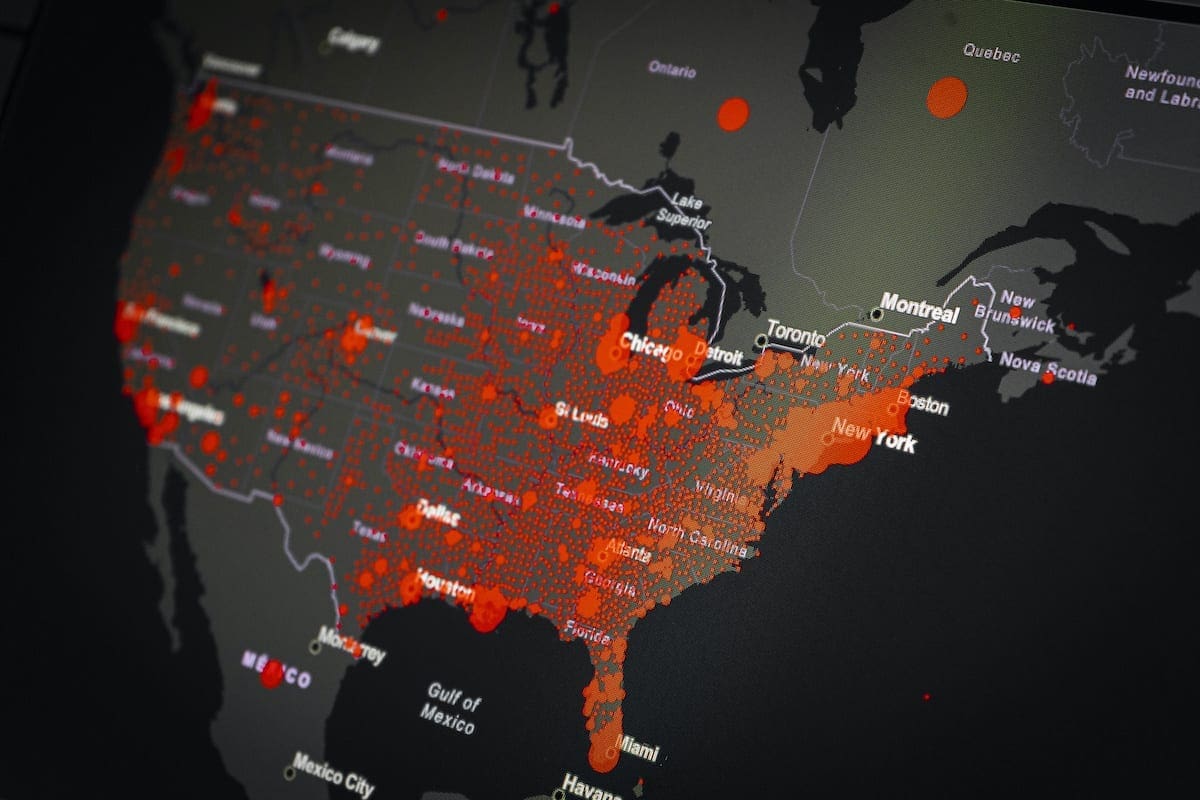
coronavirus-covid19-global-map

Map of Coronavirus (Covid-19)

According to a U.S. Air Force study of U.S. banknotes in Ohio from 2002, 94% showed traces of bacteria such as E. coli, Salmonella, and Staphylococcus aureus. Of the 43.4 billion U.S. banknotes in circulation in December 2018, the $100 bill is the most popular and the $1 bill second most popular, according to the Federal Reserve.

While the U.S. has yet to follow suit, Chinese authorities have required Chinese banks to sanitize cash via ultraviolet light or high heat and then store the cash for seven days in non-infected areas and 14 days in infected areas. The Chinese government also printed bank notes equaling Yuan four billion, or $572 million, for distribution in Wuhan where Coronavirus originated.

In addition to credit card processing that eliminates human interaction, as well as the avoidance of cash, vendors also are making way for an increase in online sales.

Shopping Online

Along with museums and educators making their content available online, vendors are experiencing an increase in online sales in China. Alibaba added 10 servers to fulfill the demand, mimicking the spike in online sales resulting from the 2003 SARS outbreak.

Car buying and visiting a health care professional are now available virtually via apps providing a virtual test drive or offering vital signs monitoring. Virtual assistants and delivery apps are helping seniors who are disproportionately affected by the negative outcomes of the Coronavirus do their grocery shopping and other errands without leaving the safety of their homes.

eCommerce Fills the Void

As eCommerce filled gaps left by traditional banking and business during the 2008 financial crisis, the innovations of the eCommerce booms are here to mitigate the impact of the Coronavirus potential pandemic by leveraging the technology that allows workers to work remotely, that allows consumers to make money by participating in side gigs like selling their clothing online, and that reduces the cost of B2B payments, both making and receiving.

The payments industry can rise to the occasion by embracing contactless payment options for brick and mortar operations and expanding online payment options for what will be an ever-increasing demand to live a virtual life during the next six to 12 months while the world waits for a Coronavirus vaccine.

Host Merchant Services

Host Merchant Services will help you find the online shopping cart software that works most efficiently with your payment processing setup. And we’ll help keep your shopping cart working smoothly. Founded on fantastic service in 2008, Host Merchant Services is structured around a strong backbone of customer service. 12 years and thousands of happy merchants later, customer service is still our number one priority. In fact, our merchant support team is FOUR TIMES the size of our sales team! We don’t believe in hold queues either, so you’ll never have to wait in line. When you’re with Host Merchant Services, you’ll get first-class treatment!

Top Ecommerce Trends for 2020

Top E-commerce Trends for 2020

E-commerce trends are making the shopping experience easier for the consumer. Moving in the direction of personalization and new customer experiences, the e-commerce industry is dynamically transforming every year, especially with the assistance of AI. Providing multiple avenues of payment and streamlining payment processes are only part of a merchant’s strategy in making paying for something as easy as possible.Β 

With a projected $4.8 trillion in retail e-commerce sales for 2021, companies are working to keep up with e-commerce trends. Not only are sales projected to increase, the number of buyers is projected to reach 2.14 billion by 2021, up from 2.05 billion buyers in 2019. Accounting for more than 20 percent of the global population, online buyers are rapidly changing the online shopping experience. From social commerce to voice commerce, companies are responding to the online demand and making online shopping more enjoyable and online payments easier. Here are the top e-commerce trends for 2020:

  • Artificial Intelligence: Chatbots & Assistants

Freeing up business owners to focus on the more nuanced aspects of running a business, artificial intelligence (AI) can manage inventory, answer product questions, and handle complaints all while learning from the conversations for better results in future interactions.Β 

  • Product Visualization

Virtual reality (VR) along with 3D imaging and augmented reality (AR) enable consumers to interact with the product on a laptop or smartphone. Bringing the in-store tangible experience to an online shopper, AI leverages 360-degree photos and product videos to engage shoppers.Β 

  • Voice Commerce

With Google Assistant and Amazon Alexa, consumers can shop by voice search. And with Loop Ventures forecasting that 75% of U.S. households will own a smart speaker by 2025, businesses are making purchases by voice command readily available.Β 

  • Mobile ShoppingΒ  Β  Β 

e-commerce trends 2020 merchant servicesCatering to the 2 billion people who access the internet via smartphones, e-commerce platforms like PayPal and Amazon Pay streamline the sale of online products. Features such as storing registration data on the mobile device, ensuring the search window is visible on the home page, locating an easy to tap call-to-action, tailoring online experiences, and a providing a distraction-free checkout process make mobile shopping easy and accessible for the online consumer.Β 

  • Social CommerceΒ 

Embracing social media influencers and the β€œswipe to buy” revolution, some online businesses sell exclusively on Instagram, Facebook, and Pinterest. Not only are commerce merchants available by mobile, they’re also accessible by social – social media that is. Increasing 110% in two years, social referrals to retail websites have outpaced every other channel. With easy and pleasant online social experiences, a business with a social presence can engage consumers to the point of buying.Β 

The e-commerce revolution is underway in the American economy. Exponentially growing and innovating, e-commerce can boost merchants who keep up with the trends. From mobile phone accessibility to voice command availability, merchants can now be everywhere for their customers. Catering to the online consumer in a myriad of ways is the only path to success for the modern entrepreneur.Β 


Host Merchant Services

Founded on fantastic service, Host Merchant Services is structured around a strong backbone of customer service. Founded in 2008, we have 11 years and thousands of happy merchants to show for our commitment. Customer service is still our number one priority. In fact, our merchant support team is four times larger than our sales team! We don’t believe in hold queues either, so you’ll never have to wait in line. When you’re with Host, you’ll get first-class treatment!


How Ghost Kitchens are Impacting the Quick Service Restaurant Industry

How Ghost Kitchens are Impacting the Quick Service Restaurant Industry

In the ever-evolving world of quick service restaurants, the growing demand for food delivery has led to an increase in ghost kitchens, which operate exclusively for delivery service. No servers, no tables, no chairs, just a kitchen in service of delivery orders.Β 

Third-Party Delivery Services

The cultural shift toward food delivery in lieu of takeout opened the door to third-party delivery services such as DoorDash, which currently holds 35 percent of the third-party delivery market overtaking GrubHub. Of course, third-party delivery services charge a fee for the delivery, as well as for the expanded reach. With an up to 30 percent fee for each delivery, third-party delivery apps make an already tight margin barely worth the added business for restaurant operations. Increases in rent for an optimal site selection plus increases in the costs of insurance and goods were already cutting into restaurant revenue. Delivery fees charged by third-party services contribute to the downward spiral when some restaurants even lose money on each delivery order.Β 

Ghost Kitchens Cut Costs

In response to the razor-thin margins resulting from high delivery fees, members of the restaurant industry adopted the ghost kitchen model, eliminating the need for a dining room, as well as for everything in a dining room, including china, cutlery, tablecloths, and tables. With only a kitchen space and a third-party app, a restaurateur can fulfill the needs of the online food ordering consumer. With third-party app representatives propositioning existing restaurants to branch out with a delivery-only addition to their current offerings, both the market and the delivery services are growing the options to fulfill the needs of consumers who can’t find the cuisine they want, according to searches on the delivery apps.

Technology Needs

Overcoming logistics and the technology required to run a delivery-only operation are challenges standing in the way of the ghost kitchen. From ordering accuracy to delivery radius, the relationship between the ghost kitchen and its partner delivery app can make or break a virtual kitchen operation. Leveraging the technology to reach the highest potential, as well as to not lose money despite demand, may be equally important as the food itself. Something as simple as accurately reflecting menu options on the delivery app can create miscommunications and flawed orders between the kitchen and consumer. If a ghost kitchen can successfully master its underlying technology, their delivery business is in a position to thrive.

Host Merchant Services: What Your Restaurant Needs in a Payment Processor

If your restaurant is adapting to the evolutions of the delivery world, Host Merchant Services can guide you in the next best steps for your success in a competitive market. Whether you need an entirely new point of sale system or a solution for your current system, HMS offers a suite of services to suit your restaurant’s needs. From wireless equipment, payment by check, recurring billing, to online payment gateways, HMS has everything a restaurant needs for serving customers in both traditional sit down establishments and catering services.Β 

Host Merchant Services provides customer support for restaurant credit card processing 24 hours a day, 7 days a week, 365 days a year. We know we need to work as much as you do to properly support an industry that can operate nearly 24 hours a day. That’s why we have operators standing by to answer your call any time of day.

HMS also explains how payment processing works. Providing a comprehensive package including credit card processing and financial transaction services to restaurants, we will custom design a flexible credit card processing solution to fit the needs of your restaurant.

And when we do demonstrate your payment processing scenario selections, HMS also offers your restaurantΒ  several point of sale options, including Clover, Vital, Bonsai, SwipeSimple, and more to fit your specific operation. If your restaurant is already equipped with hardware, HMS provides an easy point of sale integration.Β 

With our low rate guarantee, HMS provides a Free Rate Analysis to show where you can save on your restaurant payment processing. If HMS can’t save your restaurant money, we will give you a $50 Gift Card. The best pricing model on the payment processing market, Interchange Plus Pricing will help your restaurant’s bottom line.Β 

Host Merchant Services will even provide your restaurant free equipment via our free equipment program to qualified merchants along with receipt paper at wholesale prices. We are your restaurant’s credit card processing solution.Β