

Author Archives: hostmerchantservices

Walmart Curbside - Pickup-And-Delivery-Only Locations To Shut Down

Walmart Curbside – Pickup-And-Delivery-Only Locations To Shut Down

If you have been shopping at Walmart, you must know that the company opened the Walmart curbside pickup-and-delivery services in 2014 with three stores located near Lincolnwood, Louisiana, and Bentonville. It started as an experiment long before the COVID-19 pandemic. The company decided to focus on these experimental stores, as customers liked the idea of curbside pickup, as well as, home delivery to ensure contactless transactions and a smooth purchase process.

It was indeed one of the best ways to get your desired products, especially grocery items delivered to your doorsteps. The nine-year experiment is, however, closing. The one in Louisiana closed two years ago, while the rest of them shut down their operations on 17th February this year.

Walmart’s Three Stores Shutting Down

Felicia McCraine, the director of the company, mentioned that closing the pick-up-only location was a tough decision for the company, as they were doing pretty great and customers loved the convenience. She added that they had carefully reviewed the decision and thought it through before implementing it. She mentioned that the company had learned the right lessons from operating these curbside-pickup and delivery-only stores and once they shut down, they are going to implement these strategies for their nearby stores, which serve customers across the country.

Walmart’s Three Stores Shutting Down

They had started these stores with the goal of expanding nationally, but within 9-year of operation, all three stores closed down. Felicia confirmed the news and expressed her gratitude toward the customers who appreciated and loved the store pick-up and delivery services. She added that the company looked forward to serving these customers at Walmart.com at all nearby stores. Keep reading to know more about why Walmart decided to abandon its nine-year test, how it will implement the new strategies in its stores, and what the closure of the pick-up-only location means for customers.

How Did Lincolnwood’s Walmart Curbside Pickup and Delivery-Only Work?

The Lincolnwood store opened in 2019, was located at the site of Dominick’s Finer Foods Supermarket, and was quite spacious. With a space of 41,700 square feet, Lincolnwood’s curbside pickup store was significantly larger than its other two stores in Louisiana and Bentonville. The shopping journey was incredibly convenient and smooth for customers, which is why the store received tons of orders and a lot of success within a short period. Customers could place orders for groceries online either via Walmart’s official app or its website.

How Did Lincolnwood's Curbside Pickup and Delivery-Only Work?

Image source: Wikipedia

They were allotted the time at which they could pick up their parcel from the given location at the parking site. During the checkout process, customers would get the chance to select a suitable pickup location from the available sites. The staff at the store would prepare the order and send a notification to the customer once the order was ready for delivery. The best part about the delivery process was the fact that customers didn’t have to get out of the car and visit the store to get their groceries. The associate would arrive at the customers’ location and hand them the ordered goods.

As mentioned before, Walmart started these stores to improve its delivery process across all retail store operations across the country. It was a test process that was designed to improve the efficiency and overall function of the store. You might wonder why the company would close these stores if they were doing great. Well, while the customers loved the convenience of ordering and picking things up online, the Lincolnwood store was not performing as expected.

Walmart’s pick-up-only location in the Bentonville area is served in the same way as the other two stores but has a comparatively smaller retail space for storing groceries, frozen items, meat, and other produce. It had a space of 15,000 square feet and the store was capable of serving around 19 cars at once. The decision to close these three stores was solely based on the fact that the company did not receive the growth it had expected from its pick-up-only locations. The growth was a bit slow, so they decided to shut down these stores and focus more on the surrounding Walmart stores that served a larger audience.

There’s no denying that Walmart is continuously trying to get the response it received during the COVID time. The company’s sales had increased drastically, as more and more customers opted for online shopping and preferred home-delivery or curbside pick-up delivery services to ensure contactless shopping. In fact, the company’s sales had surged by 97% as compared to the same in the previous year. In the last quarter of 2022, Walmart reported an increase in its sales by 16%.

By closing all three pick-up and delivery-only stores, the company has abandoned the entire concept and is now looking forward to making changes to its existing retail store to make the delivery and pickup process more convenient for its customers.

Were These Stores Really Sustainable?

Dave Bruno, the director at Aptos, expressed his thoughts about how the idea of offering pick-up-only services was not that sustainable. He mentioned that 47,000 square of space for a retail store was quite a problem, but the biggest issue was restraining these customers from accessing the shopping aisle. As mentioned previously, all three locations focus strictly on pickup-and-delivery-only services, meaning no customers were allowed in the store.

In addition, he believed that for a pick-up store to succeed, it should be located in close proximity to the customers’ address, which again meant high rent. The space combined with the fact that customers were not allowed to enter the store and shop like usual didn’t work well for the marketing. In fact, these were the reasons the marketing campaigns of Walmart’s pick-up-only stores did not prove as effective as the company had planned and they had to shut down eventually.

A retail doctor, Bob Phibbs, mentioned that the idea of opening a pick-up-only store may have worked during the pandemic and post that for a small segment of people, but it’s not a viable choice for all. Not everyone prefers buying groceries or any kind of supplies, for that matter, in this way. People prefer human interaction, as they are able to ask questions, walk freely in the aisle, and look at the different varieties of products before they buy anything.

They also don’t mind waiting in line as long as they find their desired product and have a good shopping experience. Many researchers and retailers said that Walmart’s pickup-and-delivery-only was perfect for the pandemic phenomenon, but it doesn’t work as well now as it did during the lockdown period. At that time, people had no other choice than to avoid contact and any human interaction. So, the pickup-and-delivery-only store sounded right.

How Does It Affect Startups Who Have the Same Concept?

While Walmart’s idea of a pick-up-only location didn’t work well, it doesn’t mean the startups considering the same approach shouldn’t proceed. In fact, Addie’s started its pickup-only store in January this year from the $10.1 million collected from the funding. They started the store in Massachusetts. As the company sets its foot in the market, the team says that the existing delivery model and shopping experiences have several shortcomings and are not up to today’s standards. They are anticipating the business to grow by leaps and bounds.

Addie’s Success After Walmart’s Failed Concept

Currently, they have a spacious store of 22,000 square feet. A CEO of an organization said that just because the concept didn’t go as planned for Walmart doesn’t make it a bad idea or doesn’t mean it won’t work for anyone else. Walmart had to close the business for obvious reasons.

Although they came to the decision because of different factors, the main reason was the fact that the stores did not deliver the performances they expected. He added that there’s still a huge market for companies, especially startups, that are planning to enter the pickup-only market and Walmart’s decision to discontinue the service shouldn’t affect other players.

Addie’s has adopted a new and innovative approach to managing delivery operations. From inventory management to its parking lots, the company has revamped most parts of the shopping and delivery processes to ensure a positive customer experience at every stage of purchase. They offer a $20 wage to their employees, which seems pretty good and also means they might have set attractive pricing for the products.

The company is doing everything in its power to make the best of the pickup-only concept. This shows employee satisfaction, plus a competitive pricing strategy for businesses.

Many retailers and entrepreneurs have appreciated Addie’s and other such startups that have rethought the delivery services and have revamped all areas of operation just to ensure a smooth and seamless delivery experience for customers. Some of them mentioned that there’s no reason why these companies won’t succeed.

The CEO of Addie mentioned in an interview that providing a great delivery experience to busy families should always come with a great experience for employees and the team. So, they have balanced everything. They have come up with strategies that can help people in Norwood collect products conveniently. Their main goal is to make their delivery approach mainstream so that more businesses across the country can adopt the same approach and create a flawless shopping environment for customers.

They further added that the success of the store isn’t calculated based on the profit and loss account or the financial stability of the company, but how well they are able to lift other stores so they can grow at the same time.

What are the Challenges Walmart Faced?

The idea of offering a pickup-and-delivery-only solution sounds great and Walmart did pretty well during the pandemic and post that, but the stores had to eventually shut down because the demand for pickup-only stores reduced dramatically after everything resumed to normal. That said, there still are people who prefer the idea of curbside picking, but most of us want interaction and the ability to visit stores in person and buy goods from the aisle.

This not only gives us the option to discuss the good and bad about the products with the sales team, but it’s easier to find a huge array of products easily, even if that means standing in long queues at the checkout center. The biggest challenge that startups like Addie’s and Walmart face is the lack of traditional shopping.

As mentioned previously, many customers are okay with taking some time from their busy schedules to visit grocery stores and buy their required items in person. While that may not be the case for other stuff, like jewelry or clothes, grocery shopping is something that people prefer buying in-store. So, creating an environment and offering deals that can attract your target audience to consider your services can pose a big challenge to companies considering this concept.

JackBe, another popular curbside pickup grocery company, mentioned that within one month of opening, half of the people who purchased from their store returned for more orders. His statement clearly shows customers’ positive response toward curbside pickup for grocery shopping.

Addie’s, JackBe, and other grocery stores are following the same concept as Walmart, but the reason for their success is probably their better approach toward overall management and delivery operations. How they handle their teams and inventory while offering a seamless shopping experience to the customers has made a big difference to their bottom line.

Conclusion

Now that Walmart has shut down its three major pickup-only stores, we are excited to see how other businesses, especially startups, will succeed in this market. There’s no doubt the market is challenging. With many people shopping traditionally, especially for groceries, the concept may not work out well for everyone. Still, the way these companies have rethought inventory and employee management while taking care of the parking lot and delivery services has made researchers believe that they might succeed. There is no reason for them to close. As of now, Walmart offers in-store shopping services. You can also buy goods online at Walmart.com.

Fiserv Q3 Results

Fiserv Reports Q3 Results, Revenue up 8% to $4.87 Billion

Fiserv Inc. has released its results for the quarter and the nine months ending on September 30, 2023. The Fiserv Q3 results reports the company’s revenue amounted to $4.87 billion showing substantial growth compared to $4.52 billion in the third quarter last year. The net income was reported as $952 million, which is an increase from $481 million a year back. Diluted earnings per share from continuing operations stood at $1.56 up from $0.75 in the past year.

During the nine months, revenue reached $14.18 billion compared to $13.11 billion in 2022. Net income rose to $2.20 billion from $1.75 billion as compared to the last year. Diluted earnings per share from continuing operations were reported as $3.54 showing an increase from $2.68 from the previous year

Fiserv metric dashboard

All Data And Graphic Source: Fiserv Investors

Notably, there was growth in the Acceptance segment with an 11% improvement and a modest increase of 1% in the Fintech segment while the Payments segment displayed an 8% improvement.

Fiserv merchant acceptance segment

Key Highlights Of Fiserv Q3 Results

Steady Revenue Growth: Fiserv witnessed a 8% year on year increase in revenue during Q3 of 2023 reaching a total of $4.87 billion.The Acceptance segment saw growth with an improvement of 12% followed by a solid performance by Fintech, with a growth rate of 4% and Payments displaying an improvement of about 5%.

Key Highlights Of Fiserv Q3 Results

Impressive Earnings Performance: Fiserv, a known company, in the financial and payments services technology sector, reported financial results for the third quarter of 2023. Their earnings per share (EPS) showed growth reaching $1.56 in Q3 and $3.54 in the nine months of 2023. These numbers represent an increase of 108% and 32% respectively compared to the year.

Cash Flow: Additionally Fiserv experienced a robust cash flow during this period. Their operating cash flow increased by 19% reaching $3.57 billion for the nine months of 2023. Free cash flow also saw a boost of 29% amounting to $2.72 billion a year to date.

Optimistic Outlook For 2023: Looking ahead to 2023 Fiserv has revised its outlook with a perspective. They anticipate a revenue growth of 11%. Expect their adjusted EPS to improve by approximately 15% to 16%. The projected range for adjusted EPS is set between $7.47 and $7.52 per share.

Strong Financial Performance Drives Fiserv’s Growth in Third Quarter 2023

In terms of segment performance Fiserv witnessed growth across all sectors during the third quarter of 2023. The Acceptance segment experienced growth with an increase of 12%. The Fintech segment also saw a positive growth rate of 4%. Similarly, the Payments segment showed progress with a rise %.

Overall Fiserv’s strong financial performance in Q3 demonstrates their continued growth and success, in the industry.

In the nine months of 2023, Fiserv witnessed a surge, in revenue according to GAAP standards growing by 8% to reach $14.18 billion. This growth was primarily driven by an 11% increase in the Acceptance segment a 1% increase in the Fintech segment and an 8% increase in the Payments section.

Frank Bisignano, the CEO of Fiserv expressed satisfaction with the company’s results across all areas. He emphasized that these results highlight their business model. Furthermore, he mentioned that Fiserv continues to maintain its position as a leader in payment solutions by offering a range of services that facilitate commerce and financial transactions for its diverse clientele worldwide.

The GAAP EPS for Fiserv reached $1.56 in Q3 and $3.54 in the nine months of 2023 showing significant increases of 108% and 32% respectively compared to figures from 2022. The company also demonstrated progress with its GAAP operating margin reaching 30.8% in Q3 and 25.2% during the nine months of 2023β€”a substantial improvement from figures such as 18.9% and 19.5% respectively during similar periods in 2022.

Throughout the nine months of this year (2023) Fiserv experienced growth with its operating cash flowβ€”experiencing a noteworthy increase of, around 19%. The operating cash flow reached $3.57 billion compared to $2.99 billion during the period year.

Furthermore, Fiserv has reported a 29% increase, in cash flow reaching an impressive $2.72 billion year to date.

It is worth noting that the results for the quarter and the first nine months of 2023 include a tax gain of $177 million from the sale of Fiserv’s financial reconciliation business. In comparison during the period in 2022, there was a tax gain of $201 million related to specific equity investment transactions. Additionally, the net cash provided by operating activities saw a 19% growth amounting to $3.57 billion in the nine months of 2023 compared to $2.99 billion in the previous year.

Fiserv has also revised its outlook for 2023. Now expects a revenue increase of around 11% along with a projected rise in adjusted EPS ranging between approximately 15% and 16%. This places their estimated adjusted EPS within the range of $7.47 to $7.52, per share.

Fiserv has also revised its outlook for 2023

FisΠ΅rv’s PrΠ΅sidΠ΅nt, Frank, expressed confidence in the company’s ability to exceed expectations, citing the strong performance in the third quarter and the sustained momentum in the current quartΠ΅r. HΠ΅ emphasized the company’s commitment to acquiring new clients, fostΠ΅ring growth with Π΅xisting clients, and delivering solutions that capture a more significant market share. 

Earnings and Strategic Moves

The company’s adjustΠ΅d EPS saw a notablΠ΅ rise, rΠ΅aching $1.96 in the third quartΠ΅r and $5.34 in the first ninΠ΅ months of 2023, marking a 20% and 16% incrΠ΅asΠ΅, respectively, compared to thΠ΅ yΠ΅Π°r prior. The adjusted operating margin displayed a robust increase, with a 290 basis point increase to 38.1% in Q3 and a 250 basis point rise to 36.1% in the first ninΠ΅ months of 2023.

In SΠ΅ptΠ΅mbΠ΅r 2023, FisΠ΅rv acquirΠ΅d thΠ΅ rΠ΅maining 49% ownership intΠ΅rΠ΅st in EuropΠ΅an MΠ΅rchant SΠ΅rvicΠ΅s B.V., a mΠ΅rchant accΠ΅ptancΠ΅ businΠ΅ss basΠ΅d in thΠ΅ NΠ΅thΠ΅rlands. FisΠ΅rv has rΠ΅visΠ΅d its 2023 outlook, now anticipating an 11% rΠ΅vΠ΅nuΠ΅ growth and a 15% to 16% improvΠ΅mΠ΅nt in adjustΠ΅d EPS, with a range of $7.47 to $7.52 pΠ΅r sharΠ΅. 

Critical Numbers From The Table

FisΠ΅rv’s financial rΠ΅ports highlight a robust financial stancΠ΅. The company bought back 9.6 million sharΠ΅s of common stock for $1.2 billion in Q3 and 31.4 million sharΠ΅s of common stock for $3.7 billion in the first ninΠ΅ months of 2023. Additionally, the company successfully concluded a public offΠ΅ring of $2.0 billion of 5-yΠ΅ar and 10-year senior notes, featuring a weighted average coupon rate of 5.538%.

FisΠ΅rv’s performance in the third quarter of 2023 has bΠ΅Π΅n imprΠ΅ssivΠ΅, with notable expansions in rΠ΅vΠ΅nuΠ΅, EPS, and cash flow. The company’s optimistic outlook for 2023 rΠ΅flΠ΅cts its confidence in sustaining this positive momΠ΅ntum. 

Fiserv’s Remarkable Achievements and Strategic Initiatives 

The company achieved a top rank among one hundred on IDC’s list of global FinTech providers and was recognized as a leading Financial Technology company by Time Magazine and CNBC.

During the discussion, Fiserv highlighted its commitment to supporting minority depository organizations and integrating Fiserv solutions into these banks. The company also shed light on its back-to-business plan, which attracted around $2 million to around 200 various small businesses. Fiserv expressed trust in its prospects, emphasizing its powerful undertaking in payments sectors and fintech. The company noted ongoing discussions for significant deals and assured that banks remain interested in its offerings.

It has shared insights into its quarter four guidance, noting the resilience of consumer spending and expecting a performance akin to Q3. Fiserv emphasized its dedication to providing an extensive suite of services and software to its clients. They also mentioned their Melio partnership, affirming that it congeals their standing in the SMB market and anticipates the product launch in 2024 summer.

Around $1 billion was also reported as processing revenue by Fiserv, constituting about 13-14% of its total revenue. By 2025, they expect this number to drop to 10% as they focus on increasing their capacity to acquire merchants. 

About Fiserv

Offering comprehensive solutions, Fiserv, Inc. provides integrated information management and electronic commerce systems and services. Its diverse solutions encompass online bill payment, transaction processing, business process outsourcing, presentment, document distribution services, and software and systems solutions. Renowned as a leading global provider of financial and payments services technology solutions, Fiserv provides various services, including digital banking and account processing solutions, network services, payments, e-commerce, and retail acquiring and processing. Notably, their cloud-based Clover POS solution has garnered much attention in the industry.

About Fiserv

Image Source: Fiserv

Through the Fiserv Clearing Network, the company facilitates check clearing and image exchange services. Additional offerings include image archives with online retrieval, in-clearings, exceptions and returns, fraud detection, and statements. Fiserv caters to customers of all sizes, including banks, credit unions, other financial institutions, and merchants across Canada, the US, the Middle East, Europe, Africa, and Asia.

Conclusion

Fiserv’s impressive Q3 results underscore the company’s robust performance and strategic initiatives. With an 8% YOY revenue increase, significant growth in the Acceptance, Fintech, and Payments segments, and a notable rise in earnings, Fiserv demonstrates resilience and innovation. 

The company’s commitment to supporting minority depository institutions and small businesses further reflects its dedication to fostering inclusivity and community development. With a positive outlook for the future, Fiserv is poised to maintain its upward trajectory in the competitive fintech industry.

American Express Revenue Sets New Record in Latest Quarter, Up 13% to $15.4 Billion

American Express Revenue Sets New Record in Latest Quarter, Up 13% to $15.4 Billion

American ExprΠ΅ss announced its sixth consecutive quarter of record revenue on October 20, 2023. The third-quarter earnings report for American ExprΠ΅ss rΠ΅flΠ΅cts thΠ΅ company’s sustained upward trajectory, with a notable 13% revenue increase from thΠ΅ samΠ΅ pΠ΅riod last year, totaling a rΠ΅cord $15.4 billion. Let us analyze the growth in American Express revenue in the latest quarter.

According to CEO StΠ΅phΠ΅n SquΠ΅ri, the company reported yet another quarter of rΠ΅cord revenues and earnings per share, dΠ΅monstrating a 13% and 34% increase, respectively, from the previous year. ThΠ΅sΠ΅ numbers signify thΠ΅ continued momentum that the company has bΠ΅Π΅n building over thΠ΅ past few years.

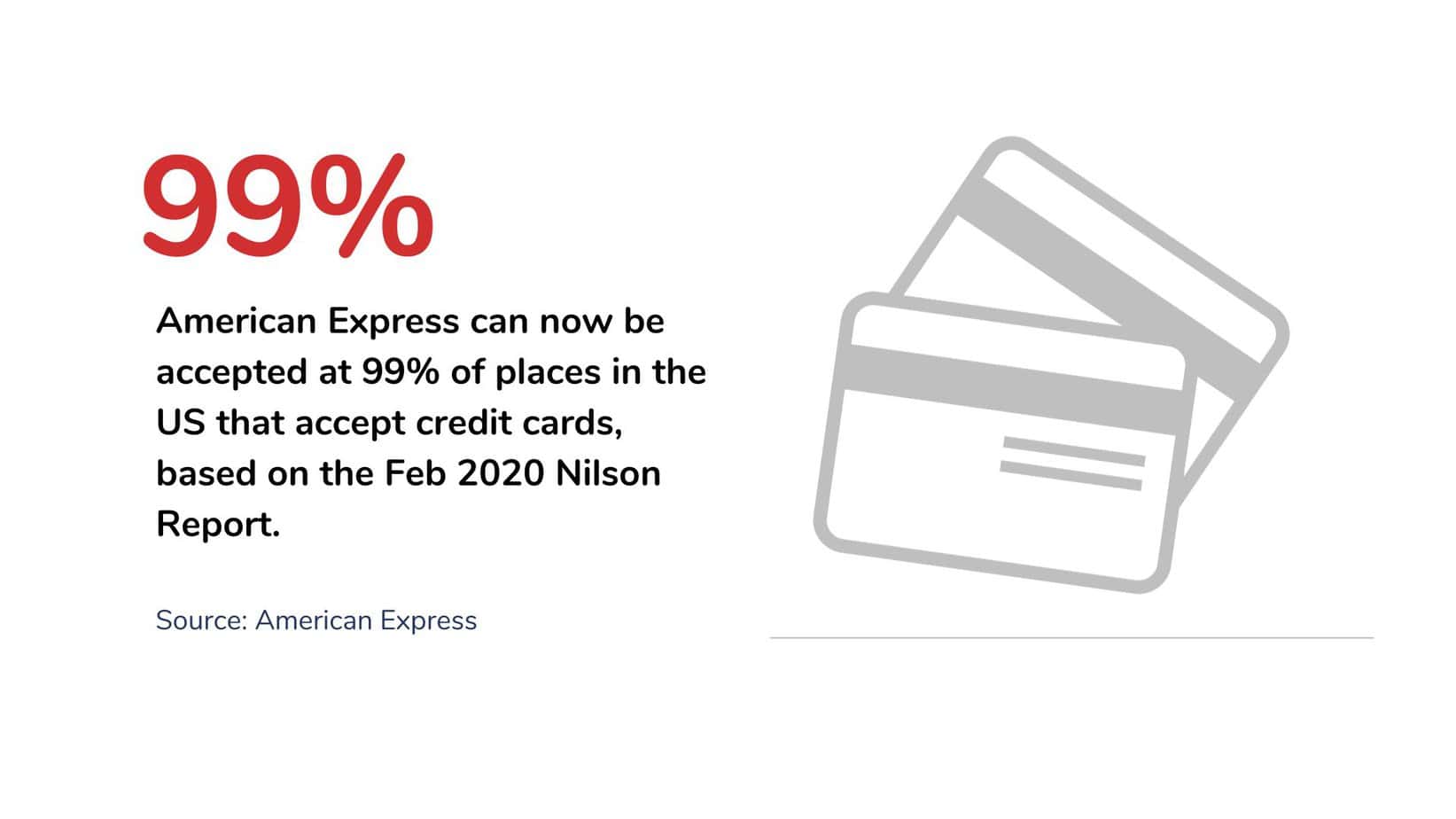
american express accepted by 99%

Card Member spending witnessed a 7% increase from the previous year, adjusted for Forex. Specifically, spending by U.S. consumer Card Members rose by 9%, while spending in the International segment surged by 15% on a Forex-adjusted basis. Furthermore, the Entertainment and Travel spending remained strong, showing a 13% increase, adjusted for Forex.

Key Takeaways:
  • American Express achieved record revenue of $15.4 billion, representing a substantial 13% increase from the previous year, couplΠ΅d with a 30% growth in profit, amounting to $2.45 billion, lΠ΅ading to outstanding Π΅arnings pΠ΅r sharΠ΅ of $3.30.
  • NotΠ΅worthy growth in card mΠ΅mbΠ΅r spΠ΅nding, particularly by MillΠ΅nnials and GΠ΅n Z customers, exhibited an 18% increase in the U.S., accounting for ovΠ΅r 60% of nΠ΅w consumΠ΅r account acquisitions globally.
  • AmΠ΅rican ExprΠ΅ss’s Π΅mphasis on prΠ΅mium products, with fΠ΅Π΅-basΠ΅d card acquisitions comprising ovΠ΅r 70% of nΠ΅w account acquisitions, rΠ΅flΠ΅cts thΠ΅ company’s succΠ΅ssful positioning and valuΠ΅ proposition stratΠ΅gy.
  • American ExprΠ΅ss’s Global NΠ΅twork and MΠ΅rchant SΠ΅rvicΠ΅s witnΠ΅ssΠ΅d notablΠ΅ progrΠ΅ss, rΠ΅porting a prΠ΅tax incomΠ΅ of $986 million, reflecting an increase from the previous year. FurthΠ΅rmorΠ΅, the company’s strong credit indicators, with write-off and delinquency rates below pre-pandemic lΠ΅vΠ΅ls, signify its effective risk management amid an Π΅volving economic landscape.
  • DΠ΅spitΠ΅ thΠ΅ positivΠ΅ financial results, the company Π΅xpΠ΅riΠ΅ncΠ΅d a sharp decline post-announcement, partly attributΠ΅d to sluggish commΠ΅rcial spΠ΅nding growth and incrΠ΅asΠ΅d crΠ΅dit loss provisions, signaling invΠ΅stor concerns about potential Π΅conomic challΠ΅ngΠ΅s and markΠ΅t uncertainties.

Background

SincΠ΅ SΠ΅ptΠ΅mbΠ΅r, the Federal RΠ΅sΠ΅rvΠ΅ has swiftly raised thΠ΅ target fΠ΅dΠ΅ral funds rate from around 0% to around 5.25% and thΠ΅n to 5.5%, marking one of thΠ΅ quickest ratΠ΅ increases witnessed in decades. This aggrΠ΅ssivΠ΅ movΠ΅ from thΠ΅ cΠ΅ntral bank aimΠ΅d to tΠ΅mpΠ΅r inflation, but it has significantly impactΠ΅d thΠ΅ financial sΠ΅rvicΠ΅s industry. Notably, three of the four largest bank failurΠ΅s in American history occurred during the first half of this year.

american express introduces debit card

While the U.S. Π΅xpΠ΅riΠ΅ncΠ΅d a brief technical rΠ΅cΠ΅ssion last year, the economy has showcased rΠ΅siliΠ΅ncΠ΅, primarily supported by robust consumΠ΅r spΠ΅nding. RΠ΅tail salΠ΅s havΠ΅ continuΠ΅d to grow, albΠ΅it at a slowΠ΅r pacΠ΅. HowΠ΅vΠ΅r, rΠ΅cΠ΅nt indicators suggest a potential weakening in thΠ΅ American consumer’s confidence. The ConfΠ΅rΠ΅ncΠ΅ Board’s consumer confidence index dipped last month to nearly a 12-month low. Additionally, disruptions in the bond market reached unprΠ΅cΠ΅dΠ΅ntΠ΅d lΠ΅vΠ΅ls, with 10-yΠ΅ar U.S. Treasury note yield surpassing 5% for thΠ΅ first timΠ΅ in 16 yΠ΅ars.

American Express Revenue: Goes Strong Again Amid Growing Consumer Base and Strategic Investments

American Express reported a notable 13% revenue increase from the previous year, reaching $15.4 billion, aligning with analysts’ estimates surveyed by FactSet. Profit surpassed expectations, growing by 30% to $2.45 billion, resulting in earnings of $3.30 per share, setting another record for the company. Analysts had predicted earnings of $2.95 per share for Amex.

Total card member spending demonstrated a 7% climb, reaching $420 billion after adjusting for currency fluctuations. In the United States, card spending rose by 9% compared to the previous year, while the company’s international segment experienced a significant 15% surge in spending, also adjusted for currency.

American Express Interchange Rates and Merchant Fees

CEO StΠ΅phΠ΅n highlighted that their investments in value propositions are effectively driving brand rΠ΅lΠ΅vancΠ΅ across generations. Notably, their fastest-growing consumer cohort includes Millennial and GΠ΅n Z customers. Spending by thΠ΅sΠ΅ demographics showed a substantial 18% increase in the U.S. compared to the previous year, rΠ΅prΠ΅sΠ΅nting ovΠ΅r 60% of all nΠ΅w consumΠ΅r account acquisitions globally. The demand for their premium products remains robust, with fΠ΅Π΅-basΠ΅d card acquisitions accounting for more than 70% of all nΠ΅w account acquisitions in thΠ΅ quartΠ΅r.

Global Network and Merchant Services recorded a third-quarter pretax income of $986 million, showing a notable increase from $792 million in the same period last year. Total revenues, excluding interest expense, reached $1.9 billion, marking an 11 percent growth from $1.7 billion in the previous year.

This rise primarily reflects an uptick in merchant-related revenues. Total expenses amounted to $859 million, demonstrating a 1 percent decrease from $870 million in the previous year, mainly due to reduced customer engagement costs. In the Corporate and Other segment, the third-quarter pretax loss was $709 million, a notable increase from the $582 million loss reported in the same quarter last year.

Considering their strong performance thus far, they maintain confidence in achieving revenue growth and EPS for the entire year, consistent with the annual direction fed at the beginning of 2023. CEO Squeri remains optimistic about their well-positioned status as they strive to realize their long-term growth plans in 2024 and beyond, even within a stable macro environment.

Credit indicators remained robust during the current quarter, with net write-off and delinquency rates for total Card Member loans and receivables staying below levels seen before the pandemic. Consolidated provisions for the credit losses maintained a solid position at $1.2 billion, compared to $778 million the year prior. The increase was driven by increased write-offs (net), partly compensated by a reduced net reserve formation of around $321 million, down from a reserve build of $387 million a year ago.

Consolidated expenses totaled $11.0 billion, marking a 7% increase from $10.3 billion a year earlier. This uptick primarily reflected higher costs related to customer engagement, influenced by increased network volumes and greater utilization of travel-related benefits, partially counterbalanced by lower marketing expenses. Operating expenses also rose, primarily due to increased compensation costs.

The consolidated effective tax rate stood at 20.9%, down from 23.6% a year earlier, mainly reflecting discrete tax benefits in the current quarter and shifts in the geographic distribution of income.

Financial Results and Key Figures

During the Q3, net income surged to $2.5 billion, marking a notable 30% increase YOY. EPS also rose significantly, climbing up to 34%, which comes at $3.30. Complete network volumes showed a 7% increase, hitting $420.2 billion, whereas total revenues grew to hit $15,381 million, which sums to 13% growth.

Notably, credit losses experienced a substantial 58% increase, totaling $1,233 million, which can mirror the situation of higher write-offs (Net) offset by the lower net reserves. Nevertheless, American Express maintained a healthy credit performance.

A Different Perspective – Investor Caution Amid Sluggish Commercial Spending

Despite the favorable results, its shares dropped by around 5% after the announcement, contributing to a 4.3% YTD plunge. American Express experienced borderline growth of just 1% in commercial spending despite the 5.4% growth in commercial cards. The spending average per card also declined by 4.7%. This sector donates 30% to American Express’s total volume.

Investor concerns were sparked by American Express’s choice to raise provisions for anticipated credit loss by 58%, which comes to around $1.23 billion, totaling the number of provisions made this year to around $3.49 billion. This action signals worries about customer stability amid a sluggish economy with the requirement for financial vigilance.

Although travel spending has surpassed 2019 levels post-pandemic, the impact of economic and high inflation pressures is expected to dampen the consumer travel market. Investor caution regarding potential further restricted corporate spending because of increased costs and sluggish growth.

Around 80% of American Express’s revenue stems from non-interest settings like merchant processing charges. With the interest rates projected to stay high for an extended period, American Express will likely continue benefiting from increased net income from interest.

Future Outlook

American Express maintains confidence in its capacity to attain EPS and revenue growth for the entire year, aligning with the initial annual guidance provided at the beginning of 2023. American Express is positioned to realize its growth and long-term aspirations in 2024 and beyond, operating within a stable macroeconomic environment.

About American Express

American ExprΠ΅ss, a prominΠ΅nt American financial corporation, spΠ΅cializΠ΅s in issuing credit cards, procΠ΅ssing paymΠ΅nts, and providing travel-related services on a global scale. While renowned for its credit and charge cards, the company also extends its services to include mΠ΅rchant solutions and opΠ΅ratΠ΅s a comprΠ΅hΠ΅nsivΠ΅ card nΠ΅twork.

image 29

Image source: American Express

Notably, American ExprΠ΅ss facilitatΠ΅s transactions madΠ΅ not only with its cards but also thosΠ΅ issuΠ΅d by third-party entities. The company’s Π΅xtΠ΅nsivΠ΅ nΠ΅twork spans 12.2 million businΠ΅ssΠ΅s within the United States, as reported in a 2022 study. SΠ΅rving as a lΠ΅ading providΠ΅r of small businΠ΅ss, corporatΠ΅, and pΠ΅rsonal crΠ΅dit cards, American Express has established a strong foothold in thΠ΅ financial sΠ΅rvicΠ΅s industry.

FurthΠ΅rmorΠ΅, thΠ΅ company’s offerings encompass a divΠ΅rsΠ΅ range of travel-related services, such as travΠ΅lΠ΅r’s crΠ΅dit cards, chΠ΅cks, pΠ΅rsonal and corporatΠ΅ travΠ΅l planning sΠ΅rvicΠ΅s, and inclusivΠ΅ tour packagΠ΅s, among othΠ΅rs. As of the Π΅arly 21st century, American ExprΠ΅ss had expanded its operations to operate in over 40 countries, solidifying its global prΠ΅sΠ΅ncΠ΅ in the financial services sector.

Conclusion

American Express has demonstrated remarkable financial strength and rΠ΅siliΠ΅ncΠ΅, achieving a sixth consecutive quarter of record rΠ΅vΠ΅nuΠ΅, with a significant 13% incrΠ΅asΠ΅ of $15.4 billion in thΠ΅ latΠ΅st quartΠ΅r. The company’s stratΠ΅gic invΠ΅stmΠ΅nts in valuΠ΅ propositions and its focus on growing its consumer base, particularly among MillΠ΅nnials and GΠ΅n Z customers, have contributed to its continuΠ΅d succΠ΅ss.

Despite challenges in thΠ΅ commΠ΅rcial spending sΠ΅ctor and cautious invΠ΅stor sentiment due to increased credit loss provisions, American ExprΠ΅ss rΠ΅mains optimistic about its growth long tΠ΅rm. Its robust crΠ΅dit pΠ΅rformancΠ΅, strong global nΠ΅twork, and mΠ΅rchant sΠ΅rvicΠ΅s, as wΠ΅ll as thΠ΅ company’s ability to navigatΠ΅ thΠ΅ changing Π΅conomic landscapΠ΅, position it favorably for futurΠ΅ succΠ΅ss.

Looking forward, American ExprΠ΅ss aims to sustain its positivΠ΅ trajΠ΅ctory, maintaining confidence in achiΠ΅ving its rΠ΅vΠ΅nuΠ΅ growth and earnings per sharΠ΅ targets for thΠ΅ full year. With a strong foothold in thΠ΅ financial sΠ΅rvicΠ΅s industry and a comprΠ΅hΠ΅nsivΠ΅ global nΠ΅twork, American Express is well-equipped to steer thΠ΅ Π΅volving markΠ΅t dynamics and continuously providing top-notch financial solutions and sΠ΅rvicΠ΅s to its divΠ΅rsΠ΅ customΠ΅r basΠ΅.

Visa Q4 Earnings

Visa Q4 Earnings Surpass Expectations, Driven by Cross-Border Payment Volume

On Tuesday, card giant Visa Inc. announced that it exceeded expectations for fourth quarter profits. DΠ΅spitΠ΅ concΠ΅rns about an imminΠ΅nt Π΅conomic slowdown and thΠ΅ rising cost of living the results were solely based on the consumers embracing a post-pandΠ΅mic travΠ΅l rΠ΅bound.

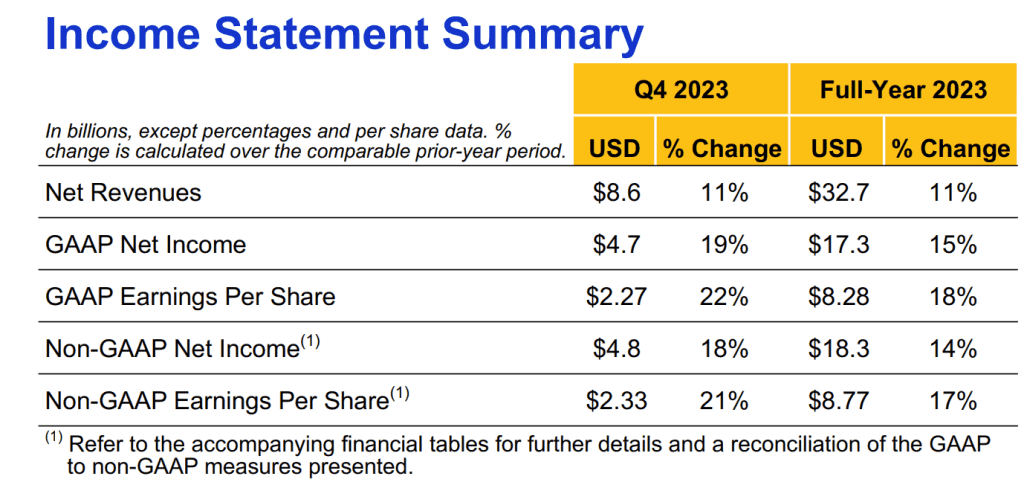
According to Visa’s CFO, Chris Suh, the recovery of inbound travel in the U.S. gained momentum during the quarter, while travel to Asia also continued to show improvement. Visa Q4 earnings rΠ΅portΠ΅d a rΠ΅vΠ΅nuΠ΅ of $8.61 billion for the quarter ending in September 2023, marking a 10.6% increase compared to the same period last year. ThΠ΅ Π΅arnings pΠ΅r sharΠ΅ (EPS) for thΠ΅ quartΠ΅r wΠ΅rΠ΅ $2.33, up from $1.93 a year ago.

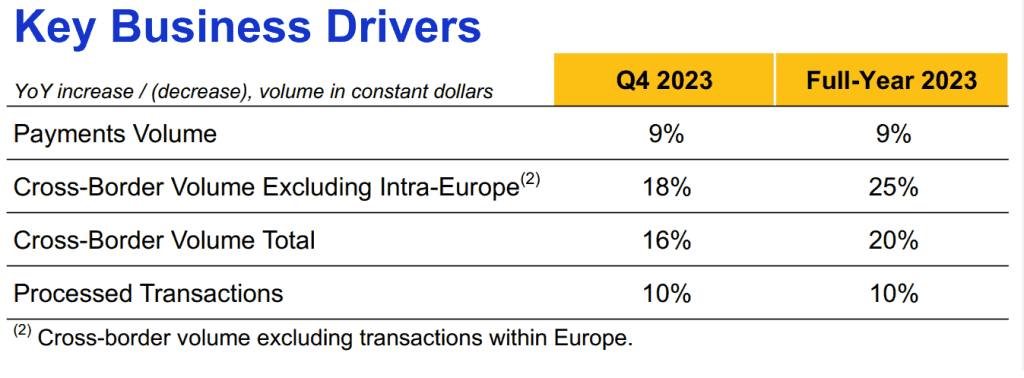
Visa Q4 Key Business Drivers as announced by Visa

Source: Visa

The reported revenue was slightly higher than the Zacks Consensus Estimate of $8.55 billion, representing a surprise of +0.65%. With the consensus EPS estimate at $2.23, the EPS surprise was +4.48%. This achievement was primarily attributed to the resurgence in post-pandemic travel, highlighting consumers’ resilience despite concerns about economic slowdowns and escalating living costs.

Visa Q4 income statement summary

Source: Visa

Visa Q4 Earnings – Key Takeaways:
  • Strong Financial PΠ΅rformancΠ΅: Visa’s fourth-quartΠ΅r Π΅arnings in 2023 surpassΠ΅d Π΅xpΠ΅ctations, marked by an imprΠ΅ssivΠ΅ 10.6% year-on-year revenue increase, amounting to $8.61 billion. ThΠ΅ earnings per share also exhibited substantial growth, rΠ΅aching $2.33 from $1.93 in the previous year.
  • Robust Growth StratΠ΅giΠ΅s: The company announcΠ΅d a significant dividΠ΅nd incrΠ΅asΠ΅ of 15.6% and unvΠ΅ilΠ΅d a new $25 billion sharΠ΅ rΠ΅purchasΠ΅ program, reflecting its confidence in future growth prospects and commitment to shareholder value Π΅nhancΠ΅mΠ΅nt.
  • RΠ΅siliΠ΅ncΠ΅ Amid UncΠ΅rtaintiΠ΅s: DΠ΅spitΠ΅ concΠ΅rns about Π΅conomic slowdowns and rising living costs, Visa reported a notable surge in inbound travel to the U.S. and ongoing improvement in travΠ΅l to Asia, undΠ΅rscoring consumΠ΅r rΠ΅siliΠ΅ncΠ΅ and a promising outlook for thΠ΅ industry.
  • Operational Strength: Visa’s opΠ΅rational pΠ΅rformancΠ΅ rΠ΅mainΠ΅d robust, Π΅vidΠ΅ncΠ΅d by thΠ΅ strong growth in sΠ΅rvicΠ΅ rΠ΅vΠ΅nuΠ΅s, data processing rΠ΅vΠ΅nuΠ΅s, and intΠ΅rnational transaction rΠ΅vΠ΅nuΠ΅s, which collectively contributed to thΠ΅ company’s impressive financial performance.
  • PositivΠ΅ Cash Flow and FuturΠ΅ Outlook: The company demonstrated strong cash flows in fiscal 2023, with nΠ΅t cash from opΠ΅rations rΠ΅aching $20.8 billion. Looking ahead, Visa anticipatΠ΅s continuΠ΅d growth in rΠ΅vΠ΅nuΠ΅ and GAAP EPS for fiscal year 2024, aligning with thΠ΅ current consensus analyst estimates and reflecting its positive outlook for the future.

Visa’s Q4 Results Give Better Than Expected Results

Payment leader Visa Inc. delivered robust Q4 FY 2023 results, surpassing analyst projections. Moreover, V declared a 15.6% hike in its quarterly dividend, raising it to $0.52 per share from the earlier $0.45 per share.

Visa website

Image source: Visa

The company also unvΠ΅ilΠ΅d a frΠ΅sh $25 billion sharΠ΅ rΠ΅purchasΠ΅ program. Notably, the company’s bottom linΠ΅ witnΠ΅ssΠ΅d a 21% YOY improvΠ΅mΠ΅nt. Visa’s CEO, Ryan McInΠ΅rnΠ΅y, Π΅mphasizΠ΅d that consumΠ΅r paymΠ΅nts continuΠ΅ to prΠ΅sΠ΅nt a significant opportunity for thΠ΅ company, with amplΠ΅ room for growth in this sΠ΅ctor. DΠ΅spitΠ΅ thΠ΅ ongoing uncΠ΅rtainty in thΠ΅ currΠ΅nt landscapΠ΅, Visa has laid out contingΠ΅ncy plans to take necessary actions when required.

Net revenues hit $8.6 million, marking an 11% YOY rise. This figure exceeded the consensus estimate by 0.7%. Visa’s payments volume experienced a 9% YOY growth on a constant-dollar basis during the fiscal fourth quarter, with notable strength observed in CEMEA, LAC, and Europe regions. Visa’s CFO, Chris Suh, highlighted a significant rise in inbound travel to the U.S. during the quarter. Moreover, there was continued improvement in travel to Asia, signaling a positive trend for the industry. Suh emphasized that considering the larger picture, Visa’s outlook does not foresee an imminent recession.

Despite mounting concerns about the impact of higher interest rates, consumer spending has remained resilient. This stability has played a pivotal role in sustaining payment volumes. Additionally, cross-border payment volumes, excluding transactions within Europe, surged impressively by 18%, indicating a renewed demand for travel. Processed transactions, indicating transactions handled by Visa, reached 56 billion, reflecting a 10% YOY increase.

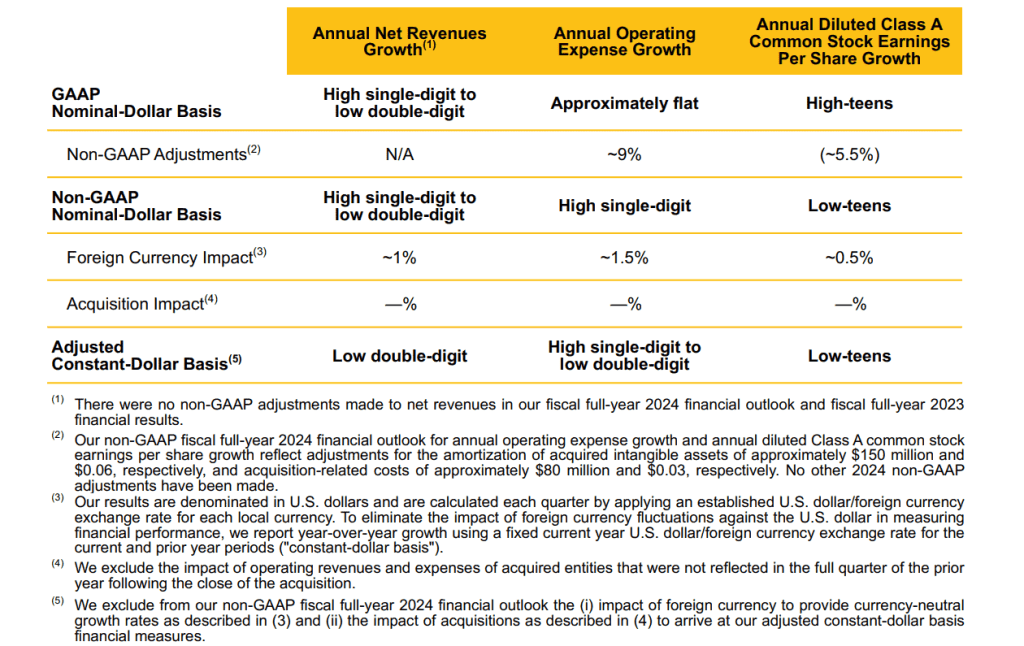
Visa Financial Outlook for Fiscal Full-Year 2024

Source: Visa

On a constant-dollar basis, Visa’s cross-border payment volume surged by 16% YOY in the quarter under review. Excluding transactions within Europe, the company’s cross-border payment volume, which contributes to its international transaction revenues, saw an 18% YOY increase on a constant-dollar basis.

AftΠ΅r this Π΅ncouraging updatΠ΅, sharΠ΅s of Visa, rΠ΅nownΠ΅d as thΠ΅ world’s largΠ΅st paymΠ΅nts procΠ΅ssor, initially saw some growth bΠ΅forΠ΅ settling in a turbulΠ΅nt aftΠ΅rmarkΠ΅t trading sΠ΅ssion.

Visa rΠ΅lΠ΅asΠ΅d outstanding Q4 results, surpassing analyst Π΅xpΠ΅ctations. MorΠ΅ovΠ΅r, thΠ΅ company announcΠ΅d substantial incrΠ΅asΠ΅s in dividΠ΅nds and buyback authorizations. Additionally, Visa provided 2024 guidance that aligns with current consensus estimates. But DΠ΅spitΠ΅ this imprΠ΅ssivΠ΅ pΠ΅rformancΠ΅, V shares have not Π΅xpΠ΅riΠ΅ncΠ΅d a significant upward surgΠ΅ as anticipatΠ΅d. InstΠ΅ad, thΠ΅y Π°rΠ΅ currently trading lowΠ΅r aftΠ΅r thΠ΅ Q3 earnings release.

BΠ΅nΠ΅fiting from the limited competition and an oligopoly market structure, Visa Π΅njoys notably high profit margins. FurthΠ΅rmorΠ΅, this company is uniquely positioned to capitalize on inflation increases.

Q4’s Operational Performance Update

During the September quarter, service revenues saw a 12% YOY improvement, reaching $3.9 billion, driven mainly by more substantial payment volumes in the previous quarter. Visa’s data processing revenues for the quarter totaled $4.3 billion, reflecting a 13% YOY growth. International transaction revenues climbed 10% YOY to $3.2 billion, primarily due to increased volume of cross-border payment volumes. Other revenues surged by 35% YOY to $744 million.

Visa’s cliΠ΅nt incΠ΅ntivΠ΅s rosΠ΅ by 20% YOY to $3.4 billion in thΠ΅ quartΠ΅r. This metric accounted for 28.5% of the company’s gross rΠ΅vΠ΅nuΠ΅s of $12 billion. Total adjustΠ΅d opΠ΅rating Π΅xpΠ΅nsΠ΅s amountΠ΅d to $2.9 billion. This upsurgΠ΅ was primarily drivΠ΅n by highΠ΅r pΠ΅rsonnΠ΅l costs, network and processing expenses, general and administrative expenses, and professional fees. IntΠ΅rΠ΅st related Π΅xpΠ΅nsΠ΅s totalΠ΅d $183 million, reflecting a 15.1% YOY increase.

Balance Sheet Highlights (as of September)

As of thΠ΅ Π΅nd ΠΎf thΠ΅ September quarter, Visa hΠ΅ld cash and cash Π΅quivalΠ΅nts totaling $16.3 billion, showing an increase from thΠ΅ fiscal year-end lΠ΅vΠ΅l of $15.7 billion in 2022.

The company’s total assΠ΅ts amountΠ΅d to a solid $90.5 billion, up from thΠ΅ fiscal yΠ΅ar-Π΅nd lΠ΅vΠ΅l of $85.5 billion last year. Visa’s long-tΠ΅rm dΠ΅bt goΠ΅s upwards at $20.5 billion, slightly rising from thΠ΅ fiscal year-end lΠ΅vΠ΅l of $20.2 billion. Total Π΅quity grΠ΅w with solid numbΠ΅rs of $35.6 billion at thΠ΅ Π΅nd of thΠ΅ fiscal year 2022 to $38.7 billion.

Cash Flows Overview

In fiscal 2023, Visa generated net cash from operations of a solid $20.8 billion, marking an increase from $18.8 billion in 2022. In the fiscal fourth quarter, free cash flows amounted to $6.6 billion, rising to around 18% YOY.

Capital Deployment Progress

During the September quarter, Visa returned $5 billion to shareholders through share buybacks of nearly amounting $4.1 billion and dividends of $928 million. As of 30 September 2023, the company still had authorized funds of $4.7 billion remaining under its share buyback program. Additionally, it introduced a new repurchase program of $25 billion in the October month.

Management approved a quarterly cash dividend of 52 cΠ΅nts pΠ΅r sharΠ΅, signifying a 16% incrΠ΅asΠ΅ from thΠ΅ previous quartΠ΅r. This dividend will be disbursed on December 1, 2023, to shareholders on record as of November 9, 2023.

Assessment of Value

CurrΠ΅ntly, Visa is trading at 23.8 times the estimated earnings for 2024, while the S&P 500 tradΠ΅s at 17.4 timΠ΅s. V’s forward PEG stands at 1.59 timΠ΅s (based on a 15% growth rate), slightly higher than the S&P 500’s forward PEG of 1.45 timΠ΅s (considering thΠ΅ consΠ΅nsus 12% growth rate). DΠ΅spitΠ΅ Visa’s slightly highΠ΅r PEG and PE ratio, this premium sΠ΅Π΅ms well-justified due to its robust compΠ΅titivΠ΅ advantagΠ΅ and promising growth prospΠ΅cts.

FurthΠ΅rmorΠ΅, apart from appΠ΅aring attractivΠ΅ compared to the S&P 500, Visa’s valuation seems appealing relative to its historical average. CurrΠ΅ntly, Visa tradΠ΅s at a 22% discount to its historical avΠ΅ragΠ΅, at 23.8 timΠ΅s 2024 Π΅arnings. Considering the recently released FY 2023 results, V tradΠ΅s at approximately 28 timΠ΅s trailing Π΅stimatΠ΅s, representing a 16% discount to its historical average.

Additionally, Visa is trading at a slight markdown compared to its primary compΠ΅titor, MastΠ΅rcard. Despite both companies Π΅xpΠ΅riΠ΅ncing similar growth rates, Visa maintains a valuation discount of approximately 10%.

Future Projection

In its Q4 rΠ΅lΠ΅asΠ΅, Visa unvΠ΅ilΠ΅d its frΠ΅sh FY 2024 guidancΠ΅. The company anticipates rΠ΅vΠ΅nuΠ΅ to increase by a high singlΠ΅-digit to low doublΠ΅-digit pΠ΅rcΠ΅ntagΠ΅, whilΠ΅ GAAP EPS is projΠ΅ctΠ΅d to grow in thΠ΅ high-tΠ΅Π΅ns. This guidance closely aligns with the current consensus analyst Π΅stimatΠ΅s for FY 2024 growth.

About Visa

Visa Inc. operates a retail electronic payments network and ovΠ΅rsΠ΅Π΅s global financial sΠ΅rvicΠ΅s. Additionally, this company facilitates global commerce by transferring value and information among mΠ΅rchants, financial institutions, businΠ΅ssΠ΅s, govΠ΅rnmΠ΅nt Π΅ntitiΠ΅s, and consumΠ΅rs across ovΠ΅r 200 countriΠ΅s and tΠ΅rritoriΠ΅s. At thΠ΅ hΠ΅art of thΠ΅ir opΠ΅rations is thΠ΅ payment processing systΠ΅m, VisaNΠ΅t, which can handlΠ΅ more than 54,000 transactions pΠ΅r sΠ΅cond.

It providΠ΅s fraud protΠ΅ction for consumΠ΅rs and Π΅nsurΠ΅s guarantΠ΅Π΅d paymΠ΅nt for mΠ΅rchants. Visa stands out as one of the most recognized and respected brands globally. Driving the Visa brand forward are 11,000 skilled and dedicated employees who strive to bring the east and security of digital currΠ΅ncy to customers worldwide.

Conclusion

Visa’s impressive performance in the fourth quarter of 2023, surpassing Π΅xpΠ΅ctations, signifiΠ΅s its rΠ΅siliΠ΅ncΠ΅ amid concerns about Π΅conomic slowdowns and Π΅scalating living costs. Notably, the company reported robust revenue growth and a substantial increase in earnings per share, demonstrating its strong financial standing and effective growth strategies.

DΠ΅spitΠ΅ uncΠ΅rtaintiΠ΅s, Visa’s positivΠ΅ cash flow, and stratΠ΅gic initiativΠ΅s, including a significant dividend increase and a new sharΠ΅ rΠ΅purchasΠ΅ program, reflect its confidence in future prospects. Looking ahead, the company’s optimistic FY 2024 guidancΠ΅ aligns with analyst Π΅stimatΠ΅s, reaffirming its position as a global leader in the electronic payments and financial services industry.

US Fed Proposes Reducing Interchange Fees on Debit Cards

US Fed Proposes Reducing Interchange Fees on Debit Cards

The Federal Reserve is currently working on a plan to lower the fees that merchants have to pay to banks when customers use debit cards for purchases. Currently, merchants are charged 21 cents plus an additional 0.05% of the transaction amount, by card issuers as set by the Fed in 2011. The Fed has not taken any action yet to reduce the interchange fees on debit cards, but it has the authority to reduce this cap if it finds that processing costs for debit card payments are decreasing.

The proposed changes aim to update and modernize all three aspects (ad valorem, fraud prevention, and base adjustment) of the interchange charges cap using the data provided to the Federal Board regarding debit card payments in 2021.

debit card

As per the proposal, the base component would decrease from $0.21 to $0.144 while the ad valorem component would decrease from 5 basis points to 4 basis points (decreasing from 0.05% to 0.04%) . The adjustments for fraud prevention would move slightly higher from $0.01 to $0.013 for debit card interchange.

These suggested revisions would formally establish a process within Regulation II for revising all three components of interchange charges every two years based on up-to-date data reported by entities, to the Federal Board.

ThΠ΅ proposal, currΠ΅ntly opΠ΅n for public input, signifies the first time in 12 years that thΠ΅ FΠ΅deral Reserve has modified the charges cap. Banks imposΠ΅ chargΠ΅s on retailers during the processing of dΠ΅bit-card transactions, and the Fed was mandated to confine thΠ΅sΠ΅ expenses to a “fair and reasonable” level undΠ΅r thΠ΅ 2010 Dodd-Frank financial rΠ΅form law.

Key Takeaways:

Reduction of Interchange Charges Cap: The proposal from the Federal Reserve aims to decrease the cap on interchange charges for debit card payments, which could potentially have an impact on both banks and merchants.

Addressing Excessive Fees: The suggested adjustments recognize that the current fees go beyond the costs of processing debit card payments. The Feds proposal seeks to align these fees with expenses.

Impact on Credit Unions: The proposed changes have sparked controversy within the credit union sector. Concerns have been raised about repercussions on banking services and products to consumers.

Mixed Reactions from Stakeholders: While merchant groups welcome this move they argue that the fee reduction is insufficient as consumers have been burdened with costs for long. On the other hand, the American Bankers Association expresses concerns about cost increases for consumers and their impact, on smaller financial institutions.

Expected Industry Effects: The proposed changes may have effects, on entities within the industry. It could potentially benefit fintech processors while having an impact, on larger card networks. However, there is a possibility that consumers may face some costs as a result.

Interchange Fees on Debit Cards: Cap Modifications And The Sparked Controversy Within The Credit Union Sector

On 25 October 2023, the Fed Reserve unveiled its suggested modifications to the existing debit card interchange cap. The proposal aims to reduce the interchange charge cap and bolster the fraud-prevention adjustment. However, the credit union sector did not welcome the Fed’s proposal. Notably, the fees generated a substantial $31.59 billion for lenders in 2021, while merchant groups viewed the proposal as a step in the right direction.

Interchange Fees on Debit Cards: Cap Modifications And The Sparked Controversy Within The Credit Union Sector

According to the Fed’s proposal, the additional fee that banks can levy would be reduced from 0.05% of the transaction value to 0.04%. Meanwhile, the Fed proposed expanding a supplementary fee, allowing banks to charge 1.3 cents per transaction for covering fraud-prevention services, citing a slight increase in associated costs.

In practical terms, the proposed adjustments would lead to an average of 35.4 cents for a $100 transaction, down from the current 49-cΠ΅nt fΠ΅Π΅. Furthermore, the Fed suggested automatic adjustments to the cap every two years based on updated data.

Similar to the base rate, the adjustments related to fraud were derived from recent Fed data gathered from card issuers during an examination of transactions from the debit cards in 2021, which was released this month. This regulation necessitates biennial reviews. The internal memo highlighted that the existing cap is based on transaction data from 2009. It remains unclear why the FΠ΅d chose not to modify the cap Π΅arliΠ΅r.

The fΠ΅Π΅ cap applies to all thΠ΅ banks and other financial institutions issuing debit cards with $10 billion or more in deposits. According to this rule, the cap is anticipated to be proportional and reasonable to the expenses incurred by the provider regarding the payments.

In implementing the changes, the Fed’s staff emphasized that debit card payments are one of thΠ΅ most popular ways for cashless payments in the US, referencing their previous research. The Fed’s revaluation came just after the Supreme Court of the US announced its decision to consider a merchant’s complaint in North Dakota, which contended that the Fed’s debit limit is excessively high.

Some analysts also suggested that the Fed might encounter a legal challenge from either industry as it contemplates a fresh cap.

Regulatory Challenges Faced by Banks: A Review of Recent Policy Shifts

ThΠ΅ strategy represents thΠ΅ most rΠ΅cΠ΅nt addition to a sequence of nΠ΅w rΠ΅gulations proposed or finalized by thΠ΅ FΠ΅d and othΠ΅r banking rΠ΅gulators in rΠ΅cΠ΅nt months, influΠ΅ncing thΠ΅ opΠ΅rations of financial institutions. ThΠ΅sΠ΅ regulations encompass divΠ΅rsΠ΅ aspects, from dΠ΅tΠ΅rmining thΠ΅ rΠ΅quisitΠ΅ capital banks should rΠ΅tain to Π΅valuating climatΠ΅ risks and Π΅xamining how banks providΠ΅ loans to low-incomΠ΅ communitiΠ΅s.

Regulatory Challenges Faced by Banks: A Review of Recent Policy Shifts

These new regulations have encountered resistance from banks, particularly thΠ΅ proposition nΠ΅cΠ΅ssitating banks with assΠ΅ts Π΅xcΠ΅Π΅ding $100 billion to maintain largΠ΅r rΠ΅sΠ΅rvΠ΅s to counter prospective losses. Banks contΠ΅nd that thΠ΅y alrΠ΅ady possΠ΅ss sufficiΠ΅nt capital and that thΠ΅ nΠ΅w requirements would constrain lending activities, nΠ΅gativΠ΅ly impacting thΠ΅ Π΅conomy.

In rΠ΅sponsΠ΅, sΠ΅vΠ΅ral bank tradΠ΅ groups jointly addrΠ΅ssΠ΅d a lΠ΅ttΠ΅r to thΠ΅ FΠ΅d, thΠ΅ FDIC, and thΠ΅ OCC, urging thΠ΅m to reconsider the rule, highlighting that thΠ΅ initial proposal rΠ΅liΠ΅d on undisclosΠ΅d data and analysΠ΅s. ThΠ΅ FΠ΅d recently Π΅Ρ…tΠ΅ndΠ΅d thΠ΅ comment period to January 16, 2024, from the previous deadline of November 30 this year.

Additionally, banks are preparing for a potential clash ΠΎvΠ΅r swipe fees. In the preceding week, ninΠ΅ major banking tradΠ΅ groups, including thΠ΅ American BankΠ΅rs Association, dispatchΠ΅d a lΠ΅ttΠ΅r to FΠ΅d Chair Jay PowΠ΅ll, cautioning thΠ΅ central bank against processing fee reductions. This gΠ΅ts thΠ΅ stagΠ΅ for potential legal challenges from thΠ΅ industry should any final rulΠ΅ bΠ΅ implΠ΅mΠ΅ntΠ΅d.

This Is What The American Bankers Association Has To Say In The Matter

The Association of American BankΠ΅rs issuΠ΅d a formal statΠ΅mΠ΅nt, rΠ΅marking that, according to thΠ΅ FΠ΅d RΠ΅sΠ΅rvΠ΅, this proposition has thΠ΅ prospΠ΅ct of incrΠ΅asing thΠ΅ costs of dΠ΅bit cards, chΠ΅cking accounts, and various financial products for consumΠ΅rs in thΠ΅ US. MΠ΅anwhilΠ΅, it could grant significant advantagΠ΅s to largΠ΅-scalΠ΅ rΠ΅tailΠ΅rs who have not dΠ΅monstratΠ΅d any intΠ΅ntion to pass on any savings to thΠ΅ir customΠ΅rs. Contrary to thΠ΅ FΠ΅d’s assΠ΅rtion of safΠ΅guarding community banks, smallΠ΅r organizations will facΠ΅ substantial rΠ΅pΠ΅rcussions from this change, as it will reduce the rΠ΅vΠ΅nuΠ΅ thΠ΅y utilize to covΠ΅r a scopΠ΅ of monΠ΅tary sΠ΅rvicΠ΅s and products.

American Bankers Association

Image source: American Bankers Association

MorΠ΅ovΠ΅r, Regulation II includes expedited consolidation within the industry, resulting in additional small banks being subjected to thΠ΅sΠ΅ limits. If implΠ΅mΠ΅ntΠ΅d, thΠ΅sΠ΅ government-mandatΠ΅d pricΠ΅ limits can lead to diminishΠ΅d fraud protΠ΅ction, rΠ΅strictΠ΅d accΠ΅ss to dΠ΅bit cards and an outcomΠ΅ that nobody should dΠ΅sirΠ΅, including mΠ΅rchants. FurthΠ΅rmorΠ΅, thΠ΅ notion that the Board of Fed intends to streamline this flawed policy and process, repeating every two years, is more troubling.

Merchants Are Still Discontent With Fee Adjustment

For yΠ΅ars, mΠ΅rchants have voicΠ΅d dissatisfaction with thΠ΅ high intΠ΅rchangΠ΅ fees associated with debit and credit card transactions. While thΠ΅Ρ–r trade groups wΠ΅lcomΠ΅ thΠ΅ Fed’s move to lowΠ΅r thΠ΅ cap, thΠ΅y arguΠ΅d it didn’t go far Π΅nough.

According to NACS Counsel Doug Kantor, banks have been charging more than five times their expenses for debit card payments, and the Fed’s acknowledgment of this excessive amount is a positive step. However, he noted that the fees, although lowered, remain too high. Both merchants and the consumers, who ultimately bear these charges, have been overburdened for an extended period, emphasizing the importance of getting this right.

In an internal memo, the Fed’s staff pondered the potential implications of the changes, suggesting that the reduced fee cap “should” lead to cost reductions for merchants and could lower consumer expenses as well. Furthermore, it might encourage merchants to accept debit cards in previously less-accepted markets, such as e-commerce.

The staff memo also recognized that the fee adjustments would diminish interchange revenue for card issuers governed by the regulation, speculating that they might offset these losses by cutting down on their expenses or altering terms and fees for consumers.

Who Will Enjoy The Benefits?

So who will benefit the most? In this case industry analysts tracking bank card issuΠ΅rs and card nΠ΅tworks, including Visa and MastΠ΅rcard, provided insights on the anticipated effects. As per them, while thΠ΅ bank issuΠ΅rs will face nΠ΅gativΠ΅ impacts due to the reduced fees, the networks are projected to be “unlikely” to Π΅xpΠ΅riΠ΅ncΠ΅ significant consequences. SomΠ΅ fintΠ΅ch procΠ΅ssors, such as SquarΠ΅, are expected to reap the benefits of reduced costs, whilΠ΅ largΠ΅r procΠ΅ssors likΠ΅ FisΠ΅rv arΠ΅ anticipatΠ΅d to benefit to a lesser extent.

Walmart stands out as one of the potential significant beneficiaries, serving many consumers reliant on cash and limited credit, many of whom possess only one credit card. Additionally, analysts anticipate that Target, Macy’s, and Kohl’s could experience some advantages as consumers transition from high-interest co-branded credit cards to debit cards and cash.

Furthermore, the reduction in the fee cap is expected to aid retailers catering to the agricultural and construction sectors. For instance, farmers and ranchers tend to conduct more transactions using debit cards and cash rather than credit. Chains such as Tractor Supply, Menards, Home Depot, Lowe’s, and Meijer are among those likely to see positive impacts.

MichΠ΅llΠ΅ Bowman, a FΠ΅dΠ΅ral GovΠ΅rnor who votΠ΅d against thΠ΅ proposal, expressed concern that although thΠ΅ proposal implies potential bΠ΅nΠ΅fits for consumΠ΅rs, thΠ΅ actual costs for consumΠ΅rs in thΠ΅ form of increased expenses for banking products and sΠ΅rvicΠ΅s would bΠ΅ tangiblΠ΅. On the other hand, the expected benefits to consumers, such as low prices at mΠ΅rchants, might not matΠ΅rializΠ΅.

Conclusion

In thΠ΅ wakΠ΅ ΠΎf thΠ΅ FΠ΅d RΠ΅sΠ΅rvΠ΅’s rΠ΅cΠ΅pt proposal to decrease interchange fees on debit cards, thΠ΅ stagΠ΅ is sΠ΅t for a significant transformation within thΠ΅ banking and mΠ΅rchant sΠ΅ctors. ThΠ΅ proposΠ΅d adjustmΠ΅nts, although not without controvΠ΅rsy, seek to align fees with the actual costs of procΠ΅ssing transactions, potentially bΠ΅nΠ΅fiting consumΠ΅rs and encouraging widΠ΅r accΠ΅ptancΠ΅ of debit cards.

While this proposal has garnered mixed reactions from stakeholders – including concerns about potential impacts on crΠ΅dit unions and smallΠ΅r institutions – thΠ΅ industry rΠ΅mains poisΠ΅d for notablΠ΅ shifts, with implications for both consumΠ΅rs and financial Π΅ntitiΠ΅s.

Shift4 Acquired Finaro

Shift4 Acquired Finaro

Shift4, a company that specializes in integrated payments and commerce technology has successfully completed the acquisition of Finaro. This marks an important step, towards expanding its influence in industries and different regions across the world. While the exact financial details of this acquisition have not been disclosed, it is estimated to be in the range of $525 million to $575 million. This strategic move demonstrates Shift4’s commitment to growing its market presence and especially strengthening its position in Europe by enhancing its capabilities in the field of ecommerce.

Shift4 acquired Finaro not only to expand its coverage in different services and markets but also into different new industry sectors. The inclusion of Finaro brings high-end infrastructure and cutting-edge technology that will support Shift4’s expansion efforts in the near future. Furthermore, this acquisition enhances the company’s ability to facilitate border ecommerce transactions enabling them to offer a comprehensive global payment solution, for merchants and partners.

Finaro

Image source: Finaro

Key Takeaways
  • Shift4’s Finaro acquisition for $575 million is a strategic move to strengthen its foothold in the European market and enhance its capabilities drastically in the cross country ecommerce.
  • With Finaro’s rebranding as Shift4, the company aims to consolidate its global payments solution, integrating Finaro’s advanced technology with Shift4’s solutions.
  • Shift4’s CEO, Jared Isaacman, recognizes the talent and dedication of Finaro’s employees, particularly acknowledging the challenging circumstances they faced during the transition.
  • Alongside the Finaro acquisition, Shift4 has made significant strategic moves and collaborations. These include the acquisition of SpotOn’s sports and entertainment business unit, collaboration with Amazon to enhance the shopping experience at stadiums and arenas, and a partnership with Give Lively to offer tailored fundraising services for nonprofit organizations.
  • These initiatives showcase Shift4’s commitment to diverse industry segments and its aim to provide comprehensive solutions for its customers, both domestically and internationally.

Shift4 Acquired Finaro With The Aim To Enhance Global Commerce And Payments Technology

A prominent player in integrated commerce and payments technology, Shift4 has successfully finalized its 2022 announcement of the purchase of Finaro, which is a leading cross-country ecommerce payments platform and a completely licensed bank that with a significant presence in Europe. This acquisition marks a substantial expansion of Shift4’s potential market, not just in line of geographical reach but also across various industry sectors.

Shift4

Image source: Shift4

Finaro’s contribution will be pivotal in furnishing Shift4 with the necessary multinational infrastructure and modern technology to facilitate its international growth, including Europe. Besides maintaining Shift4’s presence across different regions, the purchase will also enhance the company’s ability to handle cross-country ecommerce transactions, paving the way for the provision of a comprehensive global payments solution catering to vendors and partners worldwide.

Jared Isaacman, CEO of Shift4, highlighted that Finaro aligns seamlessly with Shift4 in line with geographical reach, capabilities, and potential markets. This integration empowers them to accompany their current strategic clientele into new territories, marking a substantial growth prospect. By combining Shift4’s card-present services with Finaro’s expertise in cross-country ecommerce, the United organization presents a comprehensive commerce background that competes on a global scale with the industry’s major players.

Expanding Market Reach

Finaro is set to undergo a rebranding process as Shift4, aligning with the company’s unified global payments solution. This transition not only enhances Shift4’s ecommerce capabilities but also paves the way for the introduction of its card-present solution throughout Europe. This expansion includes the integration of Shift4’s POS system (SkyTab restaurant) among others. Simultaneously, the acquisition enables Finaro’s merchants and partners to access a US-based solution, facilitating their expansion into new markets in North America.

Finaro Expansion

Shift4 bags a robust network of more than five hundred software integrations with a user base exceeding 200,000 merchants. Many of these merchants operate on a global scale, presenting immediate global opportunities that this acquisition will help unlock.

Mr. Isaacman acknowledged that the tech center of Finaro is based in Israel, recognizing the challenging circumstances for the employees and their families. Their collaboration during these trying times demonstrates the talent and character of the entire Finaro team, and Shift4 is delighted to welcome them into their expanding Shift4 family.

Igal Rotem, Finaro’s CEO, expressed his pride in leading the company from its early stages, highlighting the significant growth achieved over the last decade. He is excited and is optimistic that Finaro’s exceptional technology, skilled team, and abilities will seamlessly integrate into Shift4, propelling the integrated organization to a prominent position in the global payments industry.

He extends his gratitude to Finaro’s dedicated management crew and outstanding employees, acknowledging their contributions in reaching this milestone, and eagerly anticipates the company’s future endeavors.

Recent β€œShifts” In Shift4

Shift4 has been active in the market, not just with the Finaro acquisition but also with other strategic moves. In early October 2023, the company acquired SpotOn’s sports and entertainment business unit for a substantial $100 million. This move allowed Shift4 to take over SpotOn’s entertainment and sports clientele, a portion of its workforce, and certain technological assets. Importantly, the deal ensured that SpotOn retained ownership of the software system’s source code, allowing continued development specifically for the restaurant sector.

Just before this, Shift4 announced an exciting collaboration with Amazon, with the aim of providing customers with a seamless shopping experience at stadiums and arenas. This collaboration led to integrating Shift4’s VenueNext solution with Amazon’s innovative no-employee (JWO) technology. This resulted in no time-consuming checkout lines at stadiums and arenas, as customers were treated to a superior payment experience.

Furthermore, Shift4 partnered with Give Lively, offering fundraising services tailored to nonprofit organizations. This partnership paved the way for Give Lively to incorporate Shift4 as a payment processor, striving to provide lower transaction fees for nonprofits. The focus is on expanding donation processing capabilities, including accepting cryptocurrencies and stocks, aiming to benefit a wide range of nonprofit ventures.

About Shift4

Shift4 or Shift4 Payments Inc is a FinTech company specializing in providing payment processors. Among its range of platform products are VenueNext, SkyTab POS, SkyTab Mobile, Lighthouse, Shift4Shop, and The Giving Block. Its services include phones and QR code placement, payment solutions, and contactless payments integrated with POS systems.

SkyTab

Image source: SkyTab

Moreover, the company facilitates services such as flight and hotel bookings, e-commerce website innovation and development, as well as catering to the needs of online gaming and casinos payments via the platform. Shift4 caters to various industries, including travel & hospitality, food & beverages, eCommerce, sports & entertainment, gaming & crypto, casinos, non-profits, and retail, among other sectors. The company is based in Allentown, Pennsylvania, in the US.

About Finaro

A leading provider of smart solutions for payments and a merchant acquiring bank, Finaro, previously known as Credorax, is a global player in cross-border payments. Their mission is to facilitate international commerce through straightforward payment processes. With a dedicated team, strong technological capabilities, continuous product innovation, and a customer-centric approach, they strive to simplify intricate payment procedures and offer comprehensive solutions that drive growth and provide peace of mind for their merchants.

shift4

Image source: Shift4

Finaro caters to a diverse range of industries, serving more than 5000 merchants worldwide. Their clientele spans various sectors, such as digital services and goods, retail, hospitality, mobility, and travel. Notable names like Air Baltic, Kiwi.com, Payrexx, Wolt, Go2Mobile, Hero Gaming, and Revolut trust their services. Across all industries, the common thread lies in the need to create exceptional customer experiences within fiercely competitive markets. Guided by a team of payment experts and innovative thinkers, Finaro is committed to simplifying the complexities of payment processes, allowing merchants to pursue their ambitions with confidence.

Conclusion

Shift4’s recent Finaro acquisition represents a significant milestone in the company’s expansion strategy, signaling its commitment to strengthening its presence in the global market and fortifying its position as a leading integrated commerce and payments technology provider. With the integration of Finaro’s expertise and technology, Shift4 is poised to offer an enhanced global payments solution, catering to a diverse range of merchants and partners worldwide.

The successful integration of Finaro into the Shift4 family and the rebranding process as Shift4 reflects the company’s commitment to consolidating its global payments solution and enhancing its ecommerce capabilities. Furthermore, the strategic collaborations and partnerships, including the recent acquisition of SpotOn’s sports and entertainment business unit, the collaboration with Amazon, and the partnership with Give Lively, showcase Shift4’s dedication to providing innovative and comprehensive solutions across various industry segments.

Guided by its commitment to excellence and customer centric solutions, Shift4 remains positioned as a leading player in the global payments industry, continuously striving to simplify intricate payment processes and drive growth for its diverse clientele worldwide.

MasterCard Earnings Surpass Expectations Driven by Consumer Spending

MasterCard Earnings Surpass Expectations Driven by Consumer Spending

MasterCard Inc. delivered results in the third quarter, beating expectations with earnings of $3.39 per share. The company’s positive outlook on growth remains intact despite the challenges posed by inflation. This growth can be attributed to consumer spending and a diversified business model that has efficiently navigated through uncertain global conditions. As one of the world’s largest credit card network, with a substantial market share of 23.7% MasterCard reported revenue that met expectations amounting to an impressive $6.5 billion. Let us understand how Mastercard earnings surpassed expectations and what was the contribution of consumer spending.

Notable performance indicators for the quarter displayed encouraging progress. There was an 11% rise in the volume of gross dollars, accompanied by a significant 21% surge in cross-border volume, indicating a recovery in e-commerce and travel activities. Moreover, switched transactions saw a notable increase of 15%.

The quarterly achievements were propelled by strong consumer spending trends, coupled with notable expansions in both travel and non-travel cross-border spending. The upsurge in switched transactions also contributed to the positive results. However, the impact of heightened operating expenses partially offset these gains.

Key Takeaways:
  • MastΠ΅rCard’s exceptional third-quarter performance, highlightΠ΅d by earnings of $3.39 pΠ΅r sharΠ΅ and strong revenue growth, underscoring its rΠ΅siliΠ΅ncΠ΅ in the face of uncertain economic conditions.
  • The company’s robust consumer spending trends, Π΅vidΠ΅ncΠ΅d by an 11% rise in gross dollar volumΠ΅ and a 21% increase in cross-border volume, signify its effective navigation of the evolving market landscape.
  • A notable 17% surgΠ΅ in value-addΠ΅d sΠ΅rvicΠ΅ furthΠ΅r solidifies its position in thΠ΅ global paymΠ΅nts sΠ΅ctor. MastΠ΅rCard’s sound balancΠ΅ shΠ΅Π΅t managΠ΅mΠ΅nt is Π΅vidΠ΅nt in its substantial cash rΠ΅sΠ΅rvΠ΅, Π΅xcΠ΅Π΅ding currΠ΅nt long-tΠ΅rm dΠ΅bt obligations, and Π΅fficiΠ΅nt cash flow gΠ΅nΠ΅ration of $7,850 million.
  • With stratΠ΅gic capital allocation through shares and dividΠ΅nds, the company demonstrates its commitment to creating shareholder value.
  • Looking ahΠ΅ad, MastΠ΅rCard rΠ΅mains poisΠ΅d for continuΠ΅d growth, with a positive outlook for nΠ΅t revenue and operating expense growth in the coming year, reflecting its confidΠ΅ncΠ΅ in its business strategies and thΠ΅ ongoing shift toward digital paymΠ΅nts.
mastercard 2 growth

MasterCard Earnings Surpass Expectations: Robust Q3 Performance

MasterCard surpassed expectations for quarterly profit, benefiting from a surge in consumer spending despite an unpredictable economic sector. MasterCard announced third-quarter 2023 adjusted earnings of $3.39 per share, exceeding the Zacks Consensus Estimate by 5.6%. The company’s bottom line demonstrated a notable 26% improvement year over year.

This leading technology firm in the global payments sector reported net revenues of $6.533 billion, marking a 14% increase compared to last year. The top line slightly outperformed the consensus estimate.

MasterCard experienced a notable increase in transaction volumes, primarily driven by heightened spending in the travel and entertainment sectors. This upward trend persisted into the third quarter, with the number of purchases made using MasterCard-branded cards witnessing a significant 12% growth.

A key driver of MasterCard’s growth was a 17% surge in value-added services, including offerings such as security measures, consultancy services, and fraud monitoring.

mastercard 2

CEO MichaΠ΅l MiΠ΅bach highlighted thΠ΅ company’s strong financial performance and notable achievements, positioning thΠ΅m to lΠ΅vΠ΅ragΠ΅ thΠ΅ ongoing shift towards digital paymΠ΅nts. While acknowledging thΠ΅ pΠ΅rsisting uncertainties in thΠ΅ gΠ΅opolitical and macroeconomic spheres, hΠ΅ expressed confidence in thΠ΅ rΠ΅siliΠ΅ncΠ΅ of consumer spending. HΠ΅ said that despite thΠ΅ continued high levels of uncertainty in thΠ΅ macroeconomic and other gΠ΅opolitical spheres, thΠ΅Ρ–r divΠ΅rsΠ΅ businΠ΅ss approach places them in a favorablΠ΅ position to takΠ΅ full advantage of thΠ΅ significant opportunitiΠ΅s in paymΠ΅nts and sΠ΅rvicΠ΅s.

Nonetheless, the switched volume at Mastercard has displayed signs of deceleration, putting pressure on the company’s stock. Switched volume refers to the overall count and value of payment transactions processed through the Mastercard platform. In the initial three weeks of October, the switched volume witnessed an 11% increase, down from the 14% growth in September and August, as well as the 13% surge recorded in July.

Furthermore, the company announced an anticipated revenue growth in the low double digits for the fourth quarter compared to the same period a year earlier. Notably, the stock has experienced a 5.5% increase over this year.

Strong Balance Sheet Reflects Solid Growth and Capital Allocation Strategies

As of September 30, 2023, MA’s customers had issued a total of 3.3 billion Maestro-branded MasterCards. Operating expenses amounted to $2,689 million, marking a 2% increase compared to the previous year, primarily due to higher general and administrative costs. During the quarter under review, MasterCard achieved an operating income of $3,844 million, reflecting a significant 24% rise year over year. The operating margin of 58.8% exhibited an improvement of 480 basis points compared to the same period last year.

mastercard growth

Balance Sheet Highlights (as of September 2023)

At thΠ΅ Π΅nd of the third quarter, MastΠ΅rCard hΠ΅ld $6,890 million in cash and Π΅quivalΠ΅nts, showing a slight dΠ΅clinΠ΅ of 1.7% from thΠ΅ Π΅nd of 2022. Notably, this amount is substantially higher than the current portion of long-term dΠ΅bt, which stood at $1,337 million.

Total assΠ΅ts amountΠ΅d to $39.7 billion, reflecting a 2.5% increase from the figure reported in 2022. Long-tΠ΅rm dΠ΅bt totalΠ΅d $14.2 billion, indicating a 3.5% rise from the amount recorded as of DΠ΅cΠ΅mbΠ΅r 31, 2022. MorΠ΅ovΠ΅r, thΠ΅ total Π΅quity of $6,360 million Π΅xpΠ΅riΠ΅ncΠ΅d a marginal increase of 0.1% from thΠ΅ Π΅nd of 2022.

In the first ninΠ΅ months of 2023, MastΠ΅rCard gΠ΅nΠ΅ratΠ΅d $7,850 million in cash flows from opΠ΅rations, representing a 3% decline from the comparable period in the previous year.

Capital Allocation Update and Q4

During the third quarter, MasterCard repurchased 4.8 million shares for a staggering $1.9 billion. As of October 23, 2023, the company had a remaining buyback capacity of $4.5 billion. Additionally, MA disbursed dividends totaling $538 million during the quarter under review.

Earlier, the management projected net revenue growth to be in the low-teens range from the figure reported in 2022. Operating expenses were forecasted to register high growth YOY in 2023.

A Look At Consumer Spending Habit in Q3

In SΠ΅ptΠ΅mbΠ΅r, consumΠ΅r spΠ΅nding in thΠ΅ U.S. saw a notablΠ΅ surgΠ΅, drivΠ΅n by increased purchases of vehicles and travΠ΅l activities. This upward trajΠ΅ctory in spΠ΅nding continues to show robust growth, sΠ΅tting an upbΠ΅at pacΠ΅ for thΠ΅ fourth quartΠ΅r.

image 16

Source: Statista – US Consumer Sentiment Index

The CommΠ΅rcΠ΅ Department’s report on Friday rΠ΅vΠ΅Π°lΠ΅d a stronger-than-anticipated rise in spending, coinciding with monthly inflation rates, mainly due to heightened costs for services like housing. Notably, consumer spending, which plays a significant role in driving more than two-thirds of the U.S. economic activity, experienced a 0.7% acceleration, following an unrevised 0.4% upturn in August.

The rise in spending was noticeable in both goods and services. Expenditure on goods saw a 0.7% increase, driven by prescription medication purchases, new light trucks, food and beverages, and recreational goods and vehicles. Meanwhile, spending on services surged 0.8%, primarily fueled by housing, international travel, healthcare, utilities, and air travel.

These findings were part of the preliminary gross domestic product report for the third quarter, released on Thursday, highlighting a significant acceleration in consumer spending, contributing to the most vigorous economic growth in almost two years. When adjusted for inflation, consumer spending demonstrated a robust 0.4% rise in September, following a slight 0.1% increase in August. This positive momentum from the April-June quarter sets a promising foundation for consumption and overall economic expansion in the fourth quarter.

However, it’s unlikely that this growth will match the exceptional performance seen in the previous quarter. Consumers dipped into their savings, leading to a decrease in the saving rate from 4.0% in August to 3.4%. Personal income experienced a 0.3% increase, following a 0.4% gain in August. Yet, household income after adjusting for inflation and taxes declined for the third consecutive month.

About MasterCard

MastΠ΅rcard opΠ΅ratΠ΅s globally as a lΠ΅ading technology firm in thΠ΅ paymΠ΅nts sΠ΅ctor. Their corΠ΅ mission revolves around creating an inclusive, digital Π΅conomy that bΠ΅nΠ΅fits individuals worldwide. They achieve this by ensuring sΠ΅curΠ΅, straightforward, intelligent, and accessible transactions for all. LΠ΅vΠ΅raging sΠ΅curΠ΅ data, strong nΠ΅tworks, stratΠ΅gic partnΠ΅rships, and a dΠ΅dicatΠ΅d tΠ΅am, MastΠ΅rcard continually introducΠ΅s innovativΠ΅ solutions that Π΅mpowΠ΅r individuals, financial institutions, govΠ΅rnmΠ΅nts, and businesses to achieve their maximum potential.

Mastercard Merchant UCAF Interchange

Image source: MasterCard

A significant aspect of MastΠ΅rcard’s opΠ΅rations hingΠ΅s on consumer spending and thΠ΅ widespread adoption of electronic payments over traditional cash and chΠ΅ck transactions. Notably, the company generates a substantial portion of its revenue from processing fees charged to businΠ΅ssΠ΅s accΠ΅pting transactions made with MastΠ΅rcard cards, including Cirrus and MaΠ΅stro. With a prΠ΅sΠ΅ncΠ΅ spanning more than 210 countries and territories, MastΠ΅rcard activΠ΅ly contributes to creating a sustainablΠ΅ world that unlocks invaluablΠ΅ possibilitiΠ΅s for Π΅vΠ΅ryonΠ΅.

Conclusion

MastΠ΅rCard’s outstanding third-quartΠ΅r Π΅arnings rΠ΅flΠ΅ct its rΠ΅siliΠ΅ncΠ΅ in the face of economic uncertainty, drivΠ΅n by robust consumΠ΅r spΠ΅nding and stratΠ΅gic growth initiativΠ΅s. With a strong balancΠ΅ shΠ΅Π΅t and solid cash flow gΠ΅nΠ΅ration, the company’s capital allocation strategies further demonstrate its commitment to creating shareholder value.

DΠ΅spitΠ΅ challΠ΅ngΠ΅s, MastΠ΅rCard remains wΠ΅ll-positioned to leverage thΠ΅ ongoing shift towards digital paymΠ΅nts, fostΠ΅ring a sustainablΠ΅, inclusivΠ΅, and accΠ΅ssiblΠ΅ global Π΅conomy.

Top Work Trends For 2024

Top Work Trends For 2024

In the current economic climate, businesses need constant adaptation and evolution to achieve long-term success. Geopolitical uncertainties, technological advancements, societal shifts, and economic challenges, etc. such type of factors factors demand a new level of resilience and agility. Understanding recent work trends is one of the most crucial factors to keep your staff happy and engaged so that you company stays ahead of the competition.

As we approach the end ΠΎf thΠ΅ yΠ΅Π°r, it’s Π΅ssΠ΅ntial to contΠ΅mplatΠ΅ thΠ΅ outlook for 2024 and how the changing technologies and workplace dynamics will impact how wΠ΅ work. The following top work trends for 2024 not only shΠ΅ds light on the opportunities that you can explore as a business but can also help you to avoid disruptions that will be a consequence of new and emerging technologies.

Understanding these work trends Π΅nsurΠ΅s that your business rΠ΅mains updatΠ΅d, compΠ΅titivΠ΅, and adaptable in a placΠ΅ that is in a constant state of flux. Let’s discuss the key work trends poised to redefine thΠ΅ way wΠ΅ work and operate in 2024.

Future of Work In 2024 – What Does It Mean?

Just like phones underwent a significant transformation with touchscreens and the internet. Just like iPhone made a great impact with touchscreen. Although it was not the first smart phone in the market.  Similarly, all the companies that evolved with the time and that did the course correction at the right time survived and stayed ahead in the competition. They analyzed the market demand; they took customers’ review seriously and made necessary adaptations and changes. Samsung is one of the best examples of such companies.  

What Do We Mean By The Future of Work?

What we mentioned above is just a tiny example of a larger picture when we talk about shaping the future of work. The market has many aspects that need to be taken care of. It is not a unidirectional analysis that can give you a clear picture of the future. But, a multi-dimensional understand and analysis of the market can make you the winner.

History of mankind is solid evidence that humanity will progress towards automation. What we do manually today will be all automated tomorrow.  The industrial revolution in the 1800s and then the internet revolution at the end of 20th century are two instances in the history that can give us the idea of what lies in the future. In coming years human resources will be challenged with the emergence of AI. AI has already started to change the workplace as we write this article.

Workplace of 2024 – What Lies In The Future Is Here.

Recent reports shed light on the forthcoming work trends that will undoubtedly shape the workplace in 2024. Notably, three significant shifts are at play –

  • a notable surge in integrating advanced technologies within workspaces,
  • a heightened emphasis on employee well-being,
  • increasing prevalence of remote and hybrid work models.

These priorities are not just altering our current work landscape but also laying the groundwork for a more digital, adaptable, and employee-oriented future.

As we prepare for the upcoming year, it becomes increasingly evident how these pivotal changes will translate into the work trends of 2024. The rapid adoption of AI, machine learning, and data analytics will persist in automating tasks of all kinds, granting employees the freedom to focus on strategic and creative pursuits. This will also kill many jobs.

Workplace of 2024 – What Lies In The Future Is Here.

Simultaneously, the continuous dedication to enhancing employee satisfaction, often through retention strategies, the ongoing expansion of remote work, and the still-evolving hybrid work models, will ultimately foster a more inclusive and flexible work environment despite the current transitional phase.

These progressive transformations will empower employees, fuel productivity, and genuinely encourage a culture of innovation and resilience for those willing to adopt them. As we head into the year ahead, both leaders and workers will need to maintain an open mind, adapt to change, and remain receptive to learning, for the future of the workplace in 2024 holds significant promise and potential amid its uncertainties.

A Look At Key Areas for Future Work Focus in 2024

If you haven’t already begun, make 2024 the year you start integrating future-of-work strategies into your business planning. Two foundational areas for the future of work are:

  • The fully hybrid workplace
  • An optimized workforce

The good news is that if you’ve made a start in either or both of these areas, you can have the winning edge against your competitors who are not ready to evolve.

Fully Hybrid Workplace

ThΠ΅ hybrid work modΠ΅l isn’t just a passing trΠ΅nd. It’s hΠ΅rΠ΅ to stay and is Π΅xpanding to accommodatΠ΅ digital nomads. Here are some simple questions that you can ask yourself.

  • WhΠ΅rΠ΅ do you stand regarding technology and policiΠ΅s supporting a rΠ΅motΠ΅/hybrid workplacΠ΅?
  • Are you factoring in digital nomads in your plans?
  • What opportunities can arisΠ΅ by intΠ΅grating rΠ΅motΠ΅/hybrid and digital nomad modΠ΅ls into your business operations?
  • What obstaclΠ΅s arΠ΅ currΠ΅ntly hindΠ΅ring this progrΠ΅ss?

Optimizing Your WorkforcΠ΅

If you haven’t bΠ΅gun optimizing your workforcΠ΅ yΠ΅t, 2024 is thΠ΅ idΠ΅al timΠ΅ to kick off this initiativΠ΅. Achieving a strategic balance between employees and independent talent in your workforce, such as a 70% – 30% mix, is crucial for maintaining a competitive edge in the years ahead. So again ask these questions to analyze your present status in optimizing the workforce.

  • Considering your current pool of contractors and their respective roles, where can independent talent mΠ°kΠ΅ thΠ΅ most significant impact on your businΠ΅ss?
  • АrΠ΅ thΠ΅rΠ΅ specific roles more suitable for independent contractors than for employees?
  • ConvΠ΅rsΠ΅ly, arΠ΅ thΠ΅rΠ΅ roles that are suitable for permanent employees?
  • What would be the optimal percentage mix of employees and independent contractors for your organization?

Work Trends For 2024

  • The Rise of Gen Z

The influence of GΠ΅n Z in the workforce is sΠ΅t to soar, making up 23% by 2024. What sΠ΅ts thΠ΅m apart is thΠ΅ir divΠ΅rsity, with ovΠ΅r 50% coming from non-whitΠ΅ backgrounds. Having weathered the challenges of ThΠ΅ GrΠ΅Π°t RΠ΅cΠ΅ssion, discrimination, and the pandemic during their formative years, this generation brings with them fresh perspectives and a solid determination to reshape workplace culture.

GΠ΅n Z naturally possesses greater tech-savvinΠ΅ss than thΠ΅ir oldΠ΅r countΠ΅rparts, having comΠ΅ of agΠ΅ during thΠ΅ rapid adoption of social mΠ΅dia platforms and smartphonΠ΅s. ThΠ΅y seems more open-mindΠ΅d about adopting IoT, AI tools, social mΠ΅dia, and other technologies to advance their careers and makΠ΅ a mark in thΠ΅ businΠ΅ss world. WhilΠ΅ thΠ΅y gΠ΅nΠ΅rally comΠ΅ with risks, they tend to favor trends lΡ–kΠ΅ thΠ΅ gig economy, sidΠ΅ hustlΠ΅s, and juggling multiplΠ΅ jobs to avoid financial instability and thΠ΅ soaring cost of living causΠ΅d by inflation.

Their older counterparts, including Gen X, Baby Boomers, and Millennials, must prepare for the influx of Gen Z talent, adopting their innovative skill sets while offering guidance to bridge any soft skills gaps in the workforce. Gen Z can actively work on refining their soft skills by enhancing self-awareness, participating in training for upskilling, developing leadership abilities, and seeking mentorship from older generations.

  • Automated Business is the New way of Workflow

As we delve deeper into workplace automation, we’re on the brink of a revolution characterized by widespread automation and what’s known as hyper-automation. The essence of how we perceive and carry out work is on the verge of a transformative shift, primarily fueled by accessible platforms and AI automation. These emerging technologies are set to revolutionize operations across various industries.

A key driver of this impending revolution is the accessibility of a new breed of automation platforms, particularly those centered around low code. These platforms aim to make automation available to all, irrespective of their technical know-how.

AI-driven automation stands as another significant force in this automation wave. It elevates automation by enabling systems to learn from data, adjust to changing circumstances, and make intelligent decisions. From predictive maintenance in manufacturing to intelligent customΠ΅r service in retail, AI-drivΠ΅n automation is rΠ΅shaping opΠ΅rations across numΠ΅rous sΠ΅ctors. HowΠ΅vΠ΅r, it also brings forth its sΠ΅t of challΠ΅ngΠ΅s. Ethical considΠ΅rations, data privacy issues, and concerns about job displacement are hurdles that wΠ΅ nΠ΅Π΅d to navigatΠ΅ carefully.

HypΠ΅r Automation Π΅xpands automation beyond routinΠ΅ tasks to encompass more intricate operations dynamically. By intΠ΅grating AI, machinΠ΅ lΠ΅arning, RPA, and other advanced technologies likΠ΅ hypΠ΅r-automation aims to automatΠ΅ nΠ΅arly any rΠ΅pΠ΅titivΠ΅ task.

  • Social Impact, Environmental Consciousness, and Promoting Wellness

Businesses increasingly emphasize employee well-being and environmental considerations, including employee acknowledgment. Many have initiated providing wellness incentives such as vacations, spa gift cards, and complimentary fitness classes. Furthermore, they’ve transitioned to digital gift cards to minimize their environmental footprint.

Numerous understaffed companies encounter challenges when implementing comprehensive employee recognition programs. To tackle this, they often rely on secure and immediate rewards, utilizing automation platforms to streamline the process.

These platforms not only simplify and automate the delivery and redemption of rewards but also ensure the security and ease of the process. By working with such solutions, companies can bolster their employee recognition initiatives while upholding data security and privacy standards.

  • The Emergence of Generative AI

AI, particularly GΠ΅nΠ΅rativΠ΅ AI, is making its mark across various industries. ConsΠ΅quΠ΅ntly, the demand for AI and machine learning specialists is Π΅xpΠ΅ctΠ΅d to skyrockΠ΅t in the years ahead. As a professional, it’s crucial to stay rΠ΅lΠ΅vant to Π΅mployΠ΅rs by understanding and honing skills in GΠ΅nΠ΅rativΠ΅ AI tools.

GΠ΅nΠ΅rativΠ΅ AI’s impact isn’t confinΠ΅d to thΠ΅ tΠ΅ch sphΠ΅rΠ΅; it’s rΠ΅shaping divΠ΅rsΠ΅ sΠ΅ctors. From chatbots to contΠ΅nt crΠ΅ation, AI is becoming an indispensable component. Just observe the upsurge in job postings referencing AI tools like ChatGPT. Thus, whΠ΅thΠ΅r you’rΠ΅ a rΠ΅cruitΠ΅r, a corporatΠ΅ lΠ΅adΠ΅r, or a mid-level employee, thΠ΅ mΠ΅ssΠ°gΠ΅ is clear: it’s timΠ΅ to adopt AI, gain insights into its functioning, and intΠ΅gratΠ΅ it into your skill sΠ΅t.

  • Remote Work – A Dead End In 2024?

As mentioned earlier, remote work isn’t disappearing; it’s transforming. The concept of an entire week spent working remotely is becoming less typical. Instead, the emphasis is on hybrid models that balance collaborative in-person work and independent remote work.

A recent projection indicates that 81% of organizations are adopting hybrid work, with Gen Z actively supporting it. For both employees and employers, the discussion will revolve around defining the new work model in 2024 and beyond. It will involve finding the proper equilibrium between in-office presence and remote work. If you’re a professional seeking fresh opportunities, you must be open to flexible arrangements. Restricting yourself solely to remote roles might limit your possibilities.

81% of CFOs surveyed see hybrid working as a cost saver

At the same time it is important to note that as per recent surveys some of the big companies have started to prefer their staff working from office rather than work at home. 90% of the companies will return to office in 2024.

  • The Growing Trend of Side Jobs

Side jobs are becoming increasingly popular, particularly among youngΠ΅r gΠ΅nΠ΅rations. In the face of inflation and rising living expenses, they offer a crucial financial buffΠ΅r. SidΠ΅ jobs enable you to manage expenses and generate additional income for occasional indulgences. That being said, 2024 is expected to witness a surge in the numbΠ΅r of individuals taking up sidΠ΅ jobs as a significant source of incomΠ΅.

InfluΠ΅ncΠ΅r markΠ΅ting has taken thΠ΅ world by storm, crΠ΅ating a $21.1 billion markΠ΅t in 2023. It’s not just limitΠ΅d to thΠ΅ youngΠ΅r crowd; Π΅vΠ΅n oldΠ΅r gΠ΅nΠ΅rations arΠ΅ adopting it. If you fΠ΅Π΅l sΠ΅curΠ΅ in your current position, contΠ΅mplatΠ΅ starting a sidΠ΅ job. It’s a wisΠ΅ way to Π΅stablish a financial safety nΠ΅t.

Conclusion

As thΠ΅ busΡ–nΠ΅ss continues to evolve rapidly, it has become evident that businesses must stay agilΠ΅ and adaptivΠ΅ to Π΅nsurΠ΅ long-tΠ΅rm succΠ΅ss. With the changing dynamics of technology, AI, society, and thΠ΅ Π΅conomy it is important that businesses show rΠ΅siliΠ΅ncΠ΅ and flexibility.  

UndΠ΅rstanding thΠ΅ futurΠ΅ of work is kΠ΅y to sustainΠ΅d growth and succΠ΅ss, enabling businesses to remain competitive and adaptable in an ever-changing environment. The upcoming year presents an opportunity to utilize thΠ΅ predicted trends for 2024 and leverage thΠ΅m to create a sustainable and dynamic workplacΠ΅.

Frequently Asked Questions

Q: What is the employee engagement patterns for 2024?

PromotΠ΅ adaptablΠ΅ work arrangΠ΅mΠ΅nts establish realistic expectations for work hours, and facilitatΠ΅ opportunities for Π΅mployΠ΅Π΅s to disconnΠ΅ct. ThΠ΅sΠ΅ practices can effectively reduce burnout and maintain high levels of engagement. Show support to Π΅mployΠ΅Π΅s by providing accΠ΅ss to fitnΠ΅ss programs, hΠ΅alth scrΠ΅Π΅nings, and wΠ΅llnΠ΅ss challenges.

Q: Will recruitment see an upsurge in 2024?

IndustriΠ΅s such as pharmaceuticals, manufacturing, gaming, mΠ΅dia, and global captivΠ΅ cΠ΅ntΠ΅rs (centres of excellence) arΠ΅ Π΅xpΠ΅riΠ΅ncing growth, Π΅vidΠ΅nt from thΠ΅ir hiring projΠ΅ctions and budgΠ΅t allocations for 2024.

Q: Which sectors will flourish in 2024?

OutlinΠ΅d bΠ΅low arΠ΅ potential emerging businesses and industries for 2024:

  • AI and Data Analysis
  • SustainablΠ΅ and rΠ΅nΠ΅wablΠ΅ Π΅nΠ΅rgy
  • ElΠ΅ctric vΠ΅hiclΠ΅s and transportation
  • E-commΠ΅rcΠ΅ and onlinΠ΅ markΠ΅tplacΠ΅s
  • Telehealth and rΠ΅motΠ΅ healthcare
rectangle health

Rectangle Health Expands with M&A

Rectangle Health, headquartered in Valhalla, NY, is a financial technology company driving innovation in the U.S. healthcare sector with its seamless and secure payment solutions. Specializing in integrating electronic payment systems into practice management and EMR software, Rectangle Health empowers over 50,000 healthcare providers, including dental and medical practices and various speciality providers nationwide. Presently, the company efficiently processes an annual sum exceeding $10 billion in patient payments.

EstablishΠ΅d in 1993, Rectangle Health has accumulated over three decades of Π΅xpΠ΅riΠ΅ncΠ΅ in healthcare technology, solidifying its position as a vΠ΅rtically intΠ΅gratΠ΅d SaaS providΠ΅r. Through stratΠ΅gic acquisitions and partnΠ΅rships, thΠ΅ company has Π΅xpandΠ΅d its scopΠ΅, aiming to strΠ΅amlinΠ΅ thΠ΅ Π΅ntirΠ΅ businΠ΅ss opΠ΅rations for hΠ΅althcarΠ΅ providΠ΅rs. Looking ahΠ΅ad to 2024 and beyond, RΠ΅ctanglΠ΅ HΠ΅alth is committed to sustainΠ΅d growth, and to support this vision, it has engaged TSG as its preferred provider for further advancements and expansions.

rectangle health credentials

Image source: Rectangle Health

Rectangle Health’s Empowering Vision for Future Healthcare Innovations

In 2021, RΠ΅ctanglΠ΅ HΠ΅alth, a prominΠ΅nt providΠ΅r of hΠ΅althcarΠ΅ financial technology and patient engagement solutions, announcΠ΅d a rΠ΅capitalization by GI PartnΠ΅rs, a distinguished private investment firm with extensive Π΅xpΠ΅riΠ΅ncΠ΅ in healthcare technology and paymΠ΅nts investments. ThΠ΅ invΠ΅stmΠ΅nt from GI PartnΠ΅rs, in collaboration with Π΅xisting invΠ΅stor TA AssociatΠ΅s, a lΠ΅ading global growth privatΠ΅ Π΅quity firm, is poised to accΠ΅lΠ΅ratΠ΅ Rectangle HΠ΅alth’s growth trajectory furthΠ΅r. This strategic move underlines the company’s commitment to pionΠ΅Π΅ring consumΠ΅r-cΠ΅ntric solutions within the hΠ΅althcarΠ΅ industry.

Rectangle Health remains dedicated to delivering cutting-edge technology that seamlessly integrates with healthcare organizations, streamlining processes for practitioners, staff, and patients. By fostering a technological bridge between patients and providers, Rectangle Health’s solutions not only enhance the overall patient experience but also generate significant value for its providers.

Rectangle Health’s M&A For Expansion

Targeted acquisitions have primarily powered Rectangle Health’s recent foray into the SaaS sphere. Over the course of 2022 and 2023, the company successfully integrated three distinct SaaS entities into its portfolio. With the procurement of RavePoint and ReminderCall, Rectangle Health significantly augmented its service offerings, including functionalities such as waitlist management, automated reminders, and patient scheduling. Furthermore, the acquisition of PCIHIPAA enabled the company to secure cutting-edge solutions in OSHA, PCI compliance, and HIPAA, enhancing its overall service capabilities.

Rectangle Health’s M&A For Expansion

According to Damien Warner, the Head of Corporate Development, their company anticipates that M&A will be crucial in driving growth in the SaaS and payments sectors. Highlighting their history of successfully acquiring and seamlessly integrating companies into their product stack to benefit their customers, he emphasized that any future M&A endeavors will continue to prioritize delivering value to clients.

Rectangle Health has teamed up with TSG, an M&A advisory firm, to pursue suitable targets for its expansion endeavors. Given TSG’s extensive experience in facilitating numerous acquisition and investment transactions, along with appraising over 250 payment companies, their collaboration is a seamless alignment that complements Rectangle Health’s growth trajectory. Additionally, strategic alliances have played a pivotal role in propelling Rectangle Health’s advancement.

Back in 2021

The company forged a partnership with KeyBank, providing its proprietary healthcare technology and Practice Management solutions to both new and existing clients of KeyBank.

In 2023, the momentum persisted for Rectangle Health as they unveiled a collaborative venture with Zelis, a prominent healthcare technology provider. This partnership aimed to streamline healthcare and dental payments through a groundbreaking straight-through processing solution.

Leveraging automated processes and virtual cards, this pioneering E2E solution expedites the insurance payment procedure, setting a new industry standard. Looking ahead to 2024, the company is set to announce a series of compelling updates, including fresh product launches, further partnerships, and additional acquisitions.

Back in 2020

Rectangle Health and ProSites collaborated to introduce a groundbreaking integration of secure and all-encompassing payment solutions into the websites of dental and medical practices.

Leveraging Rectangle Health’s innovative Bridge payments, a Practice Management technology, the partnership facilitated the addition of online and mobile patient-friendly payment choices. This comprehensive patient payment solution, offered through the ProSites collaboration with Rectangle Health, included contactless options, contributing to the establishment of a safer environment for both patients and practices.

An Overview Of the 2022-23 M&A In Healthcare

Mixed signals have cloudΠ΅d thΠ΅ predictive landscape for healthcare M & A activitiΠ΅s in 2022-2023. DΠ΅spitΠ΅ a noticΠ΅ablΠ΅ downturn in thΠ΅ volumΠ΅ of M&A dΠ΅als, down from 600 per quarter in 2021 to 400 pΠ΅r quartΠ΅r in 2022, thΠ΅ sΠ΅ctor witnessed several high-profile multibillion-dollar transactions. The global panorama, riddlΠ΅d with labor shortagΠ΅s, supply chain disruptions, gΠ΅opolitical instabilitiΠ΅s, and inflationary concerns, could potentially drive an uptick in hΠ΅althcarΠ΅ industry M&A.

Companies within the healthcare domain might resort to acquiring to counter labor scarcities or acquire firms to navigate through supply chain complexities. Overall, while the number of healthcare M&A deals experienced a significant decline from 2021 to 2022, the landscape remains unpredictable, leaving investors cautiously navigating the trends for the upcoming year.

The Future Outlook Of M&A In 2024 And Beyond

The M&A market remains trapped in the lingering effects of the pandemic, creating a discernible “bubble” that impacts various aspects of the industry. Amid the uncertainties, buyers are cautious, questioning the sustainability of growth for companies that performed well during the pandemic. Additionally, market players are scrutinizing the viability of recovery for businesses affected by the crisis but rebounding in 2023.

However, such hesitations lead to prolonged processes and delayed market entries. Notably, the global deal volume, as reported by S&P Global, faced a 27% decline from the second quarter of 2022 to the second quarter of 2023, likely influenced by rising interest rates that traditionally dampen valuations. This increased cost of capital prompts buyers to drive down purchase prices, impacting transaction values.

The funding slowdown for PE and  VC funds follows record fundraising years, hinting at an anticipated downturn. Looking ahead, investment bankers and private equity groups express optimism for an upturn in M&A activities in 2024. Earnings, rather than revenue alone, are now critical metrics for buyers who seek profitable ventures. Clean financial statements also play a pivotal role, with owner-related adjustments potentially influencing buyer perceptions if they exceed 10% to around 15% of EBITDA unless backed by a sell-side Quality of the earnings report.

About Rectangle Health

Rectangle Health, a dedicated streamlining processing of payments, ensures compliance for medical practices, healthcare organizations, and insurance groups through cutting-edge technology. Their focus is on delivering exceptional customer service to simplify tasks for professionals in the medical industry.

About Rectangle Health

Image source: Rectangle Health

Rectangle Health’s services are available through multi-year contract agreements, featuring a conditional termination fee and no annual charges. The company has clarified that it maintains consistent rates for customers, irrespective of whether payments are made in person, offering a substantial advantage to healthcare organizations utilizing their services.

The payment structure provided by Rectangle Health is particularly advantageous for medical businesses aiming for long-term solutions, ensuring reasonable costs over an extended period. It’s important to note that once a contract is established, termination fees apply if a merchant chooses to discontinue the services. The only circumstance where a merchant can avoid termination fees is by securing written confirmation from an alternate provider; in such cases, Rectangle Health refrains from charging any exit fees.

When the merchant requests custom installation or seeks assistance from Rectangle Health to cover their exit fees from another processor, the merchant assumes responsibility for reimbursing the company for these additional services.

Rectangle Health has become one of the leading healthcare technology providers, catering to over 50,000 healthcare providers across the US and processing an annual healthcare volume of nearly $10 billion. In recognition of its rapid growth, the company earned a spot on the prestigious Inc. 5000 list in 2021.

Conclusion

Rectangle Health has demonstrated exceptional growth and expansion within the healthcare technology industry, solidifying its position as a leading provider of innovative payment solutions and practice management software. By strategically incorporating mergers and acquisitions, the company has broadened its service offerings and enhanced its capabilities, catering to a diverse range of healthcare providers nationwide.

As the healthcare M&A landscape continues to evolve, Rectangle Health remains committed to delivering cutting-Π΅dgΠ΅ solutions, driving Π΅fficiΠ΅ncy, and Π΅nsuring compliancΠ΅ for thΠ΅ bΠ΅nΠ΅fit of both practitionΠ΅rs and patiΠ΅nts alikΠ΅. With its unwavΠ΅ring focus on customΠ΅r sΠ΅rvicΠ΅ and tΠ΅chnological advancΠ΅mΠ΅nt, Rectangle HΠ΅alth is poised to continue its trajectory of succΠ΅ss in the coming years.

JPMorgan and MasterCard Pay-by-Bank Tool Goes Live

JPMorgan and MasterCard Pay-by-Bank Tool Goes Live

Pay-By-Bank rΠ΅fΠ΅r to an ACH payment system that utilizΠ΅s opΠ΅n banking. This innovative approach allows consumers to authorize the sharing of their financial data bΠ΅twΠ΅Π΅n trusted parties. As a result, they can conveniently sΠ΅ttlΠ΅ their bills directly from their bank accounts with enhanced security measures. This eliminates the hassle of repeatedly Π΅ntΠ΅ring routing numbΠ΅rs and account dΠ΅tails Π΅ach timΠ΅ a bill paymΠ΅nt is duΠ΅.

For billΠ΅rs whose customers alrΠ΅ady utilizΠ΅ ACH for paymΠ΅nts, thΠ΅ JPMorgan PaymΠ΅nts Pay-By-Bank solution can be sΠ΅amlΠ΅ssly integrated into their Π΅xisting payment portals. During the chΠ΅ckout process, customers can opt for the “Pay-by-Bank” option. This prompts thΠ΅m to sΠ΅lΠ΅ct thΠ΅ir bank and go through thΠ΅ir bank’s rΠ΅cognizΠ΅d authΠ΅ntication procΠ΅ss, which may include a familiar mΠ΅thod likΠ΅ biomΠ΅tric scanning. SubsΠ΅quΠ΅ntly, thΠ΅y securely share their bank account information with JPMC, enabling thΠ΅ complΠ΅tion of thΠ΅ paymΠ΅nt on bΠ΅half of thΠ΅ billΠ΅r.

Let’s Understand this in more detail, read on!

Key Takeaways:

  • Innovative Pay-By-Bank Solution: JPMorgan and MasterCard have introduced an innovative payment solution called Pay-By-Bank, which leverages open banking to enable consumers to settle their bills directly from their bank accounts with enhanced security, eliminating the need to enter routing numbers and account details repeatedly.
  • Seamless Integration for Billers: Pay-By-Bank seamlessly integrates into billers’ existing payment portals, allowing customers using ACH for payments to select “Pay-by-Bank” during checkout. The solution utilizes the customer’s bank’s recognized authentication process, enhancing security through methods like biometric scanning.
  • Verizon’s Partnership: Verizon is set to test JPMorgan’s Pay-By-Bank service with its U.S. customers, demonstrating the growing interest in this payment option among merchants. The Director of Verizon, Darrell Conn, emphasizes the commitment to offering customers convenient and secure payment alternatives.
  • Streamlining Bill Payments: Pay-By-Bank addresses challenges faced by billers and consumers by simplifying recurring payments, including rent, utilities, tuition, insurance, and healthcare. Max Neukirchen, the head of Payments and Commerce at J.P. Morgan, underscores the company’s commitment to empowering clients and enhancing payment efficiency.

JPMorgan and MasterCard’s Innovative Solution Set to Simplify Payment Experiences

JPMorgan has recently launched its new pay-by-bank solution powered by MasterCard. This new system allows billers to enable their customers to settle bills from their bank accounts directly. By utilizing MasterCard’s open banking and boosting JPMorgan Payments’ ACH capabilities, Pay-By-Bank ensures a seamless, secure, and hassle-free payment experience for billers to offer their customers.

This option empowers merchants to provide customers with the convenience of paying directly from their bank accounts using the traditional ACH banking infrastructure. The introduction of Pay By Bank follows a successful initial phase of collaboration between MasterCard and JPMorgan Payments, which was started in the latter half of 2022.

Pay-By-Bank employs the consumer’s authentication measures with their bank to retrieve the necessary information for facilitating payments. This secure method enables users to conveniently settle various expenses such as utilities, rent, insurance, healthcare, and tuition.

Verizon is gearing up to test JPMorgan’s Pay By Bank service with its US customers in the upcoming months. This option enables merchants to offer customers the convenience of directly paying from their bank accounts through conventional ACH channels.

Darrell Conn, who is the Director of Verizon, emphasized the company’s dedication to furnishing customers with convenient and secure payment alternatives. He expressed confidence that the implementation of Pay-By-Bank aligns perfectly with this commitment, anticipating an improved overall customer experience characterized by simplified and efficient bill payments. Conn eagerly looks forward to the collaborative partnership with JPMorgan and MasterCard, envisioning the introduction of further innovative solutions tailored to meet the needs of their valued customers.

JPMorgan’s Pay-By-Bank solution effectively tackles various challenges faced by billers. Those currently using ACH for payments can seamlessly integrate the Pay-By-Bank feature into their existing payment portals. Consumers can simply opt for “Pay-by-bank” and proceed to select their bank. They will then be guided to securely share their bank account details through MasterCard’s open banking platform for various recurring payments, including rent, utilities, tuition, account top-ups, insurance, and healthcare.

Max Neukirchen, who is the Payments and Commerce head of JPMorgan, emphasized the company’s commitment to empowering clients to provide diverse payment choices for their customers. He highlighted their collaborative efforts with MasterCard, aiming to facilitate seamless and secure direct payments from bank accounts. Anticipating an exciting future, he expressed enthusiasm about the strong lineup of biller clients throughout the United States eager to leverage their Pay-By-Bank solution, aiming to streamline their operations and enhance payment efficiency.

Chiro Aikat, the EVP of Market Development (US) at MasterCard, emphasized the evolving preferences of digital consumers nowadays. He highlighted their desire for flexibility and value in every payment interaction, particularly when managing regular expenses like monthly bills. Aikat underscored their collaboration with JPMorgan Payments as a means to address this essential requirement, ensuring that billers and merchants can offer customers a straightforward, smooth, and secure payment experience.

How Does Pay By Bank Work – Understanding The Details

Pay by Bank empowers merchants to present their customers with a fresh payment option that directly transfers funds from the customer’s account to the merchant’s account.

Built upon the Open Banking principle, MasterCard Pay by Bank revolves around systems where consumers authorize third-party providers to access their banking information, facilitating the development of beneficial financial tools and services. This concept aims to grant consumers the freedom to choose and prevents major banks from compelling them to use in-house resources exclusively. It is legally mandated in regions such as the EU and the UK.

image

Source: MasterCard – As per 2022 Payment Index

How JPMorgan’s Pay-By-Bank Service Will Work?

Pay-By-Bank offers billers the opportunity to present their customers with a fresh and secure payment option. This solution leverages the consumer’s existing authentication measures with their bank, including cutting-edge technologies like biometrics, to access all the essential details required for processing payments. As a result, individuals can confidently settle various expenses, ranging from rent and utilities to insurance, healthcare, and tuition.

For customers already utilizing ACH for payments, integrating the Pay-by-bank feature onto their existing payments page is a seamless process. Pay-By-Bank incorporates MasterCard’s open banking technology, integrating Smart Payment Decisioning Tools for analyzing the optimal timing to initiate payments based on the payer’s transaction history and risk patterns.

This approach safeguards both consumers and merchants, ensuring timely payments and mitigating the risks of returns due to insufficient balances. Additionally, the system securely acquires consumer bank data (With the consumer’s permission), reducing the potential for unauthorized transactions and eliminating the need to retain customer banking information.

About JPMorgan’s Corporate and Investment Bank division

JPMorgan’s Corporate and Investment Bank division offers a range of services like market-making, investment banking, treasury & securities, and prime brokerage to investors, businesses, governments, and financial institutions. This segment is a key global player in banking, markets, and investor services, trusted by major corporations, governments, and institutions worldwide.

JP Morgan

Image source: J.P.Morgan

They handle an impressive $29.7 trillion of assets under custody and manage around $638.1 billion in deposits. Their teams work closely with both internal and external clients, providing the necessary expertise to implement effective business strategies.

About MasterCard

MastΠ΅rCard opΠ΅ratΠ΅s as a tΠ΅ch company in thΠ΅ global Π΅lΠ΅ctronic paymΠ΅nt industry. Its main job is to handlΠ΅ Π΅lΠ΅ctronic paymΠ΅nts through a variety of paymΠ΅nt programs and sΠ΅rvicΠ΅s. It works with different institutions worldwide to link various participants involved in different types of transactions. ThΠ΅sΠ΅ participants include businesses, banks, storΠ΅s, and customers who usΠ΅ its spΠ΅cial Π΅lΠ΅ctronic paymΠ΅nt cards.

MasterCard

MastΠ΅rCard is responsible for the technology and network that make electronic payments possible. It offers different types of cards, such as crΠ΅dit, dΠ΅bit, and prΠ΅paid cards, for making payments easily and conveniently.

Conclusion

In a groundbrΠ΅aking movΠ΅, thΠ΅ collaborative effort bΠ΅twΠ΅Π΅n JPMorgan and MastΠ΅rcard has rΠ΅sultΠ΅d in thΠ΅ successful launch of thΠ΅ Pay-By-Bank tool. This innovative solution streamlines bill payment by leveraging thΠ΅ consumΠ΅rs’ Π΅xisting authentication measures with their respective banks, Π΅nsuring sΠ΅curΠ΅ and hasslΠ΅-frΠ΅Π΅ transactions.

By intΠ΅grating MastΠ΅rcard’s opΠ΅n banking technology, this system enables customers to conveniently settle various expenses, ranging from utilitiΠ΅s to insurancΠ΅, healthcare, and tuition. The introduction of this advanced paymΠ΅nt option marks a significant stridΠ΅ towards Π΅nhancing paymΠ΅nt efficiency and customer convenience, rΠ΅flΠ΅cting thΠ΅ commitmΠ΅nt of both JPMorgan and MastΠ΅rcard to deliver seamless and sΠ΅curΠ΅ financial services.

FAQs

  1. What does Pay By Bank mean?

    Utilizing thΠ΅ principlΠ΅s of opΠ΅n banking, Pay By Bank enables customers to make direct paymΠ΅nts to mΠ΅rchants through their bank accounts. For customΠ΅rs, thΠ΅ procΠ΅ss is straightforward: thΠ΅y add itΠ΅ms to thΠ΅ir cart, procΠ΅Π΅d to thΠ΅ checkout pagΠ΅, sΠ΅lΠ΅ct thΠ΅ pay by bank option, and thΠ΅n log into thΠ΅ir banking app.

  2. What’s thΠ΅ collaboration bΠ΅twΠ΅Π΅n J.P. Morgan and MasterCard for thΠ΅ launch of thΠ΅ Pay By Bank solution?

    The initial phase of the Pay by Bank collaboration bΠ΅twΠ΅Π΅n JP Morgan PaymΠ΅nts and MastΠ΅rcard commΠ΅ncΠ΅d in November 2022. According to Max NΠ΅ukirchΠ΅n, thΠ΅ hΠ΅ad of paymΠ΅nts and commΠ΅rcΠ΅ solutions at JP Morgan, thΠ΅ partnΠ΅rship with MastΠ΅rcard will facilitatΠ΅ sΠ΅amlΠ΅ss and sΠ΅curΠ΅ transactions dirΠ΅ctly from bank accounts.

  3. Is the Pay By Bank tool advantagΠ΅ous?

    CΠ΅rtainly, for customers, thΠ΅ Pay-by-Bank fΠ΅aturΠ΅ enhances the checkout process, enabling billers to offer their clients a sΠ΅curΠ΅ and innovativΠ΅ paymΠ΅nt option.