Host Merchant Services – Credit Card Processing and Point of Sale for Small Business

As a small business owner in Alabama, staying informed about the latest updates on Alabama minimum wage laws is essential. While Alabama does not have its own minimum wage law, it is important to keep track of federal regulations and any possible changes to ensure that you are well-prepared. The minimum wage establishes the lowest hourly pay rate that employers must comply with by federal law.
To ensure you are well-informed, we are pleased to provide an extensive guide that delves into the intricate details of the minimum wage landscape in Alabama for 2026.
What Is the Alabama Minimum Wage in 2026?
The minimum wage in Alabama is $7.25 per hour, which aligns with the federal minimum wage established in 2009. Exceptions exist for tipped employees, who are guaranteed a minimum of $2.13 per hour.
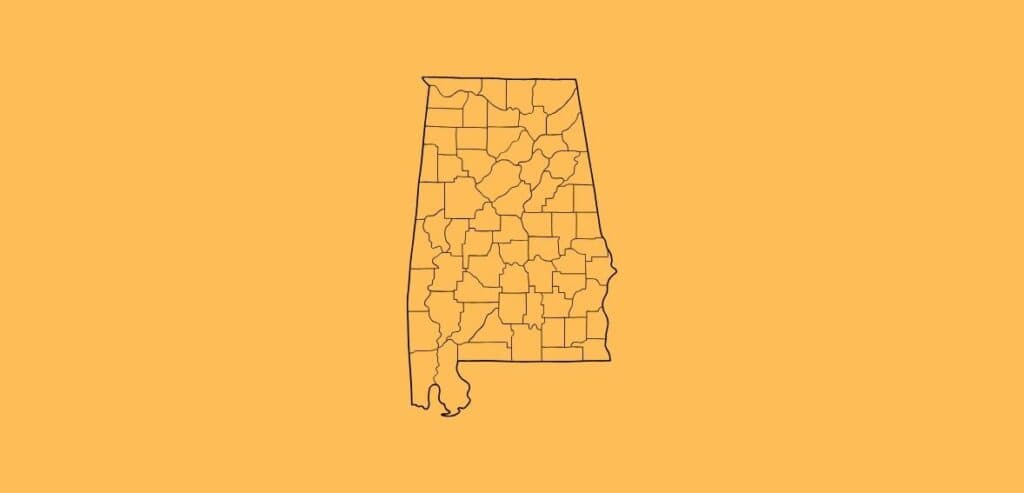
Unlike some states, Alabama maintains a uniform minimum wage across all counties, but with some exceptions. Employers in Alabama must comply with this and all other state labor laws.
At the national level, the minimum wage remains at $7.25 per hour. Alabama, along with states like Mississippi, Louisiana, Tennessee, and South Carolina, does not set a state-specific minimum wage, adhering instead to the federal rate. Contrarily, states like Georgia, North Dakota, and North Carolina have set their state minimum wages along with the federal rates.
Efforts to increase Alabama’s minimum wage have been made, including a 2019 legislative proposal to raise it to $15 per hour by 2026, but the bill was not passed.
Alabama Overtime Minimum Wage Overview
The overtime minimum wage in Alabama is set at $10.88 per hour. This rate applies to employees who exceed 40 hours of work in a week. Alabama has no daily overtime threshold, meaning overtime pay is based solely on weekly hours.
Under Alabama law, any hours worked beyond 40 in a single week entitle an employee to an overtime rate of 1.5 times their standard hourly wage. This is in accordance with the Fair Labor Standards Act (FLSA), which mandates adequate compensation for all qualifying overtime hours.
Suppose an employer fails to pay the correct overtime wages. In that case, employees can file a claim for unpaid wages with the Alabama Department of Labor, ensuring they receive the compensation legally owed.
Variations in Local Minimum Wage Law in Alabama
In Jefferson County, Alabama, the minimum wage is set at the federal level of $7.25 per hour, a rate that has not changed since 2009 and is uniform throughout the state. However, federal contractors in this area earn $15.00 per hour, a requirement from the U.S. Department of Labor to ensure wages for these workers exceed the standard minimum. This policy also applies to employees with disabilities and will affect tipped employees, who must be paid at least the full minimum wage by 2026.
In Mobile County, Alabama, specifically within the City of Mobile, the minimum wage for employees working up to 40 hours per week increased to $15.22 per hour as of April 19, 2022. This change impacts approximately 300 current hourly workers and will be the same for new hires. This reflects a broader movement in some areas to provide municipal workers with wages higher than the federal minimum.
Exemptions to Alabama’s Minimum Wage
Under both Alabama and federal law, specific categories of workers are eligible for special minimum wage rates. Here are the key exemptions:
- Tipped Employees: Workers who earn at least $30 per month in tips may be paid a base rate of $2.13 per hour. Their combined tips and hourly rate must meet or exceed the minimum wage of $7.25 per hour.
- Youth Employees: Under the Fair Labor Standards Act (FLSA), individuals under 20 can be paid a reduced wage of $4.25 per hour during their first 90 days of employment. After this period, they must receive the standard minimum wage.
- Overtime Workers: In Alabama, workers who log more than 40 hours a week are entitled to an overtime rate of 1.5 times the regular minimum wage, equating to $10.88 per hour.
- Student Workers: Full-time vocational students can be paid 75% of the minimum wage. Similarly, students working in retail, service stores, agriculture, or at educational institutions may earn 85% of the applicable minimum wage.
- Disabled Workers: Certain disabled employees may receive less than the minimum wage if they have a certification from the Alabama Department of Labor acknowledging their eligibility for such an arrangement.
These exemptions are designed to provide flexibility in certain employment situations while ensuring workers receive fair compensation.
Alabama Child Labor Regulations
In Alabama, minors aged 14 and 15 must secure an Eligibility to Work Form from the Alabama Department of Labor before commencing employment. Additionally, employers must acquire a Class I Child Labor Certificate to hire them.
During the school year, these young employees are restricted to a maximum of six days of work per school week, with weekly hours capped at 18. On non-school days, they may work up to eight hours, but no more than three hours on a school day. Furthermore, their working hours must fall between 7 a.m. and 7 p.m.
Outside of school sessions, the workweek limits expand, allowing these minors to work up to 40 hours across no more than six days, with permitted working hours extending from 7 a.m. to 9 p.m.
Establishments that serve alcohol must not employ individuals under 16 years old, with an exception for family-owned businesses not directly involving the minor in alcohol service.
Will the Minimum Wage Rate Change in 2026?
Despite the stagnant state rate, there have been local efforts, particularly in Birmingham, to raise the minimum wage to $10.10 from the current $7.25. However, these were halted by state legislation prohibiting municipalities from setting their wage standards. Legal challenges against this state law have been made, but so far, they have not succeeded in changing the legislation or the minimum wage rate.
The NAACP, alongside fast-food workers and labor groups, responded by suing in federal district court, challenging the state’s decision. The initial lawsuit was dismissed, but in July 2018, the 11th U.S. Circuit Court of Appeals found that the state’s “preemption law” conflicted with the 14th Amendment’s guarantee of equal protection. Nevertheless, the full appellate court later affirmed the dismissal, leaving Alabama’s minimum wage unchanged at $7.25.
Although the court’s ruling maintains the status quo, it could influence future legal efforts by other cities to challenge state-imposed limits on local wage adjustments.
Strategies for Small Businesses if They Face a Minimum Wage Increase in Alabama
Small business owners anticipating increases in minimum wage can implement several strategies to handle the potential impact effectively. With increasing minimum wage rates in many states, businesses need to adjust their strategies accordingly. Here’s a breakdown of effective approaches based on insights from various sources:
- Financial Planning and Analysis: Start by examining your current payroll expenses to predict how the wage hikes could affect your labor budget. This may involve modifying your business model, adjusting prices, or enhancing operational efficiency to preserve profits.
- Strategic Hiring and Staffing: Analyze your workforce structure. Hiring part-time or temporary employees during busy periods might be more economical than adding full-time staff. Optimizing staff schedules can also improve productivity, which can help control rising labor costs.
- Investing in Technology: Implementing technology to automate tasks can help reduce labor costs over the long term. Tools like point-of-sale systems, scheduling software, and customer relationship management systems can streamline operations and lessen the need for extra staff hours.
- Consulting Professionals: Consult with professionals such as accountants or legal advisors to keep up-to-date with wage law changes. Their expertise is vital for compliance and strategic financial planning.
- Employee Retention and Development: Keeping skilled workers may prove more cost-effective than hiring and training new staff. Focus on employee development and fostering a positive work environment to improve job satisfaction and decrease turnover.
- Regularly Reviewing and Adapting Business Practices: Continue to assess financial performance and refine business strategies as minimum wage levels evolve. This should include monitoring cash flow, revising pricing strategies, and seeking new market opportunities to balance the higher labor costs.
Implementing these strategies will help small business owners navigate the challenges of increasing minimum wages and ensure the sustainability of their operations. Tailor each approach to fit your business’s unique requirements and conditions for the best results.
Conclusion
Staying updated on minimum wage laws is crucial for Alabama small business owners, especially given the state’s reliance on federal standards. The federal minimum wage of $7.25 per hour has been in place since 2009, with specific provisions for tipped employees and youth workers. While local efforts to increase wages have faced legal challenges, the potential for future changes remains.
Small businesses can prepare through thorough financial planning, optimizing their workforce, leveraging technology, and seeking professional advice. Employee retention and regular business reviews will also be key strategies to manage the impact of wage increases. Adopting these measures will help Alabama businesses remain compliant and financially stable amid evolving wage laws.
 Recommended: Alaska minimum wage in 2026
Frequently Asked Questions
What is the minimum wage in Alabama for 2026?
In 2026, the minimum wage in Alabama will remain at $7.25 per hour, the same as the federal minimum wage. This rate has not been increased since it was last adjusted in 2008 from $6.55 to $7.25 per hour.
Are there any planned increases for the minimum wage in Alabama in 2026?
As of 2026, Alabama does not plan to increase the minimum wage. The state follows the federal minimum wage rate, and any change would likely depend on adjustments made at the federal level.
How does Alabama’s minimum wage compare to other states?
Alabama is among the states that adhere strictly to the federal minimum wage of $7.25 per hour without any additional state-specific adjustments. This is similar to several other states, such as Mississippi, Tennessee, and Louisiana, which also follow the federal rate without modification.
What should employers and employees know about compliance with minimum wage laws in Alabama?
Employers in Alabama must ensure they pay at least the federal minimum wage of $7.25 per hour, as Alabama does not have a higher state-specific minimum wage. Businesses must keep informed about potential federal changes to ensure compliance. Alabama law mandates that employers display approved labor law posters that include minimum wage information prominently at their workplaces to inform employees of their rights and obligations under the law.